Texas Letter from Landlord to Tenant as Notice to remove unauthorized pets from premises
What is this form?
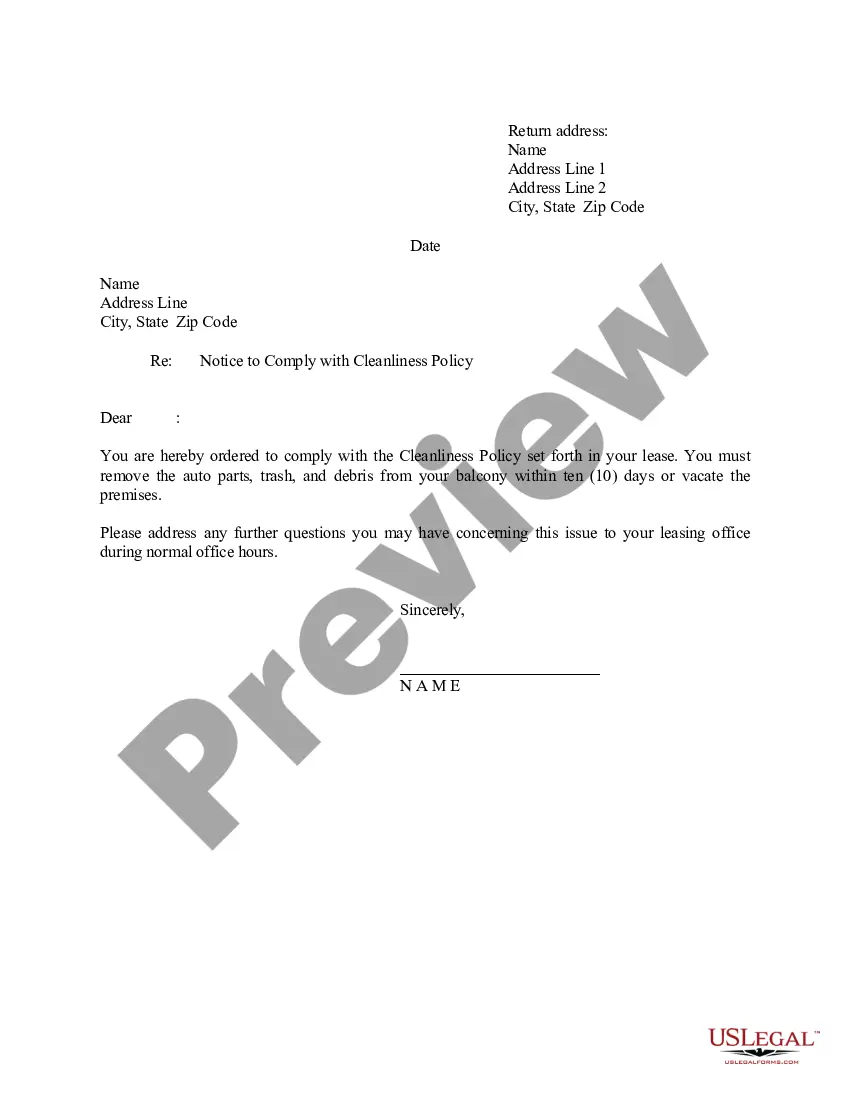
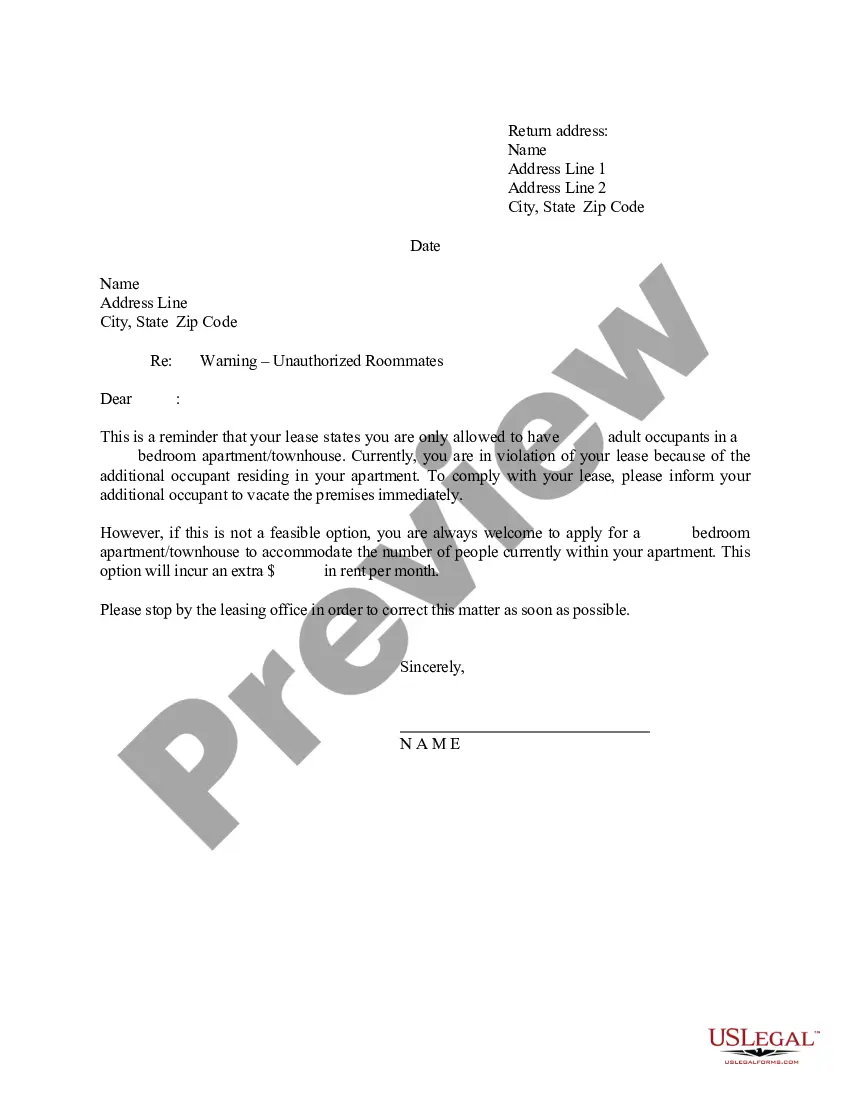
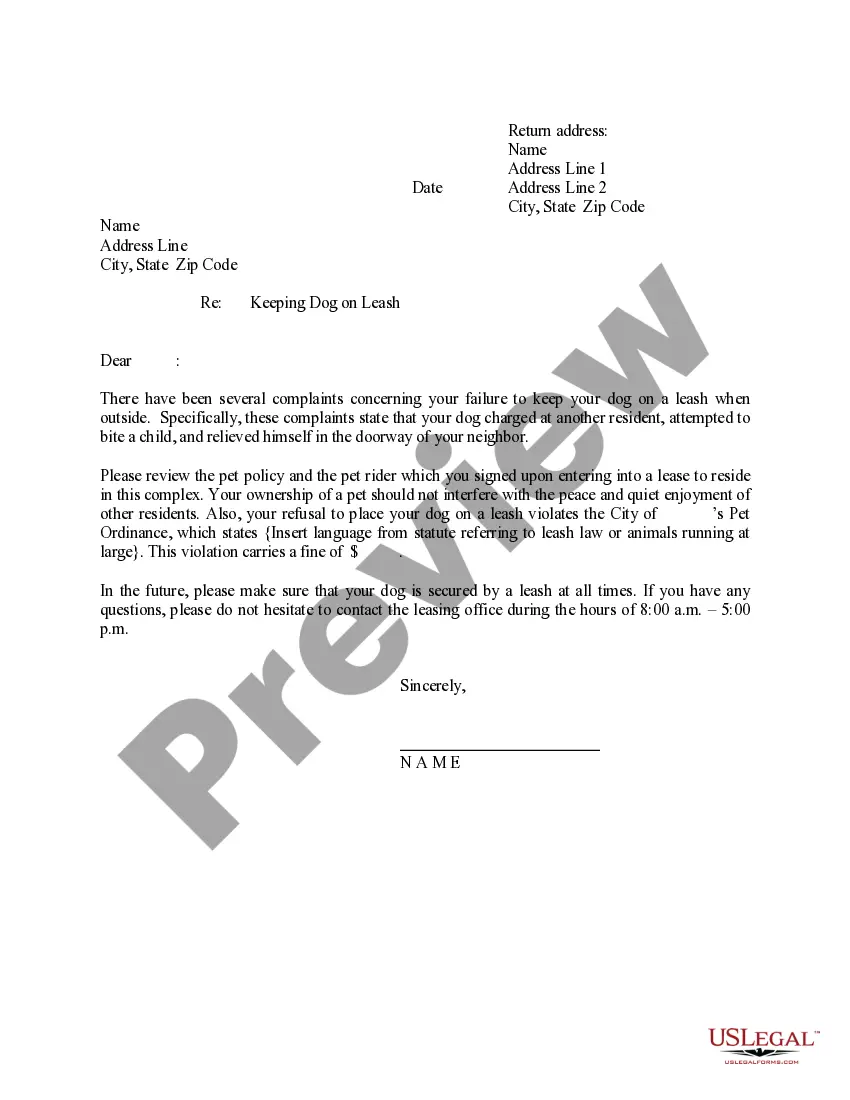
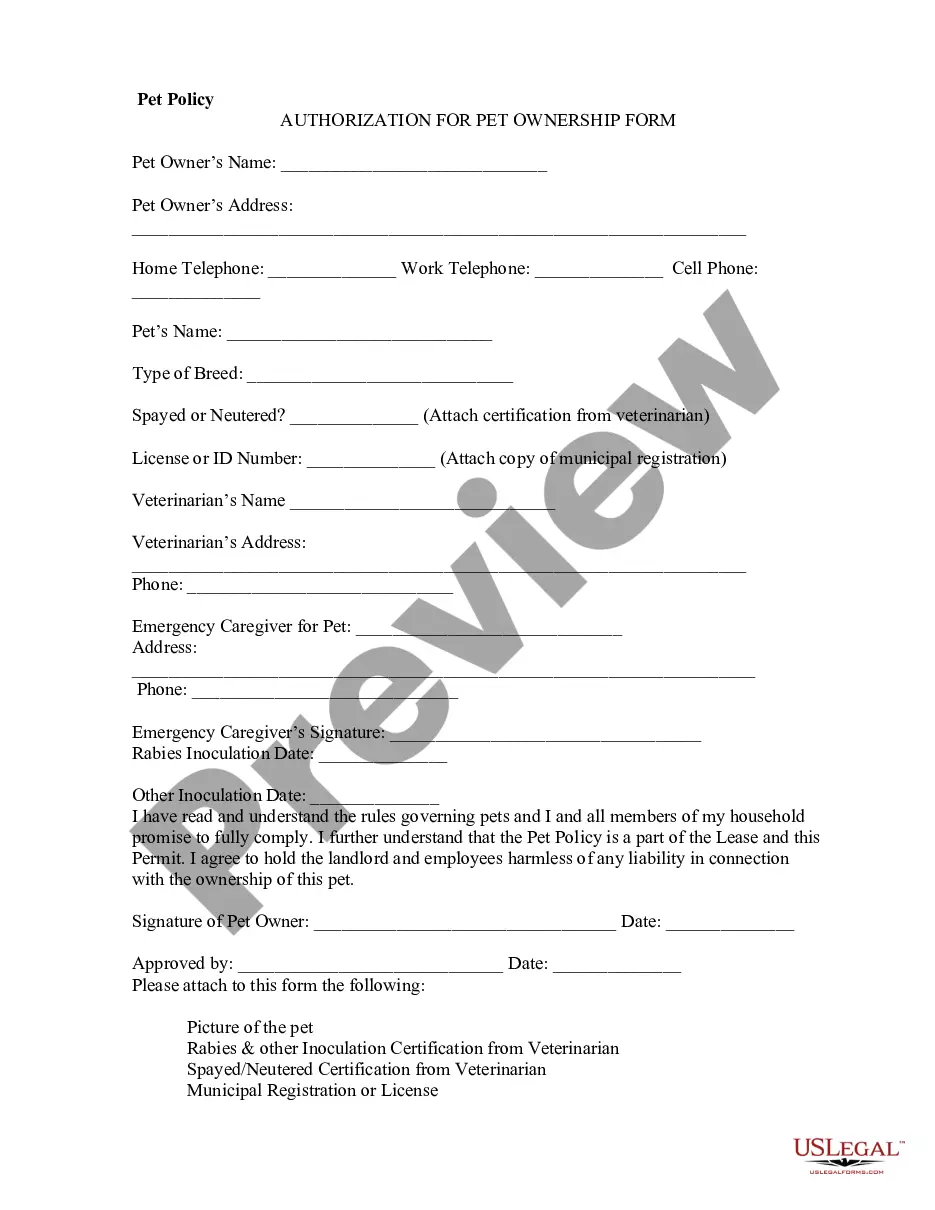
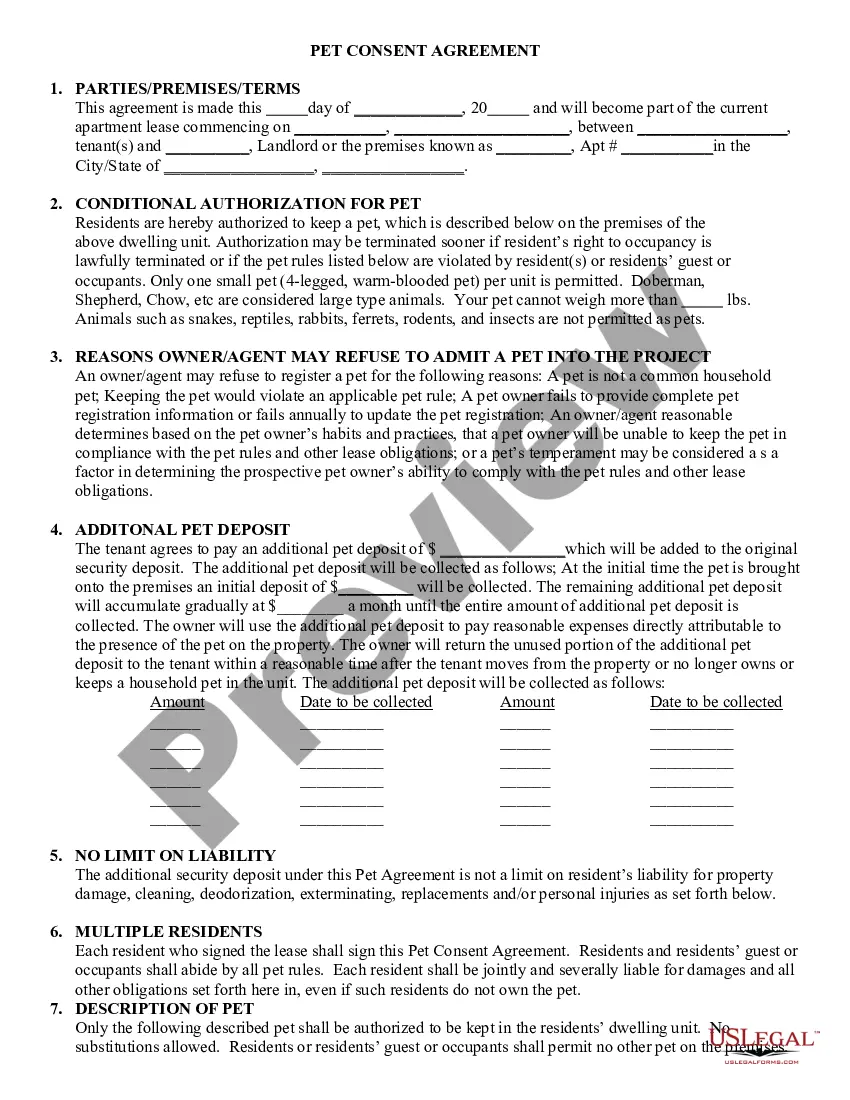
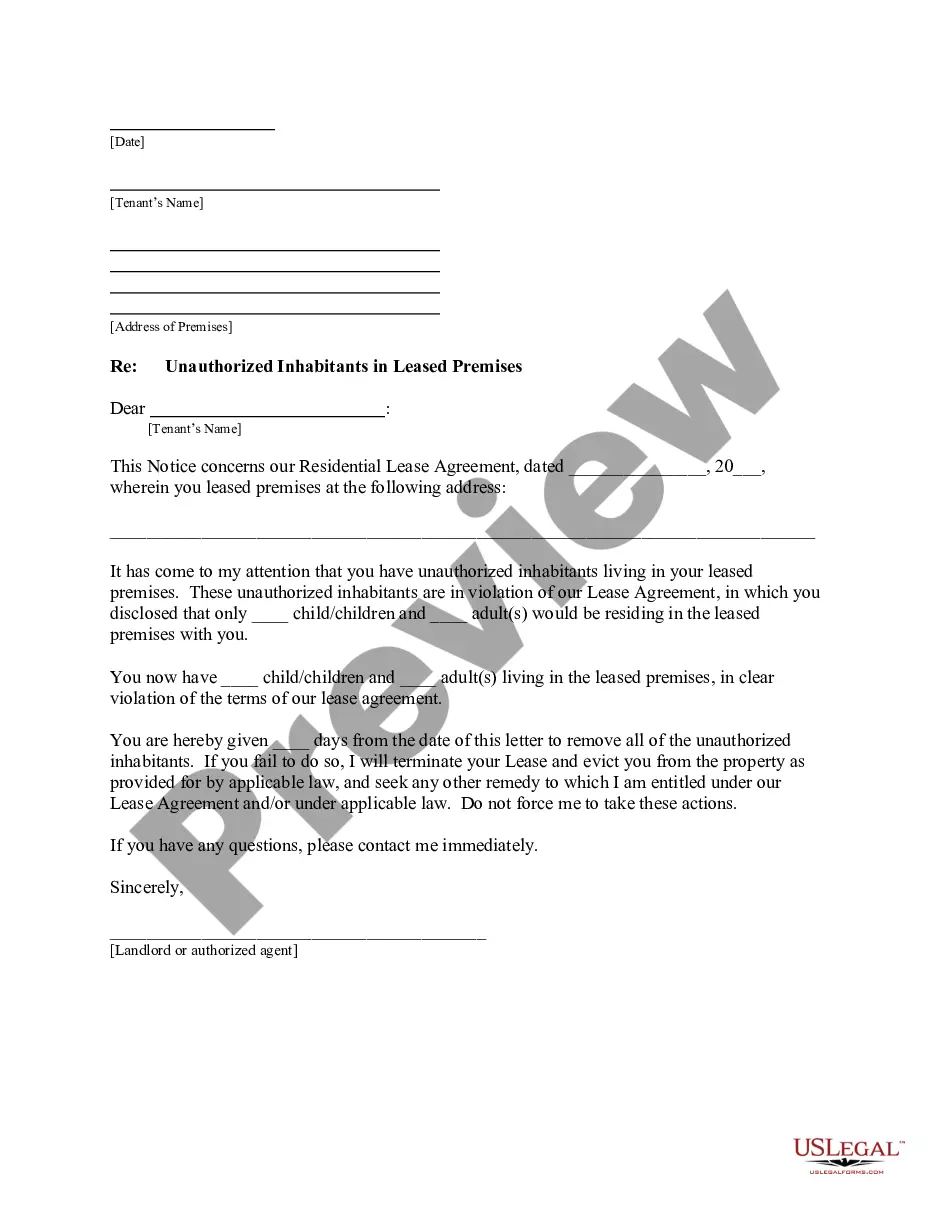
This form is a Letter from Landlord to Tenant as Notice to remove unauthorized pets from premises. Its purpose is to formally notify a tenant that keeping unauthorized pets violates the rental lease agreement. This notice serves as a warning that failure to comply may lead to eviction or further legal actions. Unlike other tenant notices, this letter specifically addresses issues related to unauthorized pets and outlines the consequences of non-compliance.
Key components of this form
- Date of the residential lease agreement.
- Property address where the lease is in effect.
- Description of the unauthorized pet(s).
- Time frame for pet removal.
- Signature of the landlord or authorized agent.
When this form is needed
This form should be used when a landlord discovers that a tenant is keeping one or more pets on the rental property in violation of the lease agreement. It is necessary when the landlord seeks to enforce the lease's pet policy and wants to formally request the removal of the pets within a specified timeframe to avoid potential eviction or legal disputes.
Who should use this form
- Landlords who have a no-pet policy in their lease agreements.
- Property managers acting on behalf of landlords.
- Tenants who are notified of unauthorized pets and want to understand their rights and obligations.
Completing this form step by step
- Fill in the date of the lease agreement.
- Clearly specify the address of the leased property.
- Identify and describe the unauthorized pet(s) being kept.
- Indicate the number of days given to the tenant for removing the pets.
- Sign the letter in the designated area as the landlord or authorized representative.
Is notarization required?
This form does not typically require notarization to be legally valid. However, some jurisdictions or document types may still require it. US Legal Forms provides secure online notarization powered by Notarize, available 24/7 for added convenience.
Get your form ready online
Our built-in tools help you complete, sign, share, and store your documents in one place.
Make edits, fill in missing information, and update formatting in US Legal Forms—just like you would in MS Word.
Download a copy, print it, send it by email, or mail it via USPS—whatever works best for your next step.
Sign and collect signatures with our SignNow integration. Send to multiple recipients, set reminders, and more. Go Premium to unlock E-Sign.
If this form requires notarization, complete it online through a secure video call—no need to meet a notary in person or wait for an appointment.
We protect your documents and personal data by following strict security and privacy standards.

Make edits, fill in missing information, and update formatting in US Legal Forms—just like you would in MS Word.

Download a copy, print it, send it by email, or mail it via USPS—whatever works best for your next step.

Sign and collect signatures with our SignNow integration. Send to multiple recipients, set reminders, and more. Go Premium to unlock E-Sign.

If this form requires notarization, complete it online through a secure video call—no need to meet a notary in person or wait for an appointment.

We protect your documents and personal data by following strict security and privacy standards.
Typical mistakes to avoid
- Failing to specify the type and number of unauthorized pets.
- Not providing a clear deadline for the removal of pets.
- Neglecting to sign the notice, which may render it ineffective.
- Using vague language that does not clearly state the breach of the lease agreement.
Why use this form online
- Convenient access to professionally drafted legal documents.
- The ability to edit and customize the form to fit specific situations.
- Reliable, up-to-date legal templates tailored for your state's laws.
- Quick download options for immediate use in legal proceedings.
Legal use & context
- The letter serves as a formal notification, outlining the consequences of non-compliance.
- It helps preserve the landlord's rights under the lease agreement.
- Documenting notice can be crucial if eviction proceedings become necessary.
Quick recap
- This form is essential for landlords enforcing lease agreements regarding unauthorized pets.
- Completing it accurately can prevent legal disputes and ensure compliance.
- Timely communication is crucial in maintaining a good landlord-tenant relationship.
Looking for another form?





Form popularity
FAQ
Your landlord cannot go into your apartment and remove a pet or show up and force you or your pet out.Generally the landlord cannot even enter the home without giving the tenant notice except in an emergency, unless the lease specifies otherwise.
Once you have notified your landlord, you should also present him/her with your ESA letter from your mental health professional. You may provide an original hard copy of your letter or send your landlord a digital copy via email.
Let Your Landlord Know About your ESA You can make your ESA request verbally or in writing (via email for example). The vast majority of landlords are happy to comply with their obligations under Fair Housing rules, and many landlords are sympathetic when it comes to the mental health needs of their tenants.
Most landlords are willing to work with their tenants, even if you do break the lease, but some landlords won't. If you're caught sneaking in a pet, your landlord may have the right to evict you. If you're evicted, your landlord may sue you for the remainder of your lease payment.
So, for over 90 percent of landlords, a blanket ban on pets of any kind was included in their contract. If a tenancy agreement included a ban on pets, getting one was reasonable grounds for eviction. This has, in reality, torn families apart, and some have even had to leave their dear pets behind.
New rules mean landlords can no longer automatically ban tenants from having pets in their property. The Ministry of Housing, Communities and Local Government has announced new guidelines around common household pets, bringing the UK one step closer to banning landlords from refusing tenants with animals.
Dear (Name of landlord or manager), This letter constitutes my written (number of days' notice that you need to give based on your lease agreement)-day notice that I will be moving out of my apartment on (date), the end of my current lease. I am leaving because (new job, rent increase, etc.)
If you want to hide your pet from your landlord, always cover up any evidence (odor, hair). Vacuum your house thoroughly, including the couches, curtains, and the rugs/carpets. Regularly make use of scented candles, room sprays to mask the pet smell. A portable air purifier can help in eliminating the pet odor.
Send a 3-day notice to fix or quit. If the tenant doesn't follow through with a fix, visit your local courthouse and begin a filing for eviction. In some states, you can file to only evict the unauthorized tenant. In others, you'll have the option to evict your tenant as well as the unauthorized occupant.