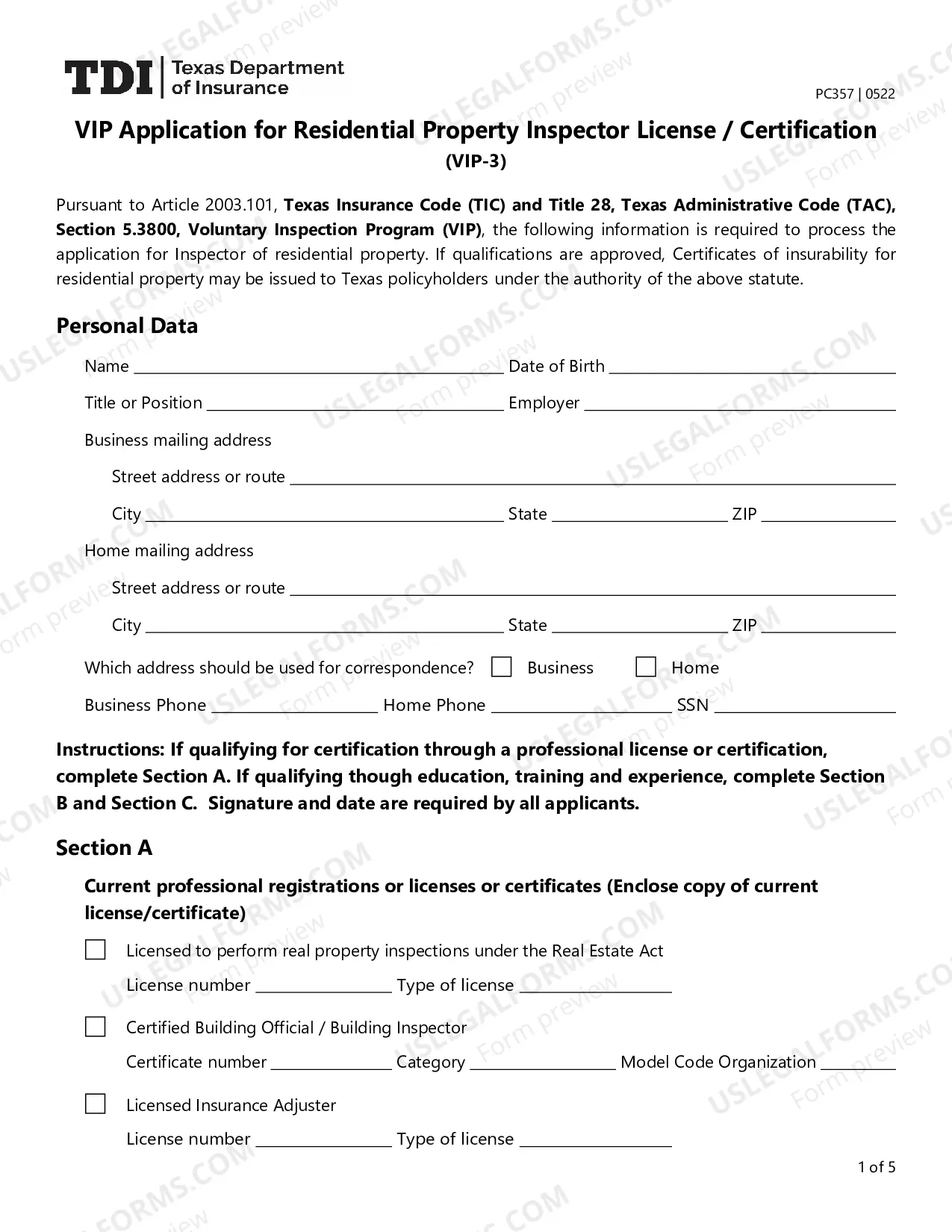
Texas Residential Rental Lease Agreement

What this document covers
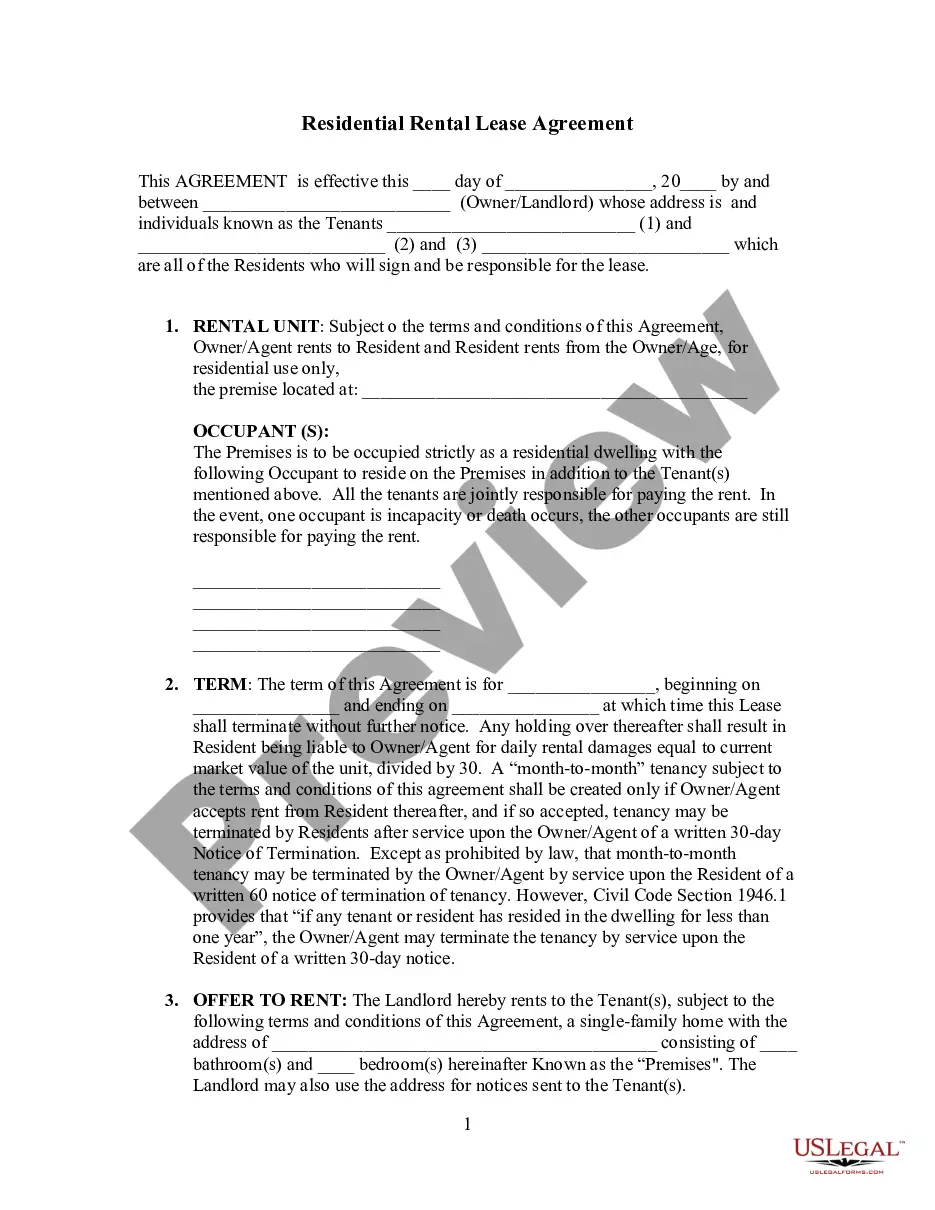
The Residential Rental Lease Agreement is a legally binding document that outlines the terms and conditions under which a landlord rents property to a tenant. Unlike a month-to-month rental agreement, this lease has a specified term, such as one year or six months, during which the tenant cannot be evicted without cause. This lease ensures that both the tenant and landlord understand their rights and responsibilities, providing clear guidelines for payment, property use, and termination.
Form components explained
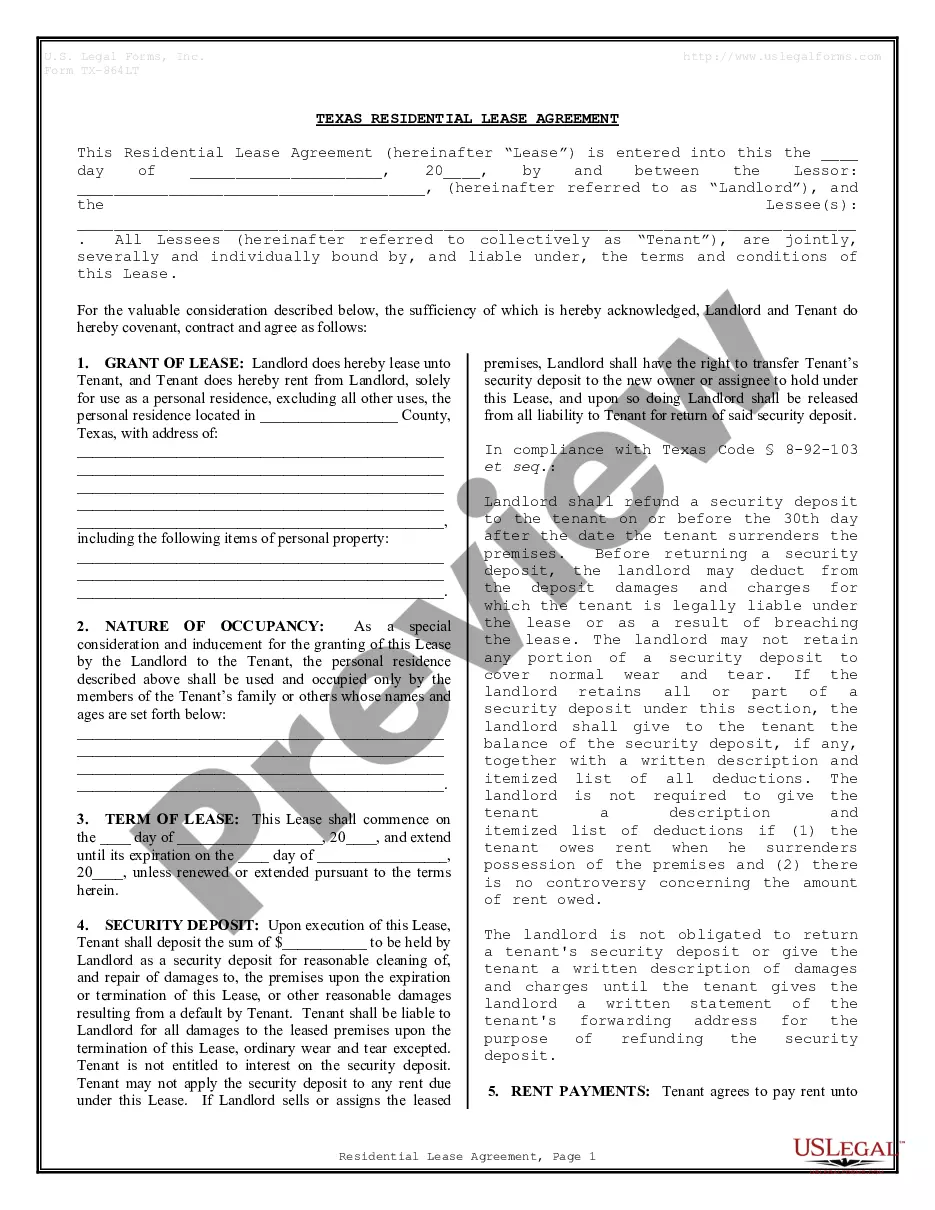
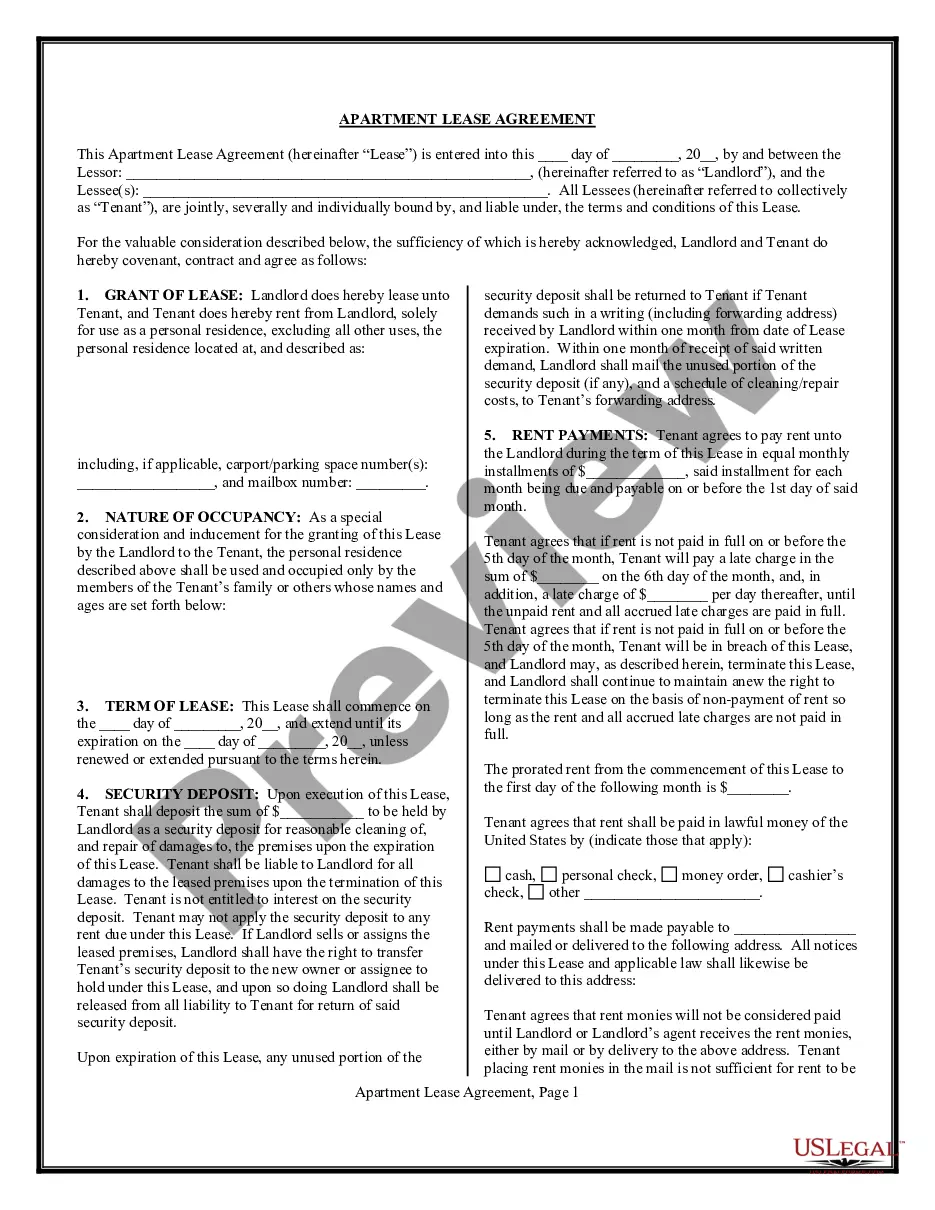
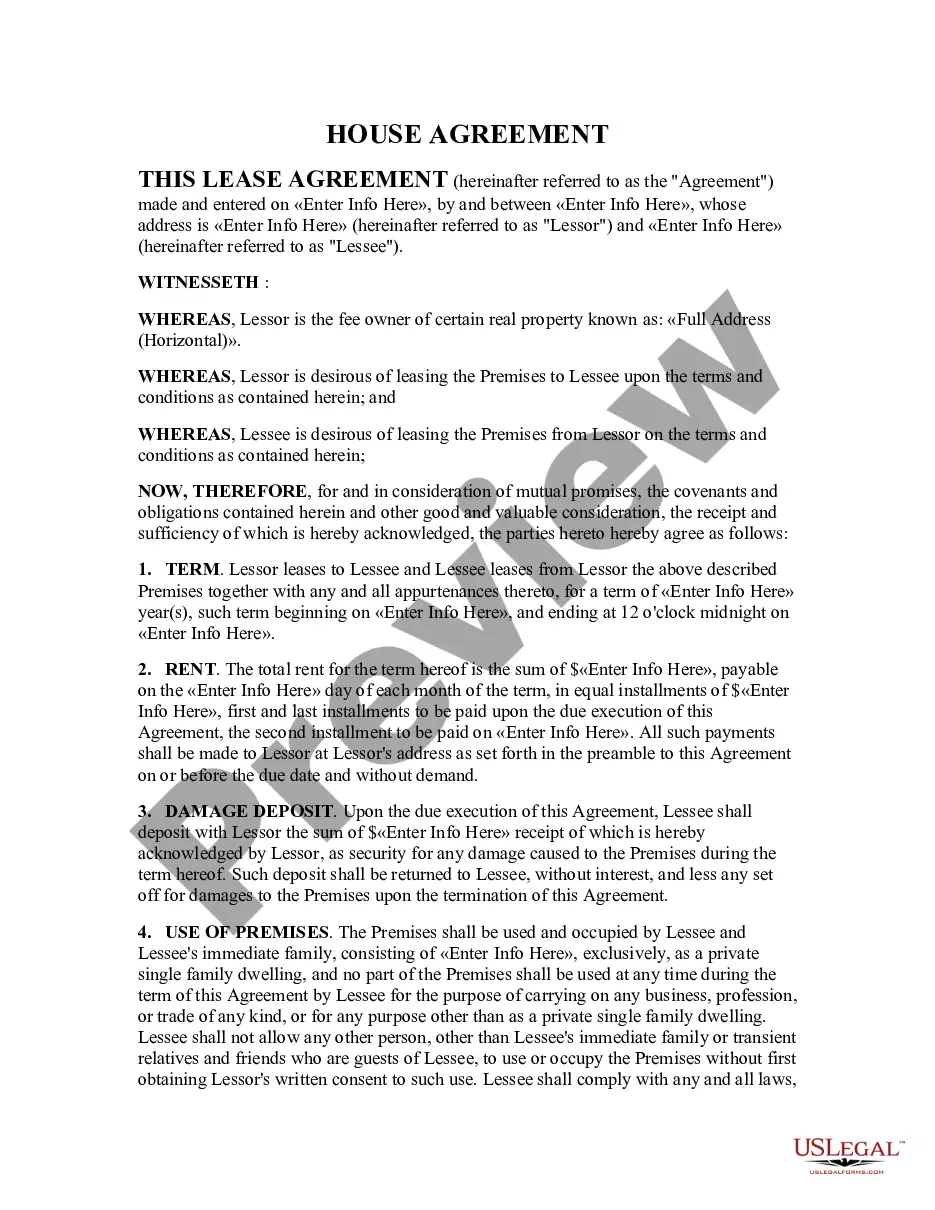
- Grant of Lease: Defines the property being rented and its permitted use.
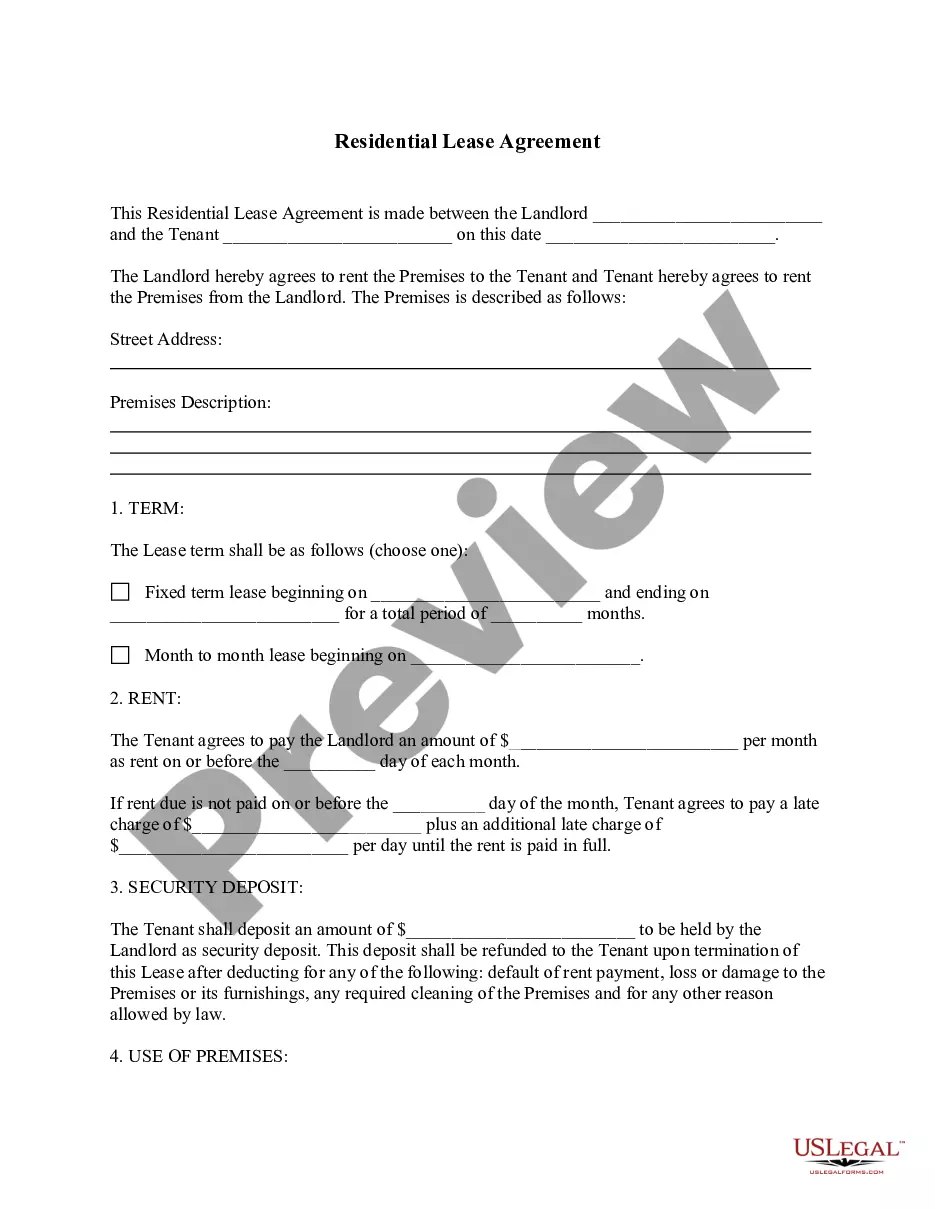
- Term of Lease: Specifies the lease duration and start date.
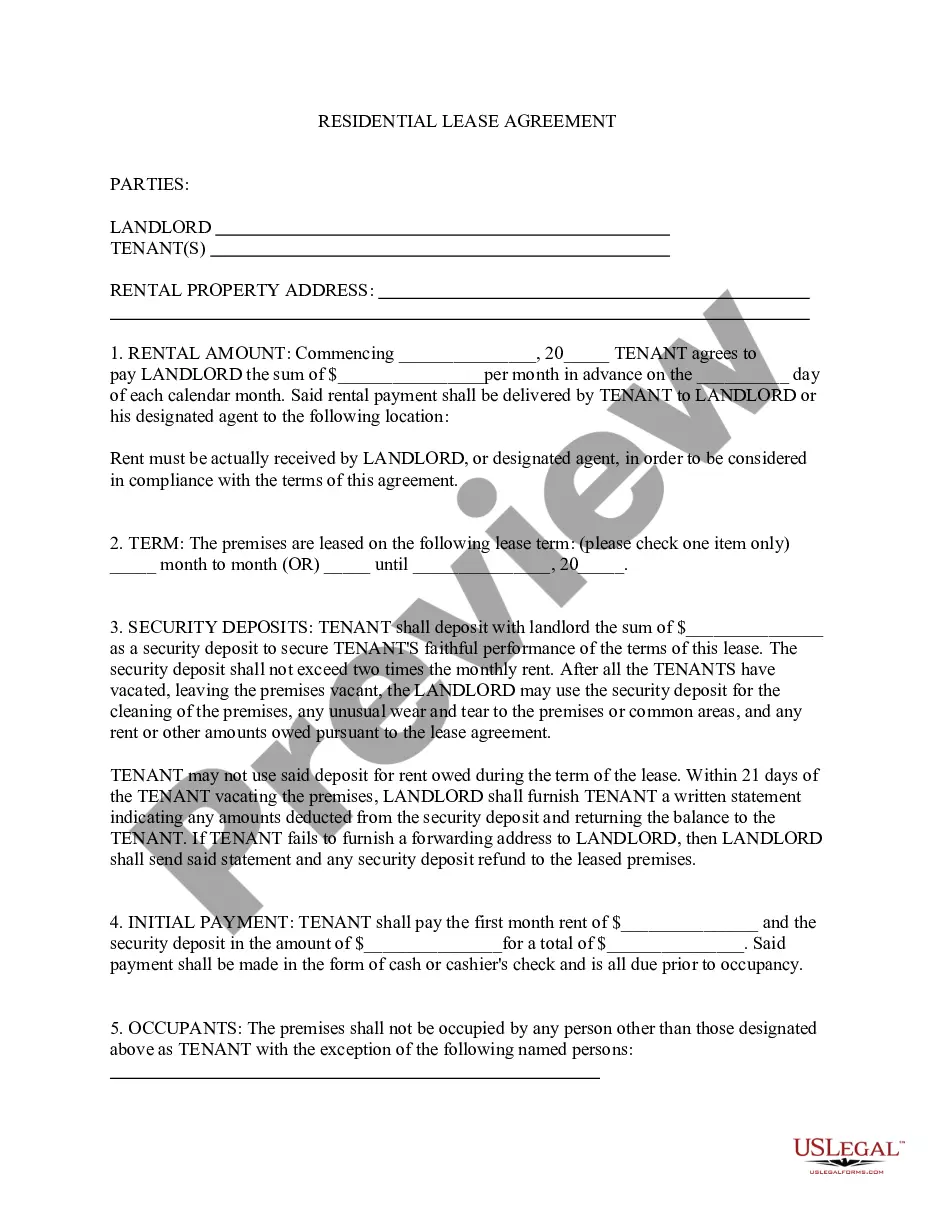
- Security Deposit: Outlines the amount required and the conditions for its return.
- Rent Payments: Details the monthly rent amount and payment due dates.
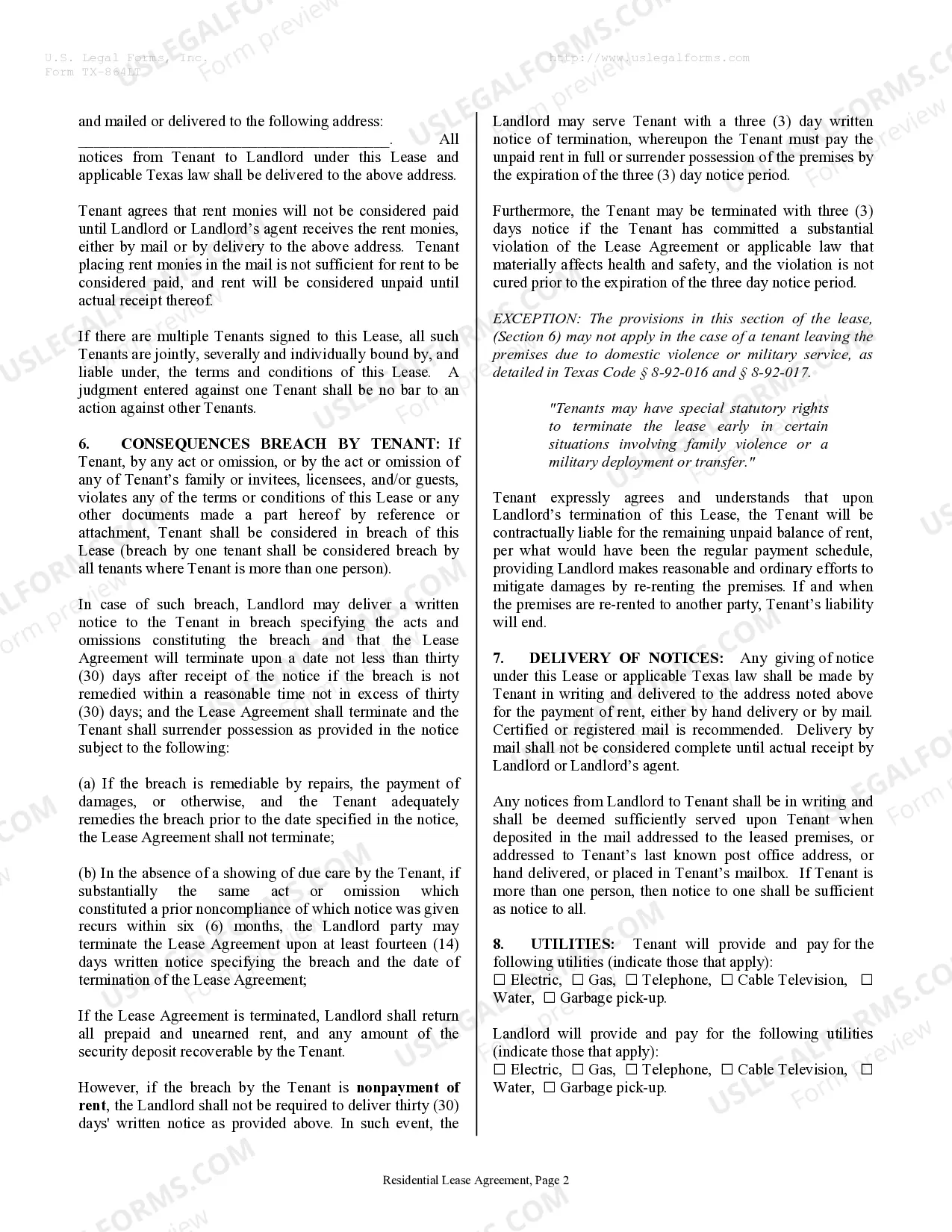
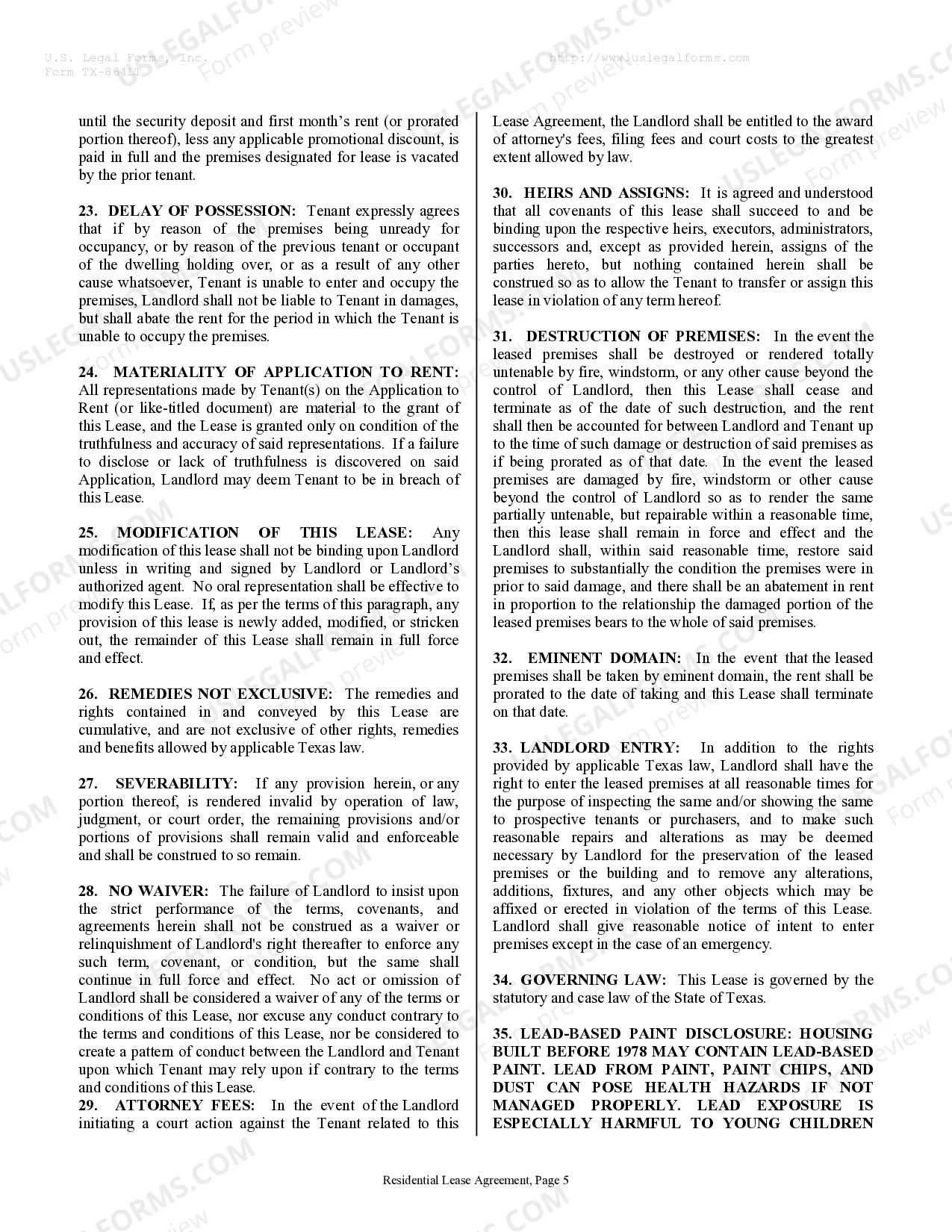
- Consequences of Breach: Explains actions for breaches by the tenant.
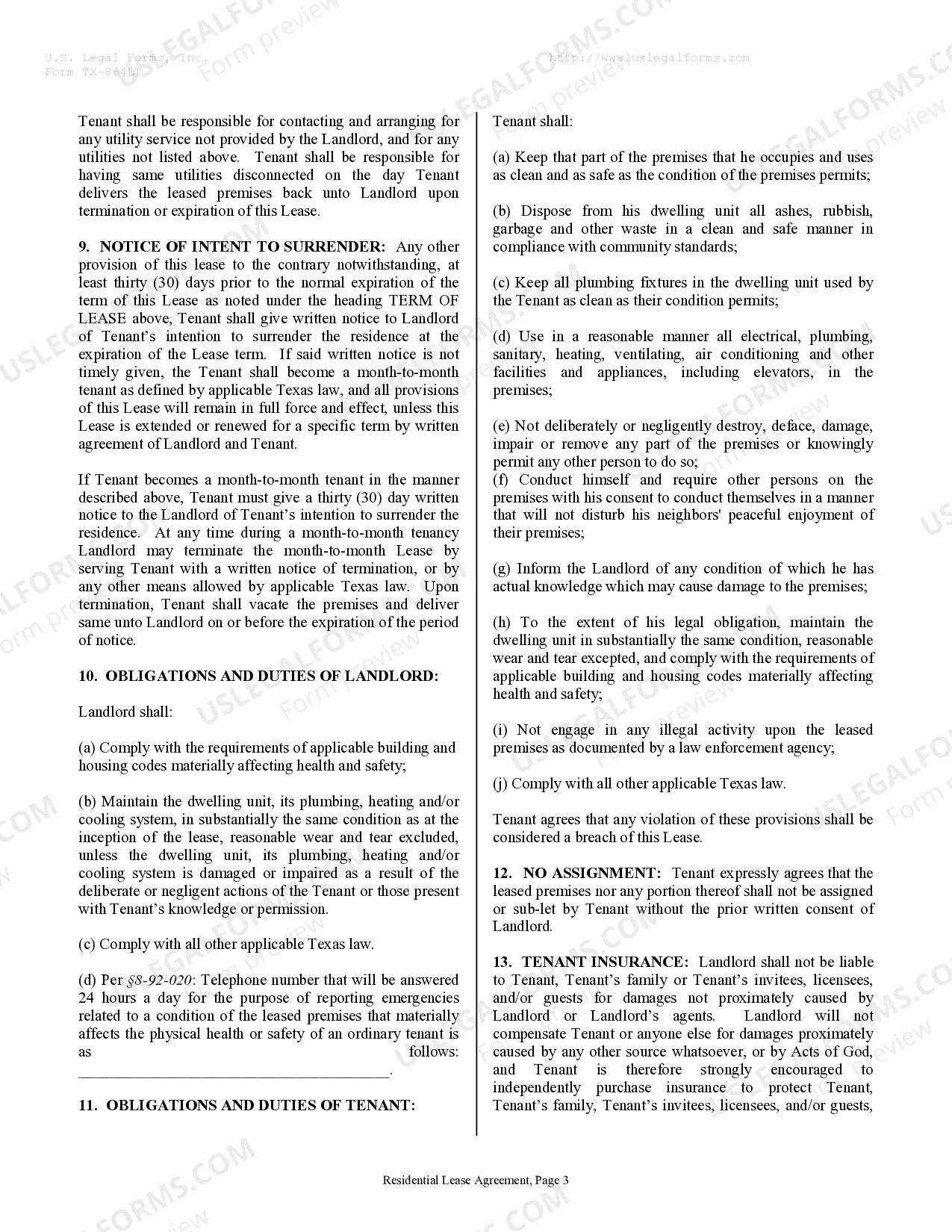
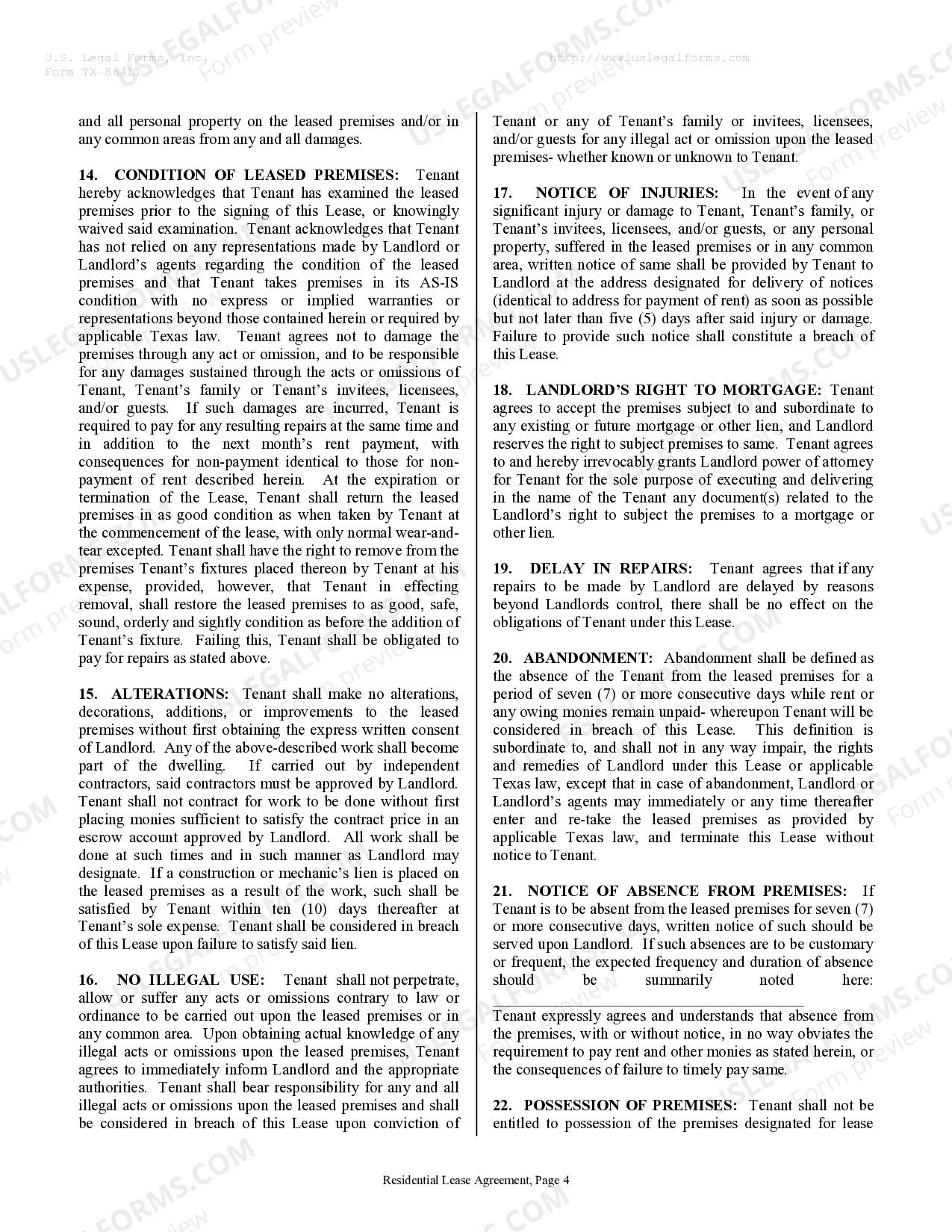
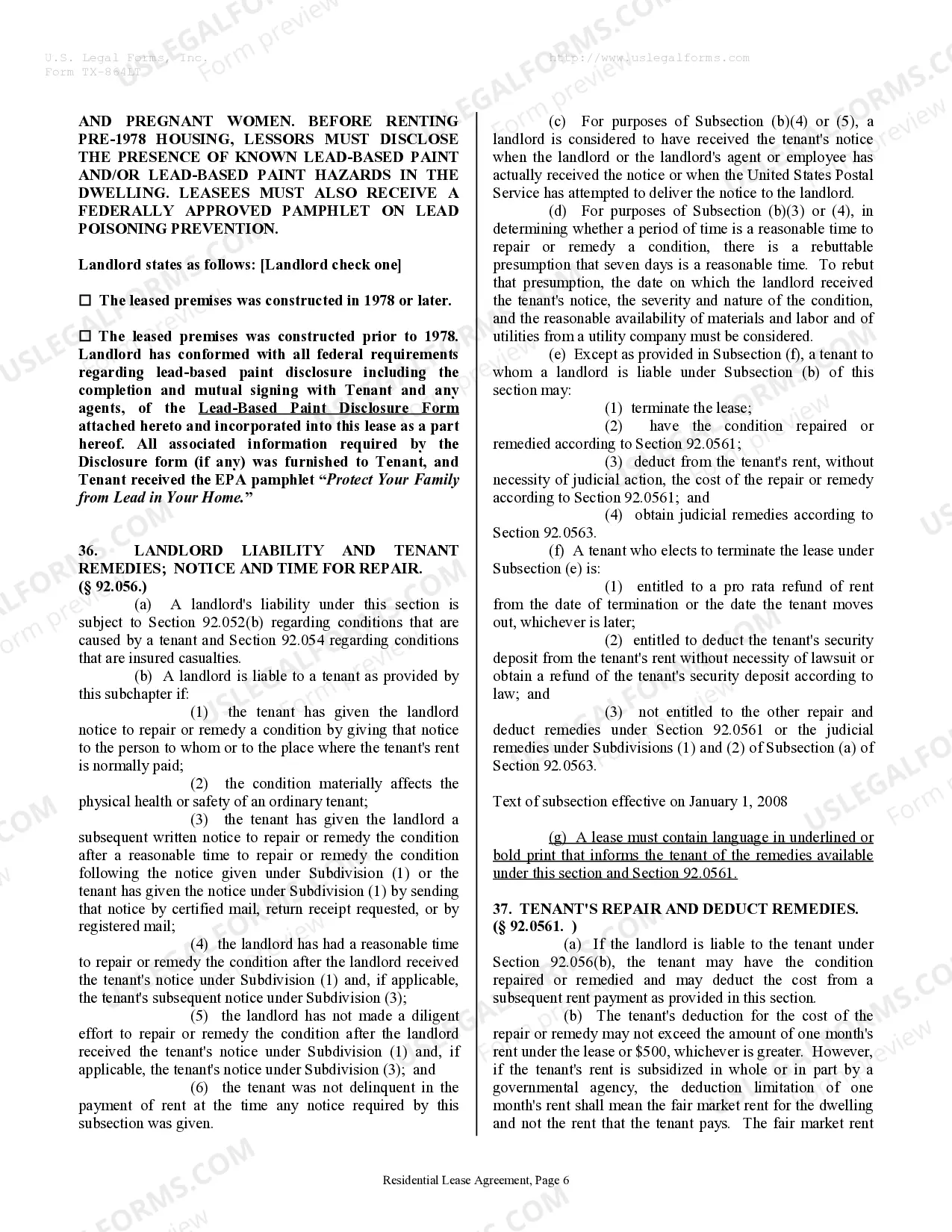
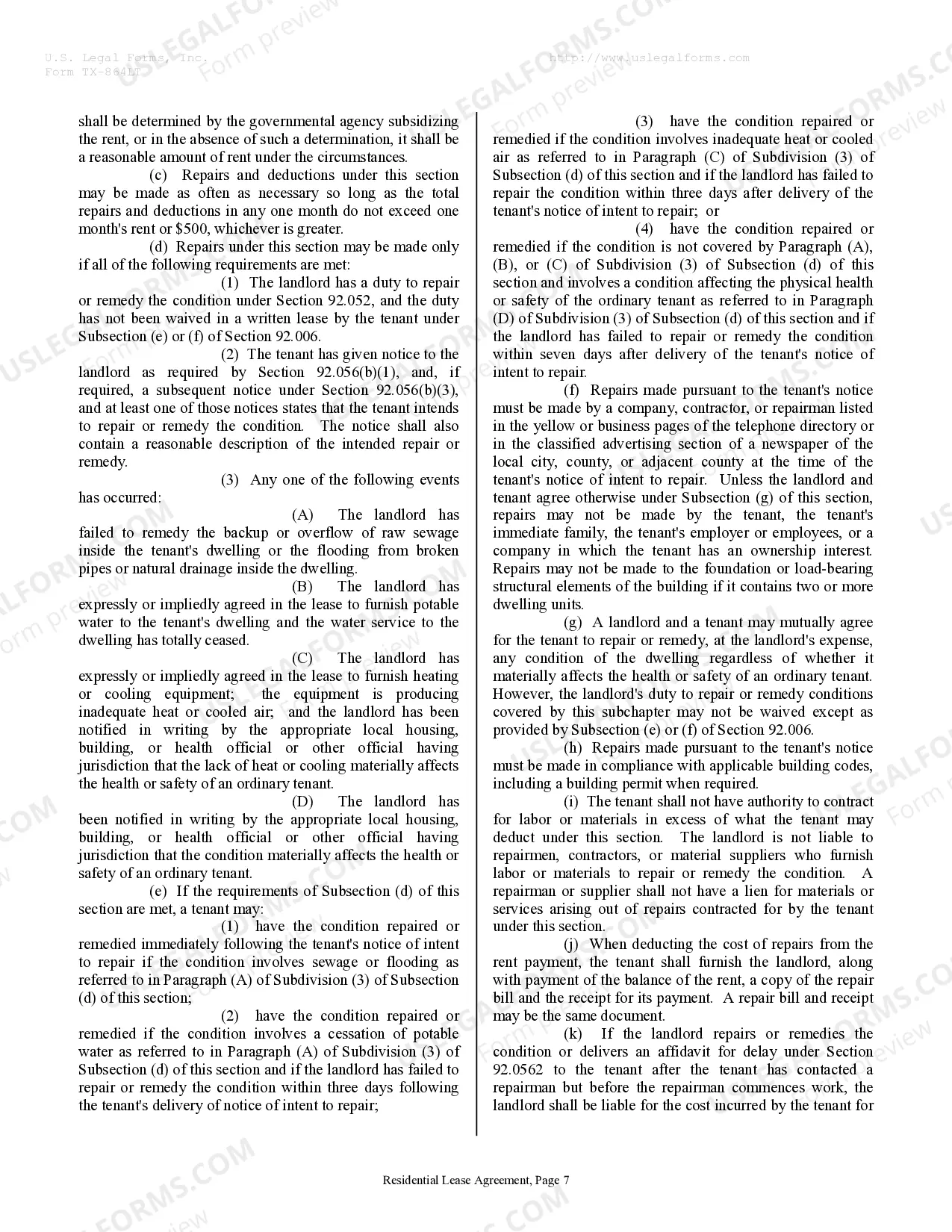
- Obligations of Landlord and Tenant: Lists responsibilities for property maintenance and occupancy.

When to use this form
This form should be used when renting a residential property for a specified term. It is suitable for situations where the landlord wants to lock in the rental arrangement for a defined period, protecting both their interests and those of the tenant. It is essential for formalizing rental agreements in various housing situations, including apartments, single-family homes, and shared living spaces.
Who needs this form
Eligible users include:
- Landlords renting out their property to tenants.
- Property management companies acting on behalf of landlords.
- Tenants seeking a stable living arrangement with clear legal protections.
How to prepare this document
- Identify the parties involved: Fill in the names of the landlord and tenant(s).
- Specify the property: Enter the complete address and details of the rental property.
- Fill in lease terms: Write the start date and the duration of the lease.
- Detail the rent and deposit: Indicate the monthly rent amount and security deposit required.
- Obtain signatures: Ensure all parties sign and date the agreement to validate it.
Is notarization required?
This form does not typically require notarization to be legally valid. However, some jurisdictions or document types may still require it. US Legal Forms provides secure online notarization powered by Notarize, available 24/7 for added convenience.
Get your form ready online
Our built-in tools help you complete, sign, share, and store your documents in one place.
Make edits, fill in missing information, and update formatting in US Legal Forms—just like you would in MS Word.
Download a copy, print it, send it by email, or mail it via USPS—whatever works best for your next step.
Sign and collect signatures with our SignNow integration. Send to multiple recipients, set reminders, and more. Go Premium to unlock E-Sign.
If this form requires notarization, complete it online through a secure video call—no need to meet a notary in person or wait for an appointment.
We protect your documents and personal data by following strict security and privacy standards.

Make edits, fill in missing information, and update formatting in US Legal Forms—just like you would in MS Word.

Download a copy, print it, send it by email, or mail it via USPS—whatever works best for your next step.

Sign and collect signatures with our SignNow integration. Send to multiple recipients, set reminders, and more. Go Premium to unlock E-Sign.

If this form requires notarization, complete it online through a secure video call—no need to meet a notary in person or wait for an appointment.

We protect your documents and personal data by following strict security and privacy standards.
Avoid these common issues
- Failing to specify the security deposit conditions.
- Inaccurately describing the rental property or its permitted use.
- Not keeping a copy of the signed lease for both parties.
- Overlooking rent payment and late fee details.
- Missing signatures from all parties, which may lead to unenforceability.
Benefits of using this form online
- Convenient access: Instantly download and fill out the form when needed.
- Editability: Customize the document to meet specific rental situations.
- Security: Ensure compliance with legal standards without missing critical provisions.
Legal use & context
- The form provides legal protections for both landlord and tenant.
- It clearly outlines all parties' responsibilities, creating a legally enforceable agreement.
- Tenants have defined rights to remain in the rented property for the agreed term unless legally evicted.
- Landlords can confidently manage their properties with written contracts that outline necessary terms.
Quick recap
- The Residential Rental Lease Agreement is essential for formalizing rental relationships.
- It includes critical details such as rent payments, security deposits, and tenant rights.
- Using this form helps ensure that both parties understand their responsibilities.
Looking for another form?
Form popularity
FAQ
The Texas Residential Rental Lease Agreement is a legally binding template that governs a landlord–tenant tenancy for a defined term. It sets expectations for how the property will be used, how payments are made, and each party’s responsibilities. The form specifies a Grant of Lease (property being rented), a Term of Lease, a Security Deposit, Rent Payments, Consequences of Breach, and the Obligations of Landlord and Tenant. It is used to formalize a residential rental in Texas for apartments, houses, or shared spaces.
In Texas, a lease becomes binding when both the landlord and tenant sign the Texas Residential Rental Lease Agreement and agree to its terms. The document’s core terms include a Grant of Lease, Term of Lease, Security Deposit, Rent Payments, Consequences of Breach, and the Obligations of Landlord and Tenant. Signing finalizes the fixed-term tenancy described by the form.
Red flags in a lease include vague or missing details about the Grant of Lease or the Term of Lease, unclear rent amount or due dates in Rent Payments, uncertain security deposit terms or return conditions, and ambiguous Consequences of Breach or landlord and tenant obligations. These gaps can lead to disputes, so ensure clear, complete terms are provided.
The form itself sets the lease terms and is not a negotiation script. Focus on understanding and signing the terms: Grant of Lease, Term of Lease, Security Deposit, Rent Payments, Consequences of Breach, and the Obligations of Landlord and Tenant before signing; avoid statements that contradict or modify these terms outside the document.
The form outlines tenancy terms and breach consequences but does not list specific grounds to end a lease early. For Texas-specific exit rights, refer to applicable law and any termination provisions in the lease. The Texas Residential Rental Lease Agreement is designed to define a fixed term and responsibilities, not enumerate break-lease reasons.
This agreement establishes a fixed Term of Lease with a defined start date and set obligations for both parties, including Grant of Lease, Security Deposit, Rent Payments, Consequences of Breach, and the Obligations of Landlord and Tenant. In contrast, a month-to-month lease continues until terminated, without a fixed term.