Tennessee Letter from Landlord to Tenant as Notice to remove Wild Animals in Premises
What is this form?
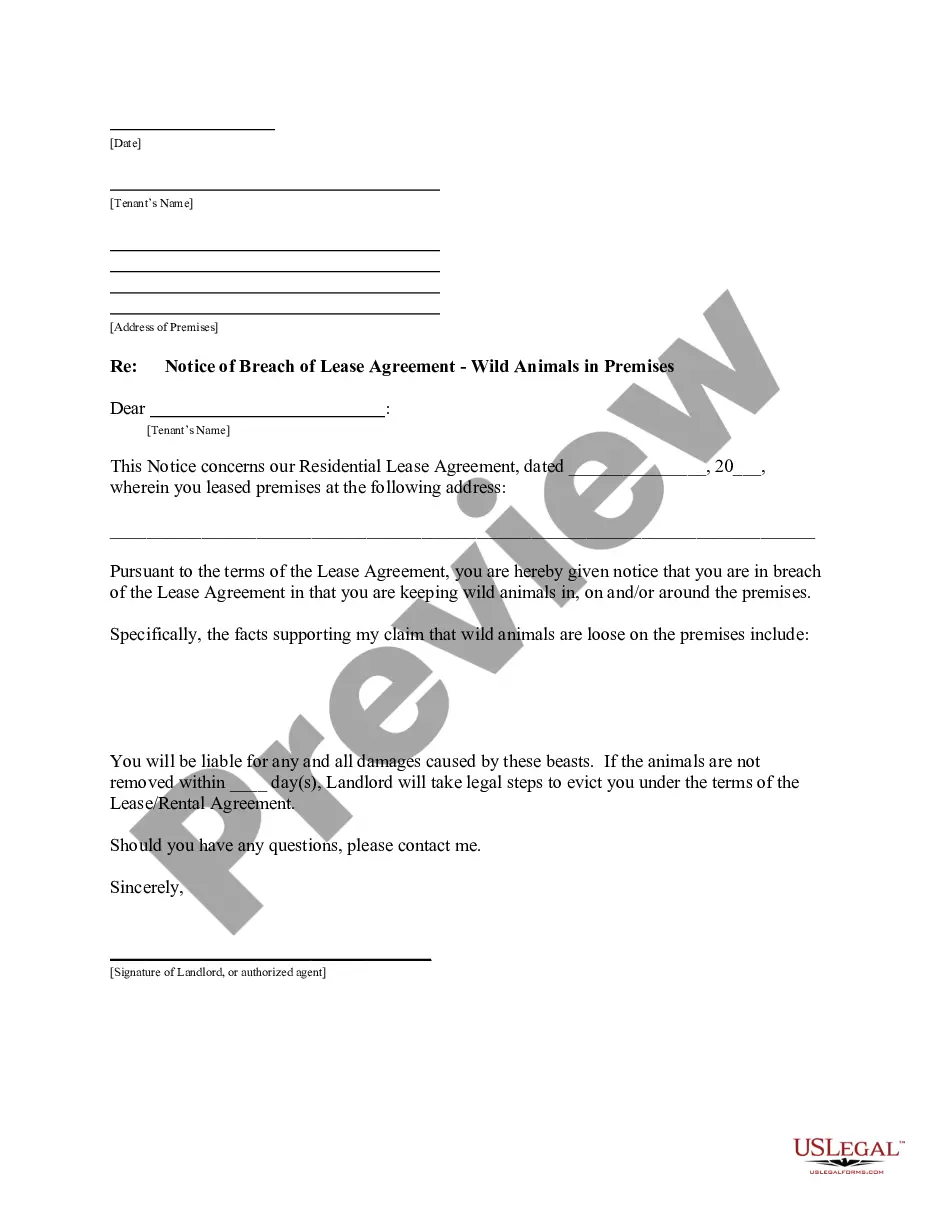
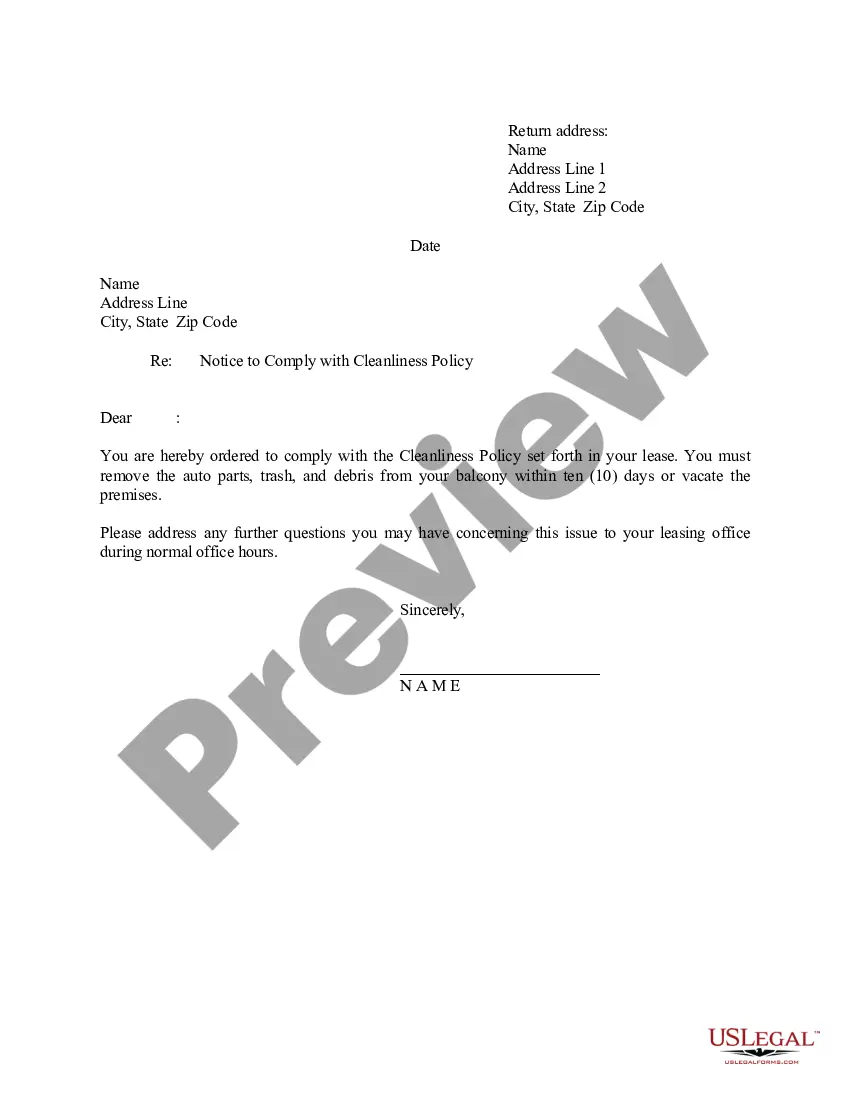
This form is a Letter from Landlord to Tenant as a Notice to Remove Wild Animals in Premises. It serves as a formal notification to a tenant indicating they have violated lease terms by keeping wild animals on the property. This letter specifically outlines the terms breached and details surrounding the violation, which distinguishes it from other landlord-tenant forms.
What’s included in this form
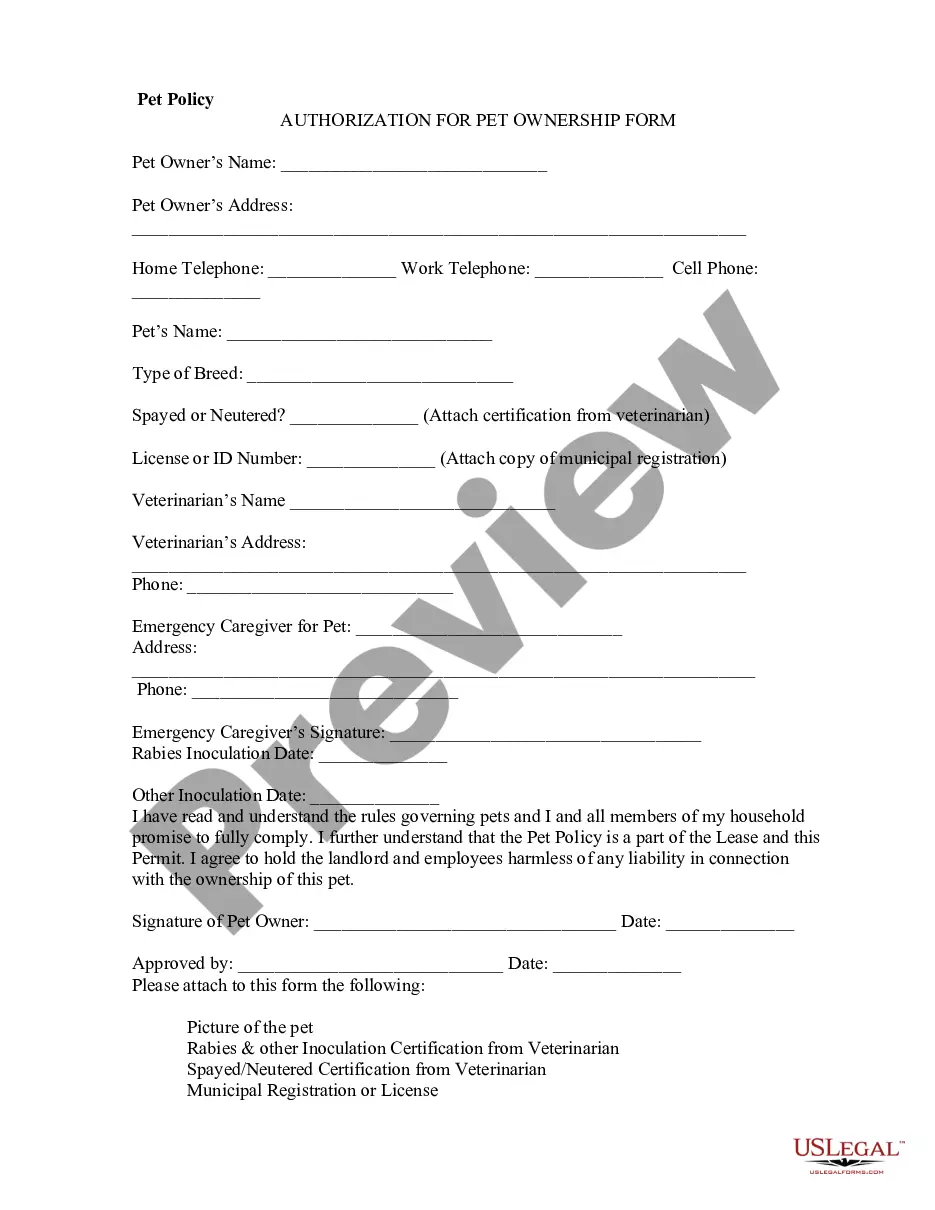
- Identification of the landlord and tenant.
- Reference to the specific lease agreement.
- Explanation of the breach regarding wild animals.
- Signature line for the landlord or authorized agent.
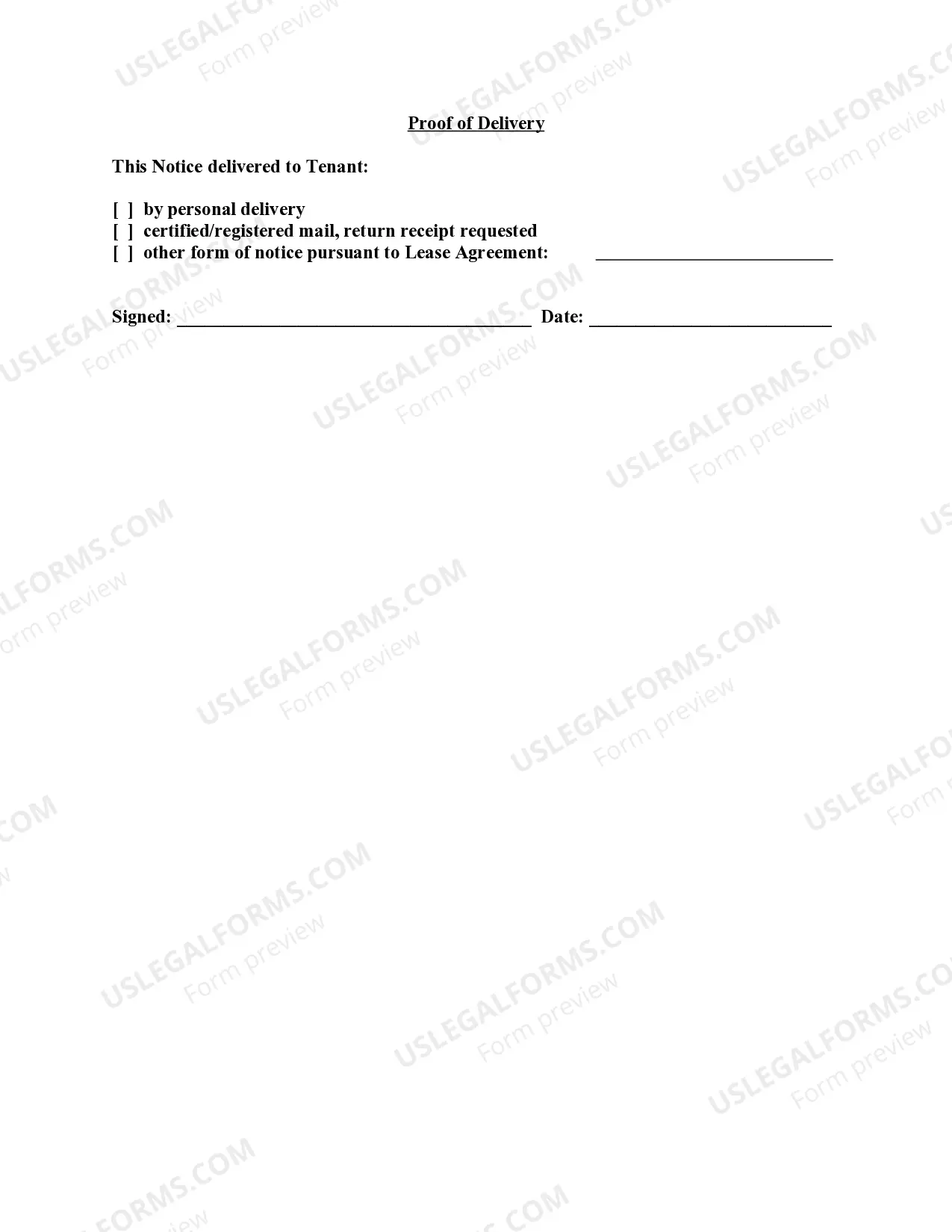
- Proof of delivery options (personal delivery or certified mail).

Common use cases
This form should be used when a landlord needs to address a situation where a tenant is keeping wild animals within or around the rented premises. This might occur if the landlord has received complaints or has observed animals that violate the lease agreement. Providing this notice is an essential step in resolving the issue and ensuring compliance with property rules.
Who should use this form
- Landlords who lease property to tenants.
- Property managers overseeing rental agreements.
- Real estate professionals managing tenant relations.
Instructions for completing this form
- Identify the landlord and tenant by entering their full names and addresses.
- Reference the specific lease agreement being violated.
- Clearly state the violation relating to wild animals.
- Sign and date the letter to validate the notice.
- Choose the method of delivery: personal delivery or certified mail.
Does this form need to be notarized?
This form does not typically require notarization unless specified by local law. It is important to check specific state requirements regarding tenant-landlord communications.
Get your form ready online
Our built-in tools help you complete, sign, share, and store your documents in one place.
Make edits, fill in missing information, and update formatting in US Legal Forms—just like you would in MS Word.
Download a copy, print it, send it by email, or mail it via USPS—whatever works best for your next step.
Sign and collect signatures with our SignNow integration. Send to multiple recipients, set reminders, and more. Go Premium to unlock E-Sign.
If this form requires notarization, complete it online through a secure video call—no need to meet a notary in person or wait for an appointment.
We protect your documents and personal data by following strict security and privacy standards.

Make edits, fill in missing information, and update formatting in US Legal Forms—just like you would in MS Word.

Download a copy, print it, send it by email, or mail it via USPS—whatever works best for your next step.

Sign and collect signatures with our SignNow integration. Send to multiple recipients, set reminders, and more. Go Premium to unlock E-Sign.

If this form requires notarization, complete it online through a secure video call—no need to meet a notary in person or wait for an appointment.

We protect your documents and personal data by following strict security and privacy standards.
Mistakes to watch out for
- Failing to indicate the specific lease agreement.
- Neglecting to detail the violation clearly.
- Omitting the signature of the landlord or authorized agent.
- Not providing proof of delivery.
Benefits of completing this form online
- Easy access to professionally drafted templates.
- Ability to customize and print the form quickly.
- Ensures compliance with legal standards.
Legal use & context
- The letter serves as an official notice and is important for documenting lease violations.
- Failure to comply with the notice could lead to further legal actions, including eviction.
- This form helps protect both landlords and tenants by clearly stating obligations and rights.
Quick recap
- The form is essential for landlords dealing with lease violations regarding wild animals.
- It must clearly outline the breach and how it will be communicated to the tenant.
- Using a professionally drafted form helps ensure clarity and legal compliance.
Looking for another form?
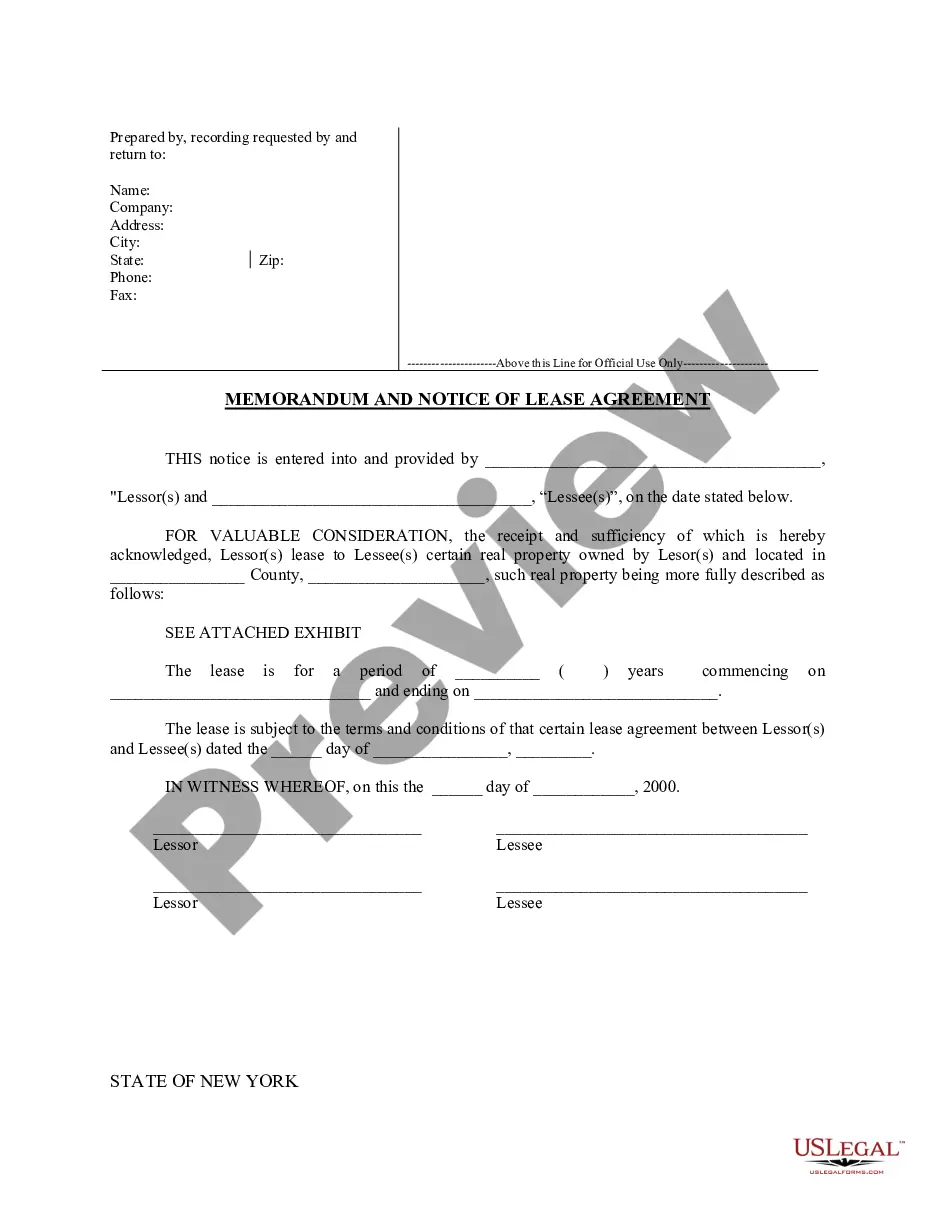
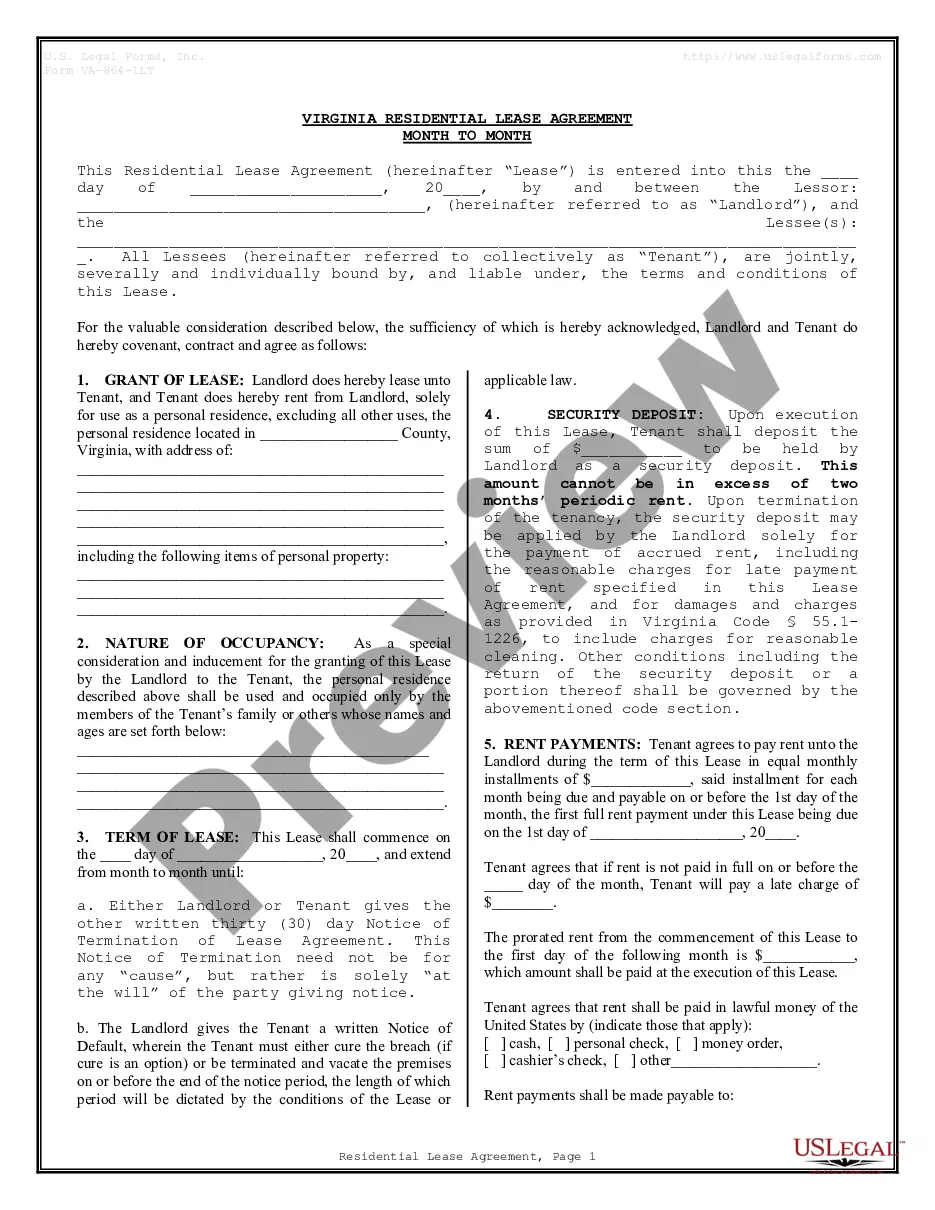

Form popularity
FAQ
Tell Them The Problem & Consequences. Explain the reason that you want the tenant to go. Offer Them a Way Out. Let the tenant know that you are willing to give them a lump sum of cash in agreement for leaving the property. The Release.
Be calm, objective, and rational. Keep written records of everything. Teach tenants how they should treat you. Try to get your tenants on your side. Ask the terrible tenants to leave. Begin the eviction process.
You can apply to court to change your ex-partner's tenancy to your name, or remove their name from a joint tenancy. You can apply for a 'transfer of tenancy' if: your landlord refuses to change your tenancy. your tenancy doesn't allow a transfer.
Approach The Court Of Law You will have to send a legal notice to your tenant asking him/her to pay the arrears of rent or else to vacate within a month. The tenant has to pay rent in the court once it is assessed by the court and in case he/she fails, it invites immediate eviction.
Approach The Court Of Law You will have to send a legal notice to your tenant asking him/her to pay the arrears of rent or else to vacate within a month. The tenant has to pay rent in the court once it is assessed by the court and in case he/she fails, it invites immediate eviction.
Step 1: Understand your state's eviction laws. Step 2: Have a valid reason for eviction. Step 3: Talk to your tenants. Step 4: Give a formal notice of eviction. Step 5: File your eviction with the courts. Step 6: Prepare for and attend the court hearing. Step 7: Evict the tenant. Step 8: Collect past-due rent.
In the event that a tenant refuses to leave the premises after receiving written notice, a landlord may file an unlawful detainer. An unlawful detainer is a legal action that is used to quickly determine whether a tenant must vacate the premises.A court may also order the tenant to pay for a landlord's legal fees.
In most cases, you will want to send a certified letter to the house guest asking them to leave in 30 days. Even though the guest is not formally a tenant, certain principles of landlord-tenant law may apply.
A landlord cannot legally evict you without a court order, whether or not you have a lease.) How long does it take for a landlord to evict a tenant? A landlord can evict a tenant only by going through a formal eviction proceeding, which can take a few weeks from start to finish.
Tell Them The Problem & Consequences. Explain the reason that you want the tenant to go. Offer Them a Way Out. Let the tenant know that you are willing to give them a lump sum of cash in agreement for leaving the property. The Release.