South Dakota Last Will and Testament for Married person with Minor Children from Prior Marriage
About this form
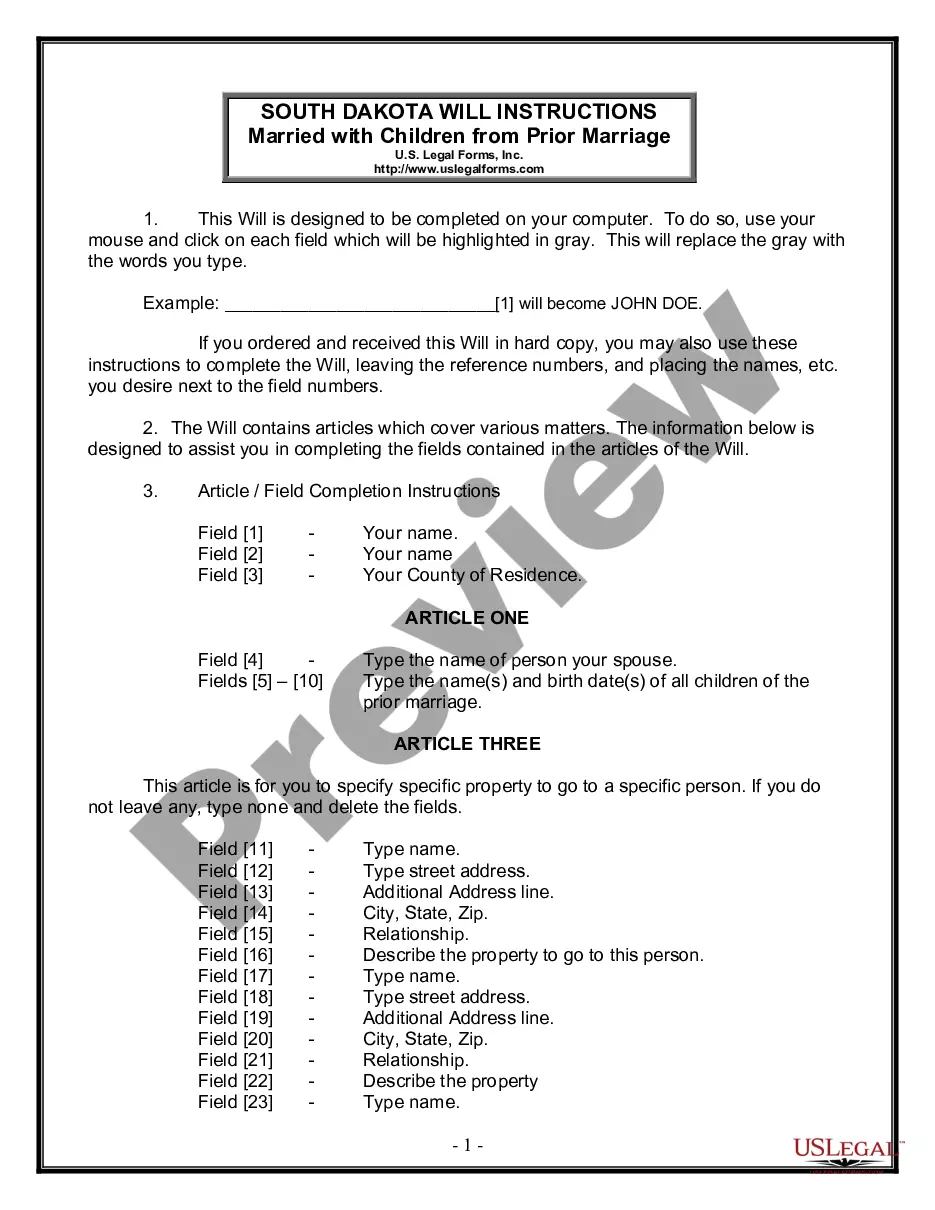
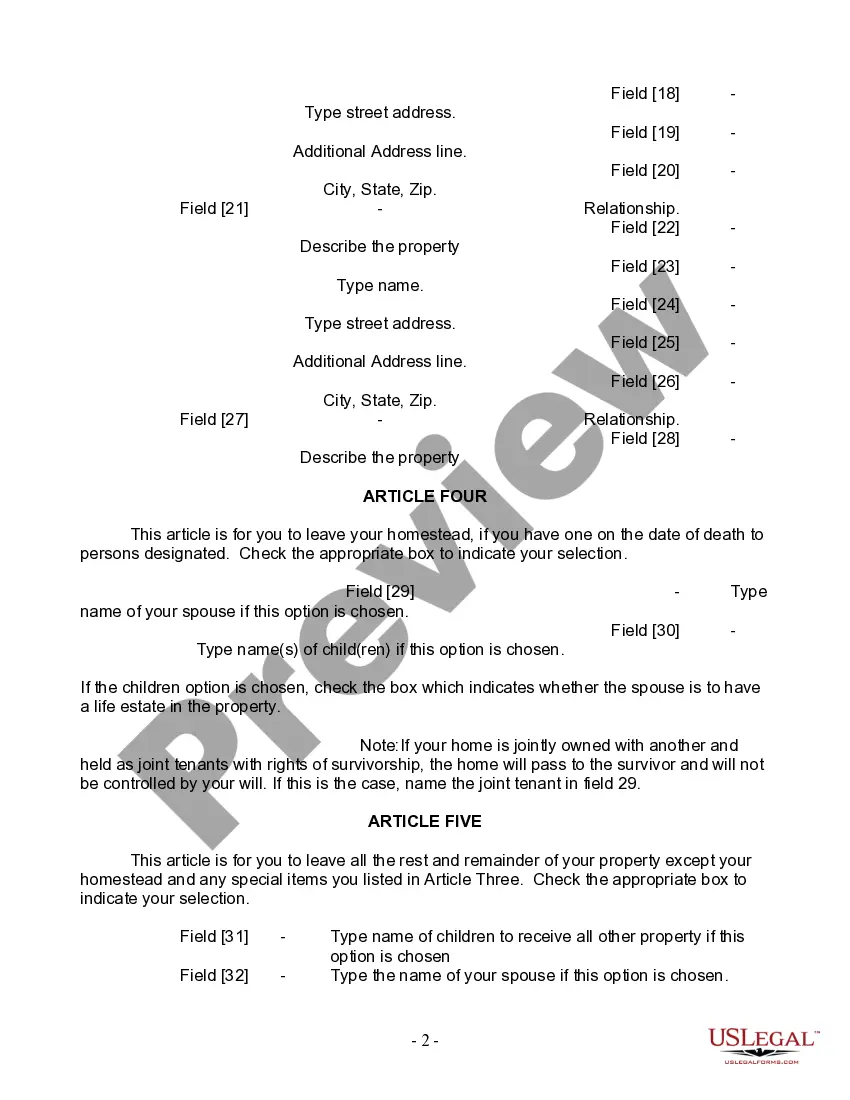
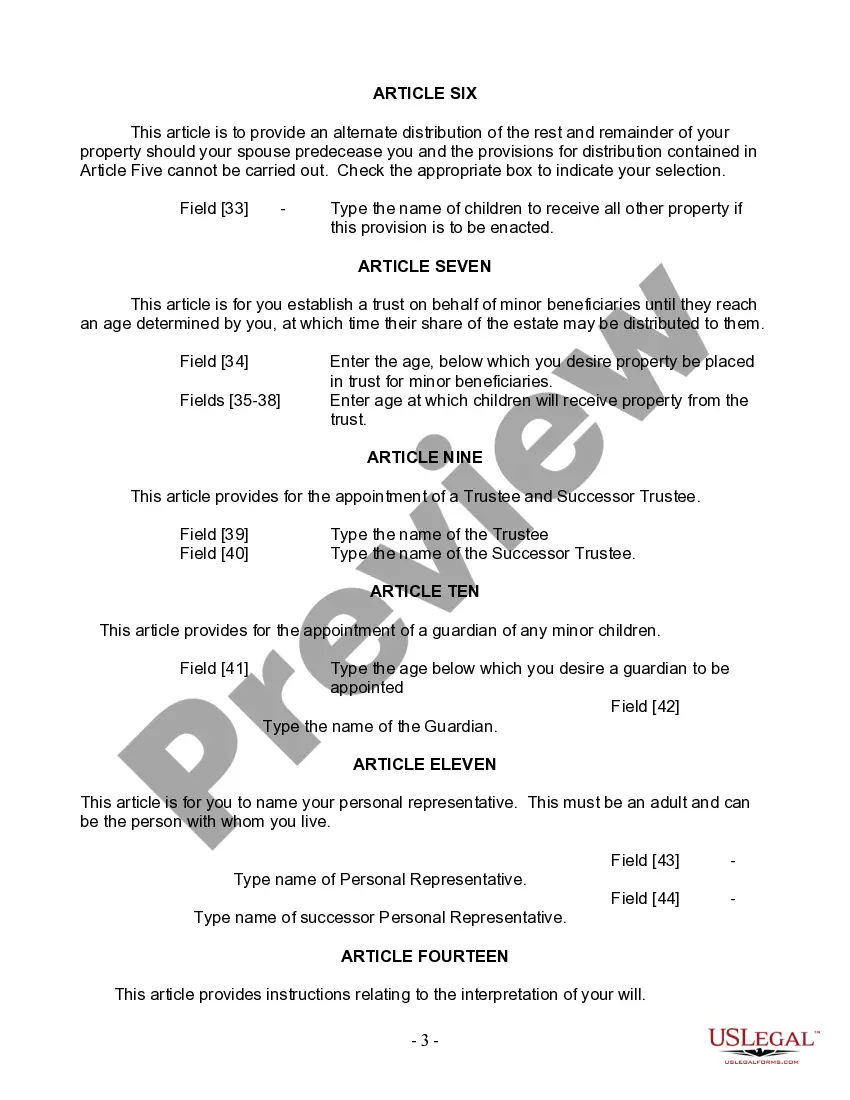
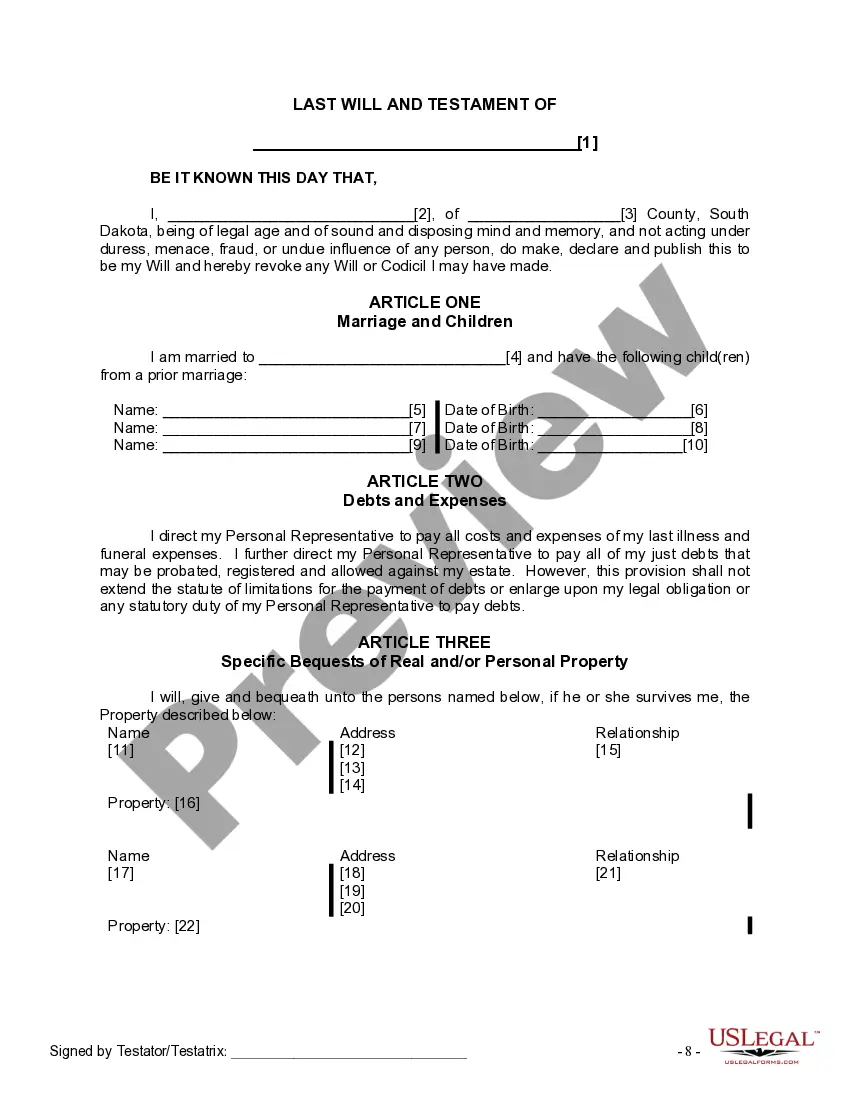
The Last Will and Testament for a married person with minor children from a prior marriage is a legal document that outlines how your assets will be distributed after your death. This form specifically addresses the complexities that arise when you have children from a previous marriage and are currently married, ensuring that both your spouse and children are considered in your estate plan. It allows you to designate guardians for your minor children and appoint a personal representative to manage your estate.
Main sections of this form
- Personal representative appointment: Designate an executor to manage your estate.
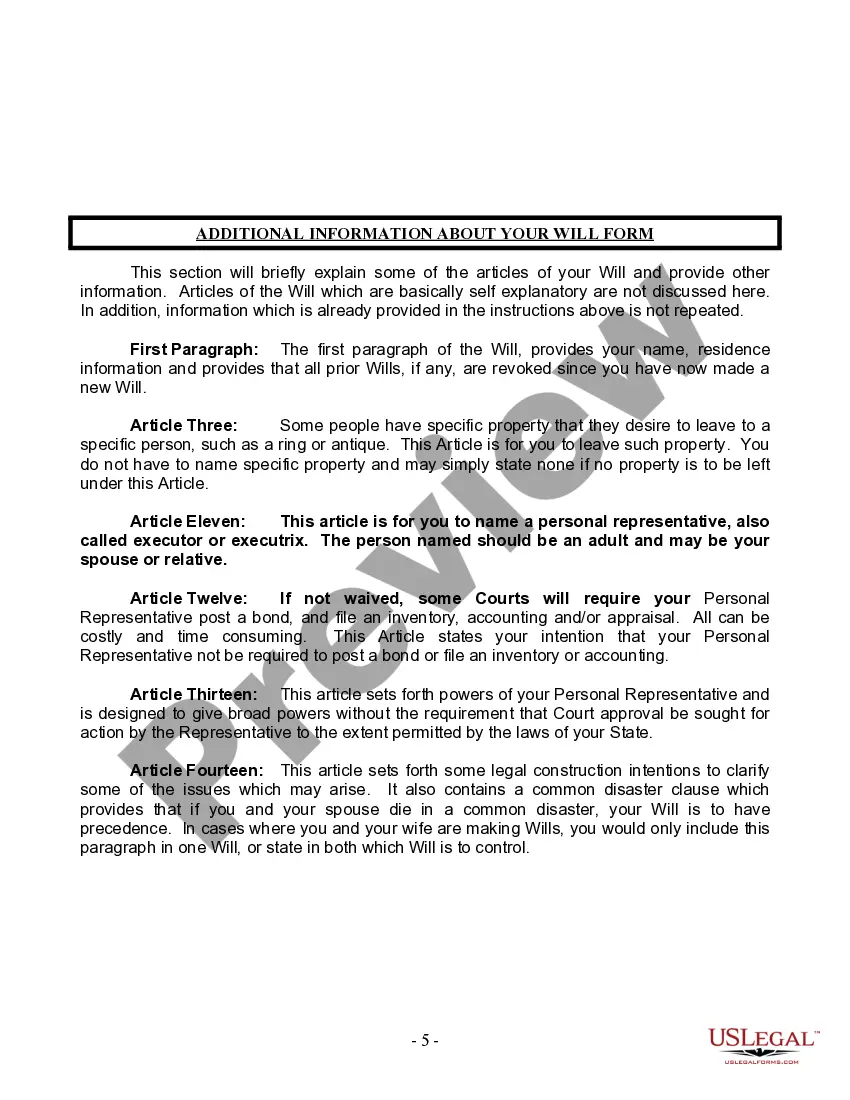
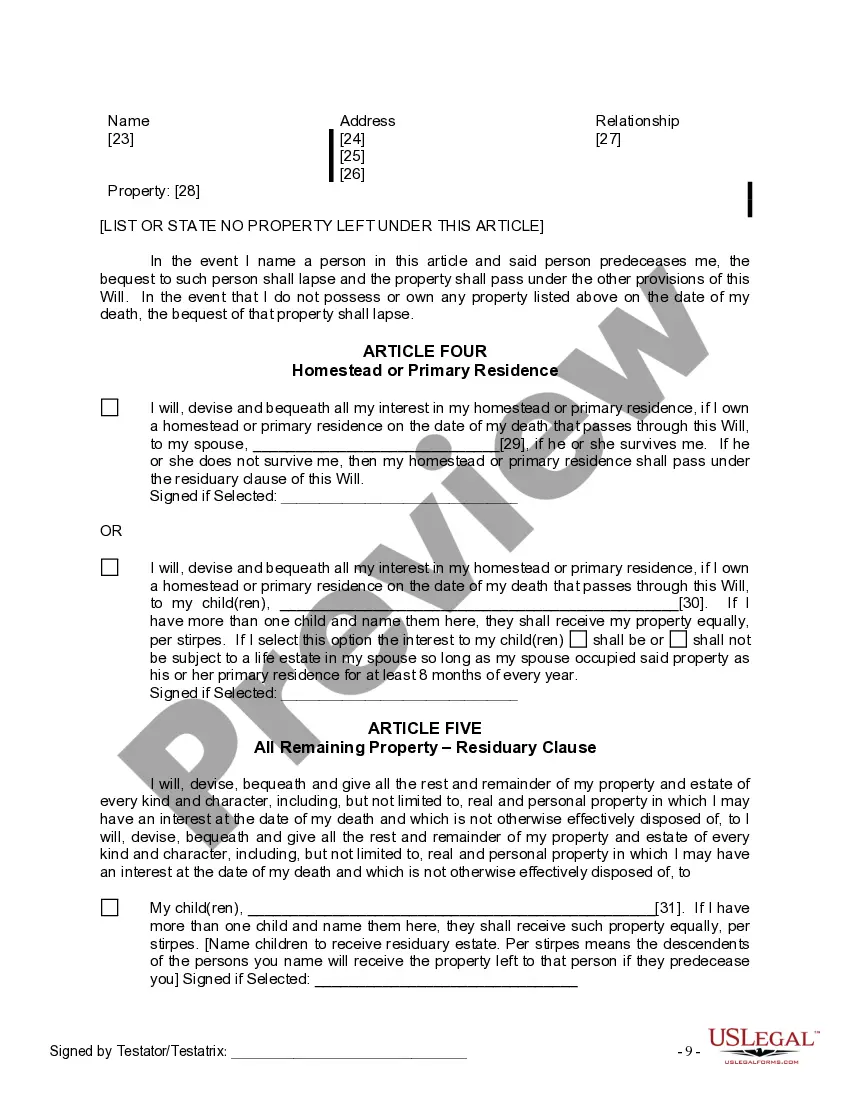
- Property distribution: Specify who receives your assets, including those specifically allocated to minor children.
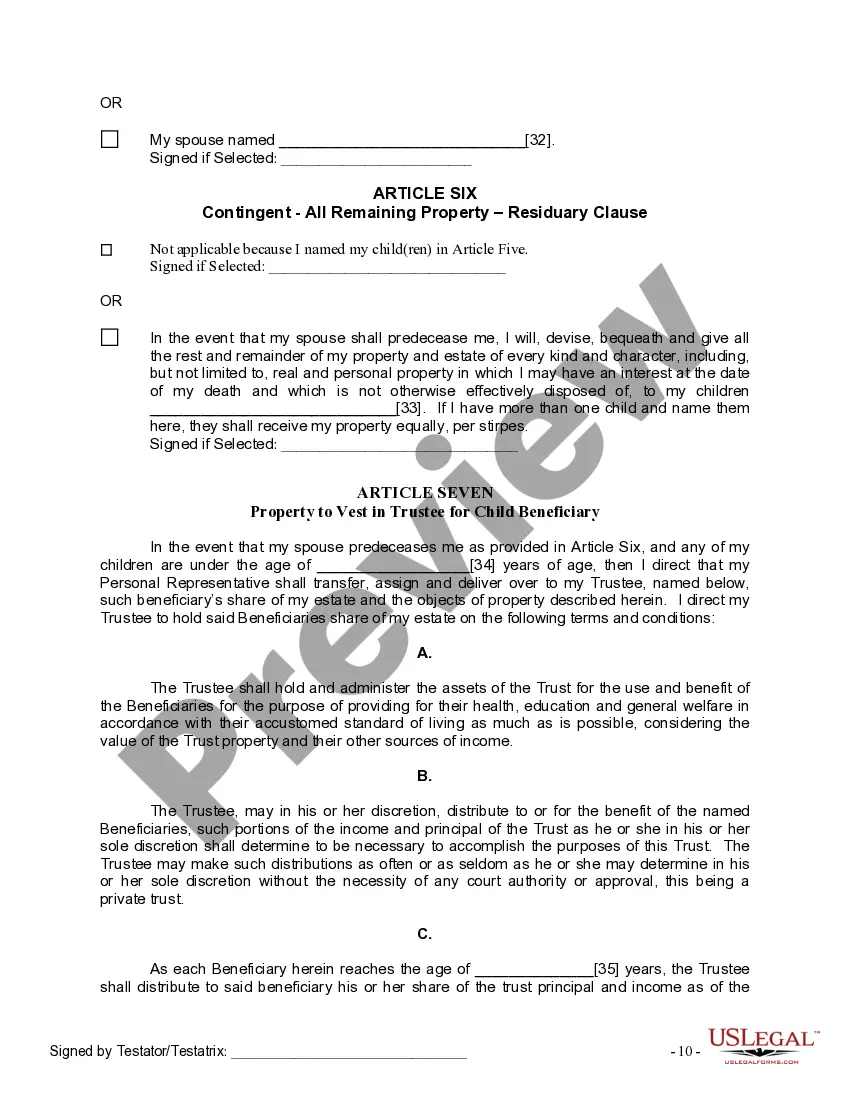
- Guardianship: Name a guardian for your minor children if both parents pass away.
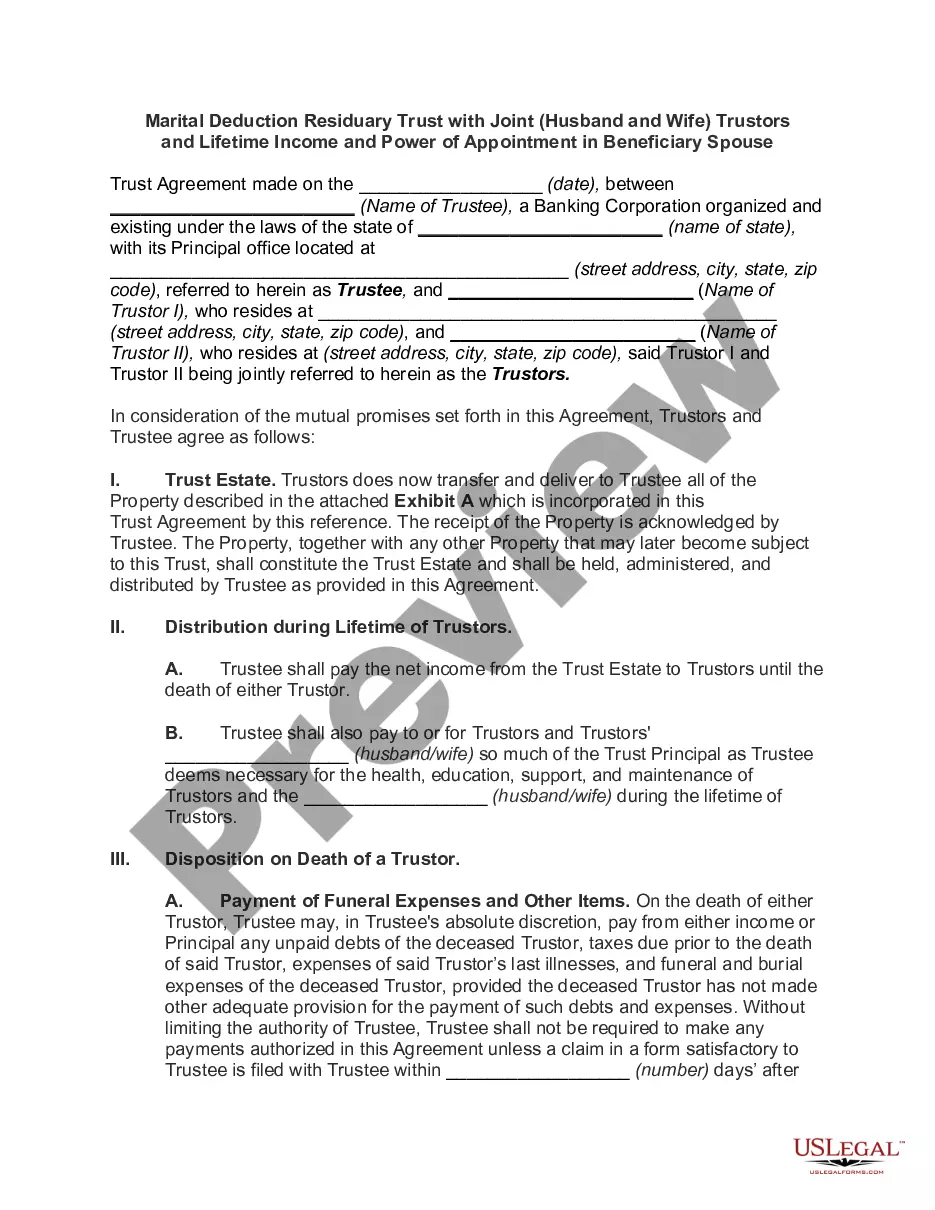
- Trust provisions: Set up a trust for minor beneficiaries until they reach a specified age.
- Homestead designation: Determine who will inherit your primary residence.





When to use this document
This form is necessary when a married individual with children from a prior marriage wants to ensure that their estate is distributed according to their wishes after death. It is particularly useful if you want to specify arrangements for your spouse, your children from previous relationships, and any new children you may have. Using this form can help prevent disputes and ensures that all parties are considered in your estate planning.
Intended users of this form
- Married individuals with minor children from a prior marriage.
- Those who want to ensure their spouse and children are provided for in their estate plan.
- Individuals looking to designate a guardian for their minor children in case both parents pass away.
- People wanting to establish trusts for minor beneficiaries.
Steps to complete this form
- Identify the parties: Enter your name, your spouse's name, and the names of your children from prior marriages.
- Designate guardians: Specify a guardian for your minor children in case both parents are deceased.
- Outline property distribution: Clearly state how your assets will be divided among your spouse and children.
- Appoint a personal representative: Choose an adult you trust to execute your will.
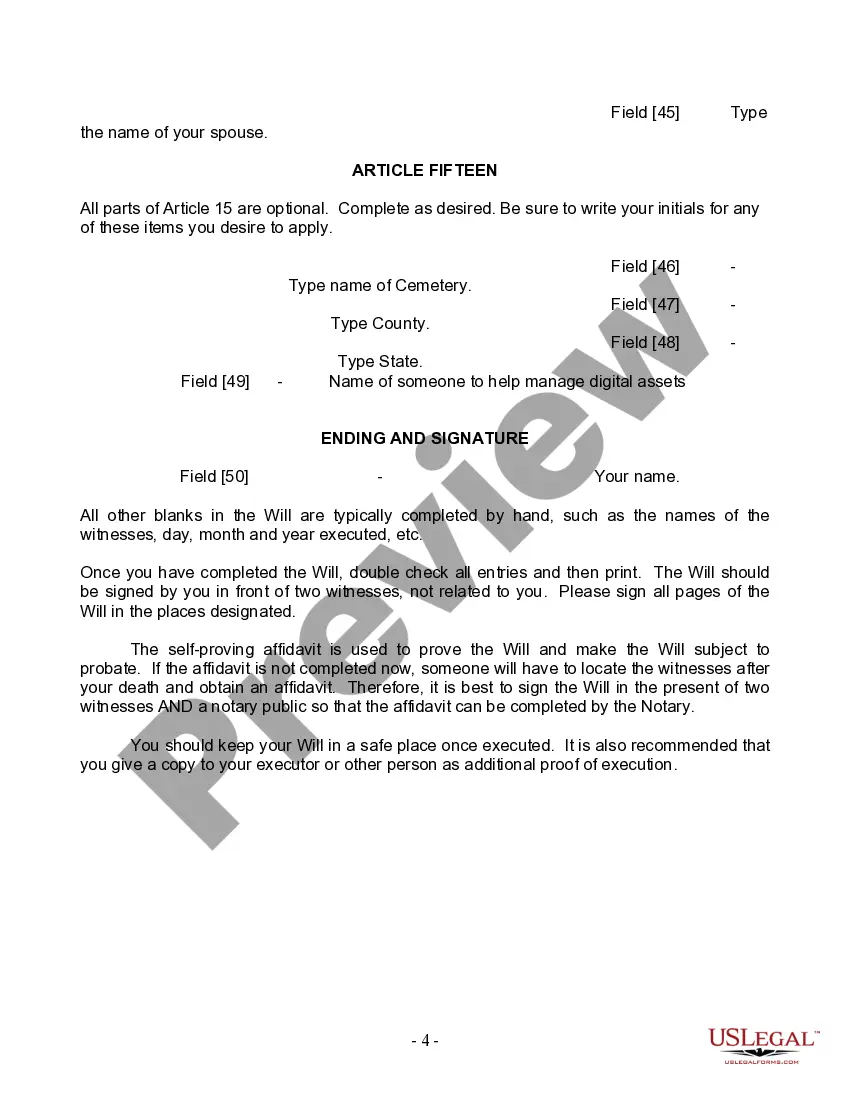
- Sign in the presence of witnesses: Ensure you and your witnesses sign the will according to local laws.
Does this document require notarization?
This document requires notarization to meet legal standards. US Legal Forms provides secure online notarization powered by Notarize, allowing you to complete the process through a verified video call, available 24/7.
Get your form ready online
Our built-in tools help you complete, sign, share, and store your documents in one place.
Make edits, fill in missing information, and update formatting in US Legal Forms—just like you would in MS Word.
Download a copy, print it, send it by email, or mail it via USPS—whatever works best for your next step.
Sign and collect signatures with our SignNow integration. Send to multiple recipients, set reminders, and more. Go Premium to unlock E-Sign.
If this form requires notarization, complete it online through a secure video call—no need to meet a notary in person or wait for an appointment.
We protect your documents and personal data by following strict security and privacy standards.

Make edits, fill in missing information, and update formatting in US Legal Forms—just like you would in MS Word.

Download a copy, print it, send it by email, or mail it via USPS—whatever works best for your next step.

Sign and collect signatures with our SignNow integration. Send to multiple recipients, set reminders, and more. Go Premium to unlock E-Sign.

If this form requires notarization, complete it online through a secure video call—no need to meet a notary in person or wait for an appointment.

We protect your documents and personal data by following strict security and privacy standards.
Common mistakes to avoid
- Failing to have the will signed in front of appropriate witnesses.
- Not updating the will with any changes in marital status or family circumstances.
- Leaving out specific bequests or not being clear about asset distribution.
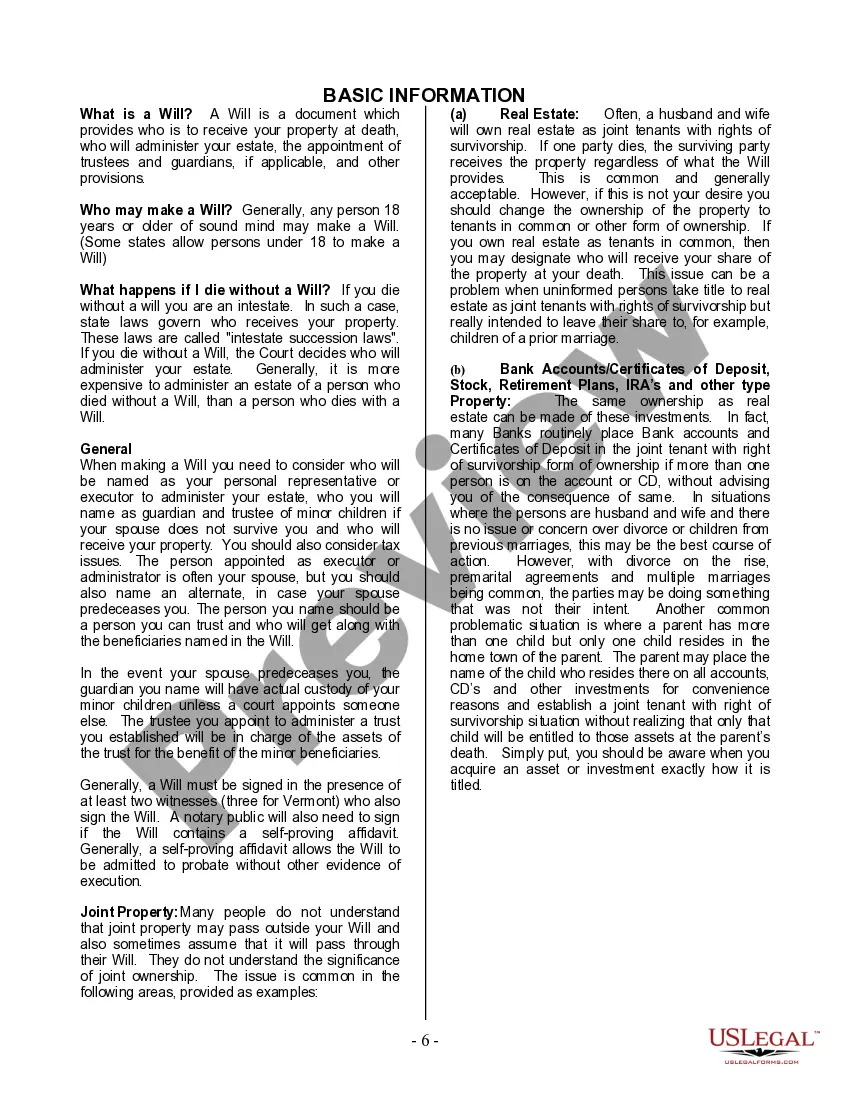
- Not considering the implications of joint property ownership.
Advantages of online completion
- Convenience: Complete the form from home at your own pace.
- Editability: Easily update and modify your will as circumstances change.
- Reliability: Form templates are prepared by licensed attorneys, ensuring compliance with legal requirements.
Legal use & context
- Wills must comply with state laws to be valid; therefore, using state-specific forms is essential.
- A well-executed will ensures your assets are distributed according to your wishes and can help avoid family disputes.
- Properly signed and notarized wills typically do not require additional evidence when probated.
Key takeaways
- The Last Will and Testament is crucial for married individuals with children from previous relationships to outline their estate wishes.
- Proper execution with witnesses and notarization is necessary for the will's validity.
- Utilizing this online form simplifies the process and ensures legal compliance.
Looking for another form?



Form popularity
FAQ
Is Probate Required in South Dakota? Probate is usually considered necessary in South Dakota to distribute the assets to the heirs.
Age: The testator must be at least 18 years old. Capacity: The testator must be of sound mind. Signature: The will must be signed by the testator or by someone else in the testator's name in his conscious presence, by his direction.
As long as it was properly signed and witnessed by two adult independent witnesses who are present at the time you sign your will, it should be legally binding.Using the wrong wording could mean that your instructions aren't followed, or even that your will isn't valid.
In South Dakota, when a person dies without leaving a will, the surviving spouse is entitled to receive the entire intestate estate unless the decedent was survived by descendants of a prior marriage or other relationship, in which event, the spouse receives $100,000.00 plus half of the remaining estate, plus certain
A. You don't have to have a lawyer to create a basic will you can prepare one yourself. It must meet your state's legal requirements and should be notarized.A do-it-yourself will that's poorly drafted can save you money but create a mess for your heirs when you're gone.
Contrary to popular belief, you do not need to have an attorney draft a will for you. Anyone can write this document on their own, and as long as it meets all of the legal requirements of the state, courts will recognize one you wrote yourself.
For private trust companies that manage private assets for the benefit of a family or families, the minimum annual fee is $3,750 and the maximum annual fee is $20,000. For public trust companies that offer public accounts, the minimum annual fee is $4,500 and the maximum annual fee is $30,000.
Choose the trust that best suits your financial situation. Take inventory of your property to determine what you'd like to include in the trust. Choose a trustee to manage your trust. Create the trust document. Sign the trust in front of a notary public. Transfer property into the trust to fund it.
No. You can make your own will in South Dakota, using Nolo's do-it-yourself will software or online will programs. However, you may want to consult a lawyer in some situations. For example, if you think that your will might be contested or if you want to disinherit your spouse, you should talk with an attorney.