South Dakota Letter from Landlord to Tenant Returning security deposit less deductions
What is this form?
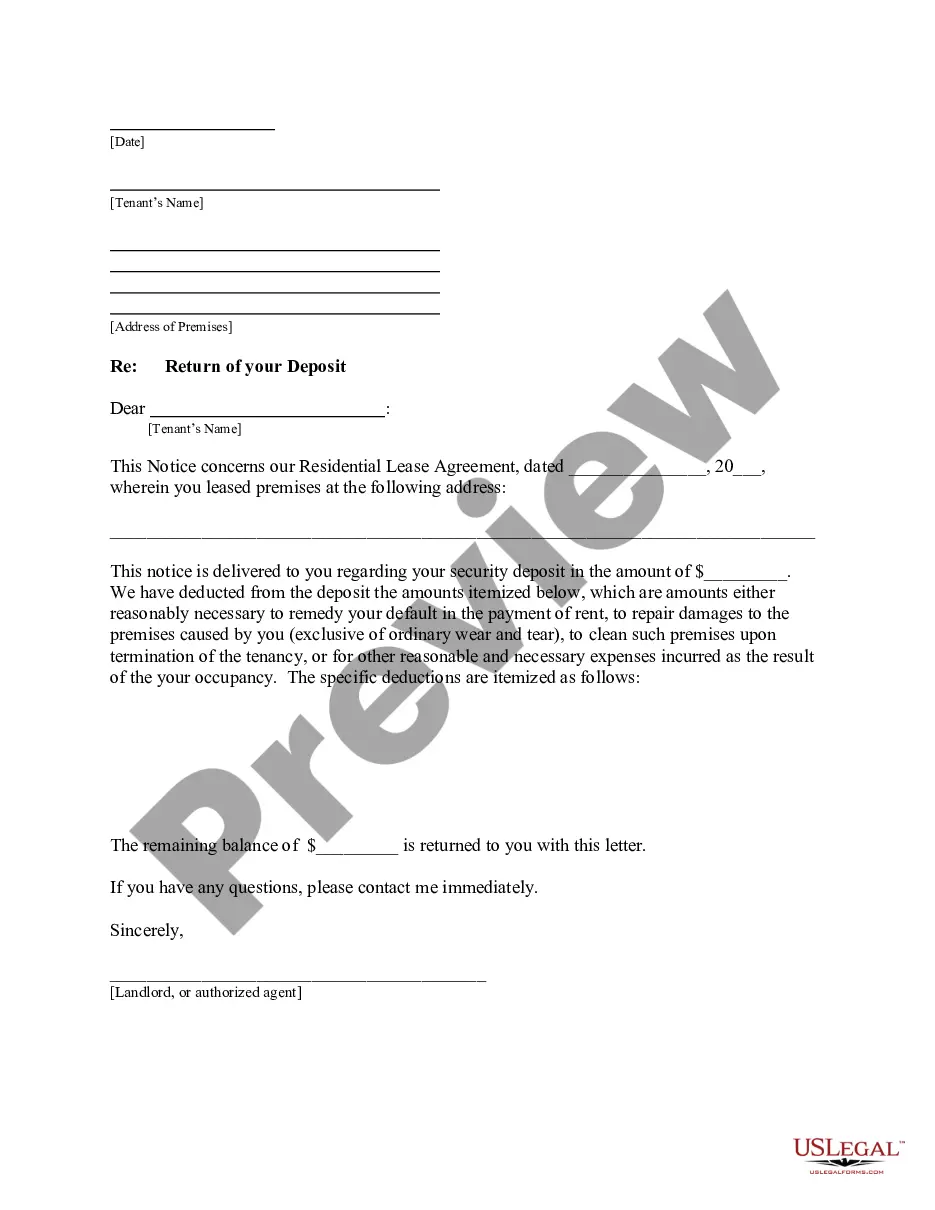
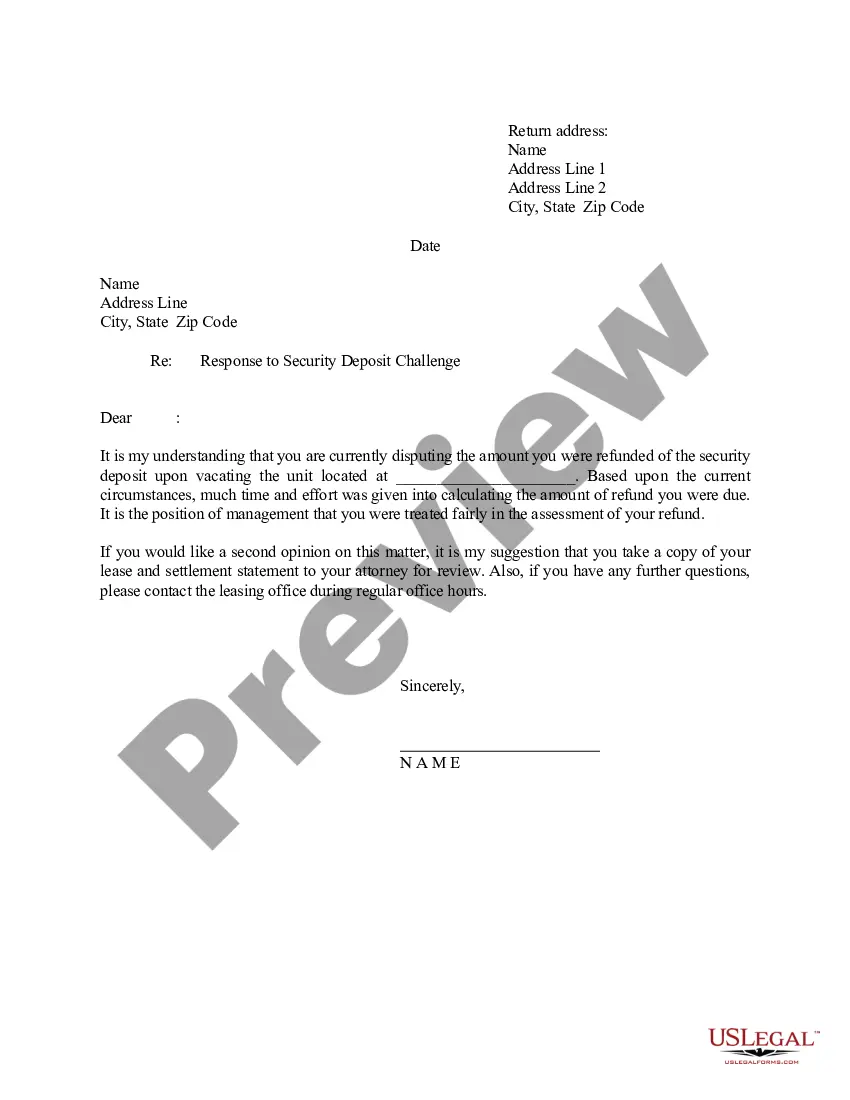
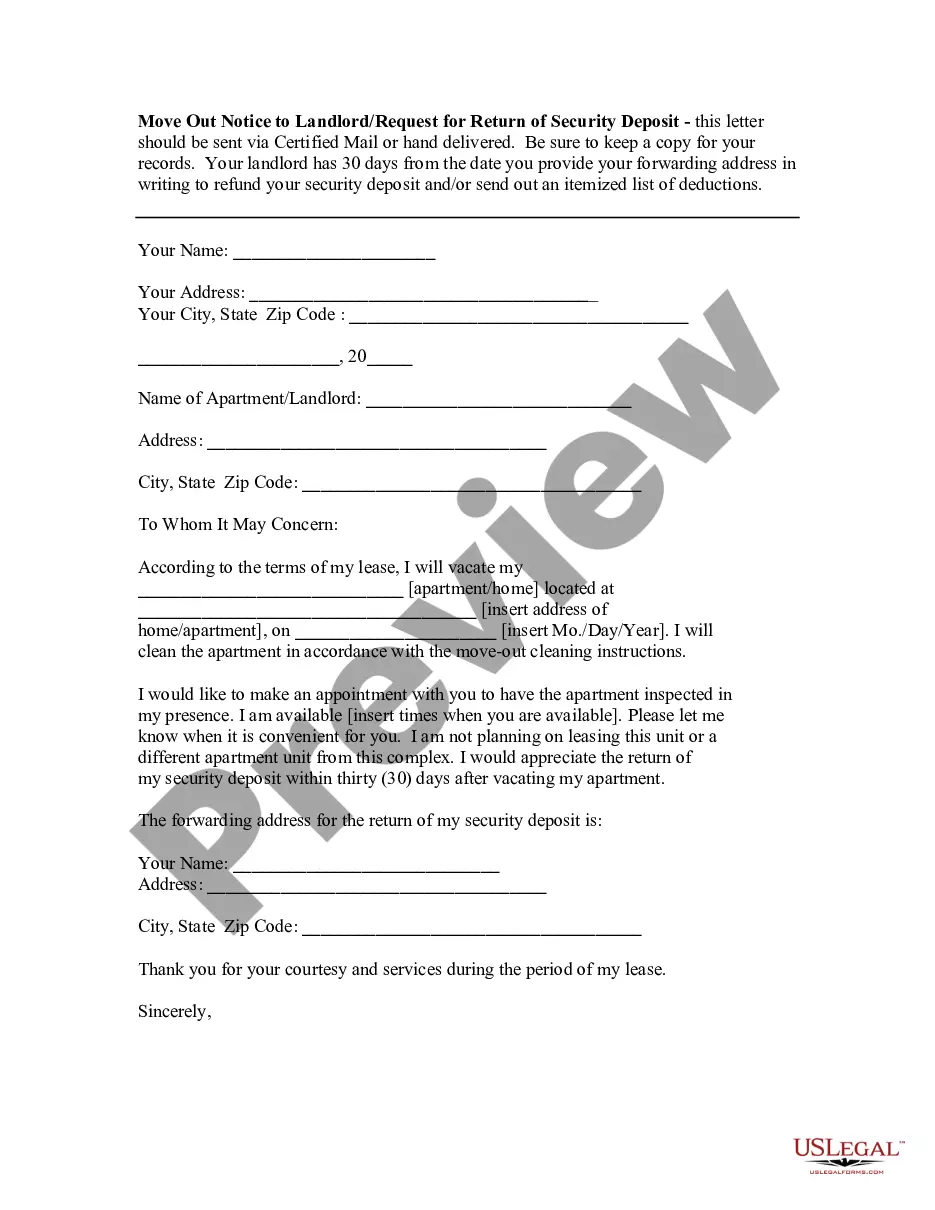
The Letter from Landlord to Tenant Returning Security Deposit Less Deductions is a formal notice that a landlord provides to a tenant regarding the status of their security deposit. This letter outlines the specific deductions made from the deposit for unpaid rent, necessary repairs, cleaning, or other expenses associated with the tenant's tenancy. Unlike a rental agreement or lease, this form specifically addresses the return of a security deposit and clarifies the financial transactions related to it.
Key parts of this document
- Identification of parties involved in the lease agreement
- Amount of the security deposit being returned
- Itemized list of deductions made from the deposit
- Explanation of reasons for each deduction
- Specific reference to the lease agreement date and property address
When this form is needed
This letter should be used when a tenant vacates a rental property and the landlord must return the security deposit, minus any eligible deductions. It is necessary when there are specific costs incurred by the landlord due to tenant actions that require accounting. Common scenarios include when tenants cause damage beyond normal wear and tear, fail to pay rent, or when the premises require cleaning before a new tenant can occupy.
Who can use this document
- Landlords who need to return a security deposit to tenants
- Property managers handling tenant leases
- Tenants who want to understand the deduction process from their security deposit
How to prepare this document
- Identify the parties involved: list the landlord and tenant's names.
- Input the date of the lease agreement and the property address.
- State the total amount of the security deposit being returned.
- Detail the deductions made from the deposit with reasons for each deduction.
- Ensure the letter is signed and dated to confirm its authenticity.
Does this document require notarization?
This form usually doesn’t need to be notarized. However, local laws or specific transactions may require it. Our online notarization service, powered by Notarize, lets you complete it remotely through a secure video session, available 24/7.
Get your form ready online
Our built-in tools help you complete, sign, share, and store your documents in one place.
Make edits, fill in missing information, and update formatting in US Legal Forms—just like you would in MS Word.
Download a copy, print it, send it by email, or mail it via USPS—whatever works best for your next step.
Sign and collect signatures with our SignNow integration. Send to multiple recipients, set reminders, and more. Go Premium to unlock E-Sign.
If this form requires notarization, complete it online through a secure video call—no need to meet a notary in person or wait for an appointment.
We protect your documents and personal data by following strict security and privacy standards.

Make edits, fill in missing information, and update formatting in US Legal Forms—just like you would in MS Word.

Download a copy, print it, send it by email, or mail it via USPS—whatever works best for your next step.

Sign and collect signatures with our SignNow integration. Send to multiple recipients, set reminders, and more. Go Premium to unlock E-Sign.

If this form requires notarization, complete it online through a secure video call—no need to meet a notary in person or wait for an appointment.

We protect your documents and personal data by following strict security and privacy standards.
Common mistakes
- Failing to provide a detailed itemization of deductions.
- Not adhering to state-specific laws regarding security deposit returns.
- Using ambiguous language that may confuse the tenant.
- Sending the letter after the legally required timeframe.
Why complete this form online
- Easy access to legally vetted templates drafted by licensed attorneys.
- Quick download and customization to fit specific situations.
- Convenient format allows for immediate use and filing.
Legal use & context
- This letter serves as proof of the landlord's actions regarding the security deposit.
- It protects both parties by documenting the reasons for deductions.
- Failure to provide this notice or to comply with state laws may result in legal disputes over the security deposit.
Looking for another form?
Form popularity
FAQ
Dear Name: I am writing to provide notice of my request that you refund the security deposit paid in the amount of $1500.00 for the rental of Address, City, State Zip Code. I vacated the residence on 00/00/00 without any damages beyond oridnary wear and tear.
Your landlord can still deduct from your deposit to cover the cleaning bill if the property is not cleaned to the level it was at and can prove it, though. So, it's still important to clean the property thoroughly before you move out.
I want to submit humbly, that all my college/university dues have been timely submitted and I am neither a library defaulter nor a hostel dues defaulter, kindly sign my application for clearance of all dues well in time so I can receive my security fee refund. (Explain the actual condition and situation).
Generally, a landlord may retain all or part of the security deposit to pay for damages to the unit that occurred during the tenants' occupancy, except for those resulting from normal wear and tear. Usually, the landlord can deduct other costs, such as late fees, unpaid rent, and unpaid utility bills.
Unpaid rent at the end of the tenancy. Unpaid bills at the end of the tenancy. Stolen or missing belongings that are property of the landlord. Direct damage to the property and it's contents (owned by the landlord) Indirect damage due to negligence and lack of maintenance.
5 Times a Landlord Does Not Have to Return a Tenant's Security Deposit. Breaking or Terminating a Lease Early. Nonpayment of Rent. Damage to the Property. Cleaning Costs. Unpaid Utilities.
The landlord is entitled to deduct from the rental deposit any expenses incurred repairing any damage to the property which occurred during the tenancy. The remainder of the money must then be refunded to the tenant no later than 14 days after the restoration of the property as dictated by the Act.
Concisely review the main facts and lay out the reasons your landlord owes you money. Include copies of relevant letters and agreements, such as your notice to move out. Ask for exactly what you want, such as the full amount of your deposit within ten days. Cite state security deposit law.
If your deposit didn't need to be protected and your landlord refuses to give it back, you might have to take them to court.You'll need to take your landlord to the small claims court to get your money back.