South Carolina Last Will and Testament with All Property to Trust called a Pour Over Will
What this document covers
The Last Will and Testament with All Property to Trust, also known as a Pour Over Will, is a legal document that directs all assets not already placed into a living trust to be transferred to that trust upon the person's death. This form is specifically designed for individuals who have established or are in the process of establishing a living trust. Unlike a standard will, a Pour Over Will ensures that any omitted assets from the trust are still handled according to the person's wishes, thereby circumventing state intestacy laws.
What’s included in this form
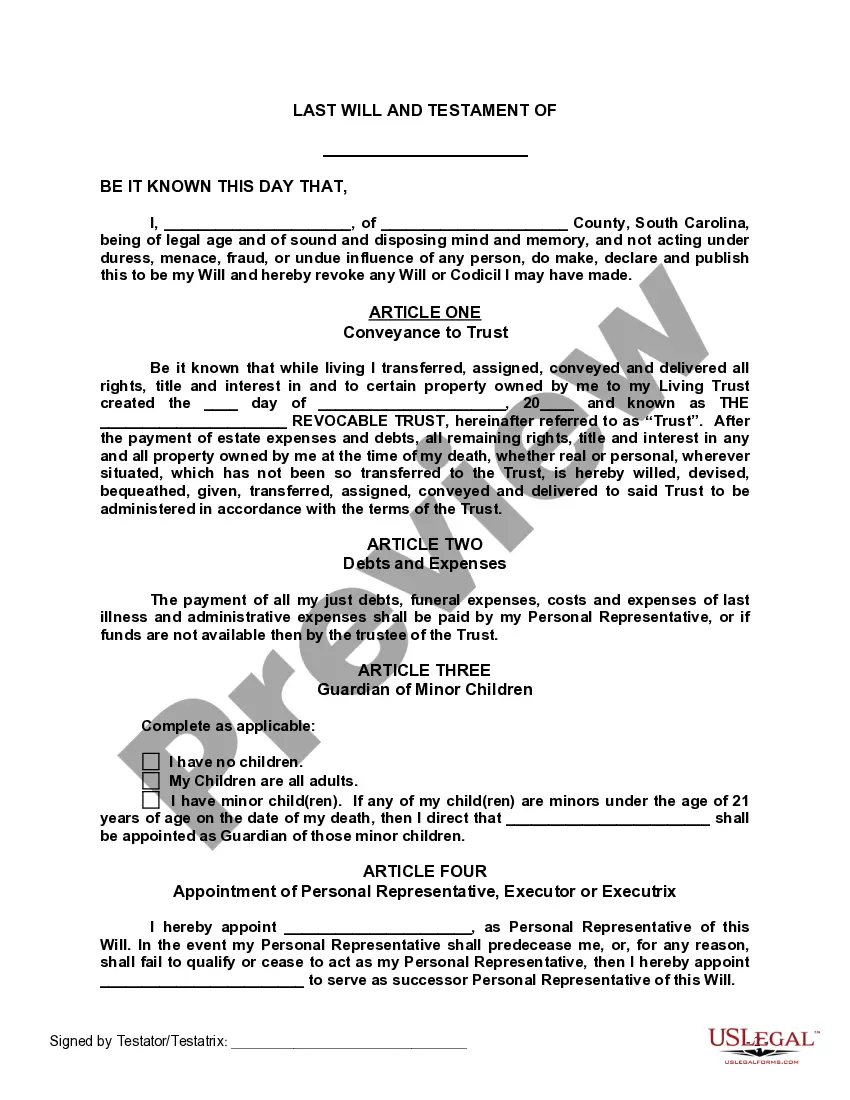
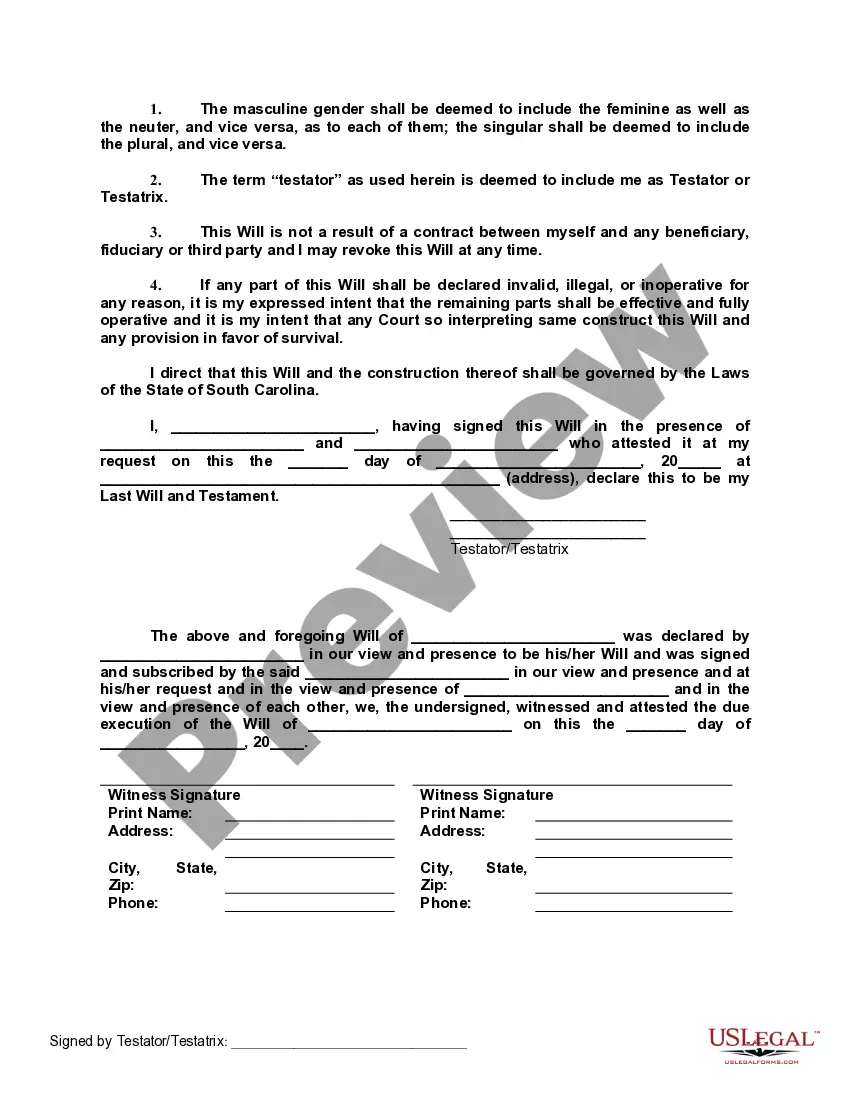
- Declaration of the testator's intent to revoke previous wills.
- Conveyance to the trust, detailing property to be transferred after death.
- Instructions for paying debts, funeral expenses, and administrative costs.
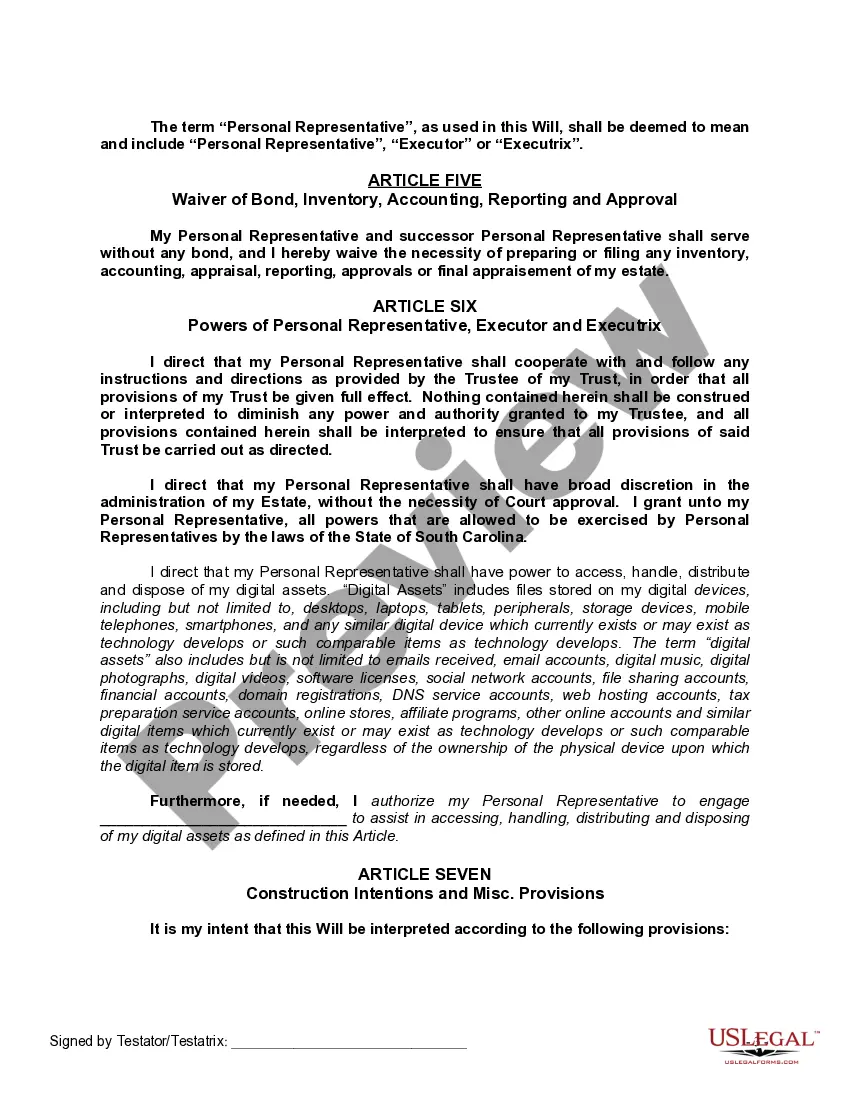
- Appointment of a personal representative to administer the estate.
- Designation of a guardian for minor children, if applicable.
- Clause waiving the need for a bond and inventory by the personal representative.



When this form is needed
This form is suitable in various scenarios, including when you have recently established a living trust, wish to consolidate your remaining assets into that trust after your death, or seek to ensure that any property not previously transferred is handled according to your preferences, rather than through state laws if not specifically outlined in a will.
Who should use this form
- Individuals who have established or are in the process of setting up a living trust.
- Anyone looking to clarify the distribution of their assets after death.
- People with minor children who need to designate a guardian.
- Those wishing to appoint a trusted personal representative for their estate.
Instructions for completing this form
- Identify and enter your personal information in the designated fields.
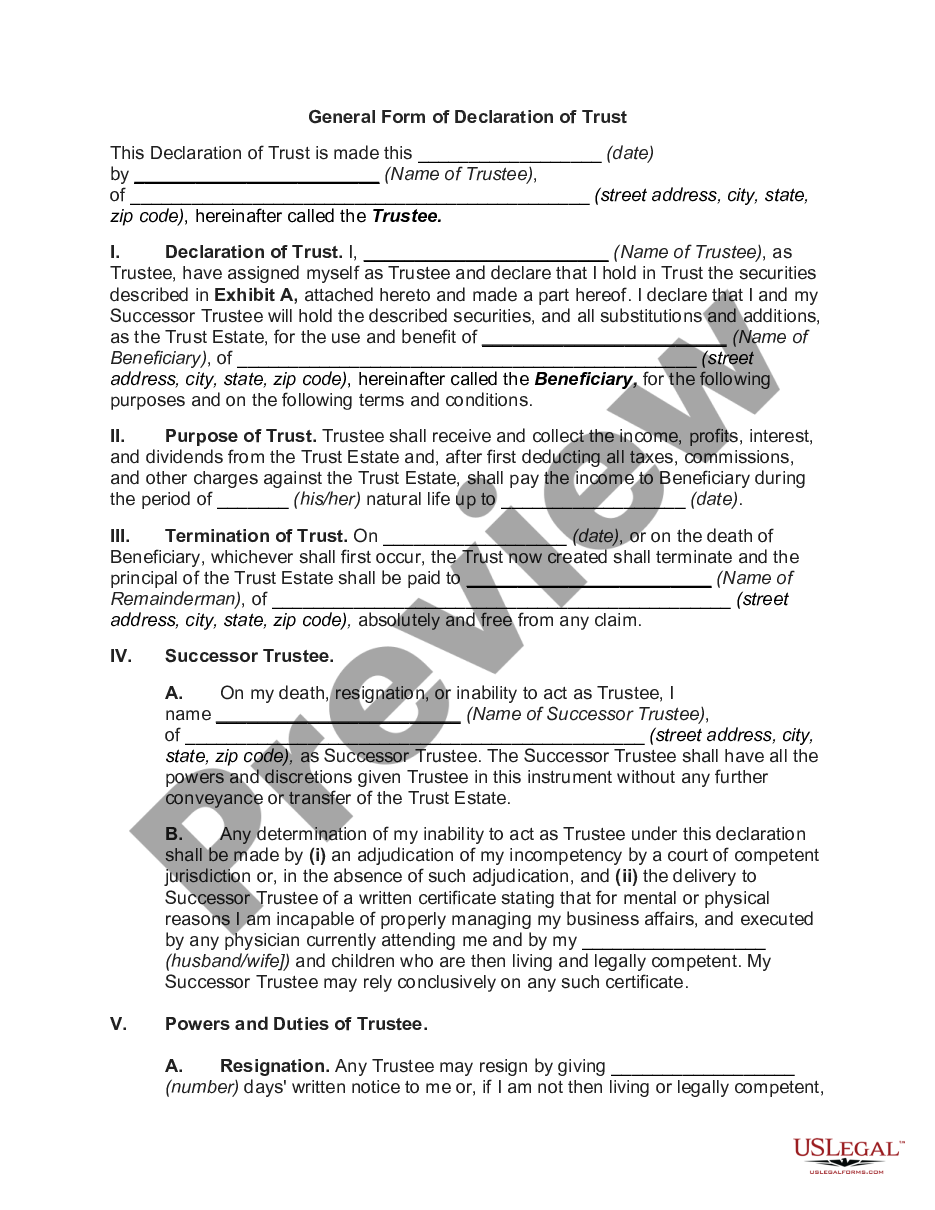
- Specify the trust name and the date it was created.
- List all assets that should be poured over to the trust upon your death.
- Designate a personal representative to carry out the instructions in your will.
- If applicable, appoint a guardian for any minor children.
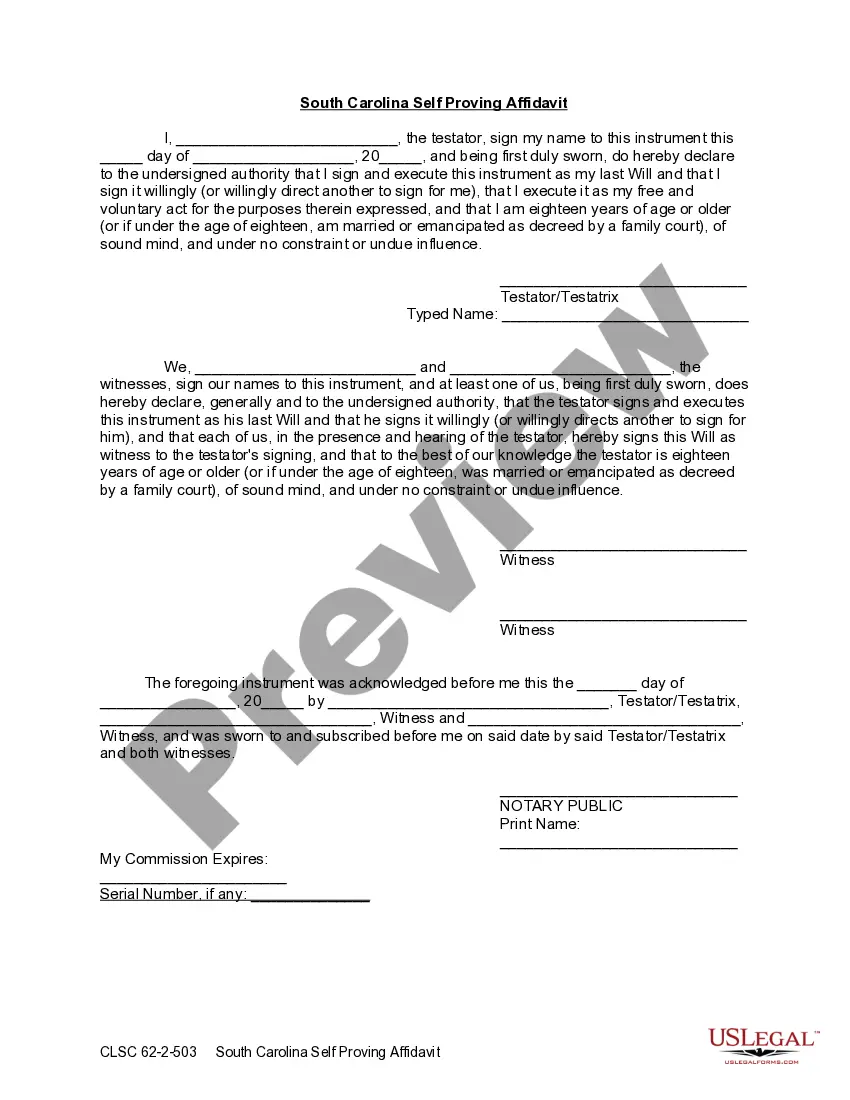
- Ensure you and your witnesses sign the document appropriately to meet legal requirements.
Notarization requirements for this form
This form does not typically require notarization unless specified by local law. However, it is strongly recommended to have it notarized to ensure its legal validity and simplify the probate process in the event of your death.
Get your form ready online
Our built-in tools help you complete, sign, share, and store your documents in one place.
Make edits, fill in missing information, and update formatting in US Legal Forms—just like you would in MS Word.
Download a copy, print it, send it by email, or mail it via USPS—whatever works best for your next step.
Sign and collect signatures with our SignNow integration. Send to multiple recipients, set reminders, and more. Go Premium to unlock E-Sign.
If this form requires notarization, complete it online through a secure video call—no need to meet a notary in person or wait for an appointment.
We protect your documents and personal data by following strict security and privacy standards.

Make edits, fill in missing information, and update formatting in US Legal Forms—just like you would in MS Word.

Download a copy, print it, send it by email, or mail it via USPS—whatever works best for your next step.

Sign and collect signatures with our SignNow integration. Send to multiple recipients, set reminders, and more. Go Premium to unlock E-Sign.

If this form requires notarization, complete it online through a secure video call—no need to meet a notary in person or wait for an appointment.

We protect your documents and personal data by following strict security and privacy standards.
Mistakes to watch out for
- Failing to update the will after changing the trust or assets.
- Not having the necessary witnesses sign the document correctly.
- Neglecting to specify all relevant assets for the trust transfer.
- Not addressing guardianship for minor children when applicable.
Why complete this form online
- Convenience of completing the document from home with digital access.
- Editability allows for easy updates and changes as needed.
- Reliable legal templates drafted by licensed attorneys for accuracy.
- Quick and straightforward guidance throughout the form completion process.
Key takeaways
- A Pour Over Will ensures that any remaining assets at death go directly to your Living Trust.
- This form is crucial for individuals with minor children and who wish to dictate their guardianship.
- Completing the form accurately is essential to avoid common pitfalls.
- Notarization helps confirm the validity of your will.
Looking for another form?
Form popularity
FAQ
A will and a trust are separate legal documents that usually have a common goal of coordinating a comprehensive estate plan.Since revocable trusts become operative before the will takes effect at death, the trust takes precedence over the will, in the event that there are issues between the two.
A pour-over will is a just-in-case will that states that your living trust is the beneficiary for any property in your name that's not in the trust at the time of your death, thereby moving any forgotten or remaining assets into the trust.One of the main reasons to create a living trust is to avoid probate.
Spillover Trusts definition: Spillover trusts are established to hold any remaining assets after all other instructions from the will are carried out.
After reading about the benefits of a revocable living trust, you may wonder, Why do I need a pour-over will if I have a living trust? A pour-over will is necessary in the event that you do not fully or properly fund your trust.Your trust agreement can only control the assets that the trust owns.
Pour-over wills are subject to probate since the assets have not yet been transferred into the trust. Some states also require your assets to go through the probate process any time your assets or property are over a certain value.Even though pour-over wills don't avoid probate, there is still a measure of privacy.
After reading about the benefits of a revocable living trust, you may wonder, Why do I need a pour-over will if I have a living trust? A pour-over will is necessary in the event that you do not fully or properly fund your trust.Your trust agreement can only control the assets that the trust owns.
A pour-over will is a testamentary device wherein the writer of a will creates a trust, and decrees in the will that the property in his or her estate at the time of his or her death shall be distributed to the Trustee of the trust.
When people make revocable living trusts to avoid probate, it's common for them to also make what's called a "pour-over will." The will directs that if any property passes through the will at the person's death, it should be transferred to (poured into) the trust, and then distributed to the beneficiaries of the trust.
Important: Although a revocable trust supersedes a will, the trust only controls those assets that have been placed into it. Therefore, if a revocable trust is formed, but assets are not moved into it, the trust provisions have no effect on those assets, at the time of the grantor's death.