South Carolina Agreement for Payment of Unpaid Rent
What this document covers
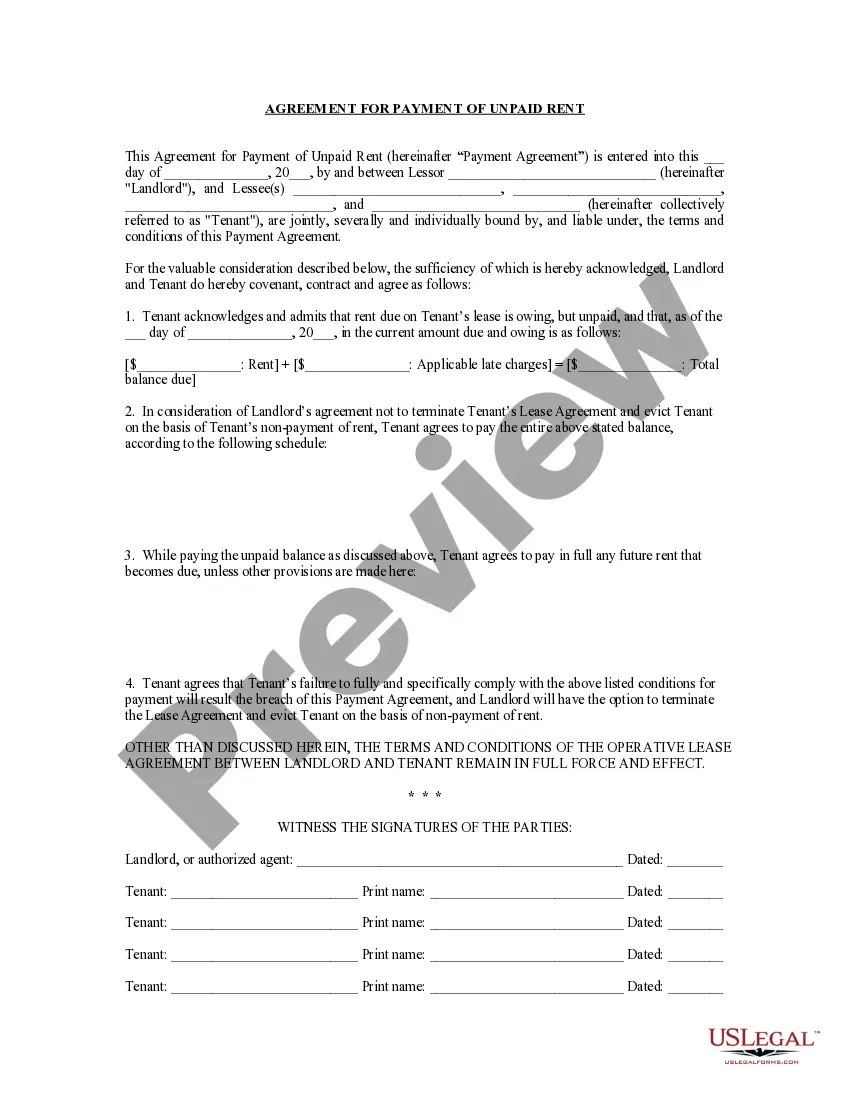
This Agreement for Payment of Unpaid Rent is a legal document between a landlord and tenant that outlines the terms for overdue rent payments. This agreement protects tenants from eviction by specifying structured repayment deadlines. It is distinct from a standard rental agreement as it focuses primarily on resolving unpaid rent issues while maintaining the existing lease terms. This form meets all state law specifications, ensuring its legality and effectiveness in applicable jurisdictions.
Key parts of this document
- Parties involved: Details of the landlord (Lessor) and tenant (Lessee(s)).
- Declaration of owed rent: Confirmation of the amount of unpaid rent and any applicable late charges.
- Payment schedule: Set dates and amounts for repayment of the overdue rent.
- Retainment of lease agreement: Reinforcement that the existing lease terms remain in effect.
- Signatures: Required signatures of all parties involved to validate the agreement.
Situations where this form applies
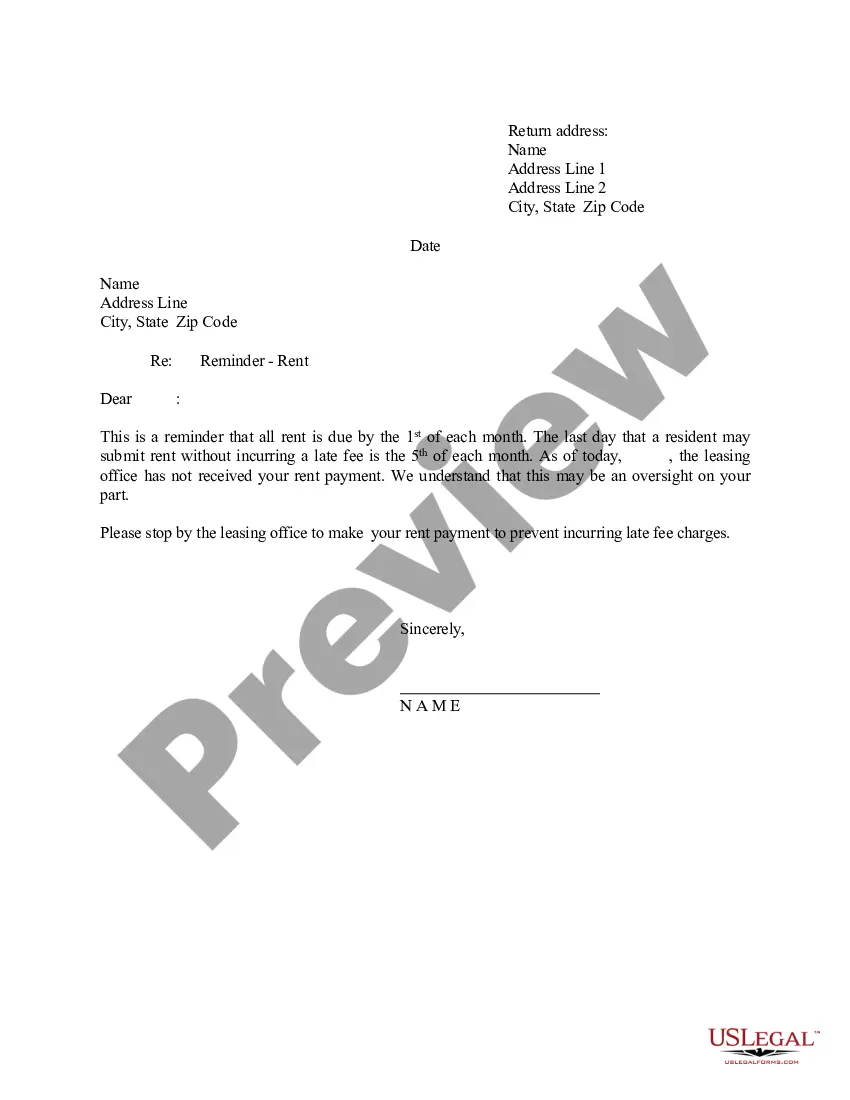
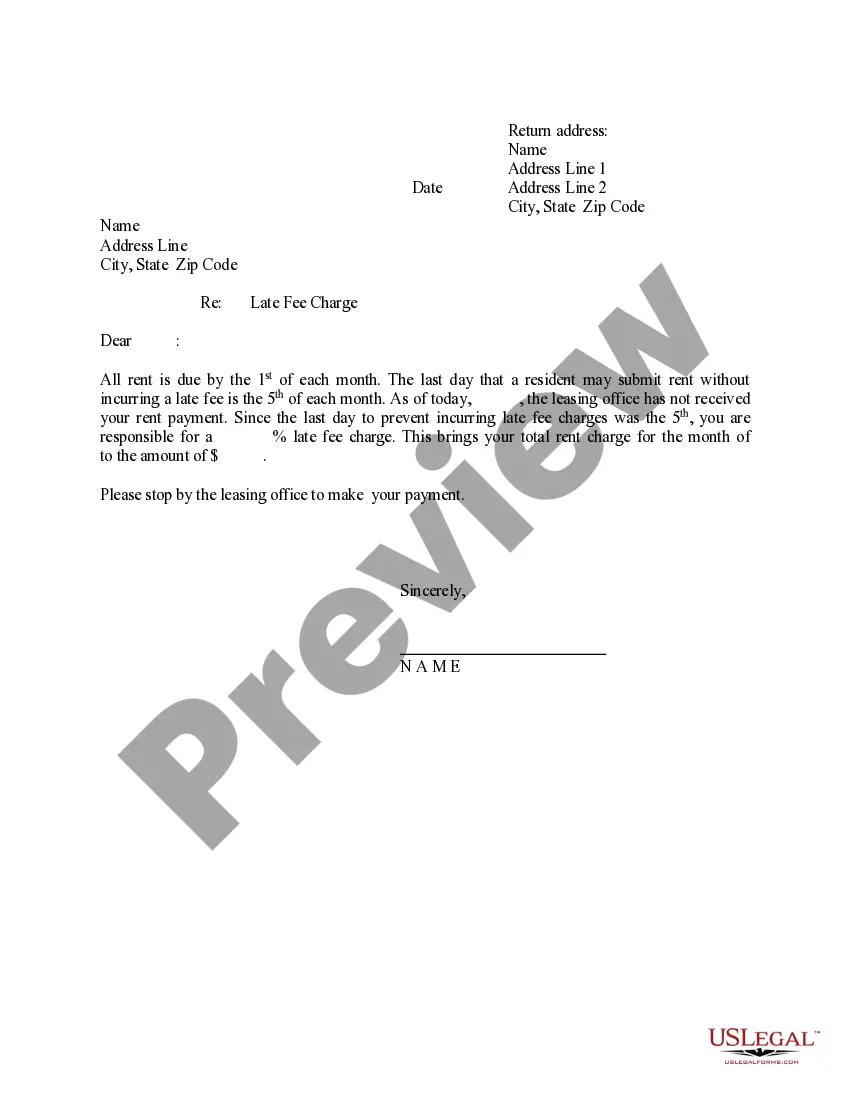
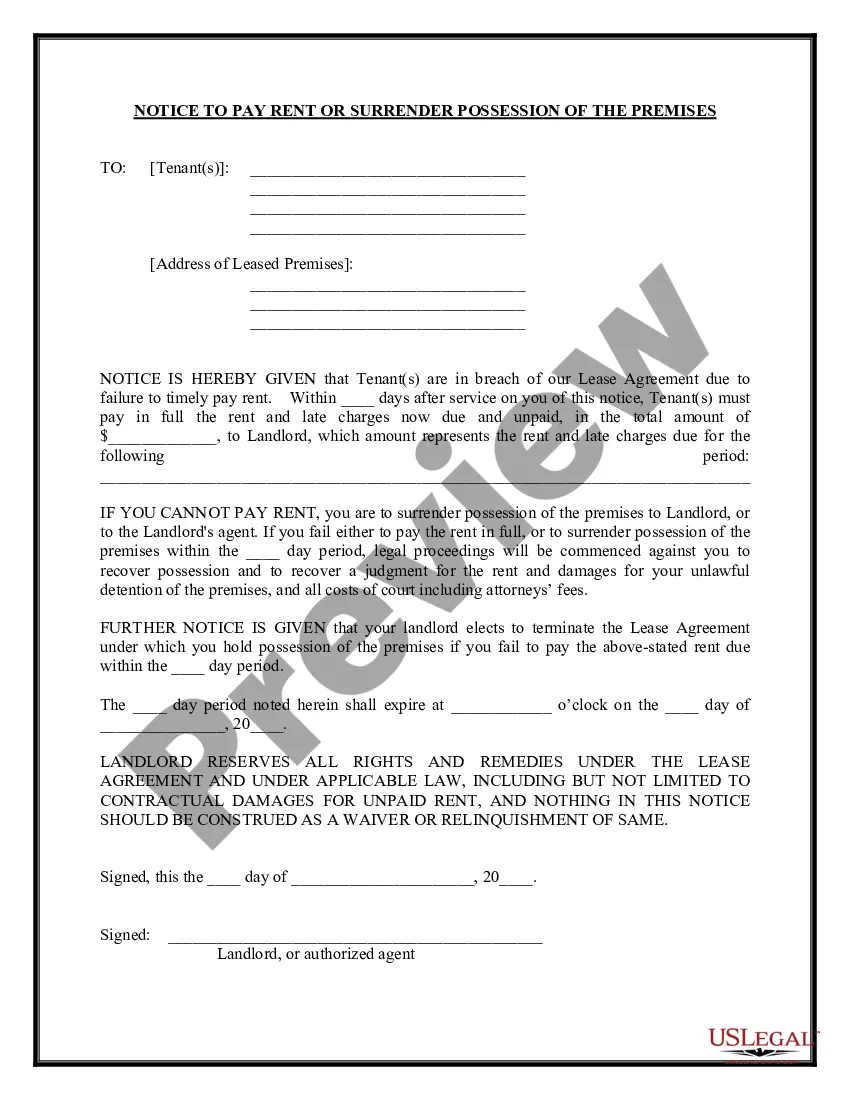
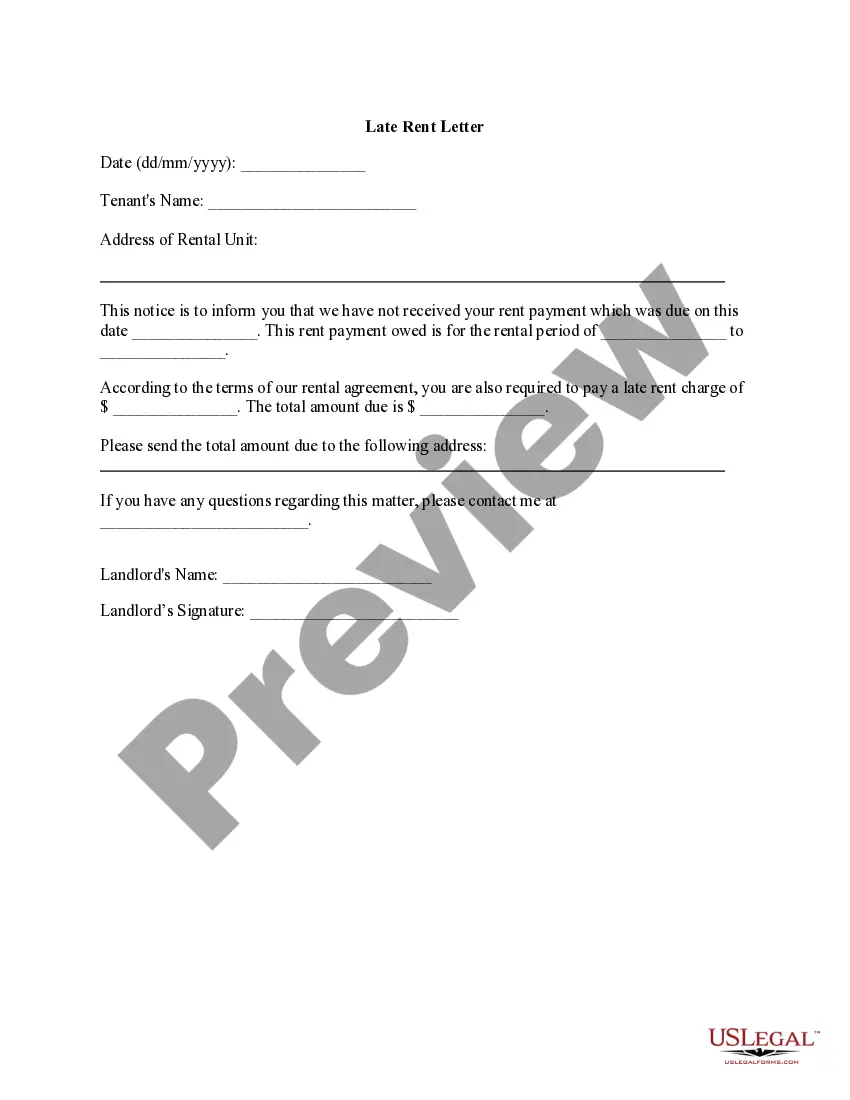
This form is useful when a tenant has fallen behind on rent payments, and the landlord wishes to allow some time for repayment while avoiding eviction proceedings. Landlords and tenants should consider using this agreement when they want to establish a clear plan for repayment and avoid further legal complications.
Who should use this form
- Landlords seeking to formalize a repayment agreement for overdue rent.
- Tenants who are unable to pay their rent on time and want to prevent eviction.
- Property managers acting on behalf of landlords who need to address unpaid rent issues.
Steps to complete this form
- Identify the parties: Fill in the names of the landlord and tenant(s) at the beginning of the document.
- Specify the amounts: Enter the total unpaid rent, any late charges, and the overall balance due.
- Outline the payment terms: Set specific payment deadlines and amounts to be paid by the tenant.
- Review existing lease terms: Acknowledge that the rental agreement remains in effect aside from this agreement.
- Gather signatures: Ensure that all parties sign and date the agreement to make it legally binding.
Does this form need to be notarized?
This form does not typically require notarization to be legally valid. However, some jurisdictions or document types may still require it. US Legal Forms provides secure online notarization powered by Notarize, available 24/7 for added convenience.
Get your form ready online
Our built-in tools help you complete, sign, share, and store your documents in one place.
Make edits, fill in missing information, and update formatting in US Legal Forms—just like you would in MS Word.
Download a copy, print it, send it by email, or mail it via USPS—whatever works best for your next step.
Sign and collect signatures with our SignNow integration. Send to multiple recipients, set reminders, and more. Go Premium to unlock E-Sign.
If this form requires notarization, complete it online through a secure video call—no need to meet a notary in person or wait for an appointment.
We protect your documents and personal data by following strict security and privacy standards.

Make edits, fill in missing information, and update formatting in US Legal Forms—just like you would in MS Word.

Download a copy, print it, send it by email, or mail it via USPS—whatever works best for your next step.

Sign and collect signatures with our SignNow integration. Send to multiple recipients, set reminders, and more. Go Premium to unlock E-Sign.

If this form requires notarization, complete it online through a secure video call—no need to meet a notary in person or wait for an appointment.

We protect your documents and personal data by following strict security and privacy standards.
Common mistakes to avoid
- Failing to accurately fill in all financial details or deadlines.
- Not having all required parties sign the agreement.
- Neglecting to keep a copy of the signed agreement for personal records.
Benefits of completing this form online
- Convenience of downloading and editing the form at any time.
- Access to legal forms designed by licensed attorneys for reliability.
- Easy storage and retrieval of completed forms as digital documents.
Legal use & context
- This agreement is enforceable as long as both parties adhere to its terms.
- The document helps to clarify the repayment obligations and can assist in avoiding eviction proceedings.
- Ensure both parties understand and agree to the terms laid out in the form to prevent future disputes.
Key takeaways
- The Agreement for Payment of Unpaid Rent helps tenants manage overdue payments while preventing eviction.
- It is crucial to fill out all sections accurately to ensure the agreement is legally sound.
- Understanding local laws is essential to make this agreement as effective as possible.
Looking for another form?
Form popularity
FAQ
Tenant Rights to Withhold Rent in South CarolinaTenants may withhold rent or exercise the right to repair and deduct if a landlord fails to take care of important repairs, such as a broken heater.
Although renters must abide by the Homeowners' Association rules, they still have rights under the law. The property owner must also follow their home state's Landlord-Tenant Laws that include the Fair Housing Act and Fair Credit Reporting Act.
Include the date at the top of the letter. Acknowledge that you you are behind in paying your rent and apologize for your actions. Explain the situation that has led to your current financial hardship. Stick to the facts, and resist the urge to write emotional appeals or project a negative attitude.
Tenant Rights to Withhold Rent in South CarolinaTenants may withhold rent or exercise the right to repair and deduct if a landlord fails to take care of important repairs, such as a broken heater. For specifics, see South Carolina Tenant Rights to Withhold Rent or Repair and Deduct.
1) Stay calm and respectful. While dealing with these cases can be extremely stressful, it's important to approach the situation as calmly as possible. 2) Have an in-person meeting with your tenant. 3) Act quickly. 4) Keep proper documentation. 5) Do not accept partial payments if you plan to evict.
Using a Section 8 notice By failing to pay their rent, your tenant has broken the terms of their tenancy agreement, meaning you can serve them a Section 8 notice at any point in the tenancy. Your tenant may dispute the eviction, so you need to be ready with evidence of unpaid rent and your efforts to resolve the issue.
Step 1: Check Your Lease Documents and Payment Records. Step 2: Send a Late Rent Notice. Step 3: Make a Phone Call. Step 4: Send a Pay or Quit Notice. Step 5: Take Legal Action.
If you have rent arrears, your landlord may try and evict you. This is called seeking possession. To do this, in most cases they will need to follow a procedure which involves getting a court order. They can't make you leave your home without going to court first.
South Carolina landlords cannot enter an apartment unless they give at least 24-hour notice to the tenant, and may only enter at reasonable times.