South Carolina Bill of Sale for Conveyance of Horse - Horse Equine Forms
About this form
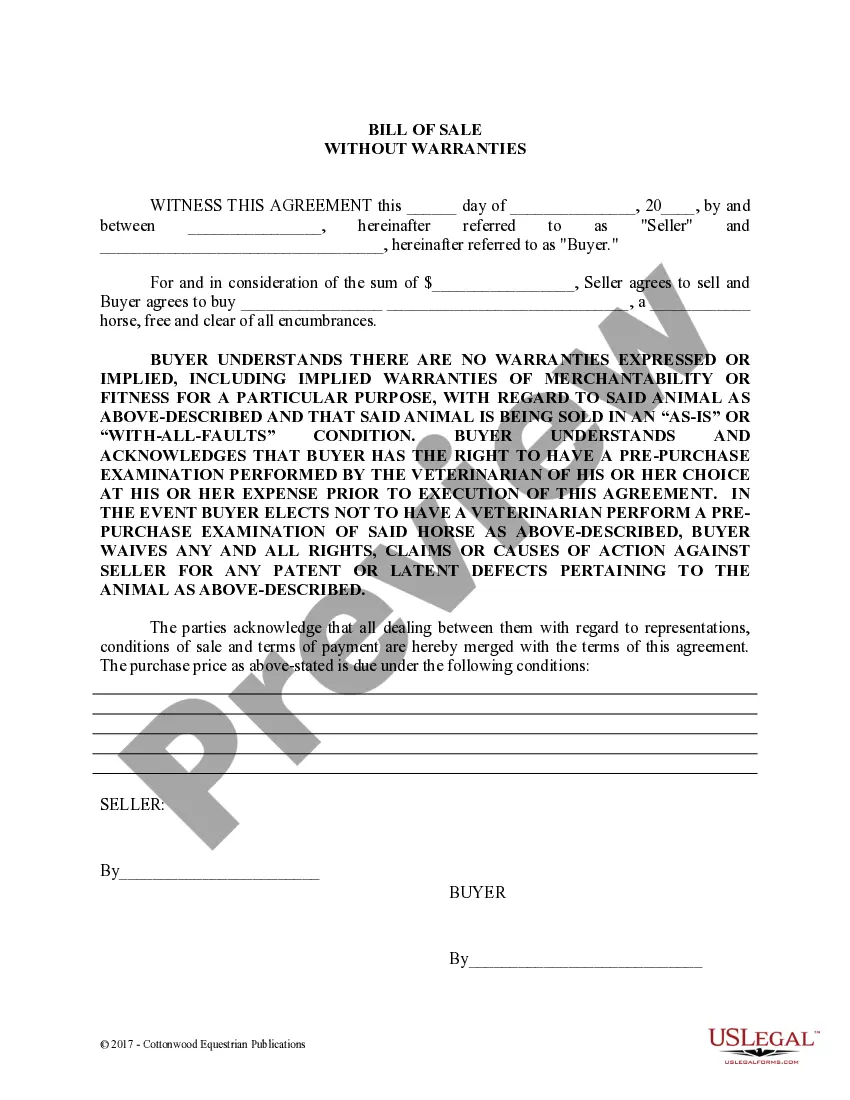
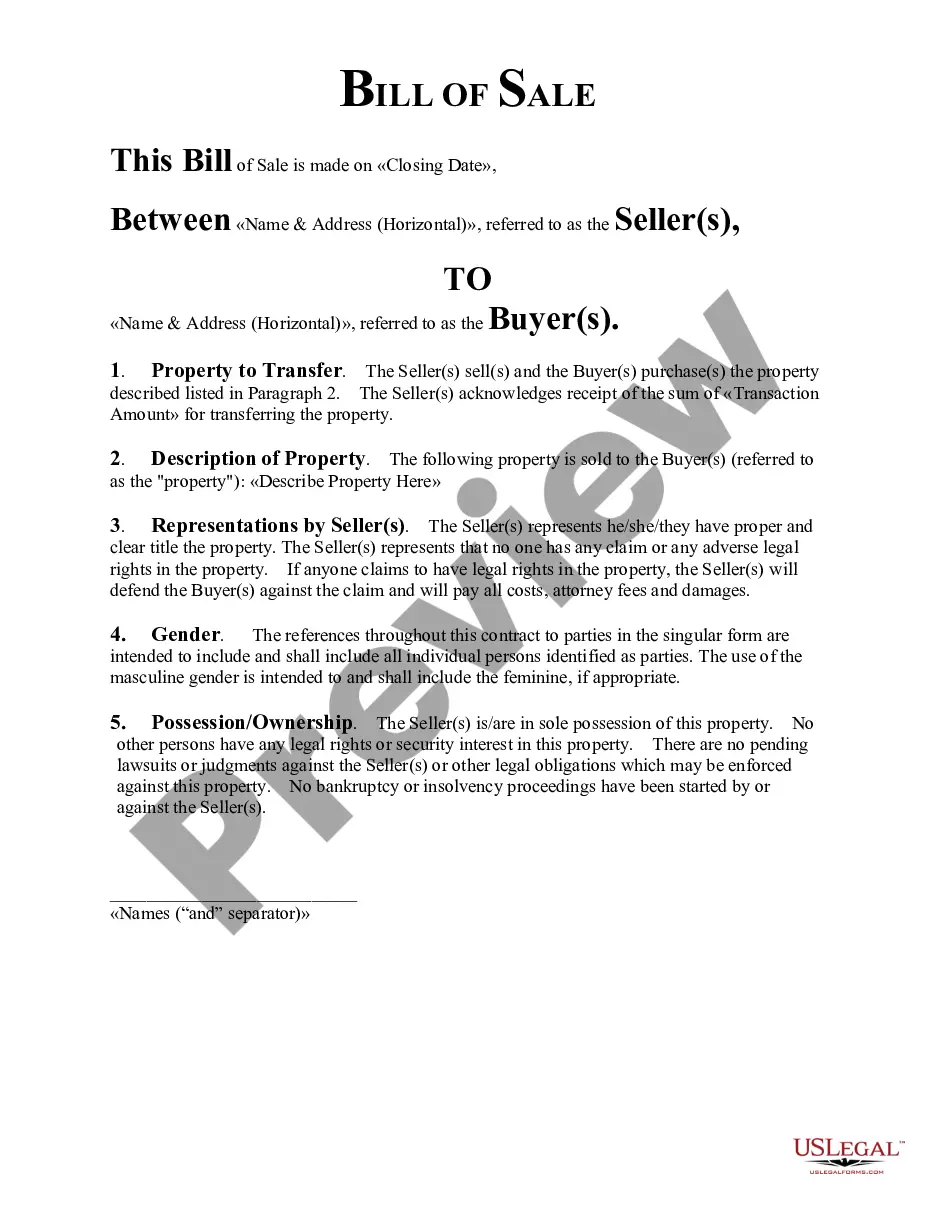
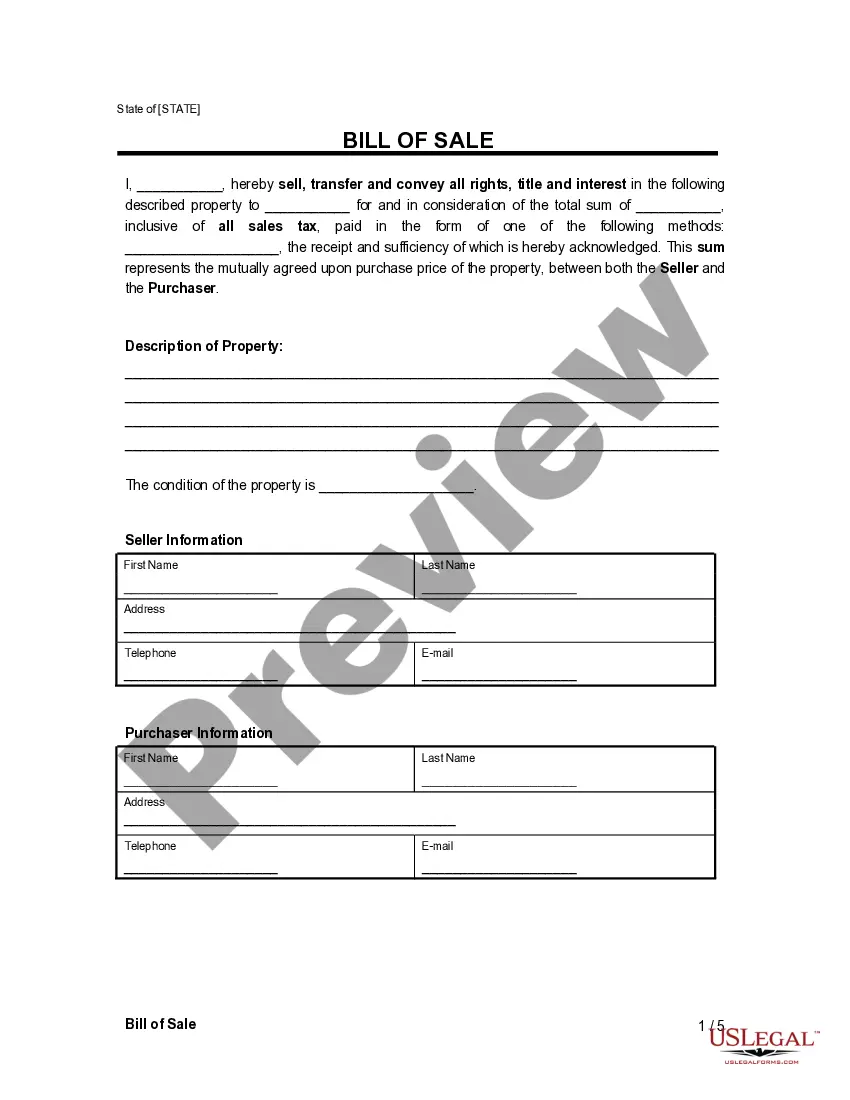
The Bill of Sale for Conveyance of Horse is a legal document used to transfer ownership of a horse from the seller to the buyer without any warranties or guarantees. This form clearly states that the horse is being sold "as is," meaning the buyer accepts the horse in its current condition, which could include any defects or faults. Unlike other sales agreements that may provide protections or warranties, this bill of sale explicitly limits liability for the seller, making it essential for both parties to understand the terms of the sale before proceeding.
Key components of this form
- Date of the sale
- Names and contact information of the seller and buyer
- Purchase price of the horse
- Description of the horse, including breed and identification
- Statement of sale "as is" without warranties
- Space for signatures of both the seller and buyer
When to use this document
This form is appropriate when you are purchasing or selling a horse and wish to document the transaction legally. It is particularly useful when the seller does not want to provide any guarantees regarding the horse's health or suitability for specific purposes. Use this bill of sale when conducting private sales, at auctions, or in situations where the buyer has had the opportunity to inspect the horse beforehand.
Who needs this form
- Horse owners selling their animals
- Buyers looking to purchase a horse without warranty rights
- Individuals or organizations involved in horse auctions
- Trainers or equestrians facilitating horse sales
Instructions for completing this form
- Write the date of the sale at the top of the document.
- Fill in the names and addresses of both the seller and buyer.
- Specify the agreed purchase price clearly.
- Describe the horse, including breed, age, and any identifying features.
- Ensure both parties read and understand the "as is" and warranty disclaimers.
- Sign and date the form in the designated spaces to finalize the agreement.
Does this form need to be notarized?
This form does not typically require notarization unless specified by local law. It is advisable to check your state's regulations to confirm whether notarization is necessary for the sale of horses.
Get your form ready online
Our built-in tools help you complete, sign, share, and store your documents in one place.
Make edits, fill in missing information, and update formatting in US Legal Forms—just like you would in MS Word.
Download a copy, print it, send it by email, or mail it via USPS—whatever works best for your next step.
Sign and collect signatures with our SignNow integration. Send to multiple recipients, set reminders, and more. Go Premium to unlock E-Sign.
If this form requires notarization, complete it online through a secure video call—no need to meet a notary in person or wait for an appointment.
We protect your documents and personal data by following strict security and privacy standards.

Make edits, fill in missing information, and update formatting in US Legal Forms—just like you would in MS Word.

Download a copy, print it, send it by email, or mail it via USPS—whatever works best for your next step.

Sign and collect signatures with our SignNow integration. Send to multiple recipients, set reminders, and more. Go Premium to unlock E-Sign.

If this form requires notarization, complete it online through a secure video call—no need to meet a notary in person or wait for an appointment.

We protect your documents and personal data by following strict security and privacy standards.
Avoid these common issues
- Failing to fill in the horseâs identification details, which can lead to confusion.
- Not clarifying the terms of the sale, especially the "as is" condition.
- Omitting signatures, which invalidates the agreement.
- Forgetting to date the document.
Advantages of online completion
- Convenient access to downloadable and customizable document templates.
- Quick completion and printing for immediate use.
- Legal forms drafted by licensed attorneys, ensuring high quality and reliability.
- Time-saving, enabling you to focus on your sale without extensive legal complications.
Legal use & context
- This bill of sale serves as an official record of the transfer of ownership of the horse.
- It provides protection to sellers from future liability regarding the horse's condition.
- Buyers should understand they are assuming all risks associated with the horse.
Key takeaways
- The Bill of Sale for Conveyance of Horse is used to formally document the sale of a horse without warranties.
- Both parties must clearly understand the "as is" condition of the horse before completing the sale.
- Ensure all necessary details are accurately filled in to avoid future disputes regarding the sale.
Looking for another form?

Form popularity
FAQ
A bill of sale is required and a notary must witness the signatures on it. This must take place, when the title does not include the price and date of the transaction. It is also important to note that the bill of sale must be an original. The South Carolina DMV can give the bill of sale to all responsible parties.
Make sure the seller signs the title to you. Make sure that the seller provides you with a bill of sale if the original title dates before 1989. Complete an Application for Certificate of Title and Registration for Motor Vehicle or Manufactured Home/Mobile Home. Get a lien release from the seller.
When is a bill of sale required in South Carolina? A DMV bill of sale is required when titling and registering your vehicle. Usually, a vehicle bill of sale can verify odometer readings and sale prices if sellers forgot to list them on the back of the vehicle title.
Is a Bill of Sale required for selling a car in South Carolina? South Carolina law requires a Bill of Sale only when the sales price and odometer reading cannot be included on the back of the vehicle title.