Rhode Island Last Will and Testament for Widow or Widower with Minor Children
What is this form?
The Last Will and Testament for Widow or Widower with Minor Children is a legal document that outlines how your assets will be distributed upon your passing, tailored specifically for individuals who are widows or widowers with minor children. This form ensures the appointment of a personal representative or executor, specifies beneficiaries for your property, and includes provisions for a trustee to manage assets for your minor children. This distinguishes it from standard wills by addressing the unique considerations of someone who has lost a spouse and is responsible for minors.
Form components explained
- Personal representative: Appoint someone to manage your estate.
- Beneficiaries: Designate who will receive your property and assets.
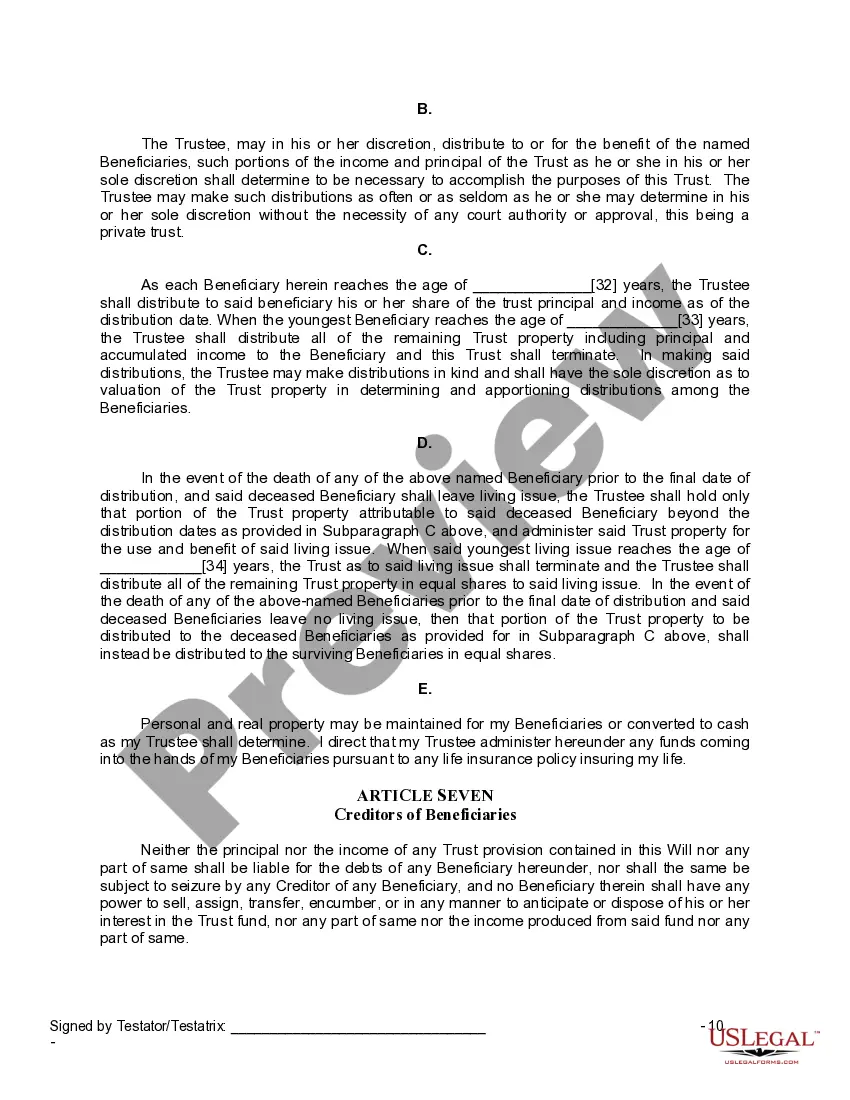
- Trust for minors: Establish a trust to manage assets for your children until they reach a specified age.
- Guardianship: Appoint a guardian for your minor children in the event of your passing.
- Specific bequests: Specify particular items or properties to be given to designated individuals.







Situations where this form applies
This form is useful when a widow or widower needs to arrange the distribution of their estate, especially when minor children are involved. You should use this Last Will and Testament if you are a surviving spouse and have children who depend on you, ensuring their needs are secured and your wishes are clear after your passing.
Who this form is for
This form is intended for:
- Widows or widowers who have minor children.
- Individuals seeking to establish a clear estate plan after the loss of a spouse.
- Those looking to appoint guardians for their children.
- Parents wanting to ensure the care and financial support of their children in the future.
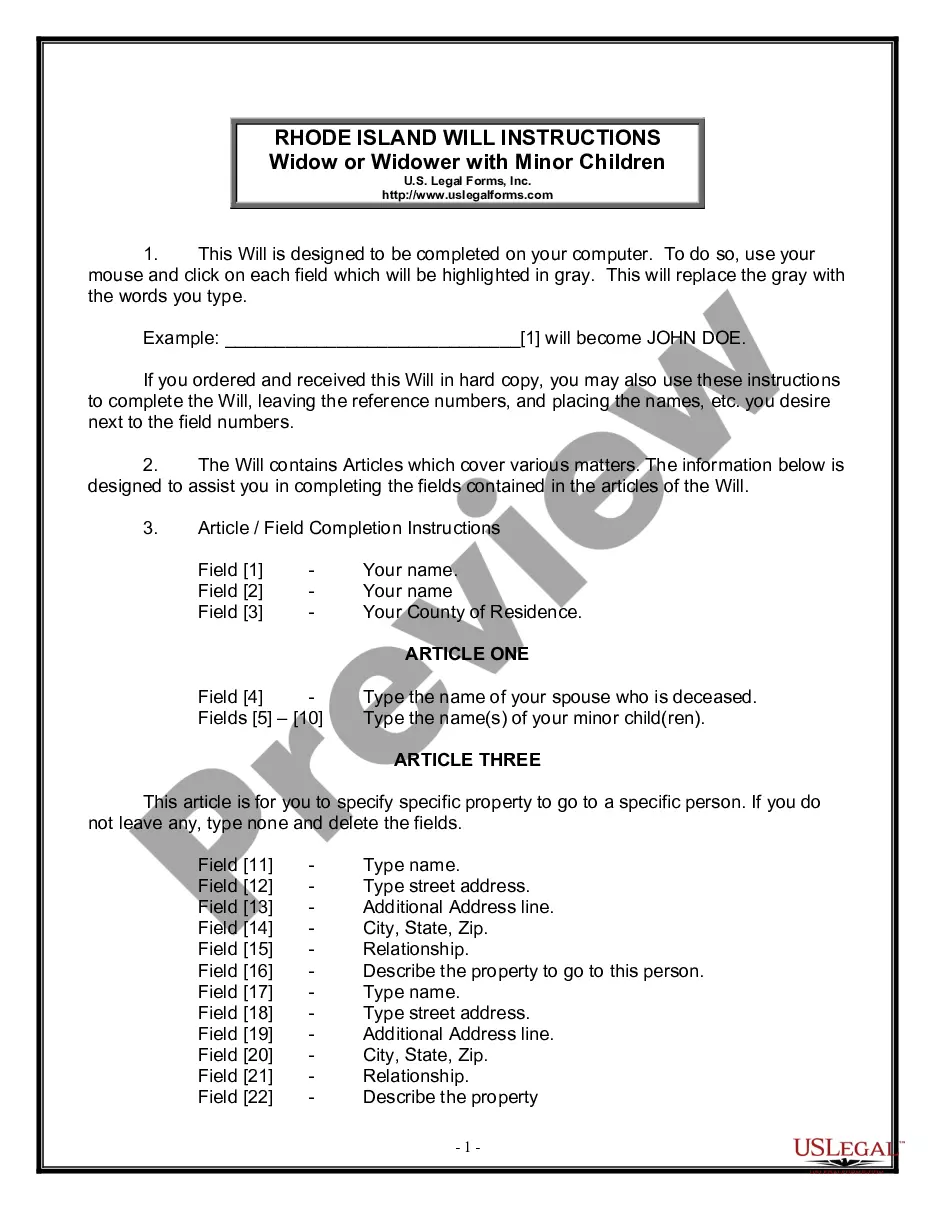
Instructions for completing this form
To complete this form, follow these steps:
- Enter your full name and county of residence.
- Provide details about your deceased spouse and your minor children.
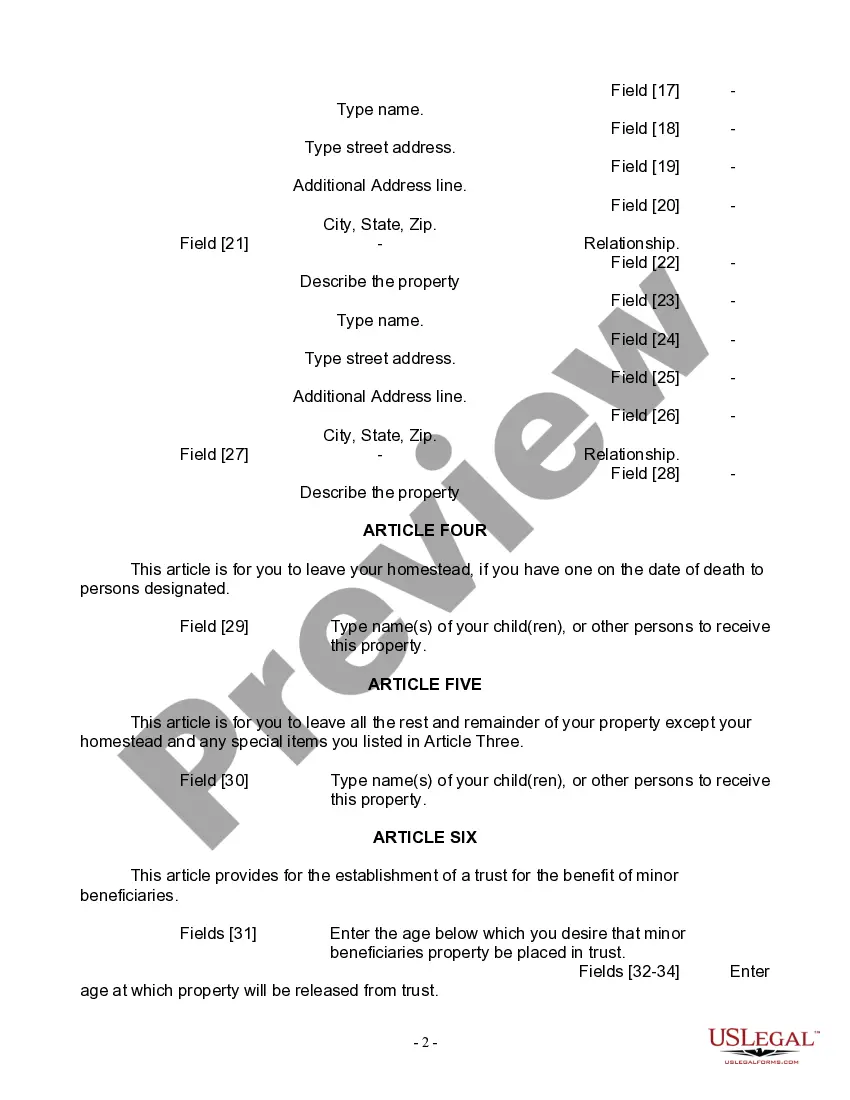
- Designate specific property bequests and who will receive them.
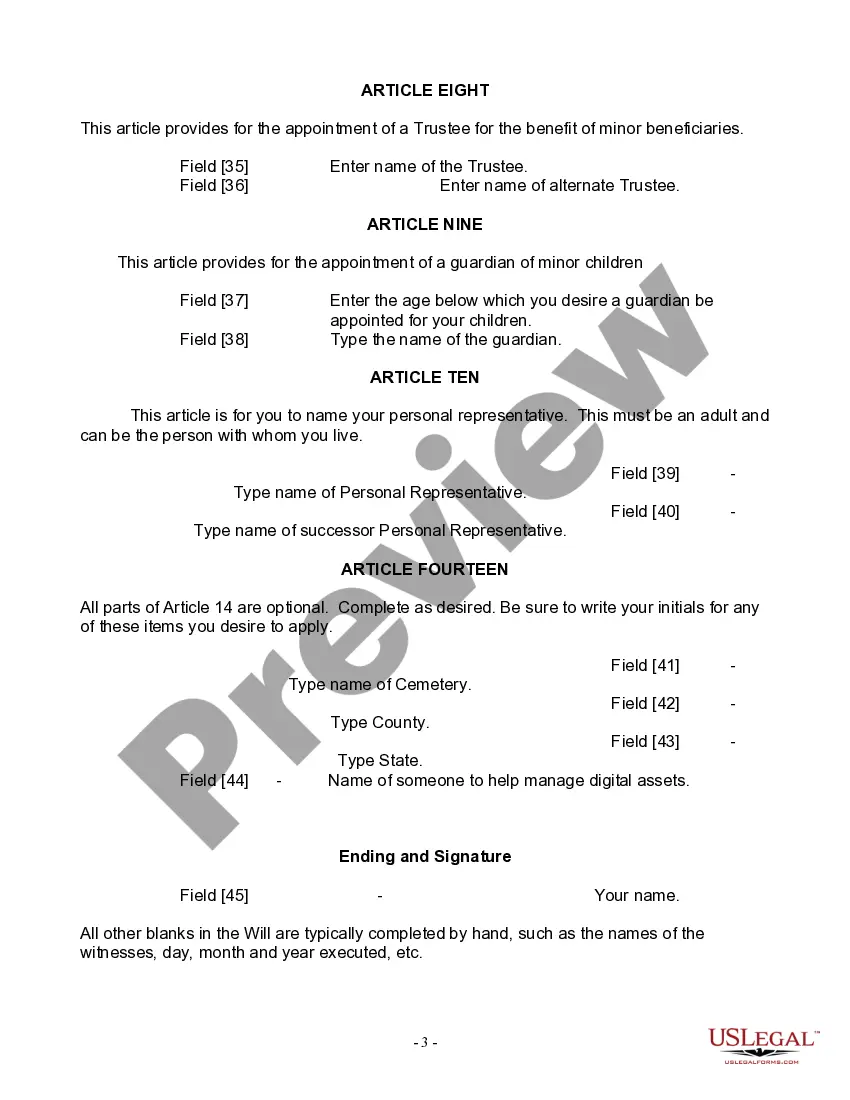
- Appoint a trustee for your minor children's assets and a guardian for your children.
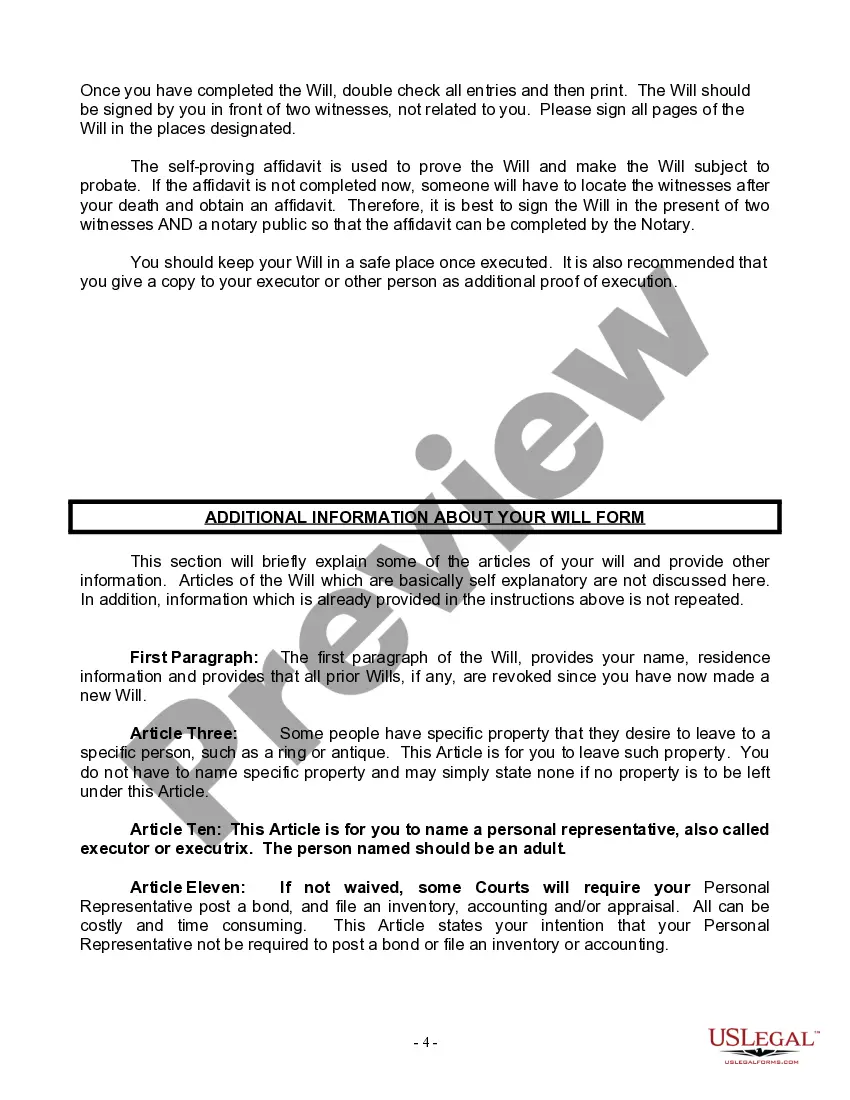
- Sign the document in front of two witnesses who are not related to you.
- Consider notarizing the will to simplify the probate process.
Notarization guidance
Yes, this form must be notarized to be legally valid. Including a notary public helps affirm the authenticity of your will and can expedite the probate process. U.S. Legal Forms offers integrated online notarization for easy and secure processing.
Get your form ready online
Our built-in tools help you complete, sign, share, and store your documents in one place.
Make edits, fill in missing information, and update formatting in US Legal Forms—just like you would in MS Word.
Download a copy, print it, send it by email, or mail it via USPS—whatever works best for your next step.
Sign and collect signatures with our SignNow integration. Send to multiple recipients, set reminders, and more. Go Premium to unlock E-Sign.
If this form requires notarization, complete it online through a secure video call—no need to meet a notary in person or wait for an appointment.
We protect your documents and personal data by following strict security and privacy standards.

Make edits, fill in missing information, and update formatting in US Legal Forms—just like you would in MS Word.

Download a copy, print it, send it by email, or mail it via USPS—whatever works best for your next step.

Sign and collect signatures with our SignNow integration. Send to multiple recipients, set reminders, and more. Go Premium to unlock E-Sign.

If this form requires notarization, complete it online through a secure video call—no need to meet a notary in person or wait for an appointment.

We protect your documents and personal data by following strict security and privacy standards.
Common mistakes
- Failing to sign the will in front of two disinterested witnesses.
- Not including a self-proving affidavit, which can complicate probate.
- Leaving out specific property details or failing to update the will after significant life changes.
- Not appointing a successor trustee or personal representative.
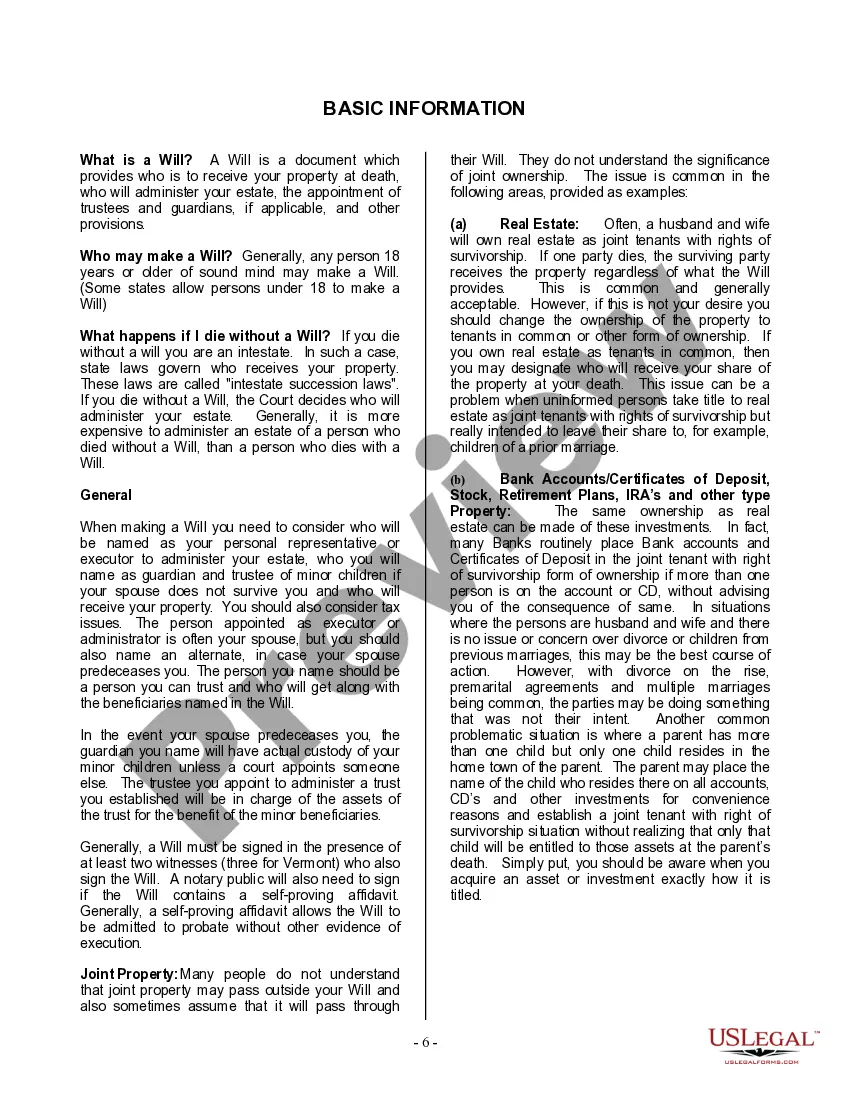
- Assuming all property will pass according to the will without accounting for joint ownership.
Benefits of completing this form online
- Convenient download and completion from home.
- Easily editable format to customize your wishes.
- Legal templates prepared by licensed attorneys to ensure compliance.
- Guidance provided throughout the document to aid in proper completion.
Key takeaways
- The Last Will and Testament is crucial for ensuring that your wishes are followed regarding asset distribution and child custody.
- Proper execution, including witnessing and notarization, is vital for the Will's validity.
- This form addresses the specific needs of widows or widowers with minor children.
- Consider appointing a trustee and alternate guardians to manage your childrenâs well-being effectively.
Looking for another form?
Form popularity
FAQ
For example, California requires that all sections of the will necessary to make the will valid must be written entirely by hand and that the person writing the will must sign it. If these state rules aren't followed, the holographic will won't be valid.
Contrary to popular belief, you do not need to have an attorney draft a will for you. Anyone can write this document on their own, and as long as it meets all of the legal requirements of the state, courts will recognize one you wrote yourself.
In most situations, a will template is an easy and inexpensive way to make sure your wishes are known and carried out. Most people can get everything they need by using a will template, with little cost or hassle.
A widow's will must meet her state's standards in order to be considered legally valid. Typically, this means the will must be in writing and signed. States generally require the signatures of two neutral witnesses who watch the widow sign the document, and a notary may also be required.
You don't need a lawyer to create a will if you have a straightforward financial situation.You can use online templates or software to write a will yourself. In order to legalize the will, it needs to be signed and dated by you and at least two other witnesses.
Create the initial document. Start by titling the document Last Will and Testament" and including your full legal name and address. Designate an executor. Appoint a guardian. Name the beneficiaries. Designate the assets. Ask witnesses to sign your will. Store your will in a safe place.
Age: The testator must be at least 18 years old. Capacity: The testator must be of sane mind. Signature: The will must be signed by the testator or by someone else in the testator's name in his presence, by his express direction.
Create the initial document. Start by titling the document Last Will and Testament" and including your full legal name and address. Designate an executor. Appoint a guardian. Name the beneficiaries. Designate the assets. Ask witnesses to sign your will. Store your will in a safe place.
Yes, under some circumstances. If no consideration is provided for the mutual wills, except the mutual agreement of the spouses, either spouse can change the will prior to the death of the first spouse.After the first spouse dies, however, the surviving spouse cannot change the will.