Rhode Island Commercial Rental Lease Application Questionnaire
What this document covers
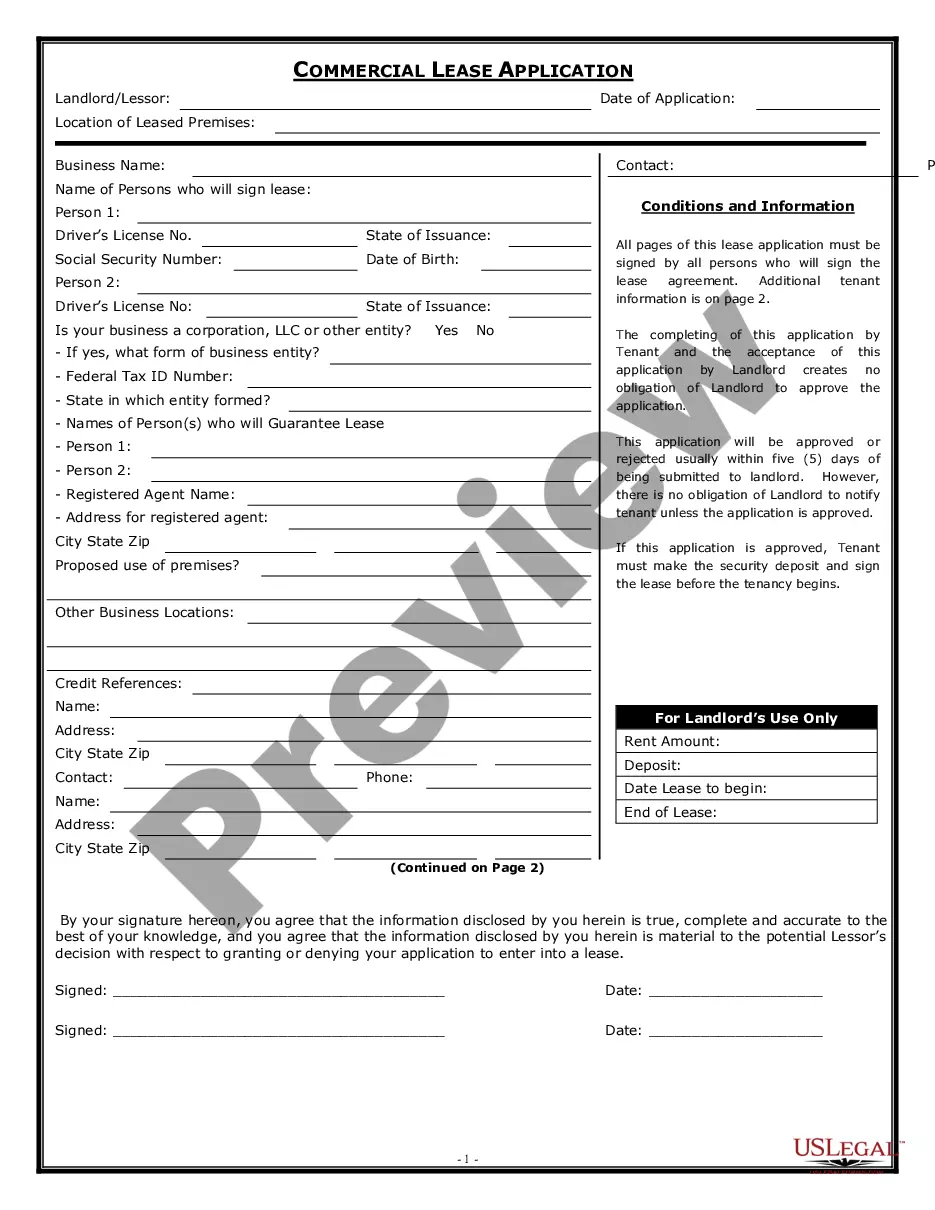
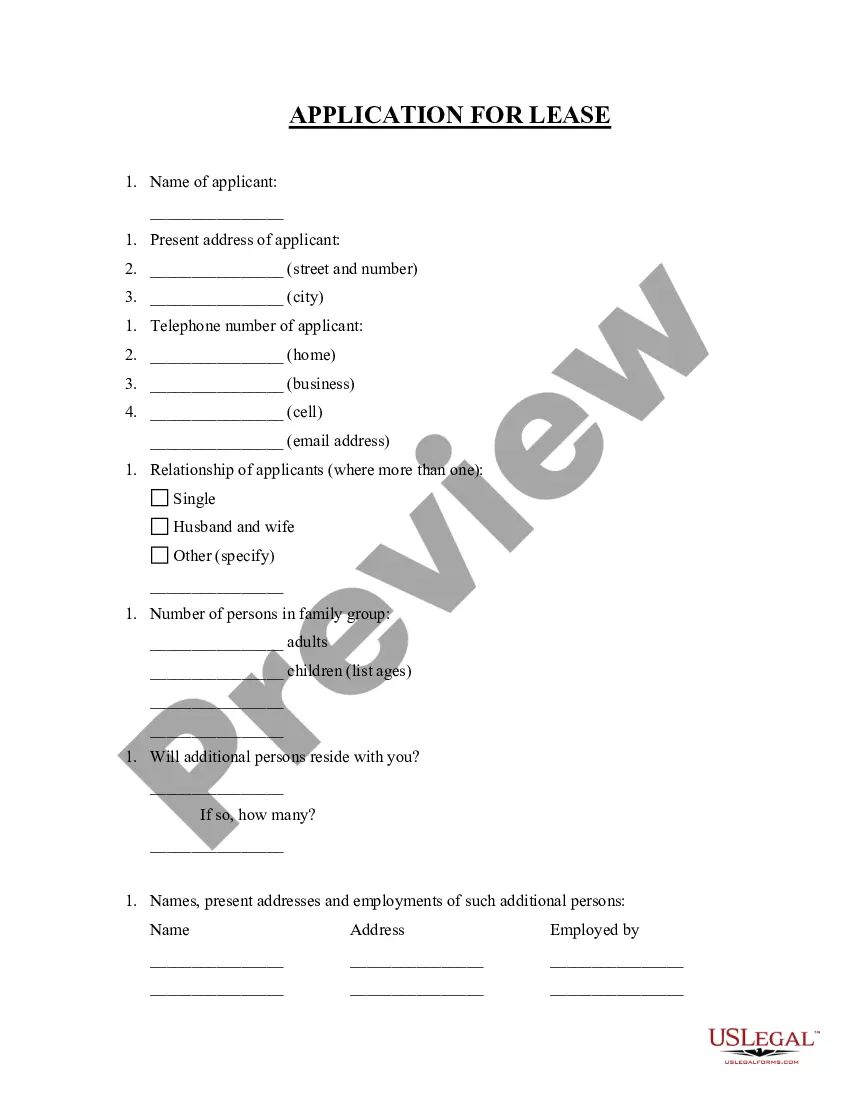
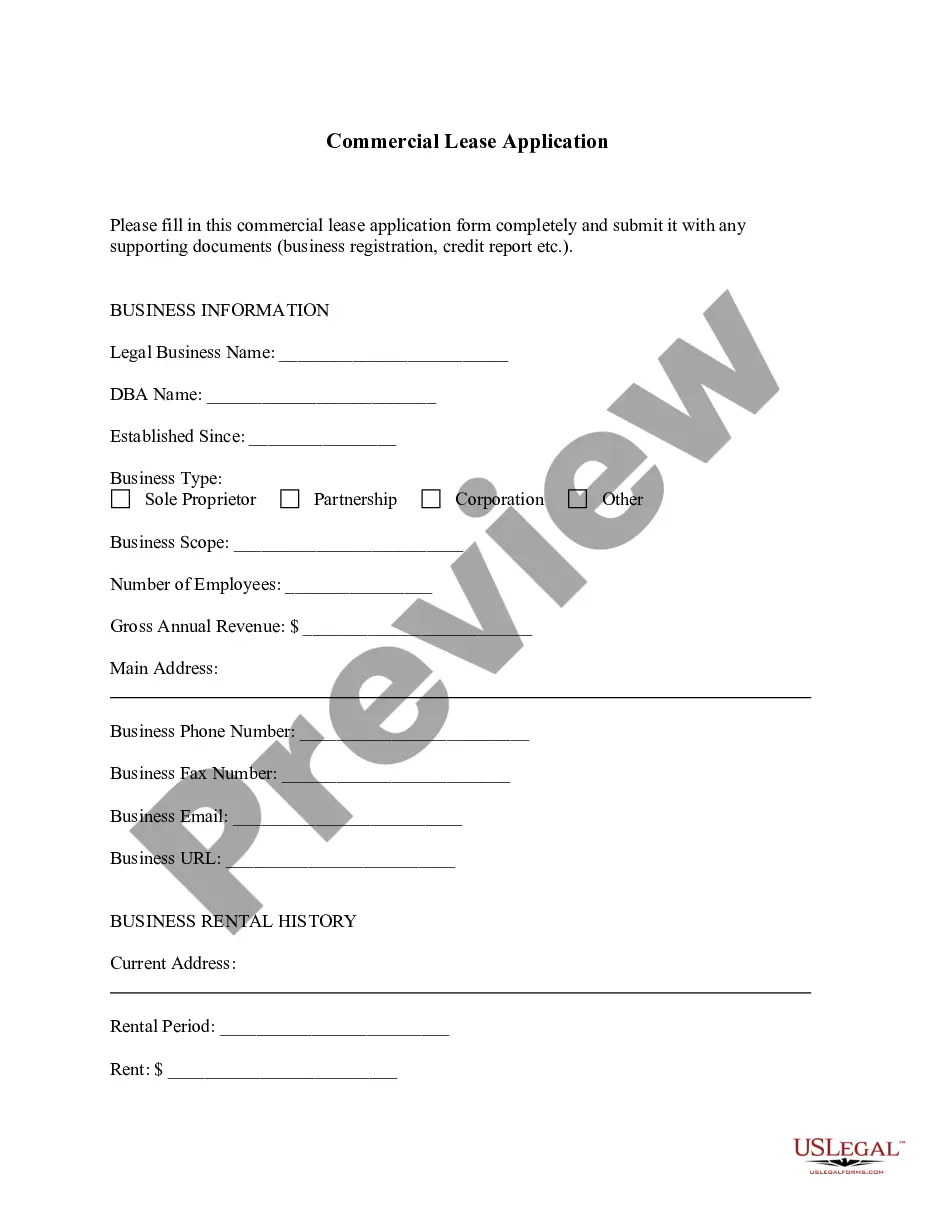
The Commercial Rental Lease Application Questionnaire is a legal form used by landlords to collect essential information from potential tenants prior to entering a commercial lease agreement. Unlike residential leases, commercial leases often involve more intricate terms related to business rather than personal living arrangements. This form allows landlords to assess a prospective lessee's eligibility and creditworthiness before proceeding with a formal lease agreement.
What’s included in this form
- Applicant Information: Collects personal and business-related details from the prospective tenant.
- Credit Authorization: Provides consent for the landlord to check the applicant's credit and criminal history.
- Disclosure Section: Contains necessary disclosures required by the landlord for transparency.
- Manager Information: Includes details about the manager responsible for the property.
- Signature Fields: Requires signatures from all applicants to confirm the accuracy of the provided information.


Common use cases
This form should be used when a landlord is considering a new tenant for a commercial property. It is essential to complete the application as part of the initial screening process. If you are a business owner looking to lease a space for operations, this form will facilitate your application and help ensure that you meet the necessary requirements as determined by the landlord.
Who should use this form
- Landlords seeking to evaluate potential tenants for commercial properties.
- Business owners looking to lease commercial space for their enterprises.
- Property managers involved in the leasing process for commercial real estate.
Instructions for completing this form
- Identify the parties: List all individuals or entities applying to lease the commercial property.
- Provide necessary information: Fill in details such as contact information, business name, and ownership structure.
- Authorize credit check: Sign the consent section to allow the landlord to access your credit and background information.
- Review disclosures: Read through the disclosures provided for completeness and accuracy.
- Gather signatures: Ensure that all applicants sign the form to verify the accuracy of the information provided.
Notarization guidance
In most cases, this form does not require notarization. However, some jurisdictions or signing circumstances might. US Legal Forms offers online notarization powered by Notarize, accessible 24/7 for a quick, remote process.
Get your form ready online
Our built-in tools help you complete, sign, share, and store your documents in one place.
Make edits, fill in missing information, and update formatting in US Legal Forms—just like you would in MS Word.
Download a copy, print it, send it by email, or mail it via USPS—whatever works best for your next step.
Sign and collect signatures with our SignNow integration. Send to multiple recipients, set reminders, and more. Go Premium to unlock E-Sign.
If this form requires notarization, complete it online through a secure video call—no need to meet a notary in person or wait for an appointment.
We protect your documents and personal data by following strict security and privacy standards.

Make edits, fill in missing information, and update formatting in US Legal Forms—just like you would in MS Word.

Download a copy, print it, send it by email, or mail it via USPS—whatever works best for your next step.

Sign and collect signatures with our SignNow integration. Send to multiple recipients, set reminders, and more. Go Premium to unlock E-Sign.

If this form requires notarization, complete it online through a secure video call—no need to meet a notary in person or wait for an appointment.

We protect your documents and personal data by following strict security and privacy standards.
Typical mistakes to avoid
- Leaving sections of the application incomplete or blank.
- Not providing accurate or truthful information.
- Failing to gather all required signatures from applicants.
- Overlooking the credit authorization section.
Advantages of online completion
- Convenience: Download the form anytime, anywhere for easy access.
- Editability: Tailor the form to your specific requirements before submission.
- Reliability: Ensure you are using a legally vetted application designed by licensed attorneys.
Looking for another form?



Form popularity
FAQ
This means that a private lease agreement will be covered by the CPA.The CPA does not apply to transactions where the consumer is a company, close corporation or a trust with an annual turnover or net asset value of R2M.
Under the Act, the landlord pays the full cost of preparing the lease, including the mortgagee consent fee.
A letter of intent is used to alert a property owner that you're interested in leasing or purchasing a commercial real estate property. Also, it provides the landlord with a more concrete view of how you'll use the property should they commit to a lease agreement with you.
The Letter of Intent should include the names of the parties negotiating, such as the name of the Tenant and the Property Owner/Landlord, and a list of industry standard list items. You should also include items that are important to your business when leasing commercial real estate.
The Consumer Protection Act (CPA) does NOT apply to all lease agreements (or rental agreements). This is really important to know because the Consumer Protection Act has a big influence on the lease and changes the legal position between the landlord and tenant significantly.Tenants already have lots of protection.
Commercial leases fall within the ambit of the CPA and refer to an agreement between a landlord and a business setting out terms and conditions governing a property rental. The CPA applies to contracts entered with natural persons and juristic persons with an annual turnover or asset value of less than R2 million.
The Person Liable for the Lease. Your Business Structure. How Long You Have Been in Business. The Nature of Your Business. Contact Information. Your Proposed Terms (or, Counter Offer) The Length of the Lease. Condition of the Property.
Names of all tenants. Limits on occupancy. Term of the tenancy. Rent. Deposits and fees. Repairs and maintenance. Entry to rental property. Restrictions on tenant illegal activity.
In New South Wales (NSW), a shop that is less than 1,000 square metres in size, sells and supplies goods and services and is a retail business is covered by the Retail Leases Act 1994 (the Act). The lease needs to be for six months and less than 25 years.