Rhode Island Commercial Sublease
Overview of this form
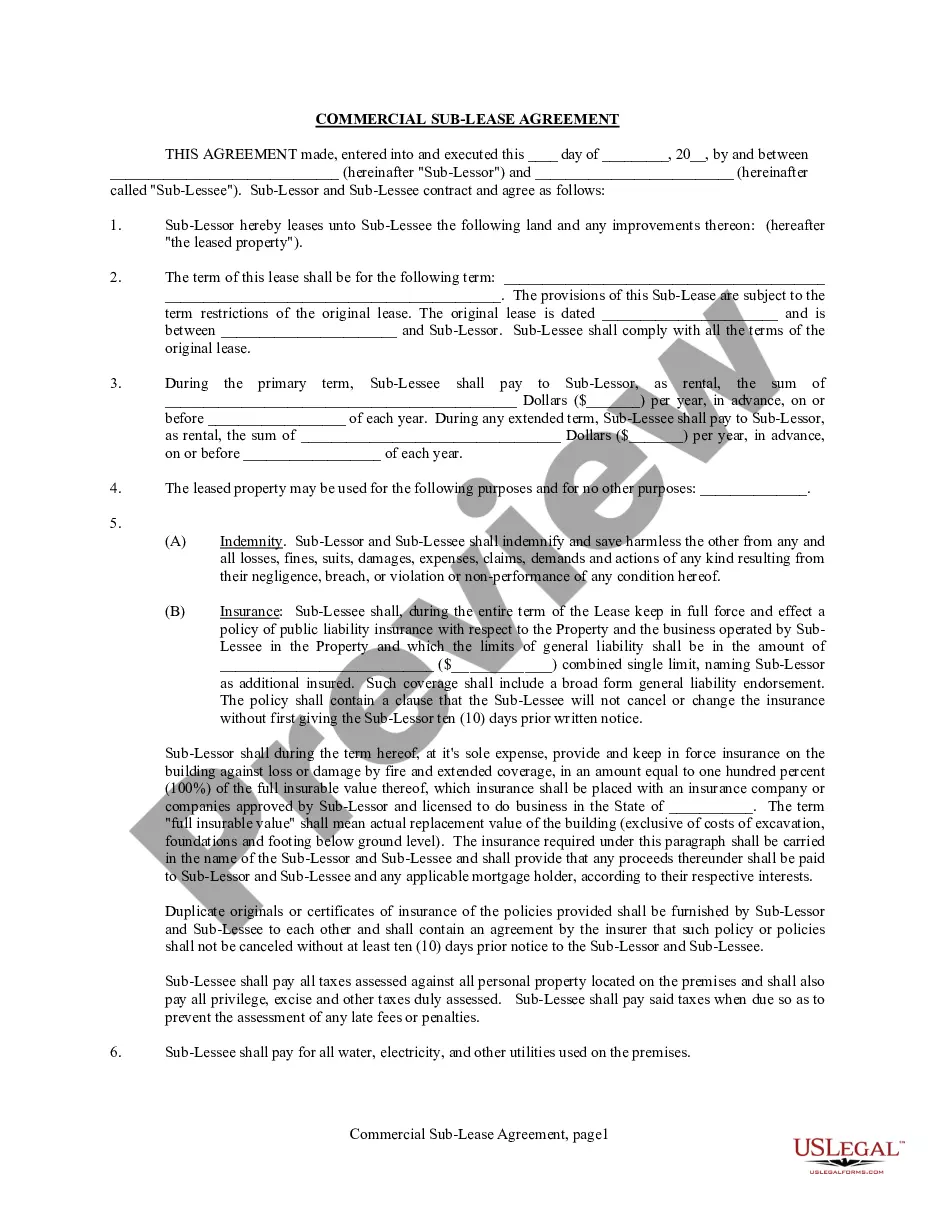
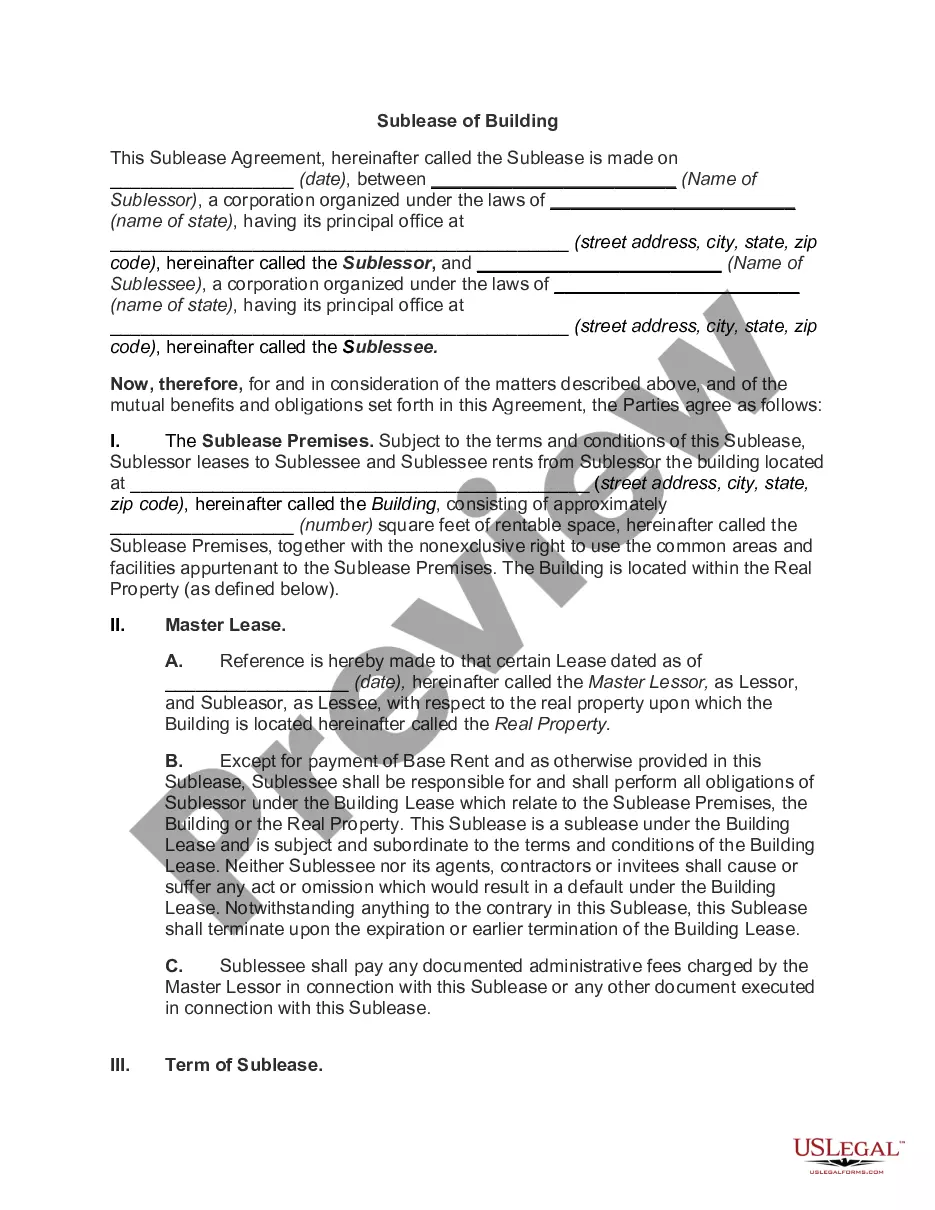
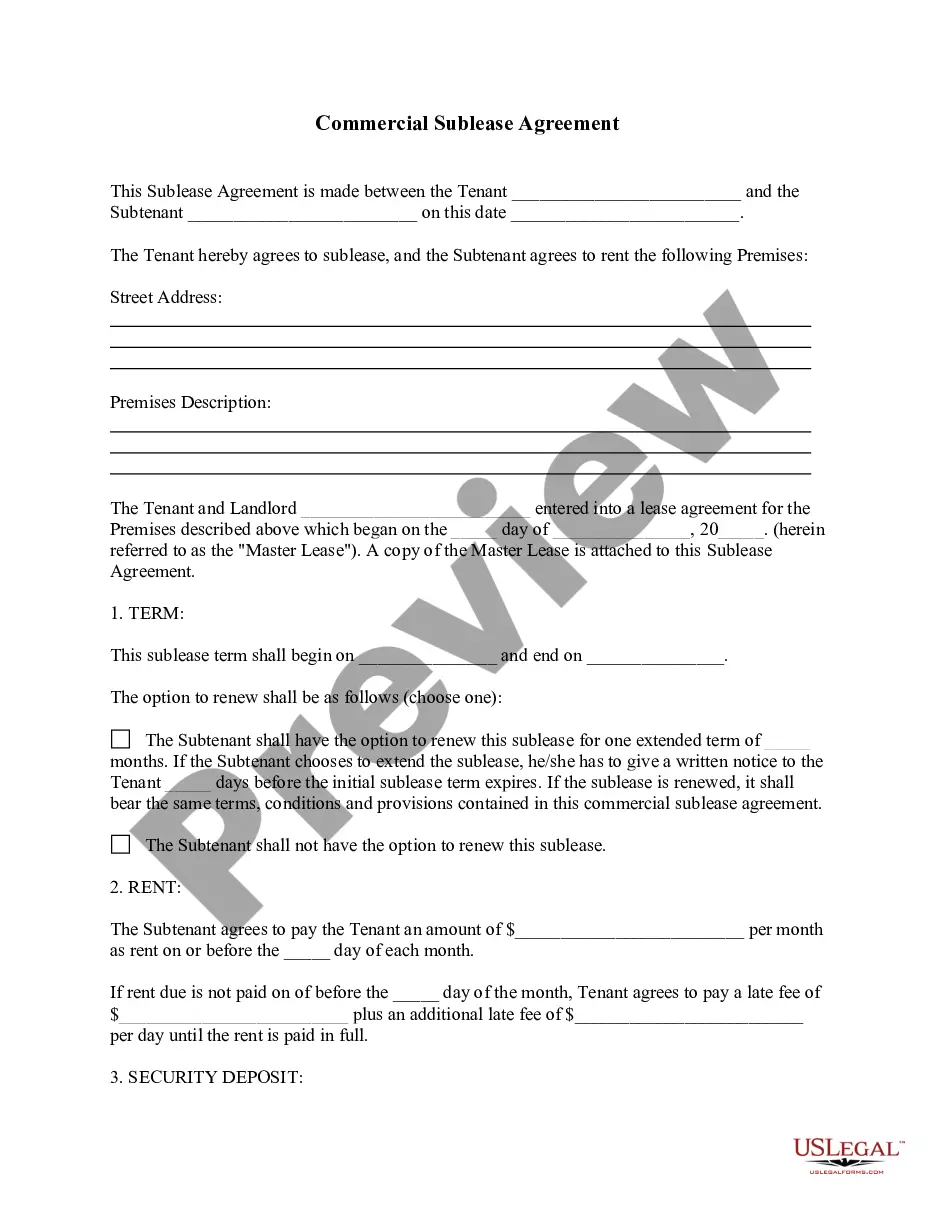
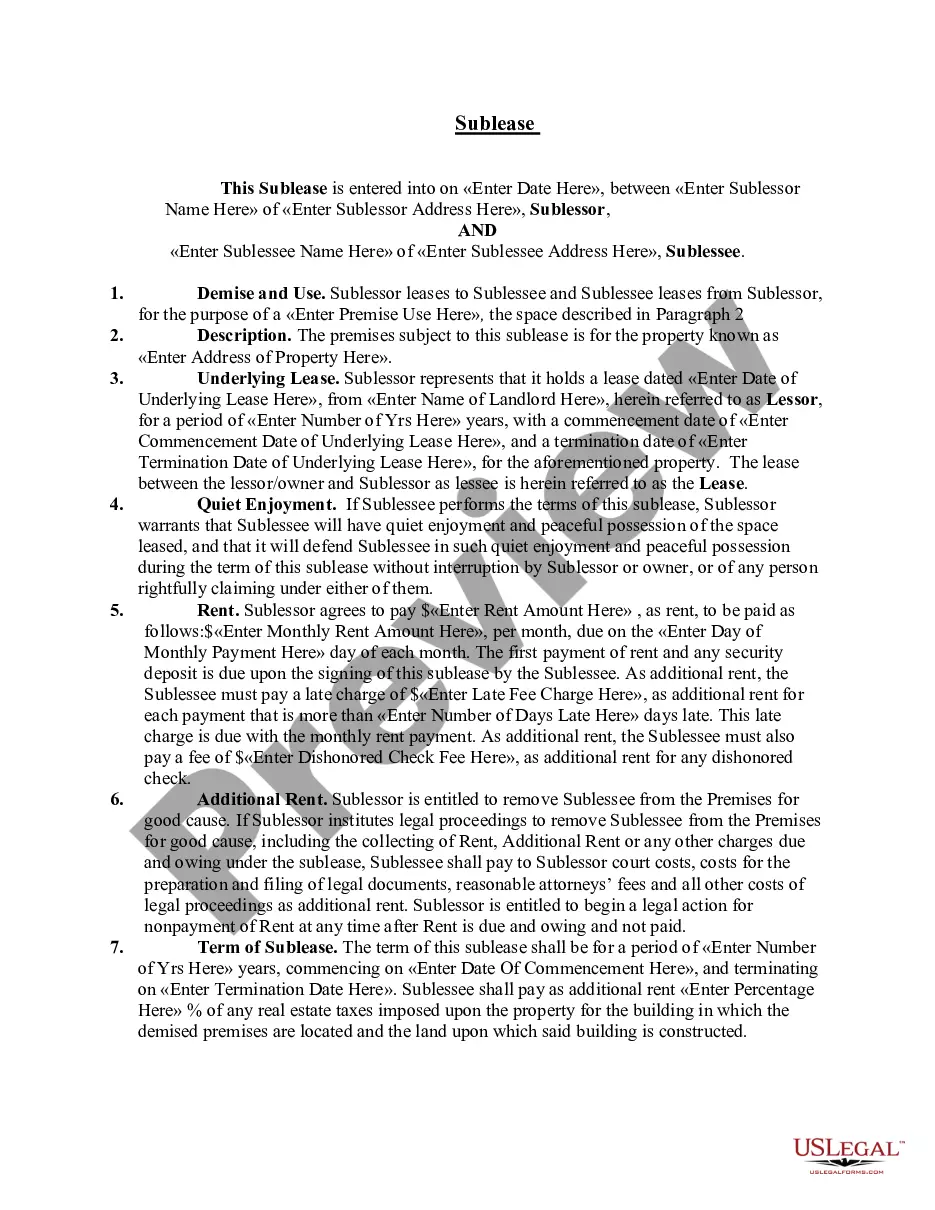
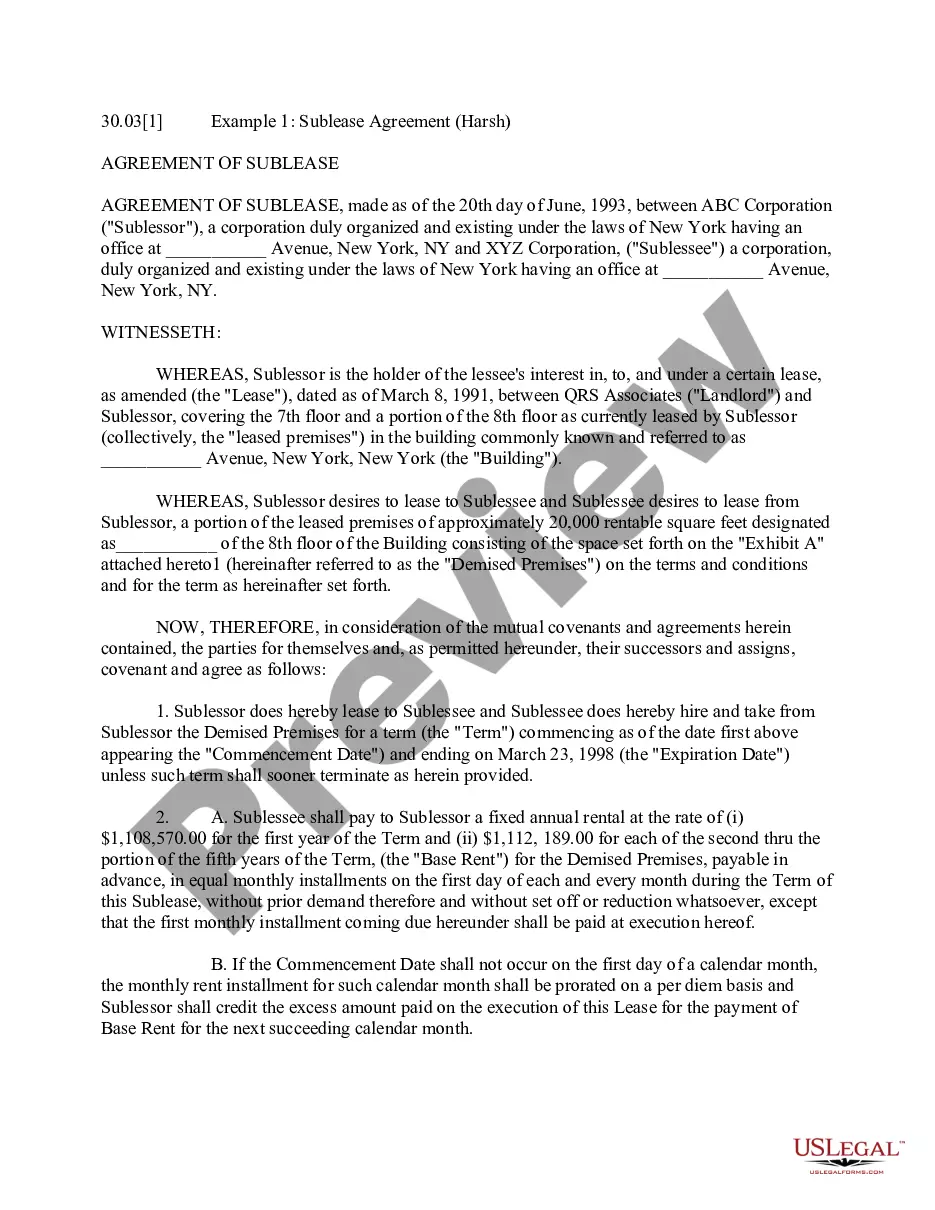
The Commercial Sublease form is a legal agreement allowing a Tenant (known as the Sub-Lessor) to lease out commercial property to a new Tenant (the Sub-Lessee). This document outlines the specific rental terms and obligations for both parties while ensuring compliance with the terms of the original lease. Unlike a standard lease, a sublease transfers only possession, making it essential for parties wanting to retain certain rights under the original agreement.
Form components explained
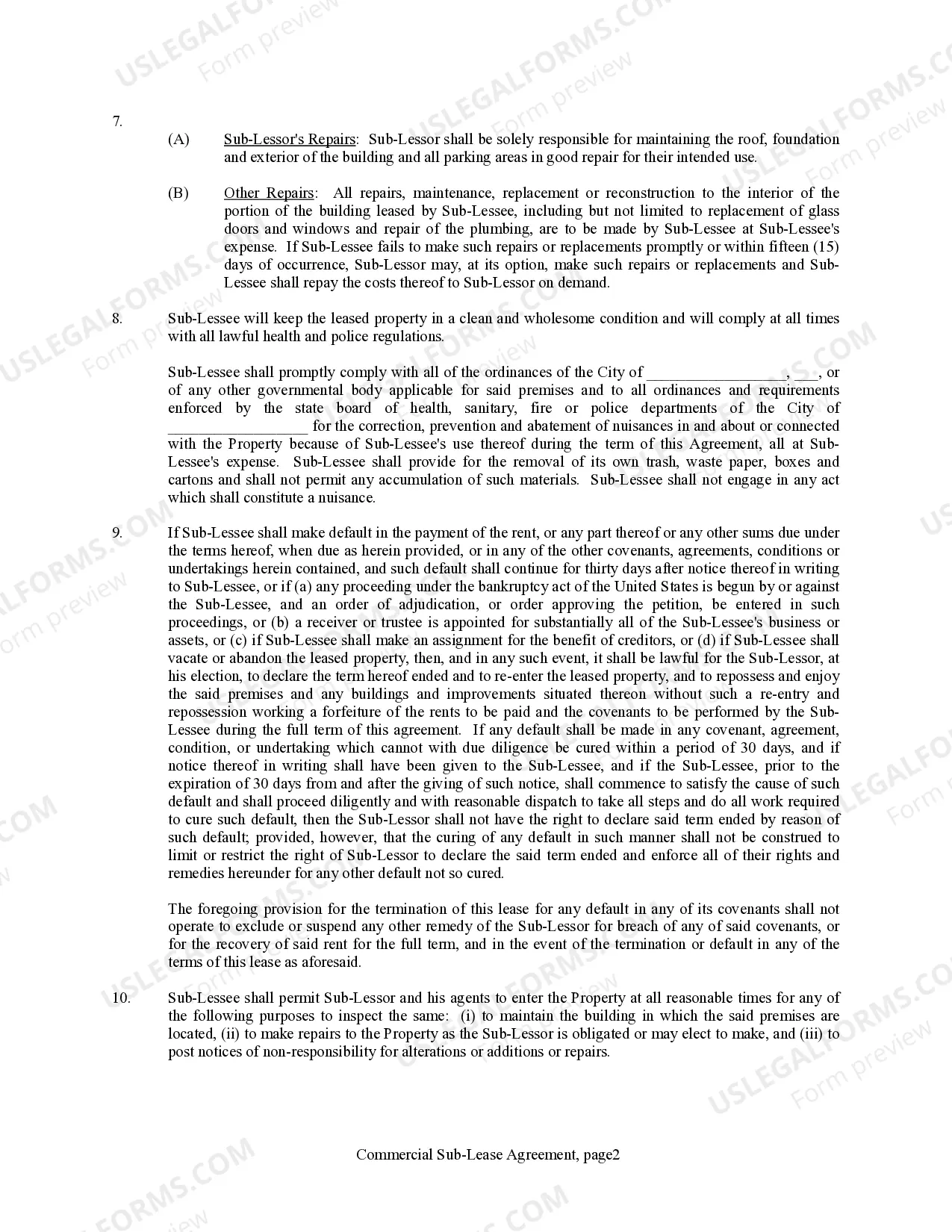
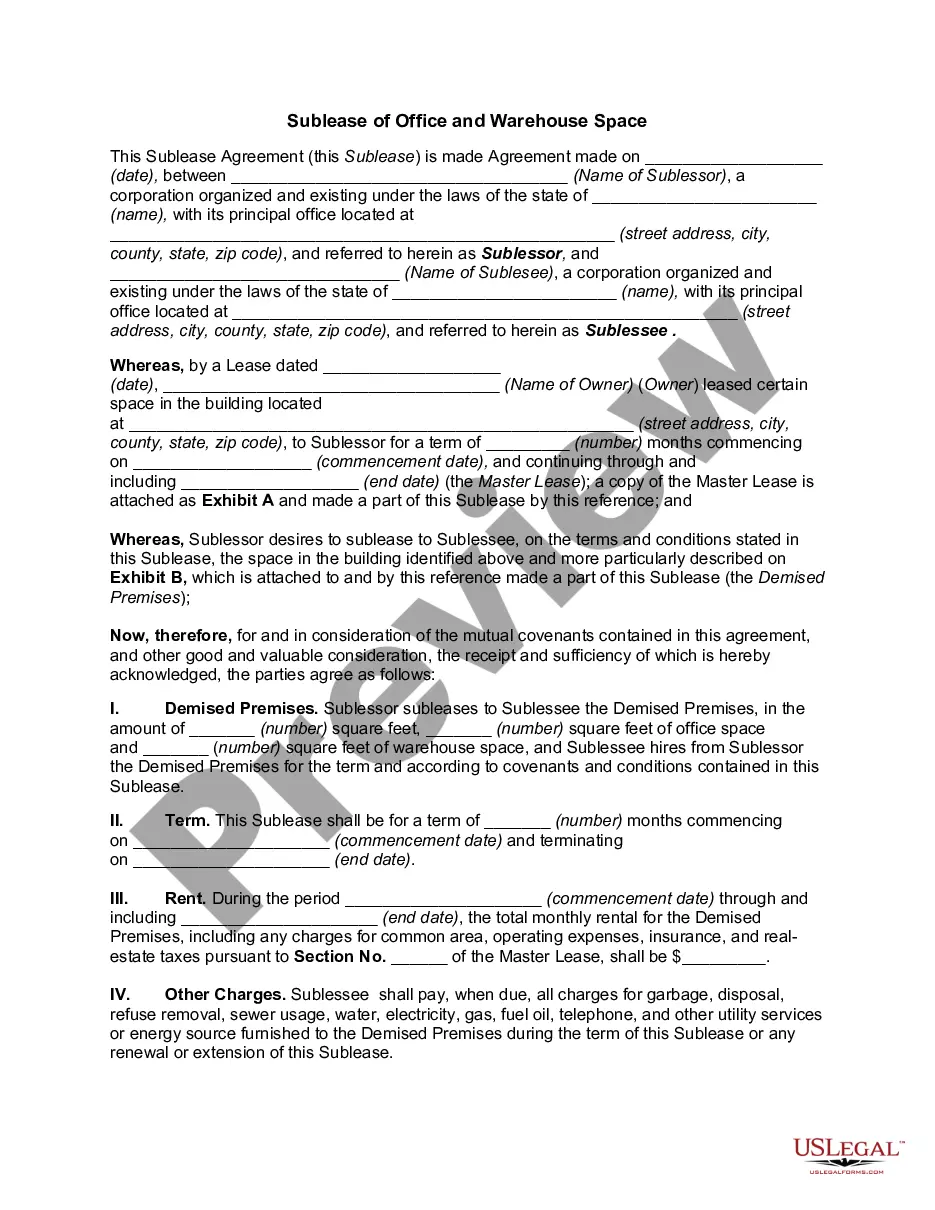
- Identification of the Sub-Lessor and Sub-Lessee.
- Description of the leased property and its intended use.
- Terms of rent payment, including amounts and due dates.
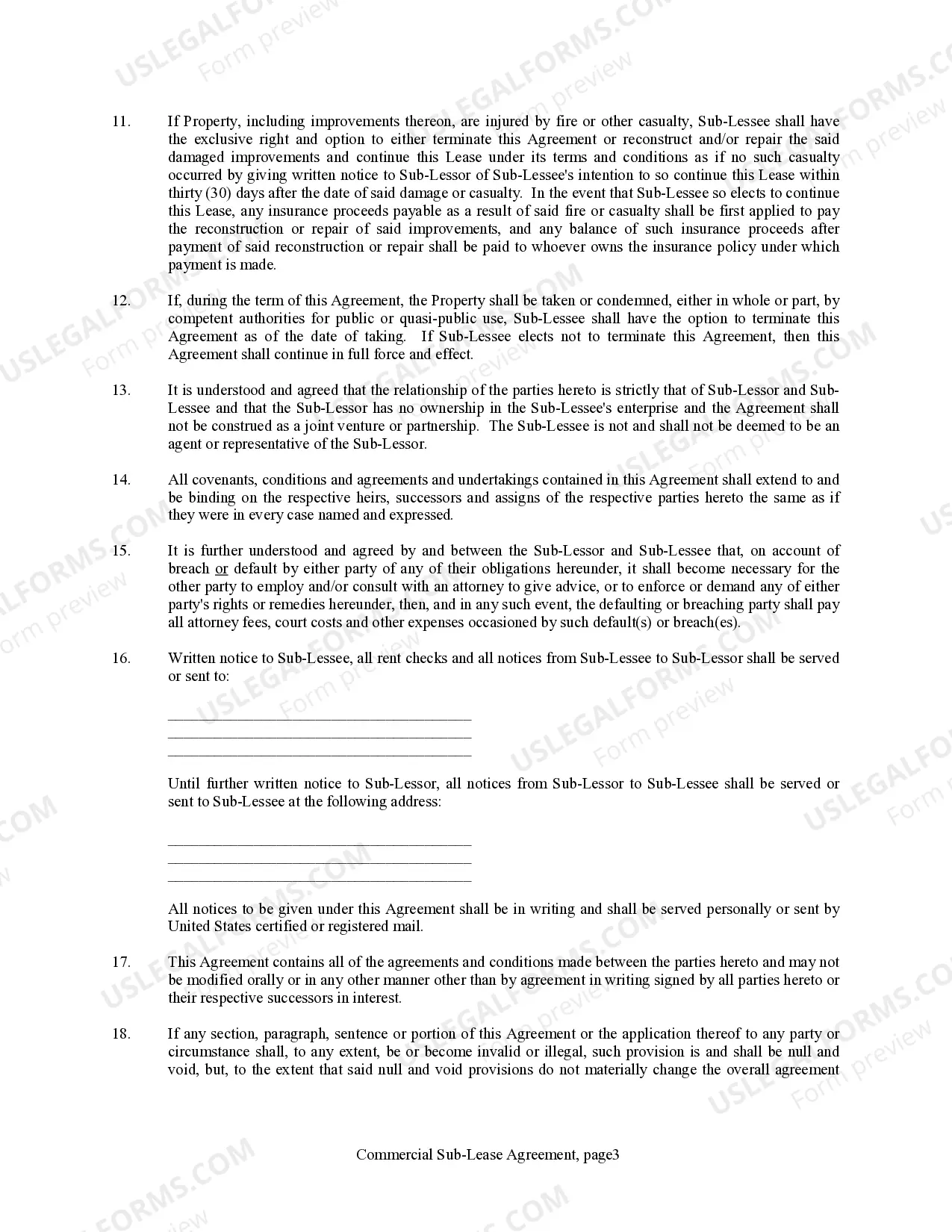
- Indemnity and insurance obligations of the Sub-Lessee.
- Responsibilities for maintenance and repairs.
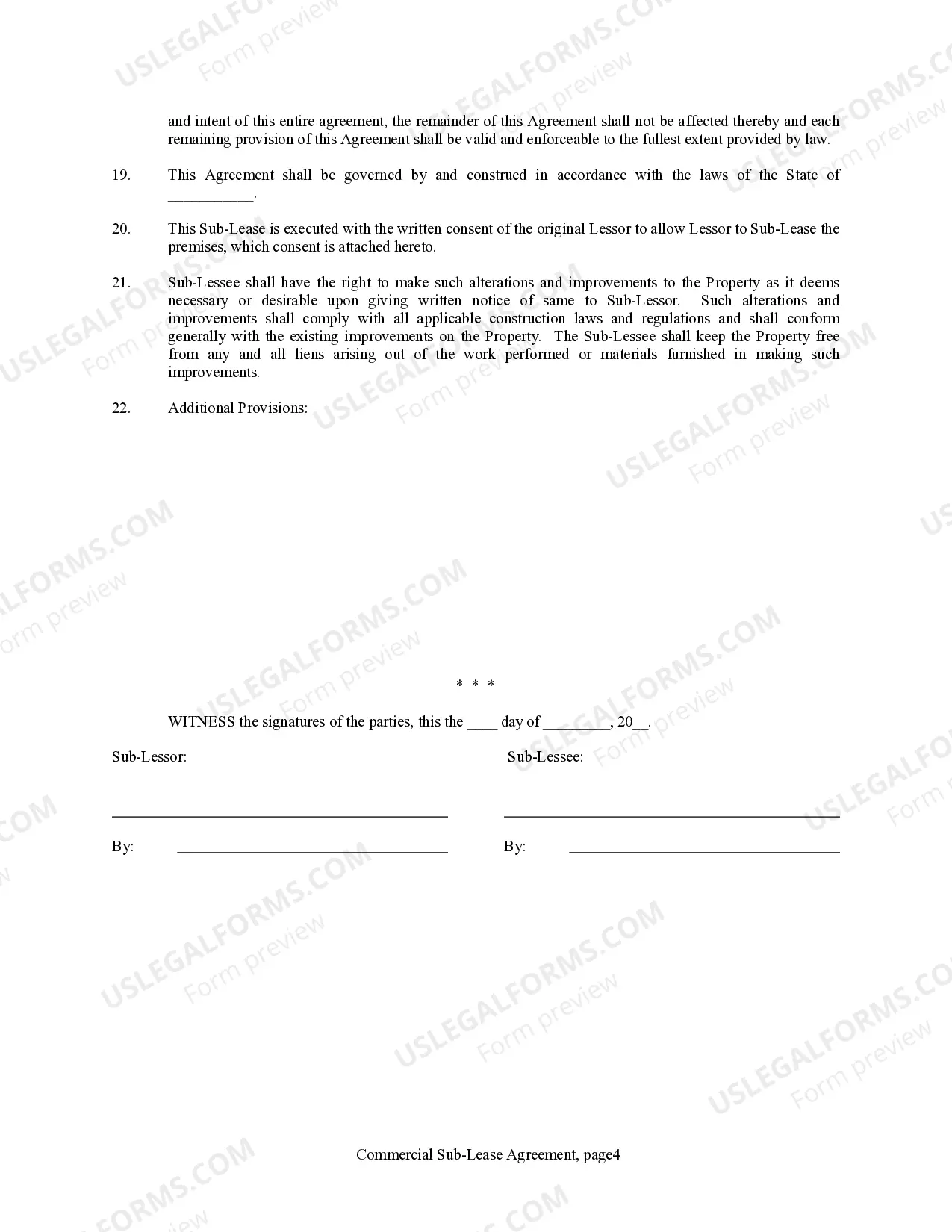
- Provisions for default and termination rights.
Situations where this form applies
This Commercial Sublease form is appropriate in situations where a business tenant needs to relinquish their lease rights to another party temporarily. Common scenarios include a tenant relocating, downsizing, or needing to share space with another tenant while still bound by the original lease terms. It allows flexibility in managing commercial leases while providing legal protection for both parties involved.
Who should use this form
- Commercial property owners looking to lease their space to another party.
- Businesses needing to sublet their leased premises to mitigate costs.
- Sub-Lessees seeking to occupy commercial spaces without signing a direct lease with the property owner.
- Legal professionals assisting clients in the drafting of subleases.
How to complete this form
- Identify the parties involved by entering the names of the Sub-Lessor and Sub-Lessee.
- Clearly describe the commercial property being leased, including its location and any improvements.
- Specify the duration of the sublease and the rental amounts due.
- Fill in the insurance requirements and indemnity clauses.
- Include any other terms related to maintenance, repairs, or default provisions.
- Ensure both parties sign and date the agreement.
Notarization guidance
This form does not typically require notarization unless specified by local law. However, it's recommended to keep a signed copy for both parties for records and potential disputes.
Get your form ready online
Our built-in tools help you complete, sign, share, and store your documents in one place.
Make edits, fill in missing information, and update formatting in US Legal Forms—just like you would in MS Word.
Download a copy, print it, send it by email, or mail it via USPS—whatever works best for your next step.
Sign and collect signatures with our SignNow integration. Send to multiple recipients, set reminders, and more. Go Premium to unlock E-Sign.
If this form requires notarization, complete it online through a secure video call—no need to meet a notary in person or wait for an appointment.
We protect your documents and personal data by following strict security and privacy standards.

Make edits, fill in missing information, and update formatting in US Legal Forms—just like you would in MS Word.

Download a copy, print it, send it by email, or mail it via USPS—whatever works best for your next step.

Sign and collect signatures with our SignNow integration. Send to multiple recipients, set reminders, and more. Go Premium to unlock E-Sign.

If this form requires notarization, complete it online through a secure video call—no need to meet a notary in person or wait for an appointment.

We protect your documents and personal data by following strict security and privacy standards.
Common mistakes
- Failing to check the original lease for subleasing restrictions.
- Omitting details about the property and its condition.
- Not specifying the payment schedule clearly.
- Neglecting to include necessary indemnity and insurance provisions.
- Forgetting to obtain consent from the original lessor when required.
Why use this form online
- Convenience of instant download and completion at your pace.
- Editability allows you to customize the document to fit your specific needs.
- Access to professionally drafted forms ensures legal accuracy.
- Time-saving by avoiding in-person consultations.
Legal use & context
- Establishes a legally binding agreement between the Sub-Lessor and Sub-Lessee
- Defines the rights and obligations of both parties under the sublease
- May be enforceable in the event of disputes, provided it complies with local laws
What to keep in mind
- The Commercial Sublease form allows a tenant to rent out their leased property to another party under specific terms.
- It must comply with the original lease's conditions to be valid.
- Properly completing this form ensures protection for both parties involved in the sublease agreement.
Looking for another form?

Form popularity
FAQ
A commercial sublease is an agreement between a tenant currently leasing a property, a new tenant looking for space, and the property owner. When you sublease your space you are the sublessor (or sublandlord) and your new tenant is the sublessee (or subtenant).
Under California law, a lease does have to be in writing to be enforceable, but only when the lease is for a period of more than a year.There is, however, an additional legal doctrine called partial performance which does make oral contracts enforceable even if they are covered by the Statute of Frauds.
Writing Your Sublease. State the name of the parties and the date of the contract. Identify the full names of each party and what their role is in the contract. The original leaseholder of the property is the Tenant and the person subletting the property is the Subtenant.
The Introduction. The beginning of the lease agreement should contain the name of the landlord and tenant, as well as a statement of the agreement into which they are entering. Rent. Deposit. Taxes. Property Insurance. Utilities and Amenities. Remodeling and Improvements. Repairs and Maintenance.
As long as the contract spells out specific details and both parties have signed that they agree to the contract's terms, a handwritten contract is legally binding and enforceable in court.
Writing Your Sublease. State the name of the parties and the date of the contract. Identify the full names of each party and what their role is in the contract. The original leaseholder of the property is the Tenant and the person subletting the property is the Subtenant.
Name the parties. A simple rental agreement form needs to name the parties signing the lease and where they live. Describe the premises. Define the term of the lease. Set how much rent is owed. Assign a security deposit amount. Finalize the lease.
Check the over-lease. This refers to the lease that was signed by the tenant from whom you're sub-leasing. Note the condition of your room. Get in touch with the management company. Make all payments in person. Ask for a deposit receipt. Comments.
Subleasing occurs when the tenant transfers a part of their legal tenancy to a third-party as a new tenant.That means that if a new subtenant does not pay rent for three months, the original tenant that subleased the property is liable to the landlord for the overdue rent amount and any late fees.