Rhode Island Mutual Wills containing Last Will and Testaments for Man and Woman living together not Married with No Children
About this form
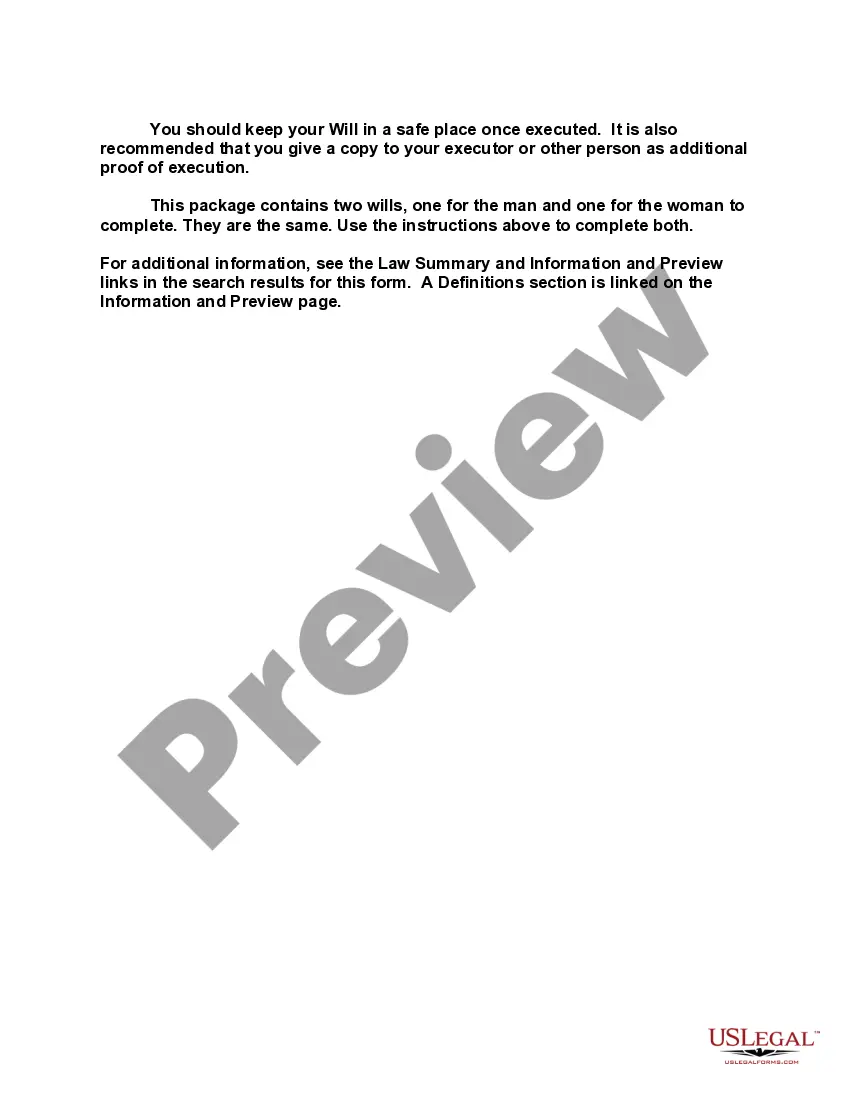
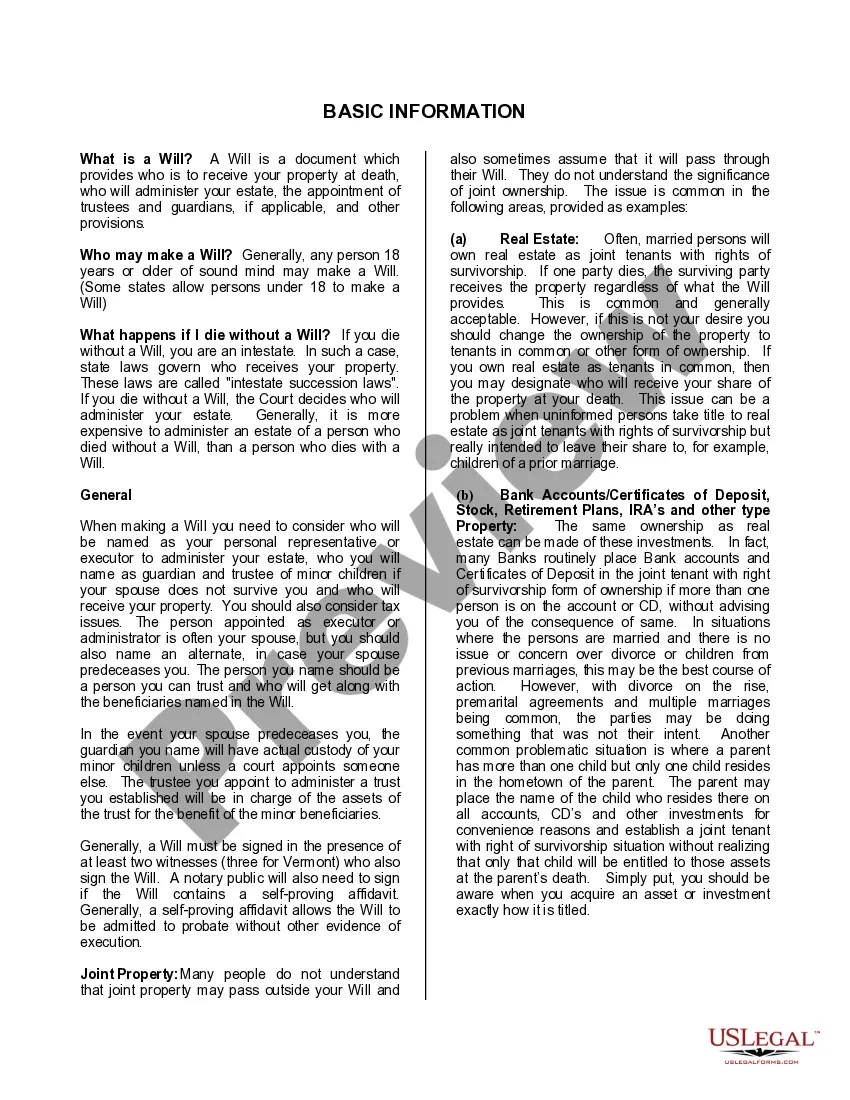
This form package includes mutual wills and Last Will and Testaments specifically designed for a man and a woman living together who are not married and do not have children. It serves those who wish to leave their property to each other despite not being legally married. This is distinct from typical wills as it sets mutual obligations between partners regarding the distribution of their estates after death.
What’s included in this form
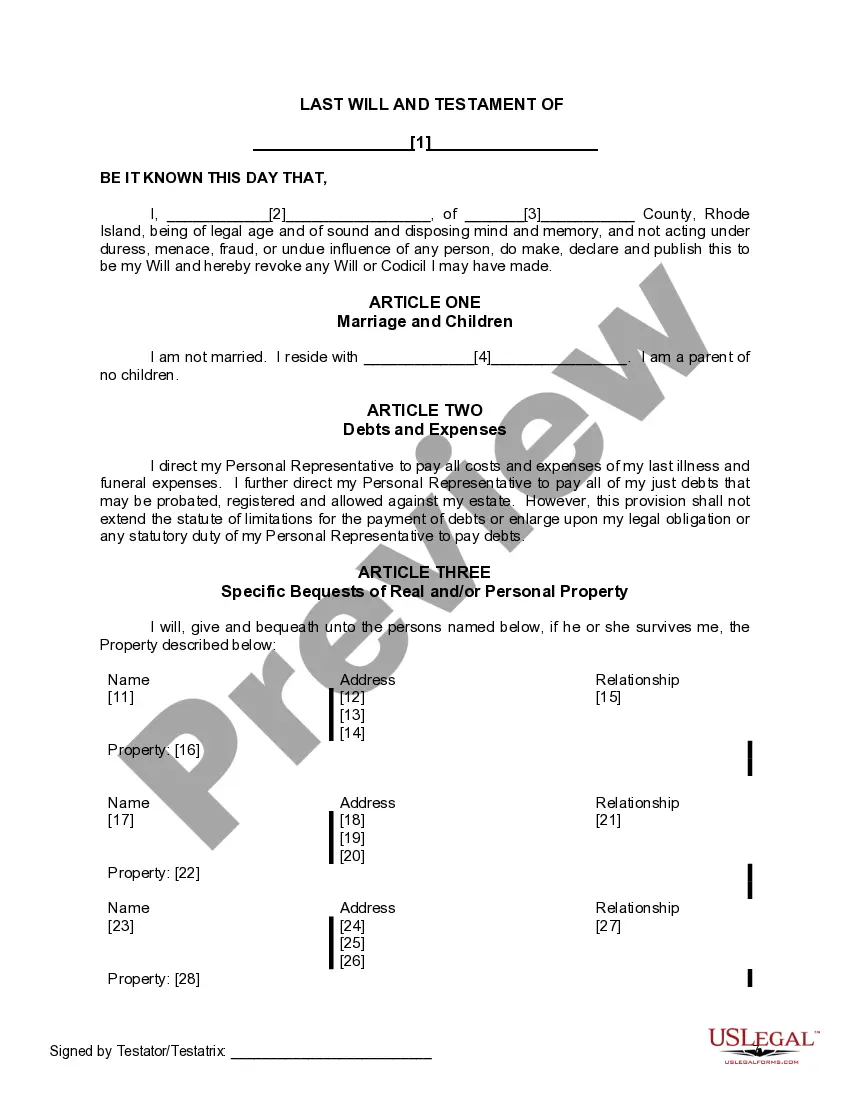
- Article One: Confirms marital status and children (none).
- Article Two: Directs the payment of debts and funeral expenses.
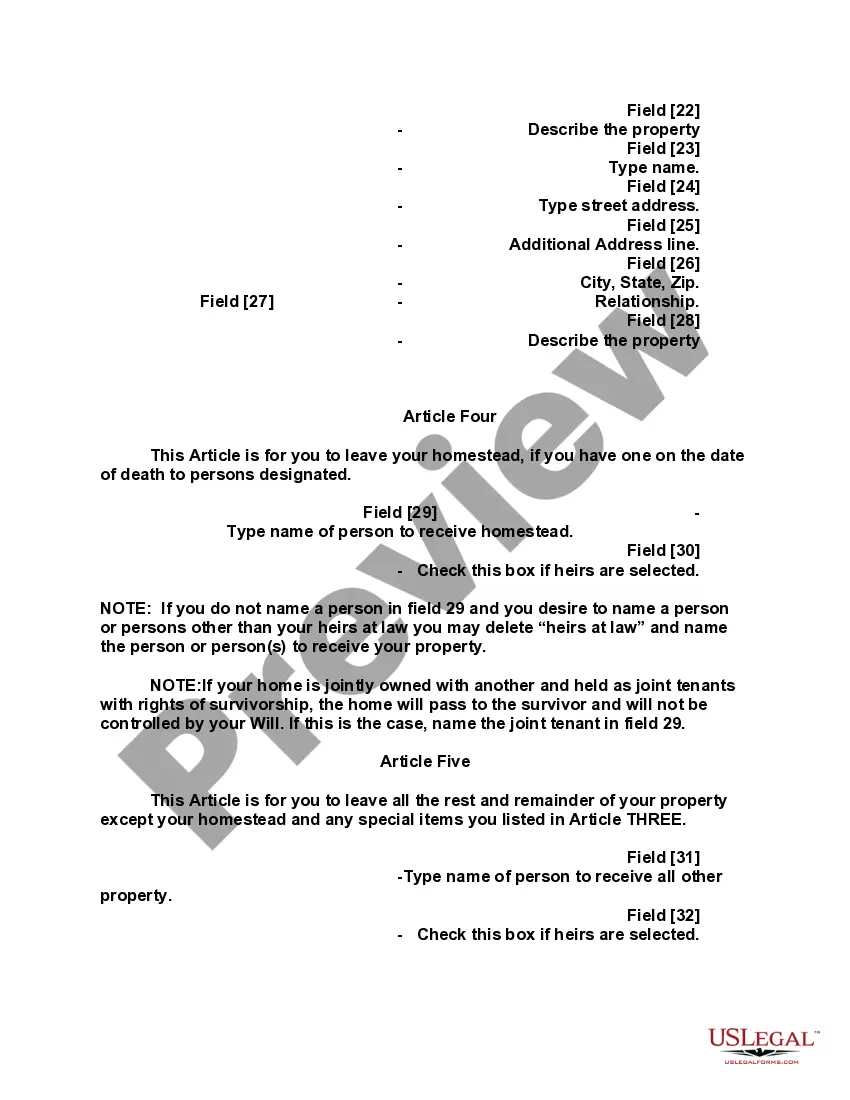
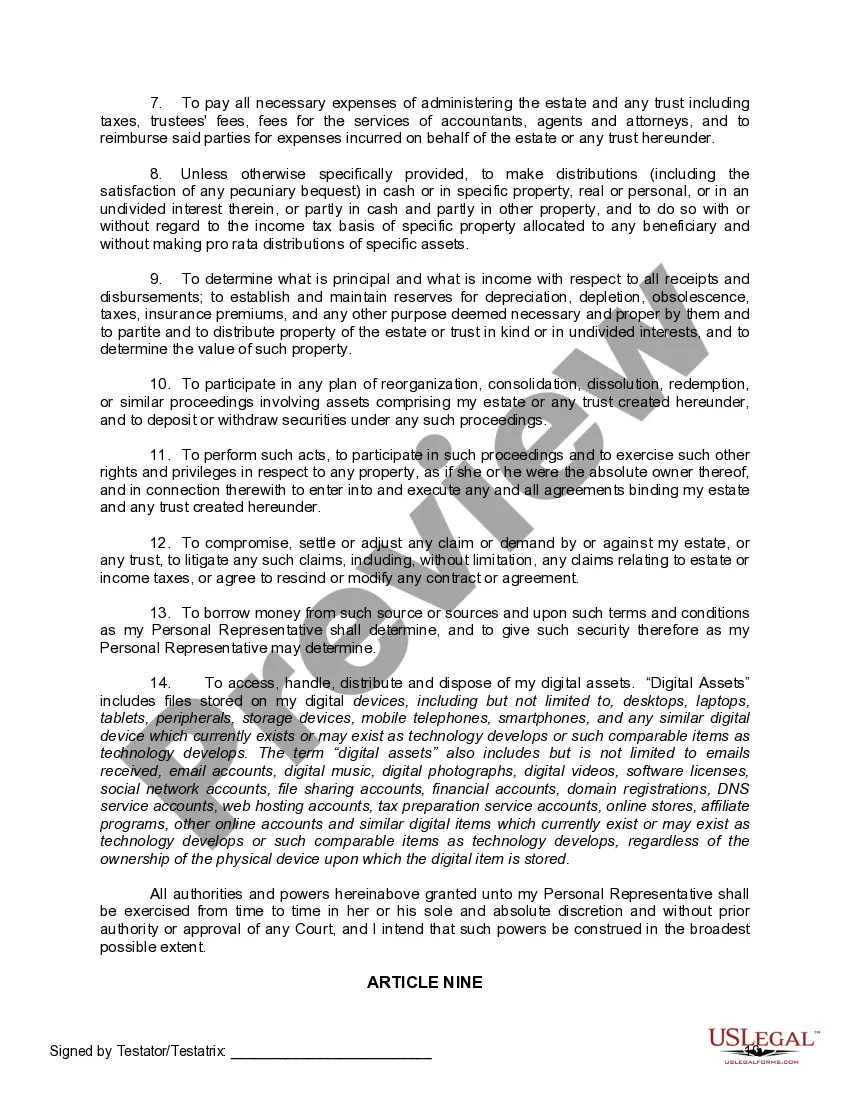
- Article Three: Specifies particular bequests of property to named individuals.
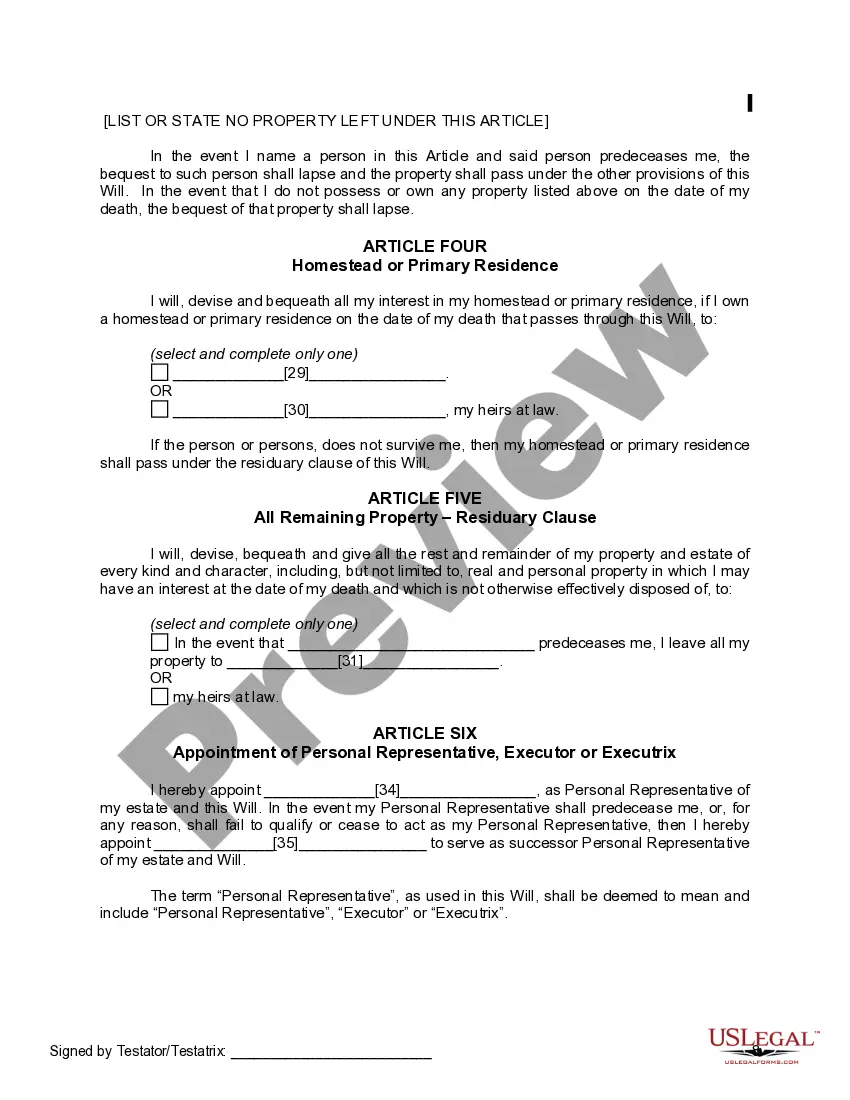
- Article Four: Addresses the distribution of the homestead or primary residence.
- Article Five: Covers all remaining estate property.
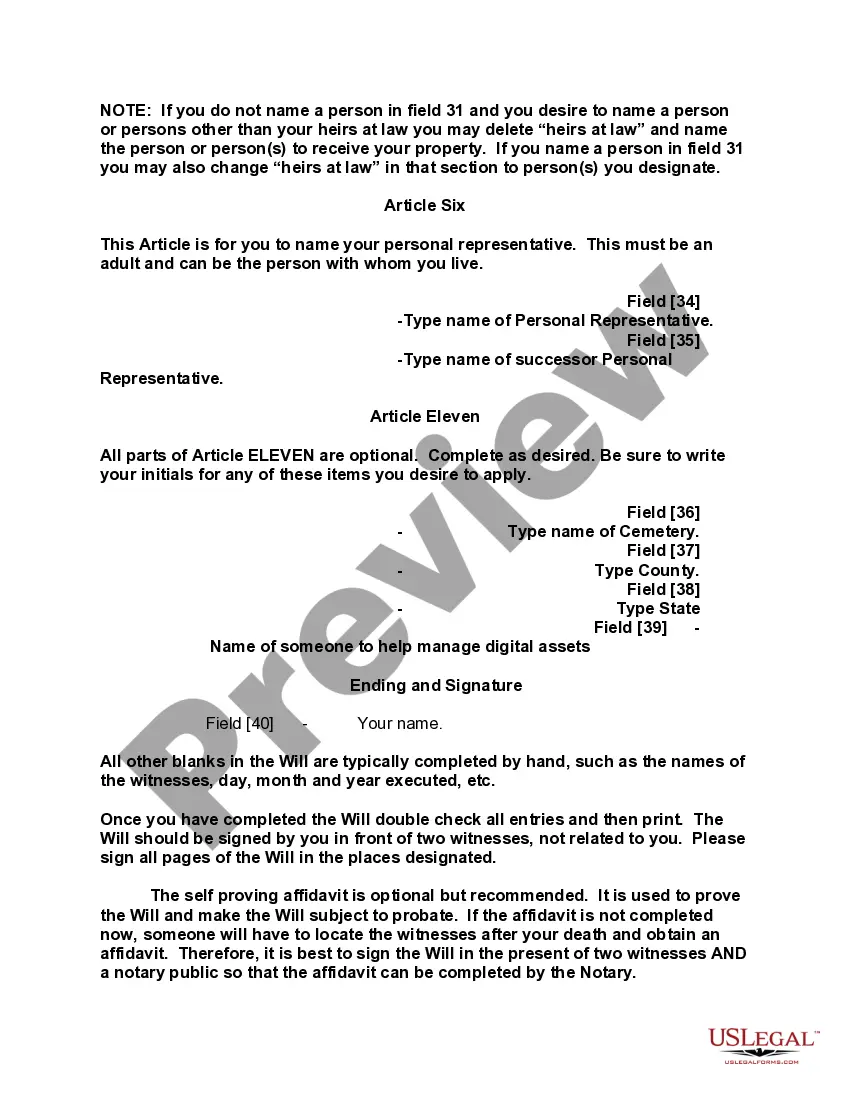
- Article Six: Appoints a personal representative for estate administration.
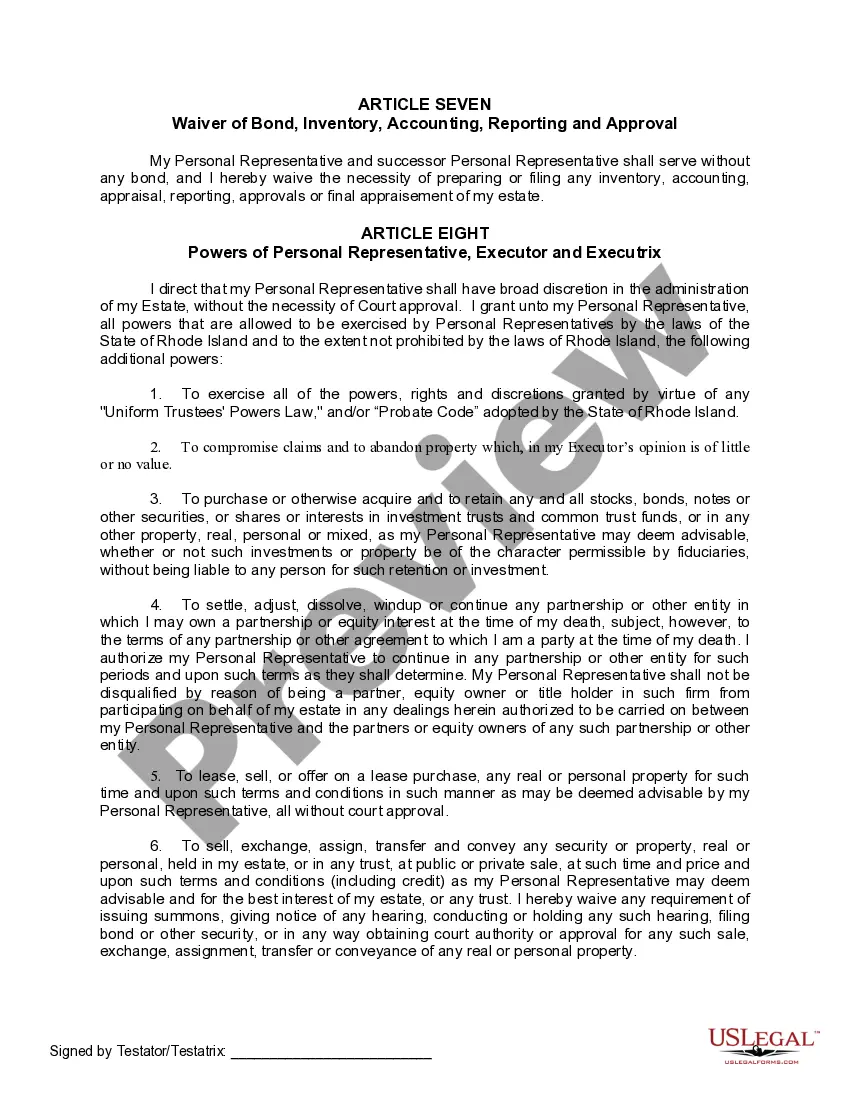
- Ending and Signature: Requires signatures from the testator and witnesses.



Common use cases
This form is necessary when two partners living together, who are not married and have no children, wish to create mutual obligations regarding their estates. It is particularly useful for ensuring that the surviving partner receives the deceased partner's assets, offering peace of mind about asset distribution.
Intended users of this form
This form is suitable for:
- Unmarried couples who live together.
- Couples without children who want to ensure that their partner is provided for after death.
- Anyone looking to specify how their assets should be distributed in the absence of a legal marriage.
How to prepare this document
To complete this form, follow these steps:
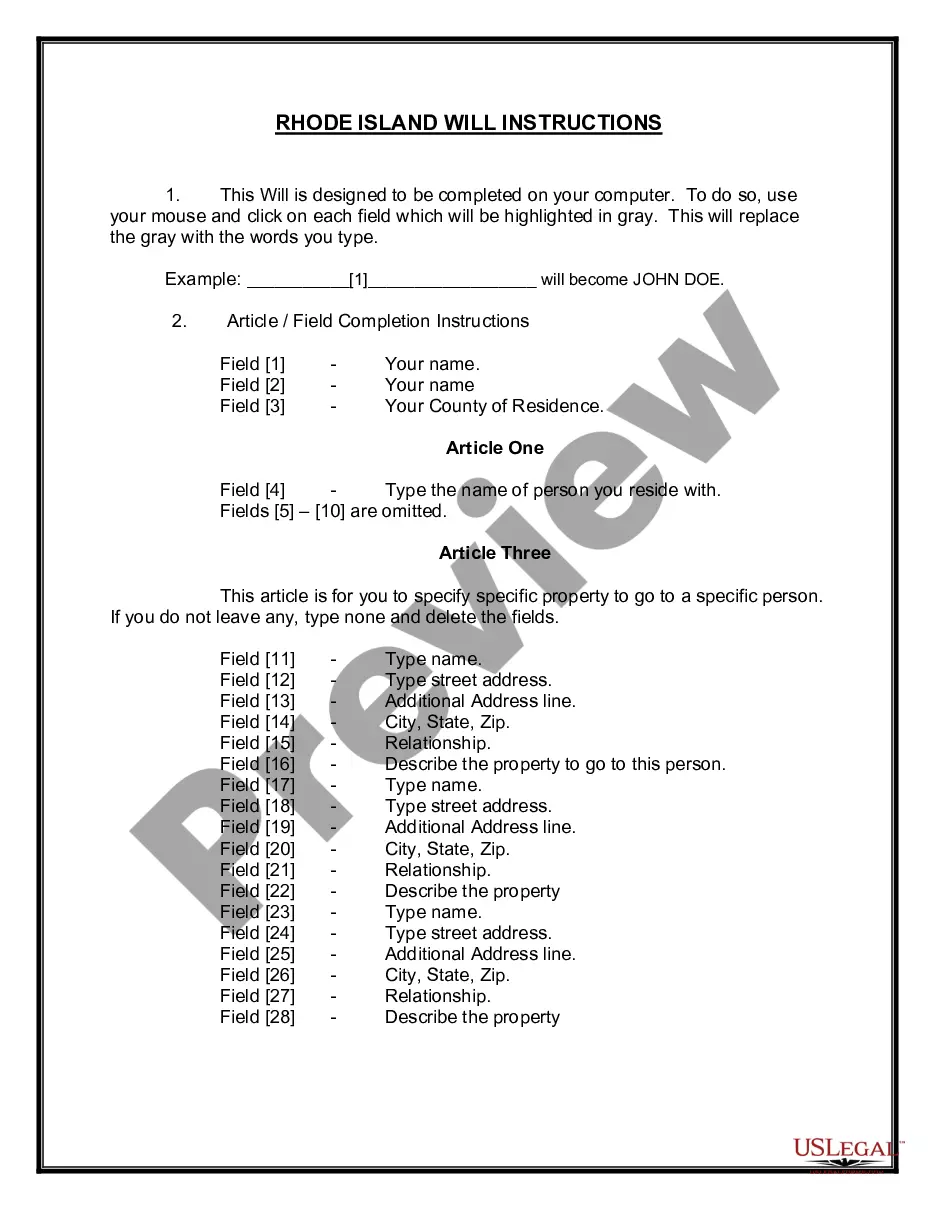
- Identify yourself and the partner you live with by entering the names in the designated fields.
- Specify any specific property you wish to bequeath to certain individuals in Article Three.
- Indicate your homestead or primary residence in Article Four and whom it should pass to.
- Appoint a personal representative in Article Six to handle your estate matters.
- Ensure you and your witnesses sign the document in accordance with your state laws.
Notarization requirements for this form
Yes, this form must be notarized to be legally valid. Having a notary public observe signatures provides an additional layer of legal assurance, making the will self-proving during the probate process. US Legal Forms offers integrated online notarization services for your convenience.
Get your form ready online
Our built-in tools help you complete, sign, share, and store your documents in one place.
Make edits, fill in missing information, and update formatting in US Legal Forms—just like you would in MS Word.
Download a copy, print it, send it by email, or mail it via USPS—whatever works best for your next step.
Sign and collect signatures with our SignNow integration. Send to multiple recipients, set reminders, and more. Go Premium to unlock E-Sign.
If this form requires notarization, complete it online through a secure video call—no need to meet a notary in person or wait for an appointment.
We protect your documents and personal data by following strict security and privacy standards.

Make edits, fill in missing information, and update formatting in US Legal Forms—just like you would in MS Word.

Download a copy, print it, send it by email, or mail it via USPS—whatever works best for your next step.

Sign and collect signatures with our SignNow integration. Send to multiple recipients, set reminders, and more. Go Premium to unlock E-Sign.

If this form requires notarization, complete it online through a secure video call—no need to meet a notary in person or wait for an appointment.

We protect your documents and personal data by following strict security and privacy standards.
Mistakes to watch out for
- Not signing the will in the presence of two witnesses who are not related.
- Failing to complete the self-proving affidavit, which can complicate the probate process.
- Leaving fields blank or not specifying certain properties or beneficiaries.
Why complete this form online
- Convenience of completing the form online from anywhere.
- Editability allows for quick changes without needing to rewrite the entire document.
- Access to legal templates created by licensed attorneys, ensuring that your will complies with state laws.
- This mutual will is legally binding once properly executed according to state laws.
- Wills may be contested, so proper completion with witnesses is crucial to uphold their intent.
- Mutual wills should be considered carefully, especially regarding any changes in personal relationships.
Quick recap
- This form is designed for unmarried couples wishing to create mutual wills.
- It provides specific instructions tailored to your state regulations.
- Proper execution is crucial for legal validity, including witness signatures and notarization.
Looking for another form?
Form popularity
FAQ
The mutual wills can be revoked during the lifetimes of both testators, but, on the first death, the survivor is prevented from making a new will in the future.
Choose an online legal services provider or locate a will template. Carefully consider your distribution wishes. Identify a personal representative/executor. Understand the requirements to make your will legal. Make sure someone else knows about your will. Consult a lawyer if you have a more complicated estate.
A joint will is a legal document executed by two (or more) people, which merges their individual wills into a single, combined last will and testament. Like most wills, a joint will lets the will-makers name who will get their property and assets after they die. Joint wills are usually created by married couples.
Like most wills, a joint will lets the will-makers name who will get their property and assets after they die.After one spouse has died, all the couple's property will be left to the surviving spouse; and. After the surviving spouse dies, the remaining property will be left to the couple's children.
Married couples often execute wills which are identical in their provisions, frequently giving the estate to the surviving spouse or if the spouse does not survive to the children.However, not every mirror will is a "mutual will", indeed very few mirror wills are mutual wills.
There have been examples of joint wills being upheld by the law, but it is on the basis that they are two wills, separately proved; and the second person is at liberty to change the will anyway (unless it is a valid mutual will).
A mutual Will is where two (or more) testators make Wills which mirror the contents of the other(s). However, mutual Wills cannot be altered upon the death of one of the testators.
Most joint wills also contains a provision stating that neither spouse can change or revoke the will alonewhich means that the will can't be changed after the first spouse dies.But a joint will is really a binding legal contract, which cannot be revoked or changed after one spouse has died.
If each spouse has their own Will, California law allows them to make new Wills after the divorce has been filed and creating the new Will does not violate the Automatic Temporary Restraining Order (ATRO) against changing beneficiaries, selling assets, etc. during a California divorce.