Rhode Island Warranty Deed from two Individuals to Husband and Wife
Understanding this form
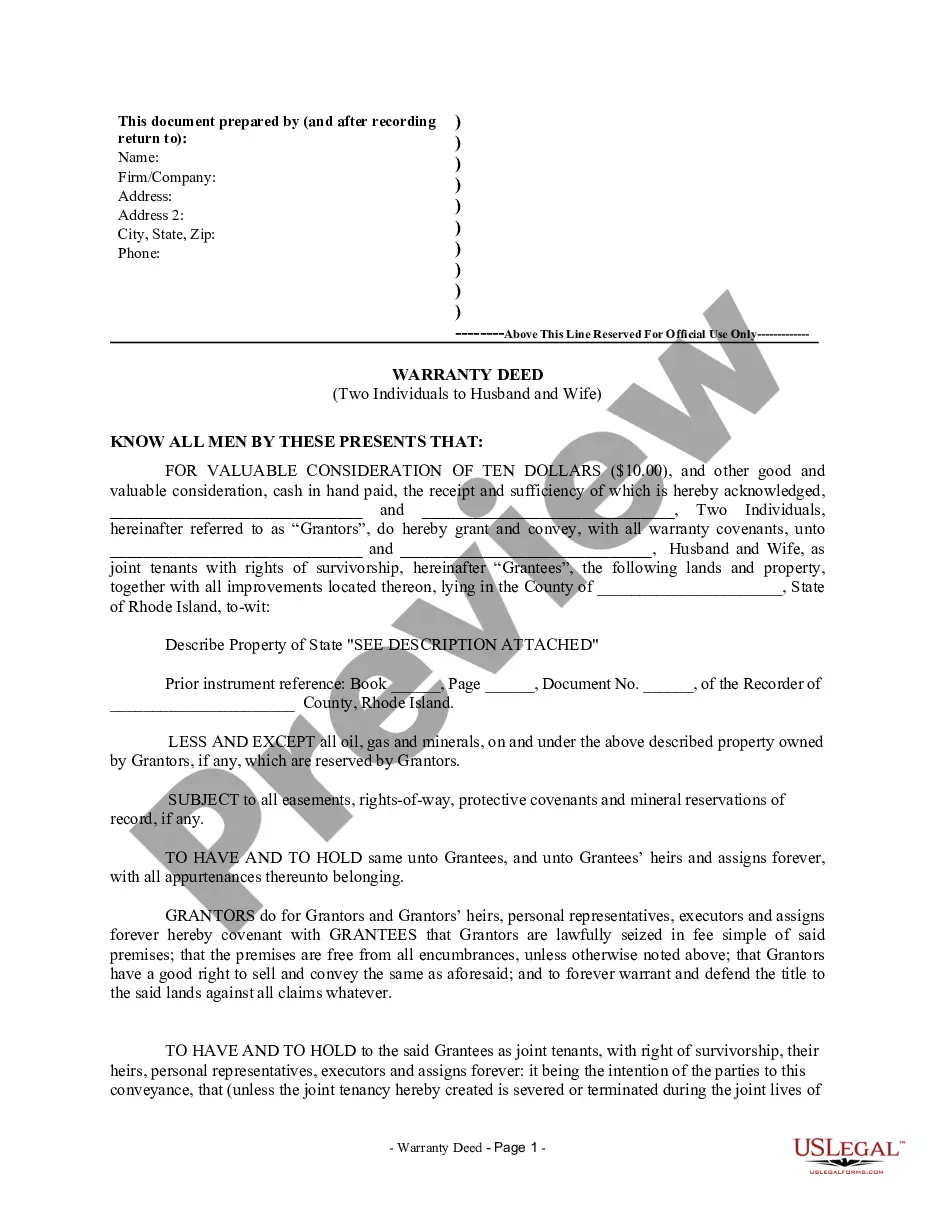
This Warranty Deed from two Individuals to Husband and Wife is a legal document used to transfer ownership of property from two individuals (the Grantors) to a married couple (the Grantees). Unlike other deeds, this form specifies the marital relationship of the Grantees and includes provisions for survivorship rights. It is particularly useful in ensuring that both spouses have equal ownership and rights over the conveyed property, offering protections against potential claims by third parties.
Key parts of this document
- Property description: Clearly identifies the property being transferred.
- Grantors' details: Includes the names and residency of the individuals transferring property.
- Grantees' designation: Specifies the husband and wife receiving the property.
- Reservation clause: States that all oil, gas, and minerals under the property are reserved by Grantors.
- Covenant: Ensures the Grantors are lawfully able to sell the property and warrants against encumbrances.
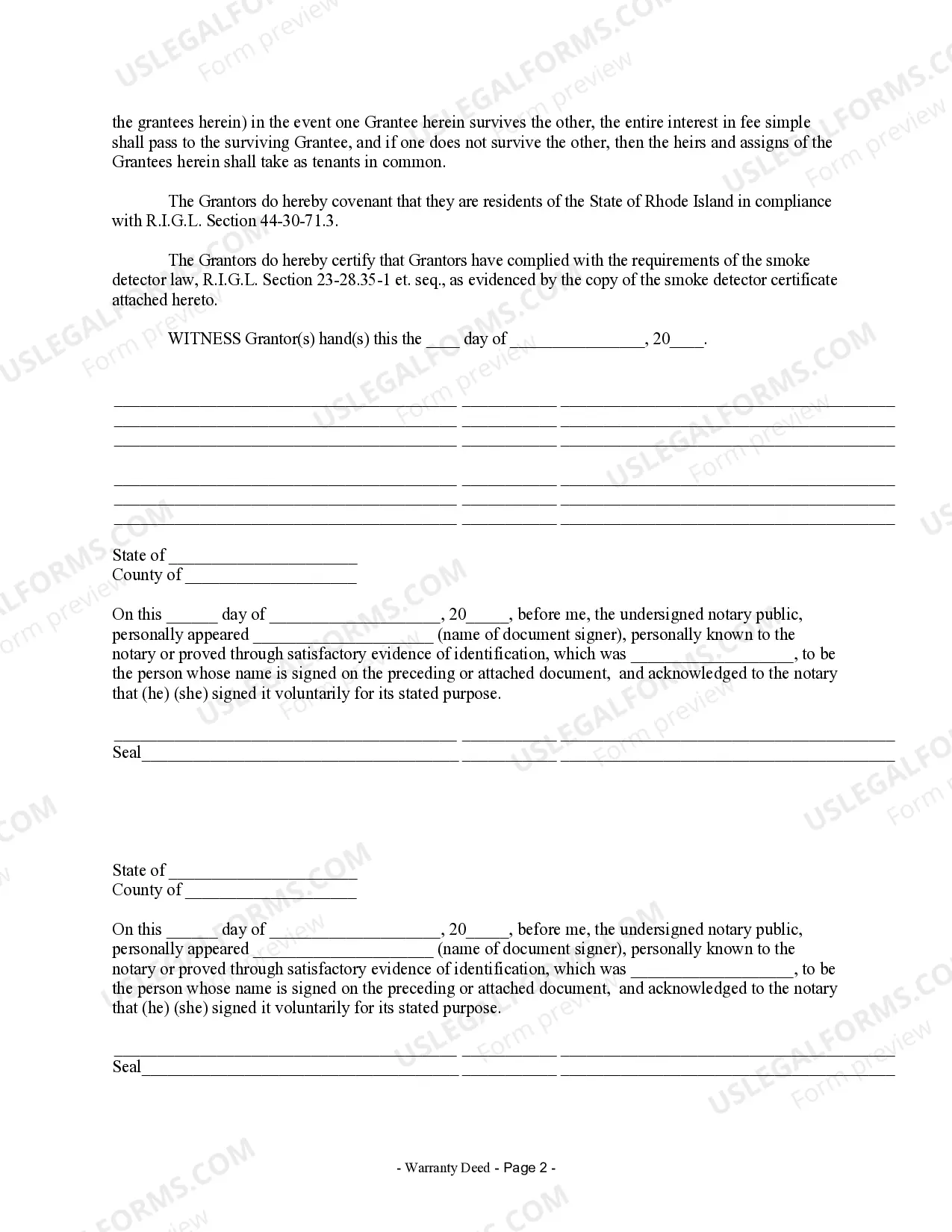
- Notary acknowledgment: Provides space for a notary public to verify the identities of the Grantors upon signing.





Situations where this form applies
This form should be used when two individuals wish to transfer property ownership to a married couple. It is commonly utilized during marriage property settlements, inheritance situations, or when family members decide to consolidate ownership into a single entity for estate planning purposes. This form is essential to establish legal ownership and facilitate joint ownership with survivorship rights.
Who can use this document
- Couples who are married and wish to hold property together.
- Individuals transferring property as part of a marital estate plan.
- Family members who want to ensure seamless property transfer upon death.
- Grantors looking for a legally sound way to convey property to a married couple.
How to complete this form
- Identify the Grantors: Enter the names of the two individuals transferring the property.
- Specify the Grantees: Clearly list the names of the husband and wife receiving the property.
- Describe the property: Provide the specific details of the property being conveyed.
- Complete the notary section: Ensure a notary public is present to witness signatures and verify identities.
- Sign and date the form: Have all parties sign and date the document at the designated spaces.
Notarization guidance
This document requires notarization to meet legal standards. US Legal Forms provides secure online notarization powered by Notarize, allowing you to complete the process through a verified video call, available 24/7.
Get your form ready online
Our built-in tools help you complete, sign, share, and store your documents in one place.
Make edits, fill in missing information, and update formatting in US Legal Forms—just like you would in MS Word.
Download a copy, print it, send it by email, or mail it via USPS—whatever works best for your next step.
Sign and collect signatures with our SignNow integration. Send to multiple recipients, set reminders, and more. Go Premium to unlock E-Sign.
If this form requires notarization, complete it online through a secure video call—no need to meet a notary in person or wait for an appointment.
We protect your documents and personal data by following strict security and privacy standards.

Make edits, fill in missing information, and update formatting in US Legal Forms—just like you would in MS Word.

Download a copy, print it, send it by email, or mail it via USPS—whatever works best for your next step.

Sign and collect signatures with our SignNow integration. Send to multiple recipients, set reminders, and more. Go Premium to unlock E-Sign.

If this form requires notarization, complete it online through a secure video call—no need to meet a notary in person or wait for an appointment.

We protect your documents and personal data by following strict security and privacy standards.
Common mistakes
- Failing to provide a complete and accurate property description.
- Not having the form notarized when required.
- Forgetting to specify the correct names and marital status of the Grantees.
- Neglecting to include necessary reservations, like oil and mineral rights.
Why use this form online
- Convenience: Download the form instantly and fill it out at your own pace.
- Editability: Tailor the document to meet your specific needs before finalizing.
- Reliability: Forms are drafted by licensed attorneys ensuring legal compliance.
Looking for another form?

Form popularity
FAQ
When it comes to reasons why you shouldn't add your new spouse to the Deed, the answer is simple divorce and equitable distribution. If you choose not to put your spouse on the Deed and the two of you divorce, the entire value of the home is not subject to equitable distribution.
If you've recently married and already own a home or other real estate, you may want to add your new spouse to the deed for your property so the two of you own it jointly. To add a spouse to a deed, all you have to do is literally fill out, sign and record a new deed in your county recorder's office.
Two of the most common ways to transfer property in a divorce are through an interspousal transfer deed or quitclaim deed. When spouses own property together, but then one spouse executes an interspousal transfer or a quitclaim deed, this is known as transmutation.
When it comes to reasons why you shouldn't add your new spouse to the Deed, the answer is simple divorce and equitable distribution. If you choose not to put your spouse on the Deed and the two of you divorce, the entire value of the home is not subject to equitable distribution.
You can gift property to spouse, child or any relative and register the same. Under section 122 of the Transfer of Property Act, 1882, you can transfer immovable property through a gift deed. The deed should contain your details as well as those of the recipient.
The easiest way to grant your spouse title to your home is via a quitclaim deed (Californians generally use an interspousal grant deed). With a quitclaim deed, you can name your spouse as the property's joint owner. The quitclaim deed must include the property's description, including its boundary lines.
You may be able to transfer your interest in the property through a quitclaim deed, where you relinquish all ownership of the property to someone else. Your lender may also agree to add another name to the mortgage. In this case, someone else would be able to legally make payments on the mortgage.
In states like California and Florida, the spouses may use a quitclaim deed to transfer the property without warranting title. Other stateslike Texasrecognize a similar type of deed called a deed without warranty.
Yes you can. This is called a transfer of equity but you will need the permission of your lender. If you are not married or in a civil partnership you may wish to consider creating a deed of trust and a living together agreement which we can explain to you.