Rhode Island Quitclaim Deed from Corporation to Corporation
About this form
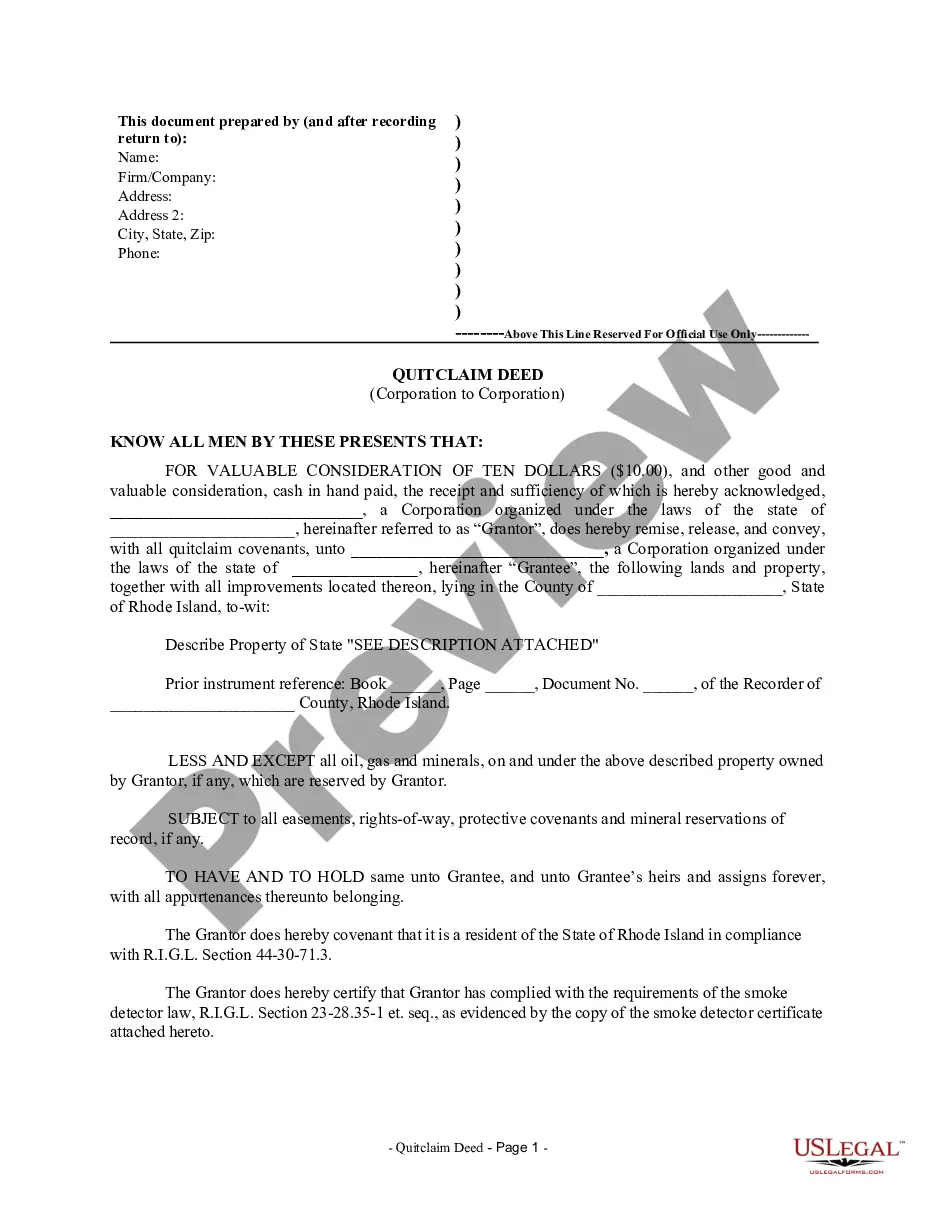
The Quitclaim Deed from Corporation to Corporation is a legal document used to transfer property ownership from one corporation to another. Unlike other types of deeds, a quitclaim deed does not assure the grantee of clear titleâit simply relinquishes any interest the grantor may have in the property. This deed is commonly used when one corporation wants to transfer real estate to another without extensive title guarantees, making it a versatile option in corporate transactions.
Key parts of this document
- Description of Property: Includes specific details about the real estate being transferred.
- Grantor and Grantee Information: The names and details of the corporations involved in the transaction.
- Reservation Clause: States the exclusion of oil, gas, and minerals owned by the Grantor.
- Covenants: Guarantees compliance with state laws, including residency and smoke detector compliance.
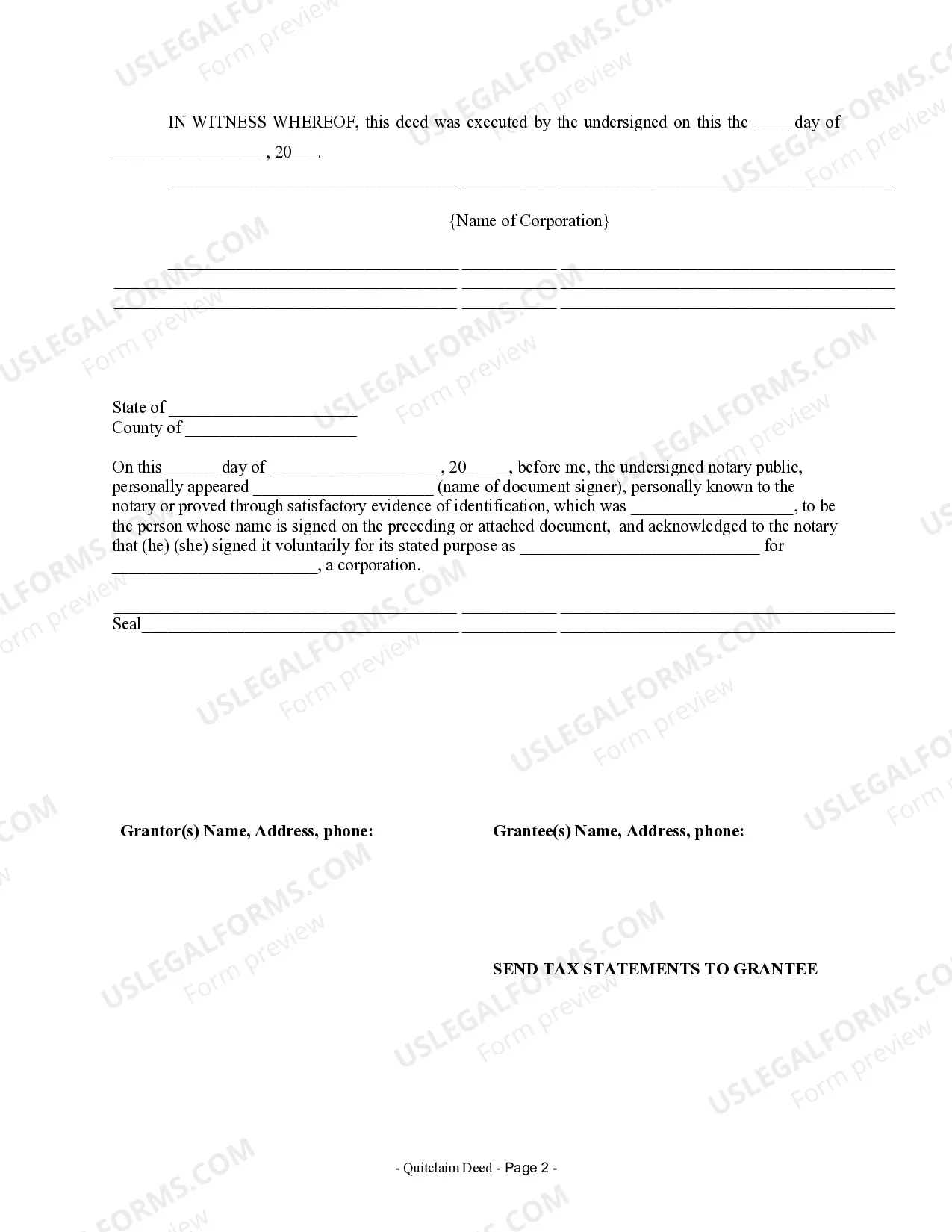
- Execution: Details regarding signatures, including the notary acknowledgment.


When to use this document
This form is typically used in situations where one corporation is transferring property to another corporation, such as in mergers, acquisitions, or real estate transactions between business entities. It can also be applicable when a corporation wants to simplify property ownership transfers without guaranteeing title integrity.
Who this form is for
- Corporations involved in property transactions.
- Real estate professionals facilitating transfers between corporations.
- Legal representatives assisting corporations with property management.
How to prepare this document
- Identify the parties: Fill in the names of the Grantor and the Grantee corporations.
- Describe the property: Provide a detailed description of the property being transferred.
- Enter relevant dates: Fill in the date of execution and any specific information needed in the designated fields.
- Sign the deed: An authorized representative from the Grantor corporation must sign the document.
- Notarize the document: Arrange for notarization to validate the deed if required by local law.
Is notarization required?
Yes, this form must be notarized to be legally valid. The notarization confirms the identity of the signing party and ensures that the transfer is executed correctly. US Legal Forms provides integrated online notarization services, allowing you to complete this process securely and conveniently from your location.
Get your form ready online
Our built-in tools help you complete, sign, share, and store your documents in one place.
Make edits, fill in missing information, and update formatting in US Legal Forms—just like you would in MS Word.
Download a copy, print it, send it by email, or mail it via USPS—whatever works best for your next step.
Sign and collect signatures with our SignNow integration. Send to multiple recipients, set reminders, and more. Go Premium to unlock E-Sign.
If this form requires notarization, complete it online through a secure video call—no need to meet a notary in person or wait for an appointment.
We protect your documents and personal data by following strict security and privacy standards.

Make edits, fill in missing information, and update formatting in US Legal Forms—just like you would in MS Word.

Download a copy, print it, send it by email, or mail it via USPS—whatever works best for your next step.

Sign and collect signatures with our SignNow integration. Send to multiple recipients, set reminders, and more. Go Premium to unlock E-Sign.

If this form requires notarization, complete it online through a secure video call—no need to meet a notary in person or wait for an appointment.

We protect your documents and personal data by following strict security and privacy standards.
Common mistakes
- Failing to accurately describe the property being transferred.
- Omitting required signatures or dates.
- Not ensuring compliance with local laws regarding notarization.
- Overlooking the reservation clause for oil, gas, and minerals.
Benefits of using this form online
- Convenience: Download the form anytime without needing to visit a lawyer.
- Editability: Fill out the form electronically or print it for manual completion.
- Reliability: Use a professionally drafted form that complies with state laws.
Quick recap
- The Quitclaim Deed from Corporation to Corporation facilitates property transfers between corporate entities.
- It is essential to accurately complete all sections to prevent legal issues.
- A notarization is required for the deed to be considered valid and enforceable.
- This form adheres to Rhode Island laws, so ensure compliance with local regulations if the form is used outside this jurisdiction.
Looking for another form?




Form popularity
FAQ
Quitclaim deeds do not rid the grantor of tax obligations.However, once a grantee accepts a clear title on the property, they inherit the responsibility of paying the newly acquired property taxes. The grantor no longer is obligated to pay future taxes on the property.
But you might be wondering if an owner can transfer a deed to another person without a real estate lawyer. The answer is yes. Parties to a transaction are always free to prepare their own deeds.A quitclaim deed, for example, is far simpler than a warranty deed.
A Quitclaim Deed must be notarized by a notary public or attorney in order to be valid.Consideration in a Quitclaim Deed is what the Grantee will pay to the Grantor for the interest in the property.
Fill out the quit claim deed form, which can be obtained online, or write your own using the form as a guide. The person giving up the interest in the property is the grantor, and the person receiving the interest is the grantee.
Quitclaim deeds are not taxable when they transfer ownership to a spouse or a qualifying charity. Other transactions may be liable to property and gift taxes. The quitclaim process is an easy way to transfer an interest in property where no money changes hands.
The drawback, quite simply, is that quitclaim deeds offer the grantee/recipient no protection or guarantees whatsoever about the property or their ownership of it. Maybe the grantor did not own the property at all, or maybe they only had partial ownership.
How to Quitclaim Deed to LLC. A quitclaim deed to LLC is actually a very simple process. You will need a deed form and a copy of the existing deed to make sure you identify titles properly and get the legal description of the property.