Rhode Island Contract for Deed Seller's Annual Accounting Statement
Overview of this form
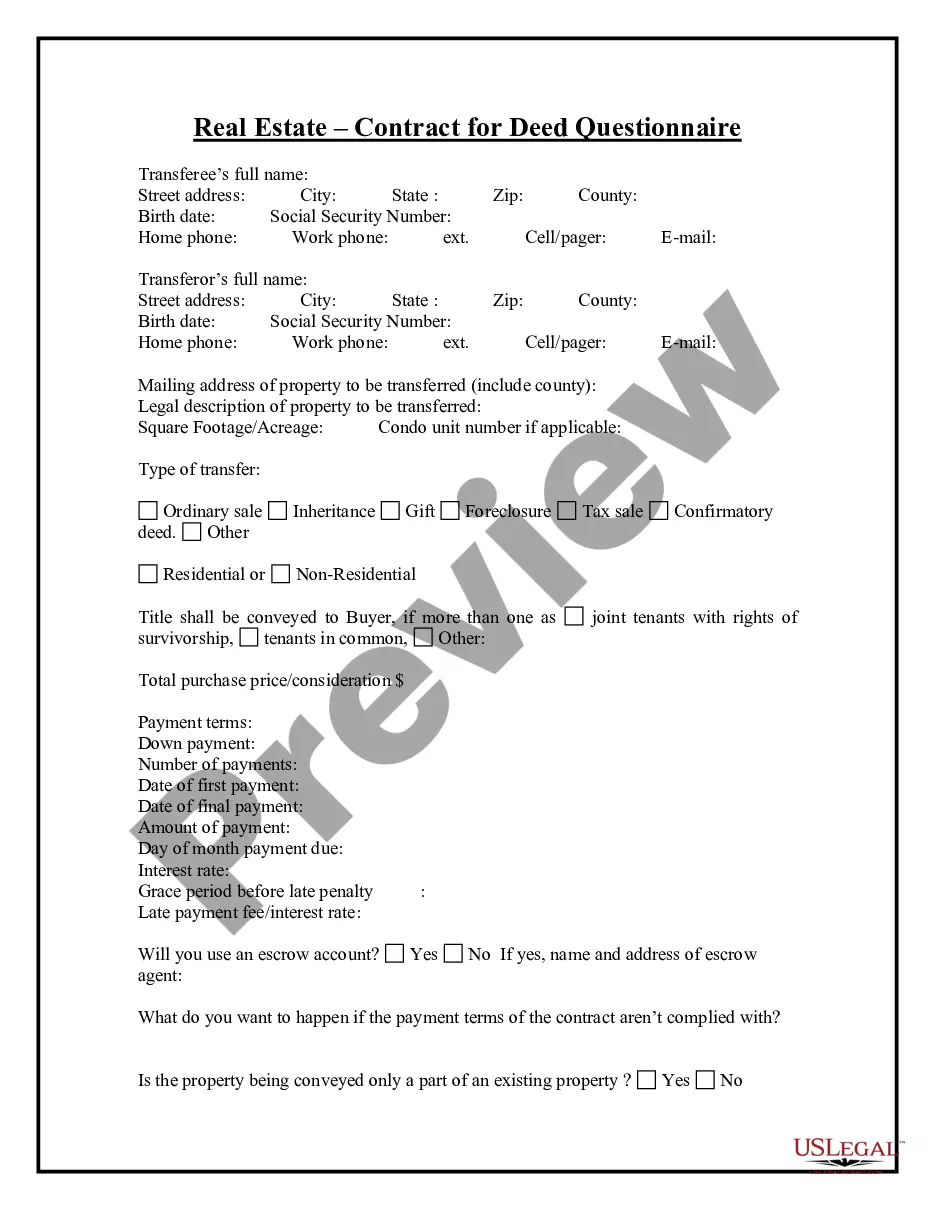
The Contract for Deed Seller's Annual Accounting Statement is a legal document that provides the Purchaser with a detailed account of all payments received by the Seller towards the purchase price and interest of a property sold under a contract for deed. This form serves a specific purpose by ensuring transparency between the Seller and Purchaser regarding payment status over the course of the year, distinguishing it from other financial statements or reports.
Main sections of this form
- Number and amount of payments received by the Seller.
- Total interest and principal amounts applied to the balance.
- Annual summary of payment history for transparency.
- Contact information for follow-up inquiries.
- Signature section for Seller confirmation.

When to use this document
This form should be used annually by the Seller to document the financial progress of the contract for deed. It is especially relevant when the Seller needs to keep the Purchaser informed of the payment status, which is crucial for record-keeping and during potential disputes regarding the contract terms or total amounts paid.
Who this form is for
- Home Sellers utilizing a contract for deed arrangement.
- Purchasers of property under a contract for deed.
- Real estate agents and attorneys assisting in the transaction.
- Accountants managing property sales and financial records.
Completing this form step by step
- Identify the names of both the Seller and Purchaser clearly at the top of the document.
- List the total number of payments received during the year.
- Detail the amounts of each payment made towards both the principal and interest.
- Include the date of each payment for accurate record-keeping.
- Sign and date the document to certify its accuracy before distributing it to the Purchaser.
Notarization guidance
Notarization is required for this form to take effect. Our online notarization service, powered by Notarize, lets you verify and sign documents remotely through an encrypted video session, available 24/7.
Get your form ready online
Our built-in tools help you complete, sign, share, and store your documents in one place.
Make edits, fill in missing information, and update formatting in US Legal Forms—just like you would in MS Word.
Download a copy, print it, send it by email, or mail it via USPS—whatever works best for your next step.
Sign and collect signatures with our SignNow integration. Send to multiple recipients, set reminders, and more. Go Premium to unlock E-Sign.
If this form requires notarization, complete it online through a secure video call—no need to meet a notary in person or wait for an appointment.
We protect your documents and personal data by following strict security and privacy standards.

Make edits, fill in missing information, and update formatting in US Legal Forms—just like you would in MS Word.

Download a copy, print it, send it by email, or mail it via USPS—whatever works best for your next step.

Sign and collect signatures with our SignNow integration. Send to multiple recipients, set reminders, and more. Go Premium to unlock E-Sign.

If this form requires notarization, complete it online through a secure video call—no need to meet a notary in person or wait for an appointment.

We protect your documents and personal data by following strict security and privacy standards.
Typical mistakes to avoid
- Failing to record all payments correctly, which may lead to disputes.
- Not including the required signatures, rendering the statement unofficial.
- Missing deadlines for annual submission, which could affect legal standing.
- Neglecting to keep copies for personal records.
Why complete this form online
- Convenient downloadable format allows for easy access and submission.
- Editable fields ensure that you can accurately input payment details.
- Instant access facilitates timely delivery to the Purchaser.
- Reliable templates drafted by licensed attorneys ensure legal compliance.
Looking for another form?





Form popularity
FAQ
Gather required information. Name of Company. Get proof of good standing or legal existence. Register your business. Register with the RI Division of Taxation. Confirm your filing.
Choose a business name. File an assumed business name with the city or town clerk. Obtain licenses, permits, and zoning clearance. Obtain an Employer Identification Number.
If you don't register your brands, logos and names as trademarks there are no guarantees that you have the right to use them.By not protecting your business with a registered trademark, another trader can start using a similar name to yours in your industry, and you may have no power to stop them.
Gather required information. Name of Company. Get proof of good standing or legal existence. Register your business. Register with the RI Division of Taxation. Confirm your filing.
To close your business in Rhode Island, you must satisfy all filing obligations with both the RI Division of Taxation and the RI Department of State. To dissolve your business, it must be active and up to date with all filings with the RI Department of State. To verify your status, email corporations@sos.ri.gov.
How much does it cost to form an LLC in Rhode Island? The Rhode Island Secretary of State charges $150 to file the Articles of Organization. You can reserve your LLC name with the Rhode Island Secretary of State for $50.
Choose a Name for Your LLC. Appoint a Resident Agent. File Articles of Organization. Prepare an Operating Agreement. Obtain an EIN. File Annual Reports.
Step 1: Choose a Business Idea. Step 2: Write a Business Plan. Step 3: Select a Business Entity. Step 4: Register a Business Name. Step 5: Get an EIN. Step 6: Open a Business Bank Account. Step 7: Apply for Business Licenses & Permits. Step 8: Find Financing.
Step 1: Choose a Business Idea. Step 2: Write a Business Plan. Step 3: Select a Business Entity. Step 4: Register a Business Name. Step 5: Get an EIN. Step 6: Open a Business Bank Account. Step 7: Apply for Business Licenses & Permits. Step 8: Find Financing.