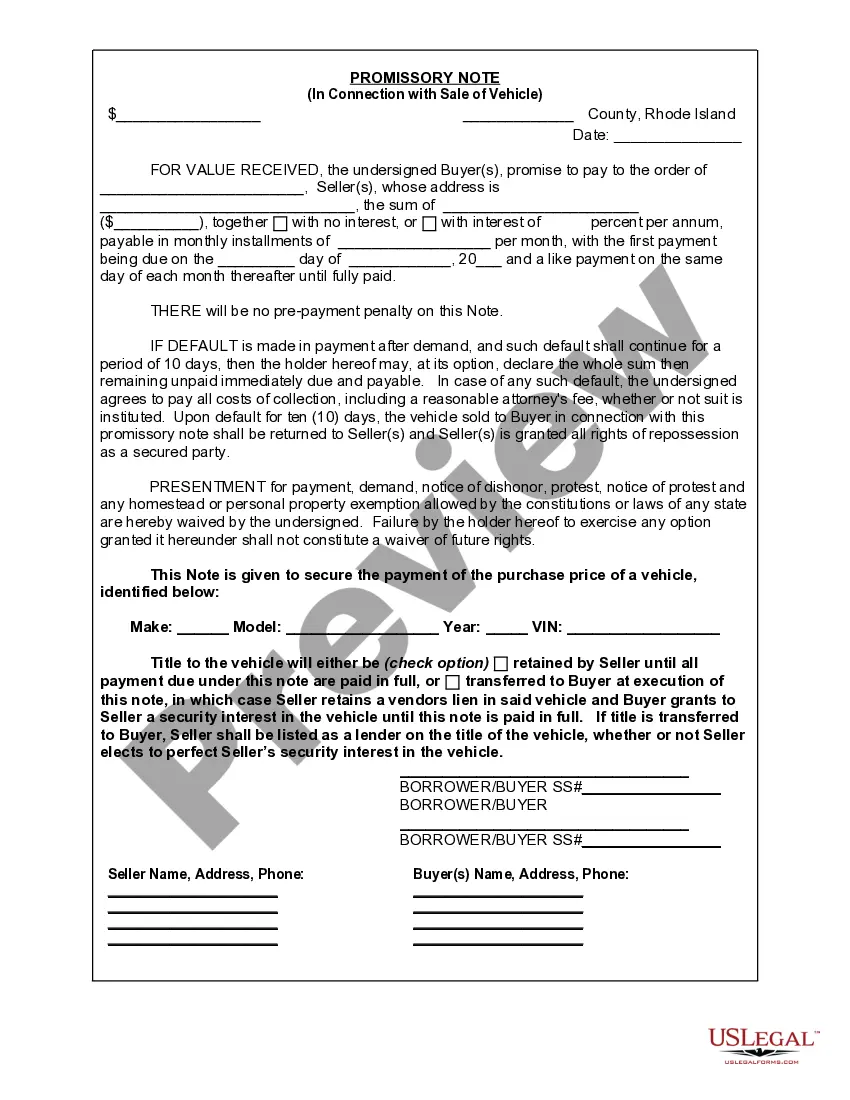
Rhode Island Promissory Note in Connection with Sale of Vehicle or Automobile
Understanding this form
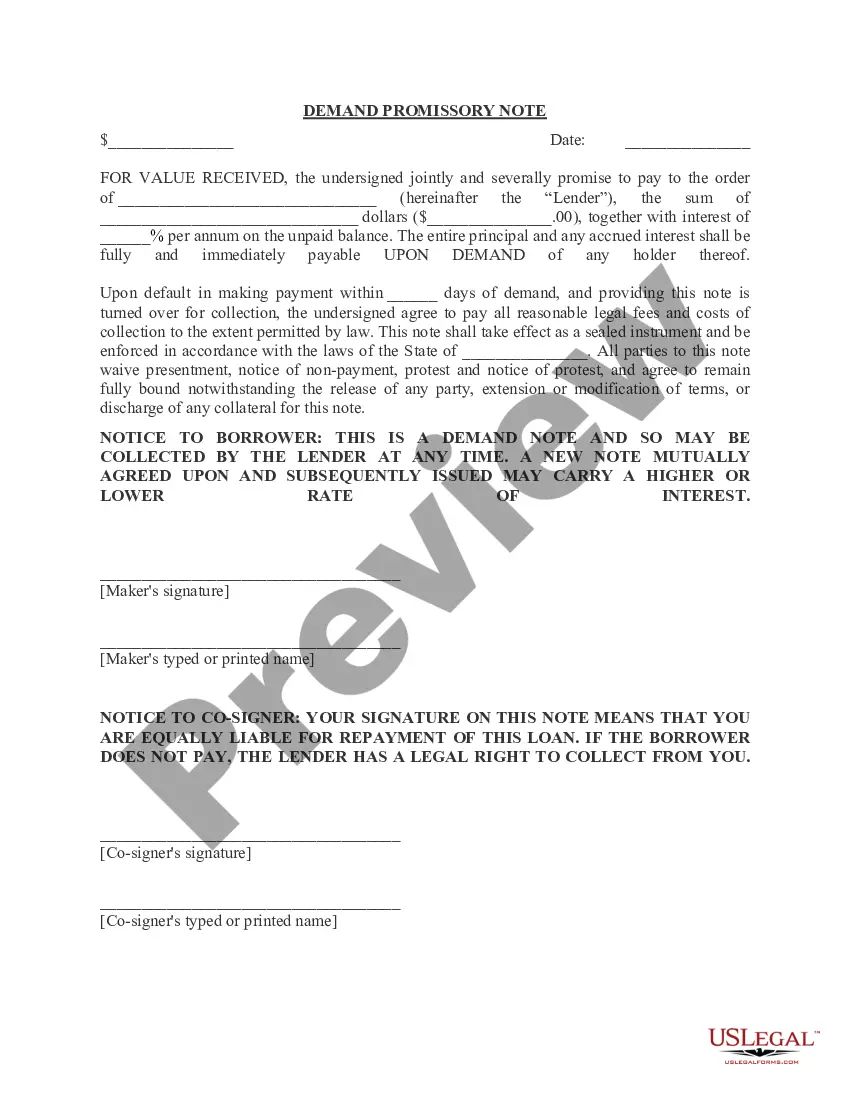
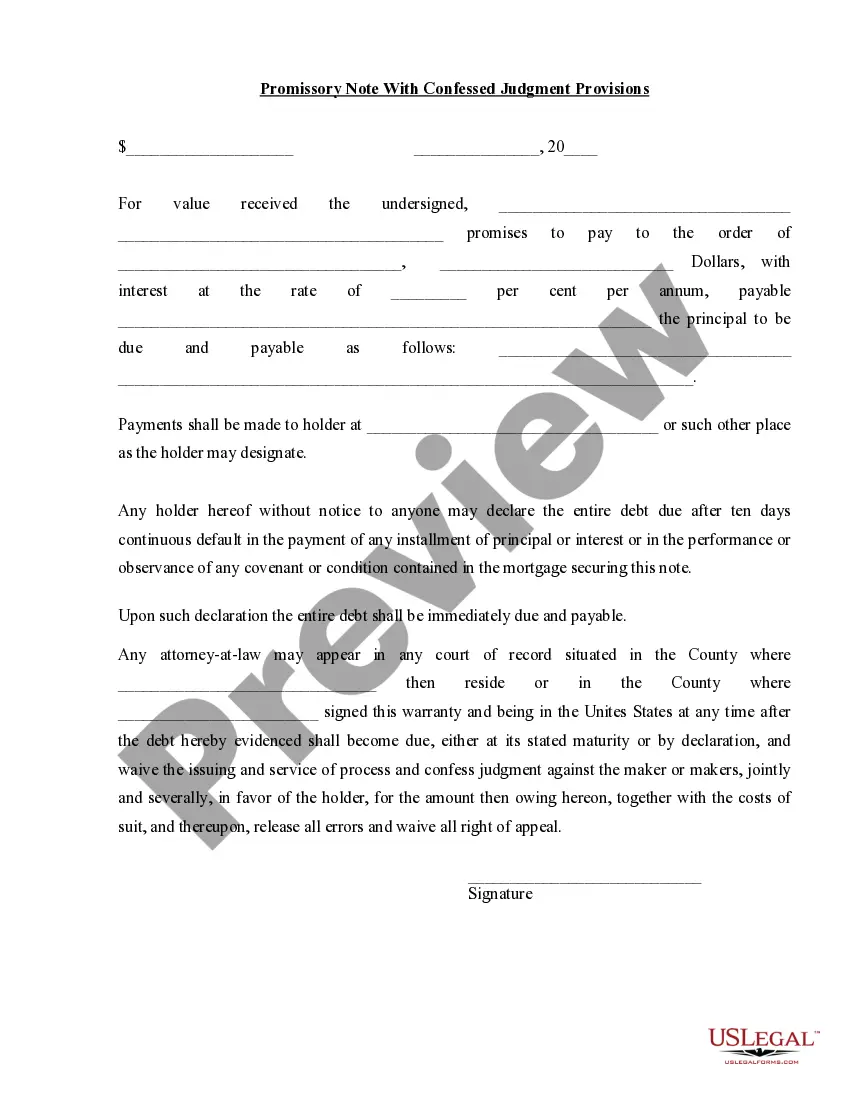
The Promissory Note in Connection with Sale of Vehicle is a legal document used when selling a vehicle, allowing the buyer to pay a portion of the purchase price over time. This form outlines the terms of repayment and the rights of both the seller and buyer. Unlike other financial agreements, this note specifically relates to vehicle sales and includes provisions for repossession in the event of default.
What’s included in this form
- Identification of the vehicle, including make, model, year, and VIN.
- Terms of payment, including the total amount financed and repayment schedule.
- Conditions of default and the seller's rights, including repossession of the vehicle.
- Options regarding the retention or transfer of the vehicle's title.
- Borrower and seller details, including names, addresses, and contact information.
When this form is needed
This form is useful in scenarios where an individual is selling a vehicle but the buyer is unable to pay the full purchase price upfront. It lays out a structured payment plan and protects the interests of both parties. Use this form when you want a clear, legal record of the payment agreement and terms regarding defaults and repossession.
Who can use this document
- Sellers of vehicles who wish to finance the sale.
- Buyers who cannot afford to pay for the vehicle in full at the time of sale.
- Individuals looking for a legally binding agreement to outline payment terms and conditions.
Instructions for completing this form
- Identify the buyer and seller by entering their names and contact information.
- Specify the details of the vehicle, including make, model, year, and VIN.
- Enter the total purchase price and the terms of payment.
- Decide if the seller will retain the title until payment is complete or if it will be transferred with a vendor's lien.
- Both parties should sign and date the document to make it legally binding.
Does this form need to be notarized?
Notarization is generally not required for this form. However, certain states or situations might demand it. You can complete notarization online through US Legal Forms, powered by Notarize, using a verified video call available anytime.
Get your form ready online
Our built-in tools help you complete, sign, share, and store your documents in one place.
Make edits, fill in missing information, and update formatting in US Legal Forms—just like you would in MS Word.
Download a copy, print it, send it by email, or mail it via USPS—whatever works best for your next step.
Sign and collect signatures with our SignNow integration. Send to multiple recipients, set reminders, and more. Go Premium to unlock E-Sign.
If this form requires notarization, complete it online through a secure video call—no need to meet a notary in person or wait for an appointment.
We protect your documents and personal data by following strict security and privacy standards.

Make edits, fill in missing information, and update formatting in US Legal Forms—just like you would in MS Word.

Download a copy, print it, send it by email, or mail it via USPS—whatever works best for your next step.

Sign and collect signatures with our SignNow integration. Send to multiple recipients, set reminders, and more. Go Premium to unlock E-Sign.

If this form requires notarization, complete it online through a secure video call—no need to meet a notary in person or wait for an appointment.

We protect your documents and personal data by following strict security and privacy standards.
Mistakes to watch out for
- Failing to accurately identify the vehicle, leading to potential disputes.
- Not clearly defining the payment terms, which can create confusion.
- Overlooking the section on default and repossession rights.
- Not including proper signatures, which could invalidate the note.
Why complete this form online
- Convenient access to download and edit the form at your convenience.
- Reliable templates ensure adherence to legal standards.
- Immediate availability without the need for in-person consultations.
- Easy to fill and customize according to your specific sale conditions.
Quick recap
- The Promissory Note allows for financing a vehicle sale with structured payments.
- It includes critical terms for default and repossession rights.
- This form is specific to vehicle sales in Rhode Island and should be filled out carefully.
Looking for another form?
Form popularity
FAQ
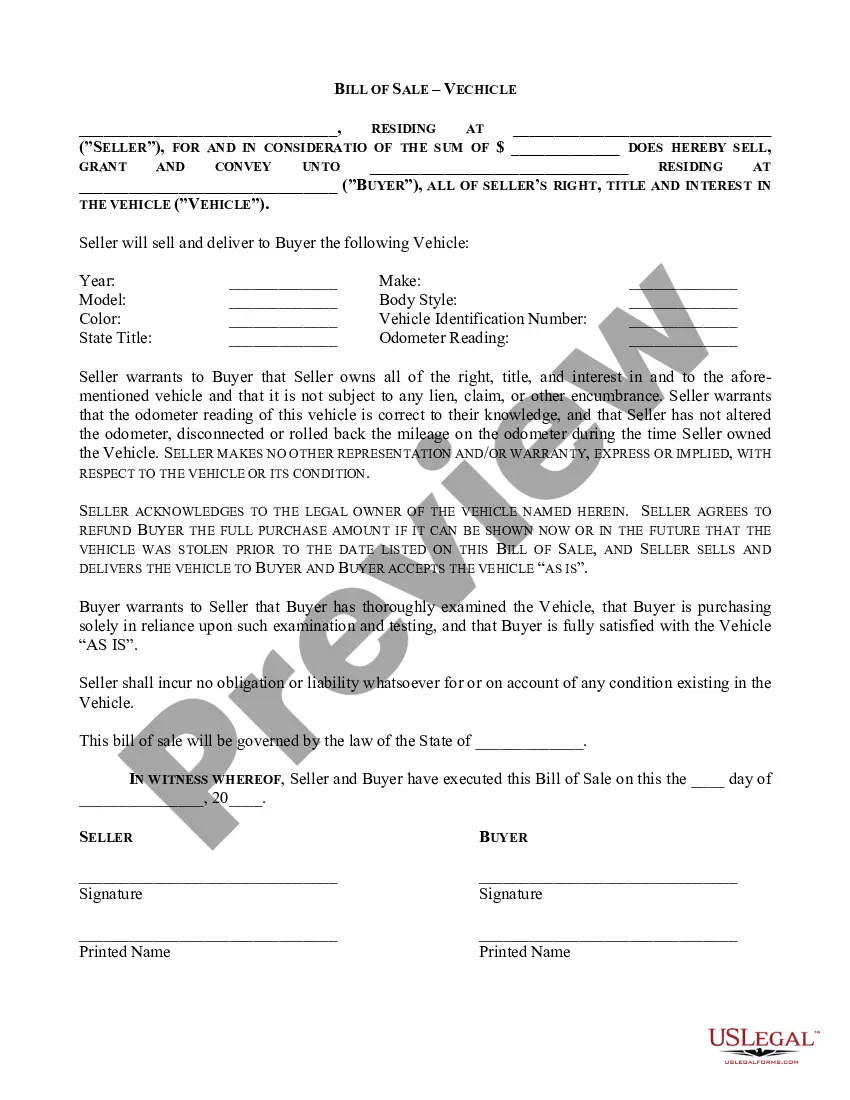
The date of the sale. A description of the car, including its: Year, make and model. The selling price of the car. If the car is a gift or partial gift, you should still create a bill of sale. Warranty information. The full names, addresses and signatures of the buyer and seller.
Write the title "Bill of Sale" at the top of the paper. Write the buyer's full name and address under the title of "Buyer." Write the seller's full name and address under the title of "Seller." Write down the year, make, model, color, current odometer reading, and Vehicle Identification Number from the vehicle.
The Bill of Sale should include all the basic information about the car, such as year, make, model, VIN number, color; it must also include the purchase price.
Vehicle title: In Rhode Island, you'll need to fill out a title transfer if you are selling a car of model year 2001 or newer. Bill of sale: As the seller, you will need to furnish the buyer with a Rhode Island bill of sale.
The full names and contact information of the buyer and seller. A statement that transfers ownership of the item from the seller to the buyer. A complete description of the item being purchased. A clause indicating the item is sold "as-is"
A Rhode Island bill of sale for a motor vehicle doesn't need to be notarized, but you can have it notarized if you'd like to do so.
After the transfer is done, the number of days the plates can be used prior to registration is as follows: RI Dealer: 20 calendar days from date on bill of sale. Out-of-state Dealer: 72 hours from date on bill of sale. Private Party: 48 hours from date on bill of sale.
The date the Rhode Island bill of sale is created should be at the top of the page. You'll need the legal name and physical address for both the buyer and the seller. Next, you'll insert the description of the item. The next provision is the terms of sale.