Ohio Probate
Probate involves managing a deceased person's estate. Attorney-drafted templates are quick and easy to complete.

Similar documents: key differences
- Will vs. Trust — A will directs asset distribution after death, while a trust manages assets during life and after death.
- Executor vs. Administrator — An executor is named in a will, while an administrator is appointed when there is no will.
- Letters Testamentary vs. Letters of Administration — The former is issued when there's a will; the latter applies when there isn't.
- Probate vs. Non-Probate Assets — Probate assets go through court, while non-probate assets transfer directly to beneficiaries.
Search for more forms
Types of Probate forms
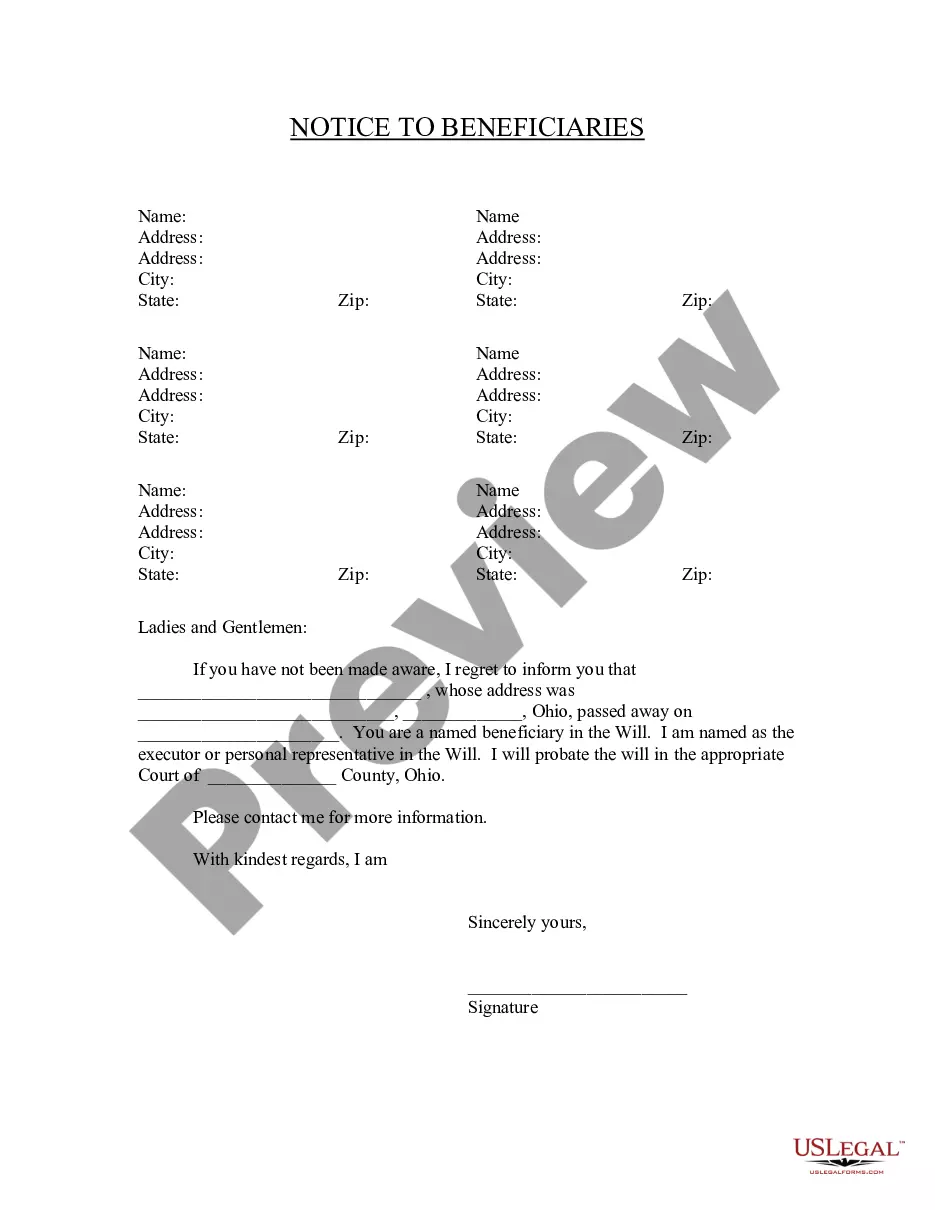
Notice to Beneficiaries of Being Named in Will
Notify beneficiaries that they're included in a will and provide essential information about the deceased and probate process.
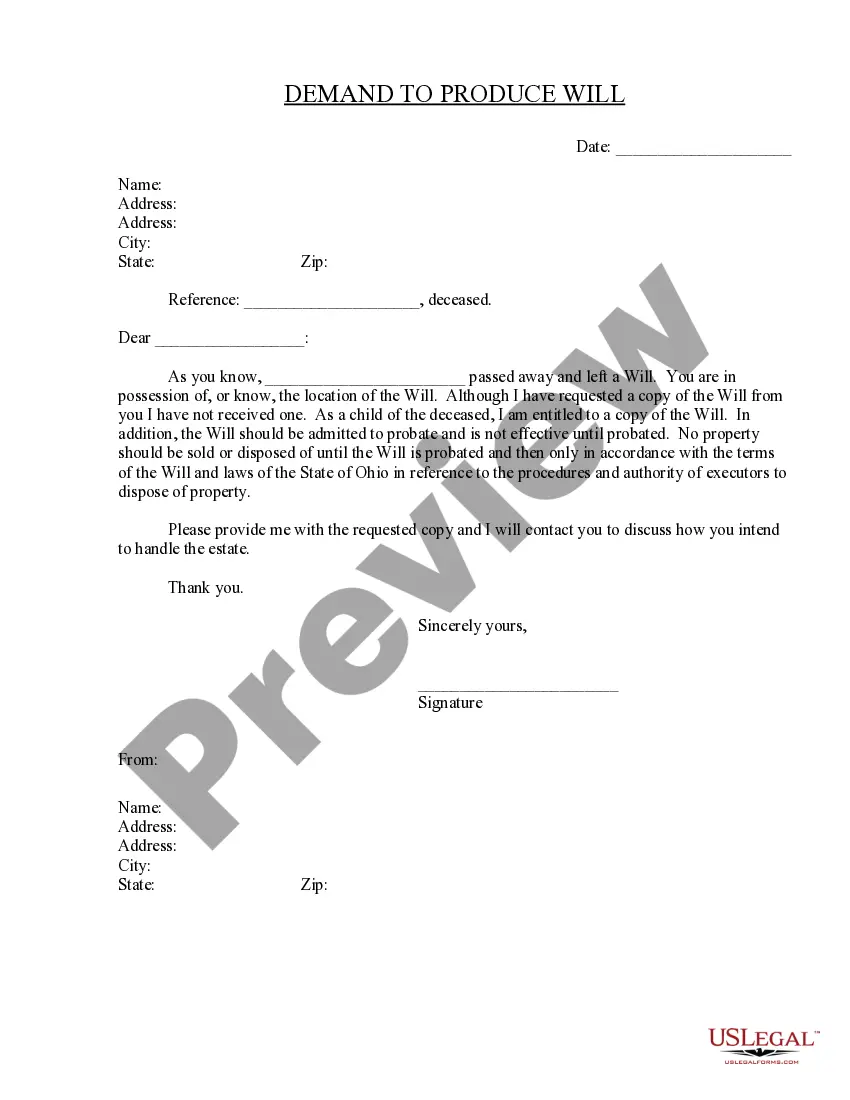
Demand to Produce Copy of Will from Heir
Request a copy of a deceased person's will to ensure proper estate management and probate procedures.
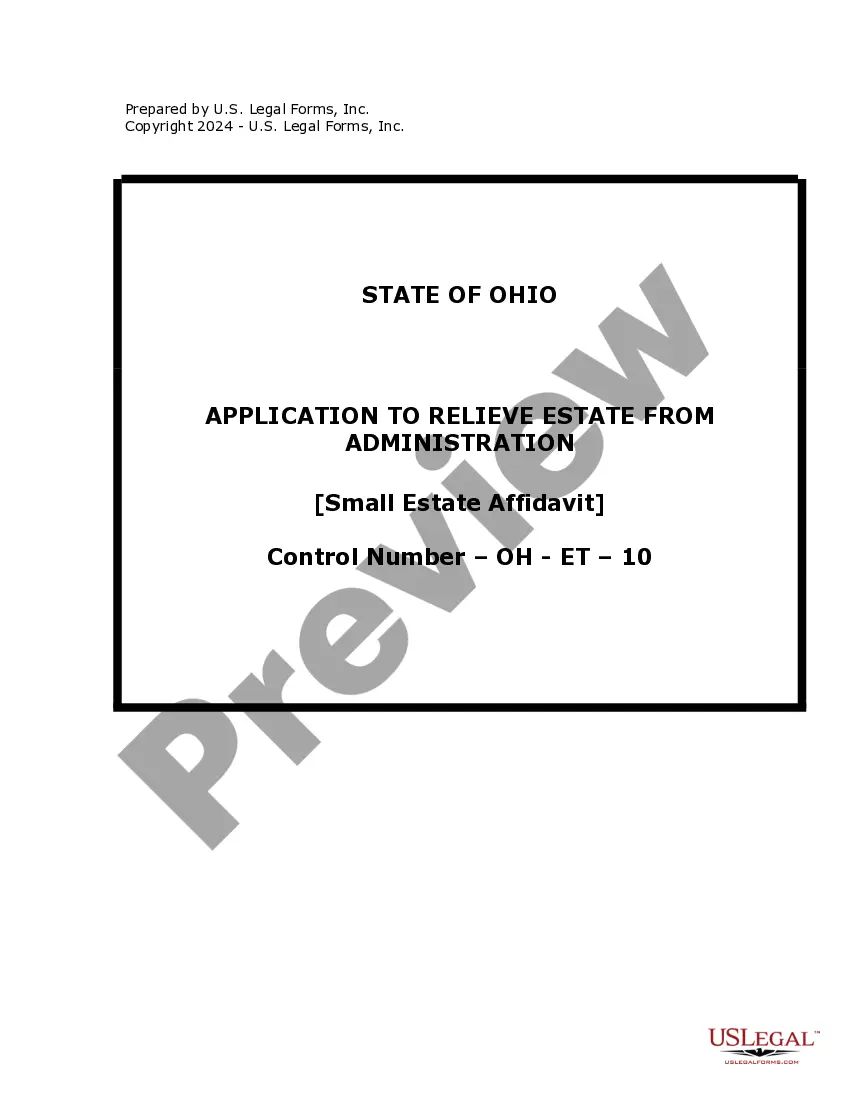
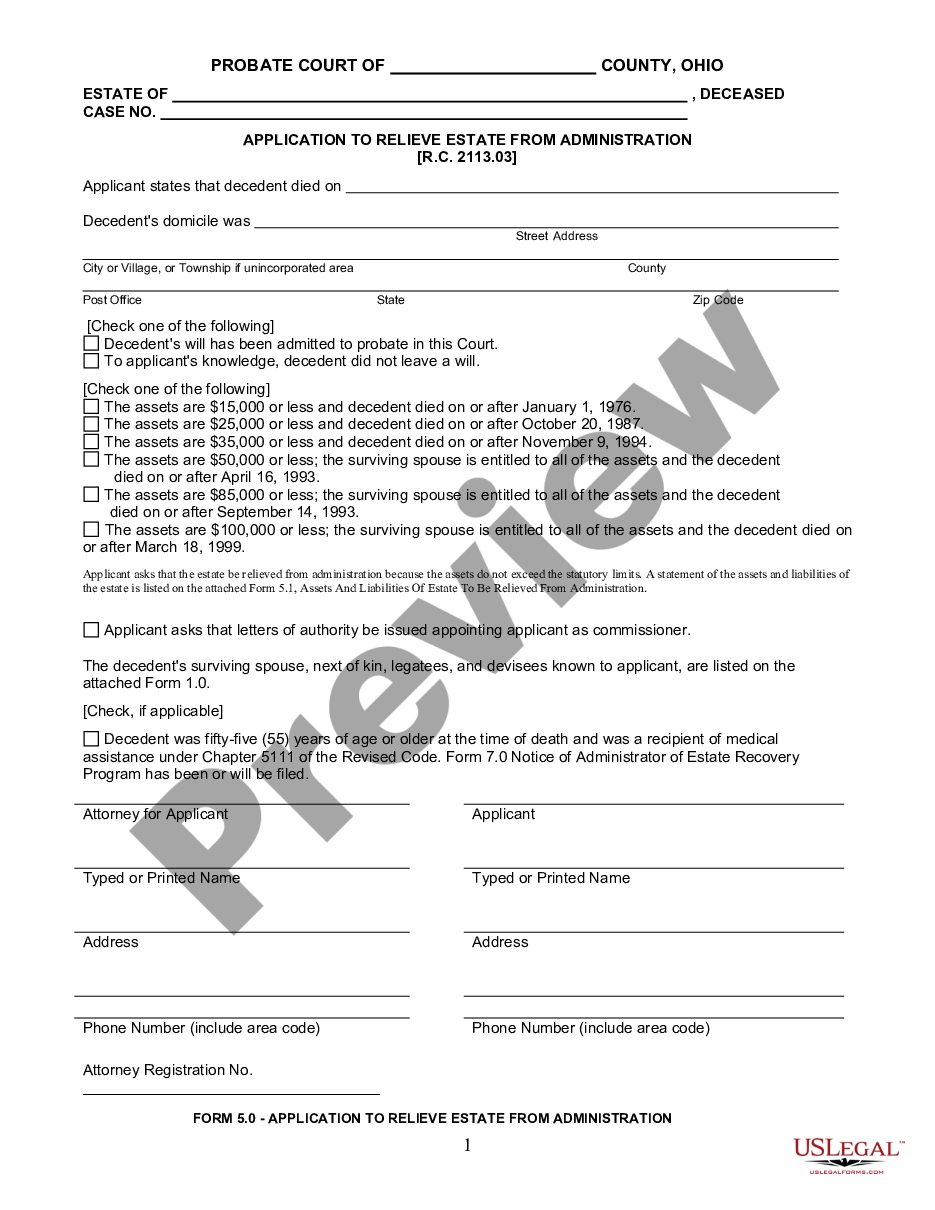
Small Estate Affidavit for Estates Not More than $35,00
Utilize this to administer a small estate without full probate, simplifying the process for surviving spouses with limited assets.
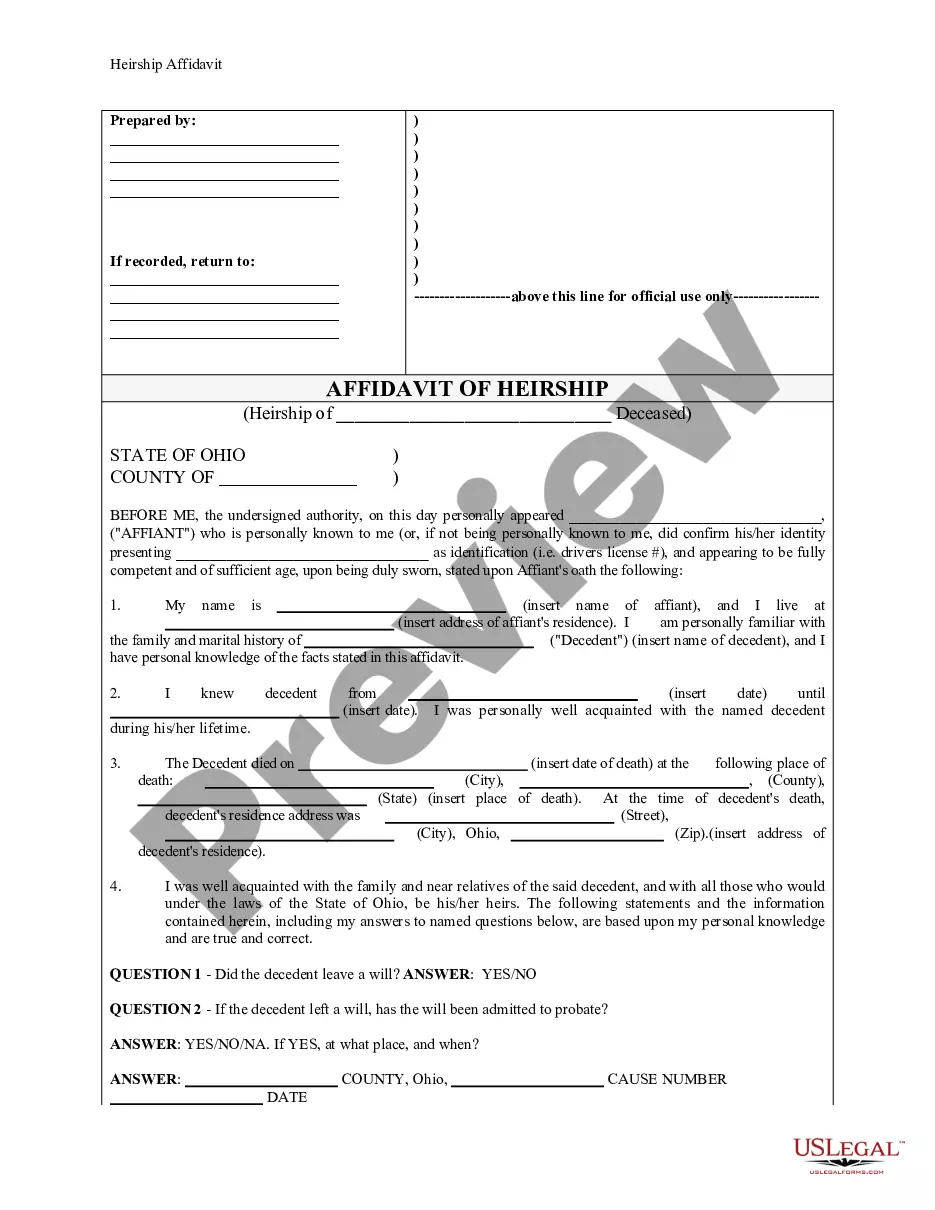
Heirship Affidavit - Descent
Confirming heirs of a deceased individual can smooth estate transitions, especially in the absence of a will.
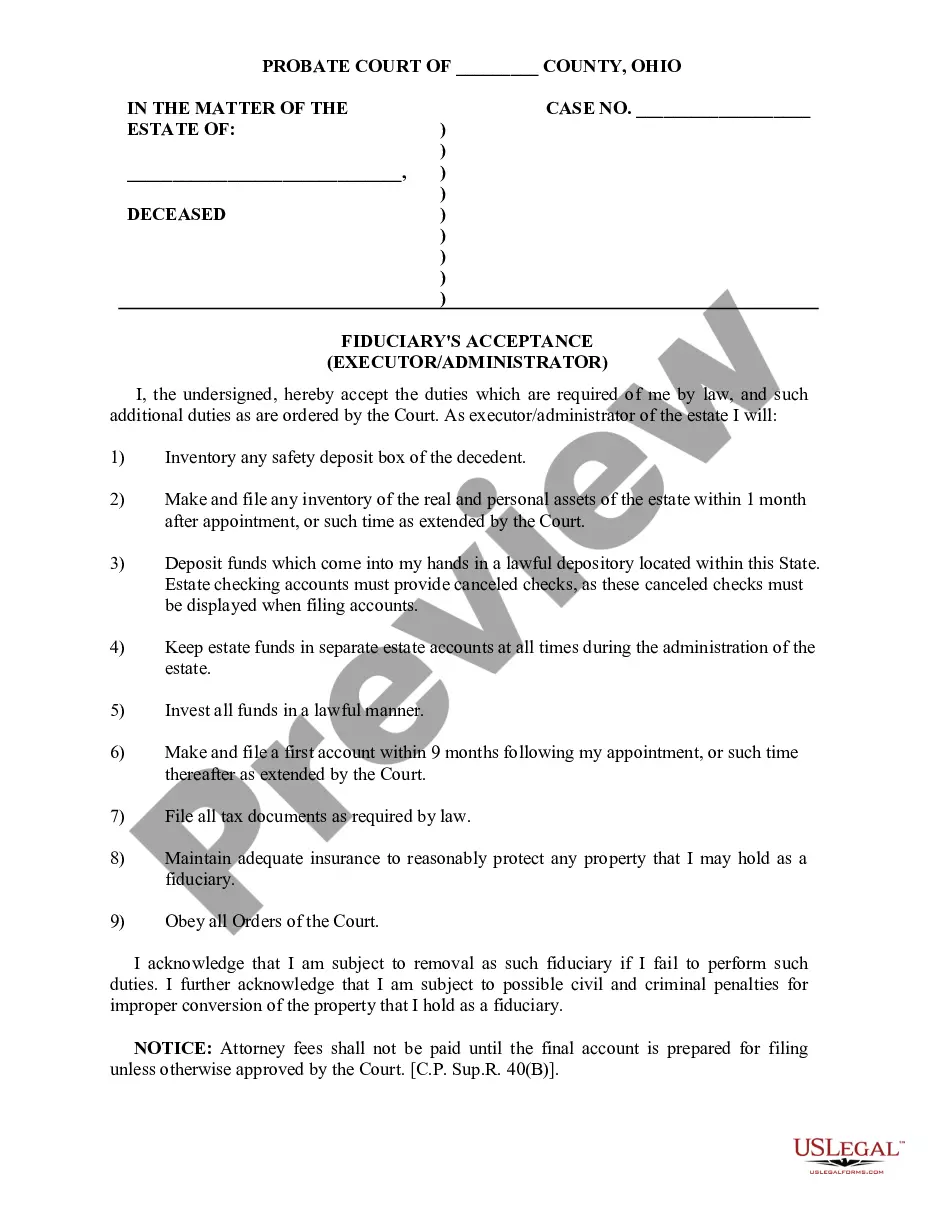
Fiduciary Acceptance - Executor - Administrator
Accept your legal responsibilities as executor or administrator of an estate with this essential document.
Notice to Distributee
Receive asset distributions from an estate while being informed about potential repayment obligations if claims arise.
Real Estate As-Is Purchase Agreement
Use this agreement to purchase property in Ohio as-is, providing clarity on terms and conditions without seller liability for property condition.
Notice: Additional Bond Due
Use this notice when additional bond amounts are required for an estate, ensuring compliance with court regulations.
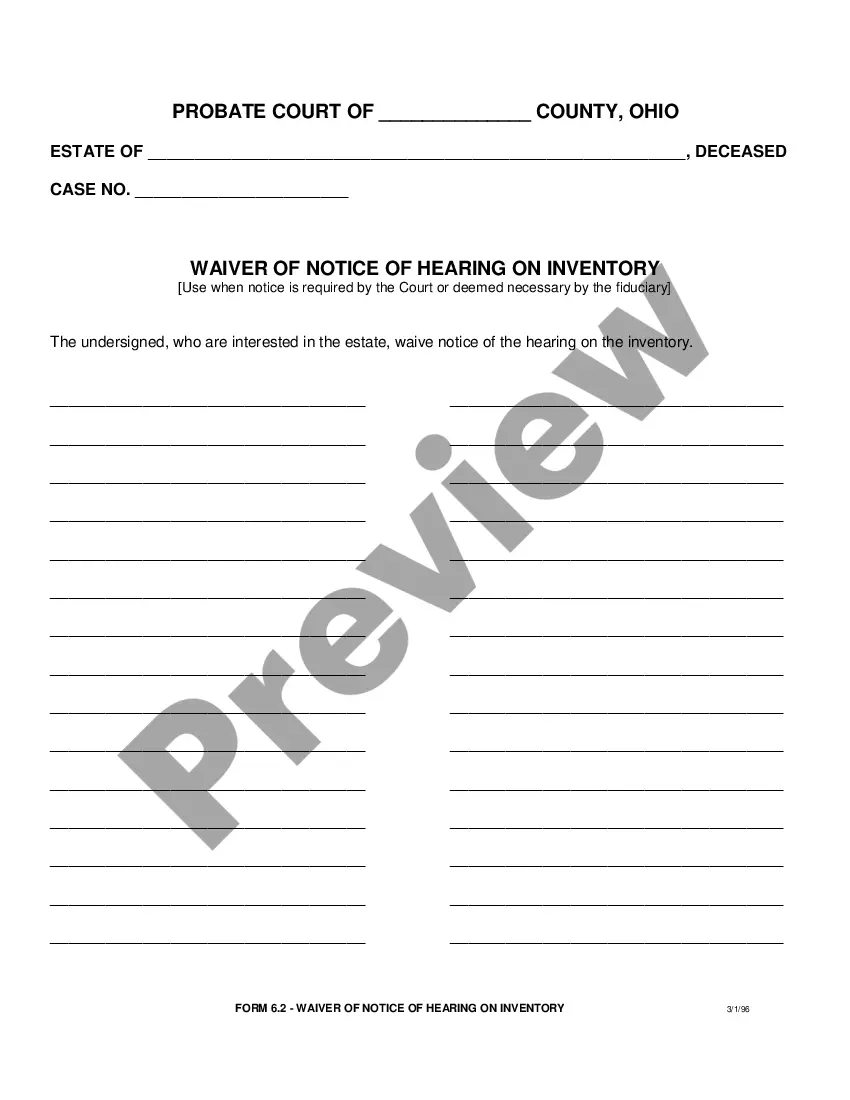
Entry Approving Inventory
Secure approval of an estate inventory after proper notice to interested parties, ensuring compliance with probate procedures.
Entry Setting Hearing on Inventory
Set a court date for reviewing an estate's inventory and alert parties involved. Essential for managing probate proceedings.
Additional Fiduciary's Bond
Ensure fiduciaries are accountable for managing an estate by securing a bond to protect against misappropriation or negligence.
Entry Setting Hearing on Account
Set a hearing date for an estate account and notify involved parties, ensuring all receive important legal notice.
Checklist for Estates
Essential for managing the estate of a deceased person, this checklist ensures all necessary legal steps are completed.
Classification Form for Estates
Identify estate administration needs and requirements with this essential form, crucial for estate proceedings, especially in wrongful death claims.
Consent to Payment of Attorney Fees
Obtain approval for attorney fees related to an estate, ensuring the costs comply with court guidelines.
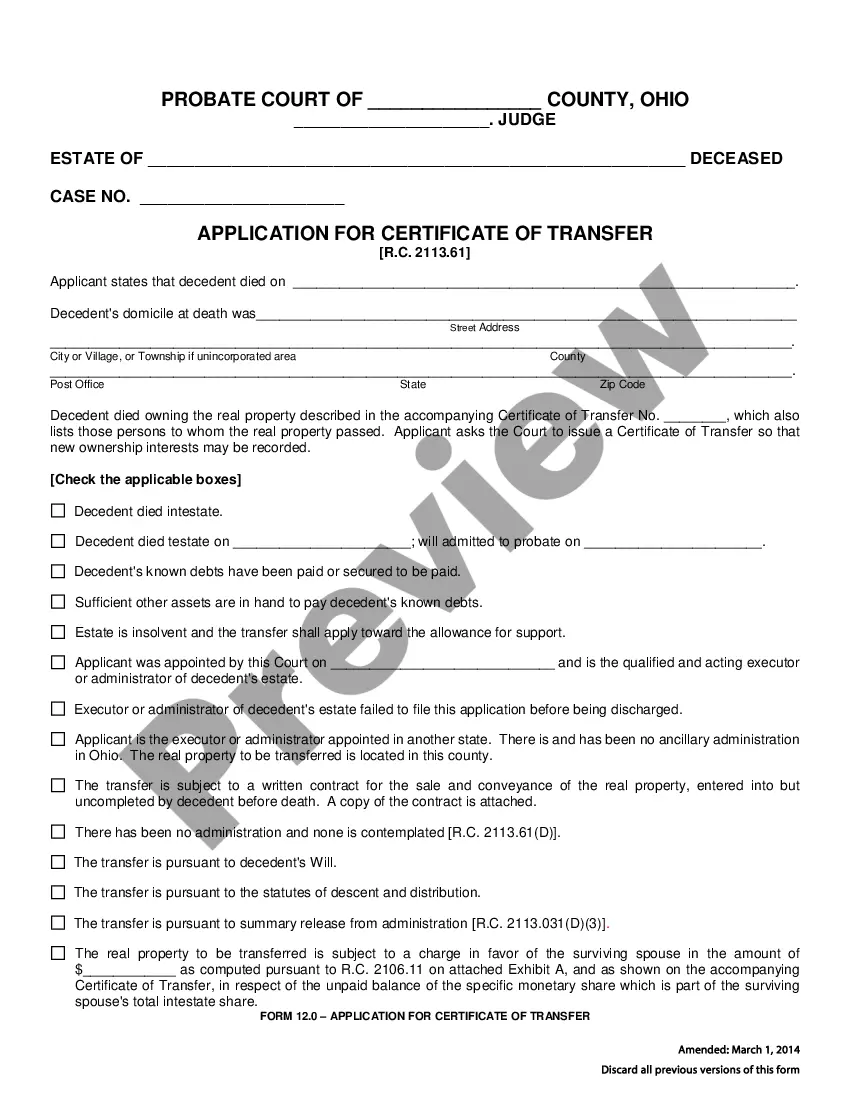
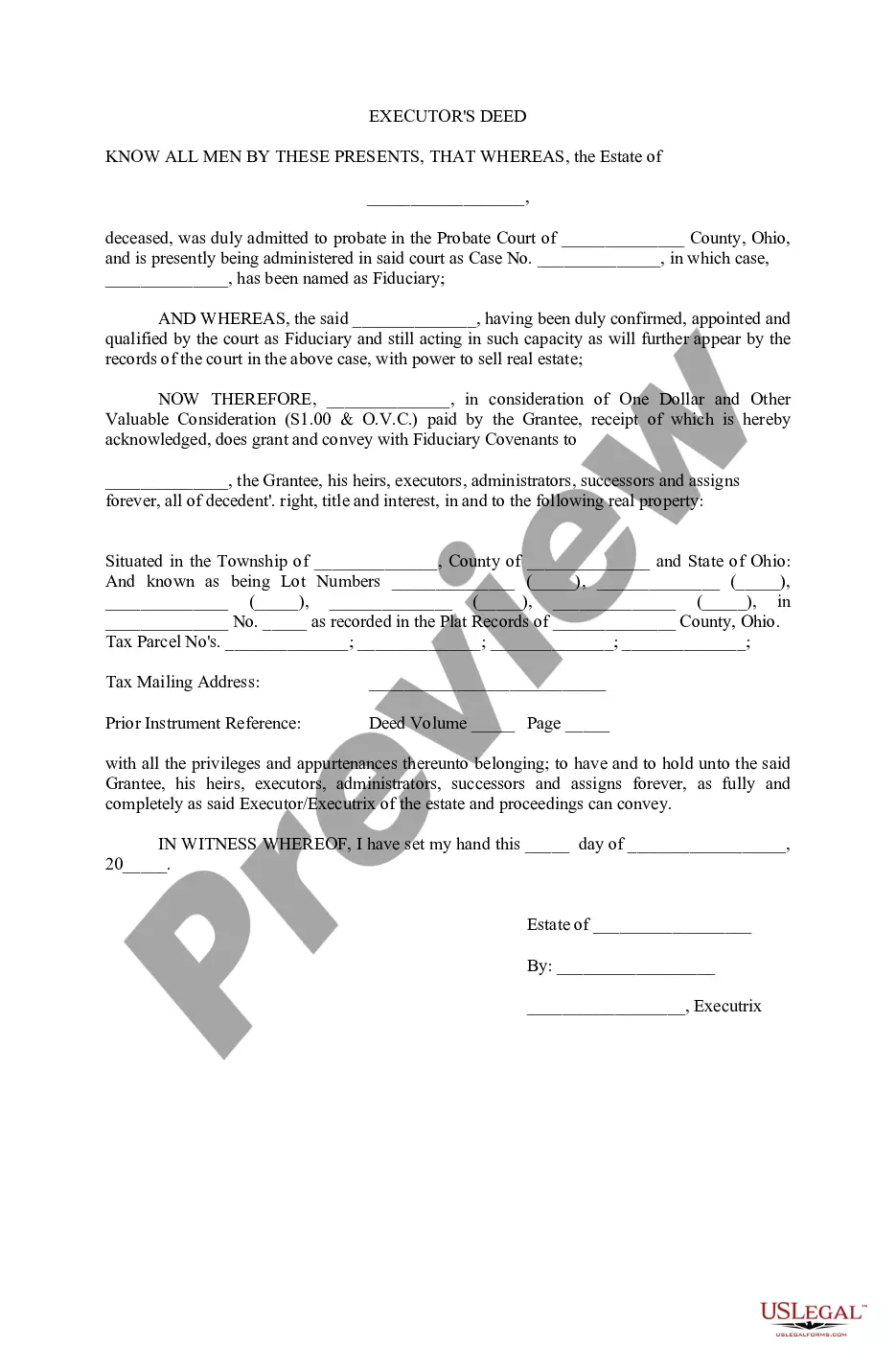
Executor's Deed
Utilized by estate executors to transfer property ownership under court authority, ensuring legal compliance and clarity in transactions.
Common Ohio Probate documents
- Will — a document specifying how a person's assets should be distributed.
- Petition for Probate — a request to start the probate process formally.
- Letters Testamentary — court documents that authorize an executor to act on behalf of the estate.
- Letters of Administration — documents granting authority to an administrator when there is no will.
- Inventory and Appraisement Form — a list detailing the estate's assets and their values.
- Final Accounting Form — a report summarizing the financial transactions during probate.
- Estate Distribution Form — a document outlining how assets will be distributed among beneficiaries.
FAQs
A trust can help manage assets during life and avoid probate, but it's not necessary with a will.
If no action is taken, the estate may go through probate, often leading to delays and potential disputes.
It's advisable to review your estate plan every few years or after significant life changes.
Beneficiary designations can override wills, so it's important to keep them updated.
Yes, you can appoint separate individuals for financial and healthcare decisions through legal documents.
Key legal points
- Probate is necessary to validate a will in court.
- Not all assets go through probate, such as joint accounts.
- The probate process can vary by state.
- Beneficiaries may need to wait for the probate to finalize distributions.
- Probate can involve paying debts and taxes before distributing assets.
How to get started
Begin quickly with these steps.
- Find a template or package that fits your situation.
- Review the description, preview, and signing requirements.
- Get full access with a subscription.
- Complete it in the online editor.
- Export or send: download, email, USPS mail, notarize online, or send for e-signature.
Practical tip
Consider establishing a trust if you want to avoid probate and manage assets privately.