What is Probate?
Probate refers to the legal process of settling an estate after someone passes away. It includes validating the will, distributing assets, and addressing debts. Choose from our state-specific templates to simplify your process.
Probate involves managing a deceased person's estate. Our attorney-drafted templates are quick and easy to fill out.

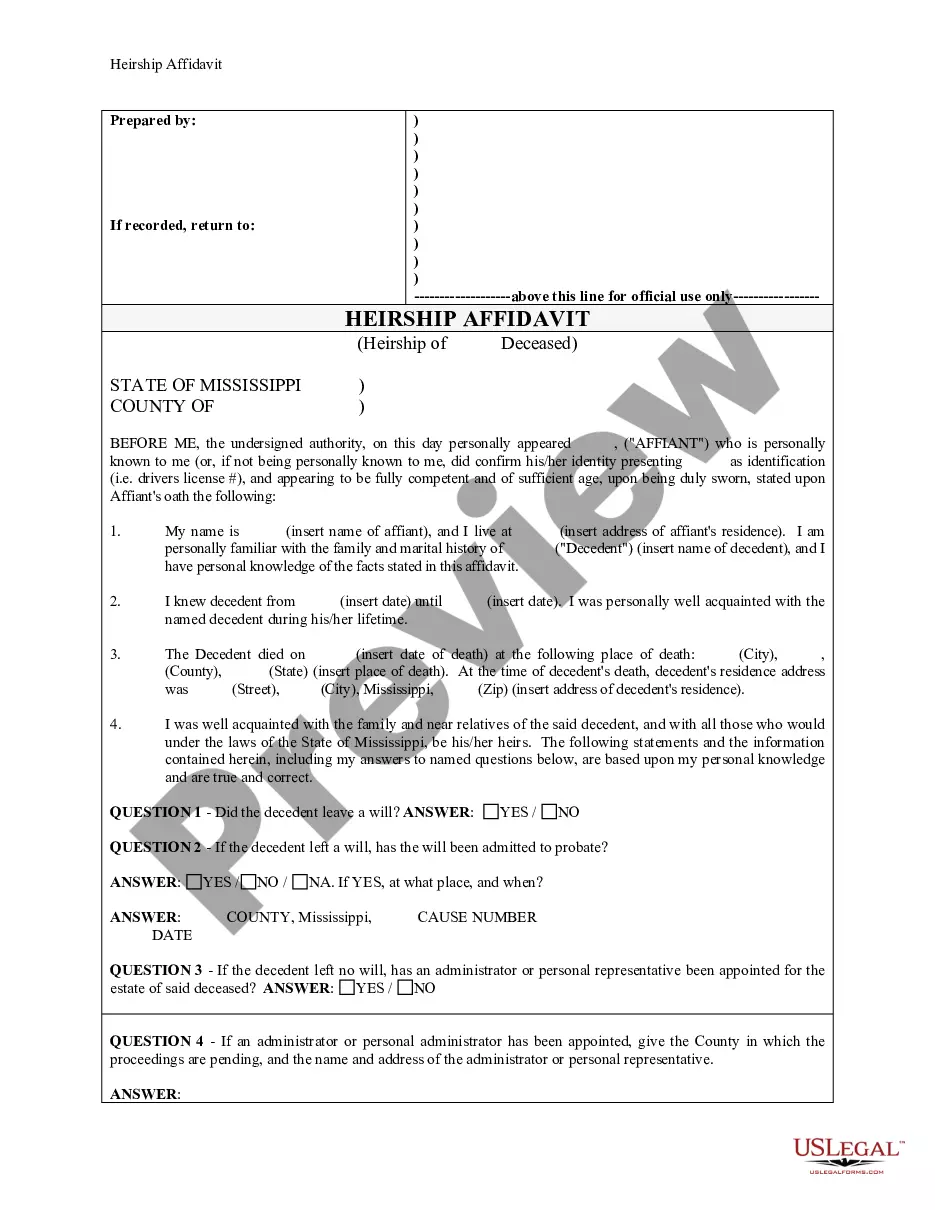
Establish lineage and rights to an estate with this affidavit, especially if no will exists or if a will hasn't been probated.
Use this form to settle a small estate in Mississippi without a probate process. It's designed for estates valued under $75,000.
Request a copy of a deceased person's will to understand estate distribution and probate requirements.
Use this form to formally accept a will for probate, simplifying the process of transferring ownership of a deceased person's property.
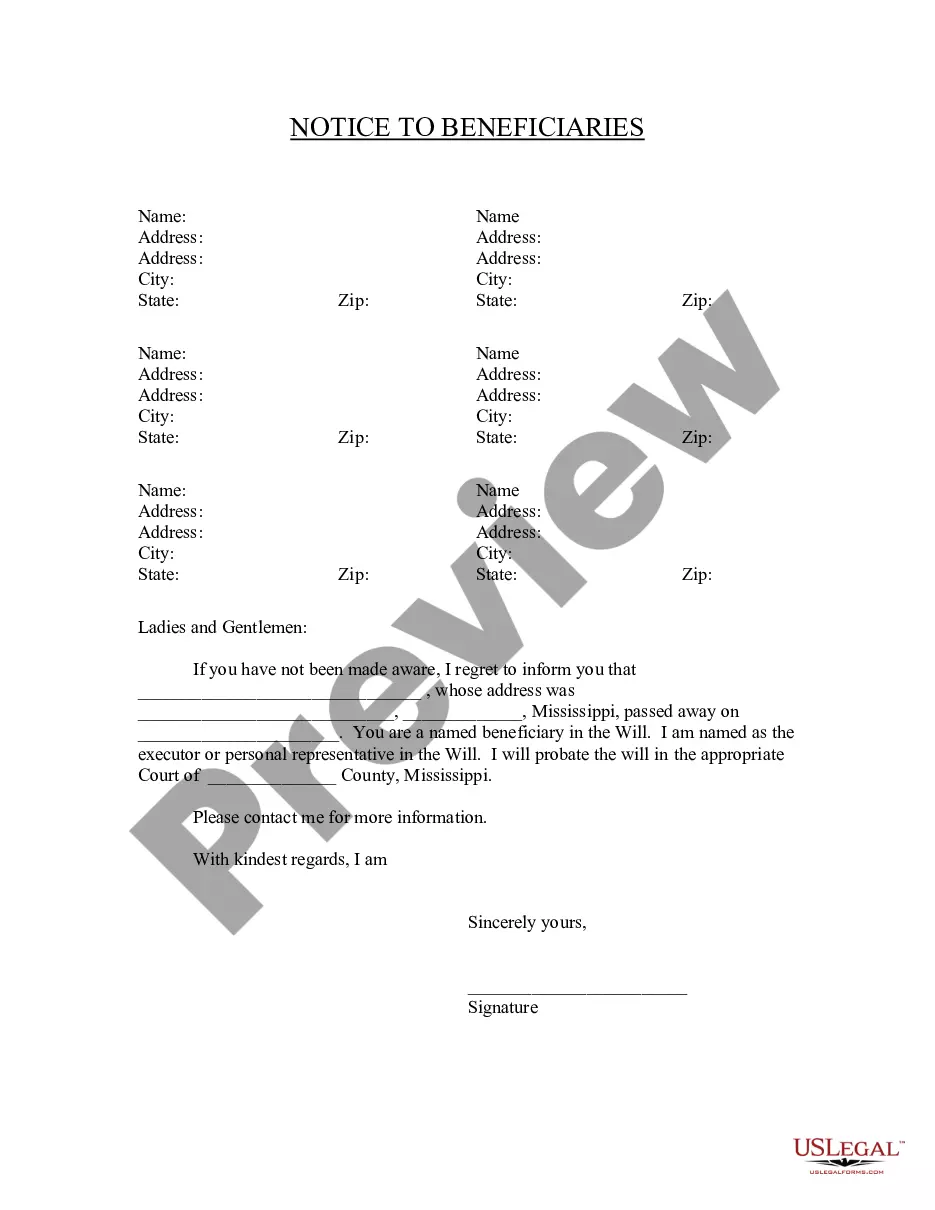
Notify named beneficiaries about their status in a will and the probate process to ensure they take necessary actions.
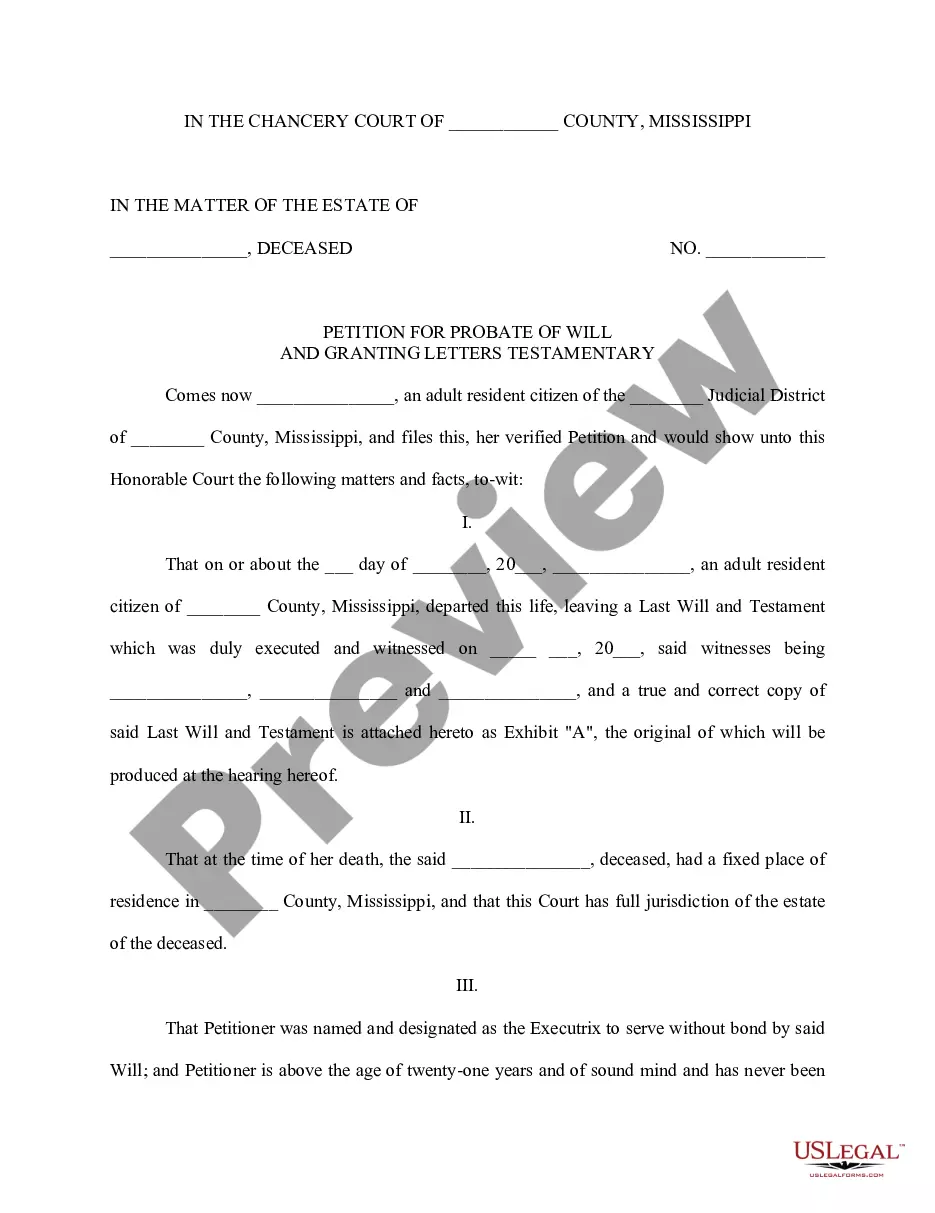
Secure court approval for a will and appoint an executor to manage the estate efficiently.
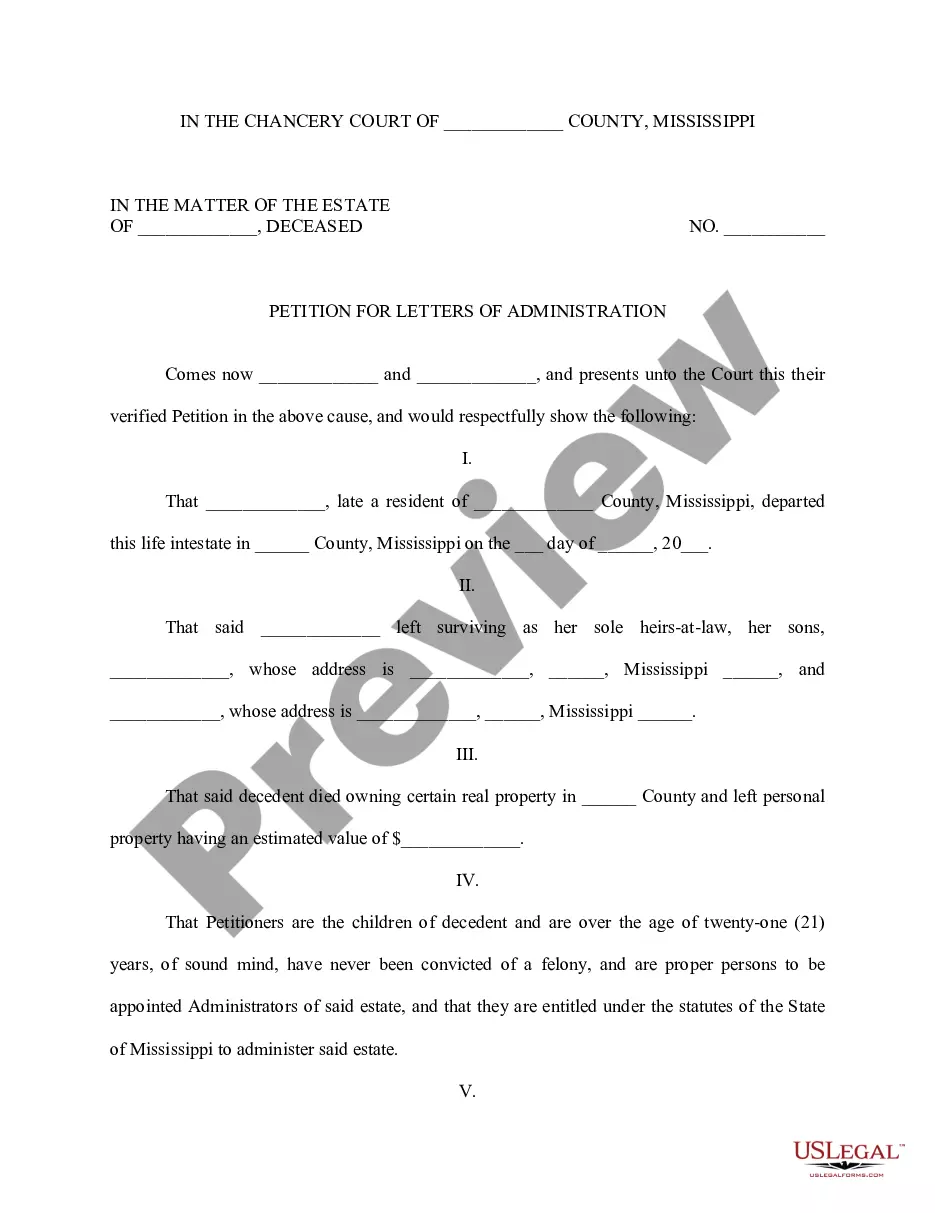
Use this document to appoint administrators for a deceased person's estate in Mississippi, ensuring proper management of their assets.
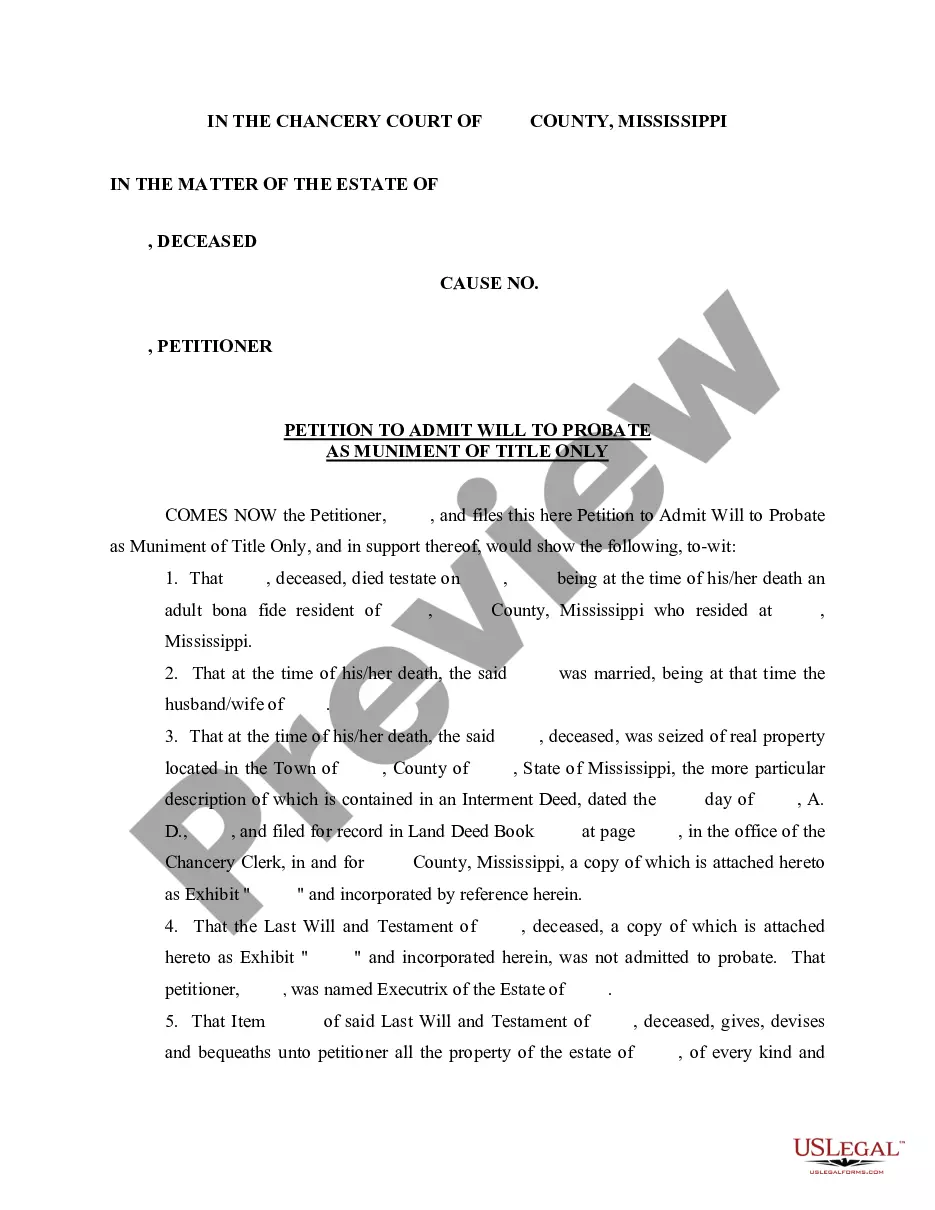
Secure the legal acceptance of a will to facilitate the transfer of real estate without full probate proceedings.
Obtain court approval to manage an estate when someone dies without a will, ensuring heirs can legally handle the estate's affairs.
Probate is required for most estates with assets.
Wills must be validated in probate court.
Heirs and beneficiaries have rights to notice of probate.
Debts of the deceased must be settled before distribution.
Probate can vary in complexity based on estate size.
Begin your probate process with these simple steps.
A trust can help avoid probate and manage assets during your lifetime.
Without action, your estate may go through probate, which can be lengthy.
Review your estate plan every few years or after major life changes.
Beneficiary designations override wills and trusts for the specified assets.
Yes, you can appoint separate agents for financial and healthcare matters.