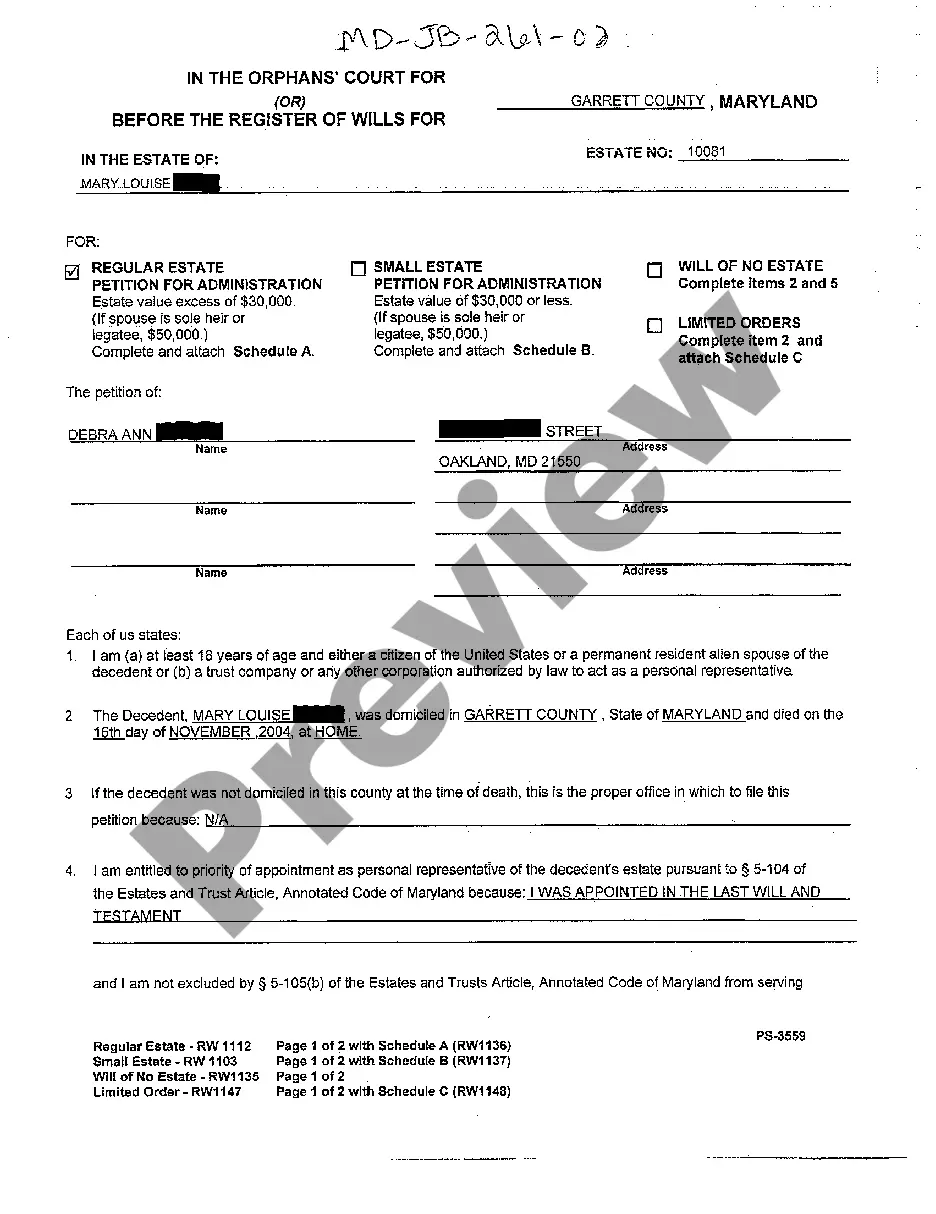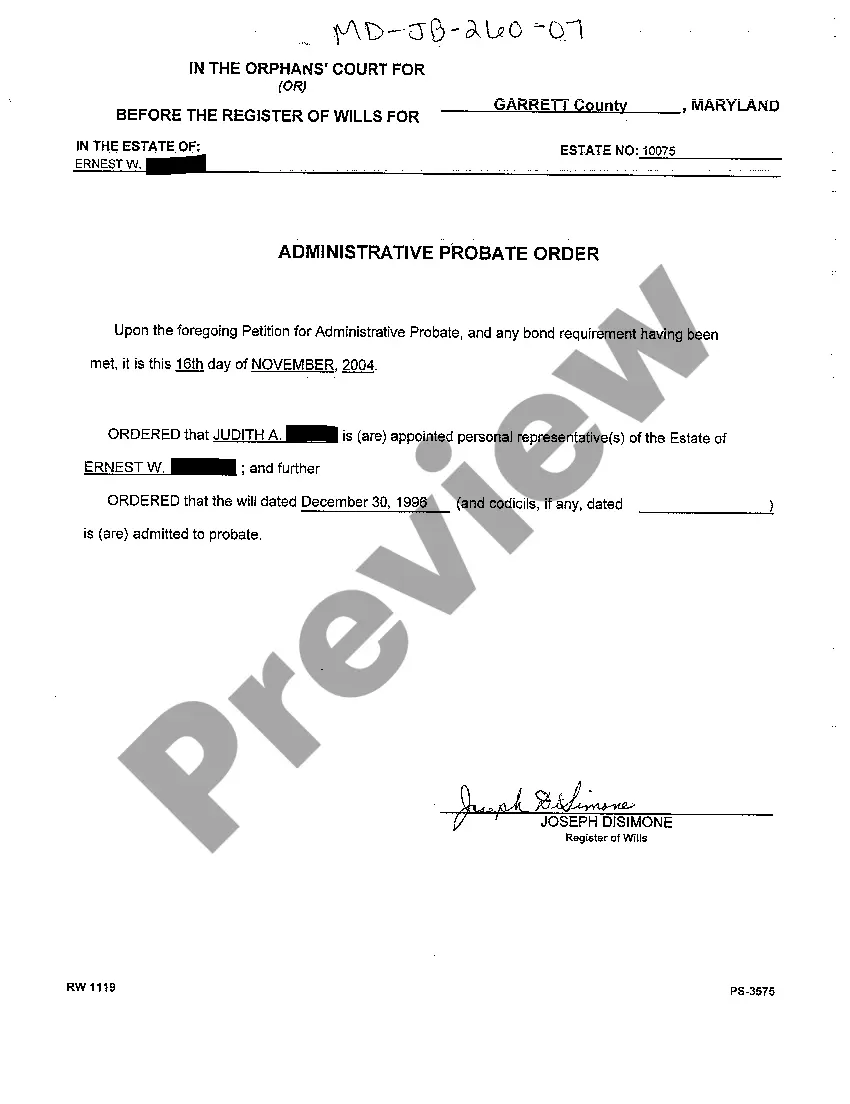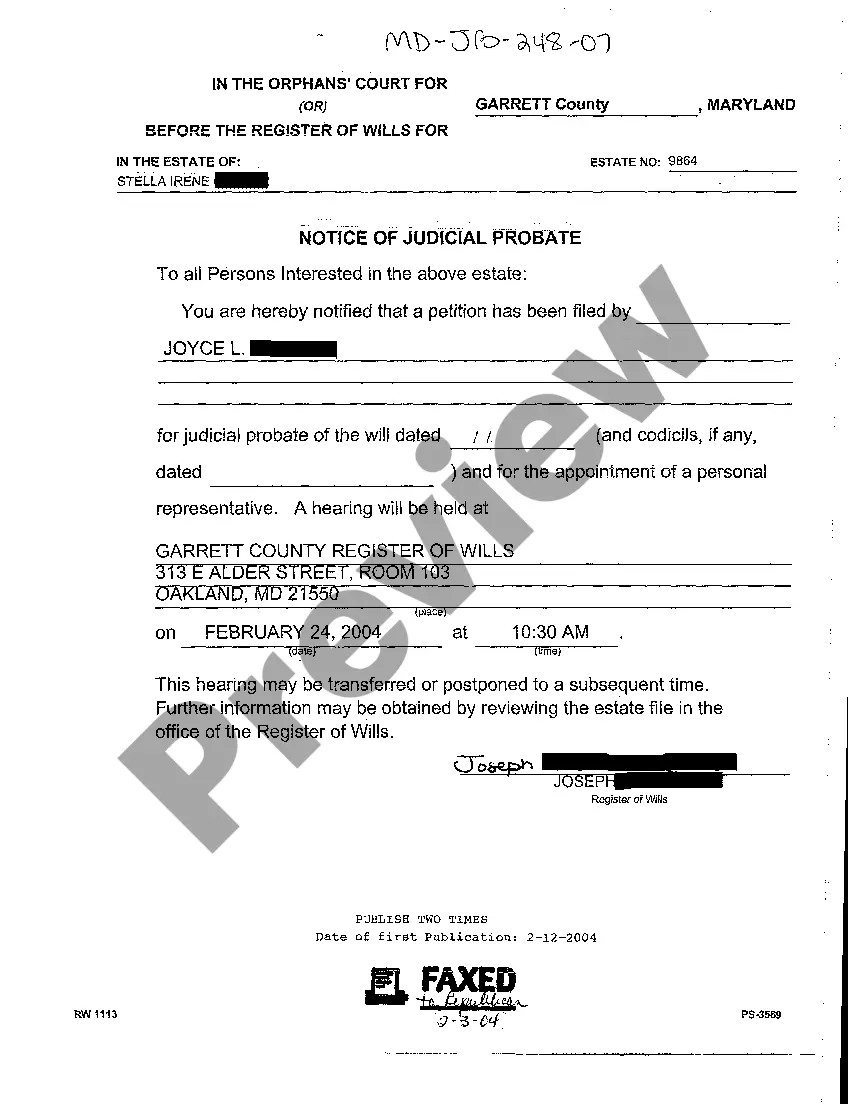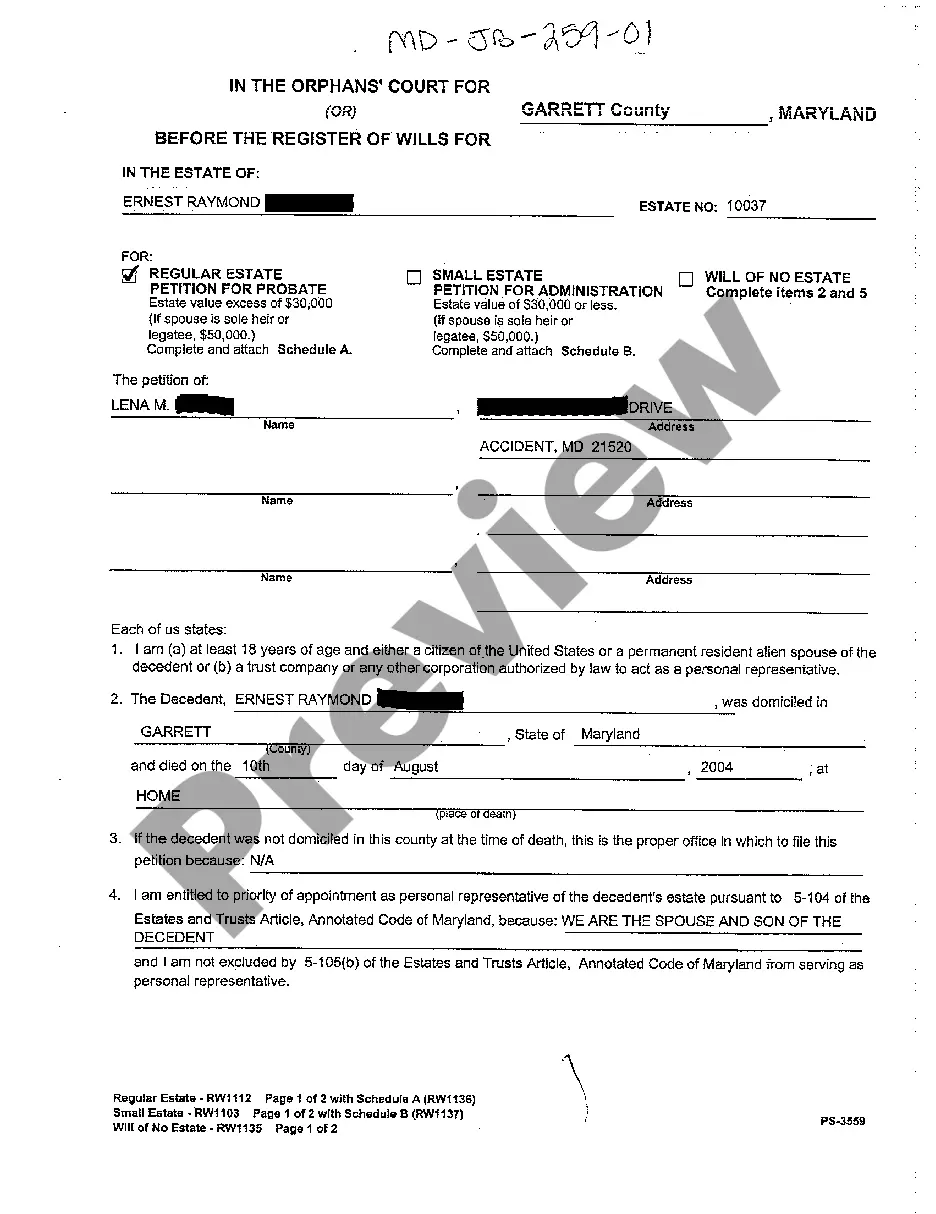
Maryland Probate

Probate involves managing an estate after someone passes away. Attorney-drafted templates streamline the process, making it quick and straightforward.

intro Probate
Form preview

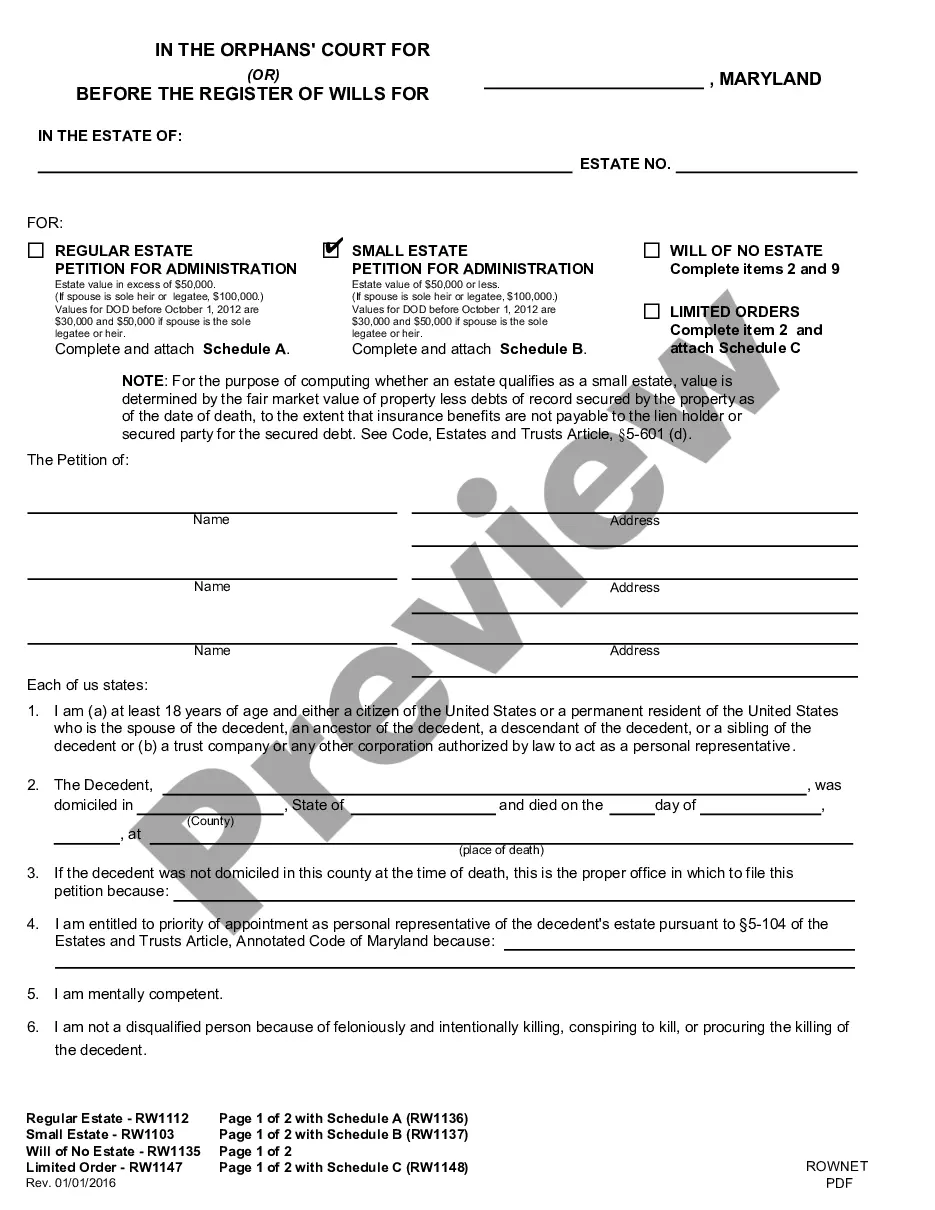
Maryland Small Estate Affidavit for Estates Not More Than $50,000 or $100,000 if Spouse is Sole Heir

Use this document when the value of an estate is $50,000 or less, simplifying the process of asset transfer.

View form

Common Maryland Probate documents

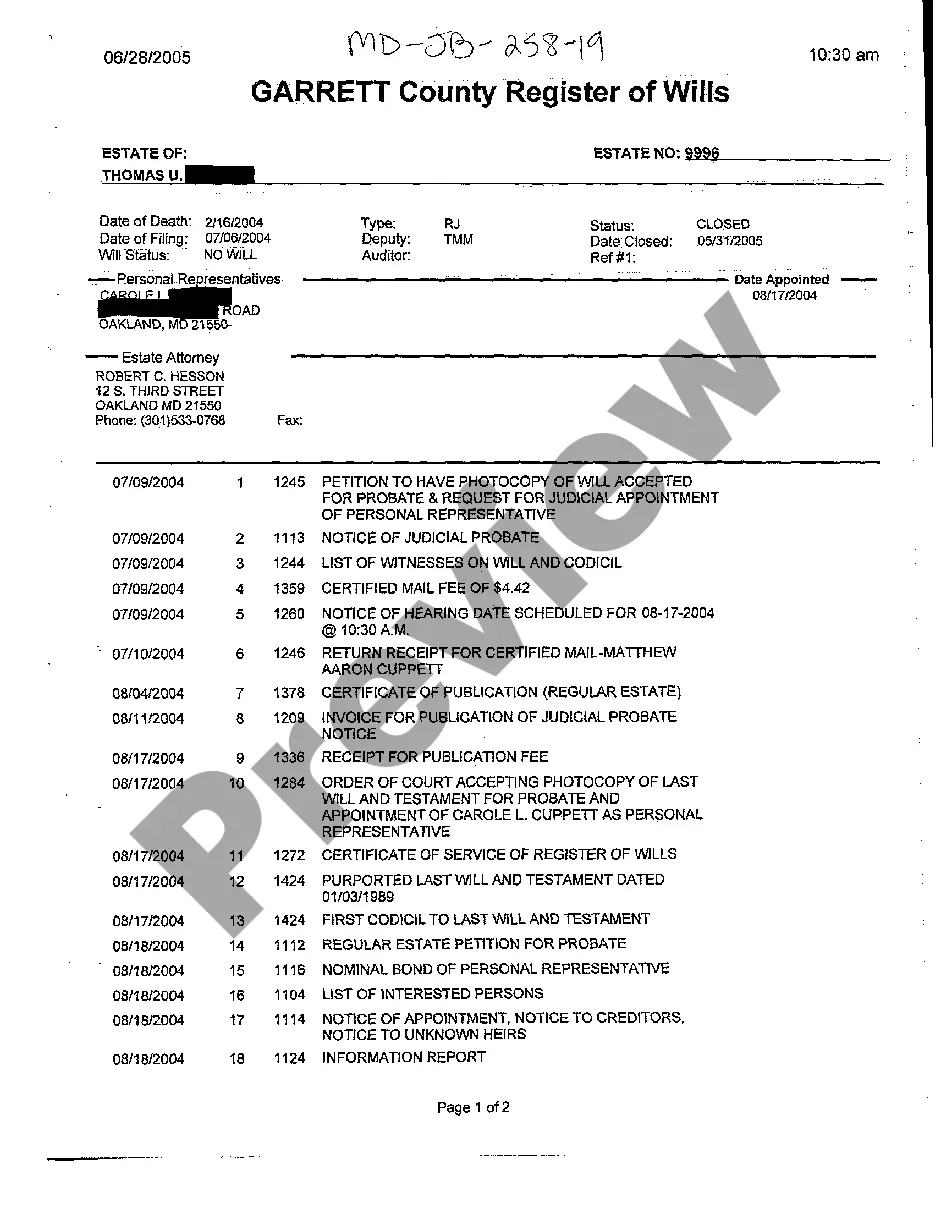
  • Petition for Probate — Initiates the probate process and requests court authority.
  • Letters Testamentary — Authorizes the executor to act on behalf of the estate.
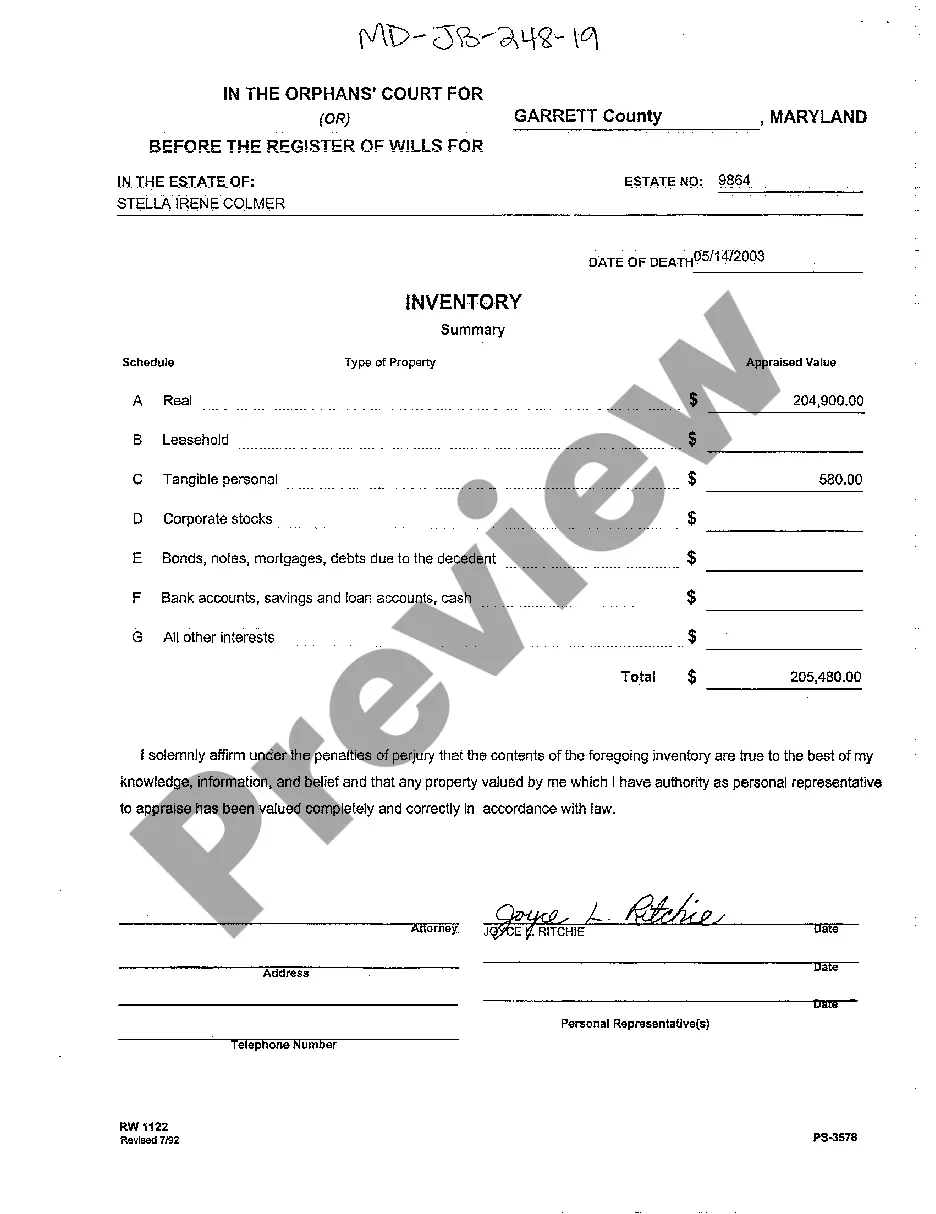
  • Inventory and Appraisement — Lists the estate's assets and their values.
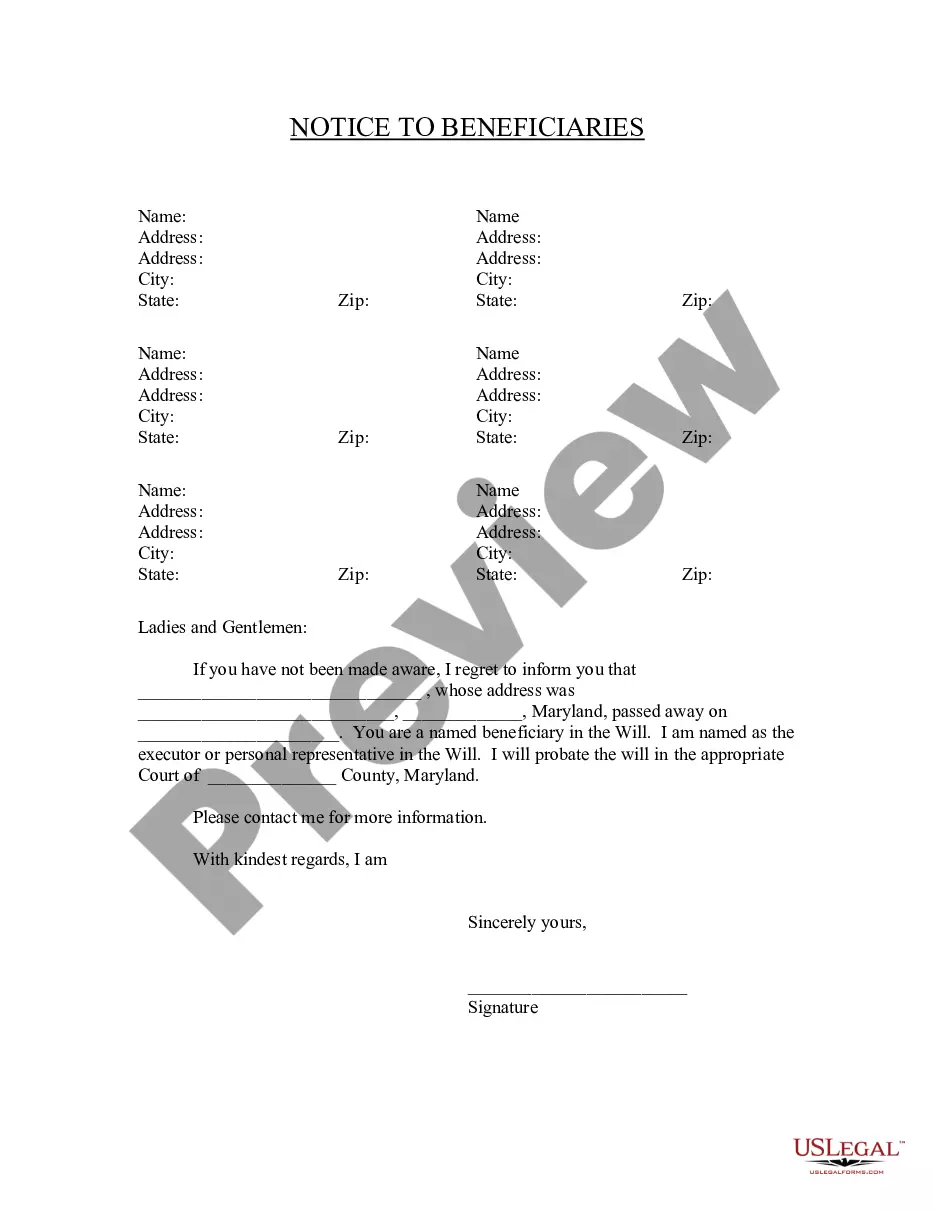
  • Notice of Probate — Notifies interested parties about the probate proceedings.
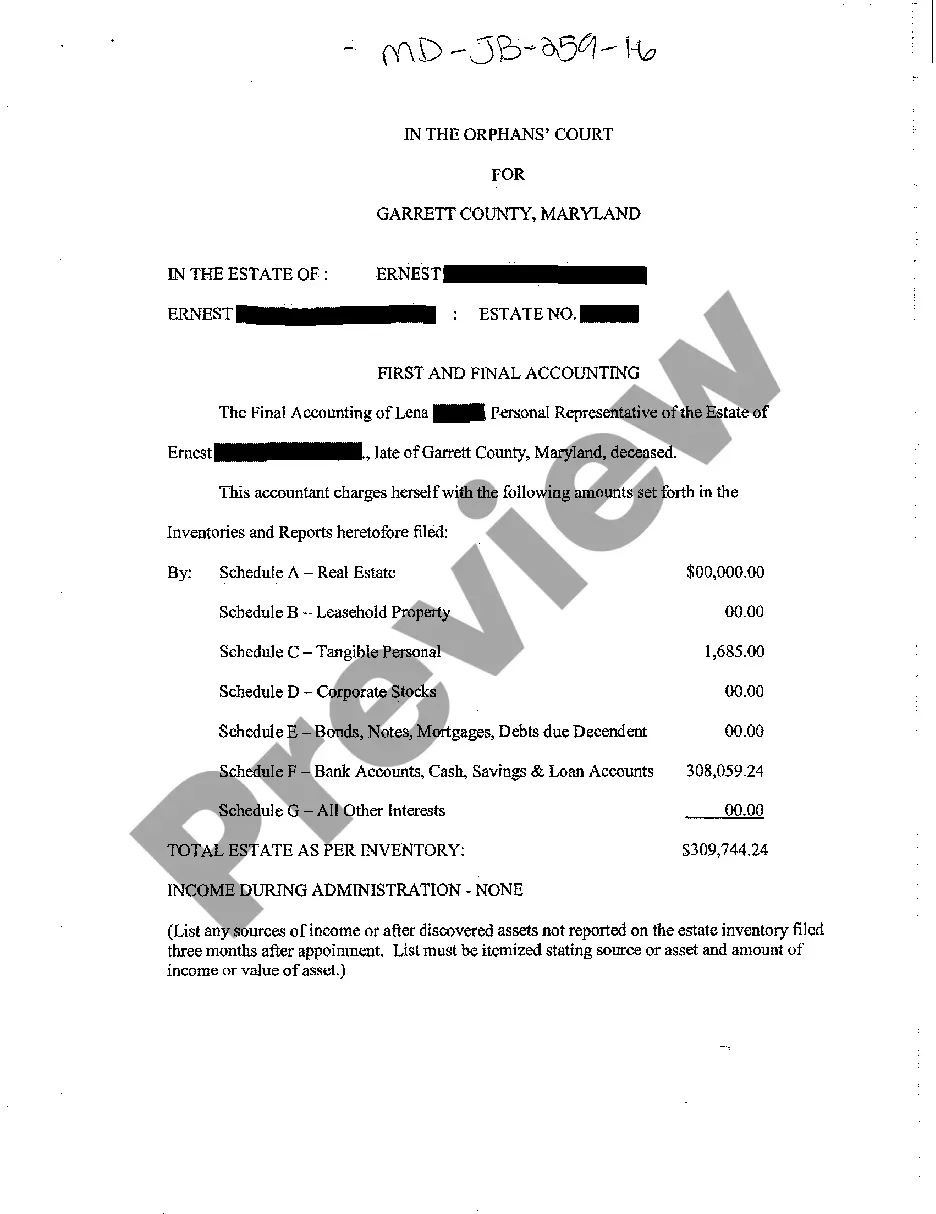
  • Final Accounting — Summarizes the estate's financial transactions and distributions.

Similar documents: key differences

  • Executor vs. Administrator — An executor is named in a will; an administrator is appointed when there’s no will.
  • Letters Testamentary vs. Letters of Administration — Letters Testamentary are issued for wills; Letters of Administration are for intestate estates.
  • Probate vs. Non-Probate Assets — Probate assets go through court; non-probate assets transfer directly to beneficiaries.
  • Will vs. Trust — A will outlines asset distribution after death; a trust manages assets during life and after death.

How to get started

Begin promptly with these straightforward steps.

  • Find a template or package that fits your situation.
  • Review the description, preview, and signing requirements.
  • Get full access with a subscription.
  • Complete it in the online editor.
  • Export or send: download, email, USPS mail, notarize online, or send for e-signature.

FAQs

A trust can provide additional control over asset distribution, but a will suffices.

If no action is taken, the estate may go through probate, which can lead to delays.

Review your estate plan every few years or after major life changes.

Beneficiary designations on accounts typically override will instructions.

Yes, you can appoint separate agents for financial and health-related matters.
Glossary

  • Probate - Legal process of settling a deceased person's estate.
  • Executor - Person named in a will to manage the estate.
  • Administrator - Appointed individual to manage an intestate estate.
  • Will - Document outlining asset distribution after death.
  • Trust - Legal arrangement for managing assets during life and after.
  • Letters Testamentary - Court document allowing an executor to act on the estate's behalf.
  • Letters of Administration - Court document granting authority to an administrator.
  • Beneficiary - Individual designated to receive assets from an estate.
  • Intestate - State of dying without a valid will.
  • Assets - Property or items of value owned by an individual.

Trusted by over 3 million people of the world’s leading companies