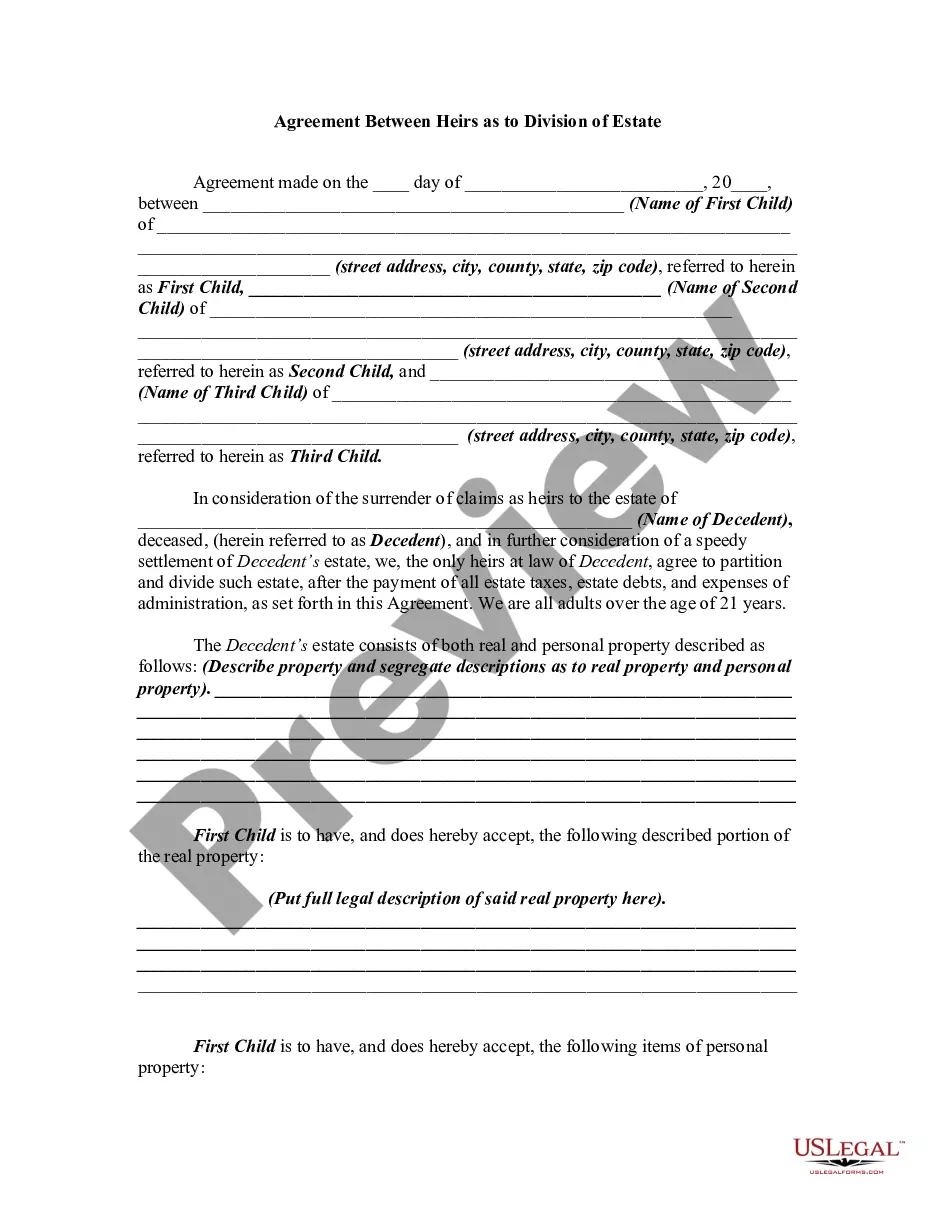
Iowa Probate
Probate involves managing a deceased person's estate. Our attorney-drafted templates are quick and easy to complete.

Similar documents: key differences
- Will vs. Trust — a will directs asset distribution after death; a trust can manage assets during life and after death.
- Executor vs. Administrator — an executor is named in a will; an administrator is appointed if there is no will.
- Probate vs. Non-Probate — probate involves court supervision; non-probate transfers bypass court.
- Letters Testamentary vs. Letters of Administration — the former is issued when there is a will; the latter when there is not.
Search for more forms
Types of Probate forms
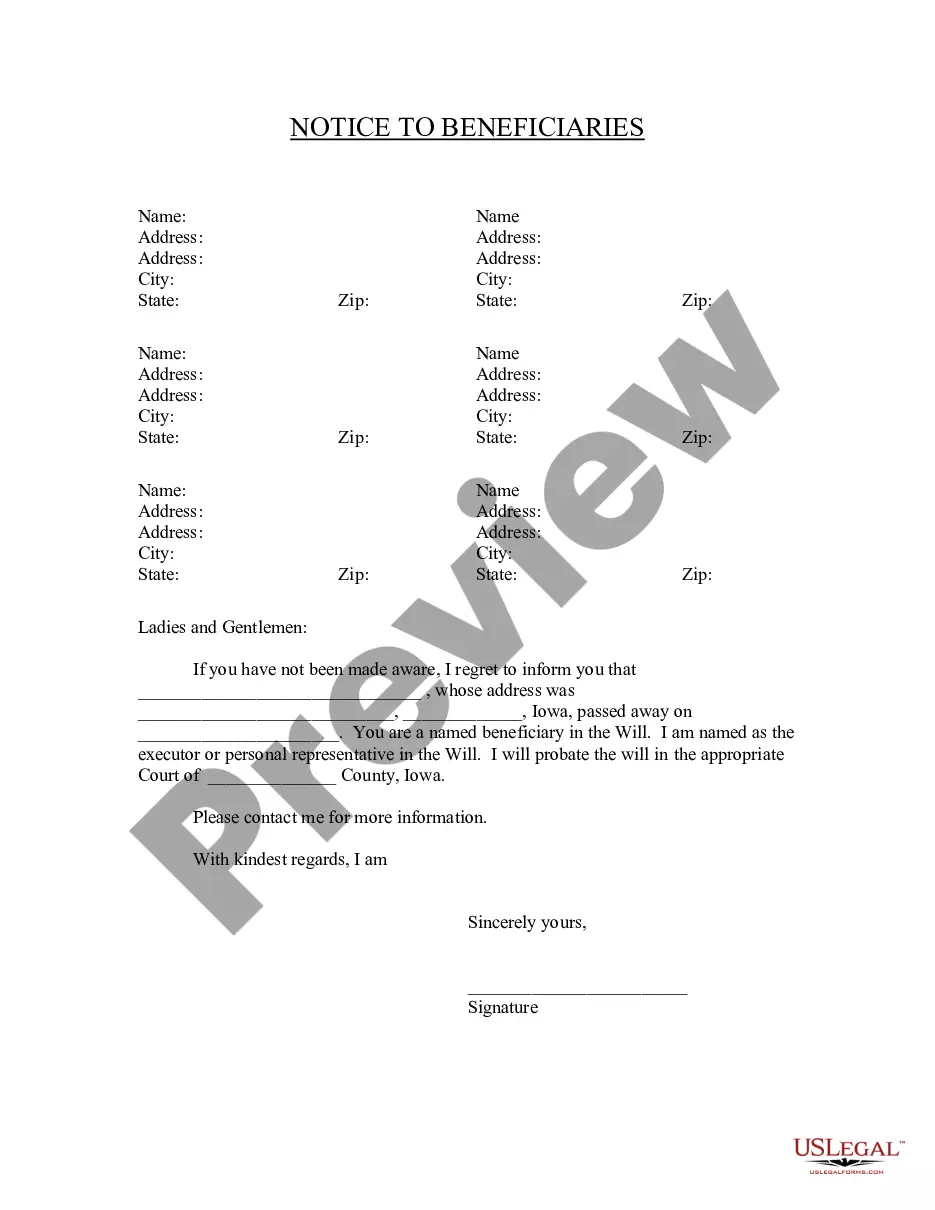
Notice to Beneficiaries of Being Named in Will
Notify beneficiaries of their status in a will and provide essential details about the deceased and the probate process.
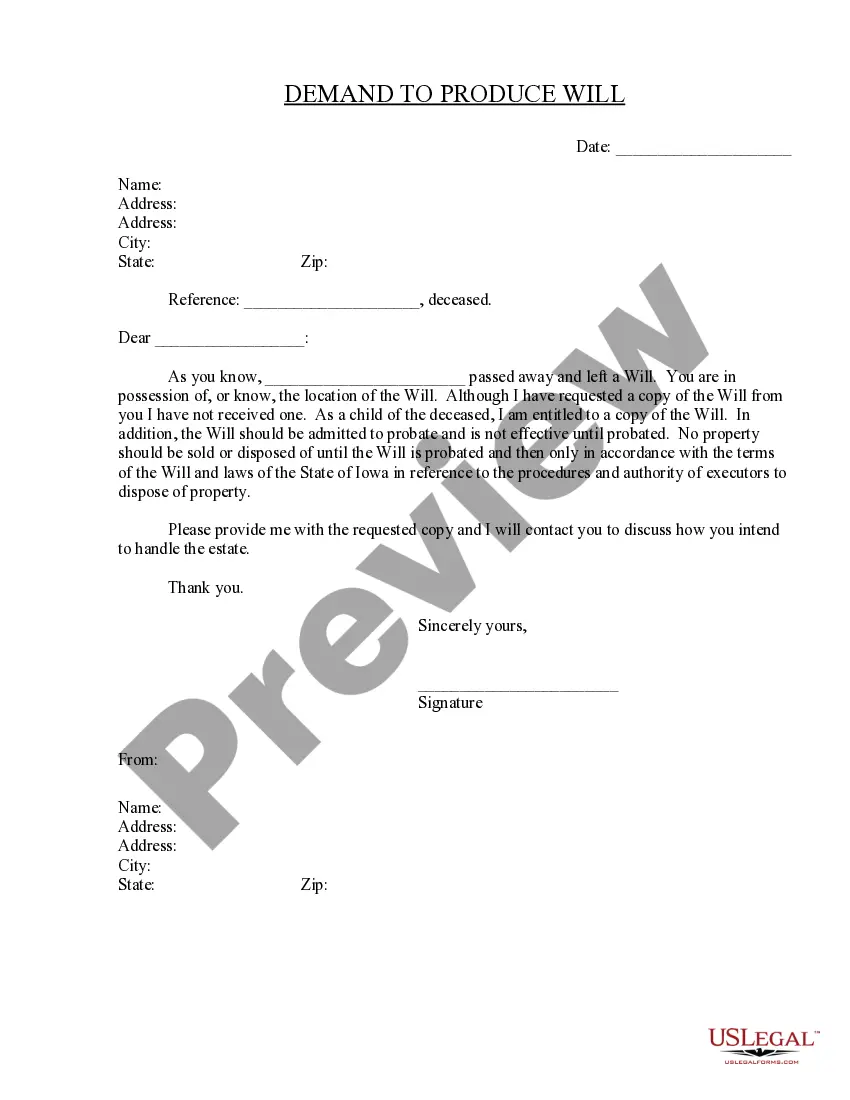
Demand to Produce Copy of Will from Heir
Request a copy of a deceased's Will when it's not voluntarily provided, ensuring legal rights and clarity in estate matters.
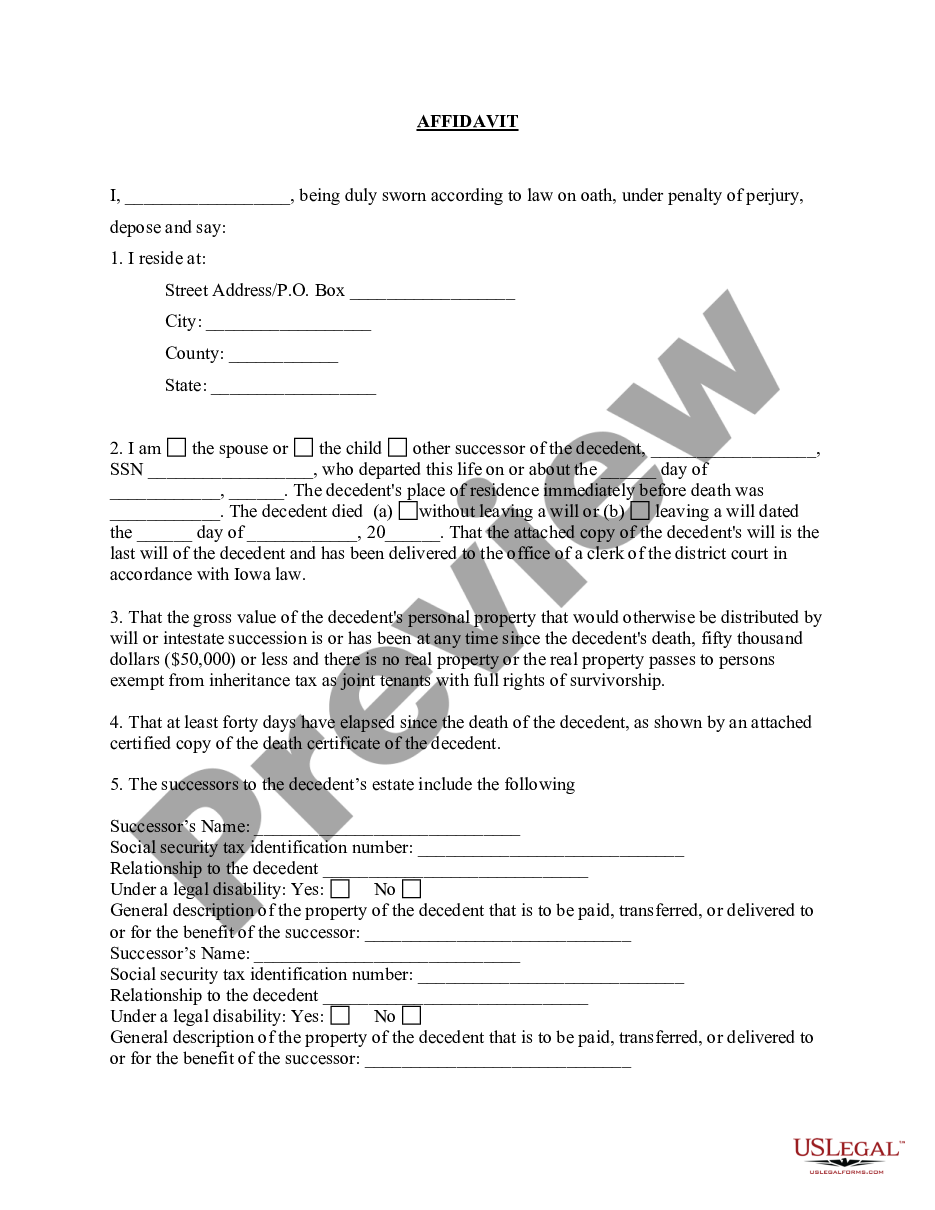
Small Estate Affidavit — Personal Property ≤ $50K
Use this affidavit to claim personal property from an estate valued at $50,000 or less, without going through probate.
Small Estate Affidavit for Estates Not More than $200,000
Use this affidavit to settle estates valued at up to $200,000 without the formalities of probate court.
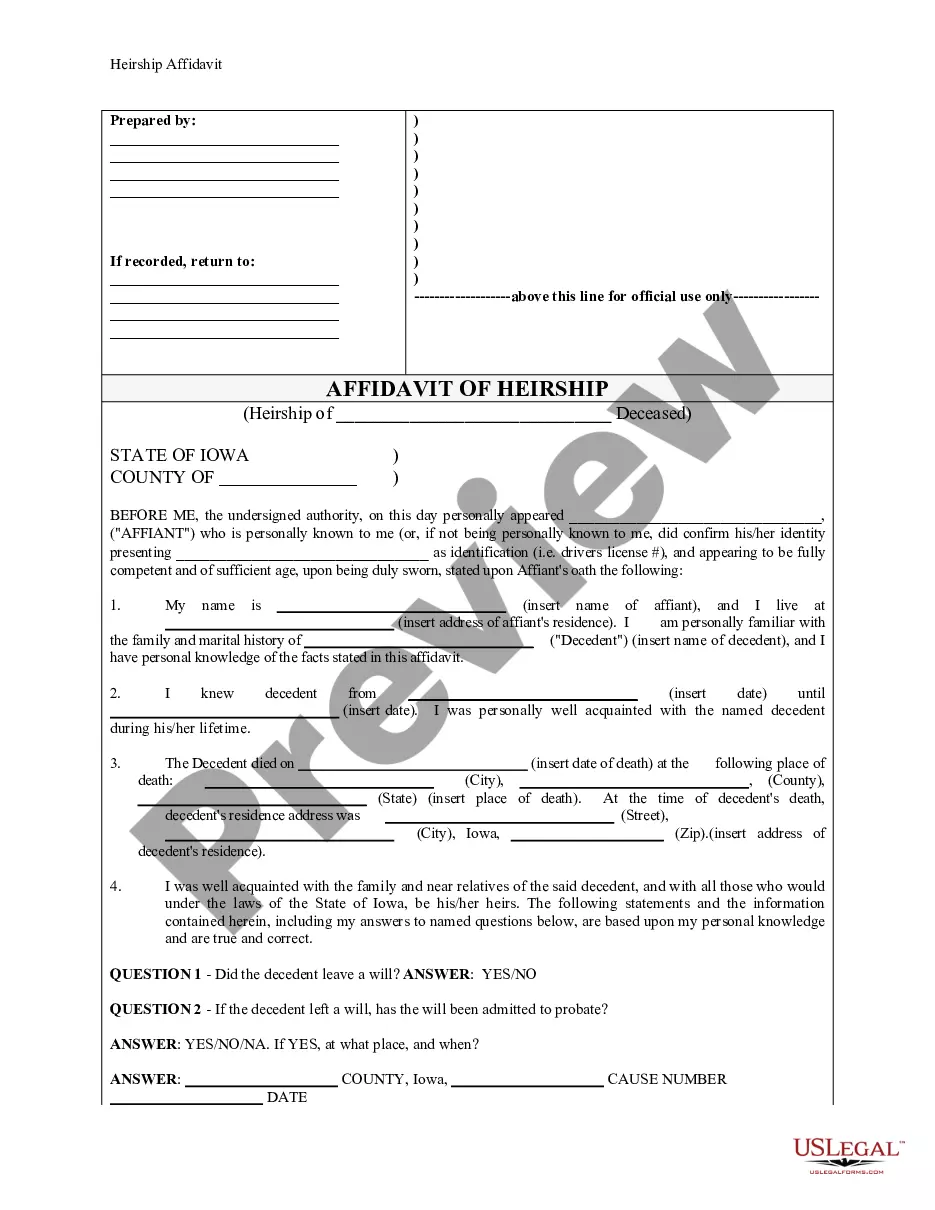
Heirship Affidavit - Descent
Use this affidavit to establish the heirs of a deceased individual for legal purposes in Iowa.
Affidavit: Attorney-In-Fact Acting as Executor
Use this document to affirm your role as an executor and validate a will after the deceased's passing.
Petition: Creditor Claim for Remaining Estate Assets
Use this petition to request the distribution of remaining estate assets among creditors after a decedent's passing.
Affidavit of Domicile
Verify your primary residence with this document, which can be crucial for legal and financial matters after a person's passing.
Common Iowa Probate documents
- Will — a document outlining how a person's assets should be distributed.
- Executor's Affidavit — a statement confirming the executor's authority to manage the estate.
- Inventory Form — a comprehensive list of all estate assets and liabilities.
- Notice of Probate — a formal notification to interested parties about the probate process.
- Petition for Probate — a request to the court to start the probate process.
FAQs
A trust can help avoid probate and manage assets during life, while a will only takes effect after death.
If no estate plan exists, state law will determine how assets are distributed.
Review your estate plan every few years or after significant life changes.
Beneficiary designations on accounts usually override instructions in a will or trust.
Yes, you can appoint separate individuals for financial and healthcare decisions.
Key legal points
- Probate is necessary for asset distribution in most estates.
- Not all assets require probate to transfer ownership.
- Wills must be validated by a probate court.
- Probate proceedings can take several months to complete.
- Estate debts must be settled before distribution to heirs.
How to get started
Begin your probate journey in a few easy steps.
- Find a template or package that suits your situation.
- Review the description, preview, and signing requirements.
- Get complete access with a subscription.
- Complete it using our online editor.
- Export or send: download, email, mail, notarize online, or request for e-signature.
Practical tip
Determine whether to create a will or trust based on your estate's complexity.