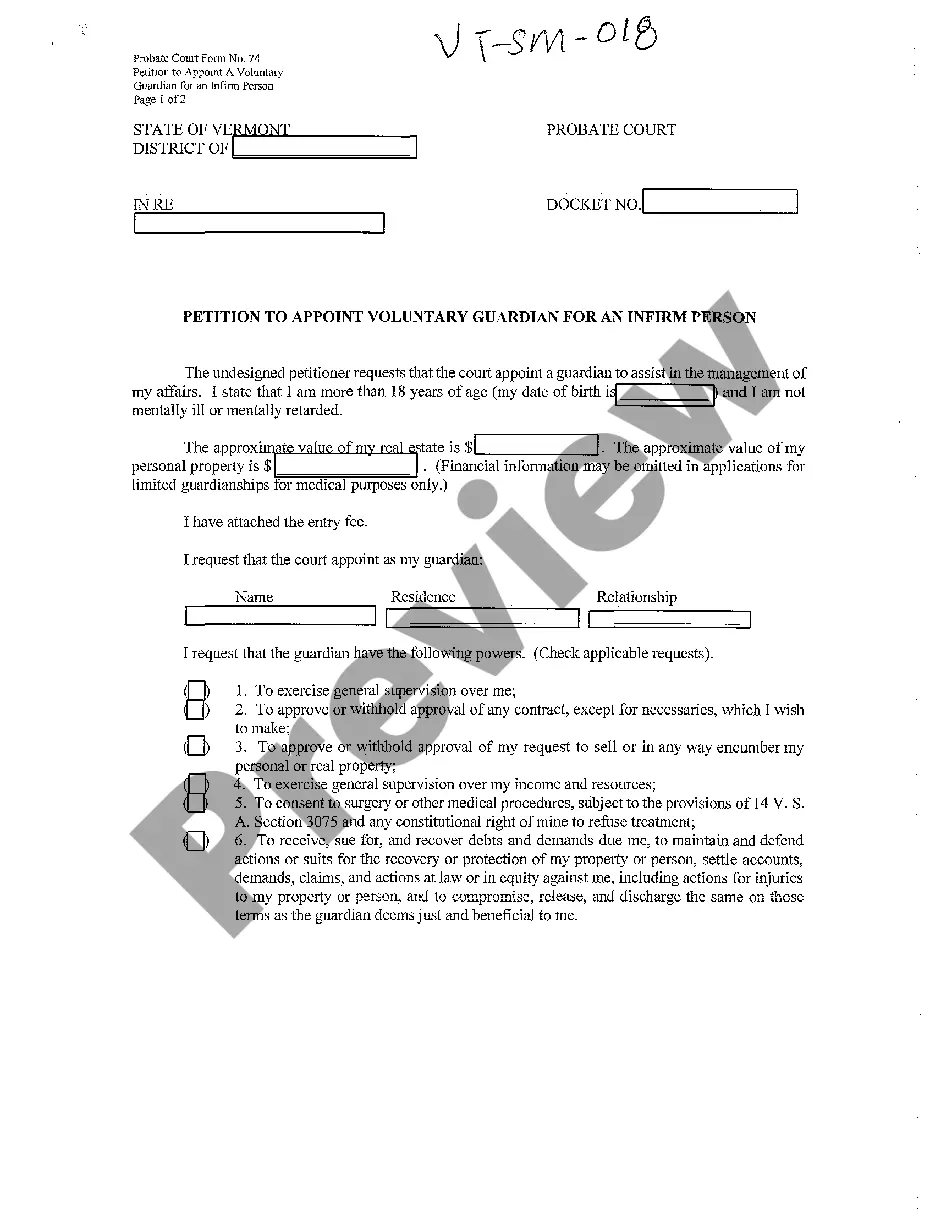
Iowa Small Estate Affidavit for Personal Property Estates Not More than $50,000
What this document covers
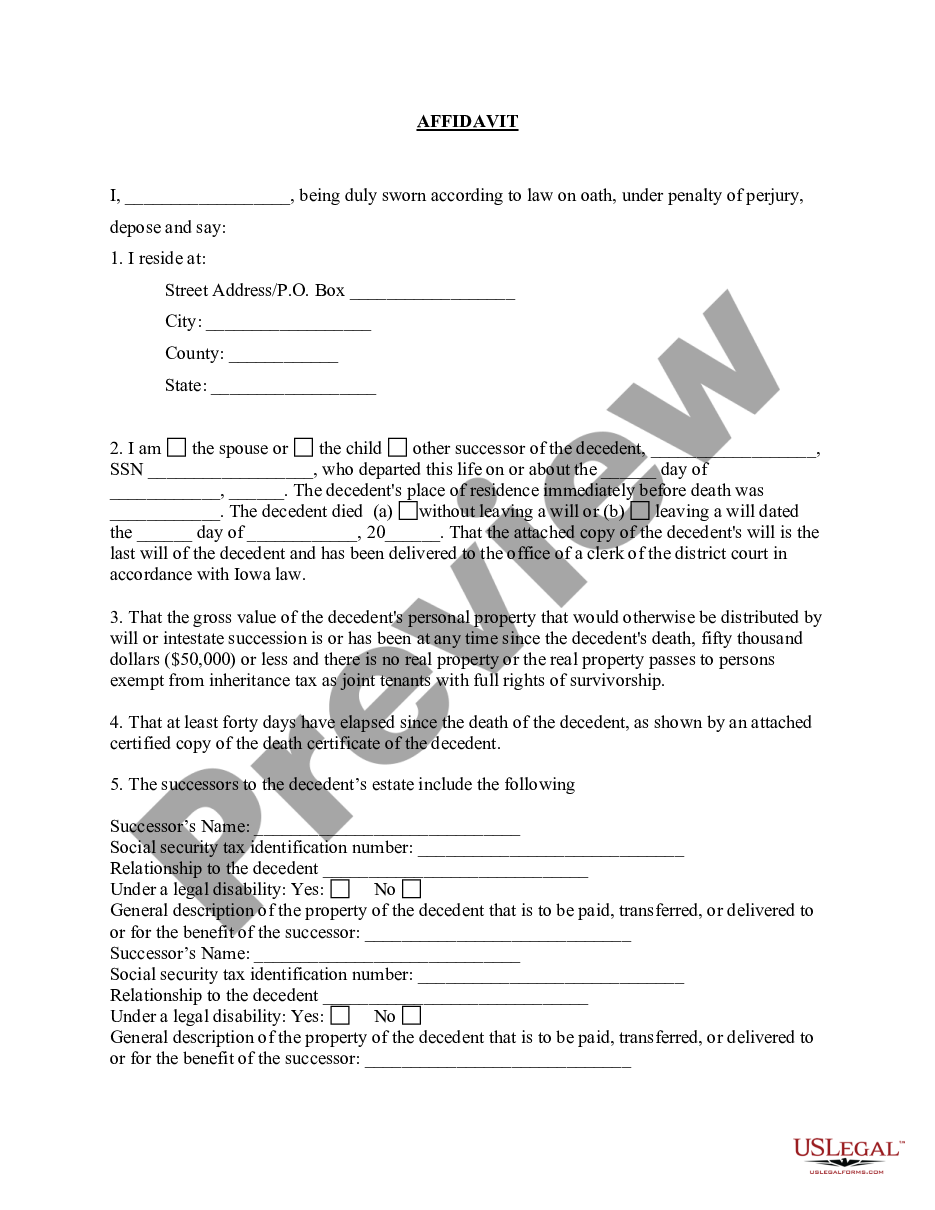
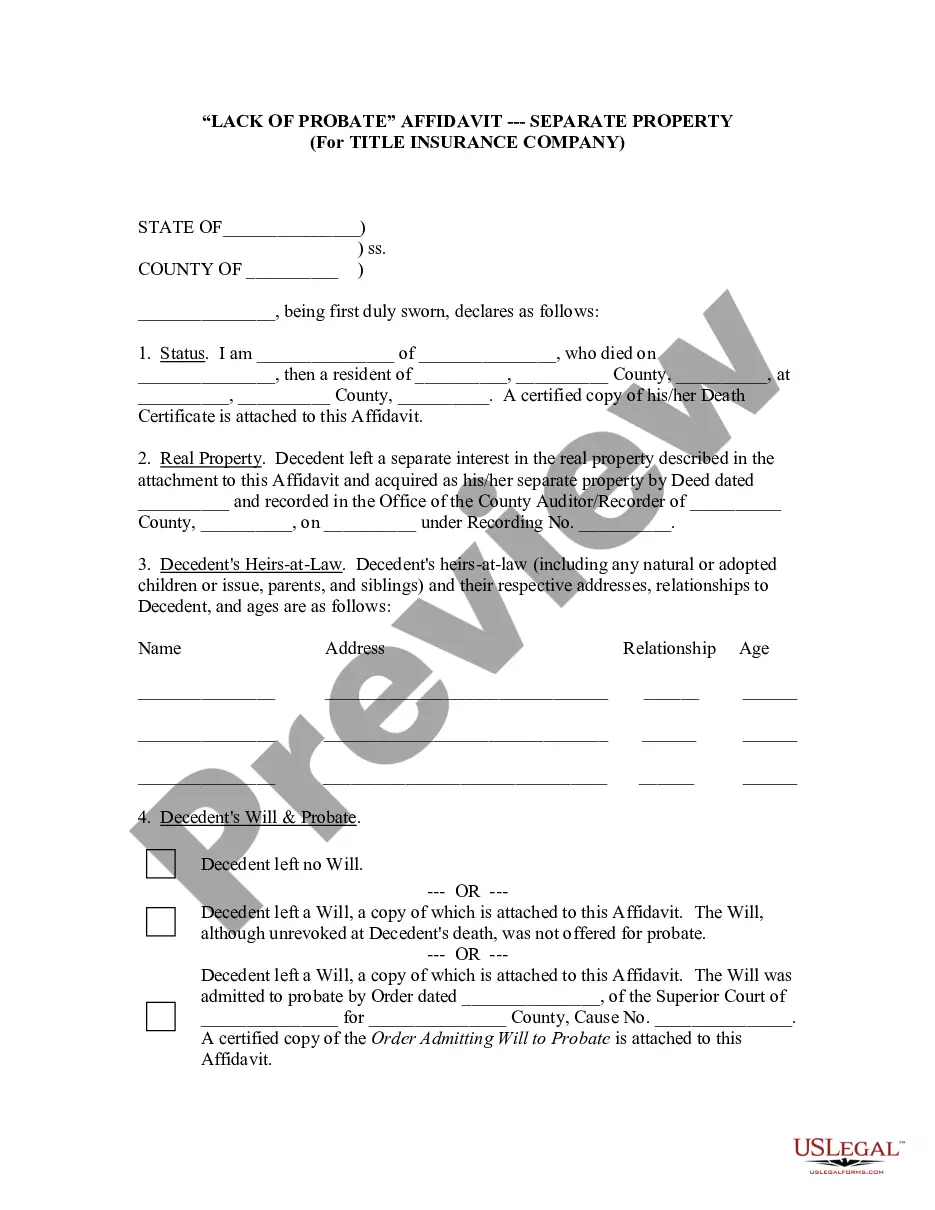
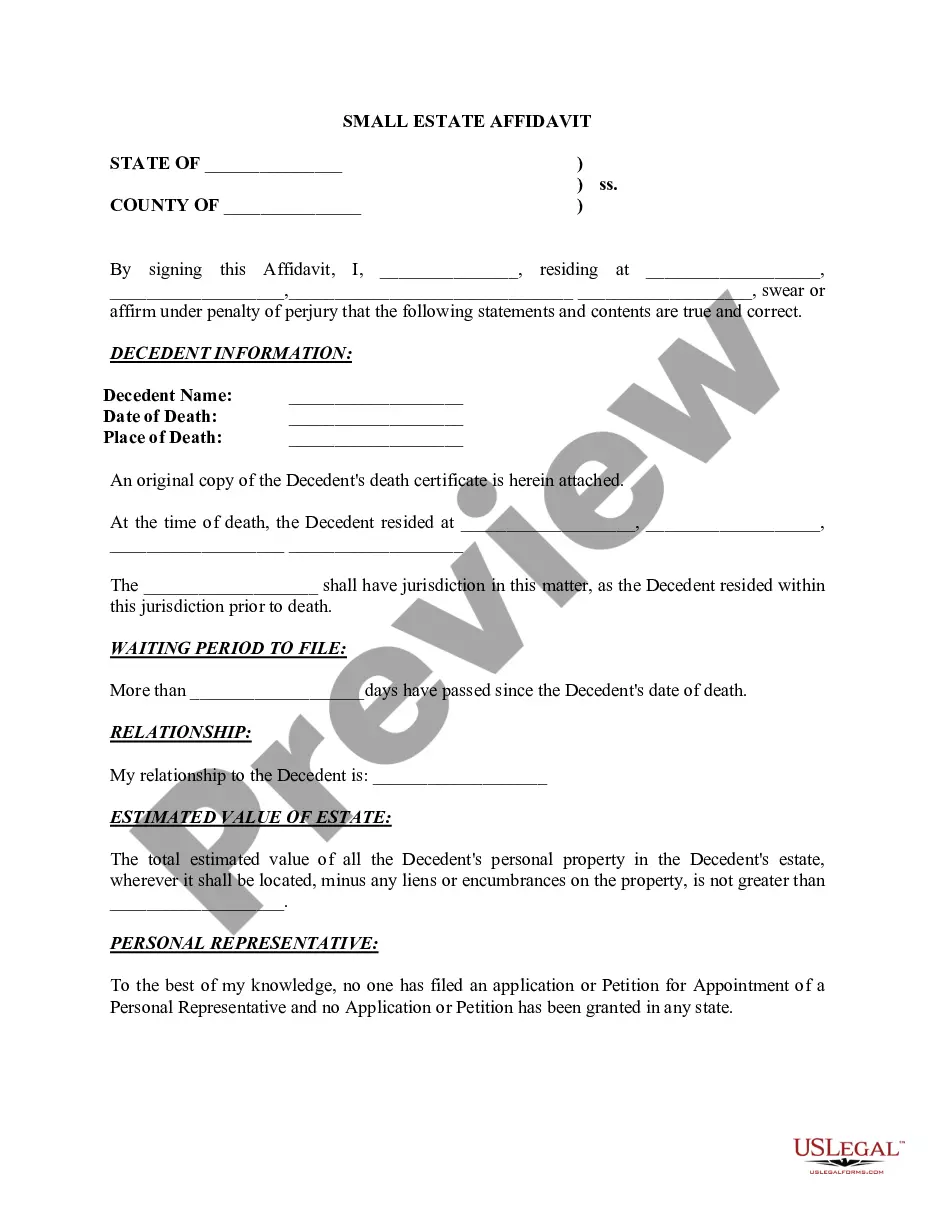
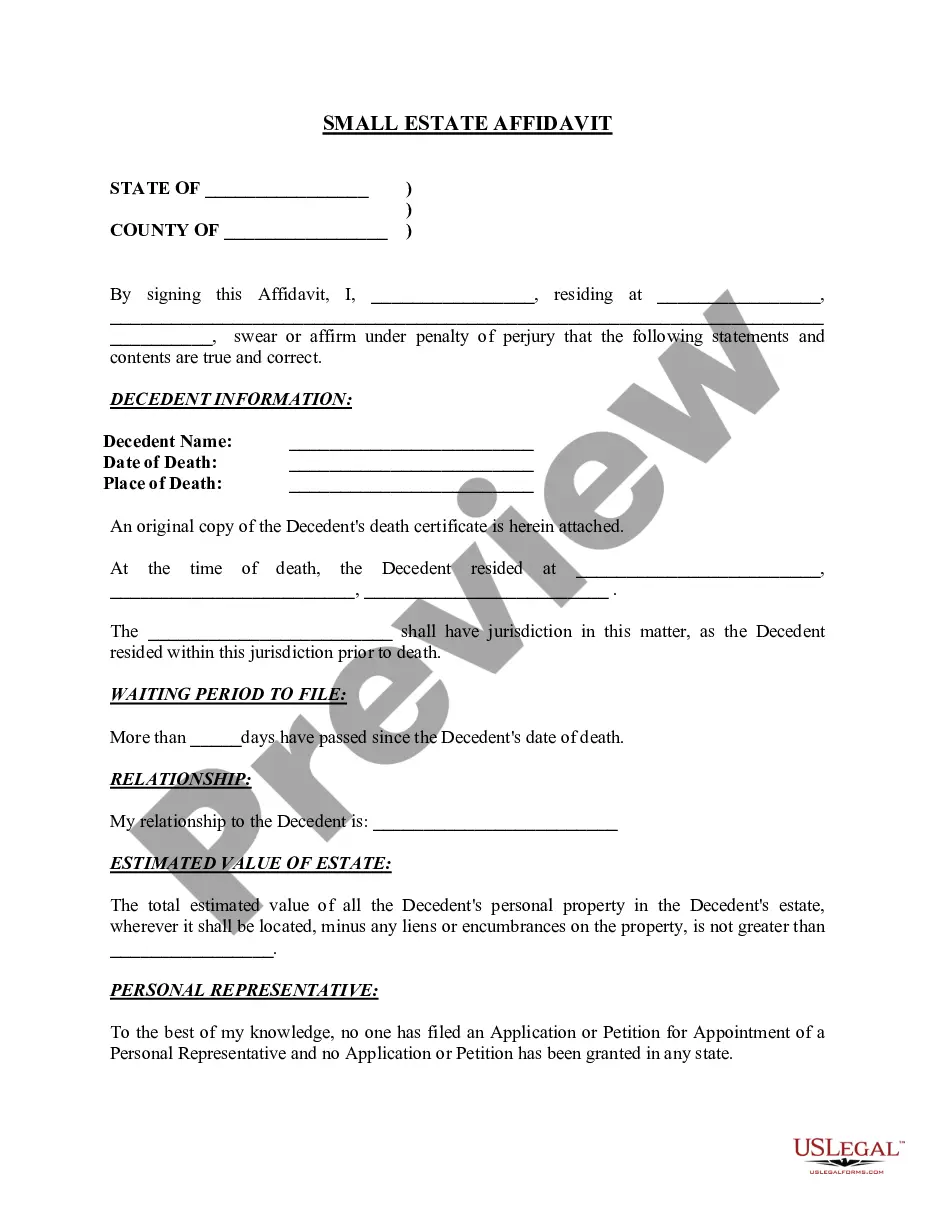
The Small Estate Affidavit for Personal Property Estates Not More than $50,000 is a legal document that allows individuals to transfer the personal property of a deceased person without going through the probate process. It is specifically designed for estates valued at $50,000 or less and does not include real estate. This affidavit is presented to the property holder, simplifying the transfer of assets to the heirs or beneficiaries designated by law or the decedent's will.
Form components explained
- Affiant's identification details, including name and address.
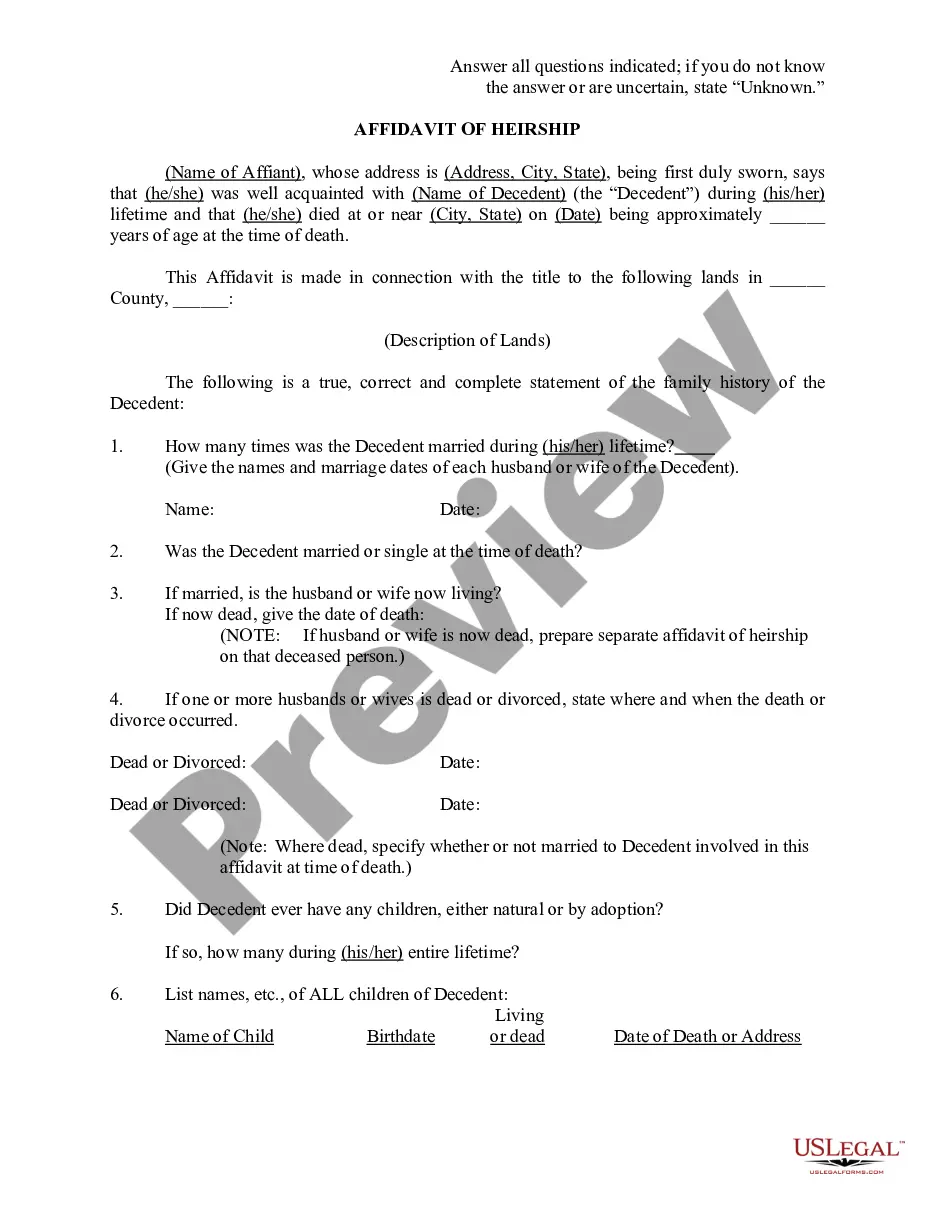
- Decedent's information, including name, Social Security number, and date of death.
- Statement regarding the existence of a will or intestate succession.
- Gross value of the decedent's personal property.
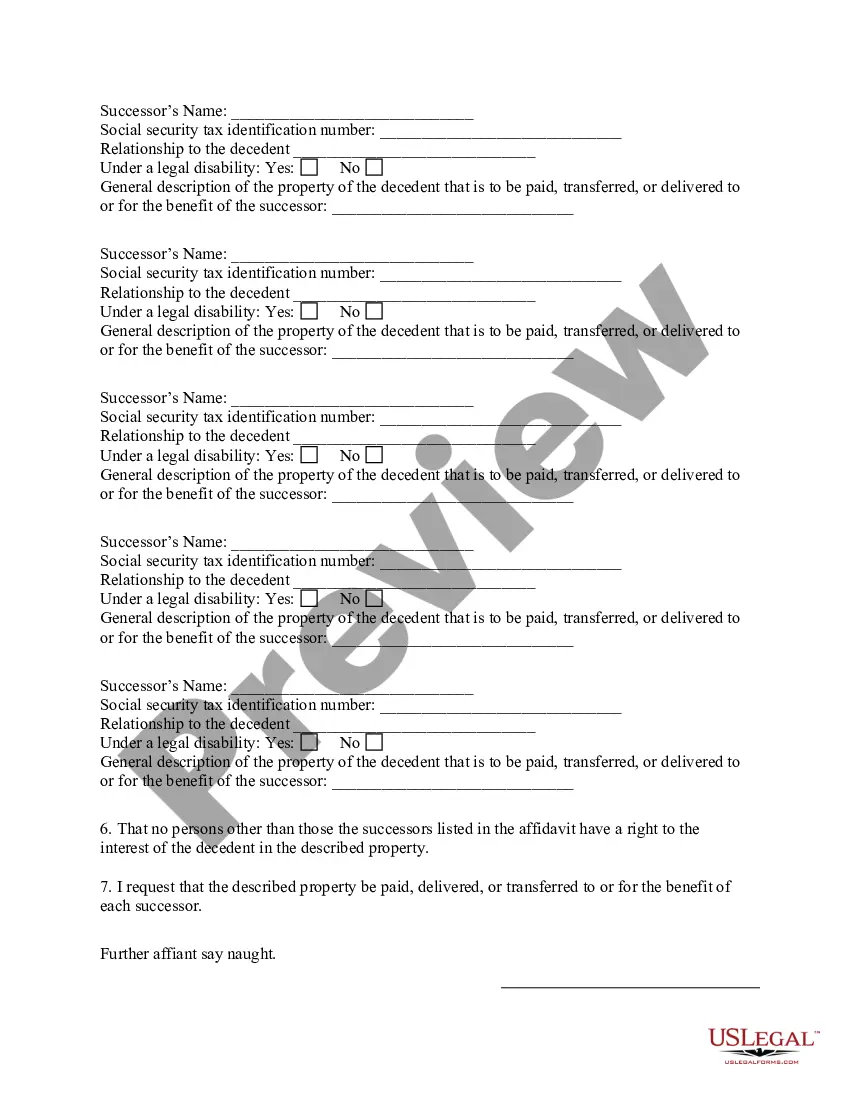
- Details of successors, including names, Social Security numbers, and relationships to the decedent.
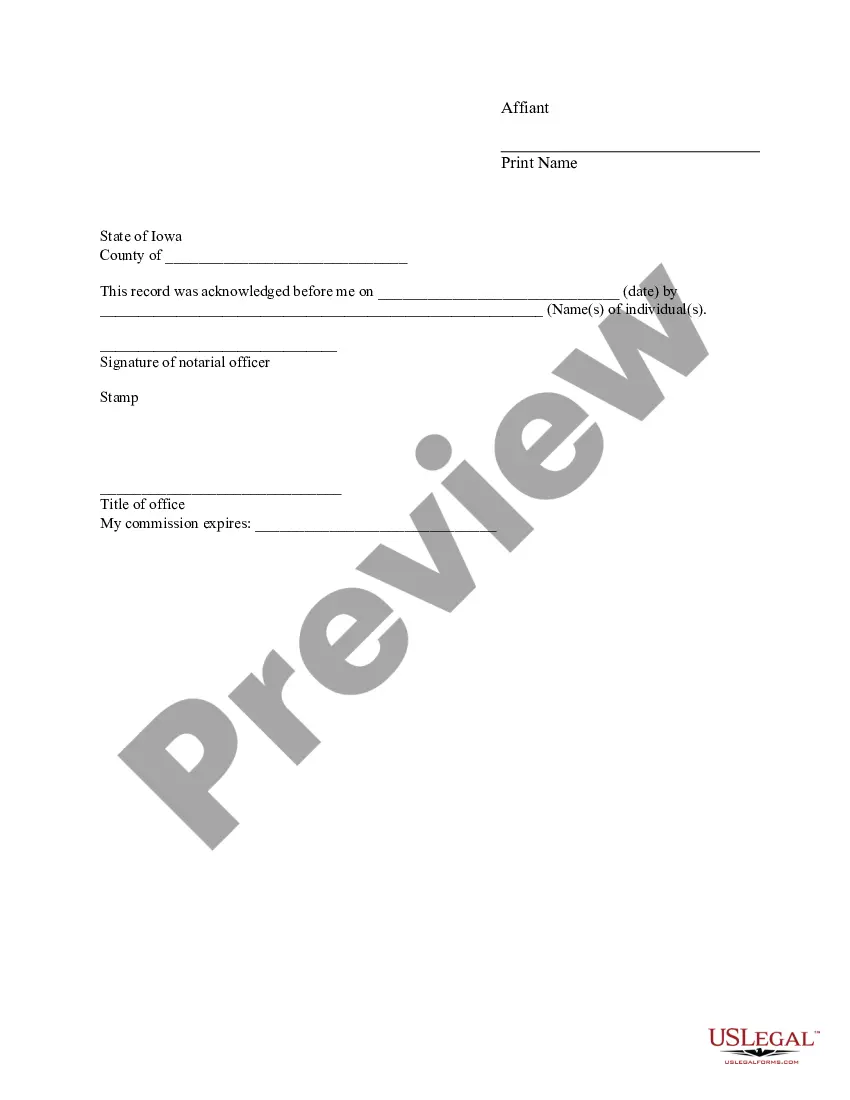
- Notary public section for validation.
When to use this form
This form is typically used when a person passes away with personal property valued at $50,000 or less, and there is no need for a court order for its distribution. It is suitable when the decedent did not leave a will or left a will that has been filed. This affidavit provides a straightforward method for heirs or beneficiaries to collect the deceased's personal property, such as bank accounts or personal belongings, directly from the holders of those assets.
Who should use this form
- Spouses of the decedent.
- Children or other legal successors of the decedent.
- Individuals responsible for managing the decedent's personal property.
- Anyone seeking to simplify the transfer of assets without probate.
Instructions for completing this form
- Identify yourself as the affiant, providing your name and address.
- Fill in the decedent's information, including name, Social Security number, and date of death.
- State whether the decedent left a will or died intestate.
- Provide the total value of the personal property you are transferring.
- List the successors, including their names, relationships, and any necessary identification numbers.
- Sign the affidavit in front of a notary public to ensure its validity.
Does this form need to be notarized?
Yes, this form must be notarized to be legally valid. The notary public will witness your signature and confirm your identity, ensuring the affidavit's authenticity. US Legal Forms offers integrated online notarization, providing you with 24/7 access to secure video calls for notarizing your documents without the need to travel.
Get your form ready online
Our built-in tools help you complete, sign, share, and store your documents in one place.
Make edits, fill in missing information, and update formatting in US Legal Forms—just like you would in MS Word.
Download a copy, print it, send it by email, or mail it via USPS—whatever works best for your next step.
Sign and collect signatures with our SignNow integration. Send to multiple recipients, set reminders, and more. Go Premium to unlock E-Sign.
If this form requires notarization, complete it online through a secure video call—no need to meet a notary in person or wait for an appointment.
We protect your documents and personal data by following strict security and privacy standards.

Make edits, fill in missing information, and update formatting in US Legal Forms—just like you would in MS Word.

Download a copy, print it, send it by email, or mail it via USPS—whatever works best for your next step.

Sign and collect signatures with our SignNow integration. Send to multiple recipients, set reminders, and more. Go Premium to unlock E-Sign.

If this form requires notarization, complete it online through a secure video call—no need to meet a notary in person or wait for an appointment.

We protect your documents and personal data by following strict security and privacy standards.
Typical mistakes to avoid
- Failing to include all successors or incorrect details about them.
- Not ensuring the total value of property does not exceed $50,000.
- Omitting the requirement for a notary public signature.
- Providing incomplete or incorrect personal information about the decedent.
Benefits of completing this form online
- Easy access to downloadable templates that can be completed at your convenience.
- Editability allows you to customize the affidavit to fit your specific situation.
- Reliability from forms drafted by licensed attorneys, ensuring compliance with legal standards.
Legal use & context
- This affidavit is legally recognized for transferring ownership of personal property in the absence of a will or if the estate is exempt from full probate.
- It must align with state-specific small estate laws to ensure its enforceability.
Main things to remember
- This Small Estate Affidavit simplifies the transfer of personal property following the death of an individual with limited assets.
- The form is designed for estates valued at $50,000 or less, ensuring quick access to personal property.
- Notarization is required to authenticate the affidavit and ensure it is legally enforceable.
Looking for another form?
Form popularity
FAQ
To fill out an affidavit of inheritance, you need to gather relevant details about the decedent and the distributions to the heirs. Be sure to clearly describe the assets involved, and use the appropriate form designed for inheritance. If you are dealing with an estate under $50,000, consider using the Iowa Small Estate Affidavit for Personal Property Estates Not More than $50,000 for a more straightforward process. Platforms like USLegalForms provide resources to assist you in this process.
In Washington state, real property typically does not have to go through probate if it is left to a surviving spouse or registered domestic partner. However, if there are other heirs or complications, you may need to follow the probate process. It is important to check whether the Iowa Small Estate Affidavit for Personal Property Estates Not More than $50,000 applies in your situation, as it generally concerns personal property.
No, an affidavit of heirship and a small estate affidavit serve different purposes. The affidavit of heirship identifies the rightful heirs of an estate, while the Iowa Small Estate Affidavit for Personal Property Estates Not More than $50,000 allows for the transfer of personal property without going through probate. Understanding these distinctions can help you choose the right document for your needs.
To fill out an affidavit form, start by gathering the necessary information about the estate and the decedent. Clearly state the purpose of the affidavit, and ensure all details are accurate and complete. When preparing the Iowa Small Estate Affidavit for Personal Property Estates Not More than $50,000, follow the instructions carefully. If needed, resources like USLegalForms can provide templates and assistance to simplify this task.
The threshold for Probate can range from £5,000 to A£50,000, depending on which banks and financial institutions are holding the deceased person's assets.
Probate is required when an estate's assets are solely in the deceased's name. In most cases, if the deceased owned property that had no other names attached, an estate must go through probate in order to transfer the property into the name(s) of any beneficiaries.
Probate is a legal process that's sometimes needed to deal with a deceased person's property, money and assets (their Estate). Probate is not always required for small Estates in England or Wales. This is because some assets up to a value of £5,000 can usually be transferred without going through the Probate process.
Fortunately, not all property needs to go through this legal process before it passes to your heirs.The quick rule of thumb is probate is not required when the estate is small, or the property is designed to pass outside of probate. It doesn't matter if you leave a will.
Visit the appropriate court office. Check the court's limits for the estate's value. Obtain the correct affidavit form. Fill out the affidavit in full. Sign the affidavit. Obtain a death certificate.
Iowa has a simplified probate process for small estates. To use it, an executor files a written request with the local probate court asking to use the simplified procedure. The court may authorize the executor to distribute the assets without having to jump through the hoops of regular probate.