What is Probate?
Probate refers to the process of validating a deceased person's will and distributing their assets. It involves a series of documents and steps to ensure proper estate management. Explore our state-specific templates for your needs.
Probate is the legal process for settling estates. Our attorney-drafted templates are quick and simple to complete.

Easily claim a deceased person's personal property without probate when the estate's value is below certain limits.
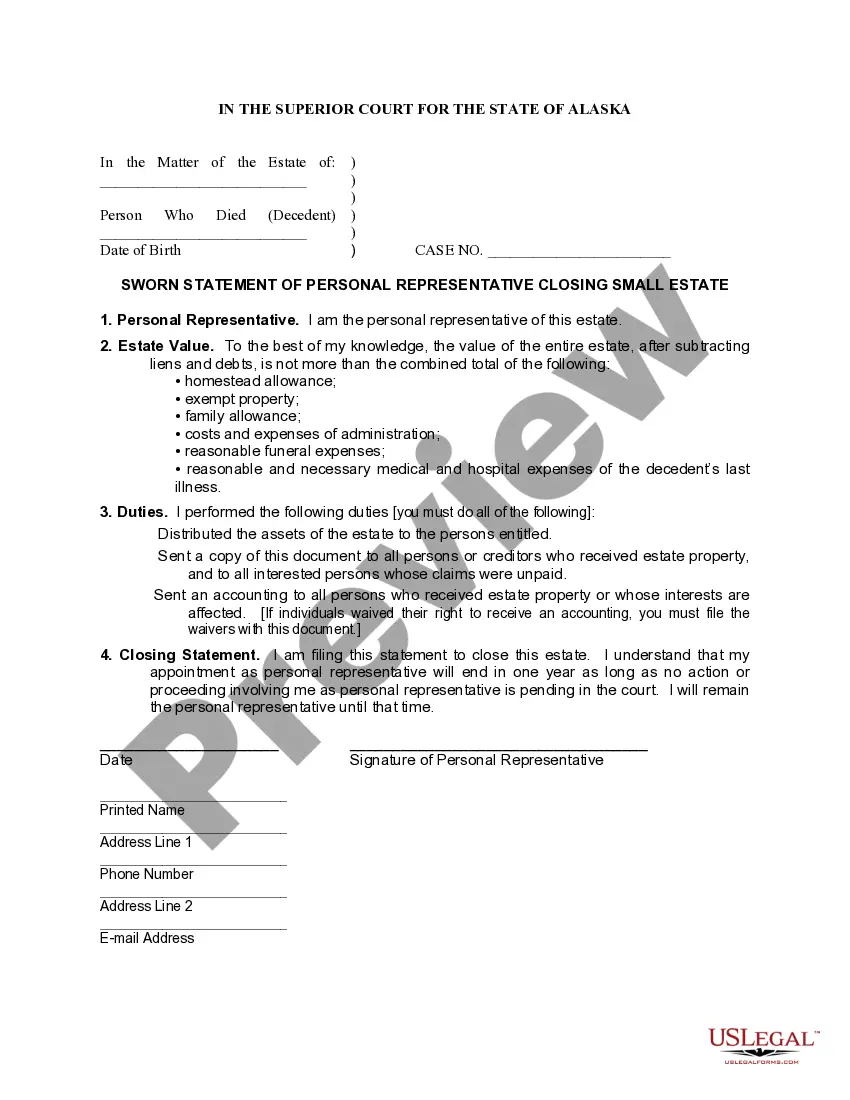
Use this document to officially close a small estate in Alaska, ensuring all debts are settled and assets distributed.
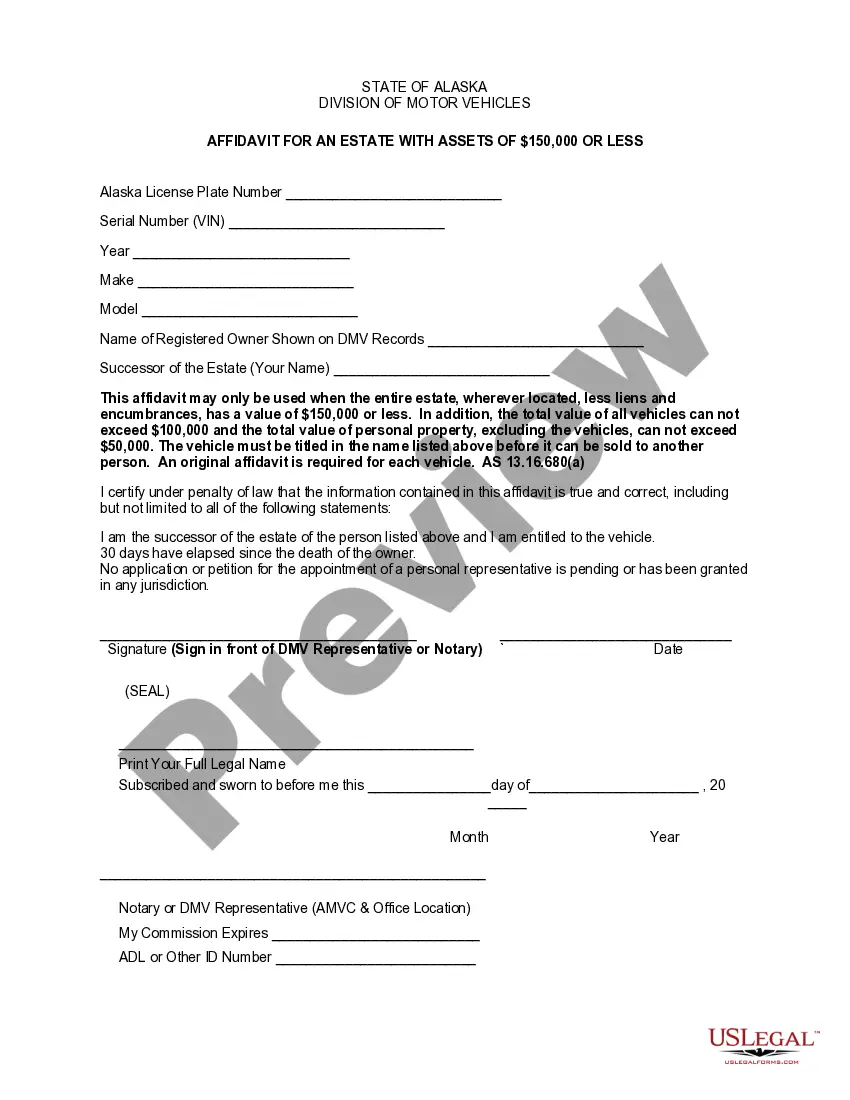
Use this affidavit to transfer vehicle ownership after someone passes away, specifically for small estates valued at $150,000 or less.
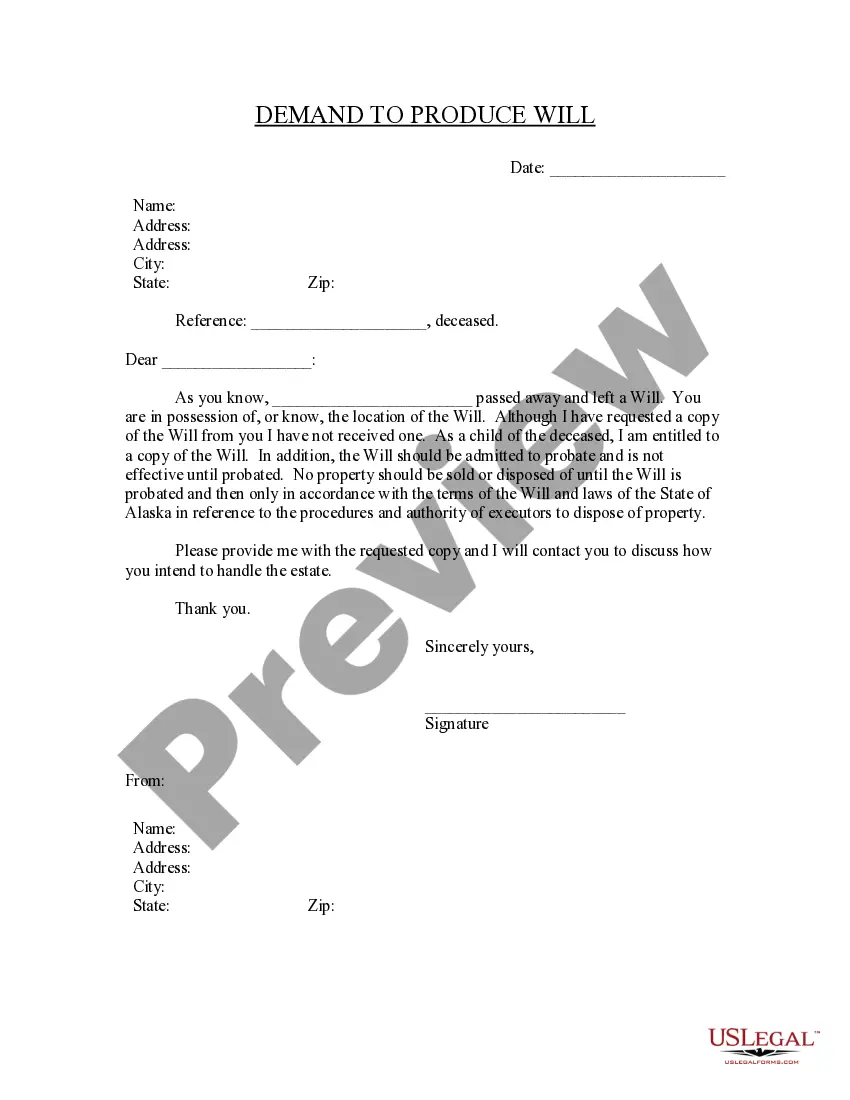
Request a copy of the Will to understand your rights as an heir and ensure proper estate management.
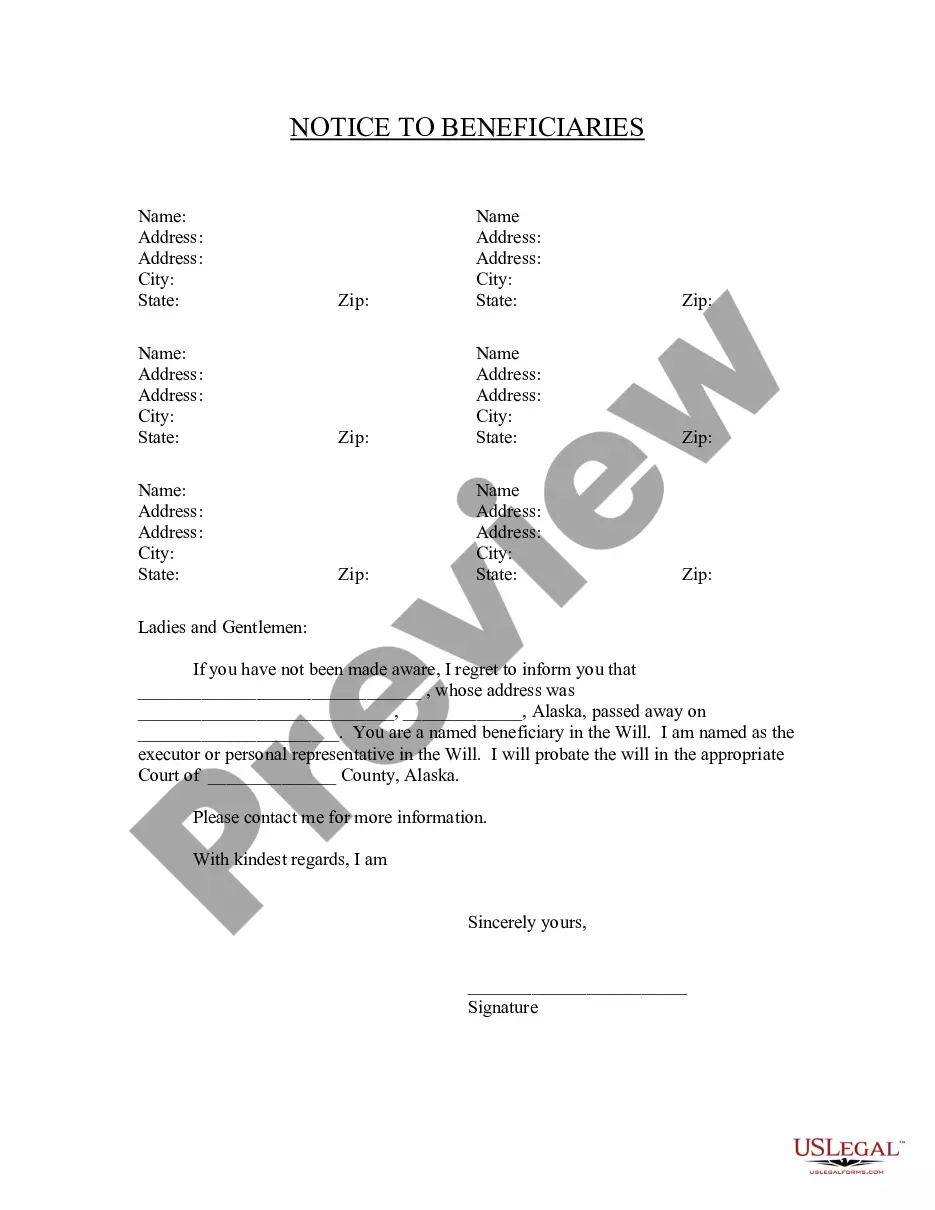
Notify named beneficiaries of their status in a will and provide information about the probate process.
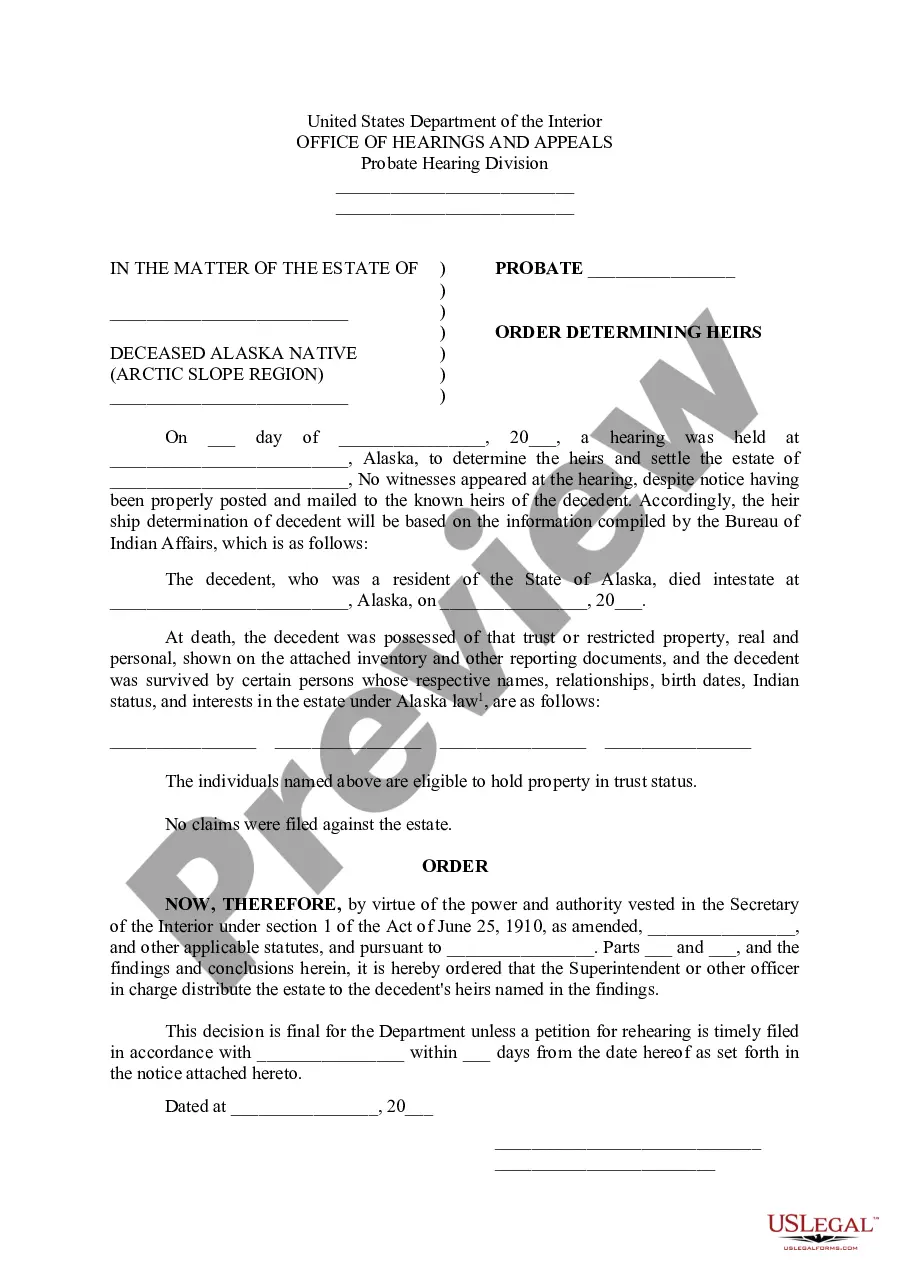
Determine the rightful heirs of an estate when no witnesses appear during the probate hearing.
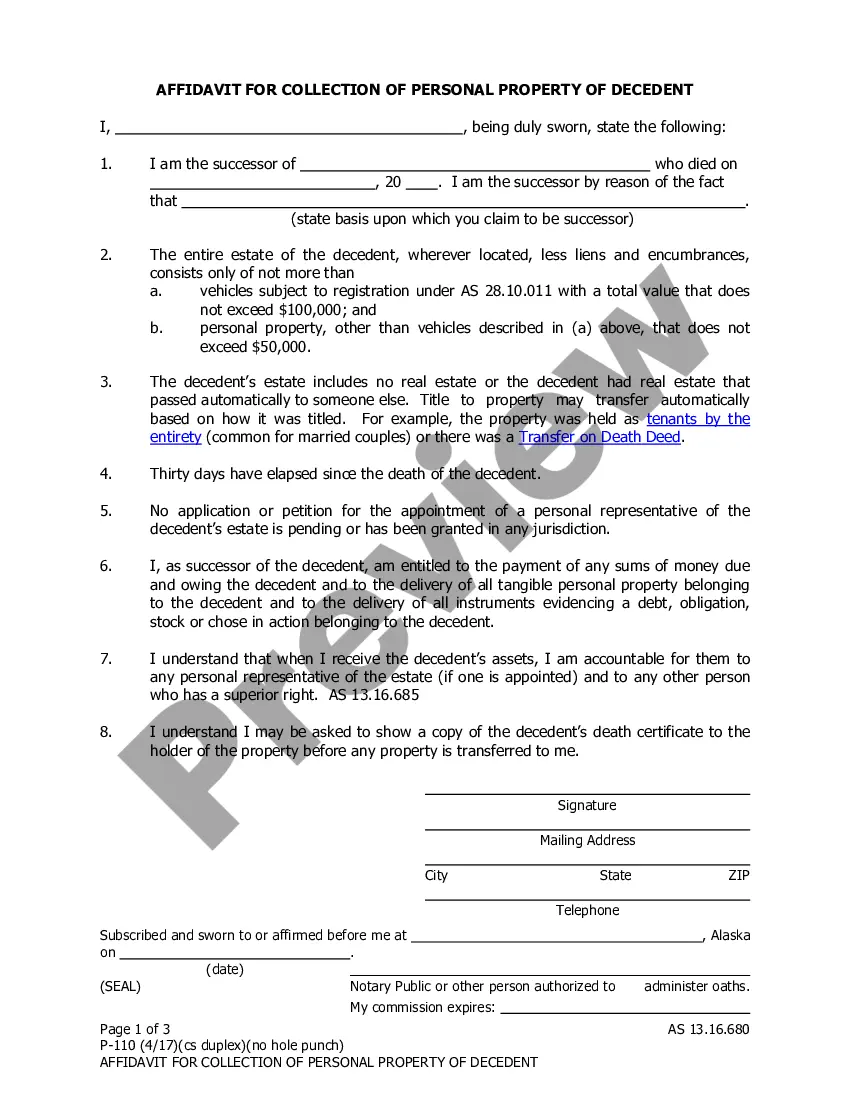
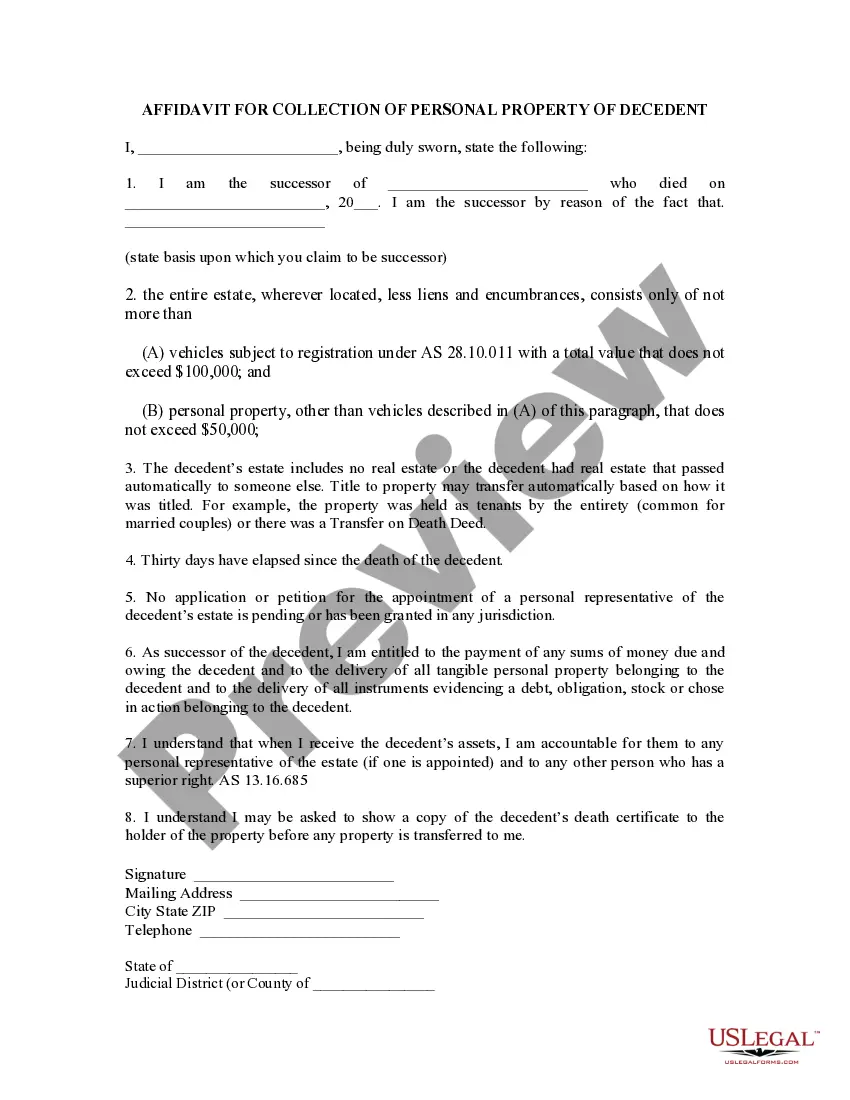
Use this affidavit to collect personal property from a decedent's estate when there's no personal representative appointed.
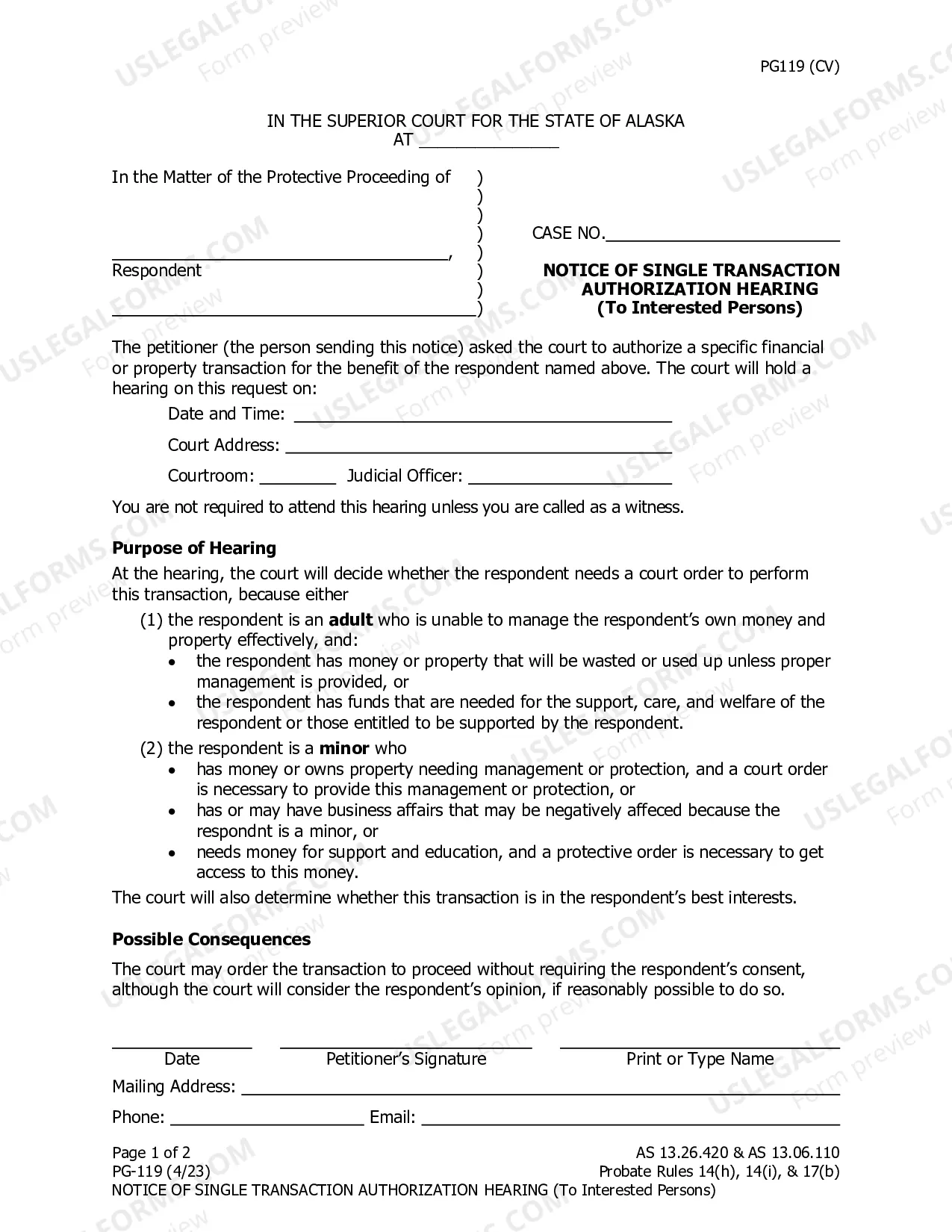
Notify interested parties of a court hearing regarding approval for a significant financial transaction.
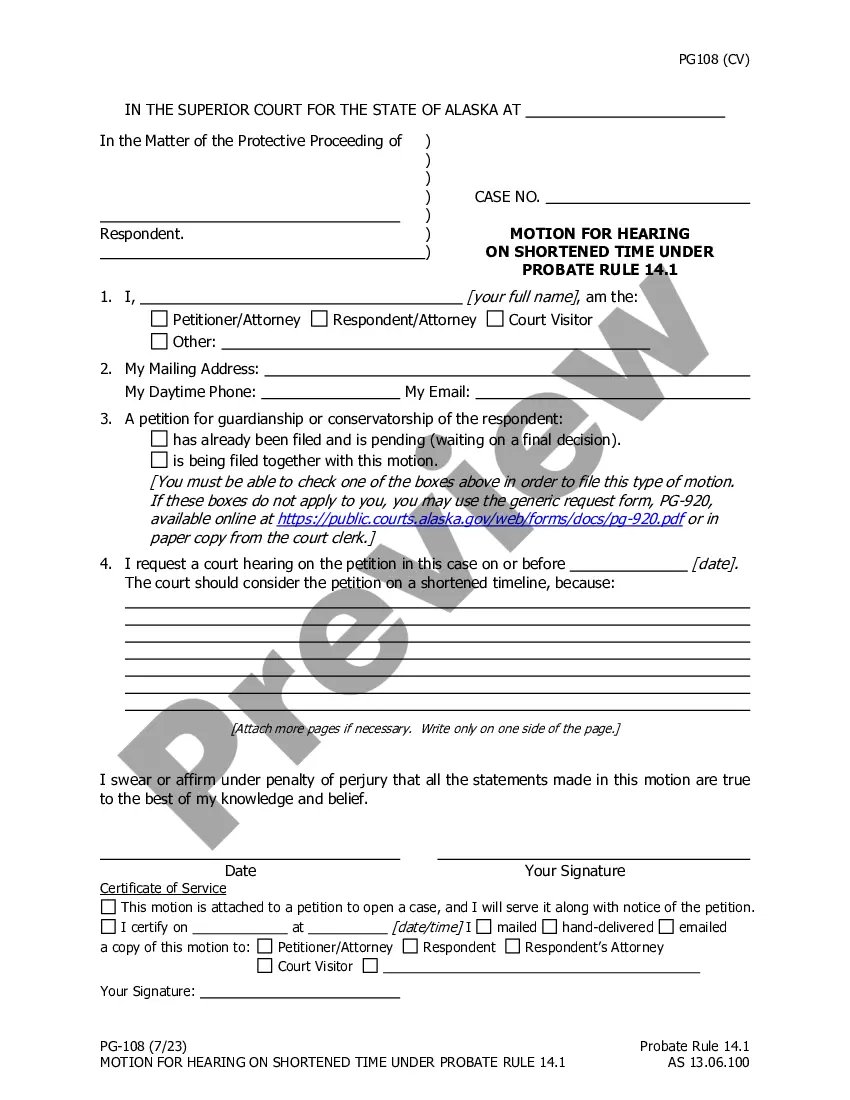
Request a court hearing sooner than usual for urgent matters in guardianship or conservatorship cases.
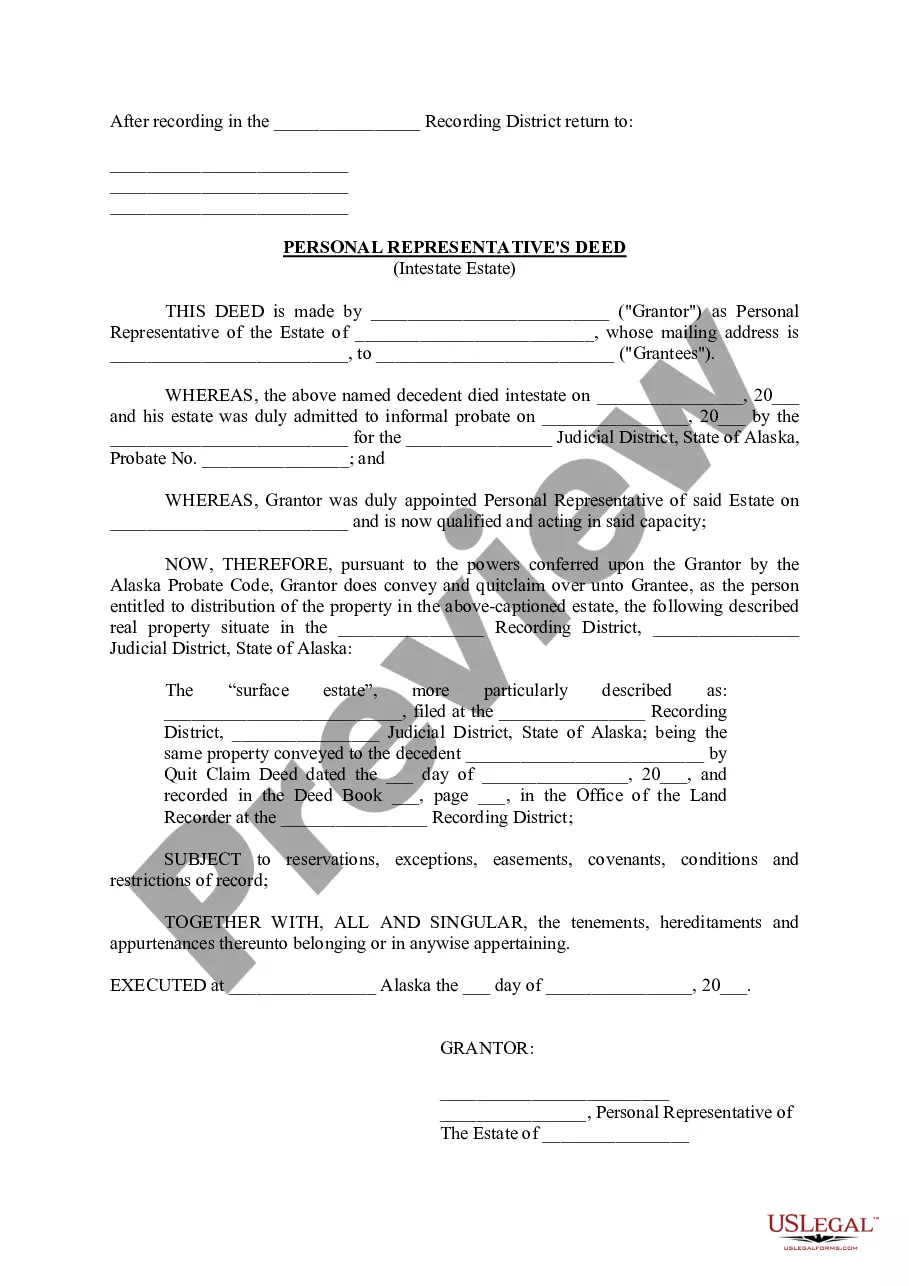
This deed is used to transfer property from an estate without a will, clarifying ownership after probate.
Probate is essential for asset distribution after death.
All debts and taxes must be settled before distribution.
Probate can be contested by interested parties.
Not all assets go through probate; some pass directly.
Probate can vary in complexity based on estate size.
Begin your probate process with these simple steps.
A trust can provide additional control over asset distribution and avoid probate.
If no action is taken, the estate may go through intestacy laws, which may not reflect your wishes.
It's wise to review your estate plan every few years or after major life events.
Beneficiary designations override wills and trusts, ensuring assets go directly to named individuals.
Yes, you can appoint separate agents for financial and health matters in your estate plan.