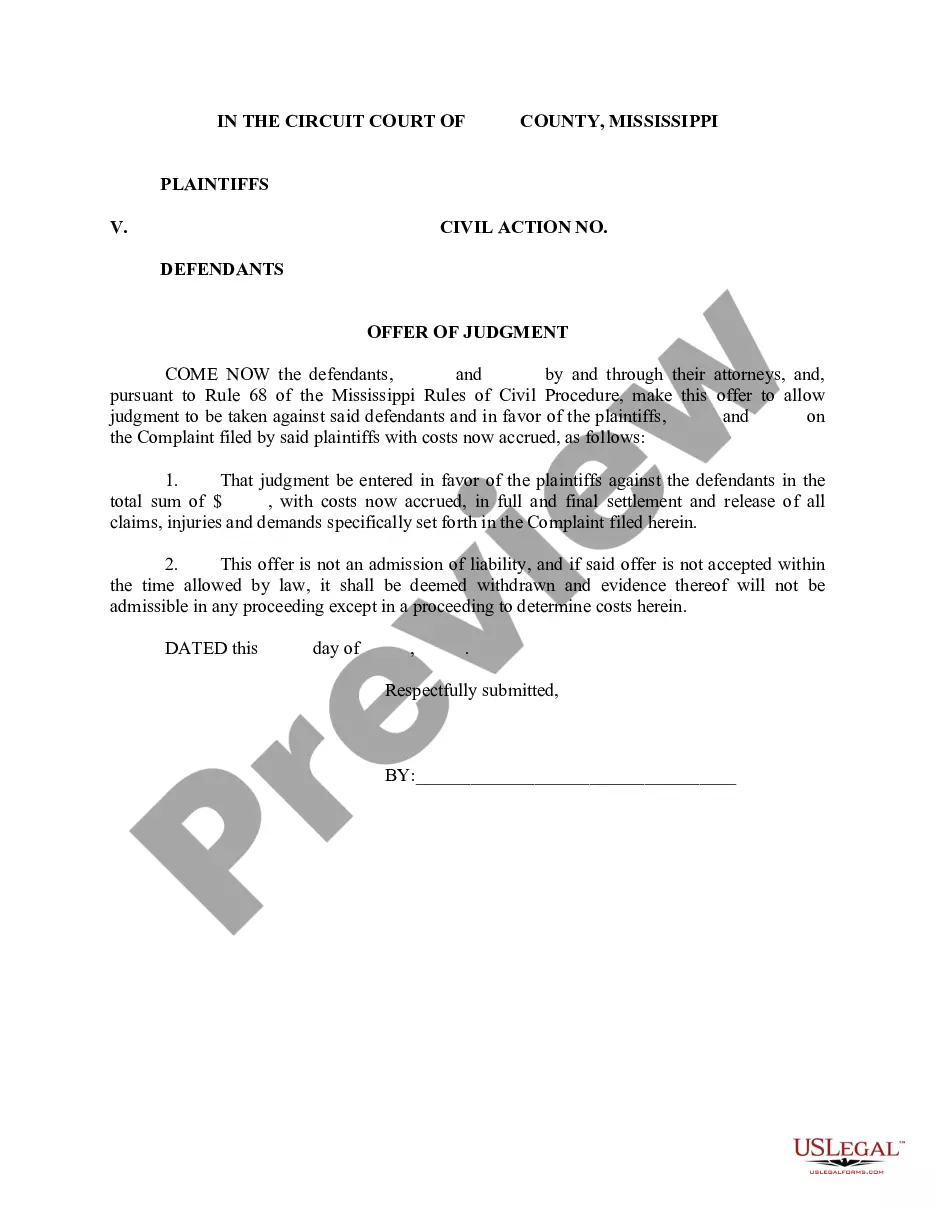
Pennsylvania Last Will and Testament for Divorced and Remarried Person with Mine, Yours and Ours Children
About this form
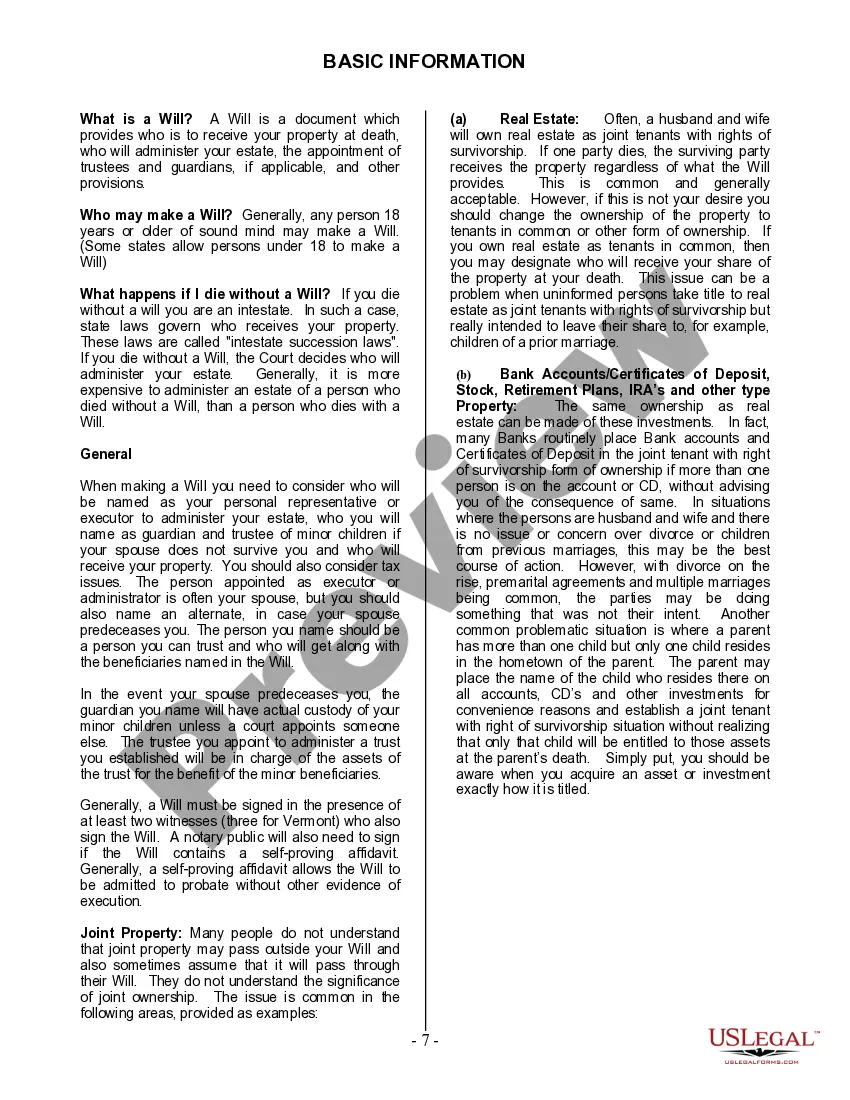
This Last Will and Testament is specifically designed for individuals who are divorced and remarried, with children from both previous and current relationships. This legal document allows you to specify how your assets will be distributed upon your death and includes provisions for appointing a personal representative. It establishes trusts for minor children, ensuring that their inheritance is managed until they reach maturity. This will is unique because it considers the complexities of blended families, addressing the distributions to both biological and step-children, which is essential for ensuring your wishes are followed.
Key parts of this document
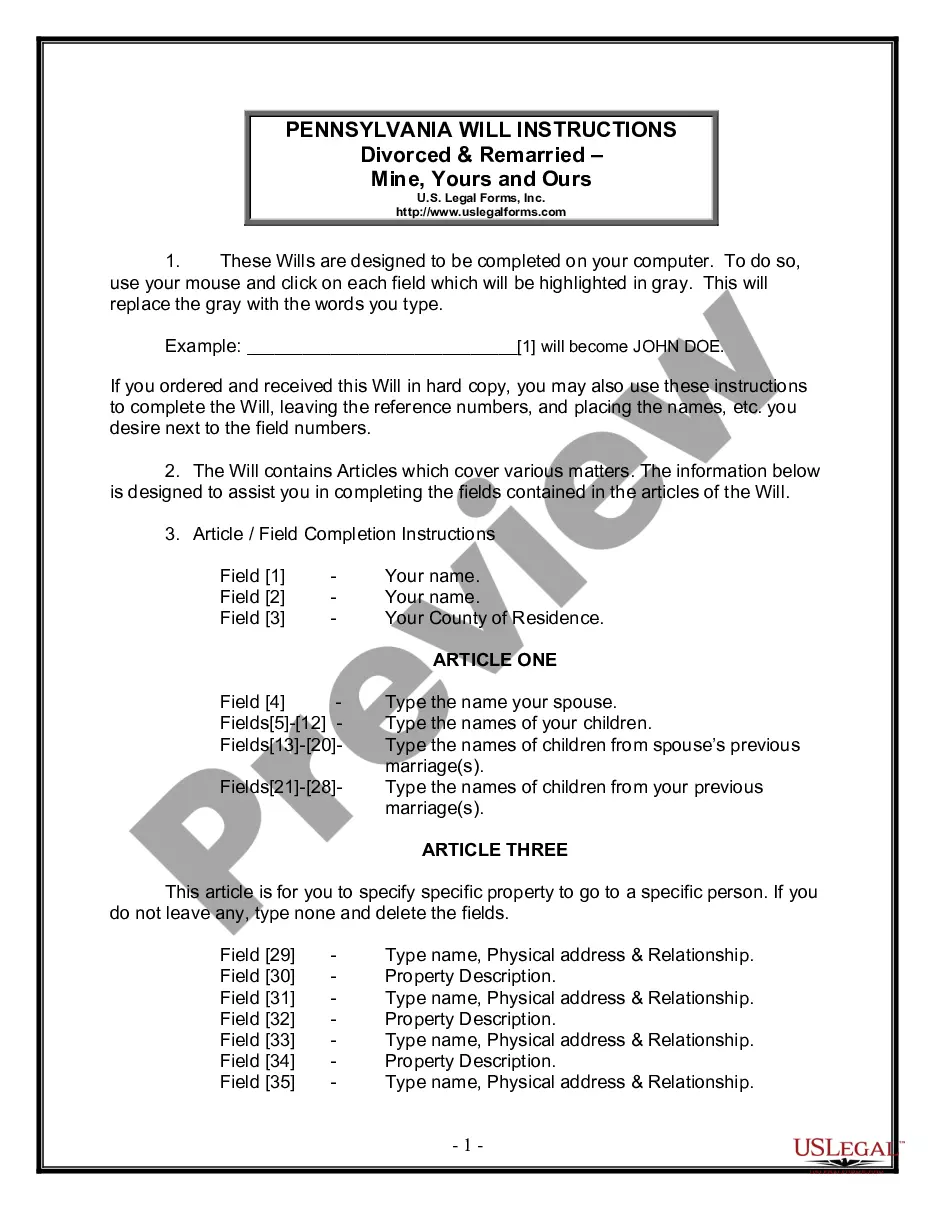
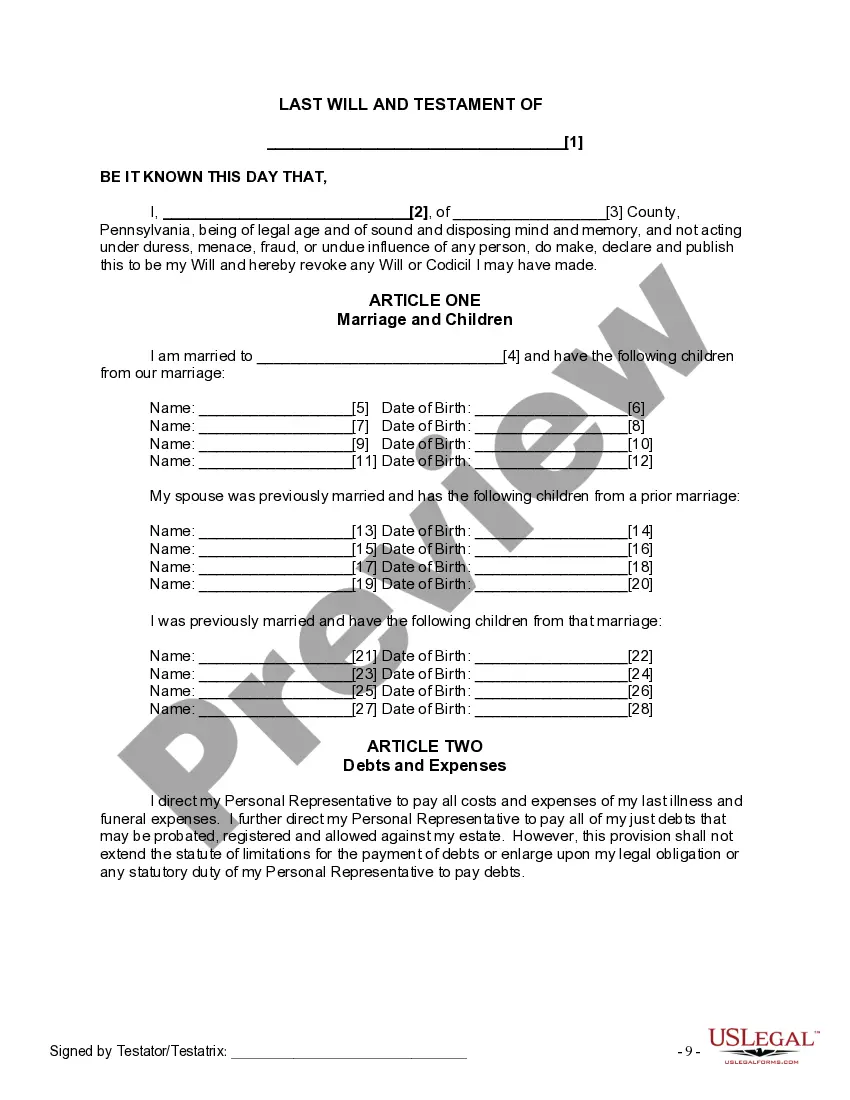
- Article One: Names of your current spouse and children from both your marriage and previous marriages.
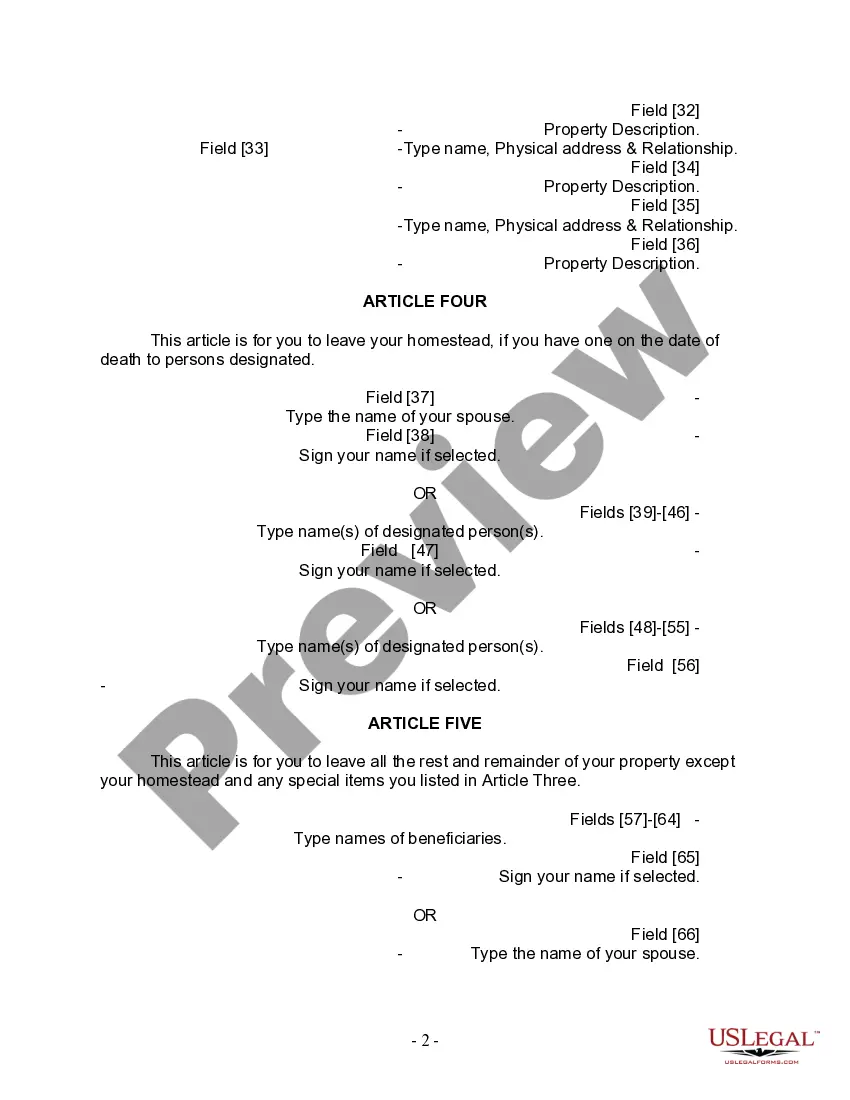
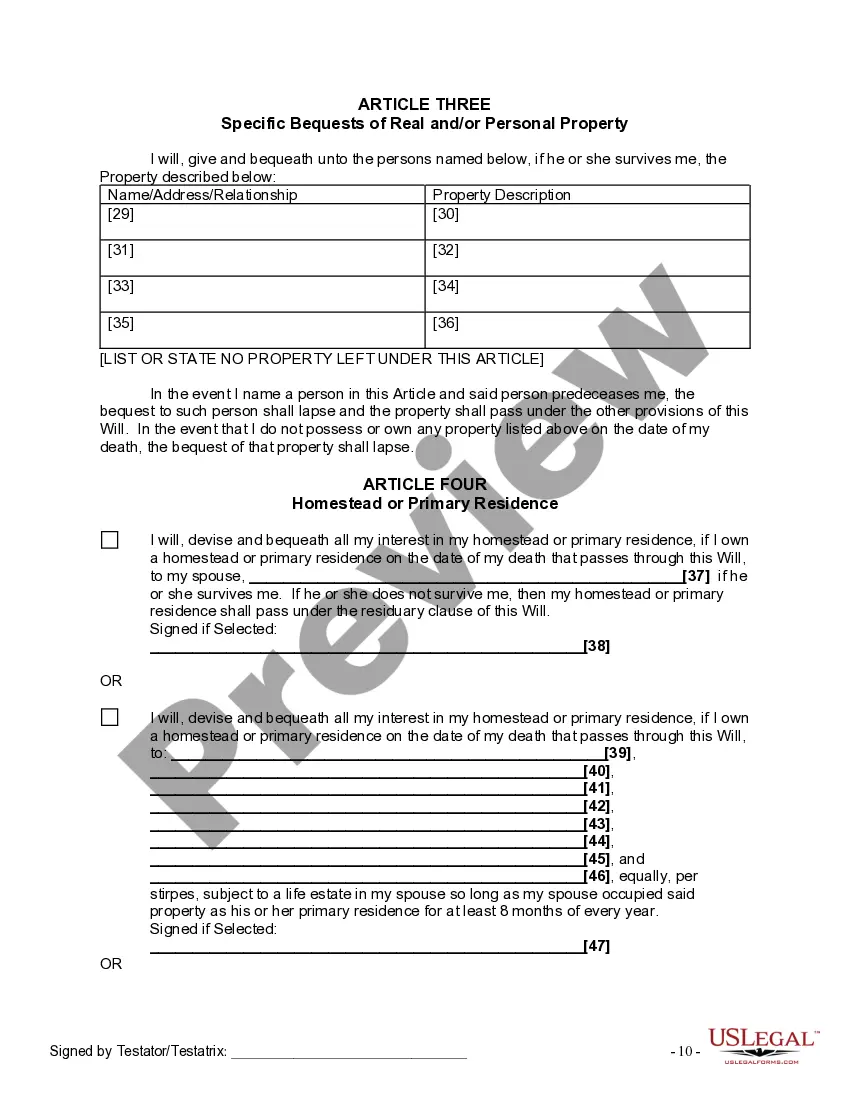
- Article Three: Specific bequests of real or personal property to designated individuals.
- Article Four: Arrangements for the distribution of your homestead or primary residence.
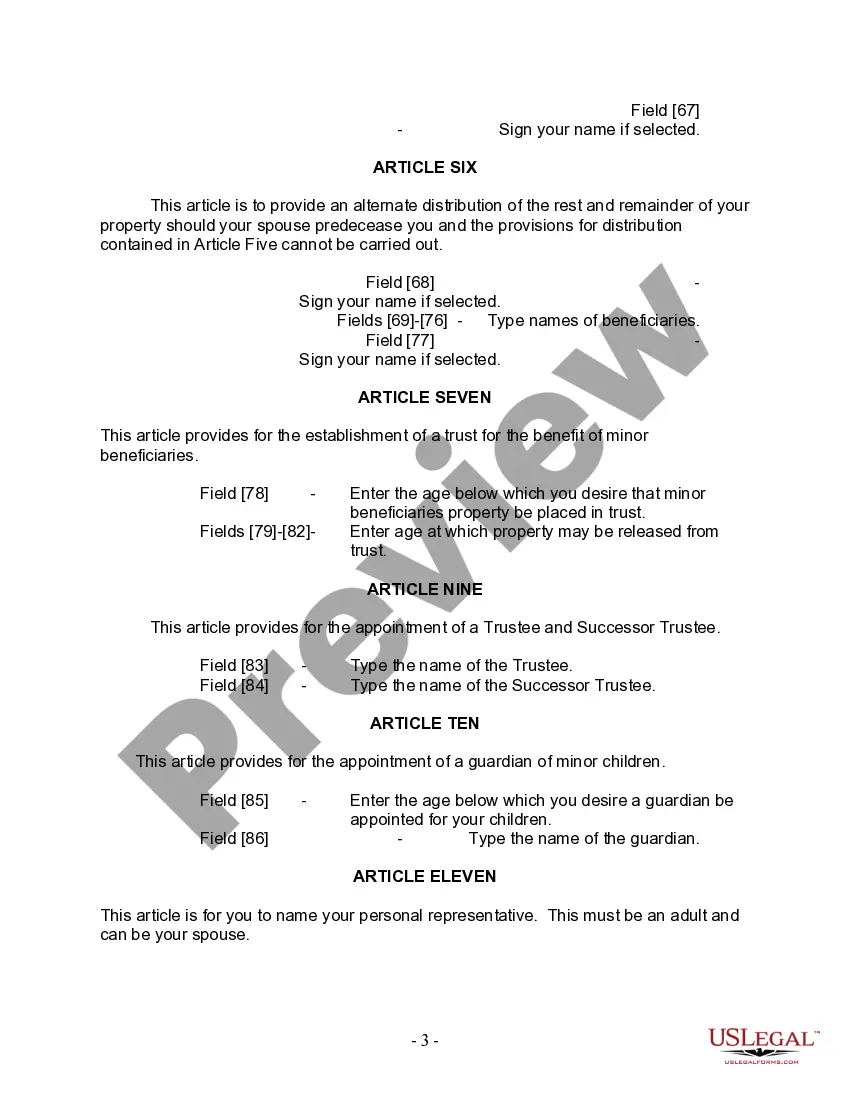
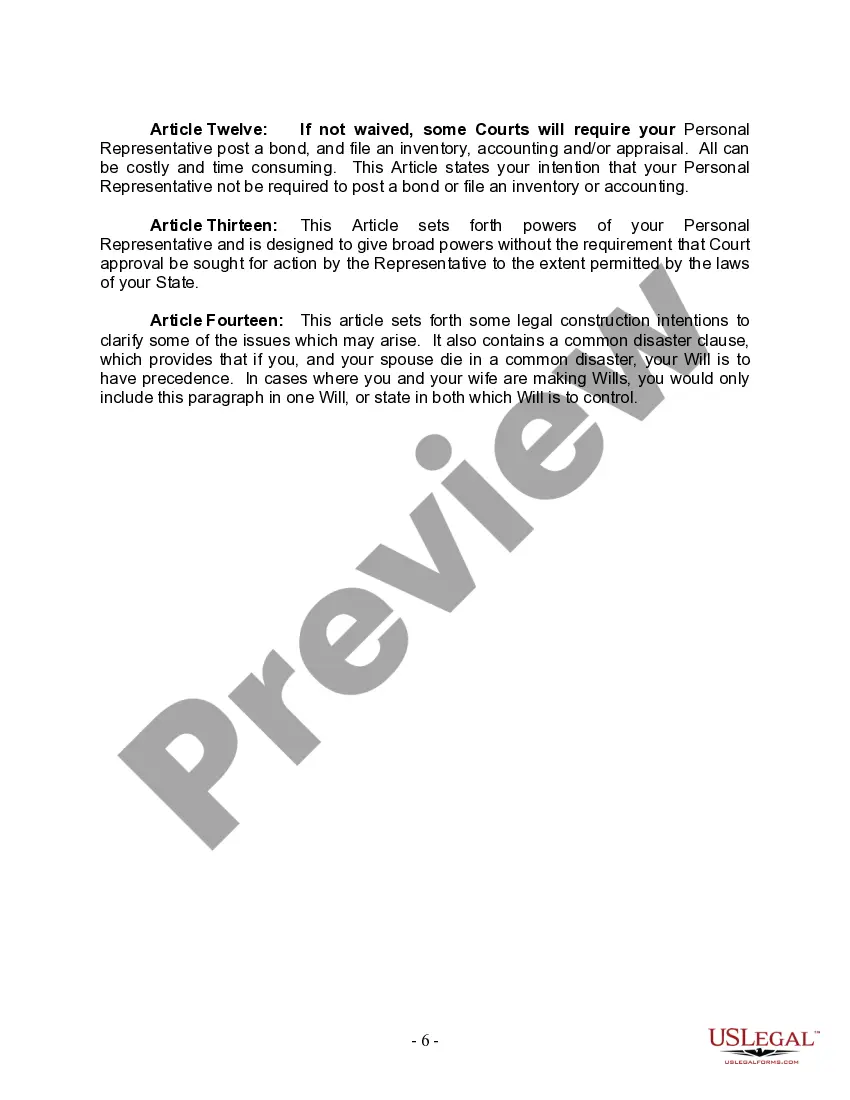
- Article Seven: Instructions for establishing trusts for minor children until they reach a specified age.
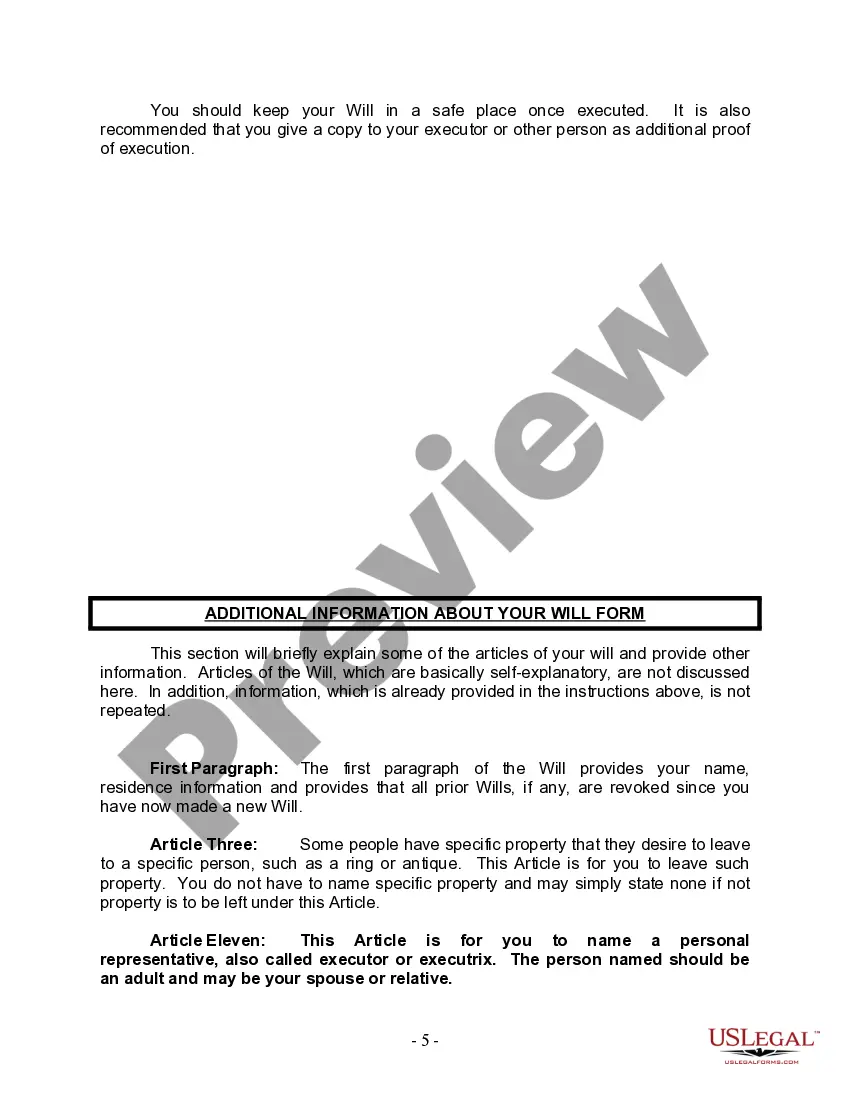
- Article Eleven: Appointment of a personal representative to administer your estate.





Common use cases
This form should be used in situations where individuals who are divorced and remarried want to create a comprehensive last will that accounts for children from both current and previous relationships. If you wish to prevent potential disputes over your estate among blended family members or ensure the financial security of minor children, this form is ideal. It's also essential if you want to clearly outline how your assets will be managed and distributed after your passing.
Who this form is for
- Individuals who are remarried and have children from previous relationships.
- Parents wanting to protect the interests of their children, both minor and adult.
- Anyone who wishes to establish trusts for minor children in their care.
- Individuals looking to ensure that their estate is divided according to their specific wishes.
How to complete this form
- Begin by entering your full name, county of residence, and the names of your current spouse and children.
- Clearly specify any personal property or assets you wish to bequeath to others in the designated sections.
- Designate a personal representative to manage your estate upon your passing.
- Include provisions for trusts if you have minor children, indicating the terms and conditions for the management of their inheritance.
- Ensure two witnesses sign the document in your presence, and consider having it notarized if required by your state law.
Does this form need to be notarized?
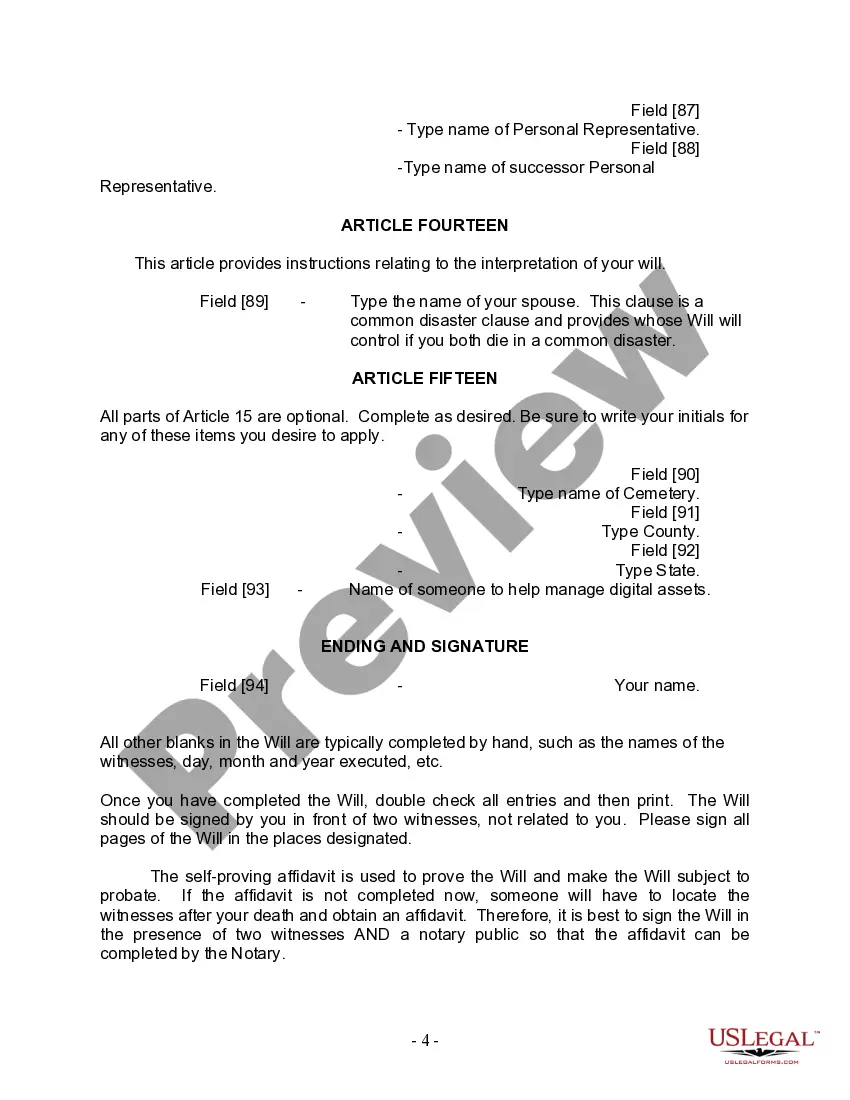
Yes, this form must be notarized to be legally valid if you are utilizing a self-proving affidavit. This ensures that the will can be admitted to probate without needing witnesses to testify about its execution.
Get your form ready online
Our built-in tools help you complete, sign, share, and store your documents in one place.
Make edits, fill in missing information, and update formatting in US Legal Forms—just like you would in MS Word.
Download a copy, print it, send it by email, or mail it via USPS—whatever works best for your next step.
Sign and collect signatures with our SignNow integration. Send to multiple recipients, set reminders, and more. Go Premium to unlock E-Sign.
If this form requires notarization, complete it online through a secure video call—no need to meet a notary in person or wait for an appointment.
We protect your documents and personal data by following strict security and privacy standards.

Make edits, fill in missing information, and update formatting in US Legal Forms—just like you would in MS Word.

Download a copy, print it, send it by email, or mail it via USPS—whatever works best for your next step.

Sign and collect signatures with our SignNow integration. Send to multiple recipients, set reminders, and more. Go Premium to unlock E-Sign.

If this form requires notarization, complete it online through a secure video call—no need to meet a notary in person or wait for an appointment.

We protect your documents and personal data by following strict security and privacy standards.
Typical mistakes to avoid
- Failing to update the will after major life changes, such as the birth of additional children or divorce.
- Not having the will witnessed by the required number of individuals.
- Improperly filling out the trust provisions, which could result in confusion for minor beneficiaries.
- Leaving out details about how debts and expenses should be handled.
Benefits of completing this form online
- Conveniently fill out the form using your computer, allowing for easy edits and revisions.
- Access the form 24/7, providing flexibility in completing your will.
- Utilize templates drafted by licensed attorneys, ensuring that you are following legal standards.
- Secure storage options for your completed will, making it easy to retrieve when needed.
Summary of main points
- This Last Will and Testament addresses the unique circumstances of divorced and remarried individuals.
- It is essential to clearly outline your wishes regarding asset distribution and guardianship.
- Make sure to follow proper signing and witnessing procedures for validity.
Looking for another form?



Form popularity
FAQ
To create a valid will in Pennsylvania, the will creator (testator) must be 18 years of age and must possess a sound mind. Possessing a sound mind means that the testator is mentally competent and fully understands what property they own and who they are conveying their property to.
No. You can make your own will in Pennsylvania, using Nolo's do-it-yourself will software or online will programs. However, you may want to consult a lawyer in some situations. For example, if you think that your will might be contested or if you want to disinherit your spouse, you should talk with an attorney.
In Pennsylvania, you are not required to have your living will notarized, however, if you are contemplating using the document in another state you should find out if the other state requires notarization.
The Will must be filed with the Register of Wills in the county where the decedent lived. A Petition for Probate must be filed with the local probate court (the "Orphan's Court" ) as well.
But for estates in Pennsylvania that exceed the small estate's threshold, and for which there is either no Will, or a Will (but not a Living Trust), probate will be required before an estate can be tranferred to the decedent's heirs or beneficiaries.
No, in Pennsylvania, you do not need to notarize your will to make it legal. However, you must go to a notary to make your will self-proving, see above.
To create a valid will in Pennsylvania, the will creator (testator) must be 18 years of age and must possess a sound mind. Possessing a sound mind means that the testator is mentally competent and fully understands what property they own and who they are conveying their property to.
To create a valid will in Pennsylvania, the will creator (testator) must be 18 years of age and must possess a sound mind. Possessing a sound mind means that the testator is mentally competent and fully understands what property they own and who they are conveying their property to.
It must be in writing. Generally, of course, wills are composed on a computer and printed out. The person who made it must have signed and dated it. A will must be signed and dated by the person who made it. Two adult witnesses must have signed it. Witnesses are crucial.