Pennsylvania Last Will and Testament for Single Person with Adult Children
Overview of this form
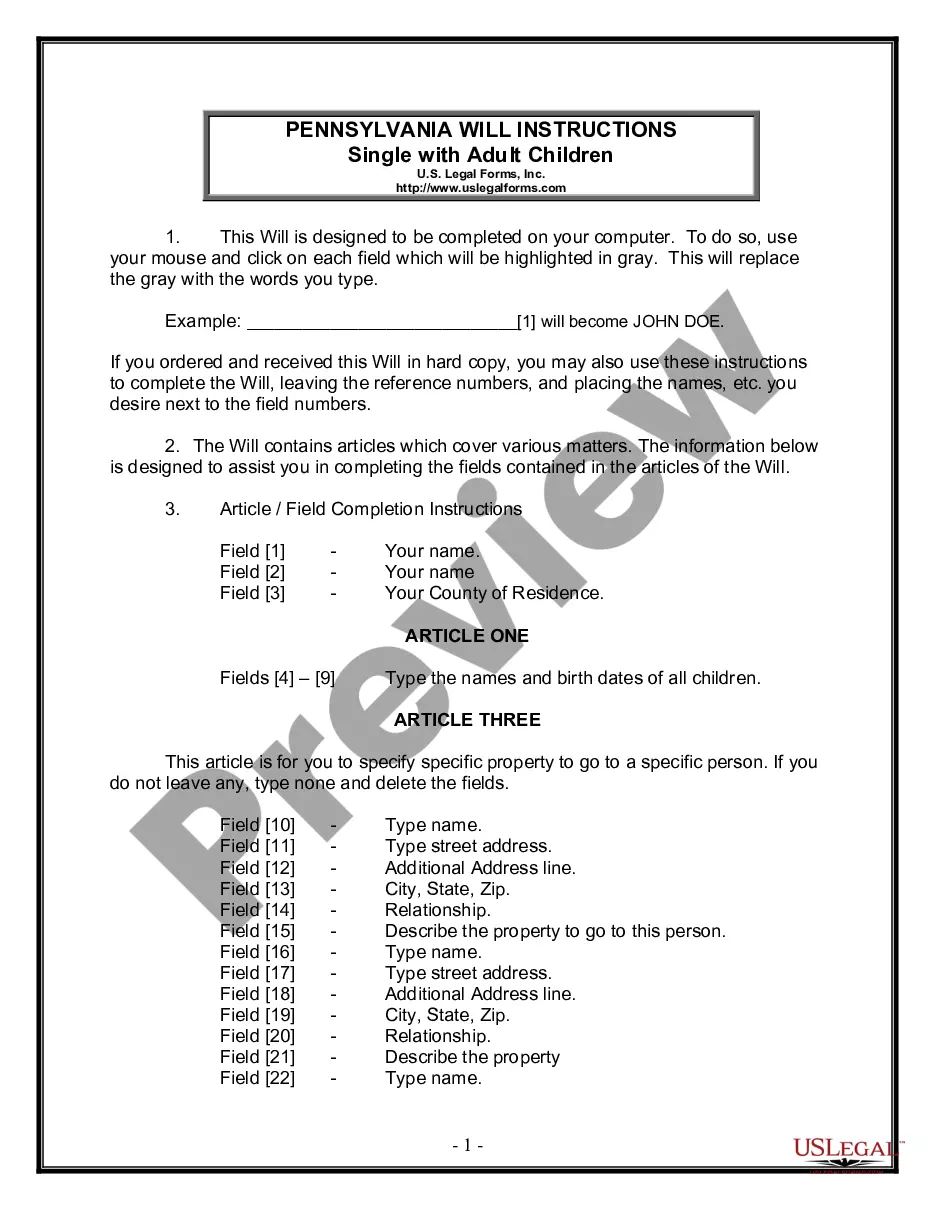
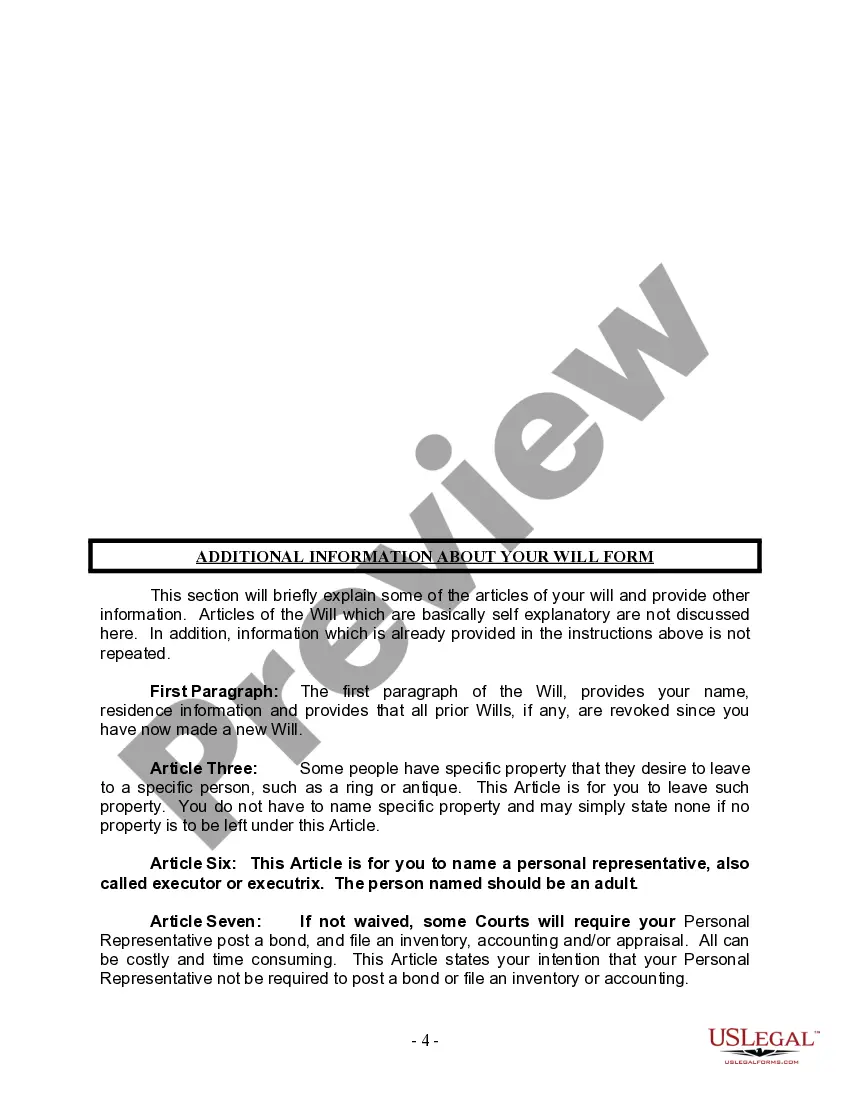
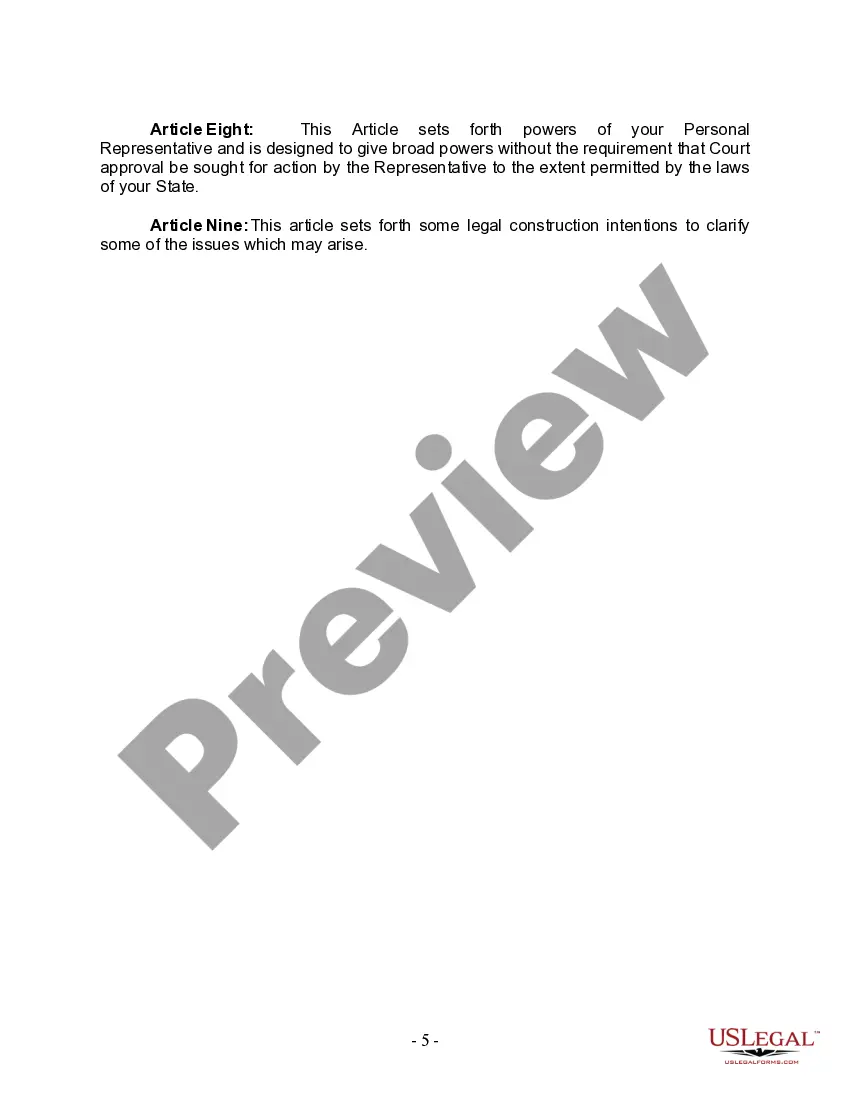
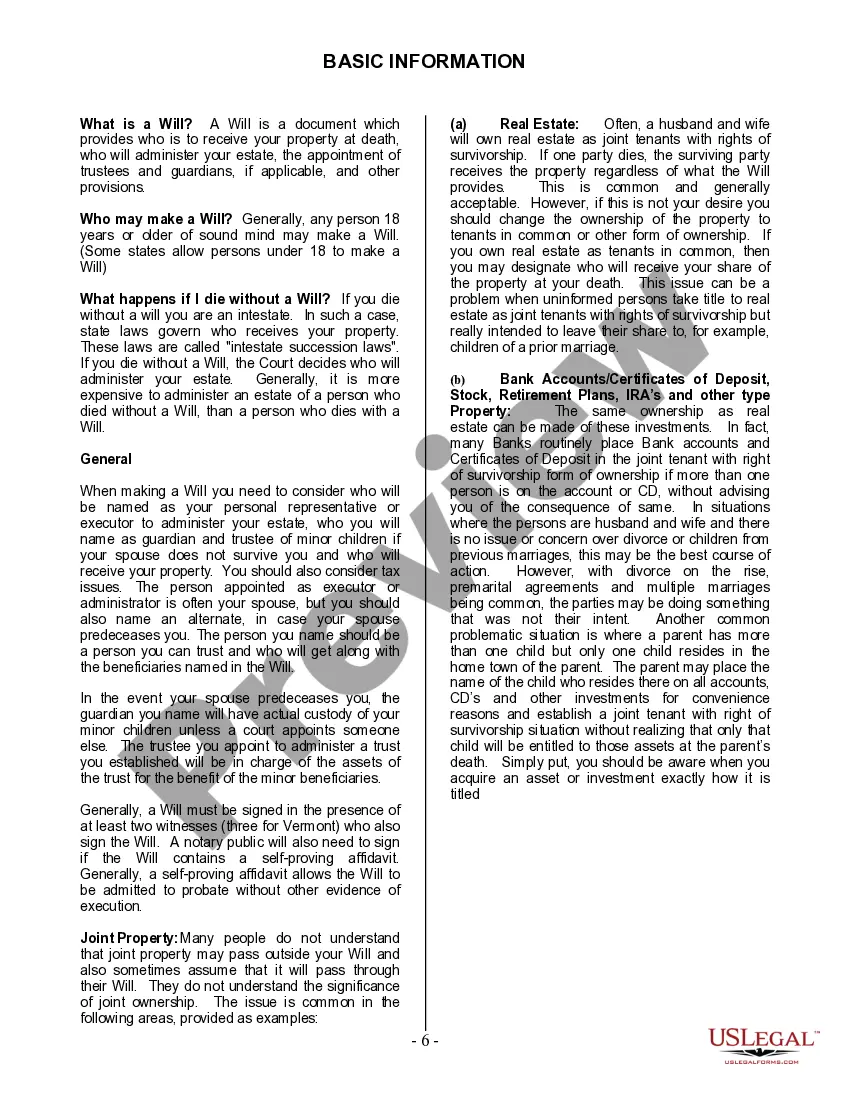
The Last Will and Testament for Single Person with Adult Children is a legal document that outlines how a person's assets and property will be distributed upon their death. This form is specifically designed for individuals who are single and have adult children, ensuring that their wishes are clearly documented and legally enforceable. Unlike wills that might also cover married individuals or those with minor children, this will focuses solely on the needs of a single person with adult offspring.
Main sections of this form
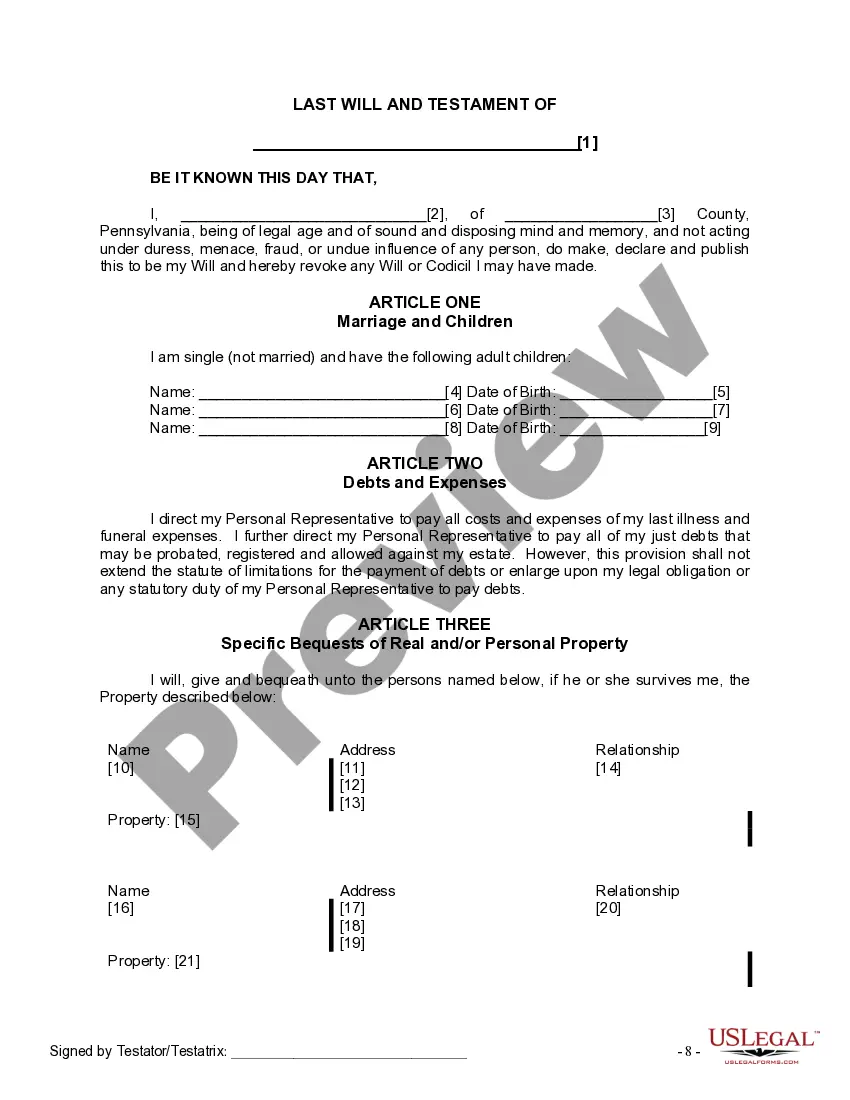
- Identification of the testator and declaration of the will's intent.
- Details about the testator's marital status and listing of adult children.
- Instructions for paying off debts and funeral expenses.
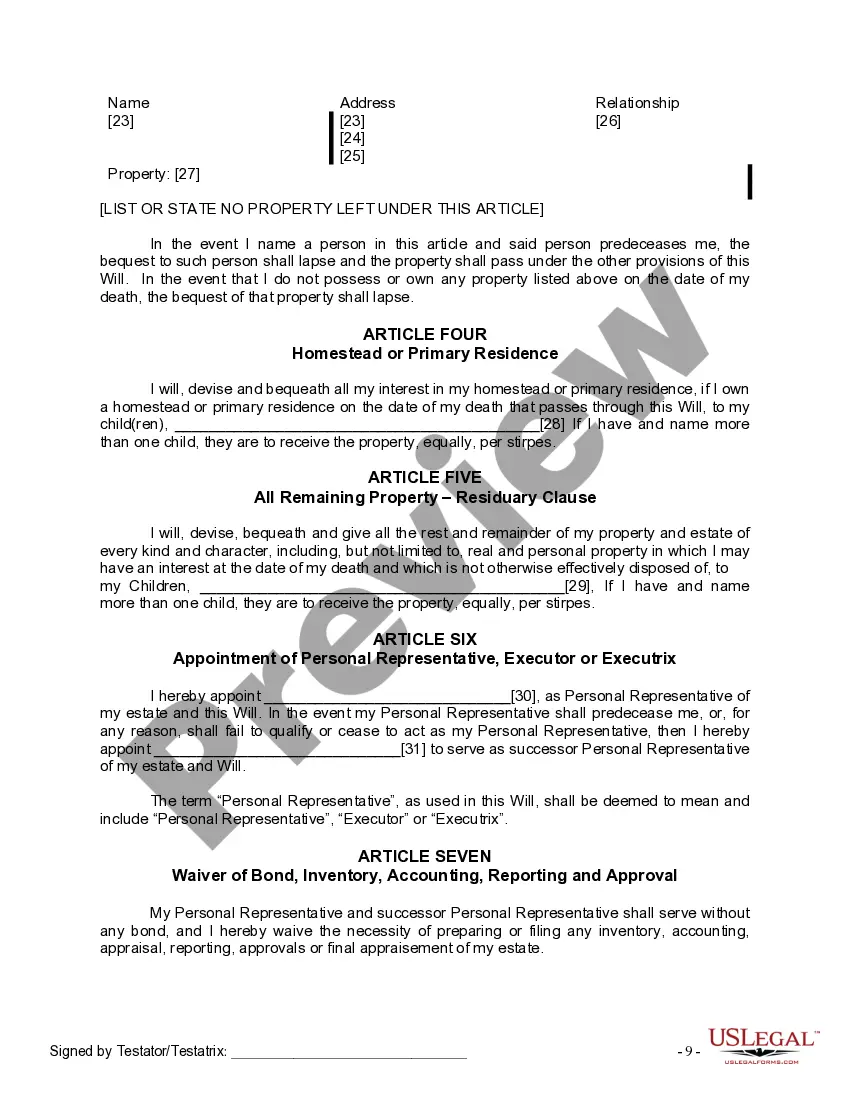
- Bequests specifying who receives which specific property.
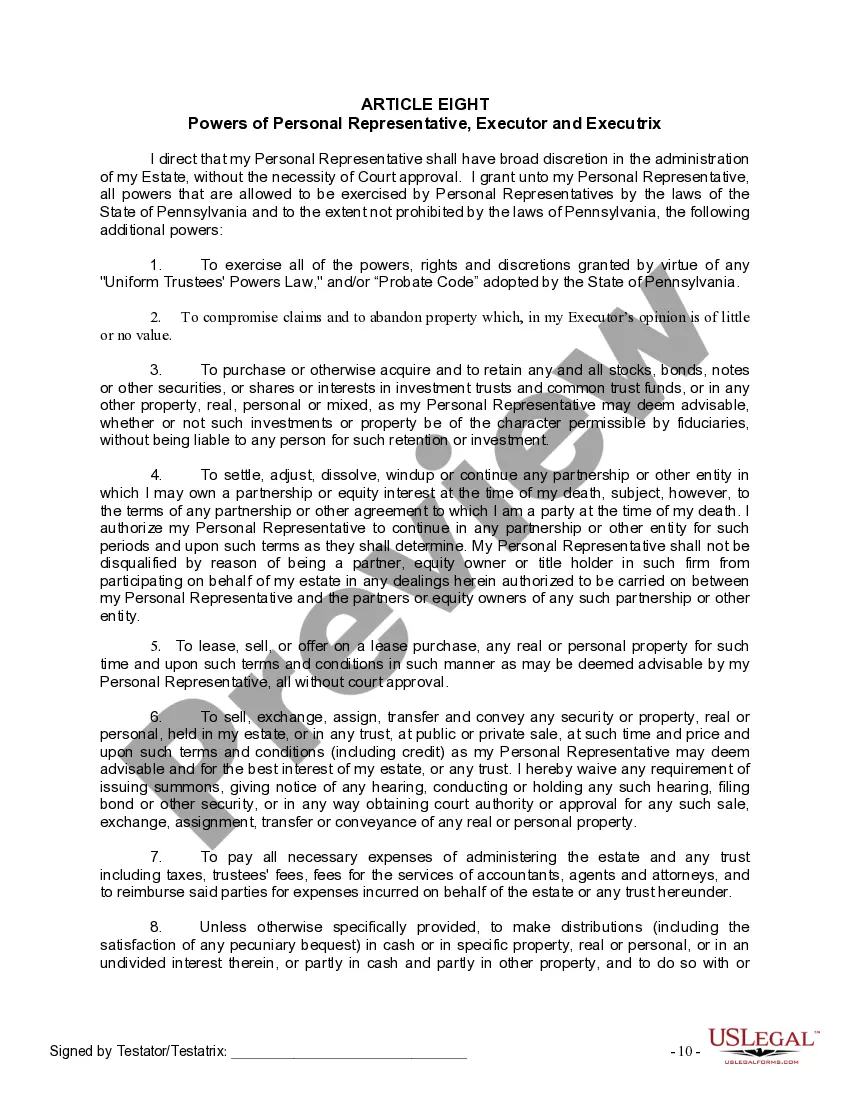
- Assignment of a personal representative or executor to manage the estate.
- Self-proving affidavit for notarization if state law allows.





When this form is needed
This form should be used by individuals who are single and wish to establish legally binding directives for the distribution of their estate upon their death. It is particularly relevant for those with adult children who want to ensure that their assets are passed down as they intend. Use this will when you want to document specific bequests, appoint a personal representative, and clarify arrangements for debts and final expenses.
Who needs this form
- Single individuals who have never married.
- People with adult children looking to specify how their estate should be divided.
- Any person wanting to outline their wishes for asset distribution clearly.
Completing this form step by step
- Identify yourself as the testator, including your name and residence.
- List your adult children by name and date of birth.
- Specify any debts or expenses you wish to be paid from your estate.
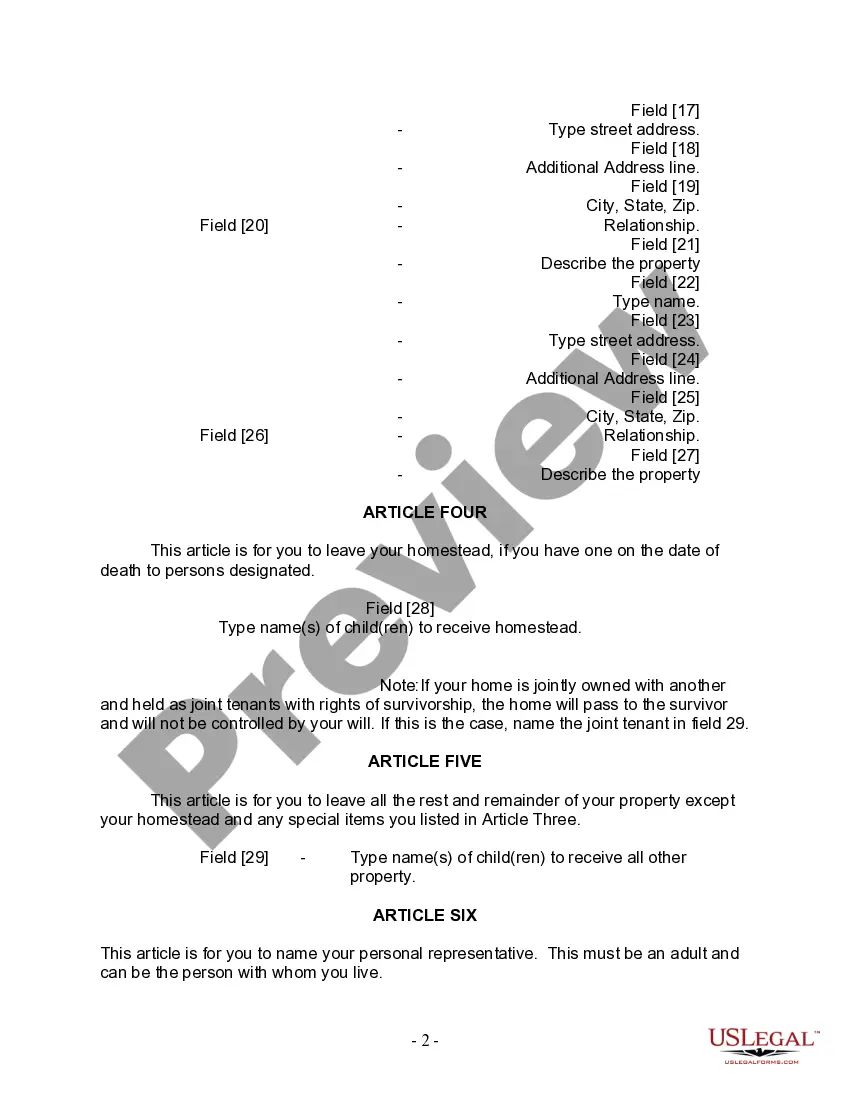
- Designate specific assets to be given to beneficiaries.
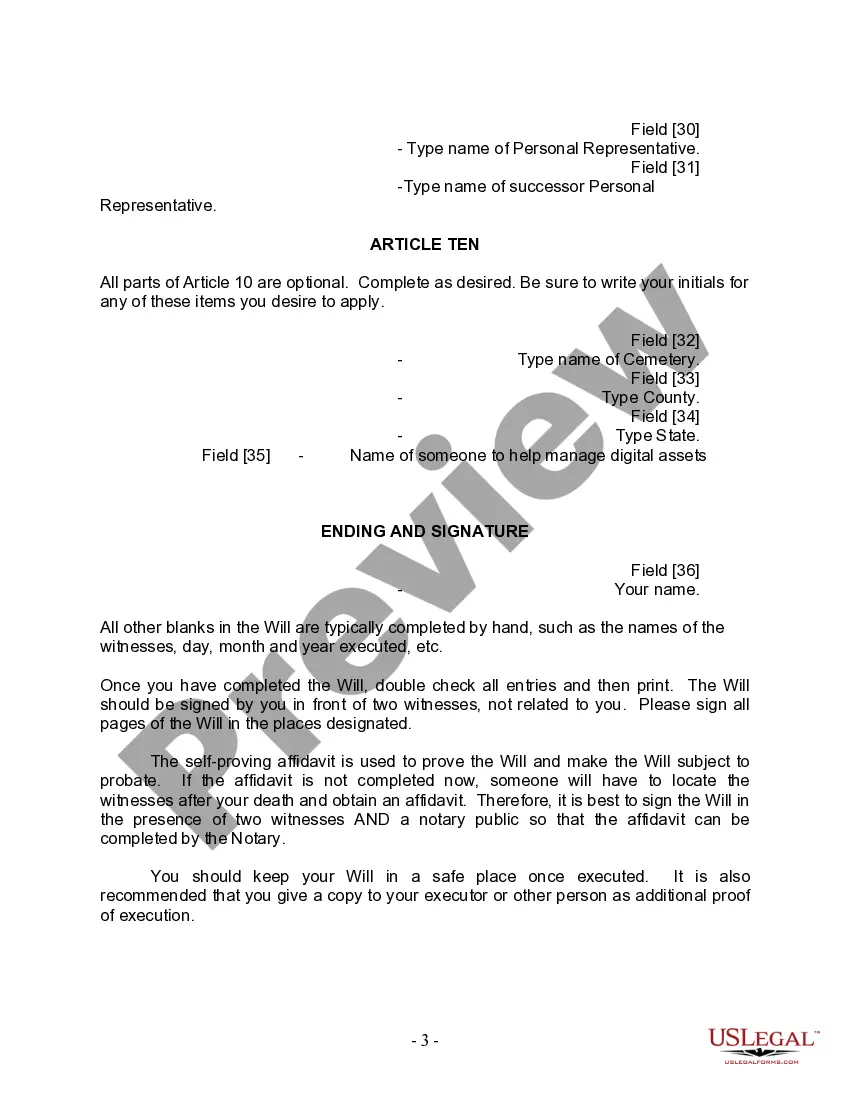
- Sign the document in the presence of two witnesses who are not named in the will.
- If necessary, arrange for notarization to meet the self-proving affidavit requirements.
Notarization requirements for this form
Yes, this form must be notarized to be legally valid. The included self-proving affidavit allows for a smooth probate process, as it does not require further witness testimony during probate. US Legal Forms offers integrated online notarization, providing a secure, convenient way to get your document notarized without having to travel.
Get your form ready online
Our built-in tools help you complete, sign, share, and store your documents in one place.
Make edits, fill in missing information, and update formatting in US Legal Forms—just like you would in MS Word.
Download a copy, print it, send it by email, or mail it via USPS—whatever works best for your next step.
Sign and collect signatures with our SignNow integration. Send to multiple recipients, set reminders, and more. Go Premium to unlock E-Sign.
If this form requires notarization, complete it online through a secure video call—no need to meet a notary in person or wait for an appointment.
We protect your documents and personal data by following strict security and privacy standards.

Make edits, fill in missing information, and update formatting in US Legal Forms—just like you would in MS Word.

Download a copy, print it, send it by email, or mail it via USPS—whatever works best for your next step.

Sign and collect signatures with our SignNow integration. Send to multiple recipients, set reminders, and more. Go Premium to unlock E-Sign.

If this form requires notarization, complete it online through a secure video call—no need to meet a notary in person or wait for an appointment.

We protect your documents and personal data by following strict security and privacy standards.
Common mistakes
- Failing to list all adult children, which could lead to disputes.
- Not signing the will in the presence of appropriate witnesses.
- Neglecting to update the will after significant life events, such as changes in family or financial status.
- Not consulting with an attorney to ensure the will complies with state laws.
Why complete this form online
- Easy to customize according to your specific wishes and family situation.
- Convenient access allows you to fill out the document at your own pace.
- Reduces the risk of errors with guided instructions tailored for Pennsylvania requirements.
- Securely stored and easily retrievable when needed by your estate executor.
Summary of main points
Key Takeaways:
- The Last Will and Testament is vital for ensuring that your estate is distributed according to your wishes.
- It must be signed in the presence of two witnesses and notarized for validity.
- Clearly identifying beneficiaries and assets is crucial to avoid confusion or disputes among heirs.
Looking for another form?
Form popularity
FAQ
In Pennsylvania it is not necessary for the signing of your will to be witnessed by anyone; however, it is customary to have at least two people witness the signing of your will. Pennsylvania does accept self-proved wills. Such a will includes a separate page which is notarized and signed by the testator and witnesses.
To create a valid will in Pennsylvania, the will creator (testator) must be 18 years of age and must possess a sound mind. Possessing a sound mind means that the testator is mentally competent and fully understands what property they own and who they are conveying their property to.
No, in Pennsylvania, you do not need to notarize your will to make it legal. However, you must go to a notary to make your will self-proving, see above.
A valid will in Pennsylvania must be in writing, either typed or handwritten. Pennsylvania only accepts oral wills in very narrow circumstances. In all cases, the testator, or person drafting the document, must also sign it.
A handwritten will may be legal in Pennsylvania depending on the individual circumstances. Under Pennsylvania state code, wills must be in writing and signed by the person making the will, known as the testator.The state of Pennsylvania therefore makes no legal distinction between a handwritten and typed will.
No, in Pennsylvania, you do not need to notarize your will to make it legal. However, you must go to a notary to make your will self-proving, see above.
You don't need a lawyer to create a will if you have a straightforward financial situation.You can use online templates or software to write a will yourself. In order to legalize the will, it needs to be signed and dated by you and at least two other witnesses.