Pennsylvania Last Will and Testament for Single Person with No Children
What is this form?
The Last Will and Testament for Single Person with No Children is a legal document that specifies how a single individual without children wishes to distribute their property after death. This form allows you to appoint a personal representative to manage your estate, designate beneficiaries for your assets, and include specific provisions tailored to your wishes. Compared to other wills, this form is designed specifically for individuals without children, simplifying the process of estate planning for this demographic.
Key parts of this document
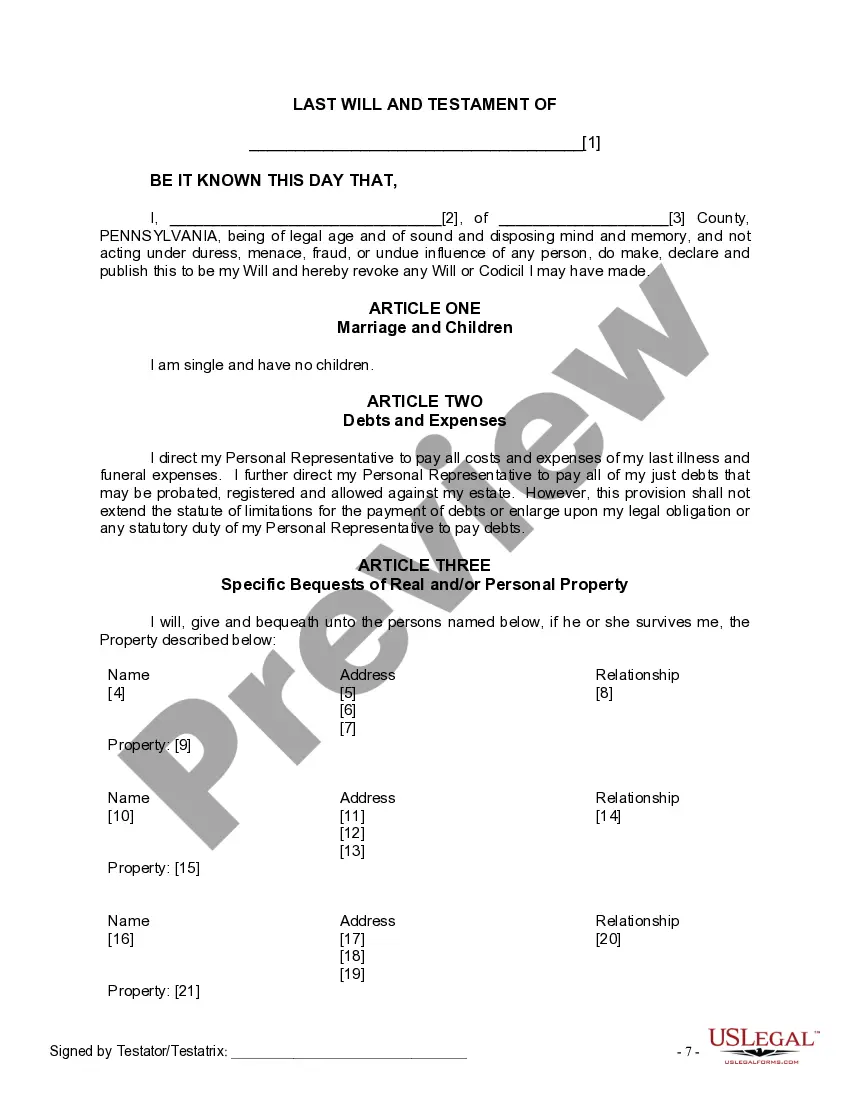
- Personal Information: Fields to input your name and county of residence.
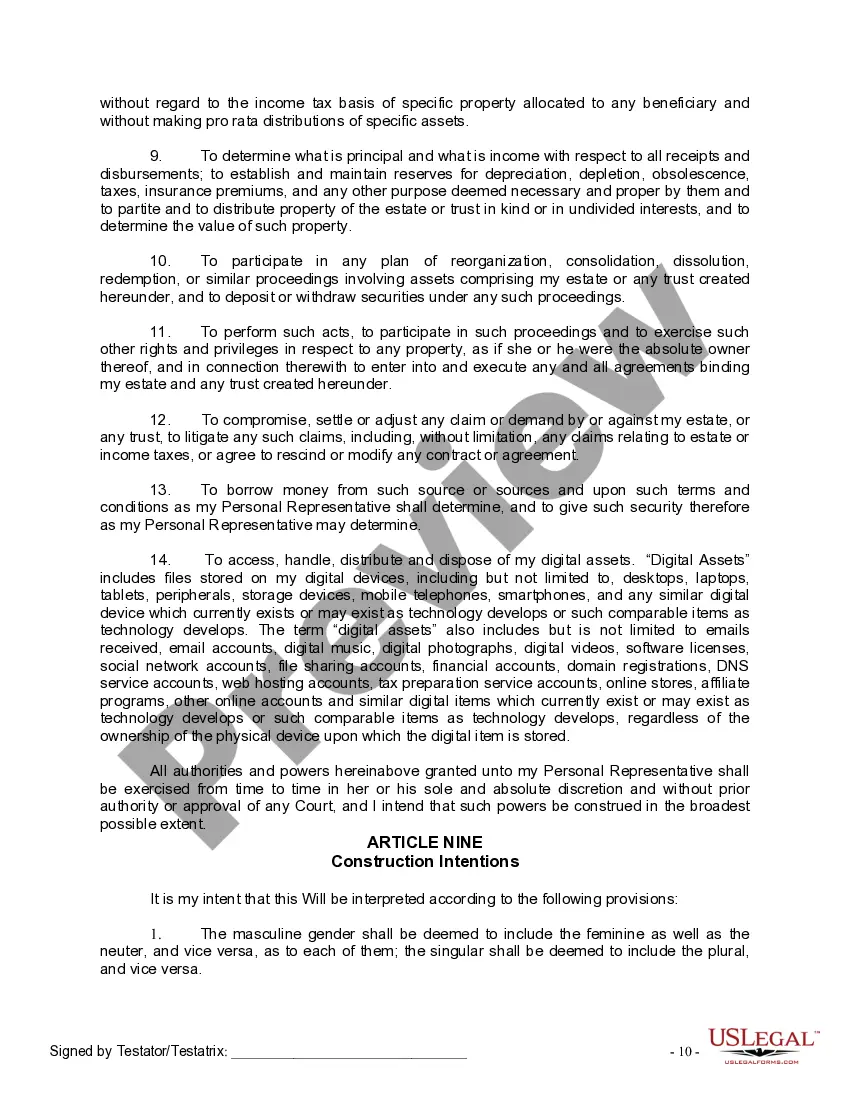
- Specific Bequests: Designation of specific property to specific individuals.
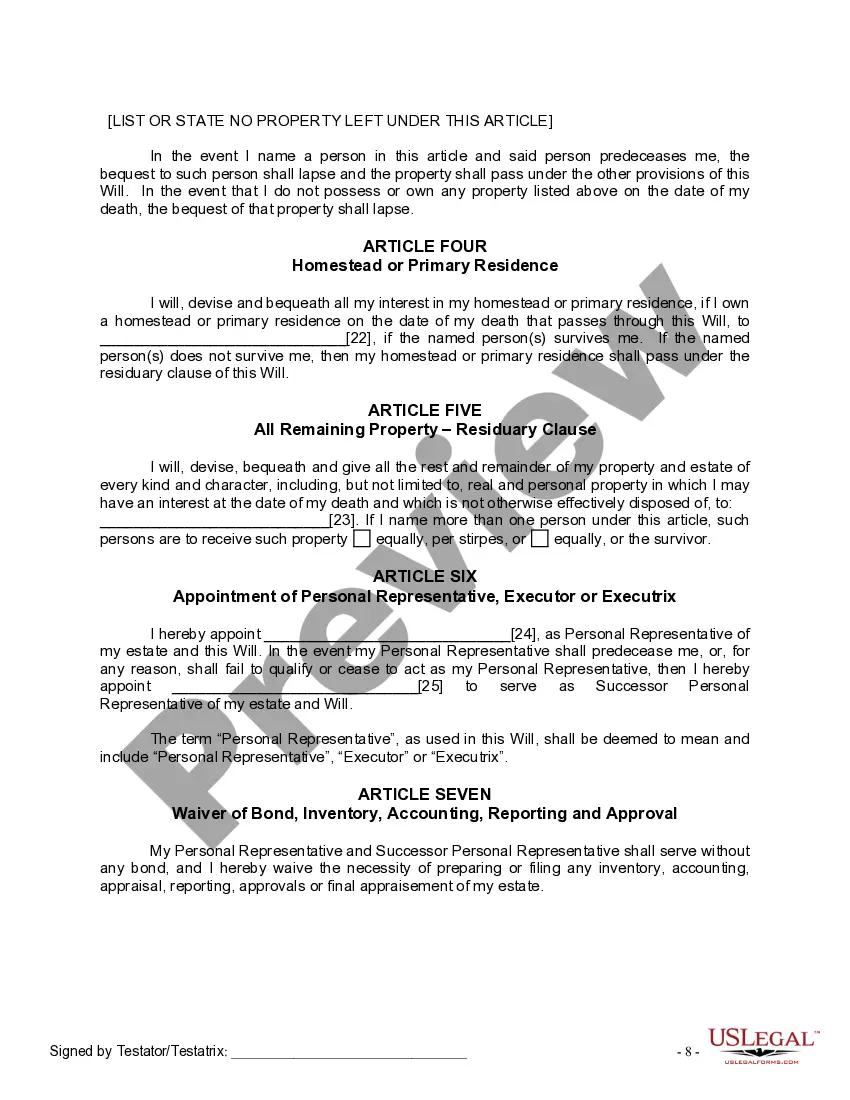
- Homestead Provisions: Instructions regarding your primary residence and how it should be handled upon your death.
- Residuary Clause: Allocation of all remaining property not otherwise specified.
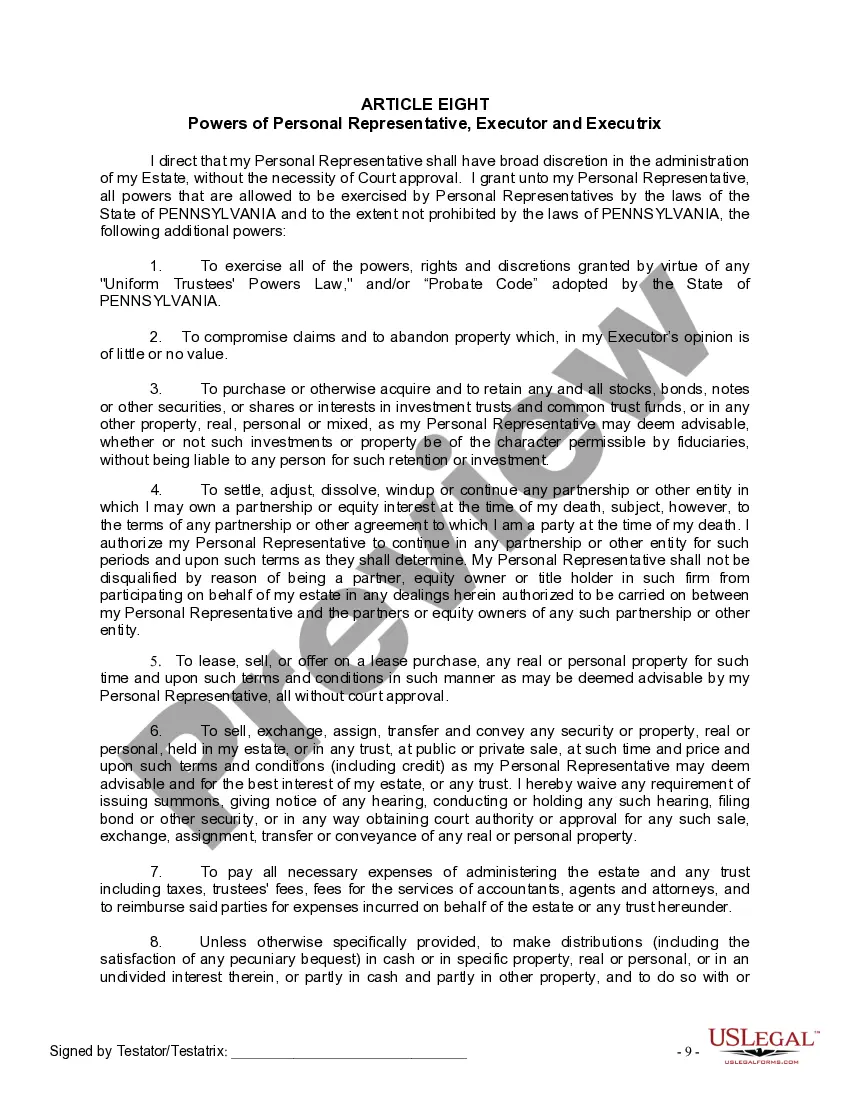
- Appointment of Personal Representative: Designation of an executor to manage your estate affairs.
- Signature and Witness Requirements: Instructions for signing the will with witnesses and optional notary acknowledgment.




When to use this form
This form is necessary when a single person with no children wishes to plan their estate. Use this will to ensure that your assets are distributed according to your preferences, to establish a personal representative for managing your estate, and to avoid the complexities of intestate succession should you pass away without a valid will. It is particularly beneficial in situations where you have specific items or assets you want to leave to certain individuals or groups.
Who needs this form
- Individuals who are single and have no children.
- People who want to specify how their assets should be distributed after their death.
- Anyone looking to appoint a personal representative for their estate.
- Individuals wanting to simplify the estate planning process to avoid legal complications.
How to complete this form
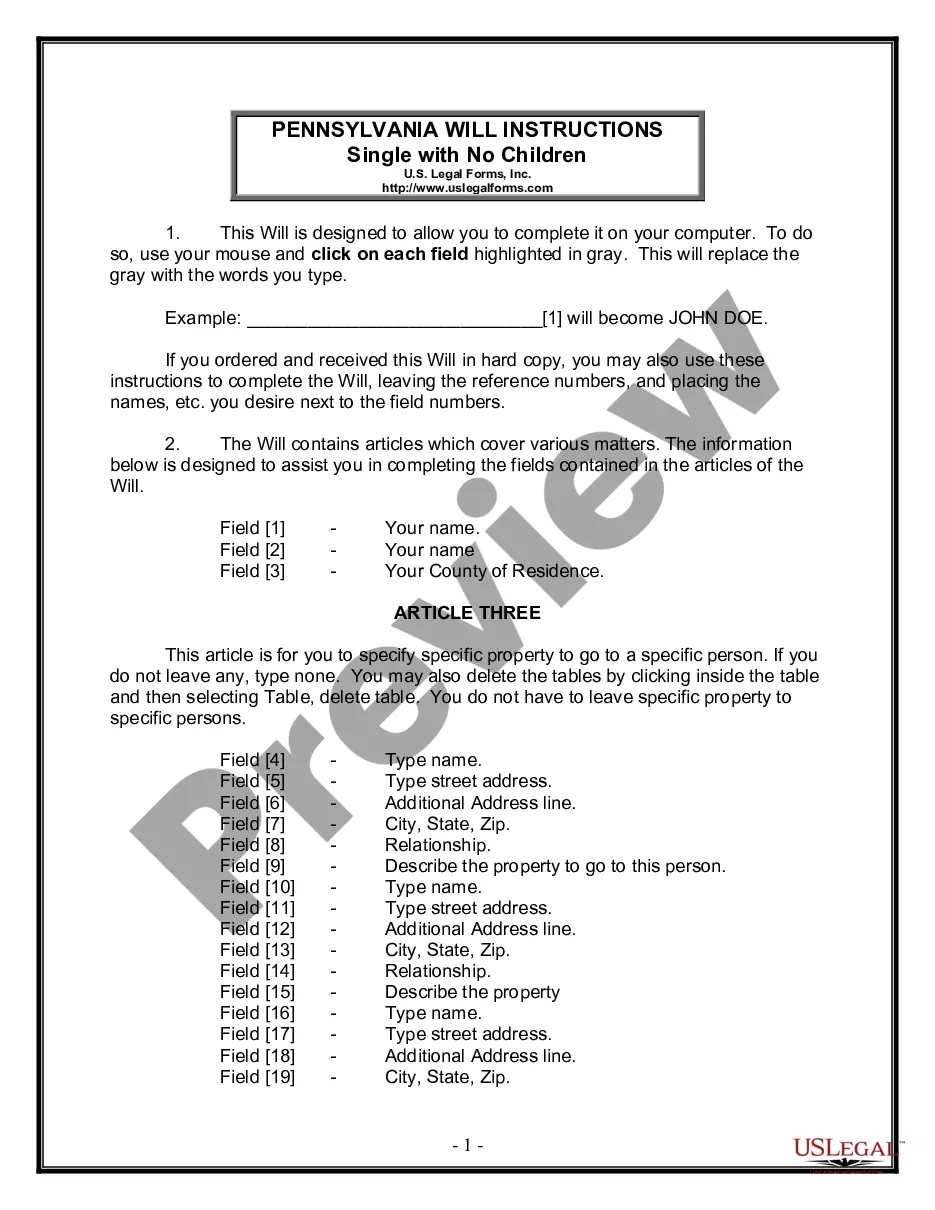
- Enter your name and county of residence at the beginning of the document.
- Specify any particular property you wish to bequeath in the relevant sections.
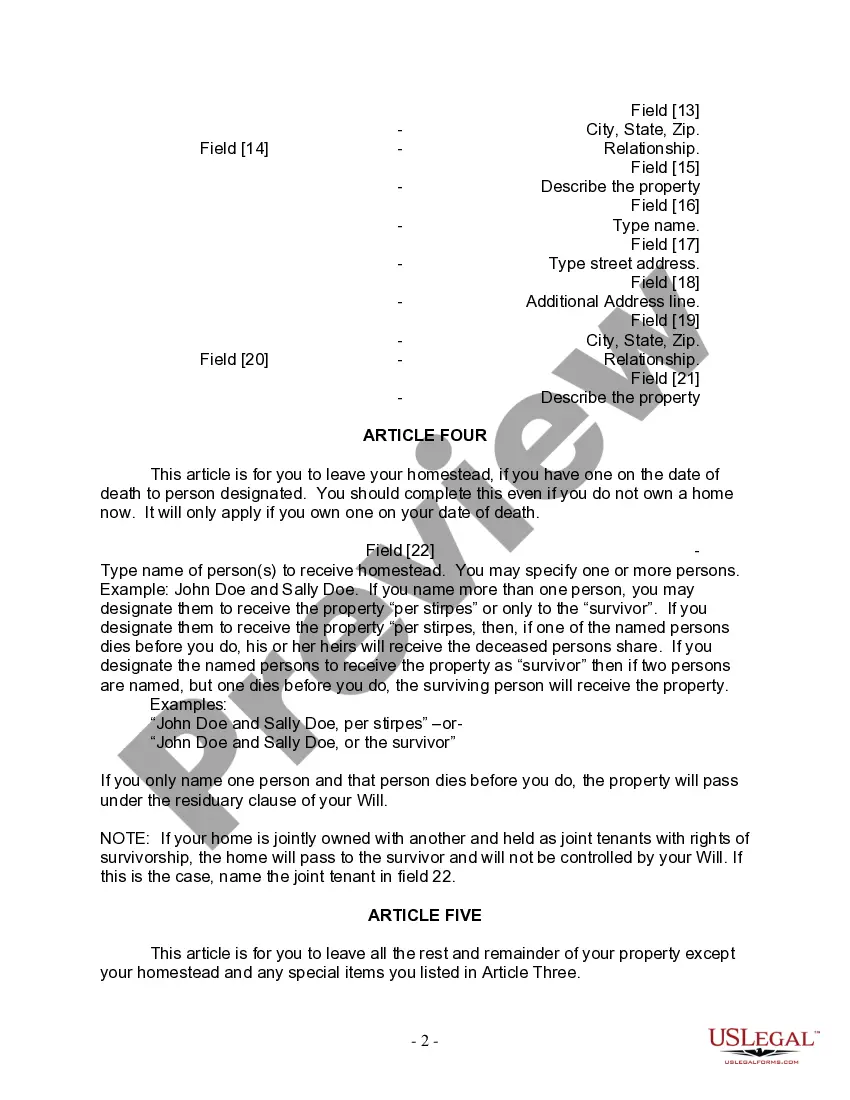
- Designate who will receive your homestead or primary residence if applicable.
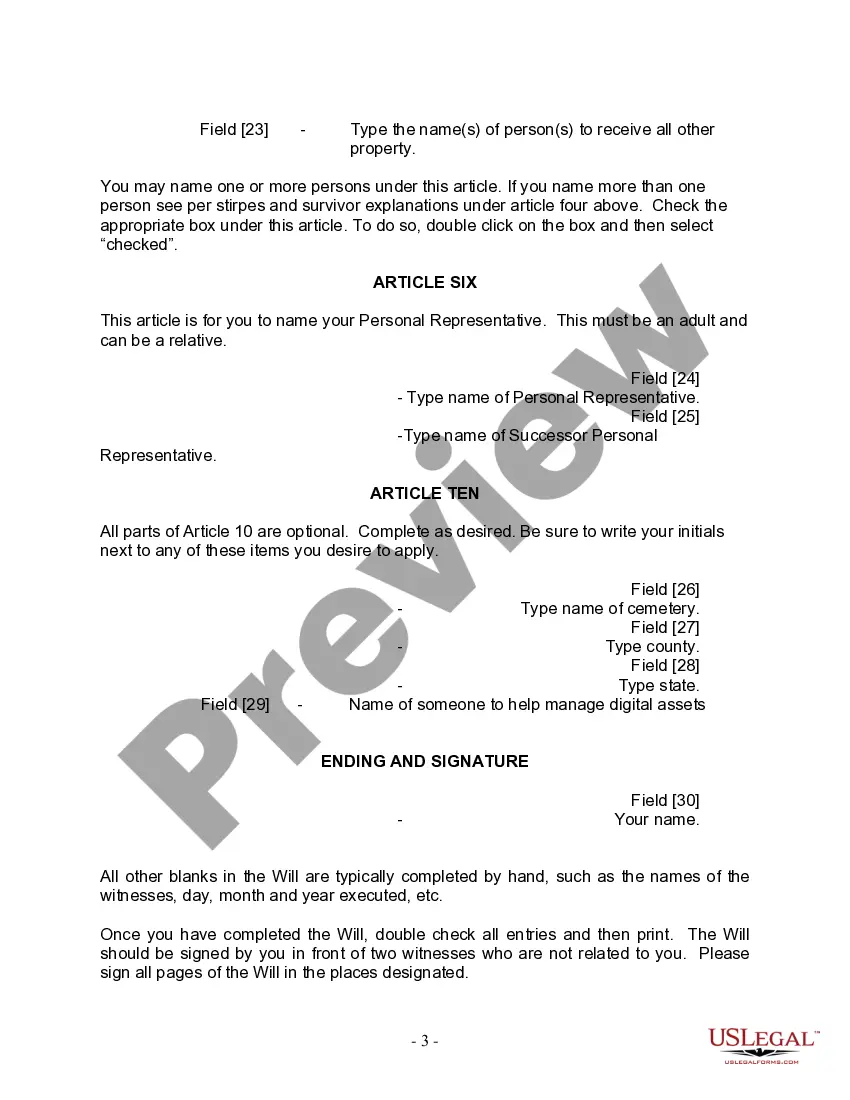
- Fill in details for your personal representative and any successor if necessary.
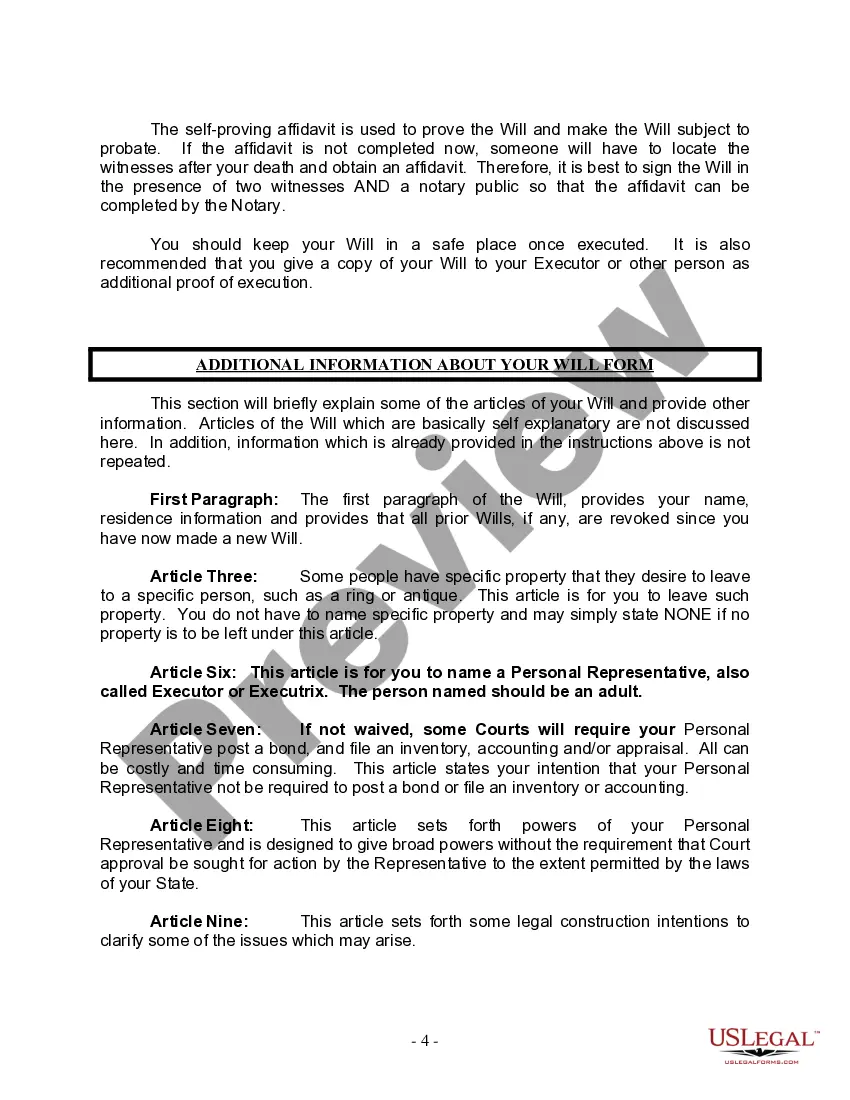
- Sign the will in front of two witnesses who are not beneficiaries.
- If applicable, have a notary public witness your signing to finalize the self-proving affidavit.
Does this form need to be notarized?
Notarization is required for this form to take effect. Our online notarization service, powered by Notarize, lets you verify and sign documents remotely through an encrypted video session, available 24/7.
Get your form ready online
Our built-in tools help you complete, sign, share, and store your documents in one place.
Make edits, fill in missing information, and update formatting in US Legal Forms—just like you would in MS Word.
Download a copy, print it, send it by email, or mail it via USPS—whatever works best for your next step.
Sign and collect signatures with our SignNow integration. Send to multiple recipients, set reminders, and more. Go Premium to unlock E-Sign.
If this form requires notarization, complete it online through a secure video call—no need to meet a notary in person or wait for an appointment.
We protect your documents and personal data by following strict security and privacy standards.

Make edits, fill in missing information, and update formatting in US Legal Forms—just like you would in MS Word.

Download a copy, print it, send it by email, or mail it via USPS—whatever works best for your next step.

Sign and collect signatures with our SignNow integration. Send to multiple recipients, set reminders, and more. Go Premium to unlock E-Sign.

If this form requires notarization, complete it online through a secure video call—no need to meet a notary in person or wait for an appointment.

We protect your documents and personal data by following strict security and privacy standards.
Common mistakes to avoid
- Failing to have the document signed in front of the necessary witnesses.
- Not correctly identifying the property and beneficiaries in the designated sections.
- Neglecting to keep a copy of the will in a safe place accessible to the personal representative.
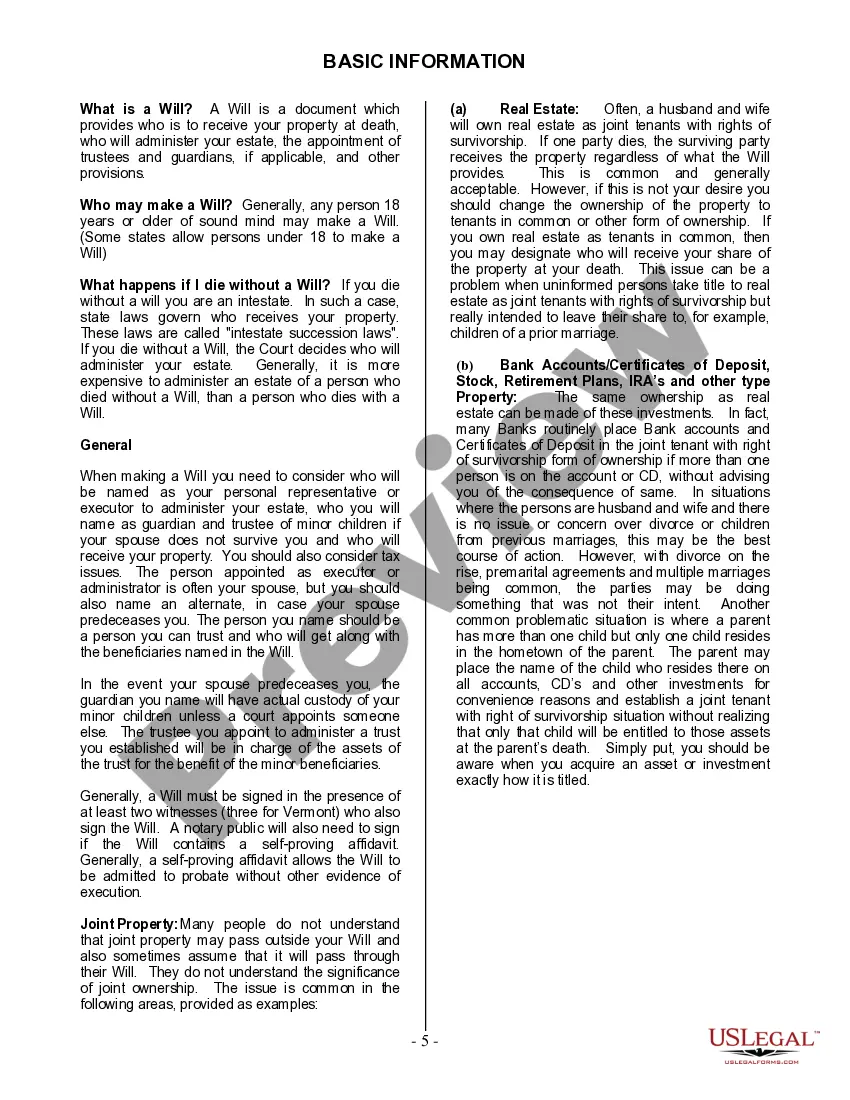
- Assuming that joint property will pass through the will, not recognizing it may pass outside of it.
- Forgetting to consider a successor personal representative in case the primary cannot serve.
Why use this form online
- Convenience of completing the form from your home on a computer or device.
- Ability to easily edit and customize specific clauses to suit your needs.
- Access to attorney-drafted templates, providing peace of mind in legal compliance.
- Option for online notarization, ensuring your document is legally binding without travel.
- Instant downloading and printing of the completed form, ready for execution.
Looking for another form?

Form popularity
FAQ
No. You can make your own will in Pennsylvania, using Nolo's do-it-yourself will software or online will programs. However, you may want to consult a lawyer in some situations. For example, if you think that your will might be contested or if you want to disinherit your spouse, you should talk with an attorney.
To create a valid will in Pennsylvania, the will creator (testator) must be 18 years of age and must possess a sound mind. Possessing a sound mind means that the testator is mentally competent and fully understands what property they own and who they are conveying their property to.
Notarization is not required in California to make your will legal. Some states allow you to make your will self-proving by signing a special affidavit in front of a notary that accompanies the will. However, California allows your will to be self-proved without a self-proving affidavit.
To create a valid will in Pennsylvania, the will creator (testator) must be 18 years of age and must possess a sound mind. Possessing a sound mind means that the testator is mentally competent and fully understands what property they own and who they are conveying their property to.
A handwritten will may be legal in Pennsylvania depending on the individual circumstances. Under Pennsylvania state code, wills must be in writing and signed by the person making the will, known as the testator.The state of Pennsylvania therefore makes no legal distinction between a handwritten and typed will.
Contrary to popular belief, you do not need to have an attorney draft a will for you. Anyone can write this document on their own, and as long as it meets all of the legal requirements of the state, courts will recognize one you wrote yourself.
The Pennsylvania self-proving affidavit form is a legal instrument which acts as sworn testimony on behalf of two (2) witnesses and the Testator for the Testator's Last Will and Testament.Both witnesses must be impartial and, therefore, cannot be named beneficiaries themselves.
In Pennsylvania, you are not required to have your living will notarized, however, if you are contemplating using the document in another state you should find out if the other state requires notarization.
No, in Pennsylvania, you do not need to notarize your will to make it legal. However, you must go to a notary to make your will self-proving, see above.