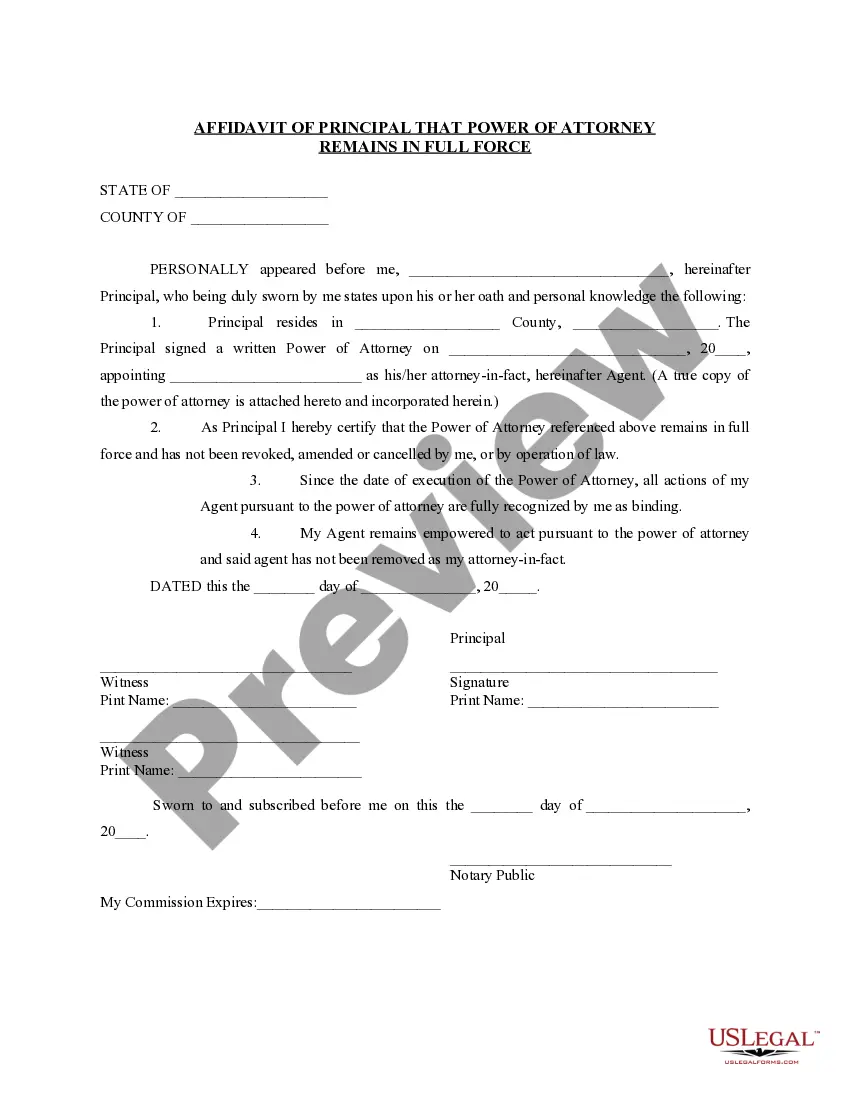
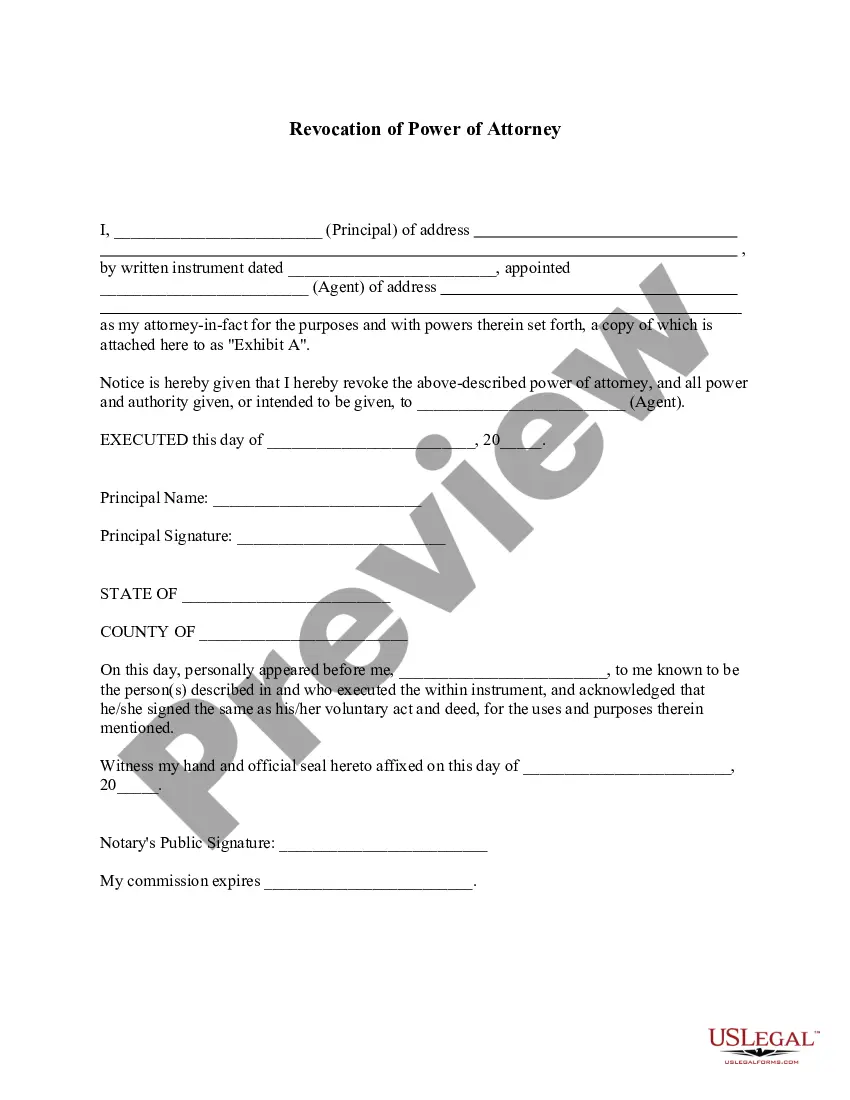
Pennsylvania Revocation of General Durable Power of Attorney
What is this form?
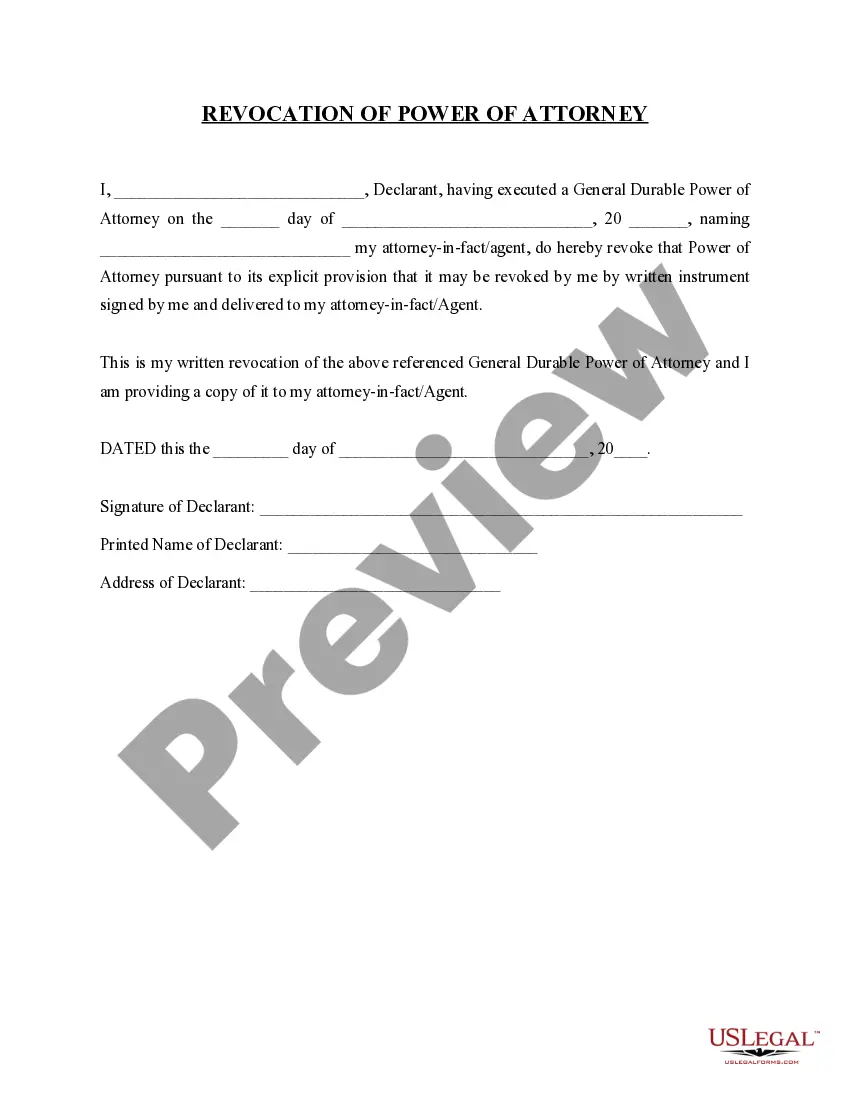
The Revocation of General Durable Power of Attorney is a legal document used to formally cancel a previously issued General Durable Power of Attorney. This document is essential when you wish to revoke the authority you granted to your attorney-in-fact or agent to make decisions regarding your property, financial affairs, or other matters. Unlike similar forms, this revocation specifically addresses the earlier power of attorney, ensuring that the agent no longer has any authority to act on your behalf.
Main sections of this form
- Declarant's name: The individual revoking the power of attorney.
- Date of original power of attorney: When the initial document was executed.
- Agent's name: The attorney-in-fact being revoked.
- Revocation statement: Clear declaration of the intention to revoke the previous power of attorney.
- Date and signature: The date of the revocation and the signature of the declarant to validate the document.
When to use this form
You should use the Revocation of General Durable Power of Attorney when you decide to end the authority of a previously appointed agent. Situations may include if the agent is no longer able to perform their duties, if you wish to assign a new agent, or if your circumstances have changed and you no longer want anyone making decisions on your behalf. This form is essential to prevent any confusion about who is authorized to act in your interests.
Who needs this form
- Individuals who have previously granted a power of attorney and need to revoke it.
- Those who wish to change their appointed attorney-in-fact or agent.
- Persons facing changes in their personal circumstances that necessitate revoking an existing legal authority.
Steps to complete this form
- Identify yourself as the declarant by filling in your name.
- Insert the date of the original General Durable Power of Attorney.
- State the name of the agent you are revoking.
- Sign and date the revocation statement to formalize your decision.
- Provide the completed form to your former agent and keep a copy for your records.
Is notarization required?
This form does not typically require notarization unless specified by local law. However, check your state's requirements to be sure.
Get your form ready online
Our built-in tools help you complete, sign, share, and store your documents in one place.
Make edits, fill in missing information, and update formatting in US Legal Forms—just like you would in MS Word.
Download a copy, print it, send it by email, or mail it via USPS—whatever works best for your next step.
Sign and collect signatures with our SignNow integration. Send to multiple recipients, set reminders, and more. Go Premium to unlock E-Sign.
If this form requires notarization, complete it online through a secure video call—no need to meet a notary in person or wait for an appointment.
We protect your documents and personal data by following strict security and privacy standards.

Make edits, fill in missing information, and update formatting in US Legal Forms—just like you would in MS Word.

Download a copy, print it, send it by email, or mail it via USPS—whatever works best for your next step.

Sign and collect signatures with our SignNow integration. Send to multiple recipients, set reminders, and more. Go Premium to unlock E-Sign.

If this form requires notarization, complete it online through a secure video call—no need to meet a notary in person or wait for an appointment.

We protect your documents and personal data by following strict security and privacy standards.
Common mistakes to avoid
- Failing to sign and date the revocation.
- Not providing a copy of the revocation to the agent.
- Misidentifying the previous power of attorney in the revocation.
Advantages of online completion
- Convenient access: Easily download the form and complete it at your convenience.
- Editability: Tailor the form to fit your specific needs before printing.
- Reliability: Get access to forms drafted by licensed attorneys for accuracy.
Legal use & context
- The revocation can prevent unauthorized actions by the former agent.
- It should be kept on file with the original power of attorney to avoid confusion.
- Failure to properly revoke may result in continued authority of the previous agent.
What to keep in mind
- The form is crucial to effectively revoke an earlier General Durable Power of Attorney.
- Ensure all information is accurately filled out and documented.
- Consult your local laws for any specific requirements related to the revocation process.
Looking for another form?
Form popularity
FAQ
A Power of Attorney shall not be deemed to be an irrevocable one merely because it states, in the clauses of the deed executed for grant of such Power of Attorney, of it being irrevocable. Such Power of Attorney may be revoked by the principal or the Power of Attorney holder by the procedure according to law.
If you decide that you no longer want or need a Power of Attorney, or if you change your mind about who your agent is, you can terminate a Power of Attorney by giving written notice to your agent. You should also give notice to your bank, your doctor, or anyone else who got a copy of your Power of Attorney.
Revoke Your Current Power of Attorney. To change or cancel your current power of attorney, you should complete a formal, written revocation. Notify Your Power of Attorney. Once you complete your revocation, notify your agent of the cancellation in writing. Notify Relevant Third Parties. Execute a New Power of Attorney.
You can always resign. Just put in writing that you resign, deliver it to anyone you have dealt with under the PoA in the past, and to the principal and the alternate agent (if any) and you're done...
As principal, you can revoke a power of attorney at any time as long as you have capacity. It's best to revoke in writing, but most states also allow you to revoke by another action that expresses your intent to terminate the power of attorney -- for example, your intentional destruction of the document.
Firstly, only a POA which is of a revocable nature can be cancelled after it has only been duly notarized by issuing a notice or a letter of revocation to the respective Attorney.
Revoke Your Current Power of Attorney. To change or cancel your current power of attorney, you should complete a formal, written revocation. Notify Your Power of Attorney. Once you complete your revocation, notify your agent of the cancellation in writing. Notify Relevant Third Parties. Execute a New Power of Attorney.
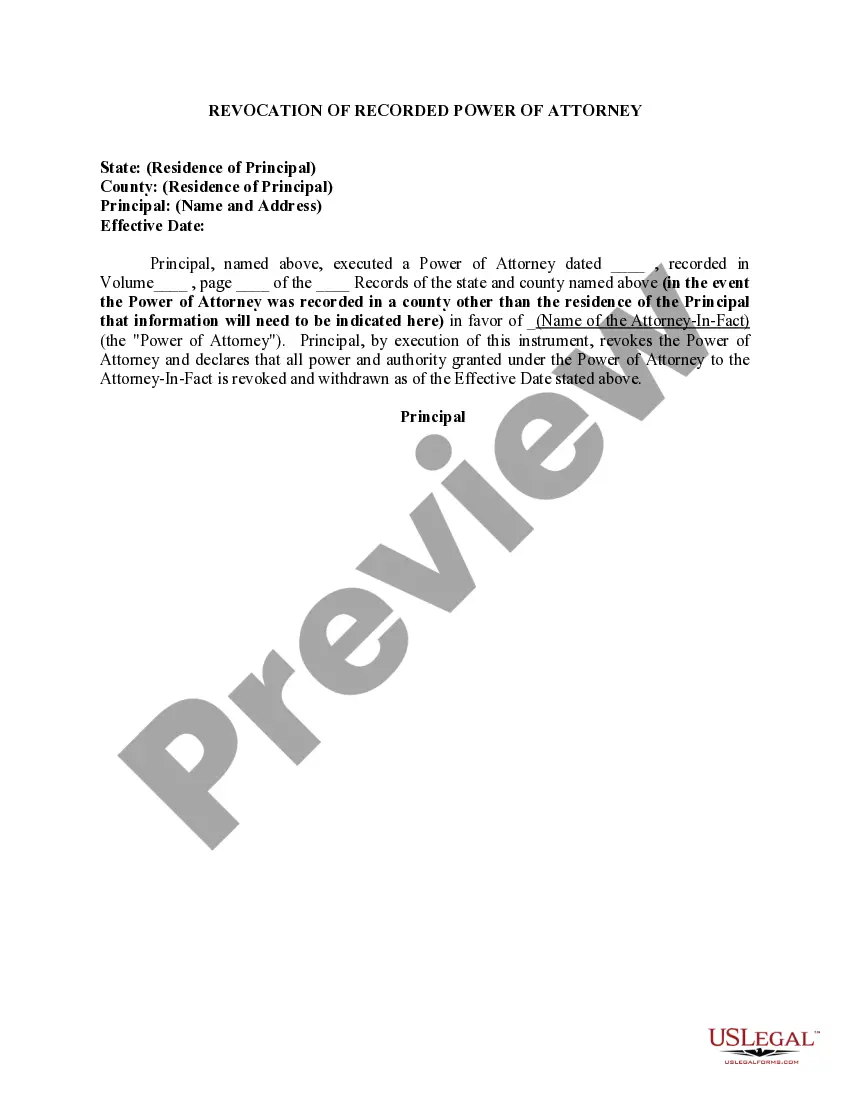
To cancel a Power of Attorney, the principal can create a document called a Revocation of Power of Attorney or create a new Power of Attorney that indicates the previous Power of Attorney is revoked.
Unless the power of attorney states otherwise, and they usually don't, a revocation of a POA must be made in writing. A verbal revocation may not be enough.A revocation will reference the existing POA and the current attorney-in-fact and revoke the document and the powers granted.