Pennsylvania Letter from Landlord to Tenant about time of intent to enter premises
Understanding this form
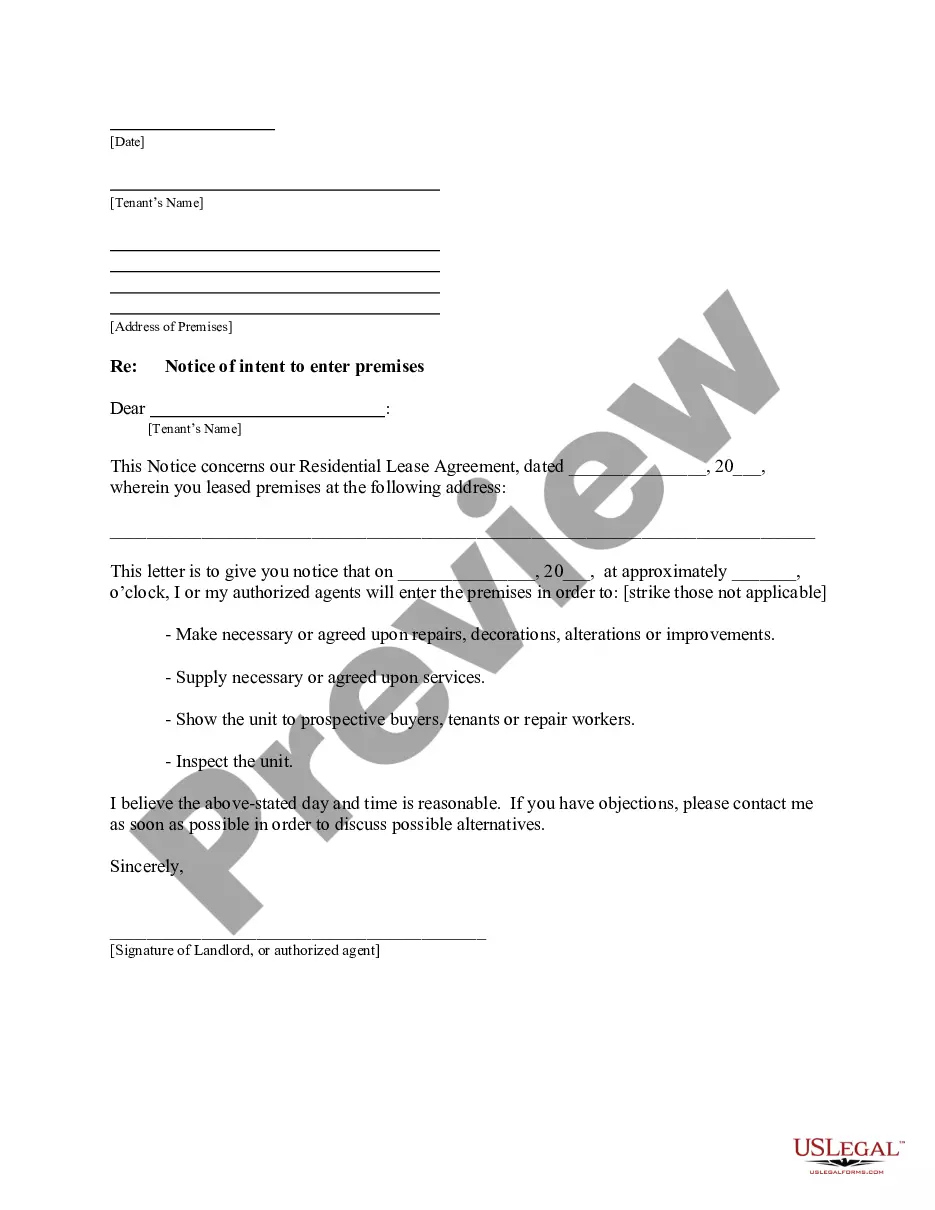
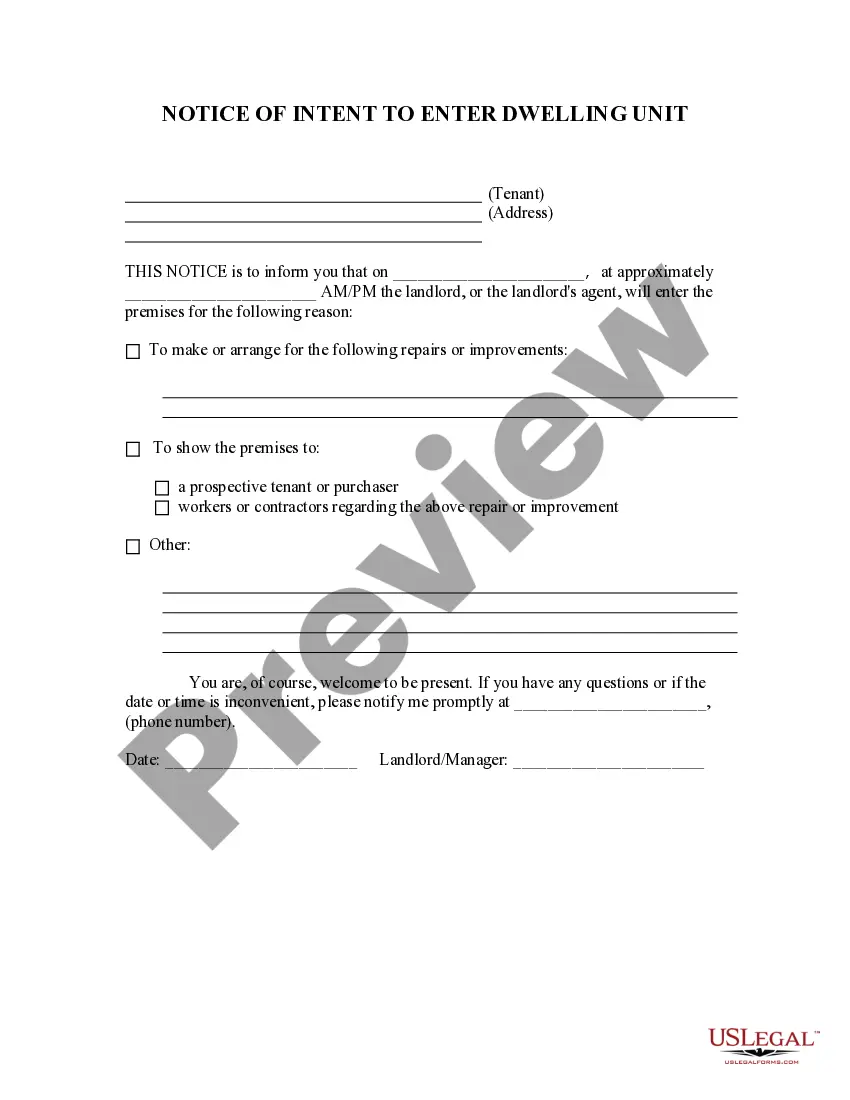
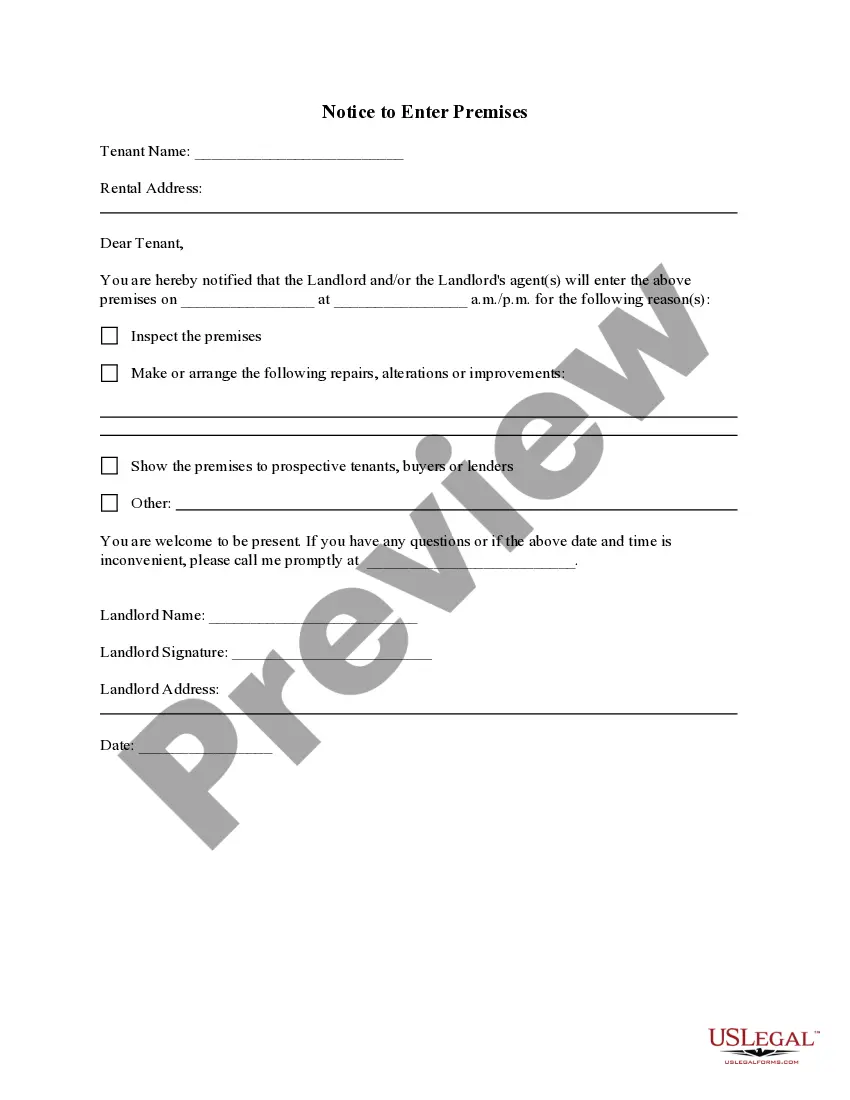
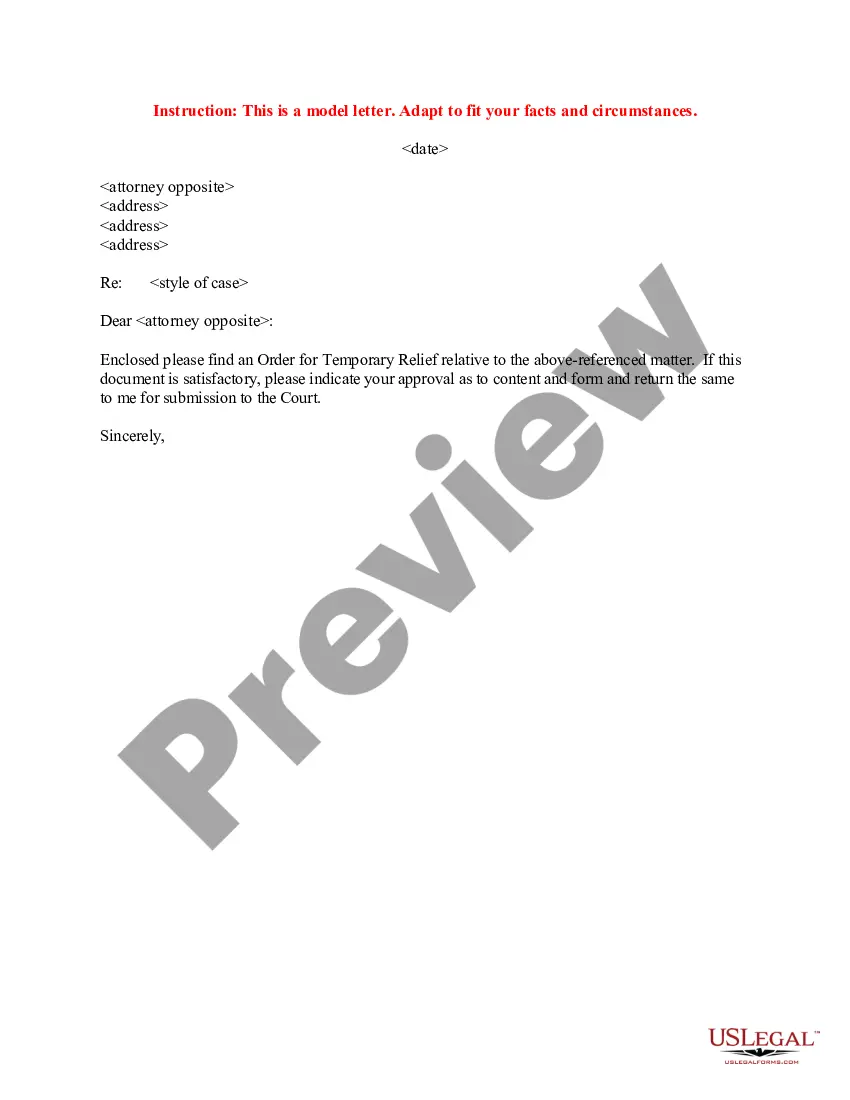
This form is a formal notice from a landlord to a tenant that indicates the landlord's intention to enter the leased premises. It serves as a communication tool to inform tenants about specific reasons for entering the property, such as repairs or inspections, ensuring compliance with legal obligations. The letter helps to maintain transparency and trust between landlords and tenants, distinguishing it from other notices or forms related to landlord-tenant interactions.
What’s included in this form
- Details of the residential lease agreement, including the date and property address.
- The date and time planned for entry into the premises.
- Specific reasons for entering the premises, with options for marking applicable reasons.
- A section for the landlord's signature or that of an authorized agent.
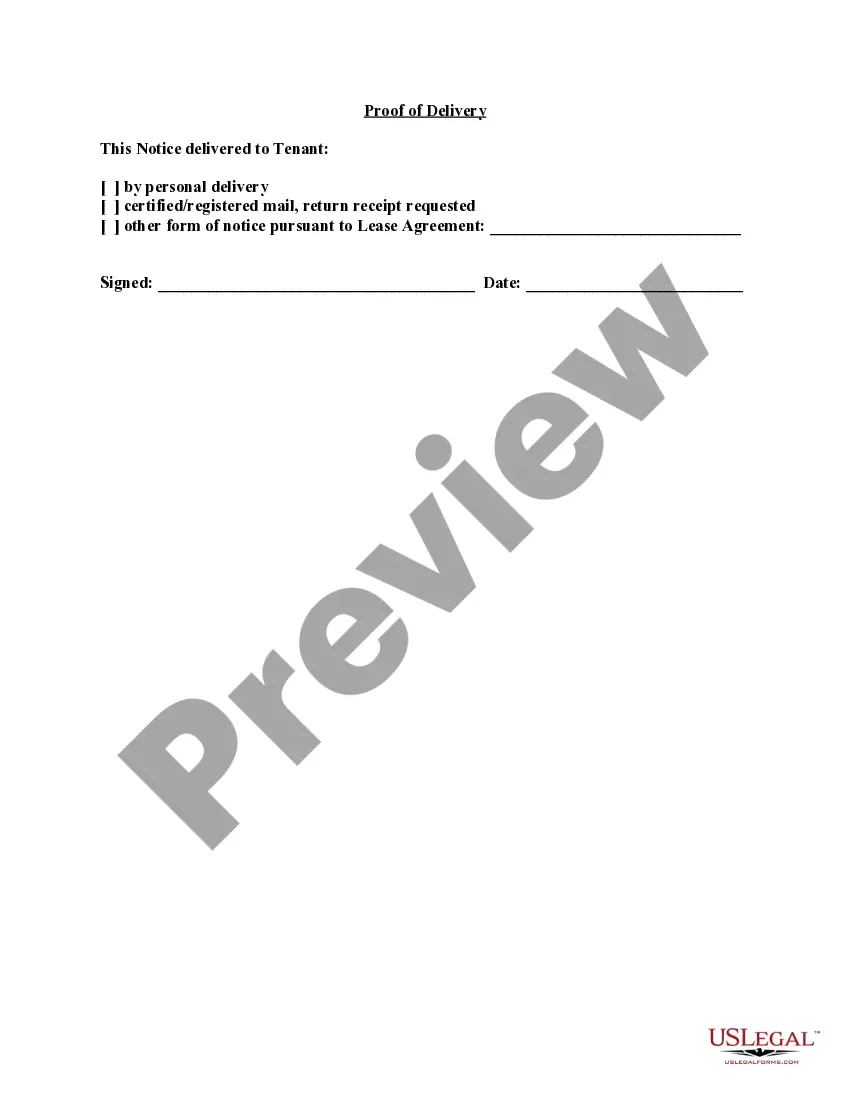
- Proof of delivery method to ensure receipt by the tenant.
Common use cases
This form should be used whenever a landlord needs to provide formal notice to a tenant about entering the rented property. Typical scenarios include conducting repairs, inspecting the unit, or showing the property to prospective tenants or buyers. It ensures that tenants are adequately informed and helps prevent disputes regarding unauthorized entries.
Who should use this form
- Landlords or property owners renting residential properties.
- Property managers acting on behalf of landlords.
- Real estate agents involved in leasing management.
- Tenants who wish to understand their rights regarding property access.
How to prepare this document
- Identify the parties involved: list the landlord and tenant names.
- Specify the address of the leased premises in detail.
- Enter the date and time for the intended entry.
- Mark the applicable reasons for entering the premises.
- Sign the letter as the landlord or authorized agent.
- Choose the method of delivery and fill in the proof of delivery section.
Does this document require notarization?
This form does not typically require notarization unless specified by local law. However, verifying local requirements is essential to ensure it is legally valid.
Get your form ready online
Our built-in tools help you complete, sign, share, and store your documents in one place.
Make edits, fill in missing information, and update formatting in US Legal Forms—just like you would in MS Word.
Download a copy, print it, send it by email, or mail it via USPS—whatever works best for your next step.
Sign and collect signatures with our SignNow integration. Send to multiple recipients, set reminders, and more. Go Premium to unlock E-Sign.
If this form requires notarization, complete it online through a secure video call—no need to meet a notary in person or wait for an appointment.
We protect your documents and personal data by following strict security and privacy standards.

Make edits, fill in missing information, and update formatting in US Legal Forms—just like you would in MS Word.

Download a copy, print it, send it by email, or mail it via USPS—whatever works best for your next step.

Sign and collect signatures with our SignNow integration. Send to multiple recipients, set reminders, and more. Go Premium to unlock E-Sign.

If this form requires notarization, complete it online through a secure video call—no need to meet a notary in person or wait for an appointment.

We protect your documents and personal data by following strict security and privacy standards.
Common mistakes to avoid
- Failing to provide adequate notice as required by state law.
- Not including a specific date and time for entry.
- Omitting the reason for entry, which may create confusion or disputes.
- Not providing proof of delivery, risking miscommunication with the tenant.
Why use this form online
- Convenience of downloading and filling out the form at any time.
- Editability allows for customization to meet specific needs.
- Reliable format ensures all necessary legal language is included.
Legal use & context
- This form serves as legal notice, helping maintain a professional relationship between landlord and tenant.
- Ensures compliance with state regulations regarding tenant notification.
- Reduces the risk of disputes by formalizing notification of entry.
Quick recap
- This form is essential for informing tenants about property access.
- Customizable for various entry purposes, ensuring clarity in communication.
- Using this form helps uphold legal rights and responsibilities for both landlords and tenants.
Looking for another form?


Form popularity
FAQ
That being said, we recommend at least 24 hours of notice. The majority of our Pennsylvania landlords noted that they provide the tenant with at least 48-hours notice before entering the premises. The notice must be given in writing and must state the nature of the repair.
Tenant Rights to Withhold Rent in PennsylvaniaTenants may withhold rent or exercise the right to repair and deduct if a landlord fails to take care of important repairs, such as a broken heater. For specifics, see Pennsylvania Tenant Rights to Withhold Rent or Repair and Deduct.
You have the right to enjoy your property and not have your landlord interfere with that enjoyment unless it is necessary. Pennsylvania tenant rights allow landlords to enter a dwelling only for repairs or inspections, and only after providing reasonable notice.
Tenants can always give the landlord or agent permission to enter the property at any time for any reason.
You have the right to enjoy your property and not have your landlord interfere with that enjoyment unless it is necessary. Pennsylvania tenant rights allow landlords to enter a dwelling only for repairs or inspections, and only after providing reasonable notice.
No. Many Pennsylvania courts have said your landlord cannot evict you by self-help, meaning such things as padlocking your door, shutting off your utilities, using force to evict you, or using any eviction method other than going to court.
Let's be clear, other than in emergency it's illegal for a landlord or agent to enter a property without agreement from the tenant. The golden rule to abide by is always to provide your tenants with written notice at least 24 hours before any planned visits.
Your landlord or their representatives may be allowed reasonable access to carry out inspections or repairs, but must first get your permission. According to Section 11, from The Landlord and Tenant Act 1985, your landlord needs to give you at least 24 hour notice before they come around and visit for any reason.
Your landlord or their representatives may be allowed reasonable access to carry out inspections or repairs, but must first get your permission. According to Section 11, from The Landlord and Tenant Act 1985, your landlord needs to give you at least 24 hour notice before they come around and visit for any reason.