Pennsylvania Warranty Deed from Individual to a Trust
Understanding this form
This Warranty Deed from Individual to a Trust is a legal document used to transfer property ownership from an individual (the grantor) to a trust (the grantee). This form ensures that the property is conveyed with a warranty of title, meaning that the grantor guarantees they hold the title free from any encumbrances unless noted otherwise. Unlike other deeds, this form specifically involves a trust as the recipient, making it essential for estate planning or asset management purposes.
Key parts of this document
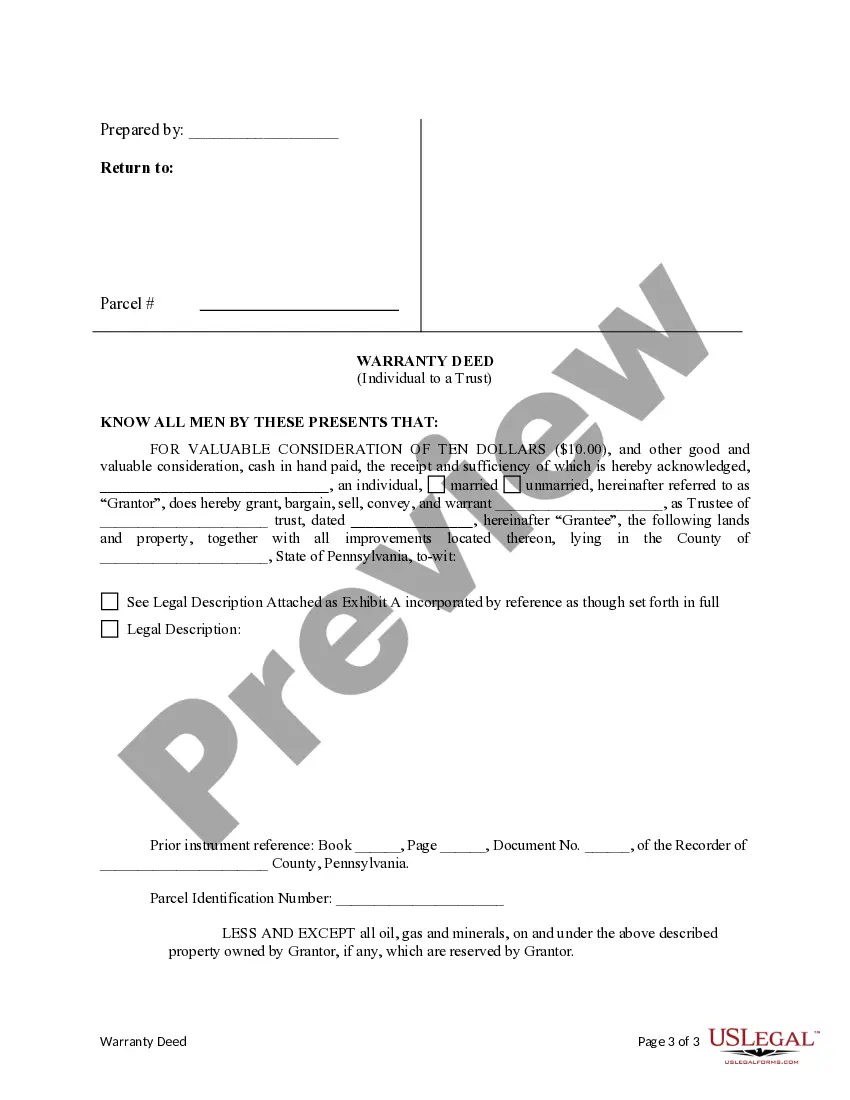
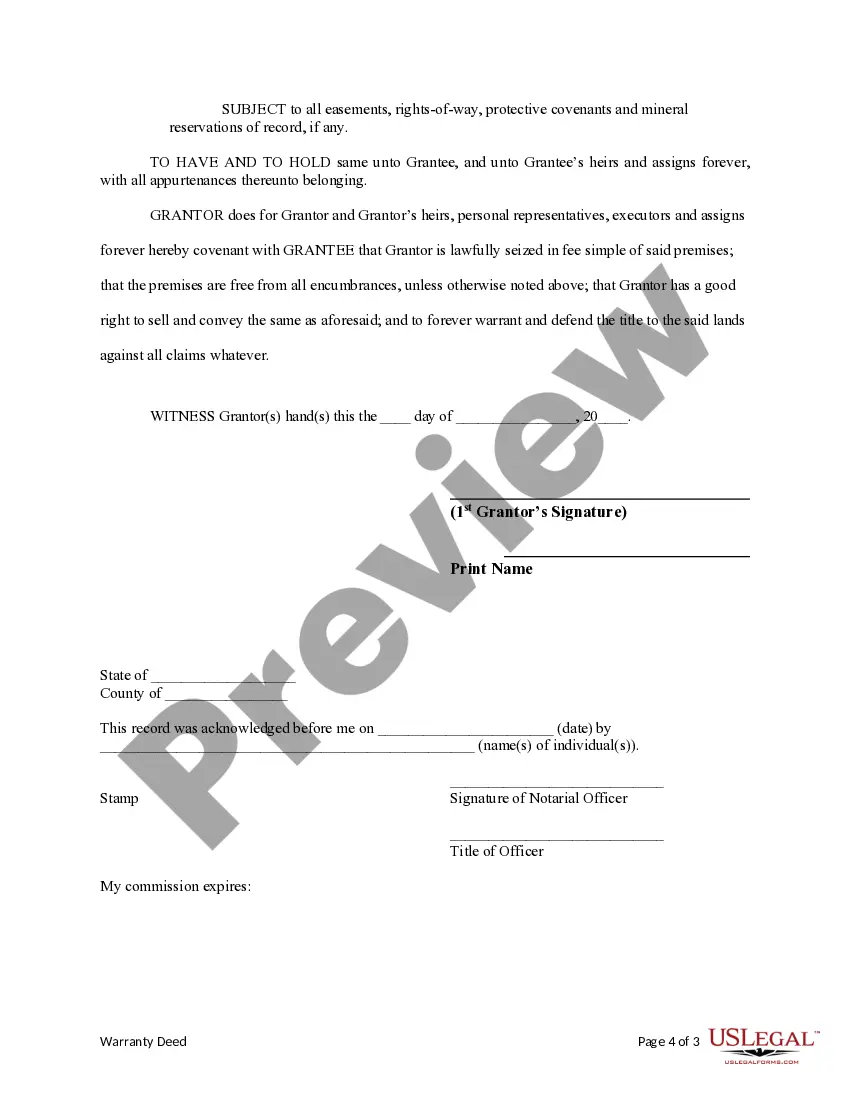
- Grantor information: Details about the individual transferring the property.
- Grantee information: Identification of the trust receiving the property.
- Property description: Clear and specific identification of the property being transferred.
- Reservation clause: Statement reserving oil, gas, and mineral rights, if applicable.
- Warranties: Assurance that the grantor has the right to transfer ownership and defend the title.
- Signature line: Space for the grantor's signature and date of execution.





When to use this document
This Warranty Deed should be used when an individual wishes to transfer property ownership to a trust they have established, typically for estate planning or financial management. This is commonly applicable when an individual wants to ensure that their assets are managed according to their wishes after their death, or to protect assets from probate during their lifetime.
Who this form is for
This form is suitable for:
- Individuals who own real estate and want to transfer it to a trust.
- Trustees or beneficiaries of a trust who need to formalize property transfers.
- Estate planners seeking to simplify the management of assets for future generations.
How to prepare this document
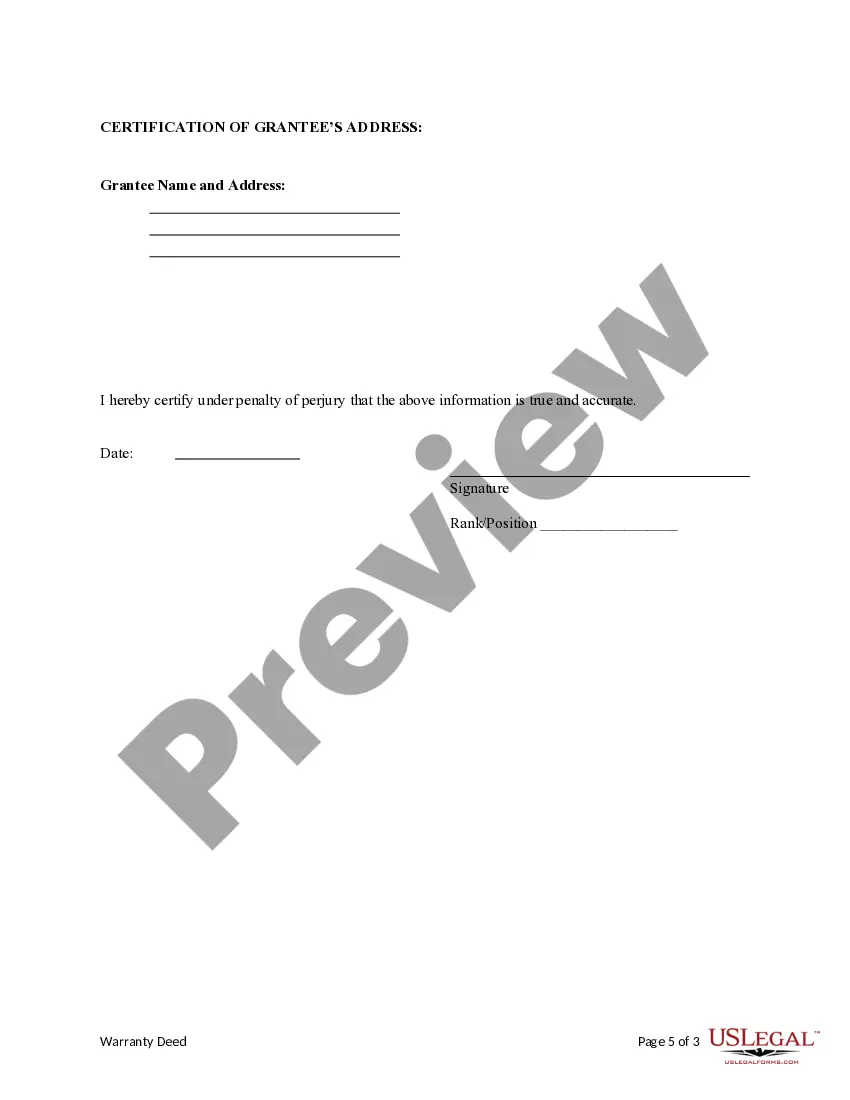
- Identify the parties: Enter the names and addresses of the grantor and the trustee of the trust.
- Specify the property: Clearly describe the property being transferred, including any legal descriptions.
- Review the reservation clause: Confirm any reservations of rights for oil, gas, and minerals as necessary.
- Sign the document: The grantor must sign and date the deed to validate the transfer.
- Consider notarization: Depending on your stateâs requirements, you may need to have the deed notarized.
Does this document require notarization?
This form does not typically require notarization unless specified by local law. However, it is good practice to have the deed notarized to ensure its validity, especially if the property transfer will be recorded with the county clerk.
Get your form ready online
Our built-in tools help you complete, sign, share, and store your documents in one place.
Make edits, fill in missing information, and update formatting in US Legal Forms—just like you would in MS Word.
Download a copy, print it, send it by email, or mail it via USPS—whatever works best for your next step.
Sign and collect signatures with our SignNow integration. Send to multiple recipients, set reminders, and more. Go Premium to unlock E-Sign.
If this form requires notarization, complete it online through a secure video call—no need to meet a notary in person or wait for an appointment.
We protect your documents and personal data by following strict security and privacy standards.

Make edits, fill in missing information, and update formatting in US Legal Forms—just like you would in MS Word.

Download a copy, print it, send it by email, or mail it via USPS—whatever works best for your next step.

Sign and collect signatures with our SignNow integration. Send to multiple recipients, set reminders, and more. Go Premium to unlock E-Sign.

If this form requires notarization, complete it online through a secure video call—no need to meet a notary in person or wait for an appointment.

We protect your documents and personal data by following strict security and privacy standards.
Common mistakes
- Failing to provide a complete description of the property, which can lead to disputes.
- Not reserving oil, gas, and mineral rights when necessary.
- Omitting the trust's details, leading to confusion about ownership.
- Not signing or dating the document, rendering it invalid.
- Neglecting to verify the need for notarization according to state law.
Why complete this form online
- Convenient access to legal documents without needing to meet in person.
- The ability to fill out the form digitally, reducing errors and ensuring clarity.
- Secure document storage and retrieval options for future use or reference.
Looking for another form?


Form popularity
FAQ
Locate your current deed. Use the proper deed. Check with your title insurance company and lender. Prepare a new deed. Sign in the presence of a notary. Record the deed in the county clerk's office. Locate the deed that's in trust. Use the proper deed.
A warranty deed protects property owners from future claims that someone else actually owns a portion (or all) of their property, while trustee deeds protect lenders when borrowers default on their mortgage loans.
Determine the Current Title and Vesting to Your Property. Prepare a Deed. Be Aware of Your Lender and Title Insurance. Prepare a Preliminary Change of Ownership Report. Execute Your Deed. Record Your Deed. Wait for the Deed to be Returned. Keep the Property in the Trust.
The mortgage company usually prepares this deed as part of the loan package and delivers it to the title company for you to sign at closing. The title company is commonly the trustee to the deed and holds legal title to the property until the loan gets fully repaid.
Trustee's deeds convey real estate out of a trust.This type of conveyance is named for the person using the form the trustee who stands in for the beneficiary of the trust and holds title to the property.
No. And unless the deed identifies the trust as an owner, then father is the owner of an interest. It is a common mistake to set up a trust and then fail to deed property into the trust. However, you cannot force him to make the changes you are...
Typically, the lender will provide you with a copy of the deed of trust after the closing. The original warranty deeds are often mailed to the grantee after they are recorded. These are your original copies and should be kept in a safe place, such as a fireproof lockbox or a safe deposit box at a financial institution.
A trustee deed offers no such warranties about the title.
The act of transferring a property that is owned by an individual into a trust, will see the trust liable to pay stamp duty on acquisition of the asset. Additionally, the individual who is transferring ownership to the trust, will be liable to pay capital gains tax on the disposal of the asset.