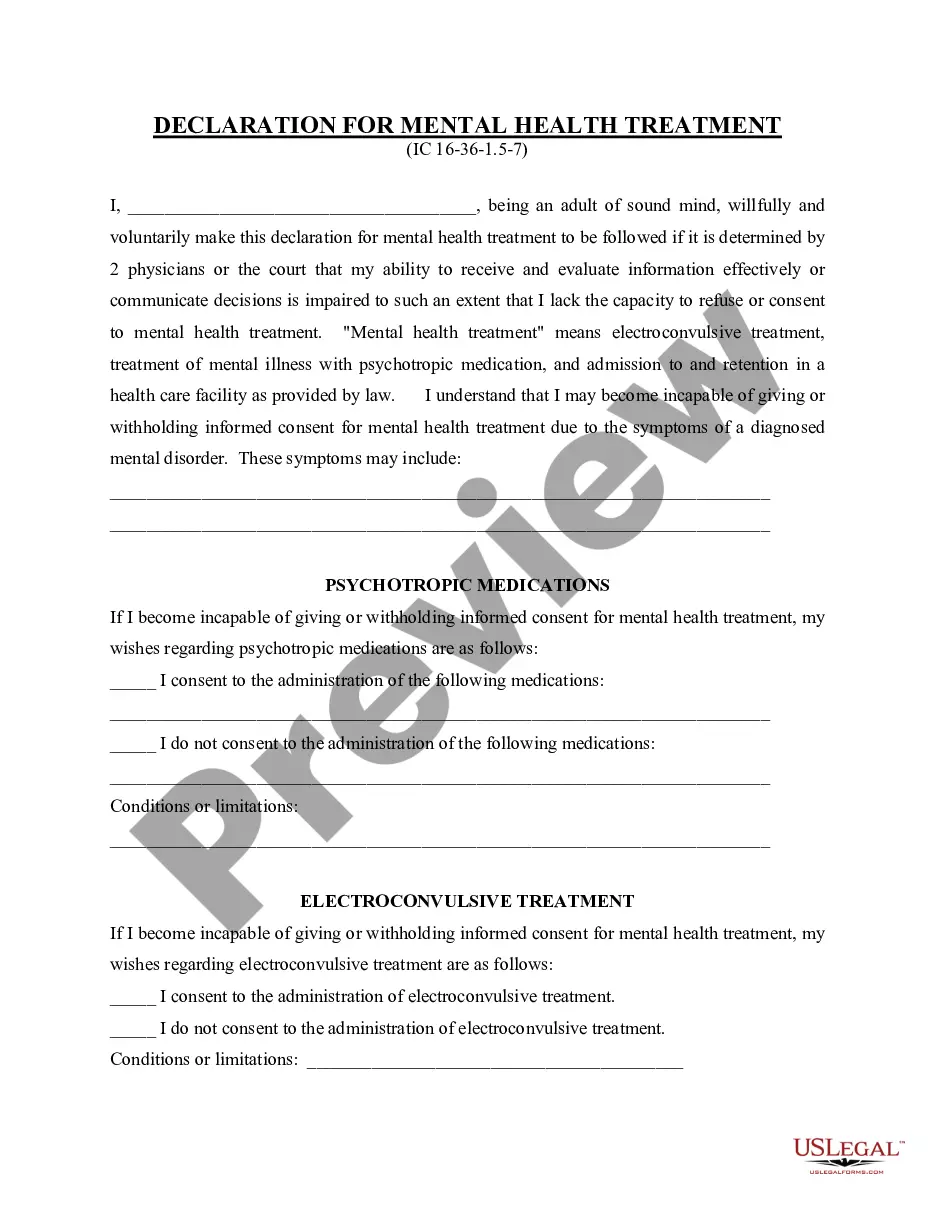
Oregon Revocation of General Durable Power of Attorney
About this form
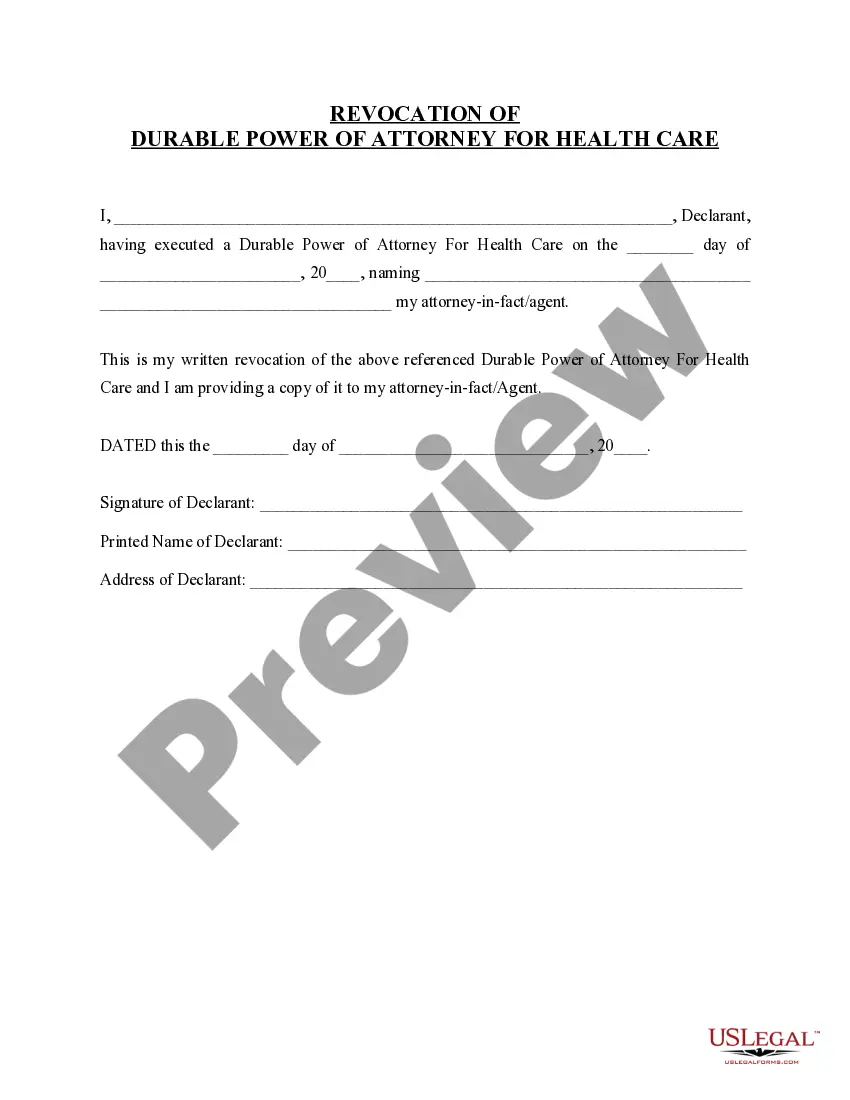
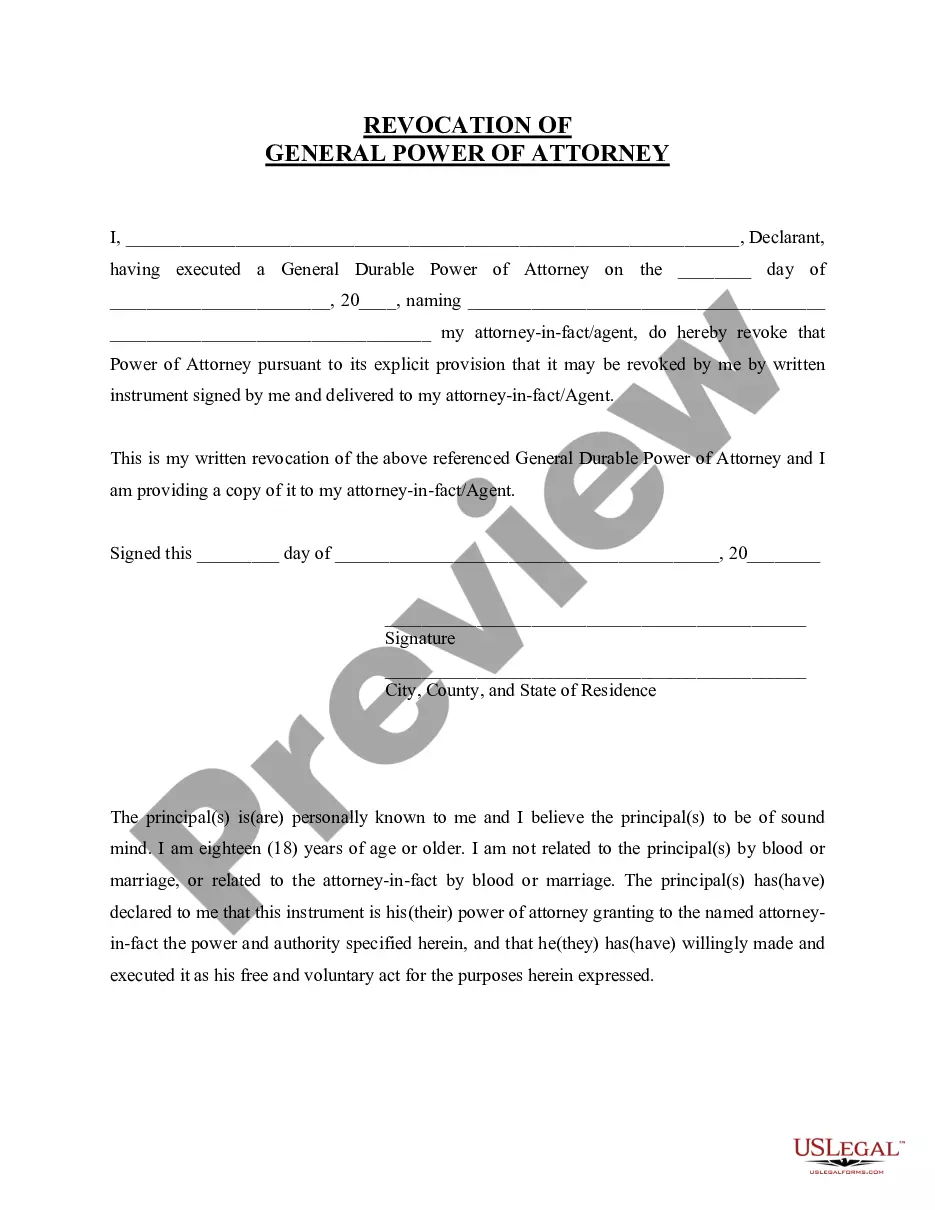
The Revocation of General Durable Power of Attorney is a legal document used to formally cancel a previously established Durable Power of Attorney. Unlike a standard Power of Attorney, this form allows you to revoke the authority given to an agent regarding property, financial, and management decisions. It's essential when you no longer wish for your agent to have powers granted to them, ensuring clarity and legality in your decision.
Form components explained
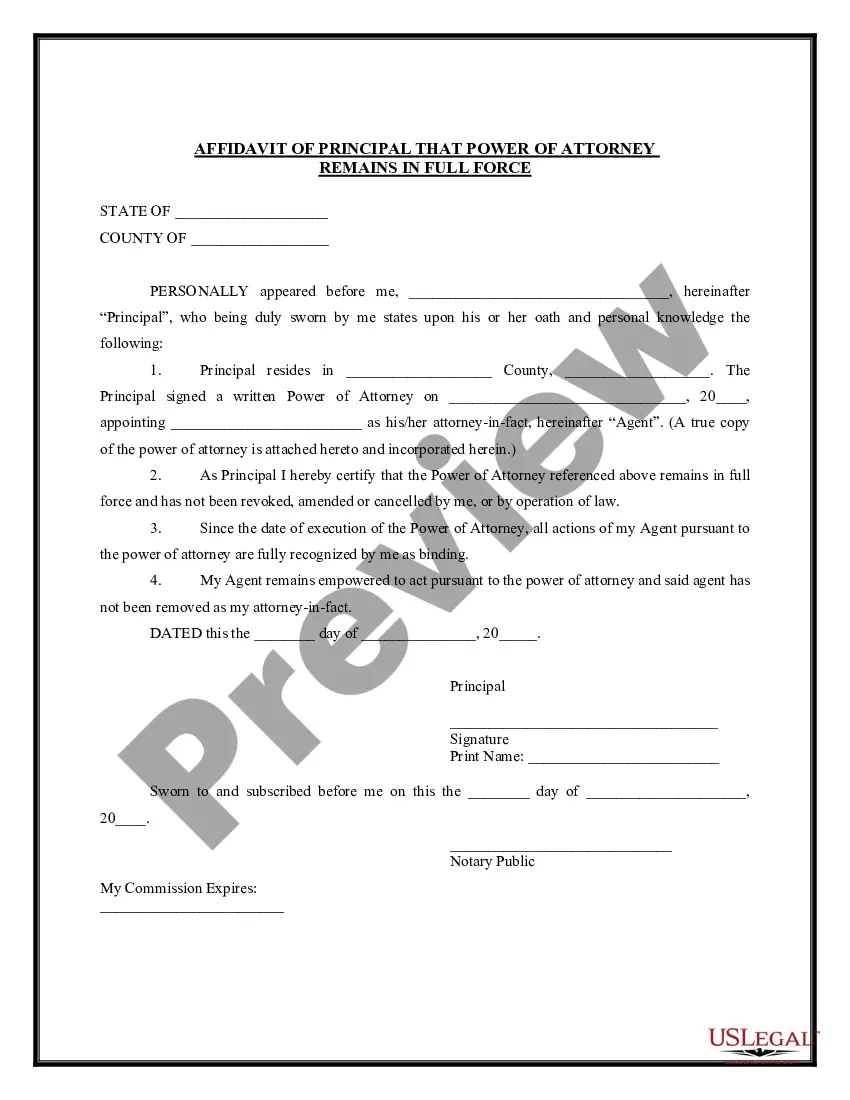
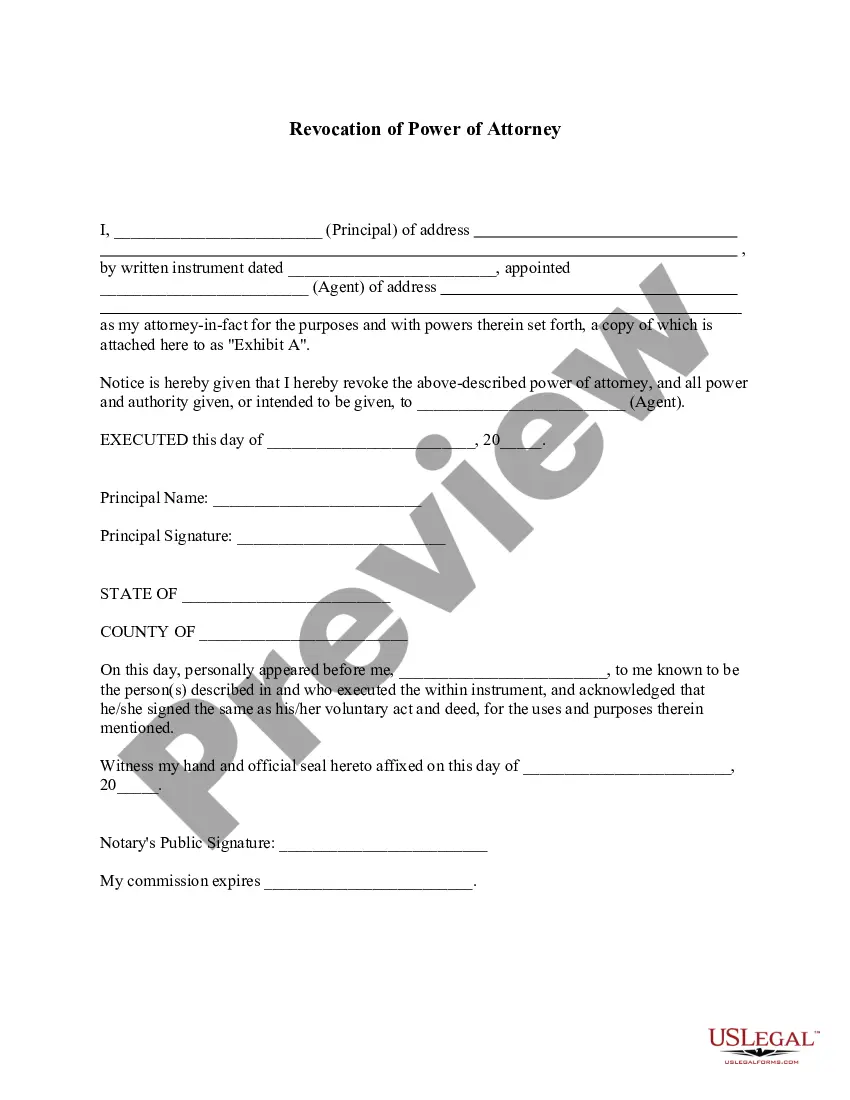
- Declarant's name: Identifies the person revoking the power of attorney.
- Original power of attorney details: References the date and the name of the attorney-in-fact being revoked.
- Revocation statement: Clearly states the intention to revoke the previous Durable Power of Attorney.
- Signature: Requires the declarant's signature for legal compliance.
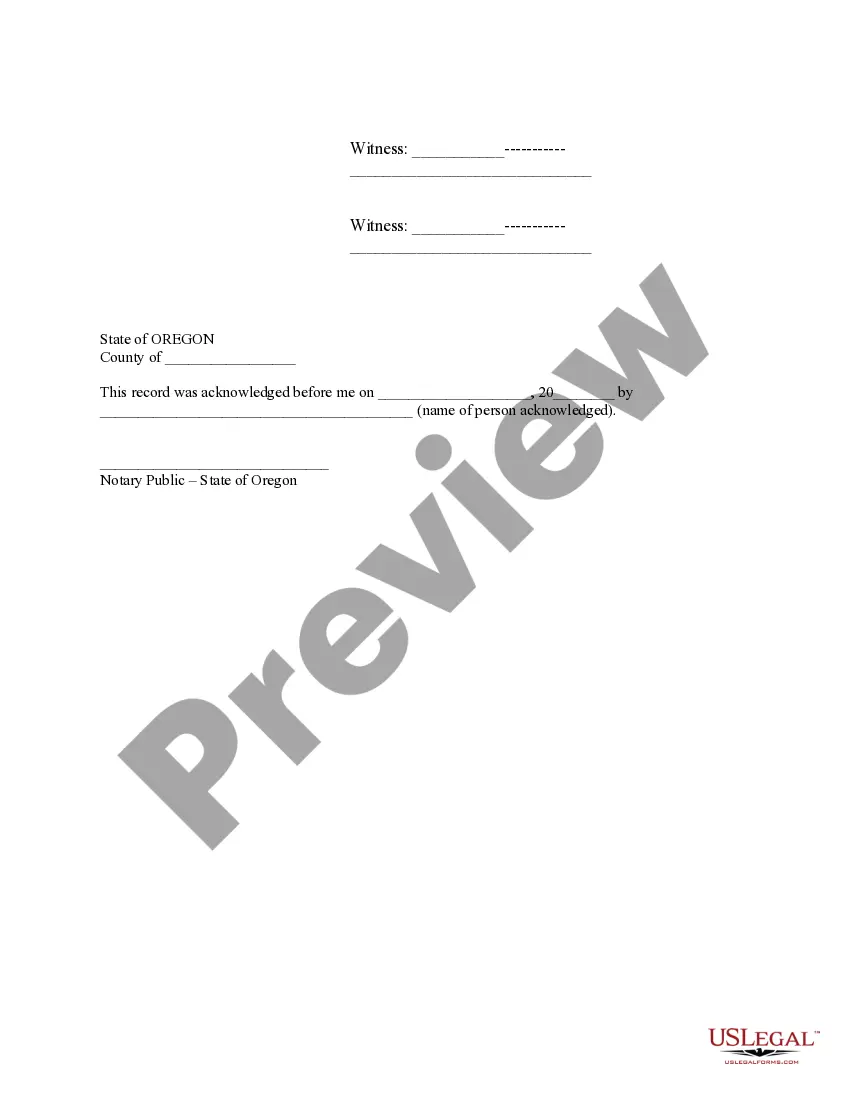
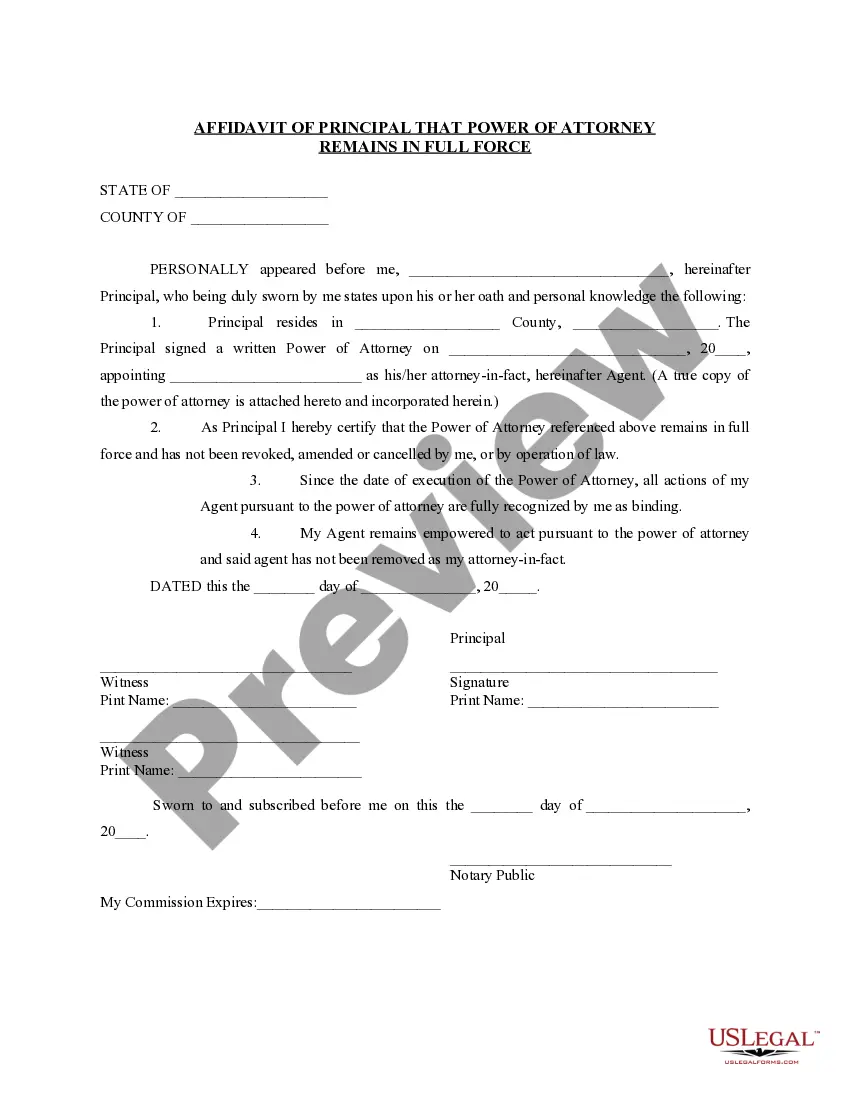
- Witness signatures: Typically includes two witnesses to validate the revocation.
- Notary acknowledgment: Essential for legal validation in some jurisdictions, ensuring the process meets legal standards.
When to use this document
This form is necessary in various scenarios, including when you wish to terminate the authority granted to an attorney-in-fact due to changes in your personal circumstances, dissatisfaction with your agent's actions, or if your agent is no longer able to perform their duties. It is a crucial step to take when you want to regain control over your affairs and prevent unauthorized decisions.
Intended users of this form
This form is intended for individuals who have previously established a General Durable Power of Attorney and no longer wish for the agent to have that authority. It is suitable for:
- Individuals changing their financial representation.
- Those who have lost trust in their attorney-in-fact.
- People experiencing significant life changes such as divorce or relocation.
How to complete this form
- Identify yourself: Enter your name as the declarant who is revoking the power of attorney.
- Cite the original power of attorney: Indicate the execution date and the name of the attorney-in-fact being revoked.
- Provide a clear revocation statement: Use the prescribed language to formally revoke the previous Durable Power of Attorney.
- Sign the document: Ensure your signature is included, as it is essential for legal acceptance.
- Gather witnesses: Have at least two witnesses sign the document to validate your revocation.
- Consider notarization: Depending on state requirements, you may need to have the document notarized to ensure its legal strength.
Notarization guidance
To make this form legally binding, it must be notarized. Our online notarization service, powered by Notarize, lets you verify and sign documents remotely through an encrypted video session.
Get your form ready online
Our built-in tools help you complete, sign, share, and store your documents in one place.
Make edits, fill in missing information, and update formatting in US Legal Forms—just like you would in MS Word.
Download a copy, print it, send it by email, or mail it via USPS—whatever works best for your next step.
Sign and collect signatures with our SignNow integration. Send to multiple recipients, set reminders, and more. Go Premium to unlock E-Sign.
If this form requires notarization, complete it online through a secure video call—no need to meet a notary in person or wait for an appointment.
We protect your documents and personal data by following strict security and privacy standards.

Make edits, fill in missing information, and update formatting in US Legal Forms—just like you would in MS Word.

Download a copy, print it, send it by email, or mail it via USPS—whatever works best for your next step.

Sign and collect signatures with our SignNow integration. Send to multiple recipients, set reminders, and more. Go Premium to unlock E-Sign.

If this form requires notarization, complete it online through a secure video call—no need to meet a notary in person or wait for an appointment.

We protect your documents and personal data by following strict security and privacy standards.
Common mistakes
- Failing to include the correct name of the attorney-in-fact being revoked.
- Not having the necessary witnesses sign the form.
- Omitting your signature, which renders the revocation invalid.
- Overlooking state-specific notarization requirements.
Advantages of online completion
- Convenience of immediate access to the form from anywhere.
- Editability allows you to customize the document as needed.
- Reliable legal templates drafted by licensed attorneys.
- Less time-consuming than seeking in-person legal assistance.
What to keep in mind
- The Revocation of General Durable Power of Attorney is essential for cancelling a previously granted authority.
- This document is particularly important in maintaining control over financial and property decisions.
- Ensure all legal requirements, such as notarization, are followed for the revocation to be effective.
- Be clear and specific in your revocation to avoid confusion regarding your intentions.
Looking for another form?

Form popularity
FAQ
You can always resign. Just put in writing that you resign, deliver it to anyone you have dealt with under the PoA in the past, and to the principal and the alternate agent (if any) and you're done...
Unless the power of attorney states otherwise, and they usually don't, a revocation of a POA must be made in writing. A verbal revocation may not be enough.A revocation will reference the existing POA and the current attorney-in-fact and revoke the document and the powers granted.
A person who has granted someone power of attorney can freely revoke that authority or give it to someone else at any point. A power of attorney is not a contract, and thus the principalor the person making the documentcan unilaterally terminate or turn over her power of attorney to another person anytime she wishes.
The answer is Yes. If you change your mind about the person you chose to make decisions for you under a durable power of attorney, you can change it. In order to make changes to your Power of Attorney, however, you must have Legal Mental Capacity.
The revocation should include your name, a statement that you are of sound mind, and your wish to revoke the power of attorney. You should also specify the date the original power of attorney was executed and the person selected as your agent.
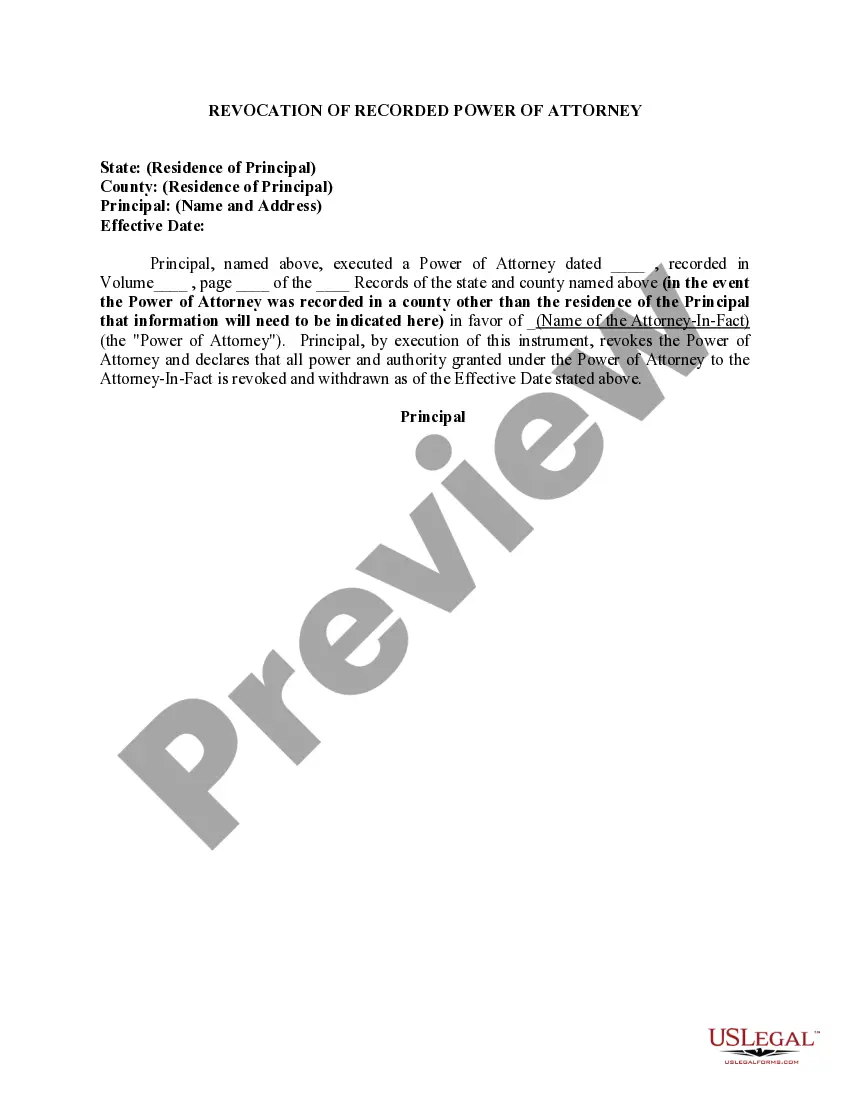
Until an attorney-in-fact's powers are properly revoked, they can continue to legally act for the principal. To cancel a Power of Attorney, the principal can create a document called a Revocation of Power of Attorney or create a new Power of Attorney that indicates the previous Power of Attorney is revoked.
If the agent is acting improperly, family members can file a petition in court challenging the agent. If the court finds the agent is not acting in the principal's best interest, the court can revoke the power of attorney and appoint a guardian. The power of attorney ends at death.
The Principal can override either type of POA whenever they want. However, other relatives may be concerned that the Agent (in most cases a close family member like a parent, child, sibling, or spouse) is abusing their rights and responsibilities by neglecting or exploiting their loved one.
1 attorney answer You can remove your self from both positions by resigning as the appointed attorney-in-fact also referred to as an agent. Acting as an agent for someone that has appointed you through a Power of Attorney is a voluntary act so you can withdraw/resign at any time.