Oregon Warranty Deed from Husband to Himself and Wife
Understanding this form
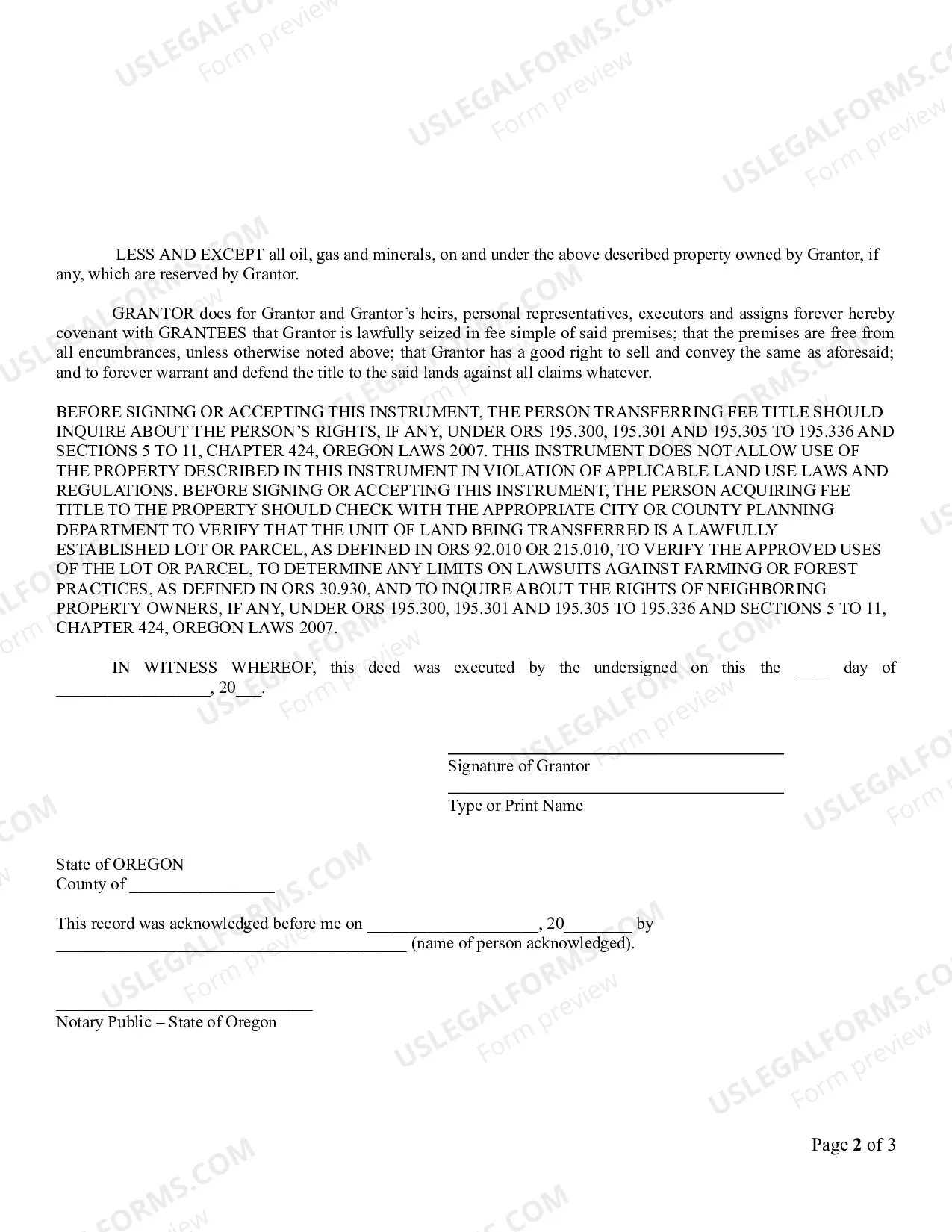
The Warranty Deed from Husband to Himself and Wife is a legal document that facilitates the transfer of property from a husband to himself and his wife as joint tenants. This form ensures that both spouses hold the property rights equally, along with rights of survivorship, which allows the surviving spouse to inherit the property automatically upon the death of the other. Unlike other types of deeds, this form explicitly addresses the ownership interests and includes a reservation clause for any oil, gas, and minerals beneath the property.
Key parts of this document
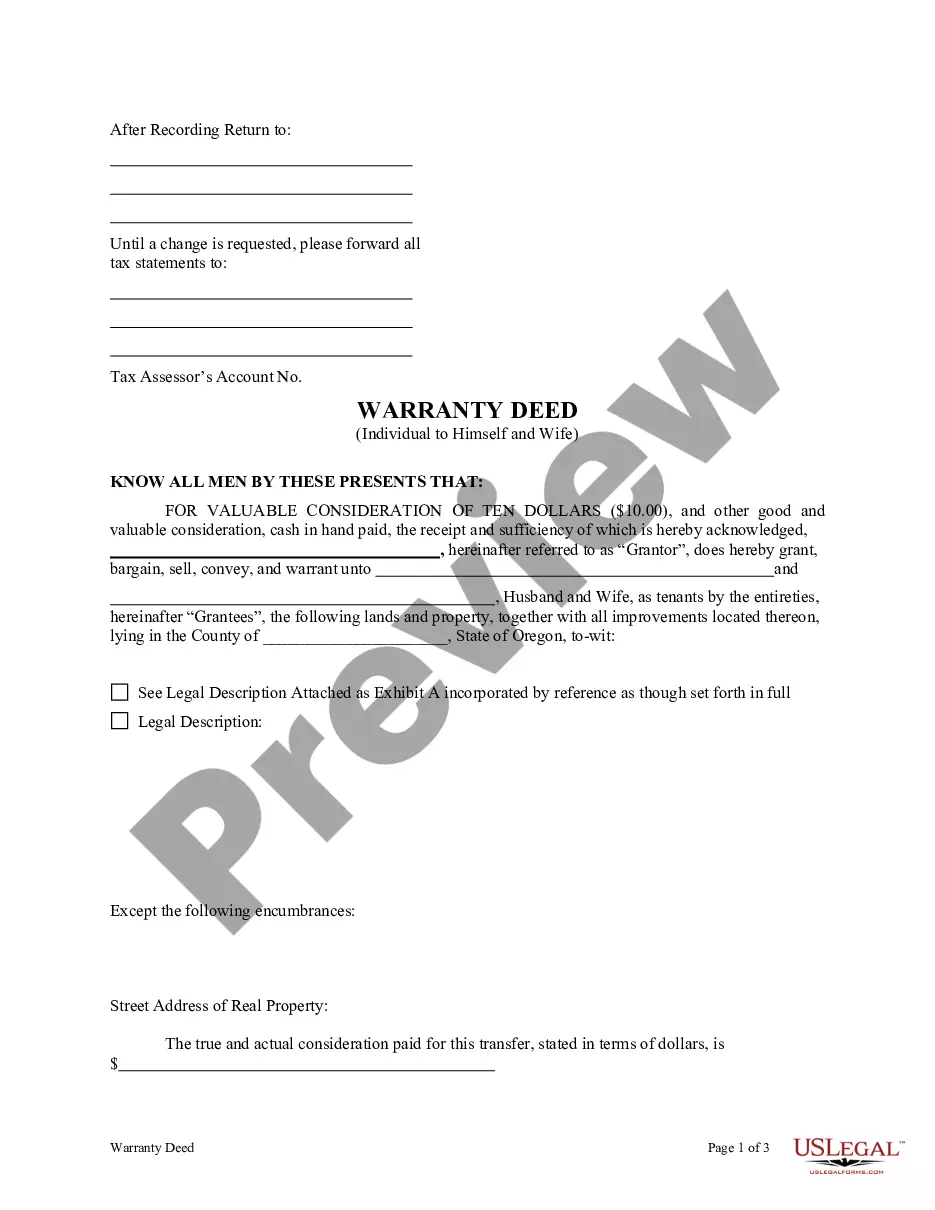
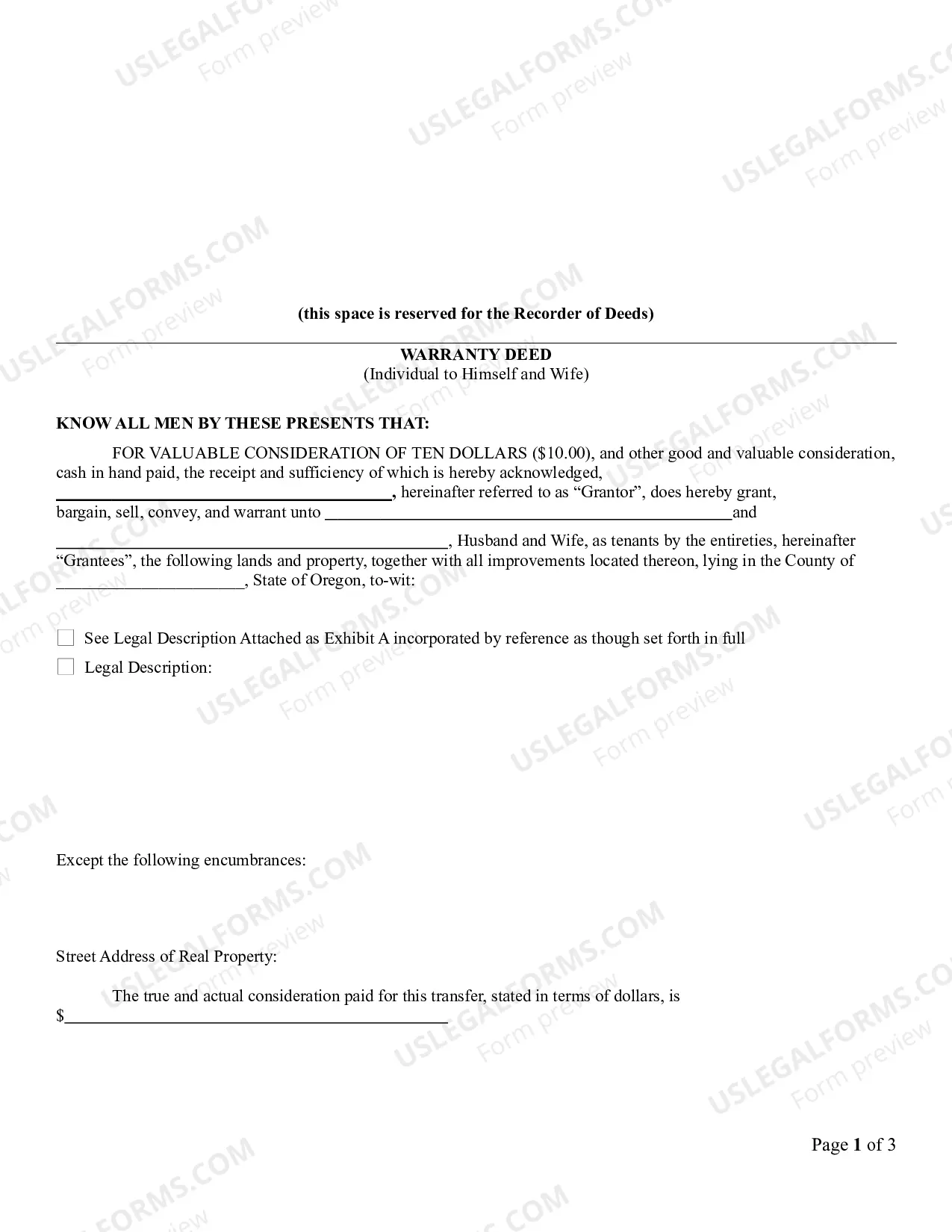
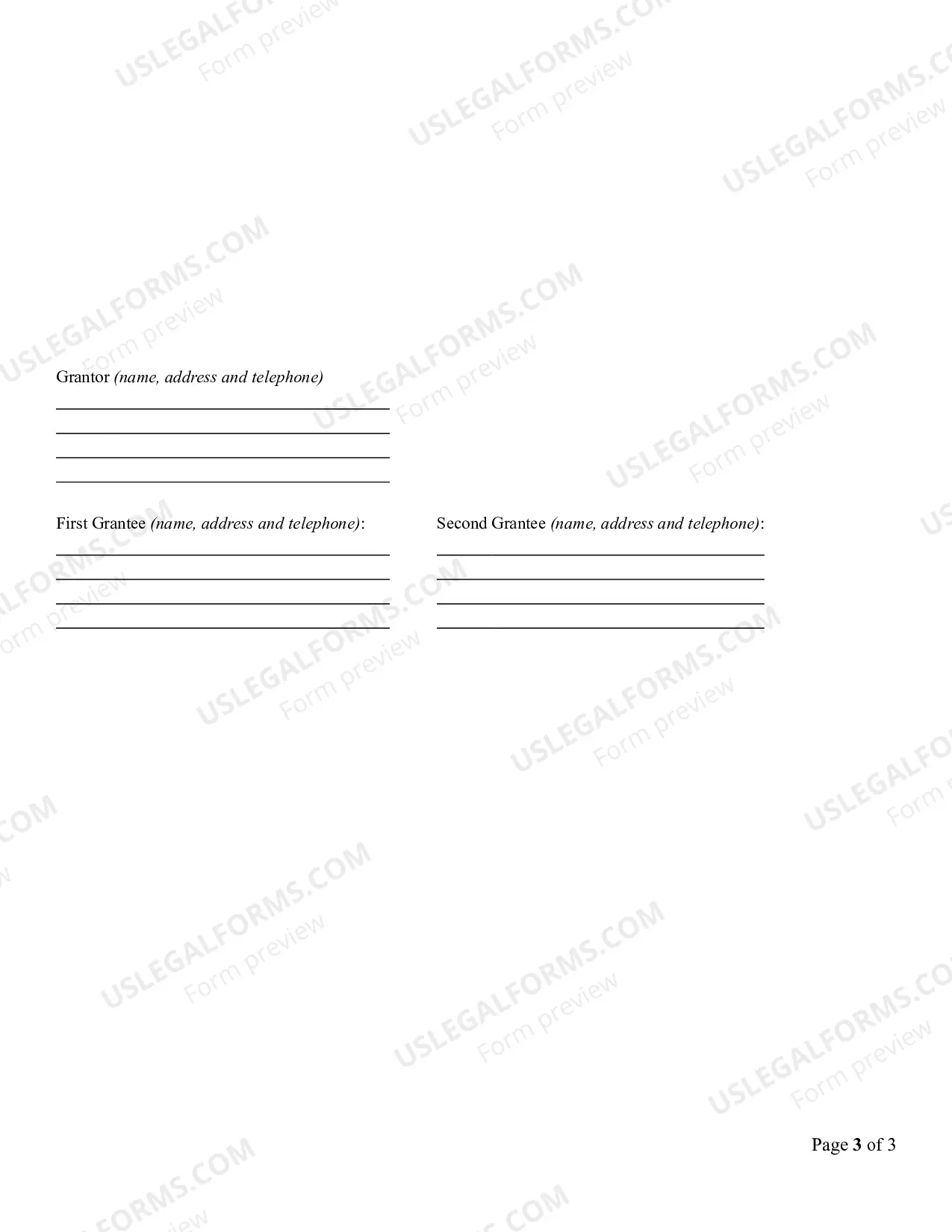
- Identification of the grantor (husband) and grantees (husband and wife).
- Legal description of the property being transferred.
- Covenant that the grantor is lawfully seized in fee simple.
- Statement that the property is free from encumbrances unless noted.
- Signature of the grantor with the date of execution.




When to use this document
This form should be used when a husband wishes to formally transfer ownership of real property to himself and his wife. Common scenarios include marriage, refinancing options, or estate planning purposes where joint ownership is desired. It establishes clear rights of ownership and simplifies transitions in case of the death of one spouse.
Who can use this document
- Married couples looking to consolidate property ownership.
- Individuals who want to ensure their spouse has rights of survivorship.
- Homeowners preparing for estate planning, particularly if they wish to pass property directly to their spouse.
Instructions for completing this form
- Identify the parties involved: the husband as the grantor and both the husband and wife as the grantees.
- Specify the property by including the legal description attached as Exhibit A.
- Include a declaration regarding any reservations, such as oil, gas, and minerals.
- Have the grantor sign the form, ensuring the signature is dated accurately.
- Check for necessary filing requirements with local land records.
Notarization requirements for this form
To make this form legally binding, it must be notarized. Our online notarization service, powered by Notarize, lets you verify and sign documents remotely through an encrypted video session.
Get your form ready online
Our built-in tools help you complete, sign, share, and store your documents in one place.
Make edits, fill in missing information, and update formatting in US Legal Forms—just like you would in MS Word.
Download a copy, print it, send it by email, or mail it via USPS—whatever works best for your next step.
Sign and collect signatures with our SignNow integration. Send to multiple recipients, set reminders, and more. Go Premium to unlock E-Sign.
If this form requires notarization, complete it online through a secure video call—no need to meet a notary in person or wait for an appointment.
We protect your documents and personal data by following strict security and privacy standards.

Make edits, fill in missing information, and update formatting in US Legal Forms—just like you would in MS Word.

Download a copy, print it, send it by email, or mail it via USPS—whatever works best for your next step.

Sign and collect signatures with our SignNow integration. Send to multiple recipients, set reminders, and more. Go Premium to unlock E-Sign.

If this form requires notarization, complete it online through a secure video call—no need to meet a notary in person or wait for an appointment.

We protect your documents and personal data by following strict security and privacy standards.
Common mistakes
- Failing to include a complete legal description of the property.
- Not clearly stating any reservations regarding natural resources.
- Leaving out signatures or dates, which can invalidate the deed.
- Incorrectly identifying the parties or their relationship to the property.
Benefits of using this form online
- Convenient access to a legally sound template drafted by licensed attorneys.
- Ability to download and edit the form to meet specific needs.
- Instant availability without the need for in-person consultations.
Main things to remember
- The Warranty Deed from Husband to Himself and Wife facilitates the transfer of property ownership between spouses.
- This deed ensures joint tenancy with rights of survivorship, protecting both owners.
- Proper completion safeguards against future disputes regarding property claims.
Looking for another form?

Form popularity
FAQ
A special warranty deed to real estate offers protection to the buyer through the seller's guarantee that the title has been free and clear of encumbrances during their ownership of the property. It does not guarantee clear title beyond their ownership.
If you've recently married and already own a home or other real estate, you may want to add your new spouse to the deed for your property so the two of you own it jointly. To add a spouse to a deed, all you have to do is literally fill out, sign and record a new deed in your county recorder's office.
Adding someone to your house deed requires the filing of a legal form known as a quitclaim deed. When executed and notarized, the quitclaim deed legally overrides the current deed to your home. By filing the quitclaim deed, you can add someone to the title of your home, in effect transferring a share of ownership.
The Oregon special warranty deed is a legal document transferring property from an owner of an interest in property to another person. This is a warranty deed, but the warranty is limited to the time frame involving seller's ownership of the property.
It's important to note that a warranty deed does not actually prove the grantor has ownership (a title search is the best way to prove that), but it is a promise by the grantor that they are transferring ownership and if it turns out they don't actually own the property, the grantor will be responsible for compensating
A warranty deed guarantees that: The grantor is the rightful owner of the property and has the legal right to transfer the title.The title would withstand third-party claims to ownership of the property. The grantor will do anything to ensure the grantee's title to the property.
It will not protect against title issues that arose prior to the time the seller took occupancy. Consequently, it offers less protection to buyers, and more protection to sellers, than a general warranty deed, which is the most common option for selling or buying a property.
A warranty deed conveys an interest in real property to the named grantee with full warranties of title. Warranty deeds are statutory in Oregon under ORS 93.850, and they convey real property in fee simple with the most assurance of title.Generally, real property is owned in either sole ownership or in co-ownership.