Oklahoma Last Will and Testament for Married person with Minor Children from Prior Marriage
Overview of this form
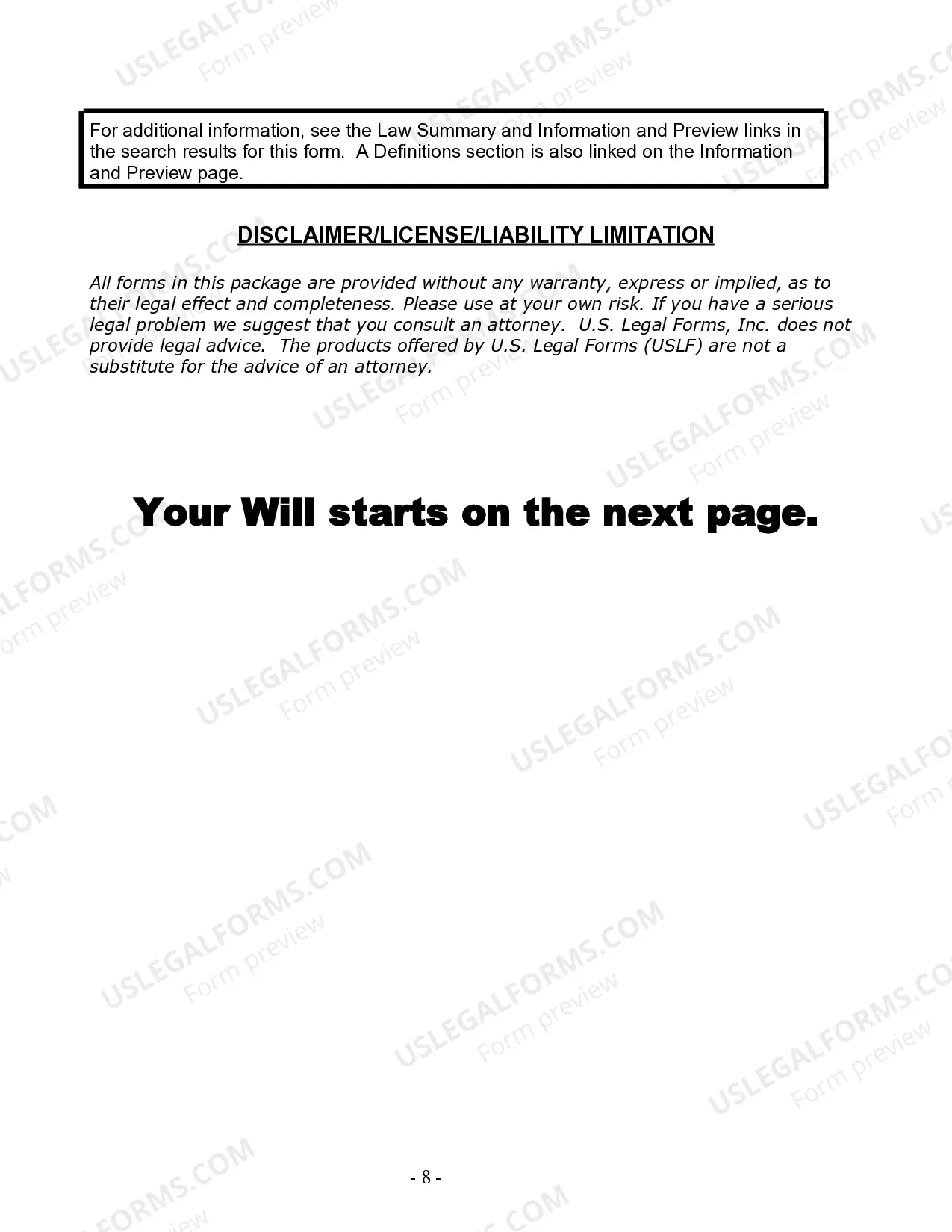
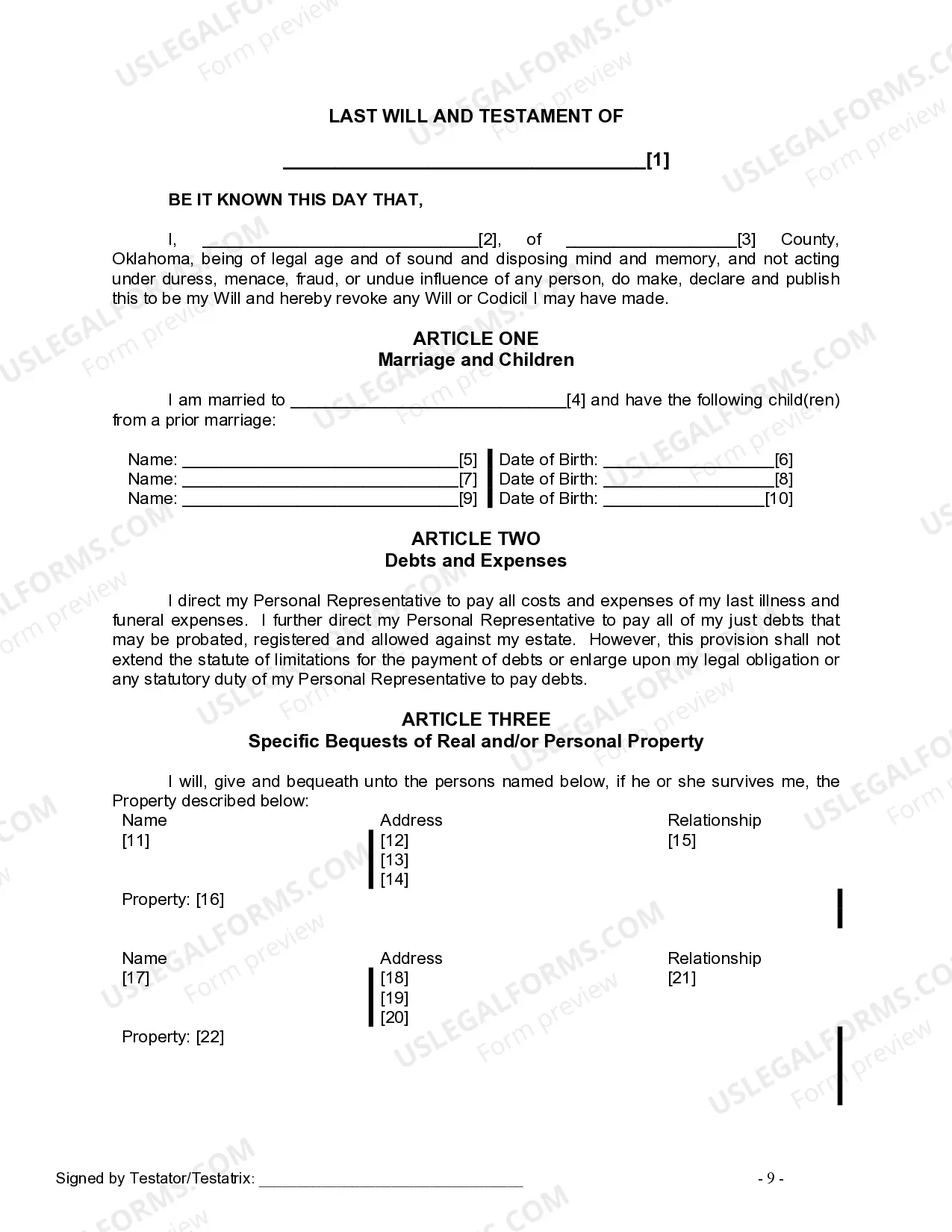
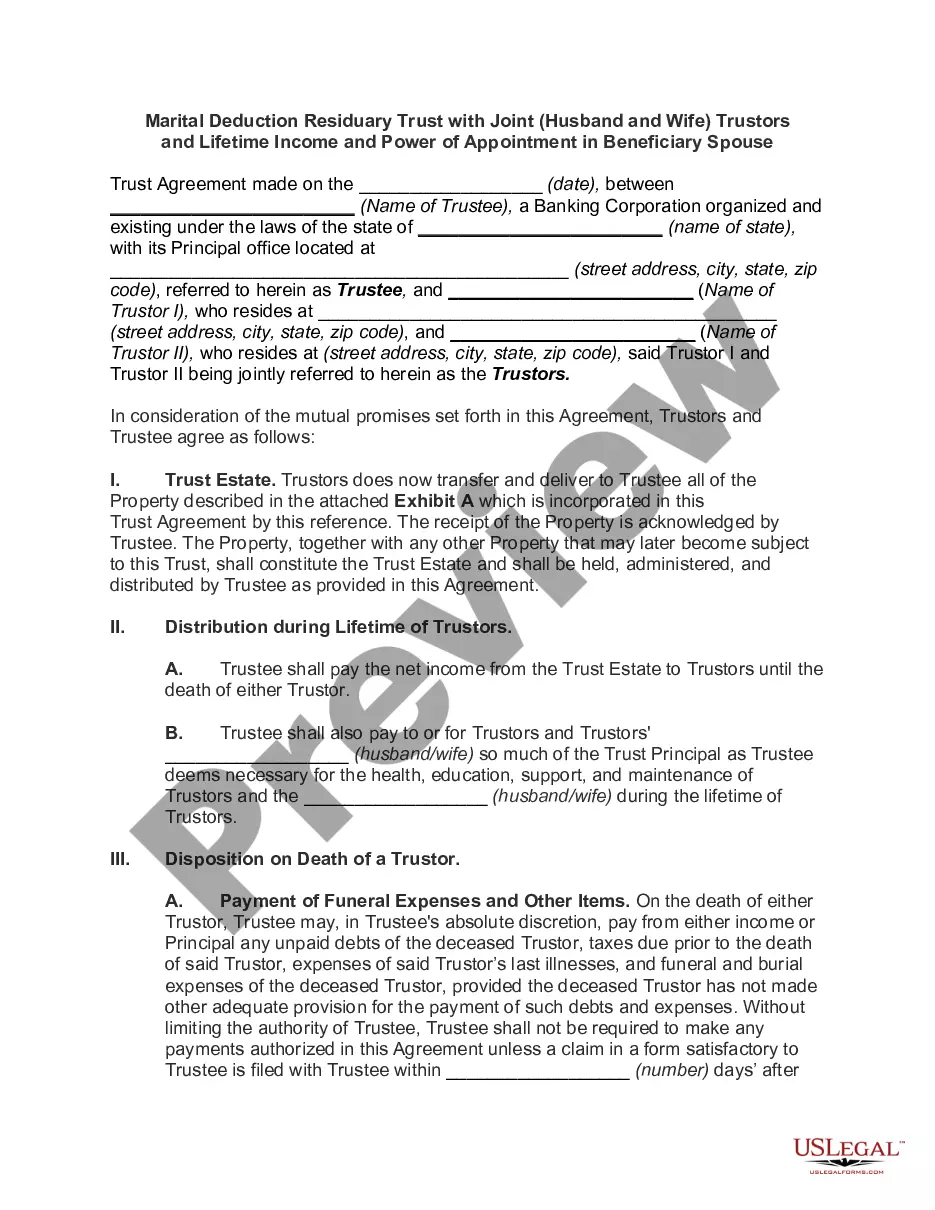
This Last Will and Testament is specifically designed for married individuals who have minor children from a prior marriage. Its purpose is to outline how your assets will be distributed upon your death, appoint guardians for your minor children, and designate a personal representative to manage your estate. This form is tailored to address the complexities that may arise from blended families, ensuring that both your spouse and children from the previous marriage are adequately considered in your estate plans.
Form components explained
- Appointment of a personal representative or executor to manage your estate.
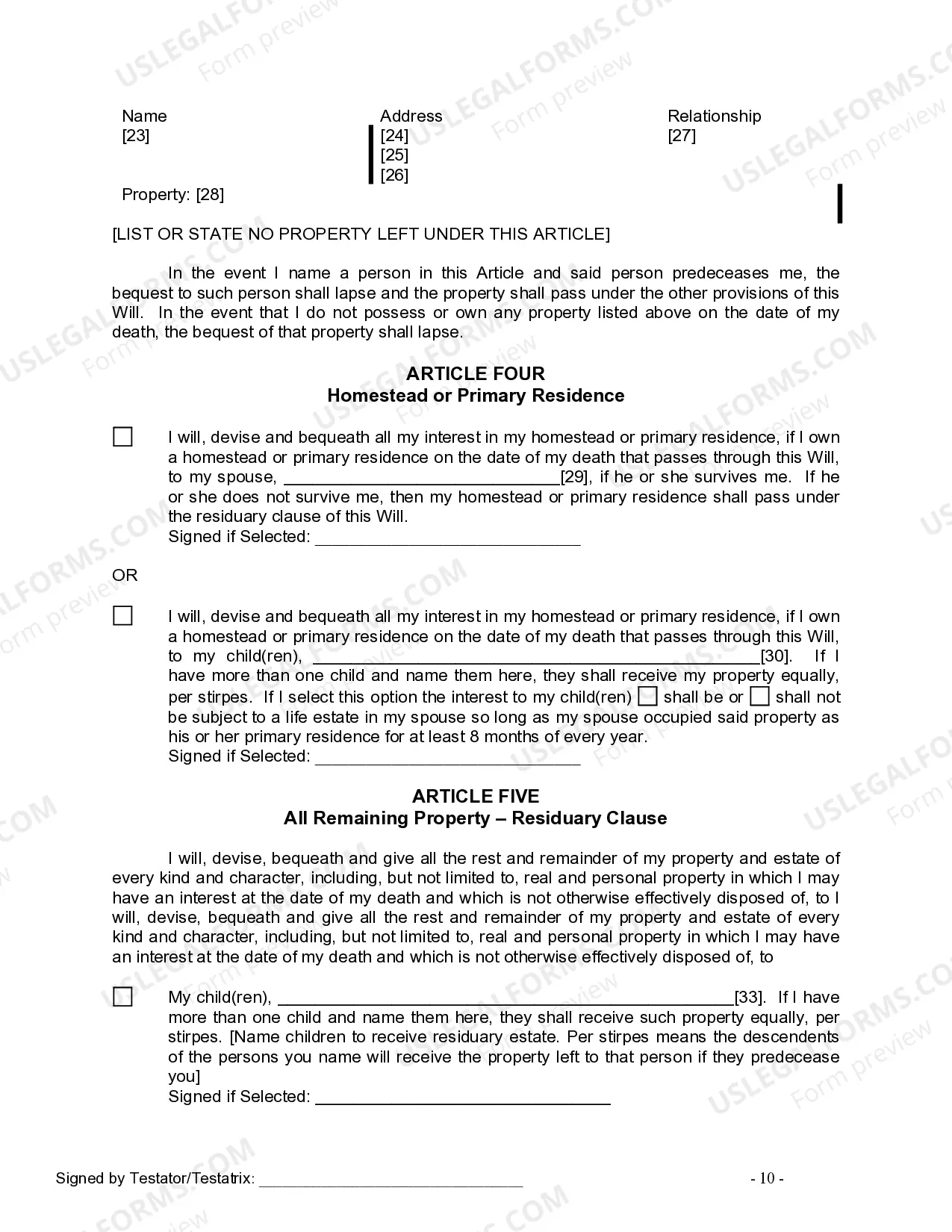
- Distribution of specific assets to designated beneficiaries, including children from prior marriages.
- Establishment of a trust for minor children to manage their inheritance until they reach a specified age.
- Selection of a guardian for minor children in case both parents are unable to care for them.
- Revocation of any prior wills to prevent conflicts and ensure clarity.




Common use cases
This form is essential when a married individual, particularly one with children from a previous relationship, wishes to clarify their wishes regarding the distribution of assets. It is especially important to use this form if:
- You want to ensure that your spouse and children from your first marriage are taken care of.
- You have specific wishes regarding who will raise your children if you pass away.
- You aim to avoid probate issues or family disputes regarding asset distribution.
Who can use this document
- Married individuals with minor children from a prior marriage.
- Parents who want to ensure their childrenâs well-being through appointed guardianship.
- People looking to specify asset distribution clearly among different family members.
Steps to complete this form
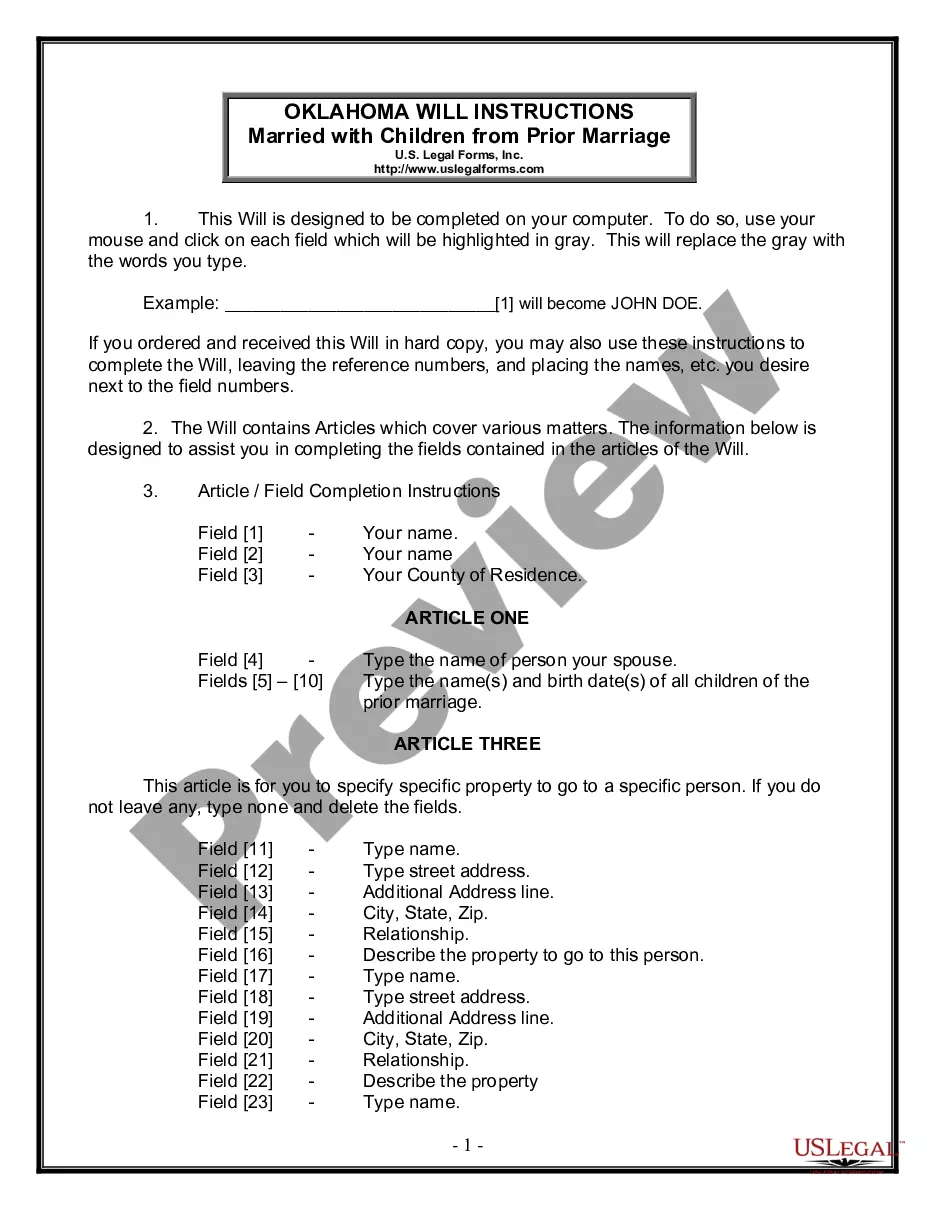
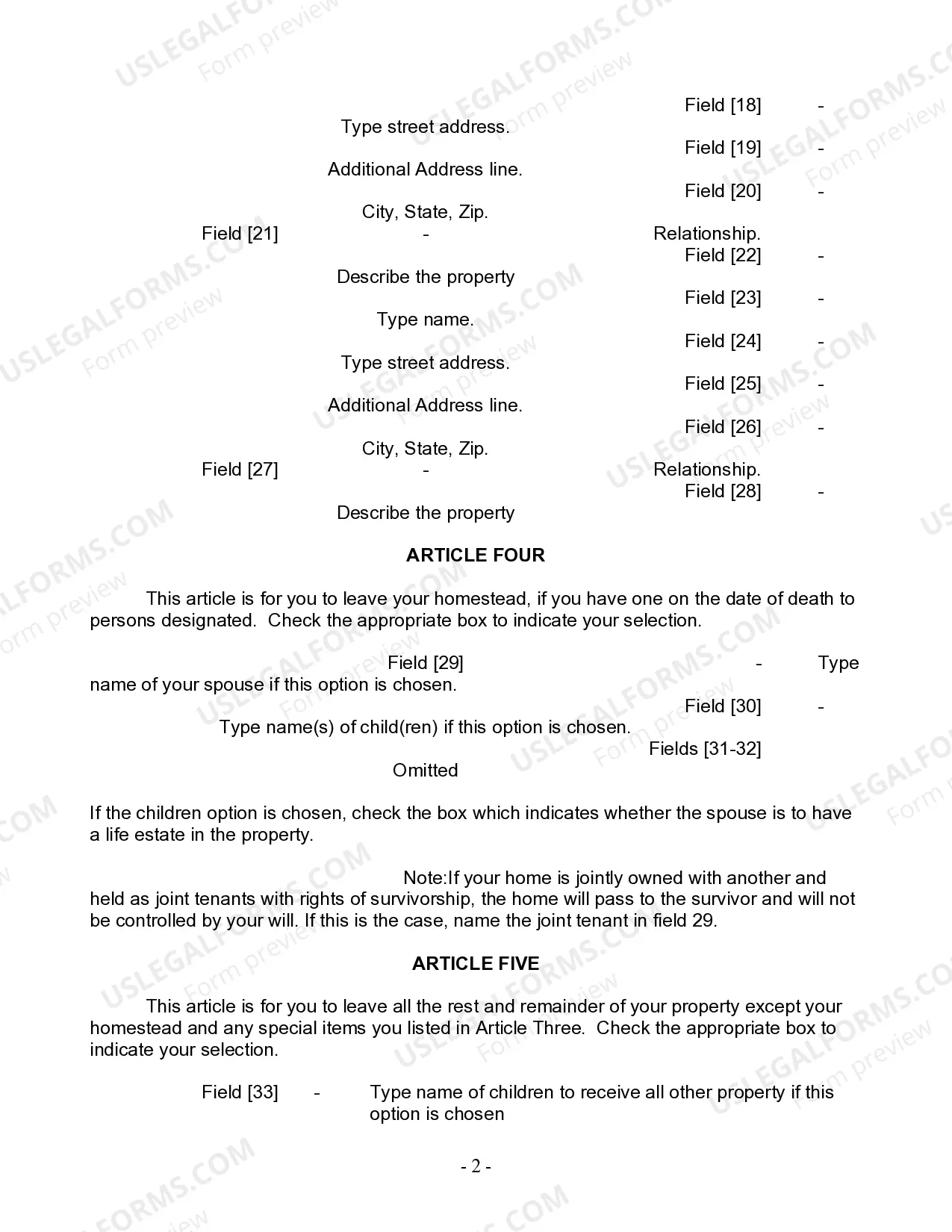
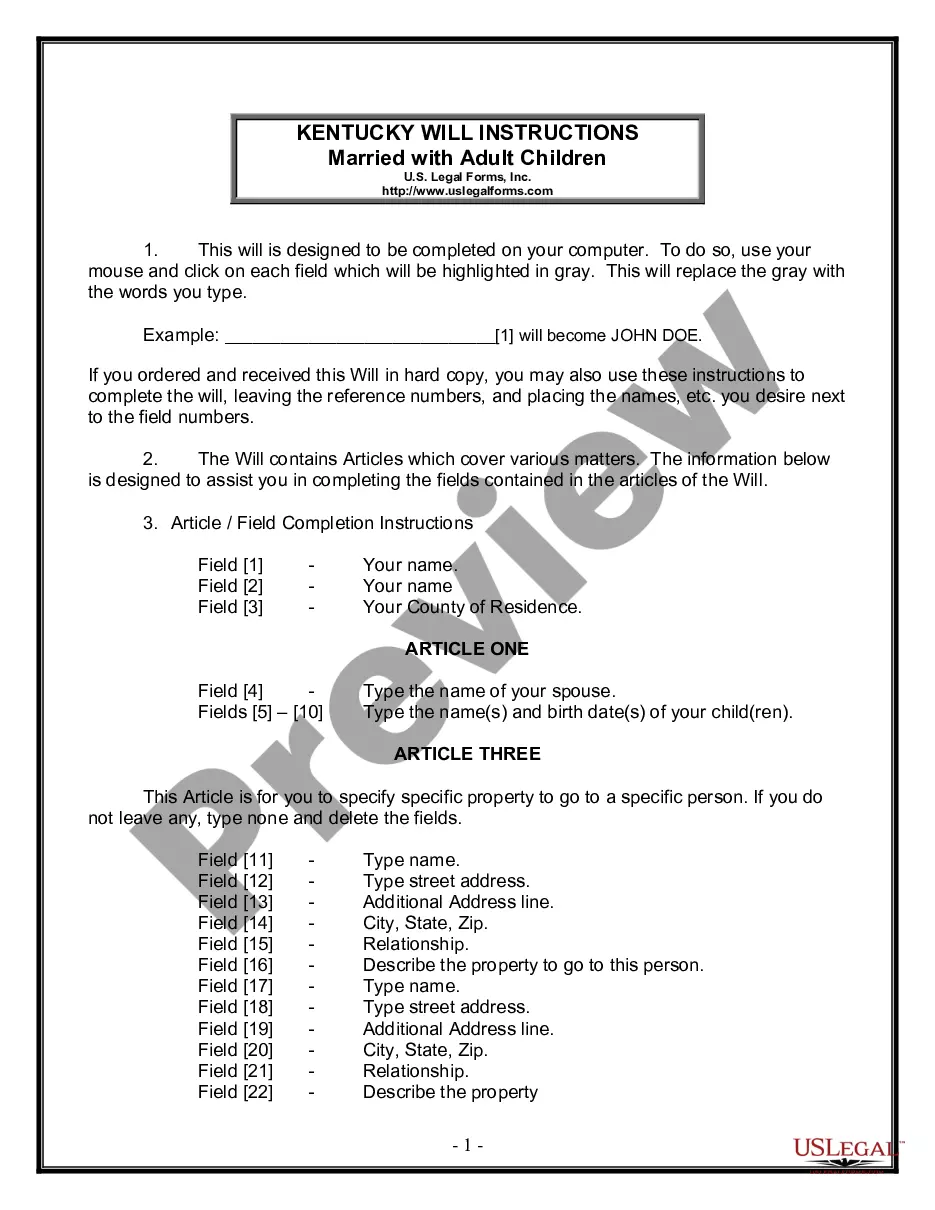
- Begin by entering your personal details, including your name, county of residence, and information about your spouse and children.
- Specify any specific property you wish to bequeath by filling in the details in the designated sections.
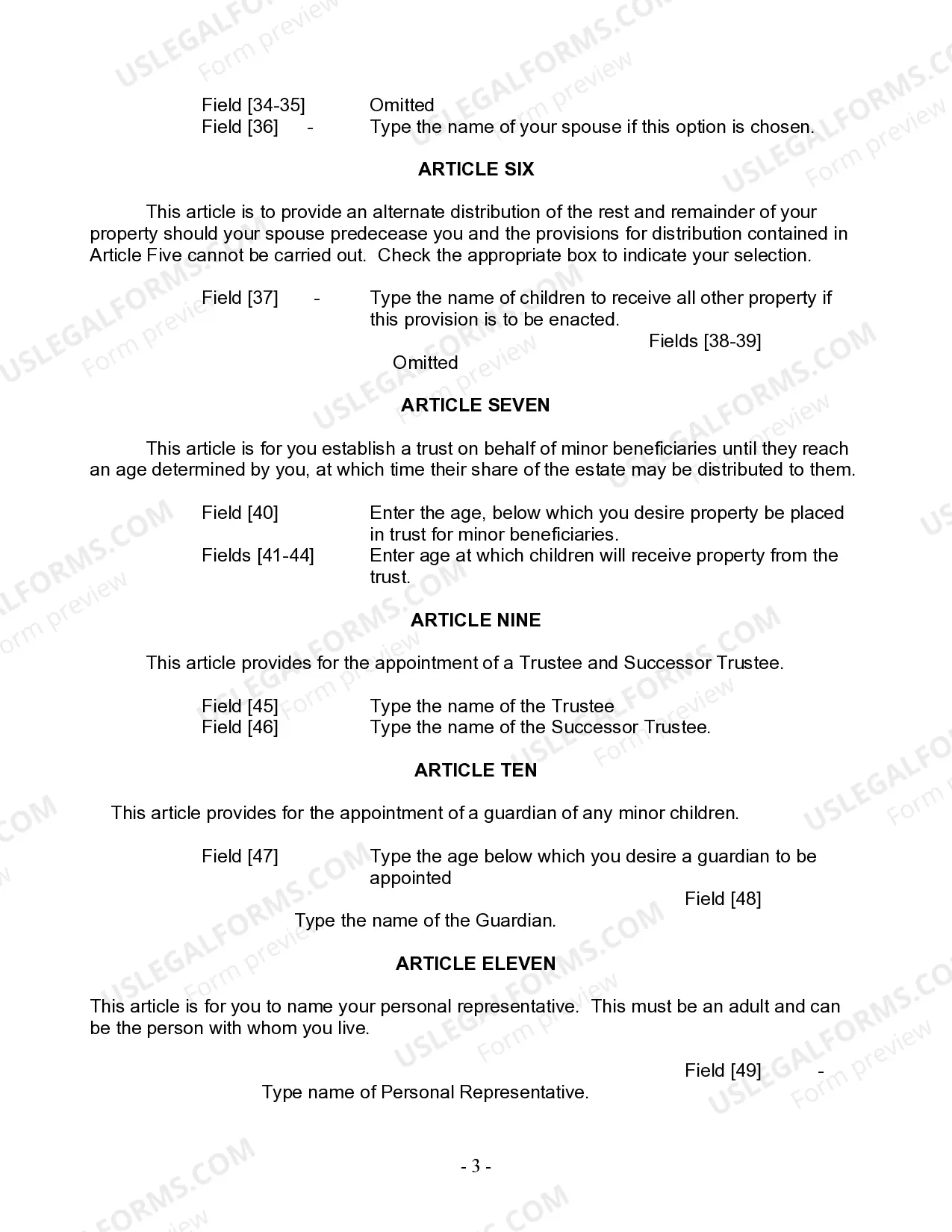
- Decide on the designation of a trustee for any assets intended for minor children and specify their age for trust distribution.
- Name a guardian for your minor children, including their age for which the guardian will be responsible.
- Review the completed document thoroughly to ensure all information is accurate before signing.
Does this form need to be notarized?
Yes, this form must be notarized to be legally valid. It is advisable to have a notary public present when you sign your will to complete the self-proving affidavit, which can expedite the probate process.
Get your form ready online
Our built-in tools help you complete, sign, share, and store your documents in one place.
Make edits, fill in missing information, and update formatting in US Legal Forms—just like you would in MS Word.
Download a copy, print it, send it by email, or mail it via USPS—whatever works best for your next step.
Sign and collect signatures with our SignNow integration. Send to multiple recipients, set reminders, and more. Go Premium to unlock E-Sign.
If this form requires notarization, complete it online through a secure video call—no need to meet a notary in person or wait for an appointment.
We protect your documents and personal data by following strict security and privacy standards.

Make edits, fill in missing information, and update formatting in US Legal Forms—just like you would in MS Word.

Download a copy, print it, send it by email, or mail it via USPS—whatever works best for your next step.

Sign and collect signatures with our SignNow integration. Send to multiple recipients, set reminders, and more. Go Premium to unlock E-Sign.

If this form requires notarization, complete it online through a secure video call—no need to meet a notary in person or wait for an appointment.

We protect your documents and personal data by following strict security and privacy standards.
Typical mistakes to avoid
- Failing to sign the will in the presence of two witnesses as required.
- Not updating the will after major life changes, like remarriage or having additional children.
- Omitting details about guardians or trustees, which can lead to confusion or disputes later.
Advantages of online completion
- Convenient access from anywhere, allowing you to complete your will at your own pace.
- Editable fields for dynamic entry, making it easier to customize your will to fit your personal situation.
- Reliability of forms drafted by licensed attorneys, ensuring your legal documents meet state requirements.
Main things to remember
- This Last Will and Testament caters to married persons with minor children from prior marriages, ensuring clear distribution of assets.
- The form includes provisions for designating guardianship and establishing trusts for minor children.
- Proper execution with witnesses and notarization is crucial for it to be legally binding.
Looking for another form?
Form popularity
FAQ
There are four main requirements to the formation of a valid will: The will must have been executed with testamentary intent;The will must have been executed free of fraud, duress, undue influence or mistake; and. The will must have been duly executed through a proper ceremony.
Fraud or Undue Influence A nonfamily caregiver forcing the testator to leave them an inheritance. A family member getting the testator to sign a will by pretending it is just a general legal document that needs a signature.
Under Oklahoma law, a will must be filed with the court within 30 days after the death of the testator. 58 Okla. Stat.So, after you pass away, your will should be filed in your local probate court by the person named to be your personal representative (also called an executor or administrator).
If there is no will, the court will name a personal representative in accordance with the intestate laws for Oklahoma. In order to clear title to assets and finalize the decedent's affairs, probate is necessary.
No, in Oklahoma, you do not need to notarize your will to make it legal. However, Oklahoma allows you to make your will "self-proving" and you'll need to go to a notary if you want to do that. A self-proving will speeds up probate because the court can accept the will without contacting the witnesses who signed it.
It must be in writing. Generally, of course, wills are composed on a computer and printed out. The person who made it must have signed and dated it. A will must be signed and dated by the person who made it. Two adult witnesses must have signed it. Witnesses are crucial.
There is no requirement to file your will with a court during your lifetime. In fact, many people simply keep the document in a safe place and do not file it while they are still alive.The executor can then simply notify the court of the testator's death to begin the probate process.
A: Under Oklahoma law a will that is entirely written, dated and signed in your own handwriting, and which contains no typed or printed portion, is valid. The problems resulting from this type of will are not so much in what the person writing the will says as in what the person fails to say.
Some couples try to go will-free by putting everything into joint names. Joint assets pass to the other owner automatically.He or she should make a will, which you both could have done from the start. When there's no will, state law dictates who gets the house, car, savings and other assets.