Ohio Last Will and Testament for Married person with Adult Children
Overview of this form
The Last Will and Testament for a Married Person with Adult Children is a legal document that outlines how a married individual wishes to distribute their property and assets upon death. This specific Will is tailored for those with adult children, providing provisions for designating beneficiaries, appointing a personal representative, and addressing specific wishes regarding the estate. Unlike other Wills, this form is particularly focused on ensuring that both the spouse and adult children are taken into account in the distribution of the estate, making it suitable for individuals in similar family configurations.
Key parts of this document
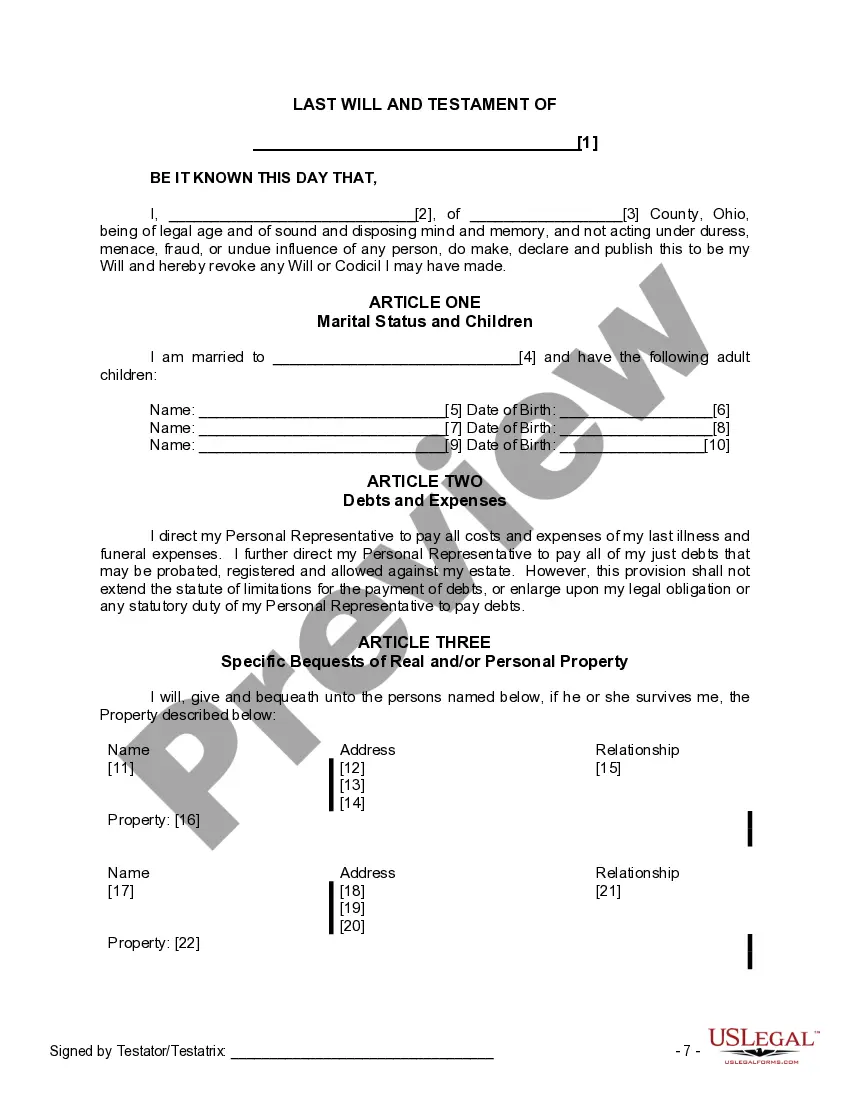
Personal Information: The Will starts with the individual's name, county of residence, and revocation of prior Wills.
Marriage and Children: Identification of the spouse and adult children, including their names and birth dates.
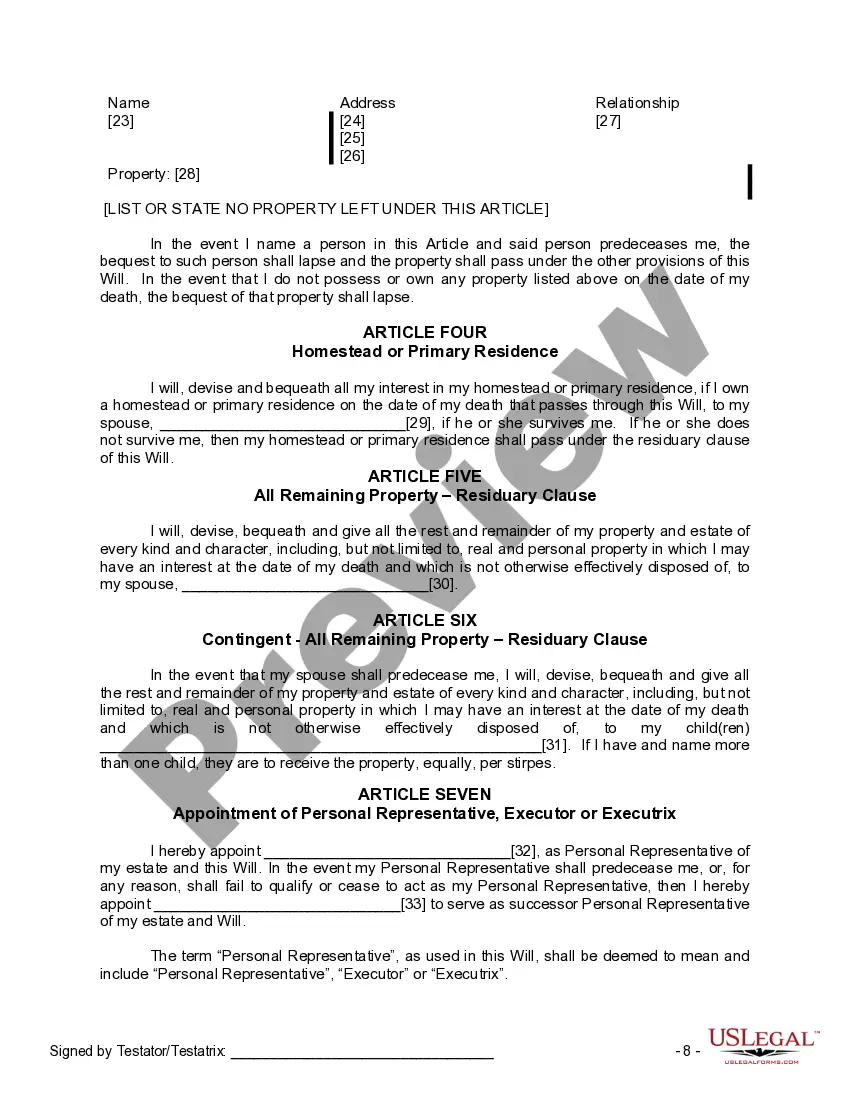
Specific Bequests: Detailed instructions on any specific property to be given to designated individuals.
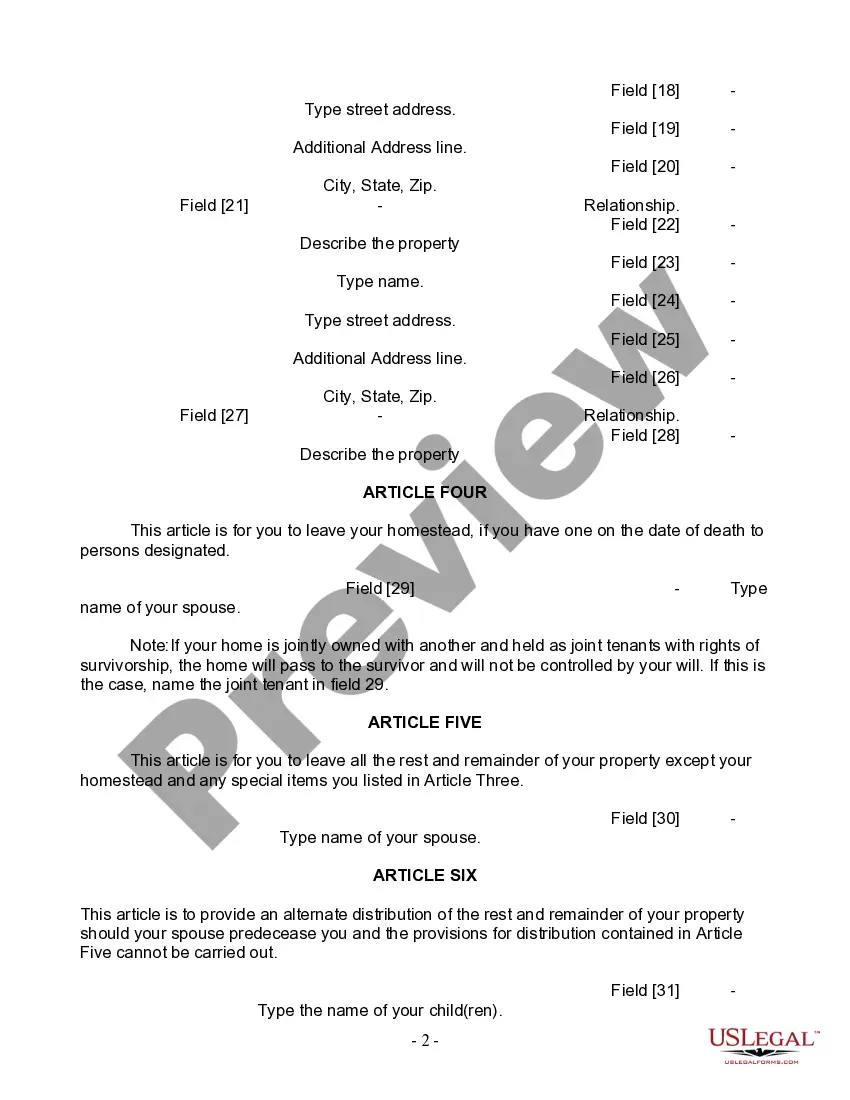
Homestead Distribution: Directions on how the primary residence should be handled post-death.
Residue Clause: Instructions for distributing any remaining property not specified elsewhere in the Will.
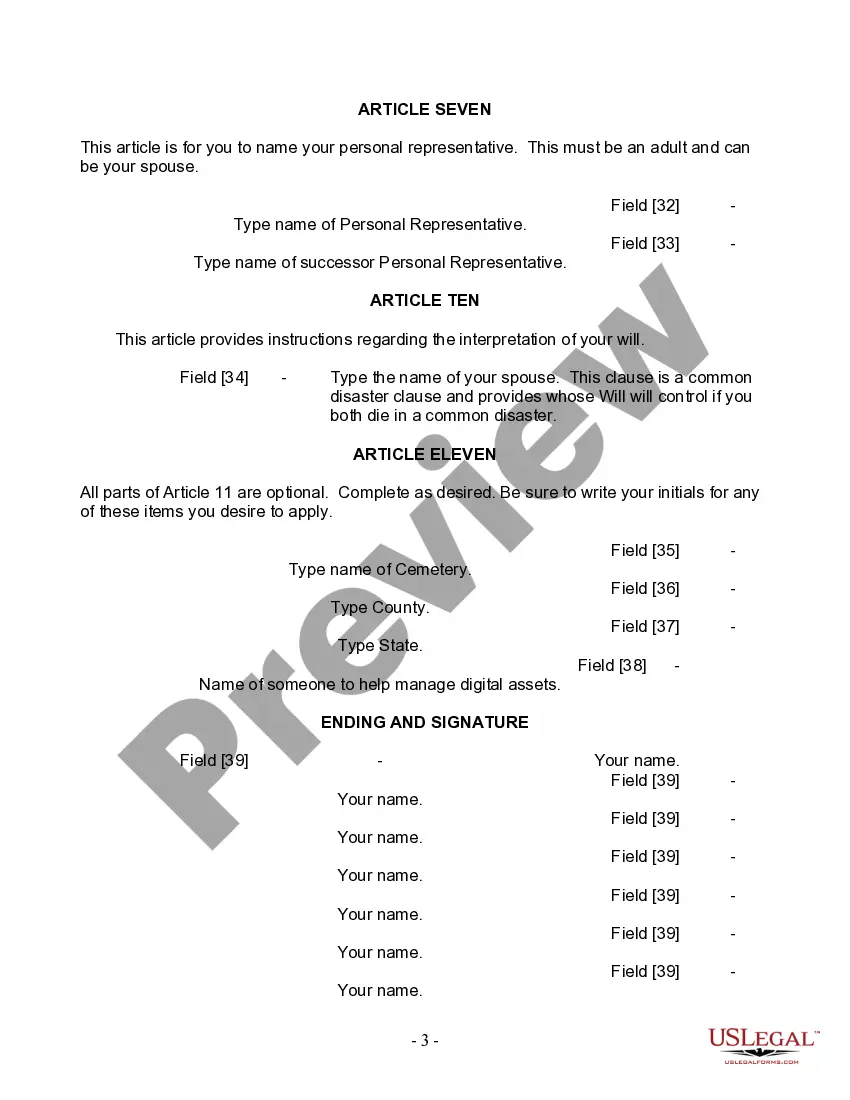
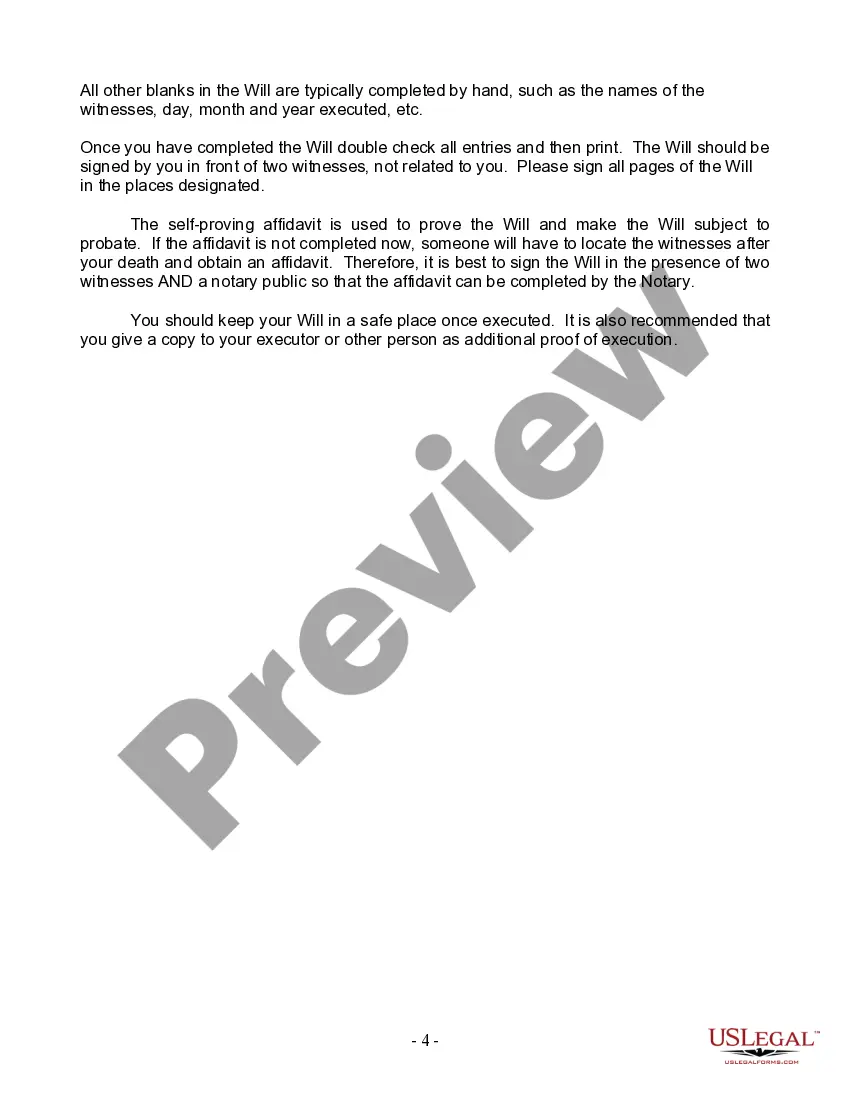
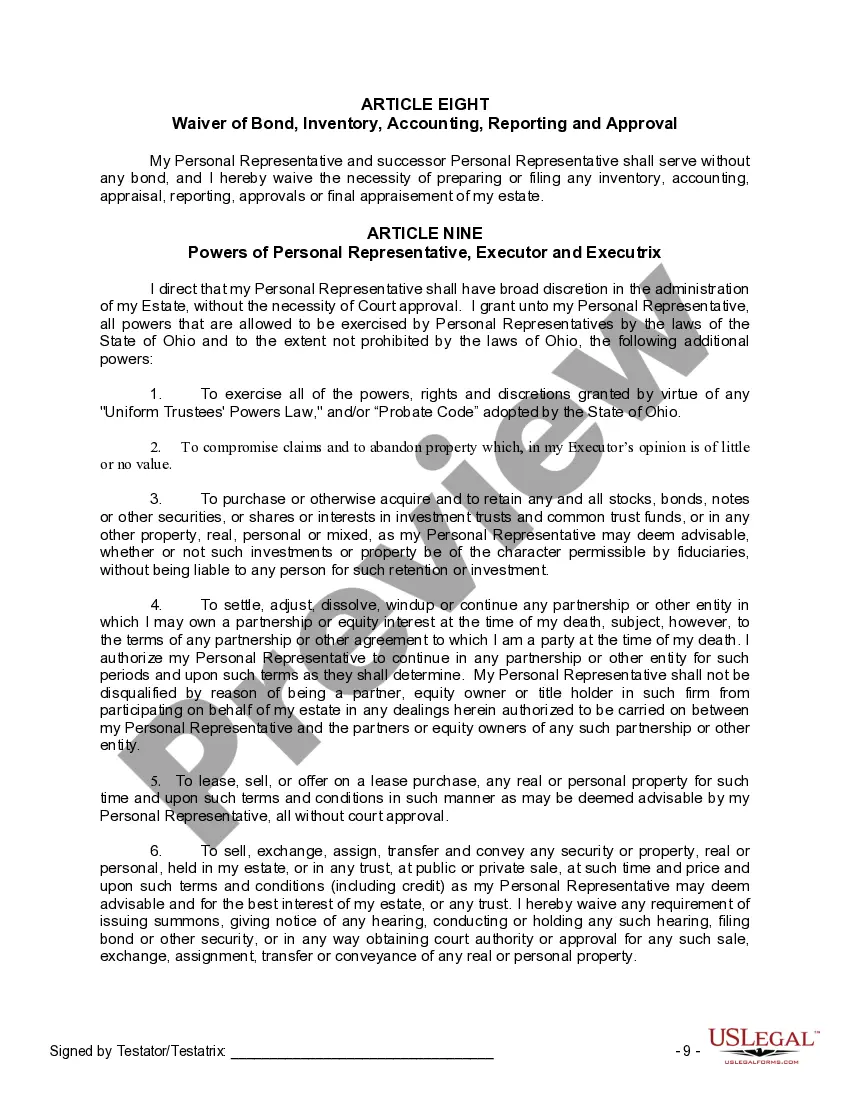
Appointment of a Personal Representative: Selection of an executor to manage the estate and carry out the Will's provisions.






Common use cases
This form is needed when a married person with adult children wants to ensure their wishes regarding asset distribution are clearly defined after their passing. It is suitable for situations where property needs to be allocated to specific individuals, such as adult children or a spouse, and when appointing a trusted individual to execute the Will is necessary. This form can help prevent disputes among heirs by making the deceased's intentions clear.
Who this form is for
- Married individuals with adult children who wish to create a legally binding distribution of their estate.
- Those who want to outline specific bequests to family members or other beneficiaries.
- Individuals looking to appoint a personal representative who will manage their estate after death.
- Anyone wanting to ensure that their spouse and adult children are appropriately considered in their Will.
Instructions for completing this form
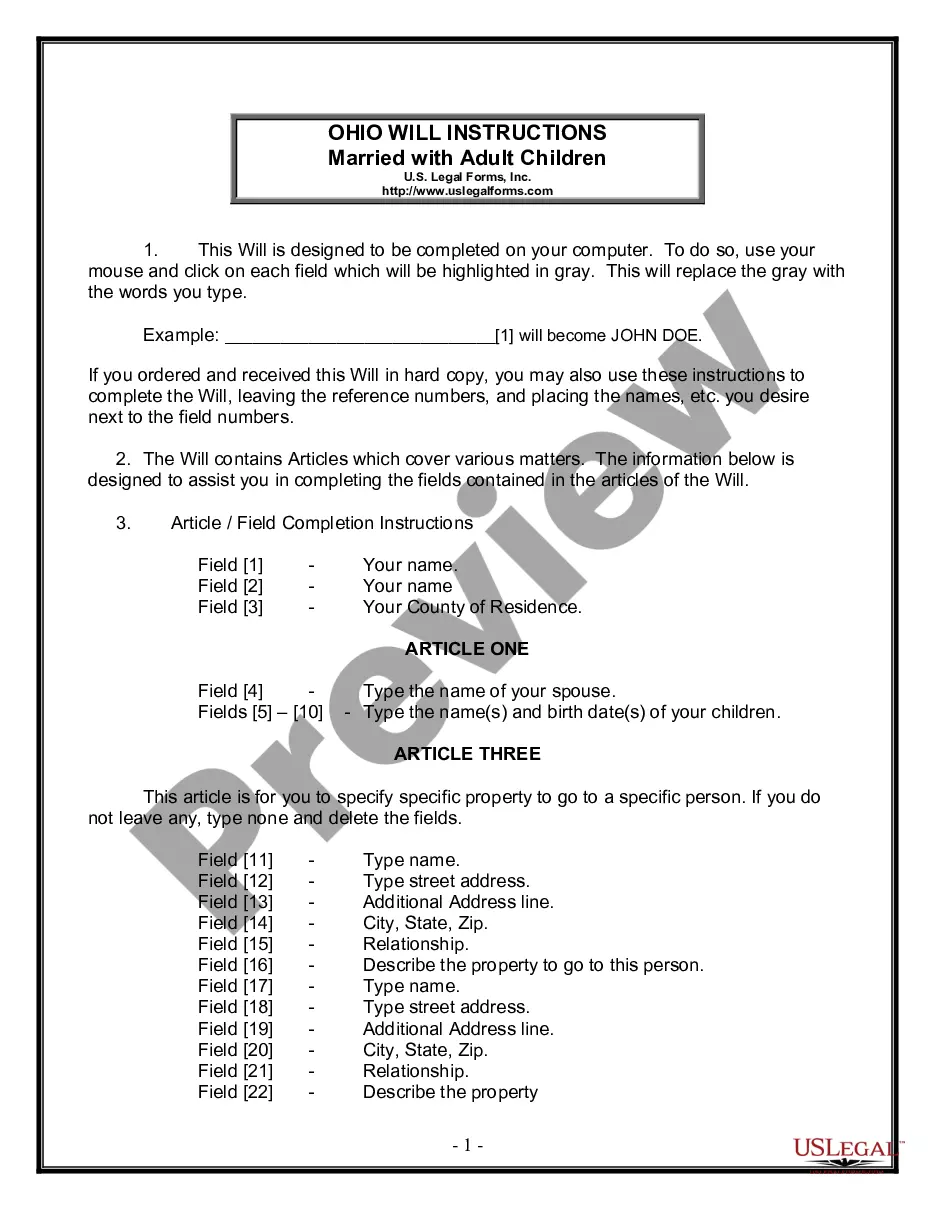
- Begin by entering your personal details, including your name and county of residence.
- Identify your spouse and list your adult children, including their names and birth dates.
- Specify any particular property you wish to bequeath to specific individuals.
- Indicate who will inherit your homestead or primary residence, if applicable.
- Select a personal representative to manage your estate and ensure your Will is executed as intended.
Notarization guidance
This form must be notarized to be legally valid. US Legal Forms provides secure online notarization powered by Notarize, allowing you to complete the process through a verified video call.
Get your form ready online
Our built-in tools help you complete, sign, share, and store your documents in one place.
Make edits, fill in missing information, and update formatting in US Legal Forms—just like you would in MS Word.
Download a copy, print it, send it by email, or mail it via USPS—whatever works best for your next step.
Sign and collect signatures with our SignNow integration. Send to multiple recipients, set reminders, and more. Go Premium to unlock E-Sign.
If this form requires notarization, complete it online through a secure video call—no need to meet a notary in person or wait for an appointment.
We protect your documents and personal data by following strict security and privacy standards.

Make edits, fill in missing information, and update formatting in US Legal Forms—just like you would in MS Word.

Download a copy, print it, send it by email, or mail it via USPS—whatever works best for your next step.

Sign and collect signatures with our SignNow integration. Send to multiple recipients, set reminders, and more. Go Premium to unlock E-Sign.

If this form requires notarization, complete it online through a secure video call—no need to meet a notary in person or wait for an appointment.

We protect your documents and personal data by following strict security and privacy standards.
Avoid these common issues
- Failing to sign the Will in the presence of two qualified witnesses.
- Not properly identifying property or beneficiaries, leading to confusion or disputes.
- Overlooking the need for a notary public when required by state law.
- Neglecting to update the Will after major life changes, such as divorce or the birth of more children.
Benefits of completing this form online
- Convenience of completing the form at your own pace and from the comfort of your home.
- Editability allows you to revise details as needed before finalizing the document.
- Access to professional guidance to ensure all legal requirements are met.
Legal use & context
- A properly executed Will is enforceable and ensures your estate is distributed according to your wishes.
- Failure to have a valid Will may result in state laws dictating the distribution of your assets.
- It's important to keep your Will updated to reflect any significant life events.
What to keep in mind
- The Last Will and Testament for a Married Person with Adult Children is essential for estate planning.
- Completing this form accurately helps prevent disputes among heirs.
- Notarization and proper witnessing are crucial for the validity of your Will.
- Make sure to update your Will regularly to reflect any changes in your personal or family situation.
Looking for another form?










Form popularity
FAQ
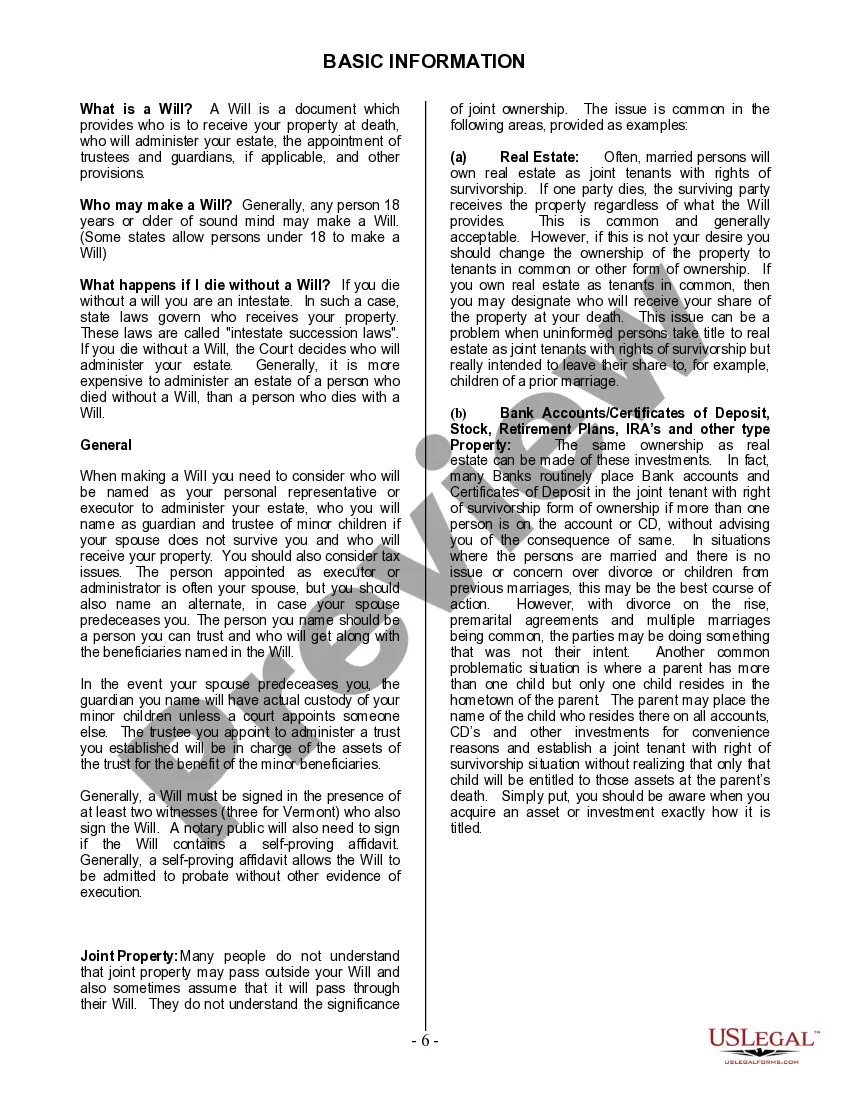
The form may be downloaded in fillable Adobe PDF, Rich Text Format, and Microsoft Word templates and should be signed by the testator and at least two (2) witnesses or a notary public (See your State's Probate Code).
In Ohio, with very few exceptions, all wills need to be in writing. Ohio does allow holographic wills, which means you can actually handwrite your own will in the state. As long as your handwritten will meets the other requirements, it will be valid.
In most situations, a will template is an easy and inexpensive way to make sure your wishes are known and carried out. Most people can get everything they need by using a will template, with little cost or hassle.
Create the initial document. Start by titling the document Last Will and Testament" and including your full legal name and address. Designate an executor. Appoint a guardian. Name the beneficiaries. Designate the assets. Ask witnesses to sign your will. Store your will in a safe place.
If each spouse has their own Will, California law allows them to make new Wills after the divorce has been filed and creating the new Will does not violate the Automatic Temporary Restraining Order (ATRO) against changing beneficiaries, selling assets, etc.
In Ohio, probate attorneys sometimes serve as witnesses to both written and oral wills. Does a Last Will and Testament Need to be Notarized to be Valid? No, your last will and testament does not need to be notarized.
Create the initial document. Start by titling the document Last Will and Testament" and including your full legal name and address. Designate an executor. Appoint a guardian. Name the beneficiaries. Designate the assets. Ask witnesses to sign your will. Store your will in a safe place.
A joint will is a legal document executed by two (or more) people, which merges their individual wills into a single, combined last will and testament. Like most wills, a joint will lets the will-makers name who will get their property and assets after they die. Joint wills are usually created by married couples.