Ohio Living Will or Declaration concerning the use of life sustaining treatment
Overview of this form
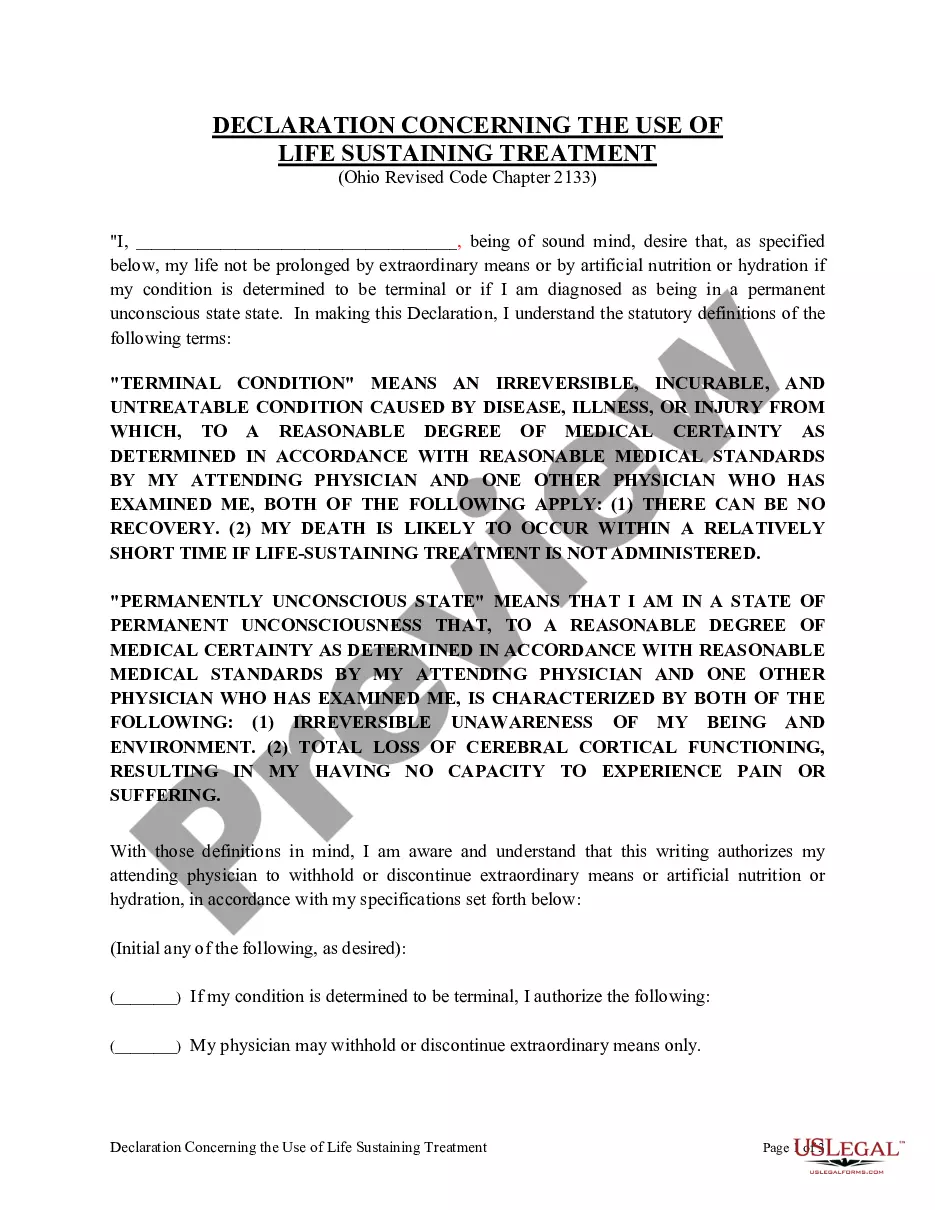
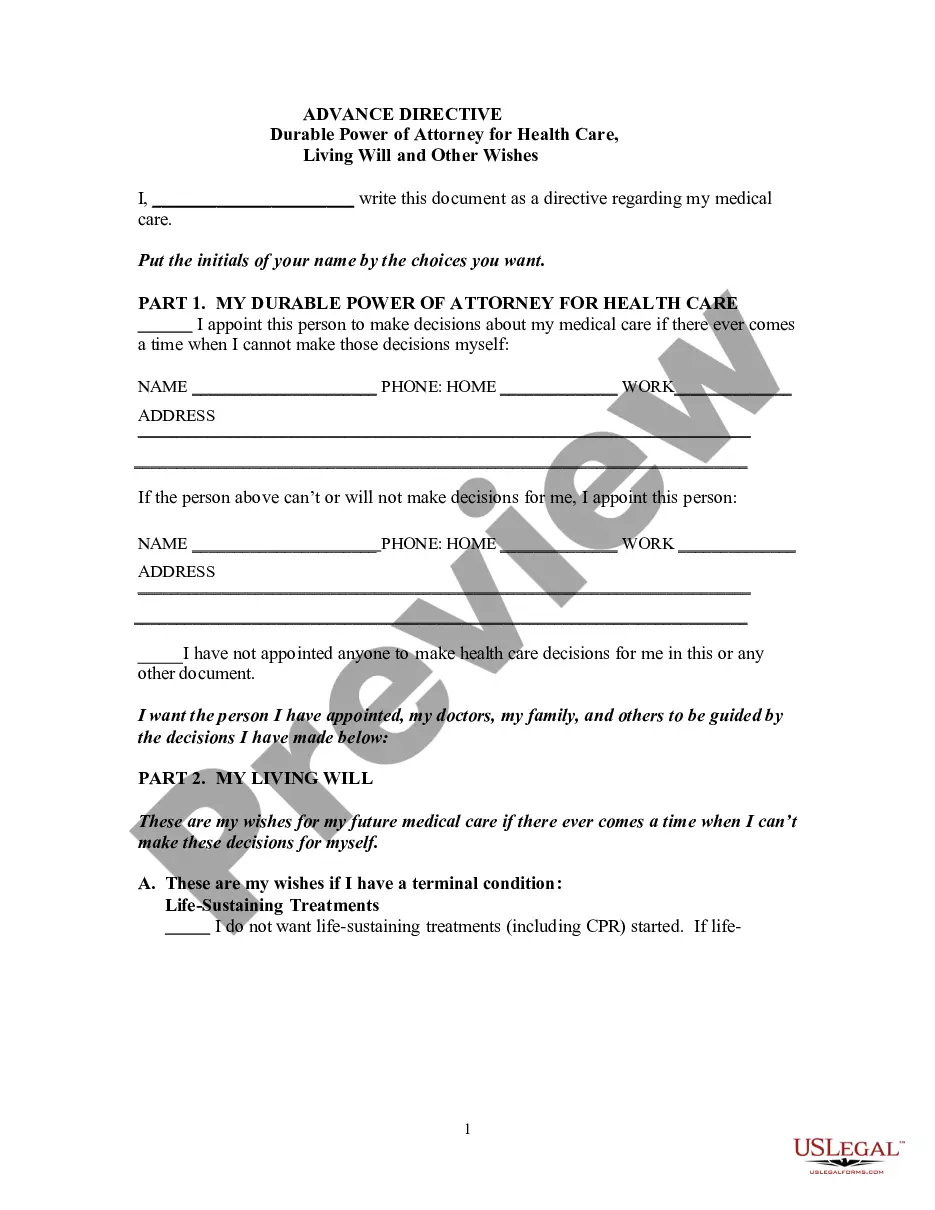
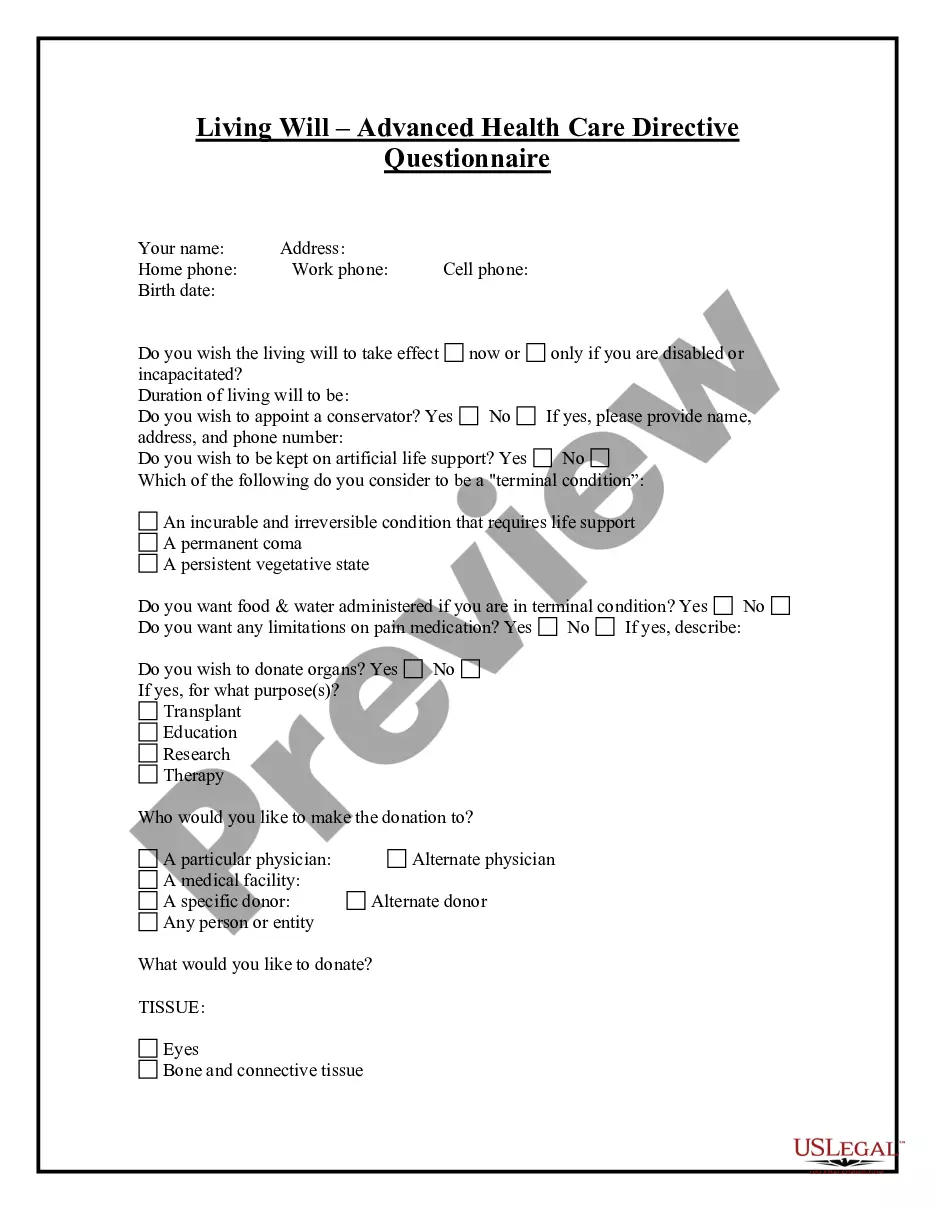
The Living Will, also known as a Declaration Concerning the Use of Life Sustaining Treatment, is a legal document that allows individuals to express their preferences regarding medical treatment in the event they are unable to communicate these wishes themselves. This form specifically helps clarify whether or not life-sustaining measures, including extraordinary means or artificial nutrition and hydration, should be taken if a person is diagnosed with a terminal condition or is in a permanently unconscious state. It differs from other advance directives by focusing on end-of-life decisions specifically related to medical treatments.
What’s included in this form
- Declarant's personal information, including name and address.
- Definitions of "terminal condition" and "permanently unconscious state" to guide medical decisions.
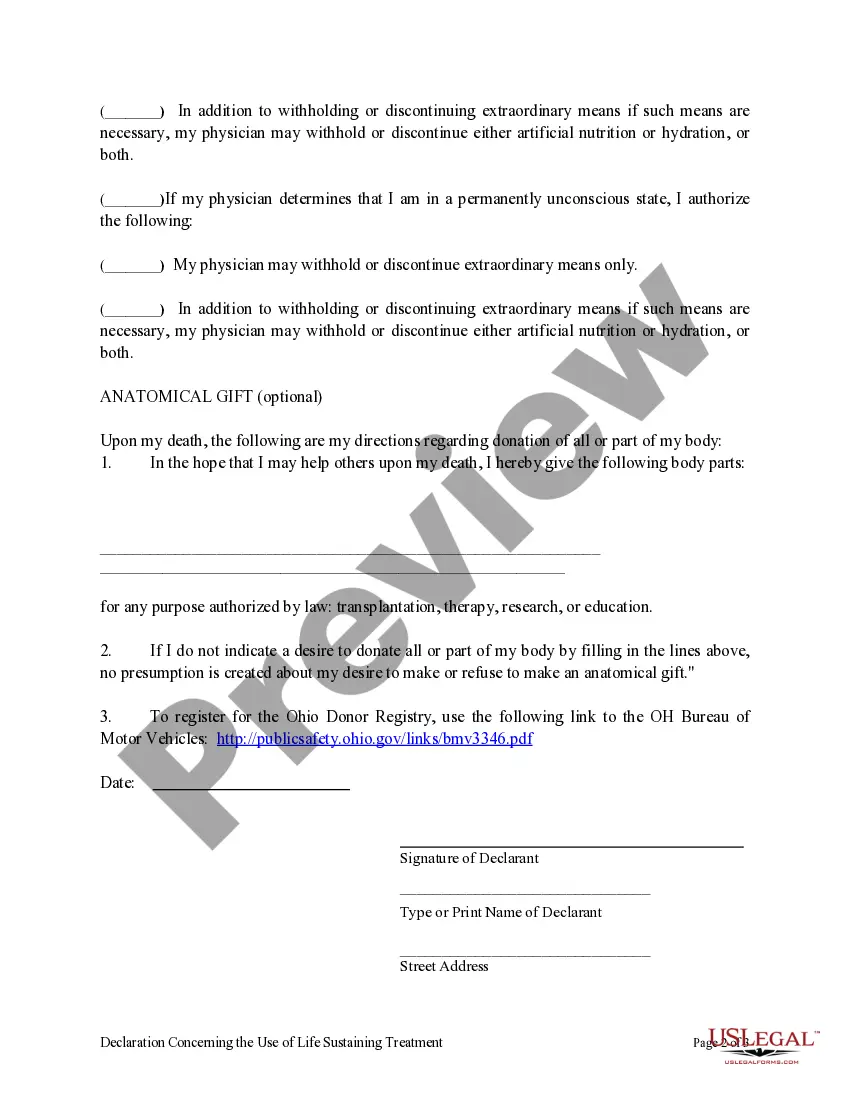
- Options to specify treatment preferences regarding extraordinary means and nutrition or hydration.
- Optional anatomical gift section for organ donation directions.
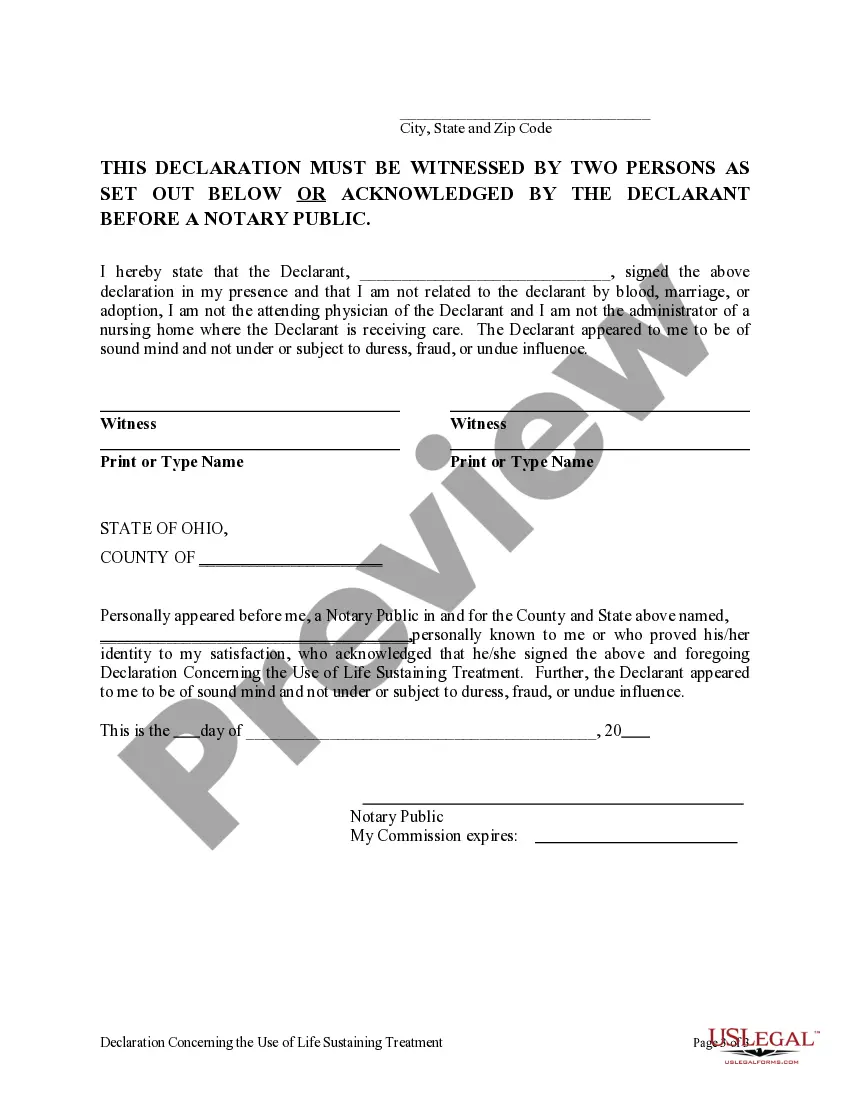
- Signature lines for the declarant and two witnesses or a notary public acknowledgment.
When to use this document
This form should be utilized when an individual wishes to ensure that their medical treatment preferences are known and followed in critical health situations. It is particularly important when facing serious illnesses that may lead to terminal health conditions or in situations where one may become permanently unconscious. Having a Living Will helps to ease decision-making burdens on family members and medical professionals during emotionally challenging times.
Who this form is for
- Adults of sound mind who are concerned about their medical treatment preferences in critical health situations.
- Individuals diagnosed with terminal illnesses or who anticipate end-of-life care needs.
- People wanting to clarify their wishes regarding life-sustaining treatment for themselves and their families.
- Those who wish to include anatomical gifts in their end-of-life planning.
Completing this form step by step
- Enter your full name and address at the top of the form.
- Review and indicate your preferences regarding life-sustaining treatment by initialing the appropriate sections.
- If desired, provide directions for anatomical gifts in the designated section.
- Sign and date the document in the presence of two witnesses or a notary public.
- Ensure that the witnesses are not related to you and are not your attending physician.
Does this form need to be notarized?
This form must be notarized to be legally valid. US Legal Forms provides secure online notarization powered by Notarize, allowing you to complete the process through a verified video call.
Get your form ready online
Our built-in tools help you complete, sign, share, and store your documents in one place.
Make edits, fill in missing information, and update formatting in US Legal Forms—just like you would in MS Word.
Download a copy, print it, send it by email, or mail it via USPS—whatever works best for your next step.
Sign and collect signatures with our SignNow integration. Send to multiple recipients, set reminders, and more. Go Premium to unlock E-Sign.
If this form requires notarization, complete it online through a secure video call—no need to meet a notary in person or wait for an appointment.
We protect your documents and personal data by following strict security and privacy standards.

Make edits, fill in missing information, and update formatting in US Legal Forms—just like you would in MS Word.

Download a copy, print it, send it by email, or mail it via USPS—whatever works best for your next step.

Sign and collect signatures with our SignNow integration. Send to multiple recipients, set reminders, and more. Go Premium to unlock E-Sign.

If this form requires notarization, complete it online through a secure video call—no need to meet a notary in person or wait for an appointment.

We protect your documents and personal data by following strict security and privacy standards.
Typical mistakes to avoid
- Failing to have the form signed in the presence of two witnesses or a notary public, as required by state law.
- Not clearly specifying preferences for life-sustaining treatments.
- Using outdated forms that may not comply with current state laws.
- Neglecting to communicate the existence of the Living Will to family members and healthcare providers.
Why complete this form online
- Convenience of completing the form from home without the need for in-person visits.
- Editability allows users to customize their preferences easily.
- Access to reliable, attorney-drafted templates ensures legal compliance.
- Quick downloads save time compared to traditional methods of obtaining legal forms.
Summary of main points
- The Living Will specifies your preferences for medical treatment in critical situations.
- It is important to have the document properly witnessed or notarized to be valid.
- Discuss your wishes with your family and medical providers for clarity.
Looking for another form?
Form popularity
FAQ
According to Ohio law and case history, a will is valid if it meets the following requirements: The testator (the person who is leaving the will) must be 18 years of age or older. The testator must be of sound mind. The testator must not otherwise be under restraint or under the undue influence of another person.
It must be in writing. Generally, of course, wills are composed on a computer and printed out. The person who made it must have signed and dated it. A will must be signed and dated by the person who made it. Two adult witnesses must have signed it. Witnesses are crucial.
A handwritten will, sometimes referred to as a holographic will, is lawful in a majority of states, including Ohio.As with typewritten wills, the will must be signed by the person making the will (the testator) or by some other person in the testator's conscious presence and at the testator's express direction.
Does a will have to be notarized in Ohio? A will does not need to be notarized in order for it to be a valid legal document.
Will a Probate Proceeding Be Necessary? Generally, only assets that the deceased person owned in his or her name alone go through probate. Everything else can probably be transferred to its new owner without probate court approval. Many common assets do not need to go through probate.
Age: The testator must be at least 18 years old. Capacity: The testator must be of sound mind and memory and not under restraint. Signature: The will must be signed by the testator or by someone else in the testator's name in his conscious presence, by his express direction.
Does a will have to be notarized in Ohio? A will does not need to be notarized in order for it to be a valid legal document.
Step 1: Find and File the Decedent's Will. Step 2: Order Decedent's Death Certificate. Step 3: Petition for Probate. Step 4: The Probate Is Opened and Letters of Authority Are Issued. Step 5: Administration, Creditors, and Inventory of the Estate.