Ohio Quitclaim Deed by Two Individuals to Husband and Wife
About this form
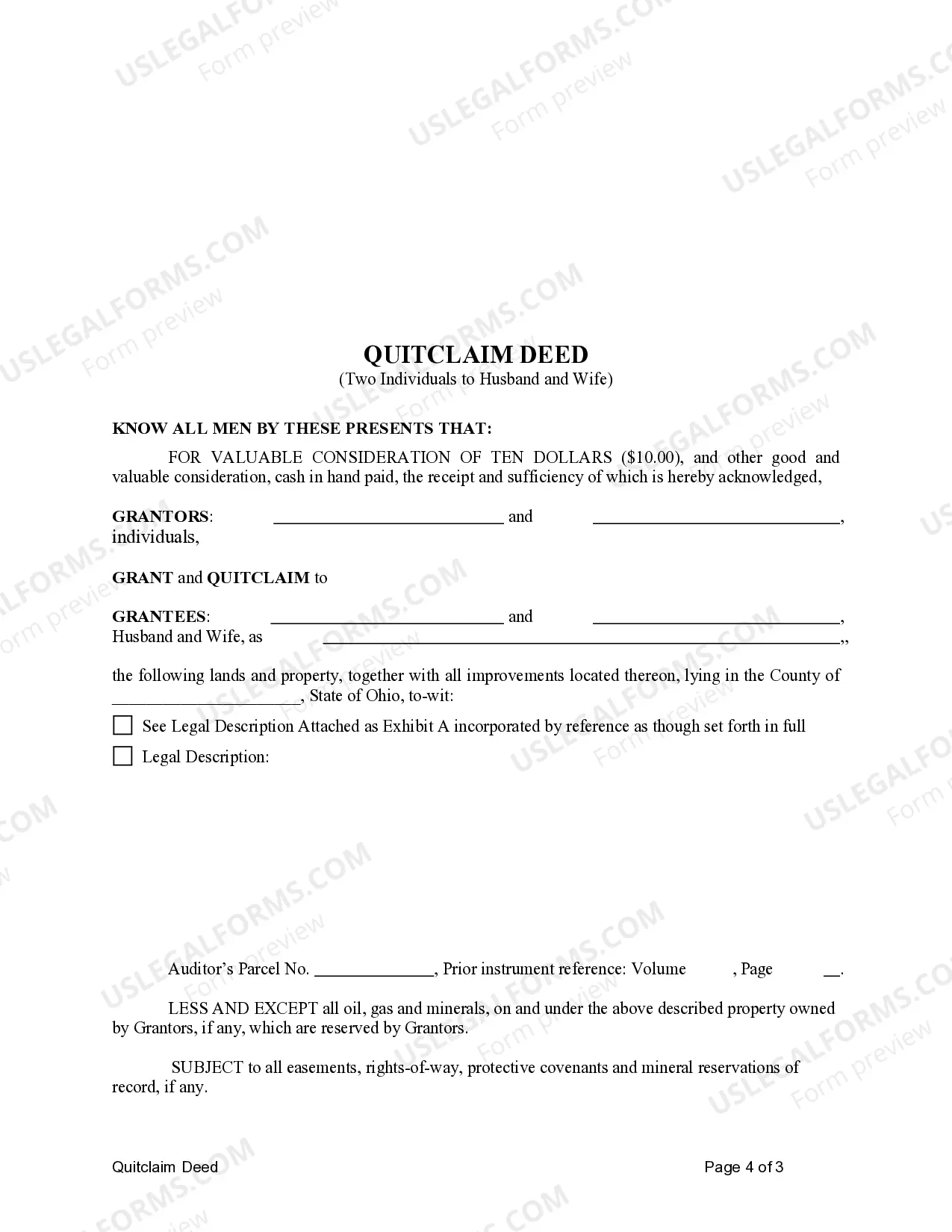
The Quitclaim Deed by Two Individuals to Husband and Wife is a legal document used to transfer ownership of real property from two individuals (the Grantors) to a married couple (the Grantees). This form is distinct from other deed types because it effectively conveys whatever interest the Grantors may have in the property without any guarantees regarding the property's title, making it useful in scenarios where the Grantors wish to release their claims. This form complies with all relevant state laws, ensuring its legal validity.
Key parts of this document
- Identification of the Grantors (two individuals transferring their interest).
- Identification of the Grantees (the husband and wife receiving the property).
- Description of the property being transferred (including legal description).
- Specification of any reserved interests, such as oil, gas, and mineral rights.
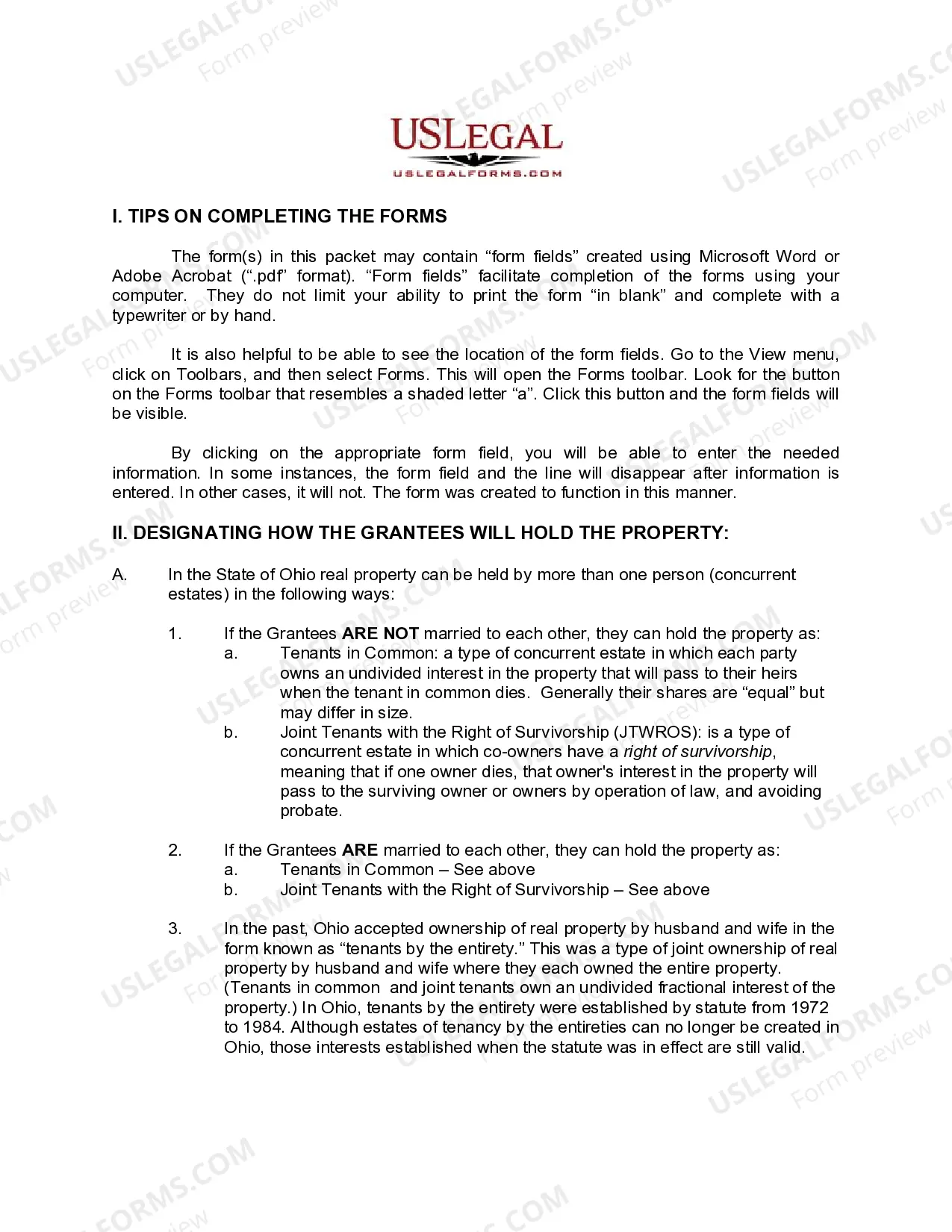
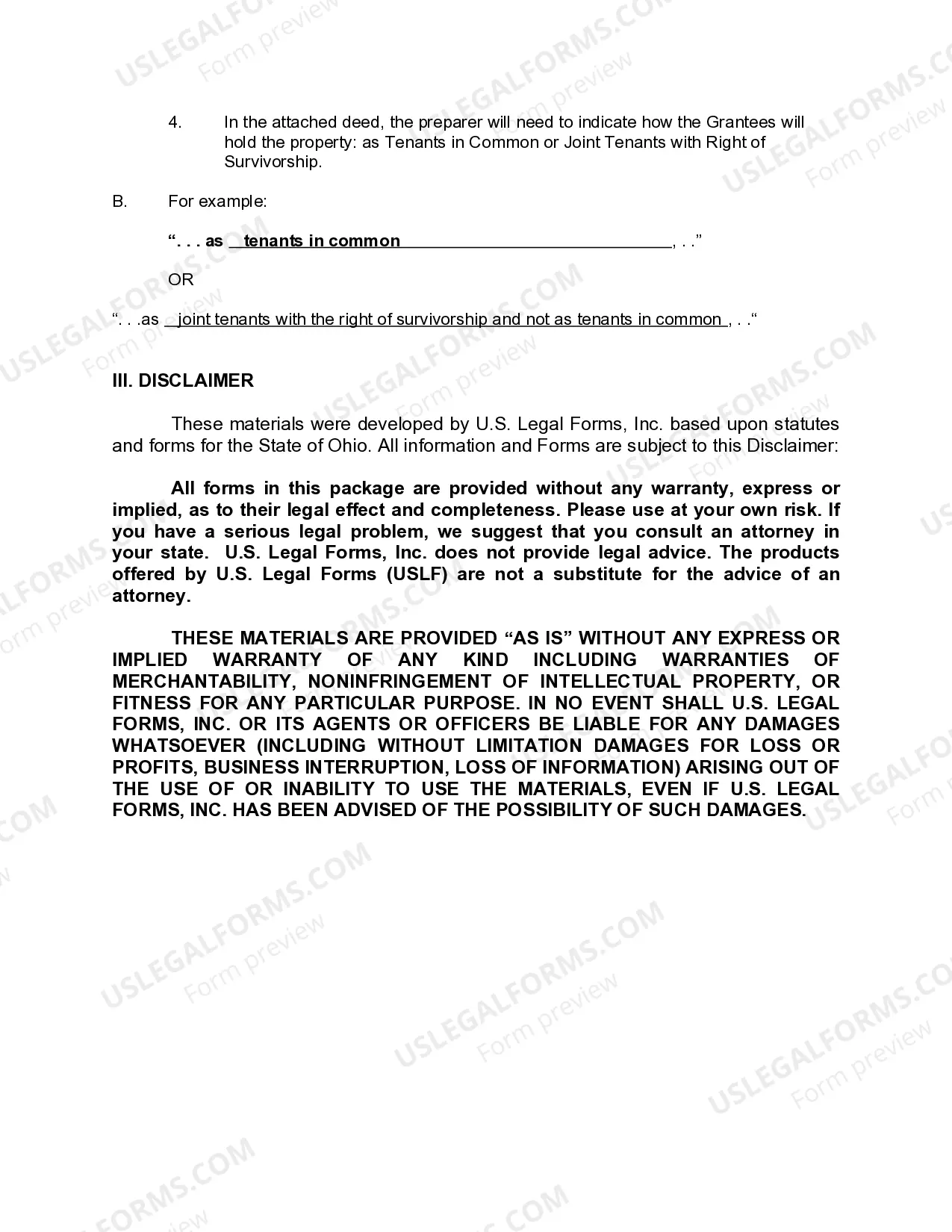
- Options for how the Grantees will hold the property (as tenants in common or joint tenants with right of survivorship).
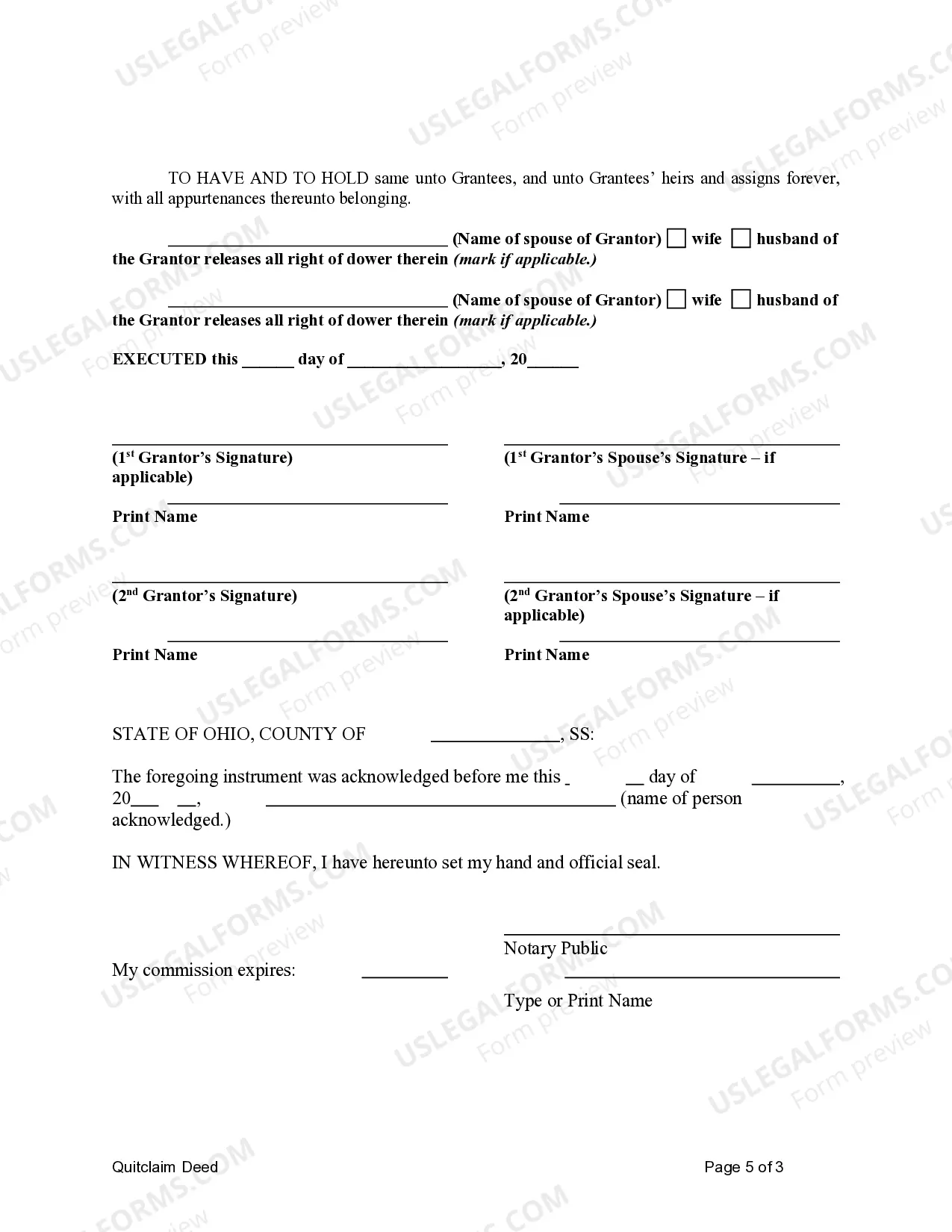
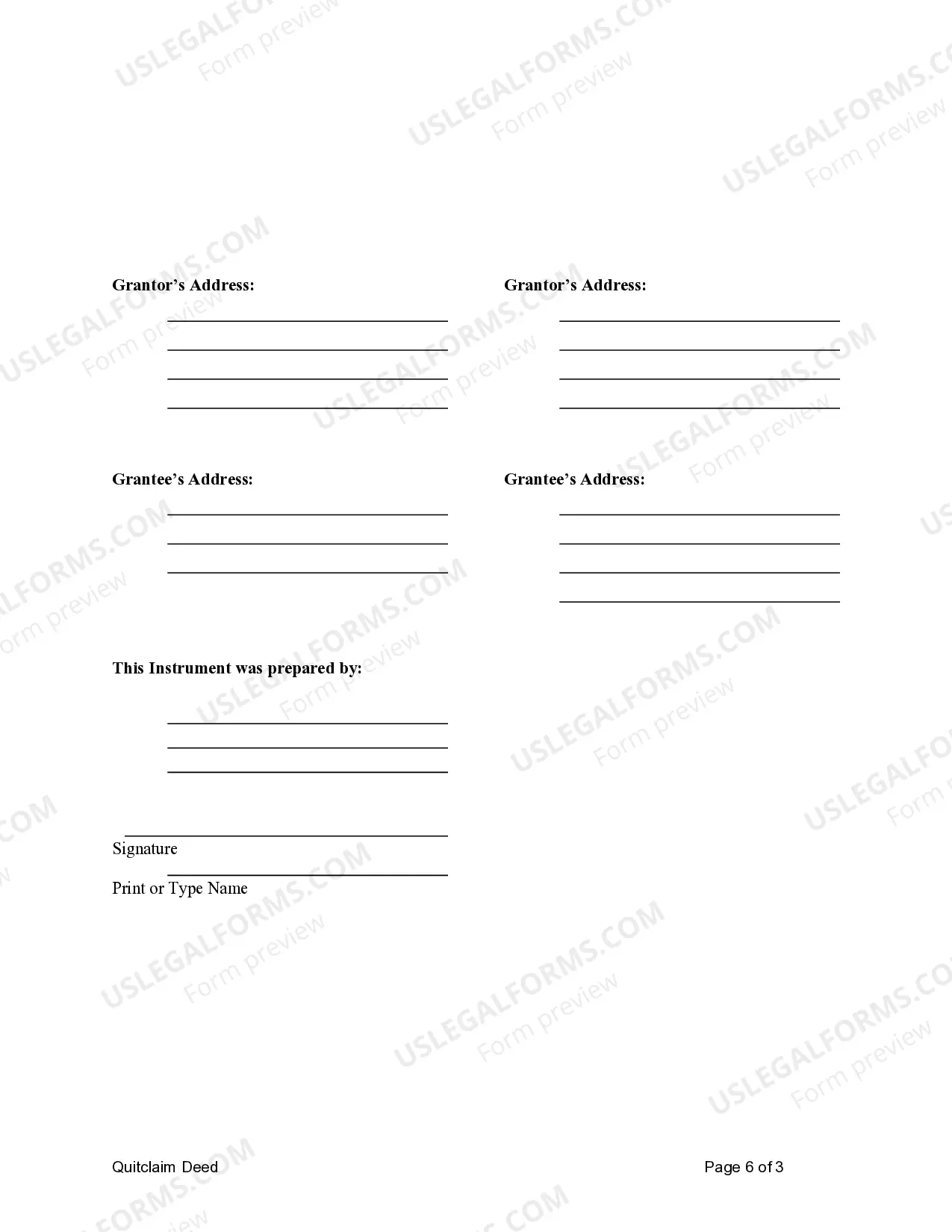
- Space for necessary signatures and date of execution.






Situations where this form applies
This form is commonly used in situations where two individuals want to transfer their property interests to a married couple. Examples include when parents gift property to their married children, or when friends want to formalize a transfer of property ownership to a couple. It is particularly useful when the parties seek to eliminate any potential disputes over ownership, as it conveys the interest without warranties.
Intended users of this form
This form is intended for:
- Individuals who own real property and wish to transfer it to a married couple.
- Couples receiving property as a gift or as part of a legal settlement.
- Real estate professionals facilitating property transfers between parties.
How to complete this form
- Identify the Grantors by entering their names and any required identifying information.
- Specify the Grantees' names (the married couple) to whom the property is being transferred.
- Provide a detailed legal description of the property being conveyed.
- Indicate any reserved interests, such as oil, gas, and mineral rights, that Grantors wish to keep.
- Choose how the Grantees will hold the property (as tenants in common or joint tenants with right of survivorship).
- Have both Grantors sign and date the form in the designated areas.
Does this document require notarization?
This form must be notarized to be legally valid. US Legal Forms provides secure online notarization powered by Notarize, allowing you to complete the process through a verified video call.
Get your form ready online
Our built-in tools help you complete, sign, share, and store your documents in one place.
Make edits, fill in missing information, and update formatting in US Legal Forms—just like you would in MS Word.
Download a copy, print it, send it by email, or mail it via USPS—whatever works best for your next step.
Sign and collect signatures with our SignNow integration. Send to multiple recipients, set reminders, and more. Go Premium to unlock E-Sign.
If this form requires notarization, complete it online through a secure video call—no need to meet a notary in person or wait for an appointment.
We protect your documents and personal data by following strict security and privacy standards.

Make edits, fill in missing information, and update formatting in US Legal Forms—just like you would in MS Word.

Download a copy, print it, send it by email, or mail it via USPS—whatever works best for your next step.

Sign and collect signatures with our SignNow integration. Send to multiple recipients, set reminders, and more. Go Premium to unlock E-Sign.

If this form requires notarization, complete it online through a secure video call—no need to meet a notary in person or wait for an appointment.

We protect your documents and personal data by following strict security and privacy standards.
Common mistakes to avoid
- Failing to include a legal description of the property, which is essential for clarity.
- Not indicating the correct method of holding the property, which can affect ownership rights.
- Omitting signatures or dates, which may render the deed invalid.
Why complete this form online
- Easy to fill out electronically with form fields that guide you through the process.
- Immediate access for download, allowing for quick completion and filing.
- Elimination of errors with step-by-step instructions included.
Looking for another form?
Form popularity
FAQ
If you do not have any loan or mortgage over the said property, then the easiest way to remove your name from the joint names, is if you were to execute a release deed or relinquishment deed in favour of your wife with respect to 50% share that you are the owner of, then she in turn becomes the full and absolute owner
Misconceptions and Realities. It is a misconception that someone can be removed from the deed. Nor can a co-owner simply take away another party's interest in a property by executing a new deed without that other party. In short, no one can be passively removed from a title.
Generally, someone else cannot remove you from title without your consent and/or knowledge. You should speak to a local real estate attorney to see how to return your name to title and how it was removed in the first place.
Discuss property ownership interests. Access a copy of your title deed. Complete, review and sign the quitclaim or warranty form. Submit the quitclaim or warranty form. Request a certified copy of your quitclaim or warranty deed.
If the quitclaim deed requires the signature of all co-owners, the deed is invalid unless all co-owners have signed it and the deed is then delivered to the grantee.If one individual owns real estate and desires to add a co-owner such as a spouse, a quitclaim deed might be used.
One of the simplest ways to add your wife to the home title is by using an interspousal deed. You can transfer the property from your sole and separate property to mutual tenancy, such as joint tenants with right of survivorship, with your wife.
A quitclaim deed transfers title but makes no promises at all about the owner's title.A person who signs a quitclaim deed to transfer property they do not own results in no title at all being transferred since there is no actual ownership interest. The quitclaim deed only transfers the type of title you own.
It's usually a very straightforward transaction, but it's possible for a quitclaim deed to be challenged. If a quitclaim deed is challenged in court, the issue becomes whether the property was legally transferred and if the grantor had the legal right to transfer the property.
Fill in the application to change the register. You'll need to fill in the application to change the register, known as form AP1. Sign the transfer deed. Take form ID1 to a solicitors' firm. Send the completed forms to HM Land Registry.