New York Last Will and Testament for a Married Person with No Children
Overview of this form
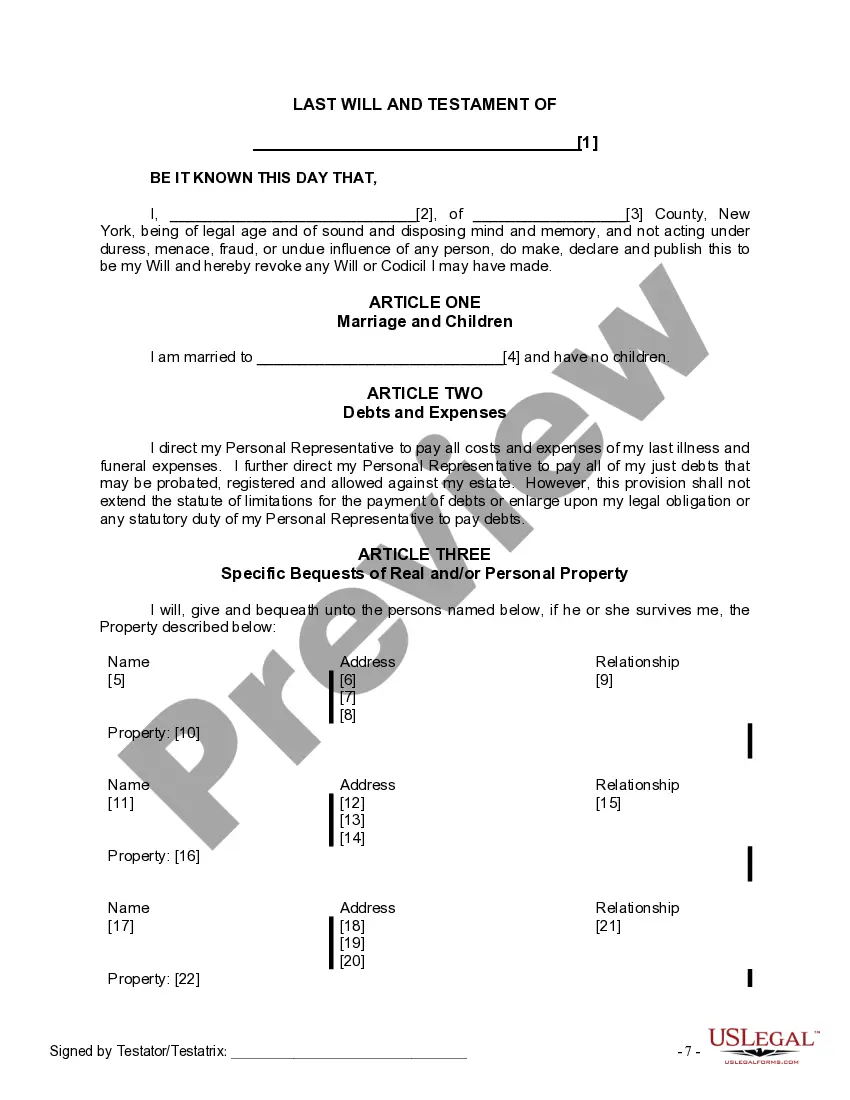
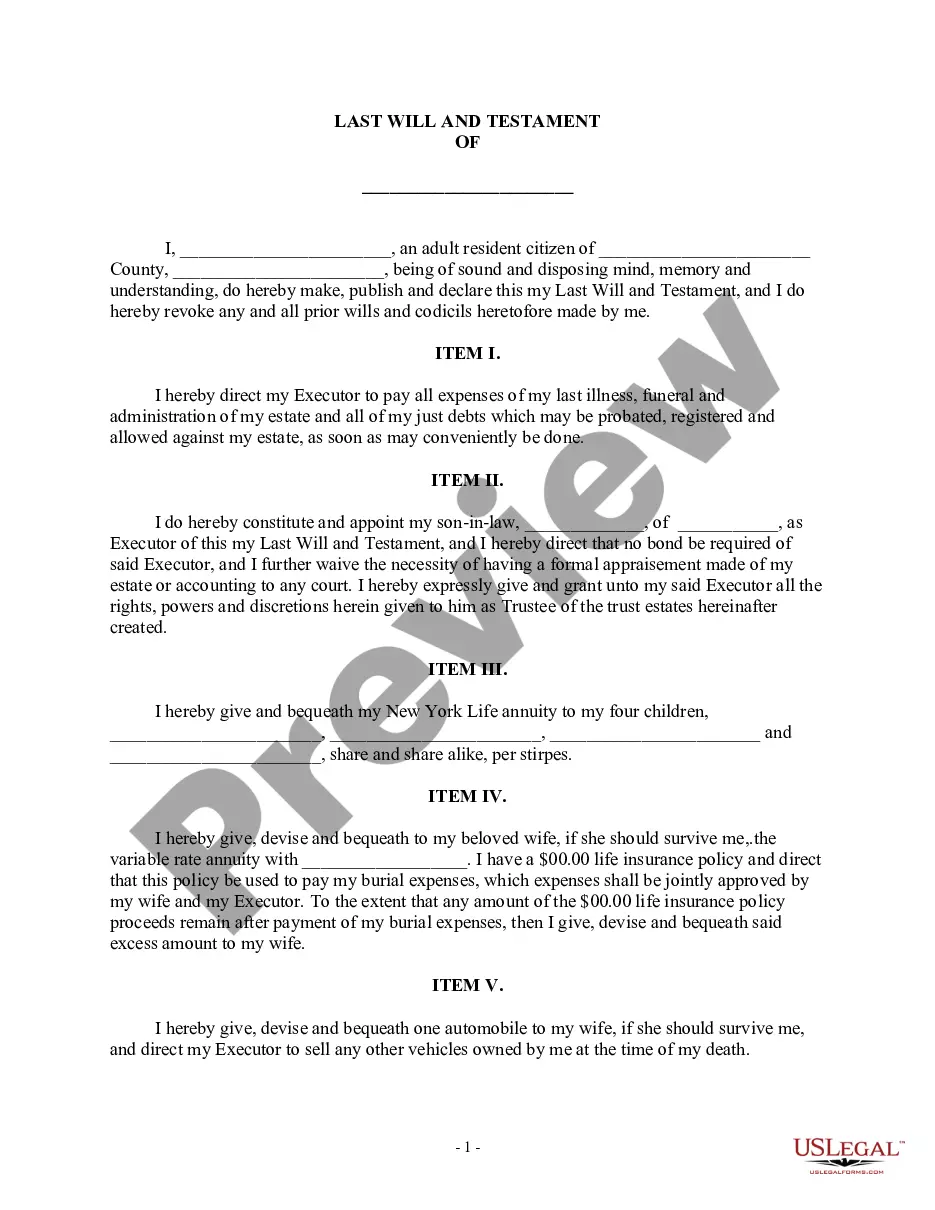
The Last Will and Testament for a Married Person with No Children is a legal document that outlines how your assets will be distributed upon your death. Specifically designed for married individuals without children, this will allows you to designate your spouse as the primary beneficiary and make special bequests if desired. It differs from other wills by focusing on the unique circumstances of a married person without dependent children, ensuring that your spouse receives the intended inheritance directly.
Key parts of this document
- Personal Information: Includes your name and the county of residence.
- Spouse Designation: Clearly specifies the name of your spouse.
- Specific Bequests: Allows you to leave specific property to named individuals.
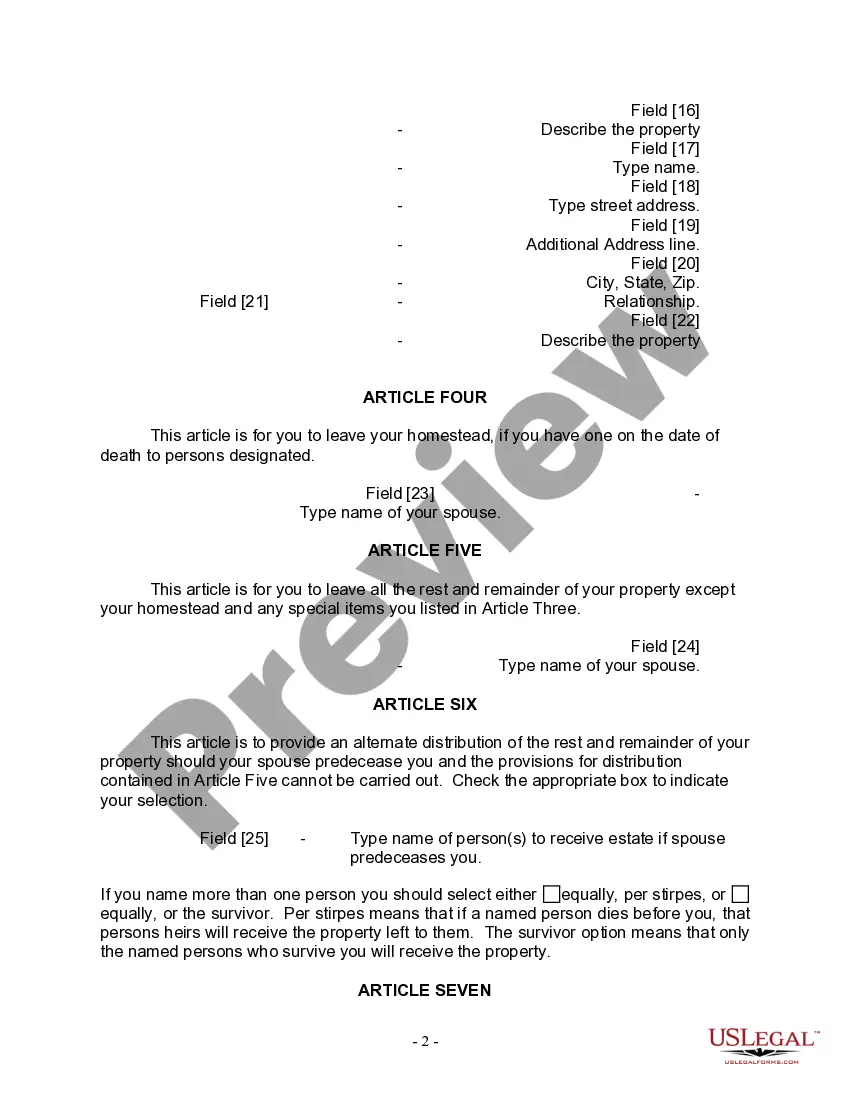
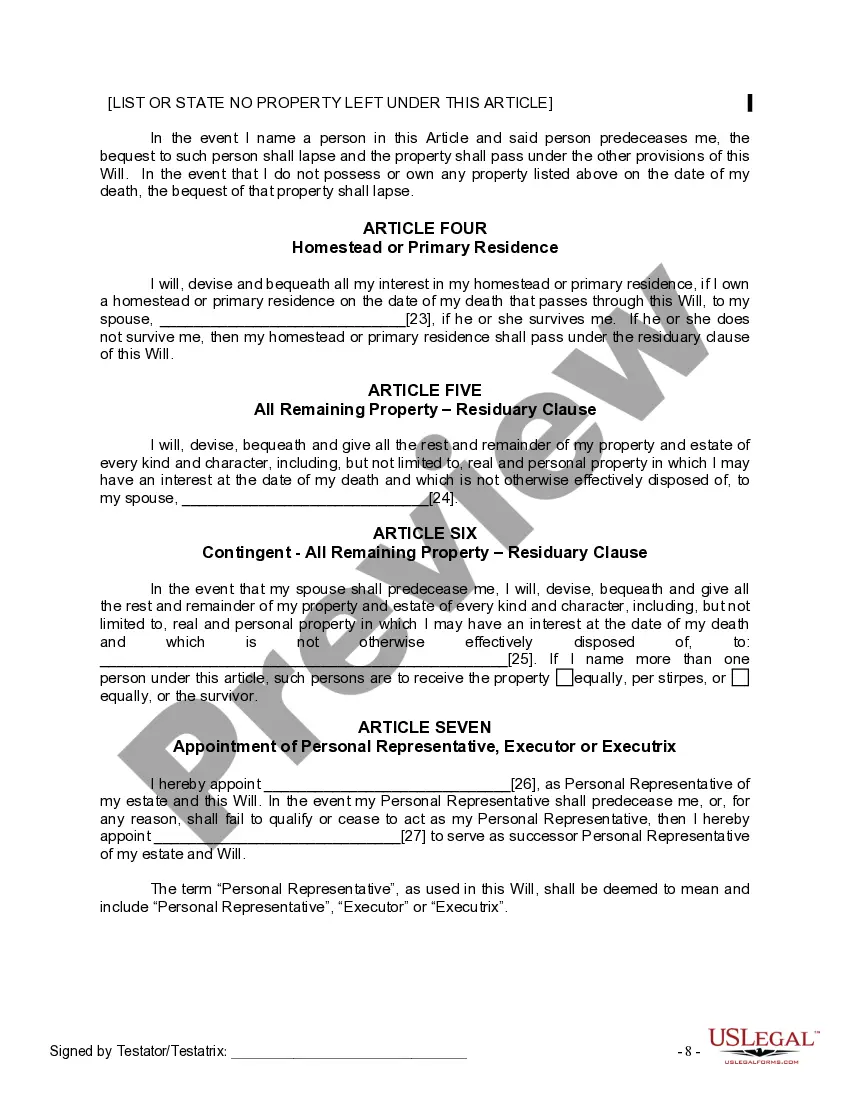
- Homestead Provision: Directs that your primary residence passes to your spouse.
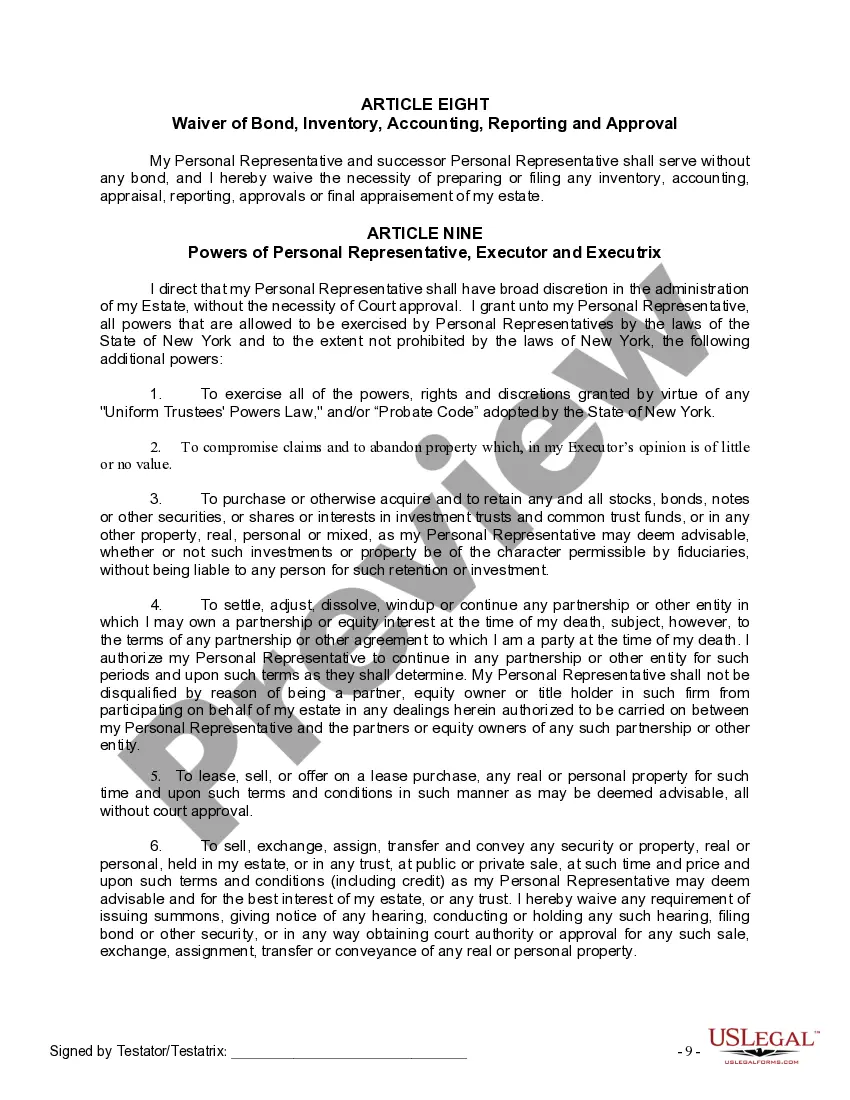
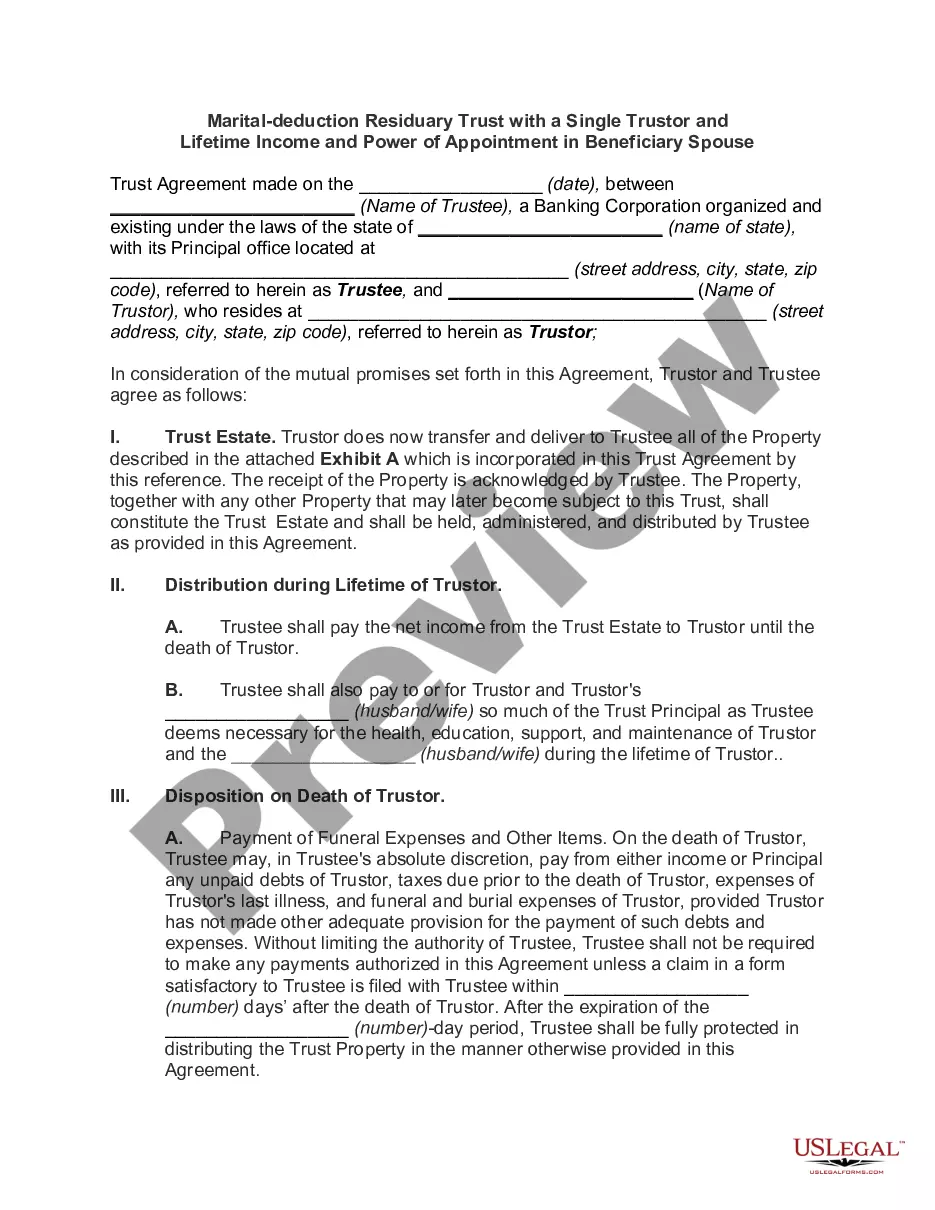
- Residuary Clause: Distributes the remainder of your estate to your spouse or alternatives if they predecease you.
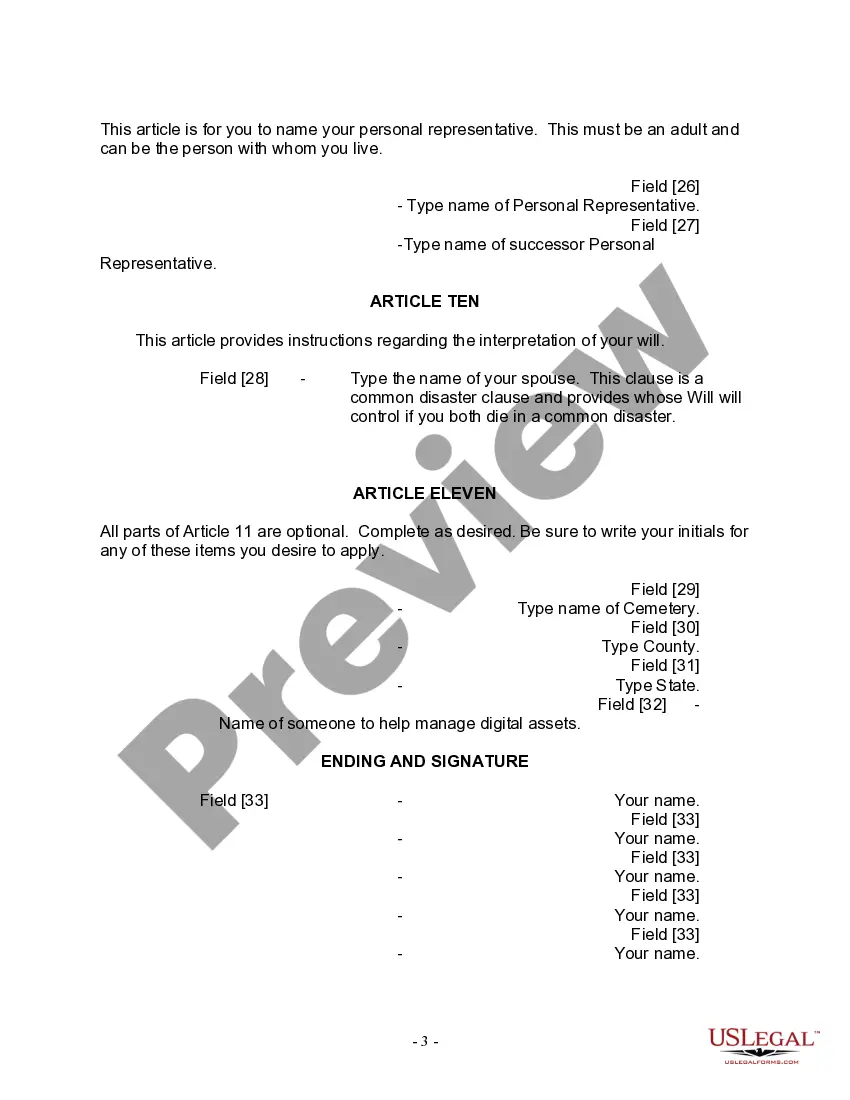
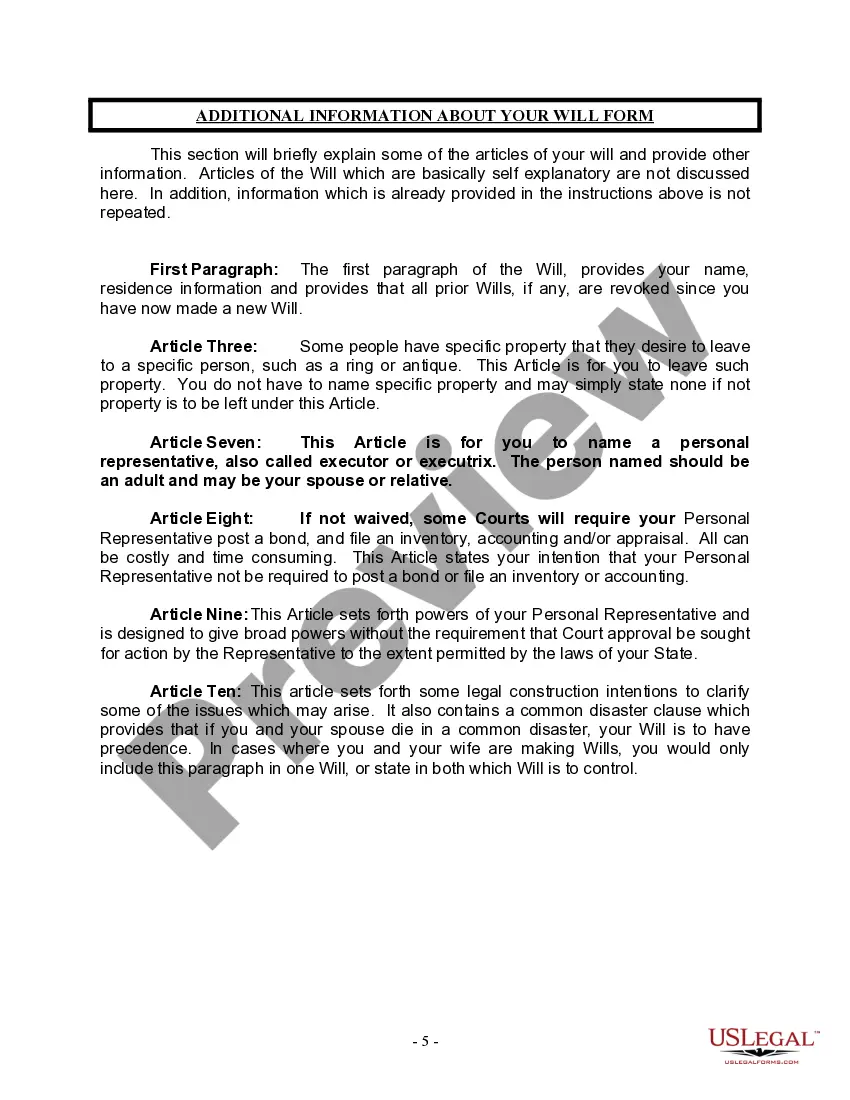
- Appointment of Personal Representative: Names an executor to oversee your estate affairs.




When to use this form
This form is ideal when a married individual without children wishes to outline their estate distribution plans. You should use this last will and testament if you want to ensure your spouse inherits your assets and if you have specific items of personal or real property you wish to leave to others. Additionally, it provides clarity regarding your wishes in the event of unforeseen circumstances, such as both you and your spouse passing away in a common disaster.
Who needs this form
- Married individuals without children looking to create a legally binding will.
- Those who want to specify their spouse as the primary beneficiary of their estate.
- Individuals desiring to make specific bequests of personal property to friends or relatives.
- Anyone wanting to ensure their final wishes are recorded and legally recognized.
Completing this form step by step
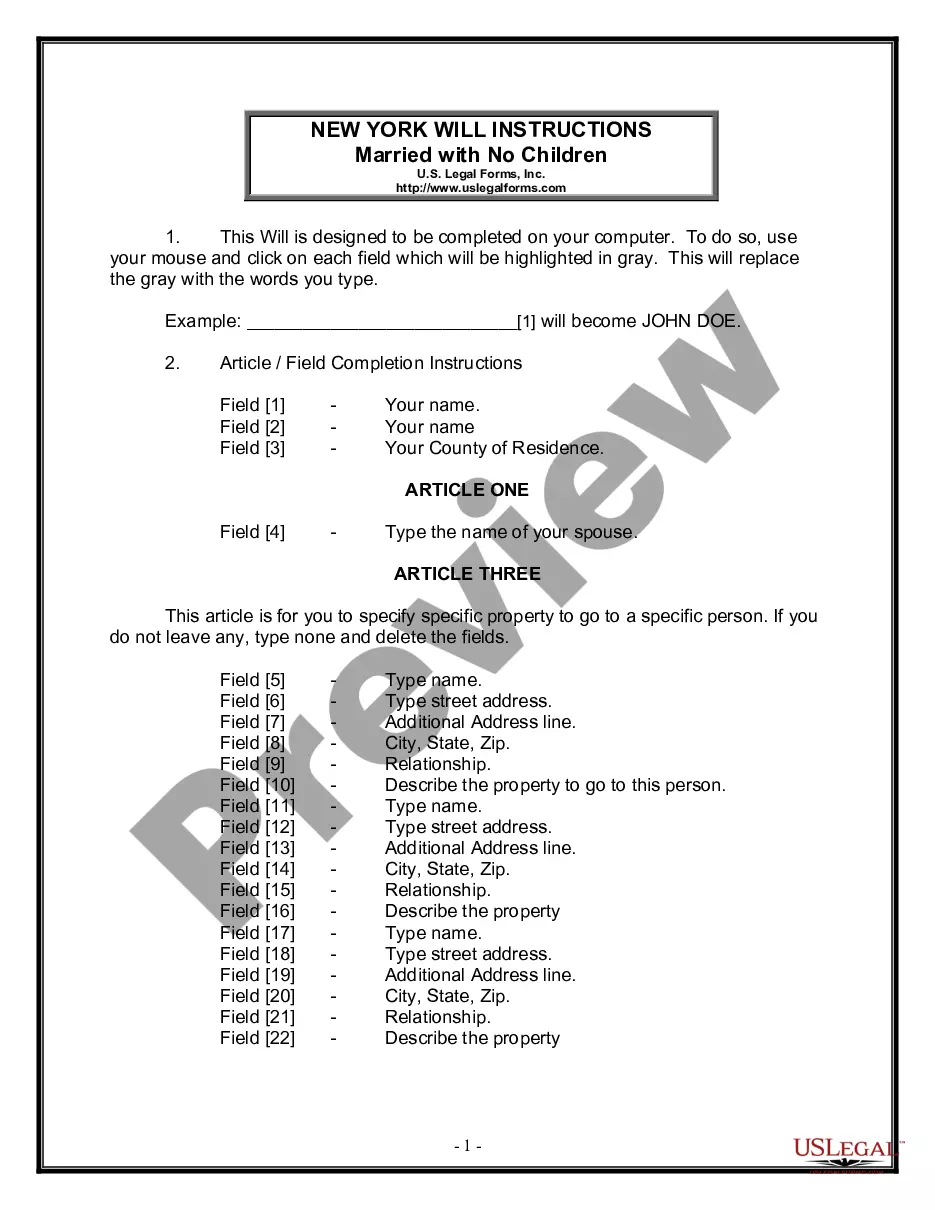
- Enter your full name and county of residence at the top of the document.
- List your spouse's name in the designated article.
- Complete specific bequest sections to allocate any personal items to chosen individuals.
- Designate a personal representative to oversee your estate's administration.
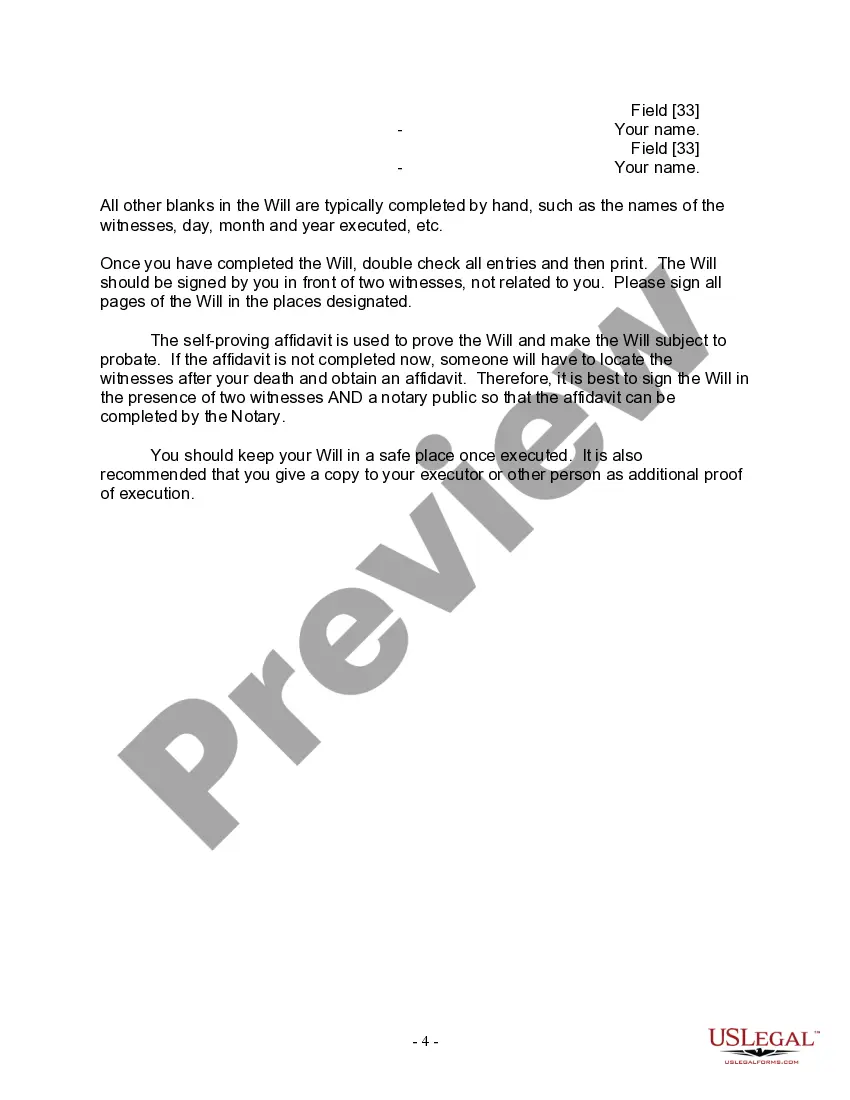
- Sign the document in front of at least two witnesses and a notary, if required.
Is notarization required?
Notarization is required for this form to take effect. Our online notarization service, powered by Notarize, lets you verify and sign documents remotely through an encrypted video session, available 24/7.
Get your form ready online
Our built-in tools help you complete, sign, share, and store your documents in one place.
Make edits, fill in missing information, and update formatting in US Legal Forms—just like you would in MS Word.
Download a copy, print it, send it by email, or mail it via USPS—whatever works best for your next step.
Sign and collect signatures with our SignNow integration. Send to multiple recipients, set reminders, and more. Go Premium to unlock E-Sign.
If this form requires notarization, complete it online through a secure video call—no need to meet a notary in person or wait for an appointment.
We protect your documents and personal data by following strict security and privacy standards.

Make edits, fill in missing information, and update formatting in US Legal Forms—just like you would in MS Word.

Download a copy, print it, send it by email, or mail it via USPS—whatever works best for your next step.

Sign and collect signatures with our SignNow integration. Send to multiple recipients, set reminders, and more. Go Premium to unlock E-Sign.

If this form requires notarization, complete it online through a secure video call—no need to meet a notary in person or wait for an appointment.

We protect your documents and personal data by following strict security and privacy standards.
Common mistakes to avoid
- Failing to have the will signed by two witnesses, which may invalidate the document.
- Not specifying contingencies if your spouse predeceases you.
- Neglecting to properly print and store the final executed will safely.
- Overlooking the need for a self-proving affidavit when appropriate.
Benefits of completing this form online
- Convenient access: You can complete your Last Will and Testament at your own pace.
- Editability: This form can be easily modified to reflect changes in your wishes.
- Reliability: The document is drafted to comply with legal standards, providing peace of mind.
Legal use & context
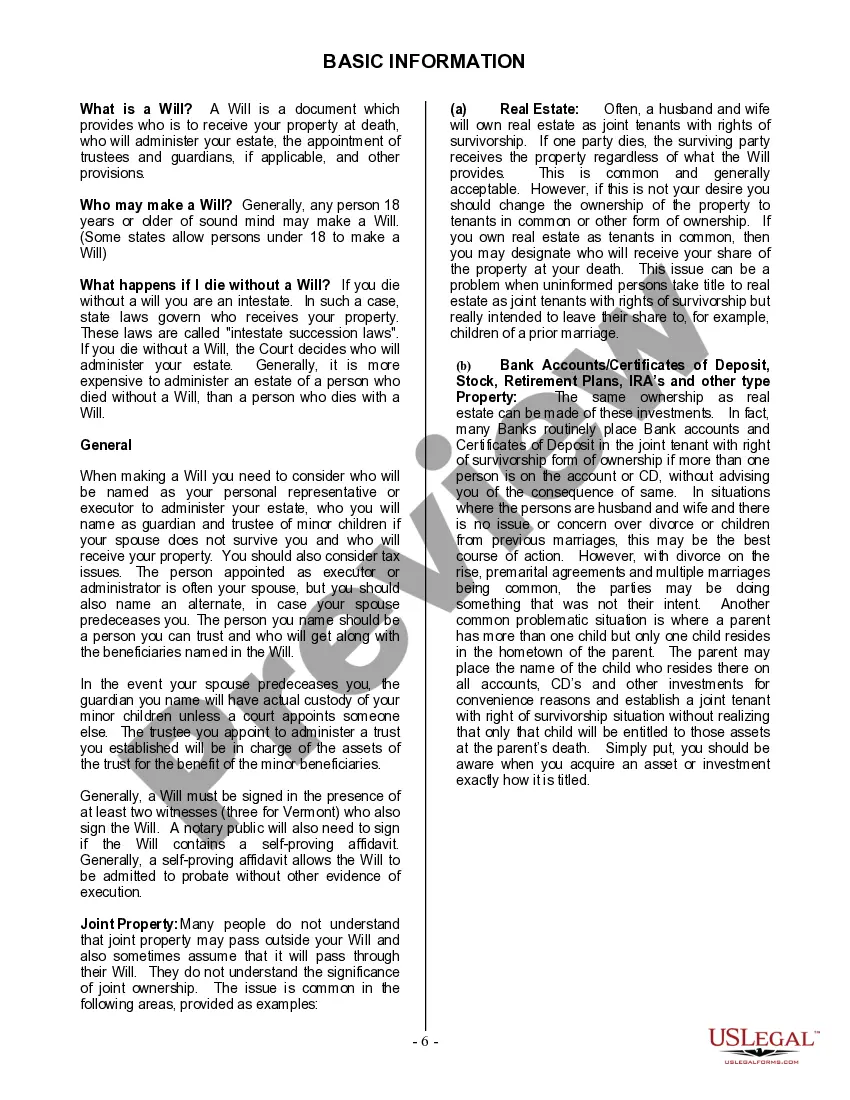
- This will can direct how your estate is divided, preventing intestate succession laws from applying.
- It must be executed according to local laws to ensure enforceability, including witnessing and notarization.
- Ambiguities in the will may lead to legal disputes, making clarity vital.
Quick recap
- A Last Will and Testament is essential for ensuring your wishes are honored after your death.
- This form is geared toward married individuals with no children, simplifying estate planning.
- Clarity in your directives can prevent future disputes among heirs and family.
- Proper execution, including witnessing and notarizing, is crucial for legal validity.
Looking for another form?
Form popularity
FAQ
A notarized will does not need to be probated.When a person dies leaving behind a will that is not notarized, the law requires that its validity be ascertained by a notary or by a court. Similarly, any non-notarized modification made to a will must be probated, whether the will is notarized or not.
No. You can make your own will in New York, using Nolo's do-it-yourself will software or online will programs. However, you may want to consult a lawyer in some situations. For example, if you think that your will might be contested or if you want to disinherit your spouse, you should talk with an attorney.
Free will templates allow you to choose an executor who will manage your estate, as well as a guardian if you have any minor children. Writing a will template allows you to cover every single important issue that needs to be addressed to provide complete peace of mind in most situations.
A handwritten Will without witnesses is valid in New York only under very limited circumstances and is not recommended. To be valid at all times, a Will must be in writing, dated and signed by the maker of the Will with two witnesses signing and adding their addresses under their signature.
A. You don't have to have a lawyer to create a basic will you can prepare one yourself. It must meet your state's legal requirements and should be notarized.A do-it-yourself will that's poorly drafted can save you money but create a mess for your heirs when you're gone.
How much does it cost to make a will in NYC? Typically, about $1,200. It could cost more if one of the following is a factor: a large estate.
The Will must be filed in Surrogate's Court and admitted for probate before the wishes of the person who died can be followed. If the person who died had less than $50,000 of personal property, then a small estate (also called a voluntary administration) can be filed instead.
Under New York law, a surviving spouse has a right to share in a decedent's estate.EPTL § 5-1.1-A provides that a surviving spouse has the right to override the Will's terms and receive the greater of $50,000 or one-third of the net estate.
You do not need a lawyer to write your Will for you.The witnesses must sign your Will at the bottom and place their addresses after their signatures to complete the formality. A notary is not required for a Will in New York State.