New York Special Durable Power of Attorney for Bank Account Matters
What is this form?
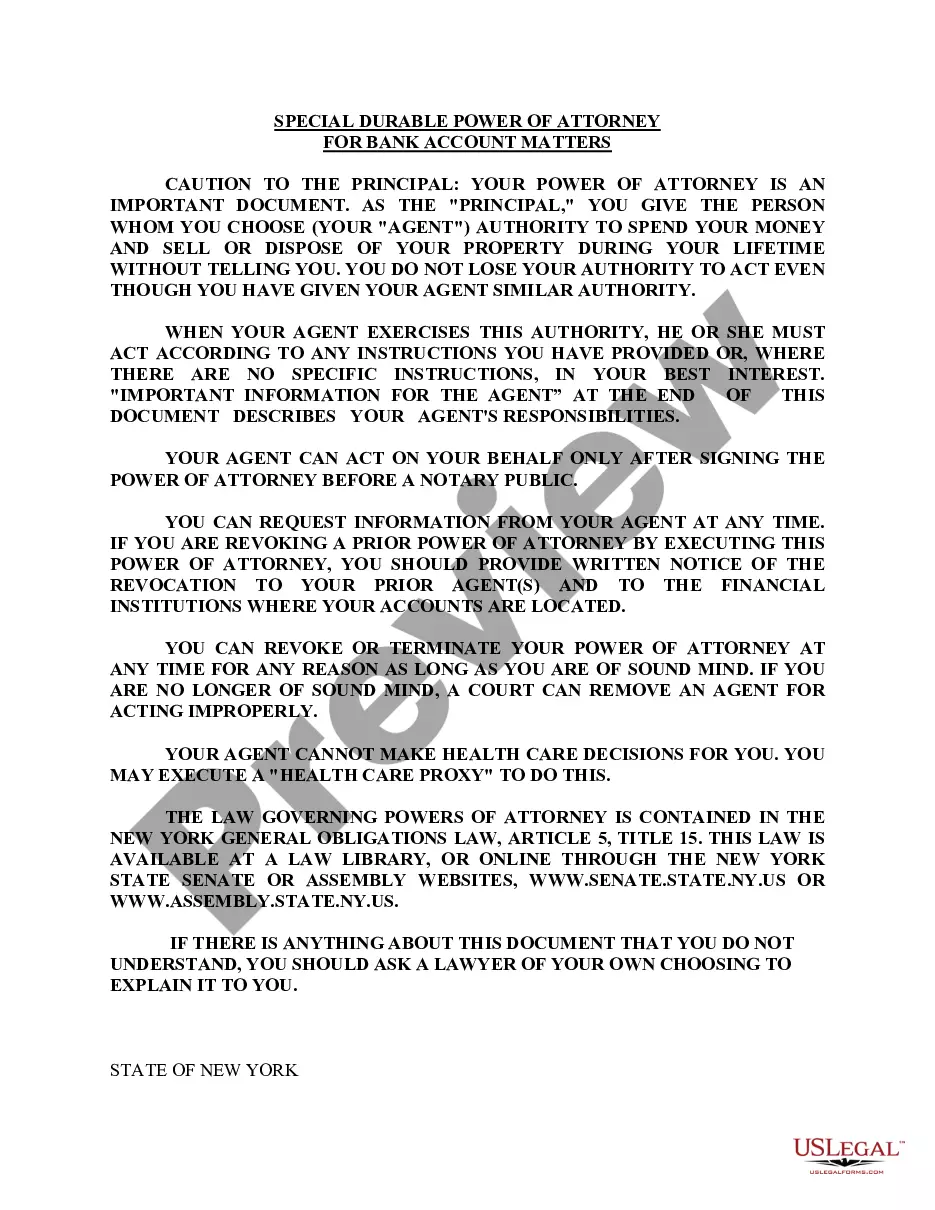
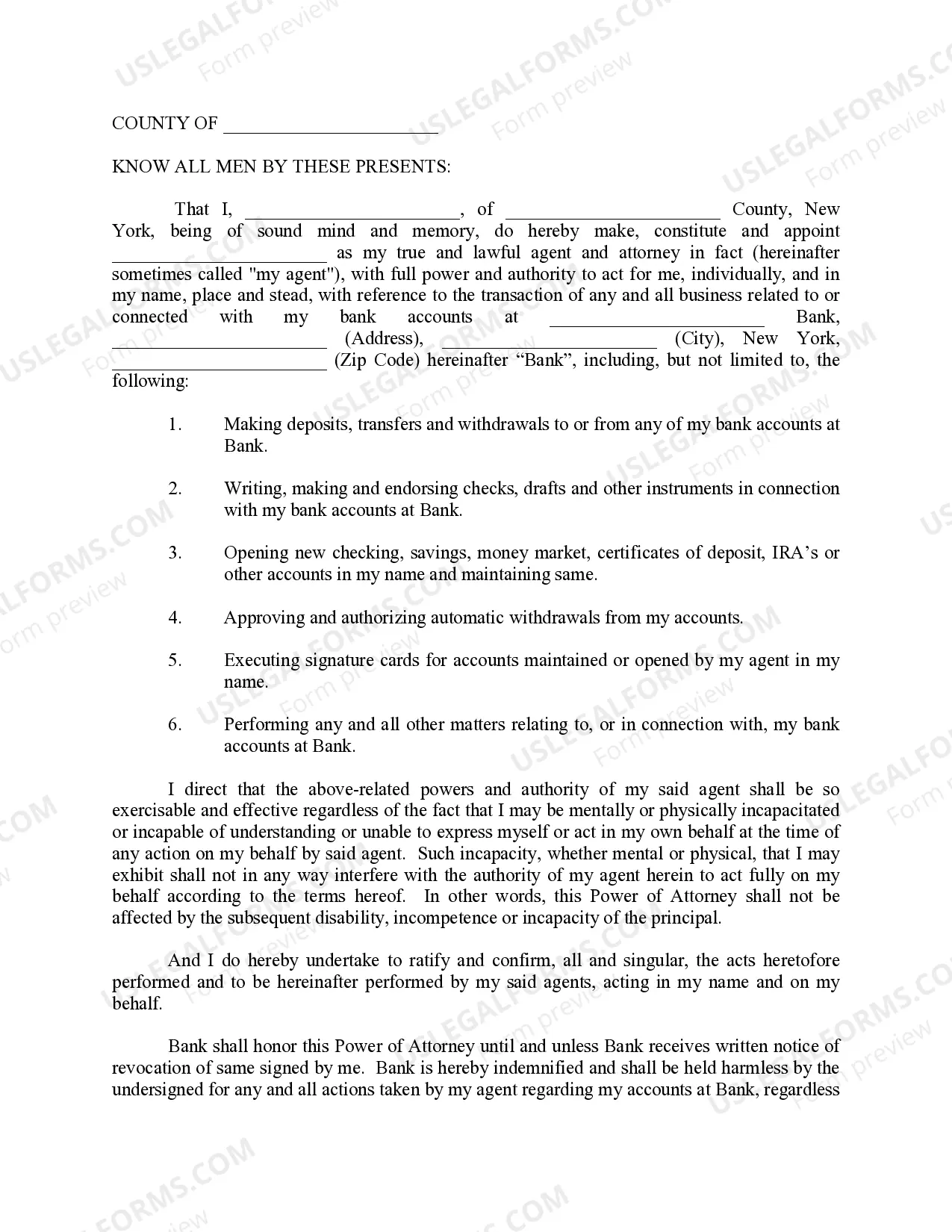
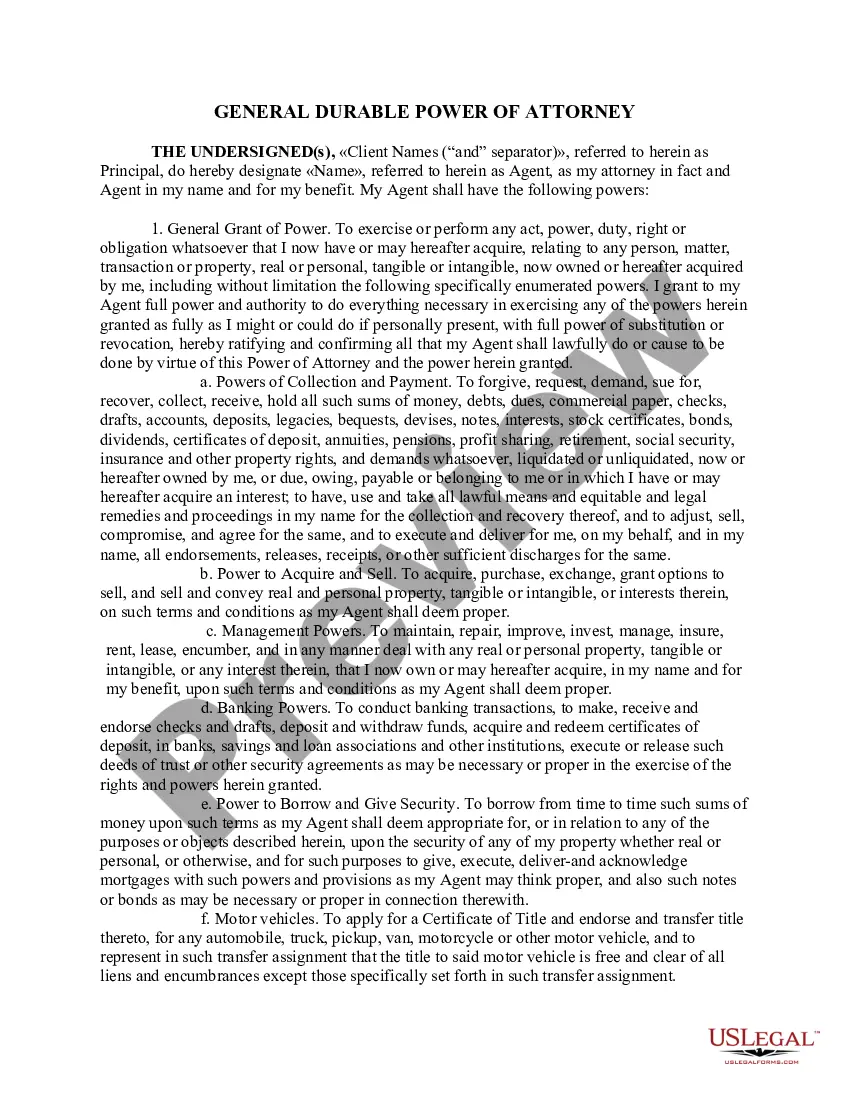
The Special Durable Power of Attorney for Bank Account Matters is a legal document that allows you to appoint someone (your agent) to manage specific bank account transactions on your behalf. Unlike a general power of attorney, this form grants limited authority tailored to banking matters such as making deposits, writing checks, and managing withdrawals. This specialized power of attorney is essential when you are temporarily unavailable or unable to handle these financial tasks yourself.
What’s included in this form
- Principal's details: Identifies the person granting the power.
- Agent's details: Names the individual authorized to act on behalf of the principal.
- Powers granted: Outlines specific banking activities the agent can perform.
- Durability clause: Specifies that the powers remain effective even if the principal is incapacitated.
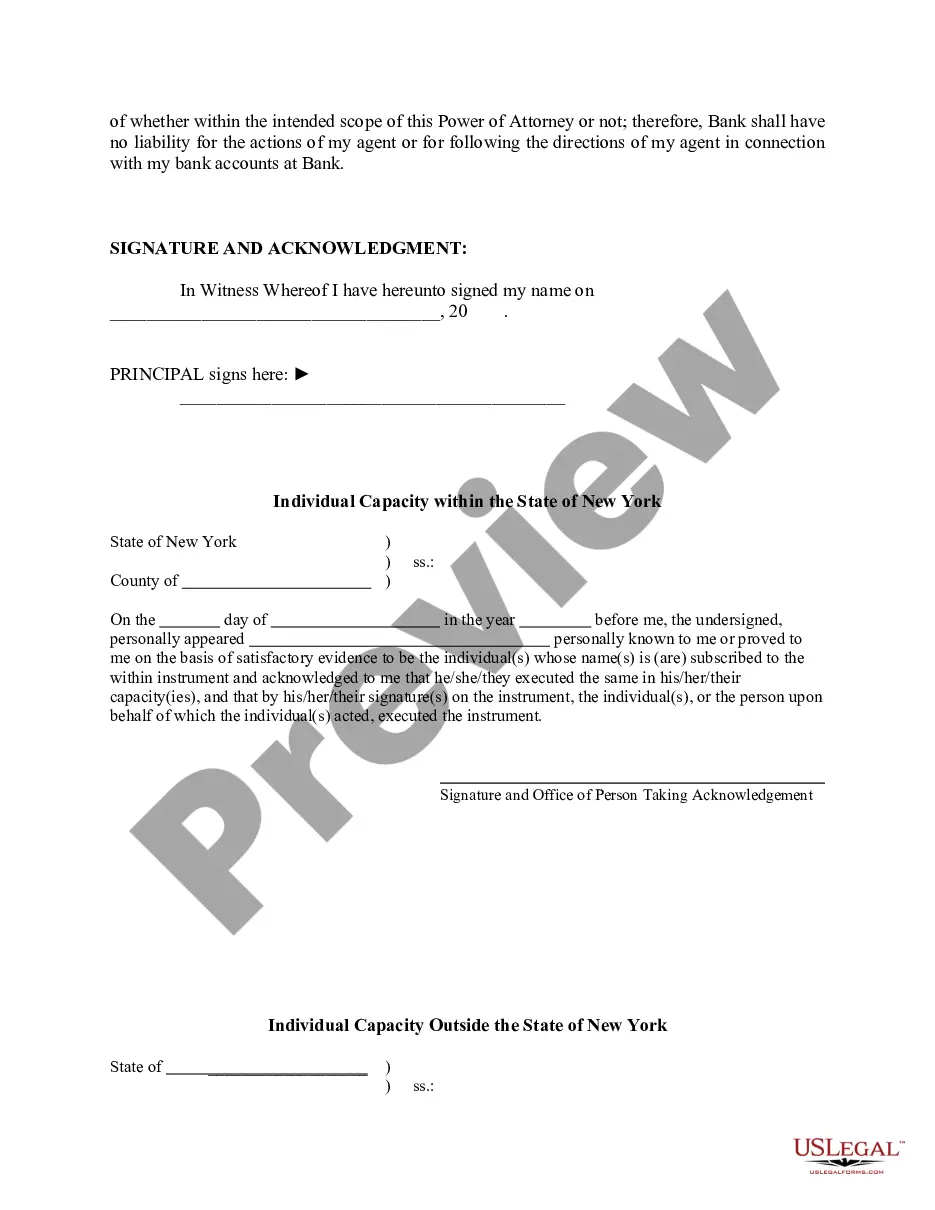
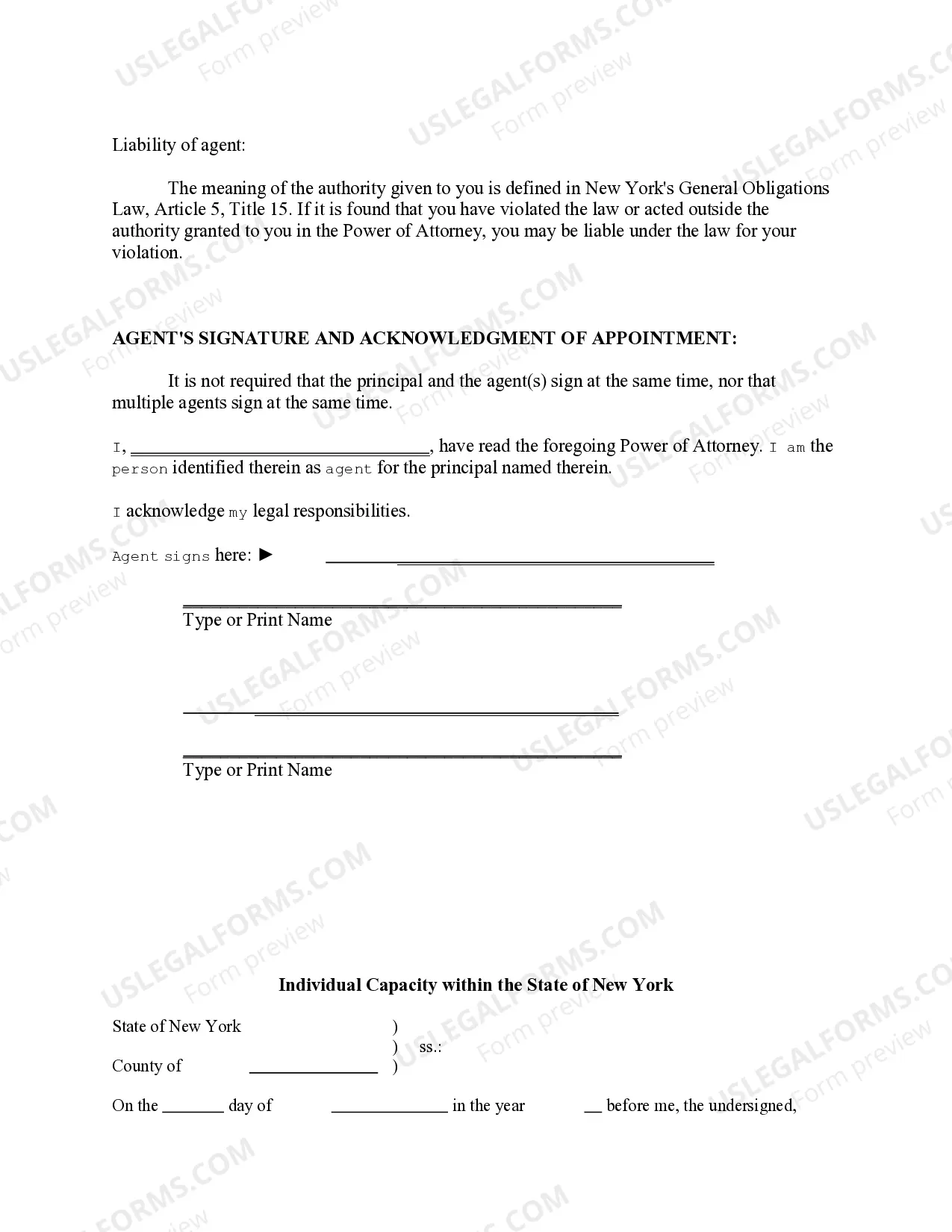
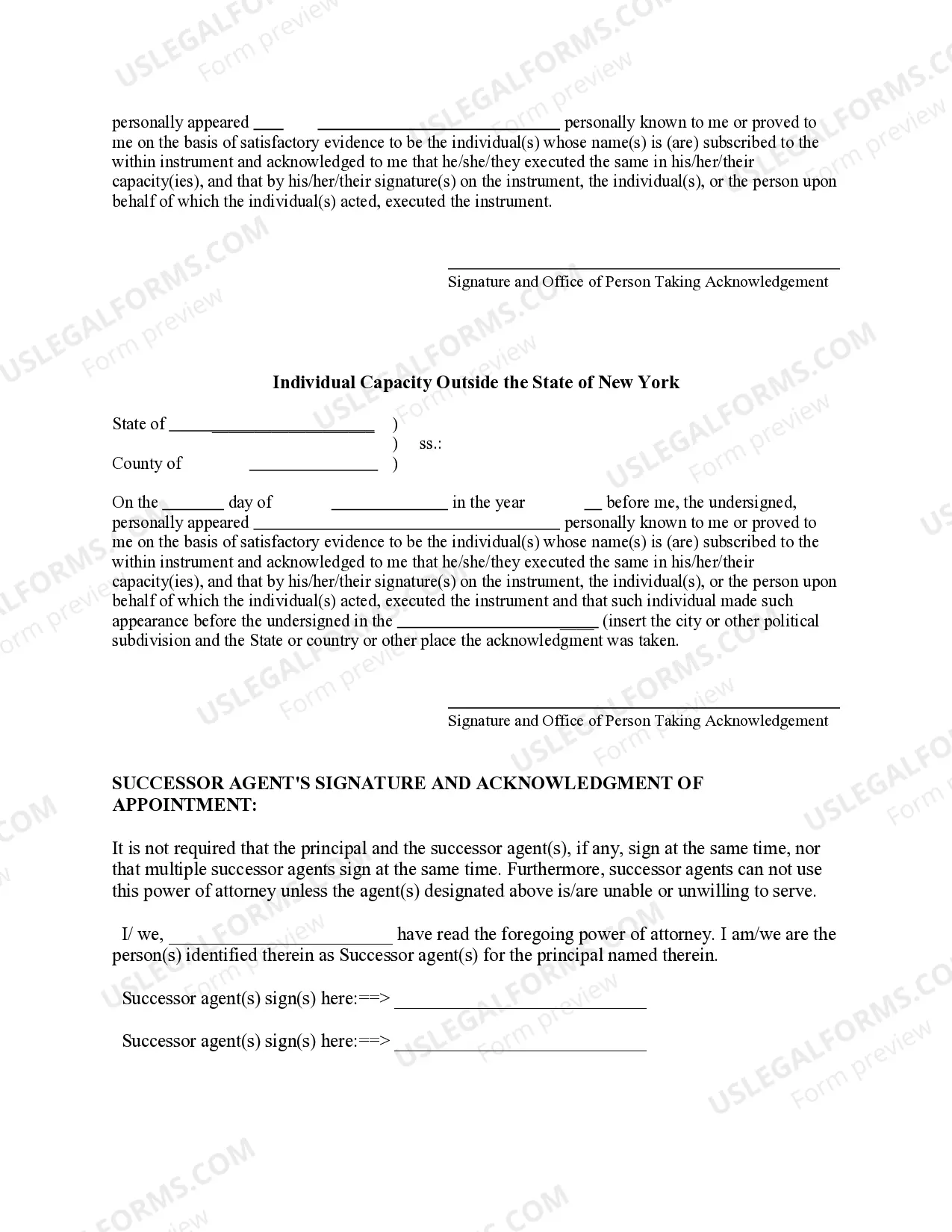
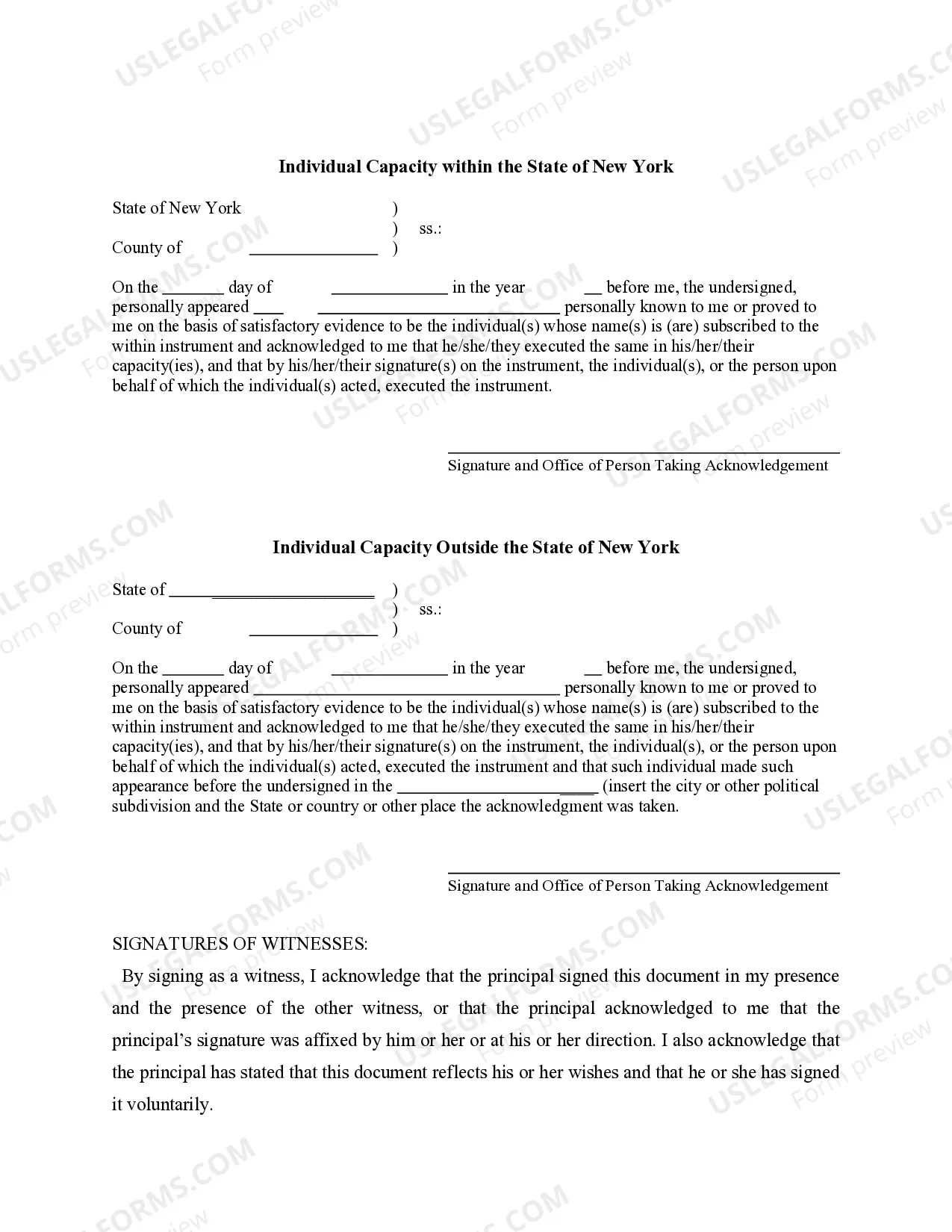
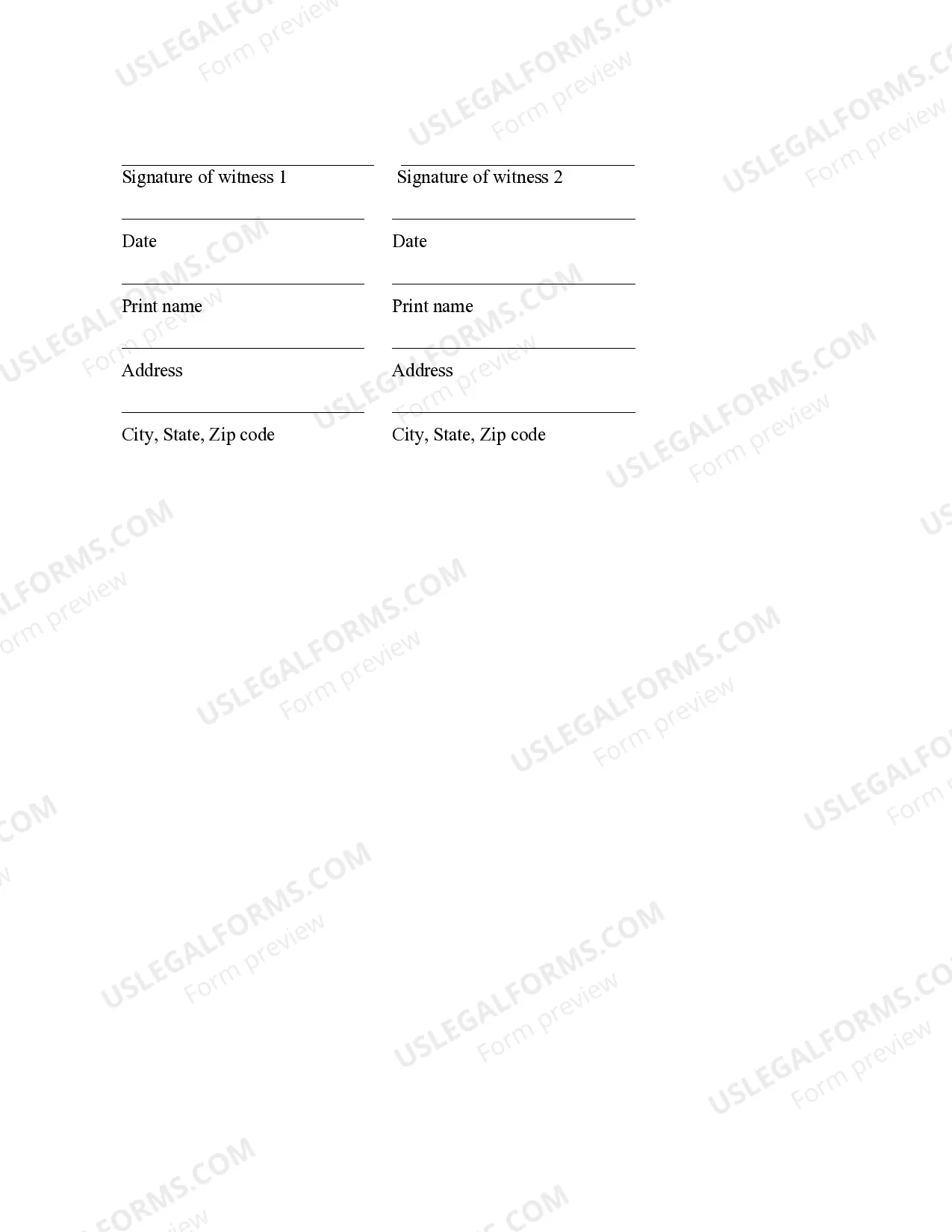
- Notarization requirement: Details the need for notarization when signing the document.
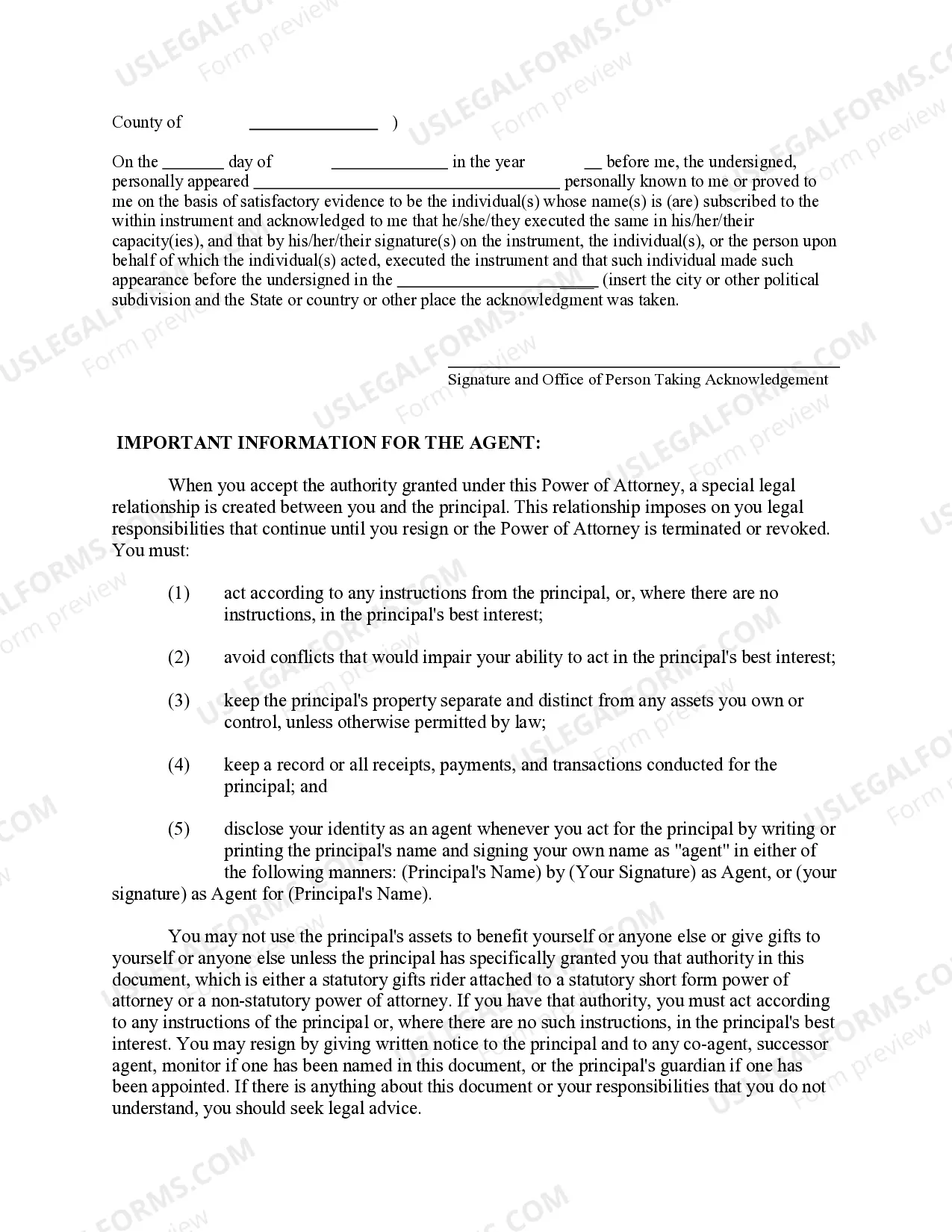
- Agent's responsibilities: Explains the legal obligations and limitations of the agent.
Common use cases
You should use the Special Durable Power of Attorney for Bank Account Matters when you need someone to manage your bank transactions due to travel, temporary disability, or any other reason that might prevent you from handling your financial matters. This form is particularly useful for individuals who may be out of town for an extended period or those who have health concerns affecting their ability to manage their accounts.
Who this form is for
- Individuals who want to delegate specific banking responsibilities to a trusted person.
- People with health issues that may affect their financial management.
- Persons planning to travel for an extended time and need someone to handle their accounts.
- Anyone seeking a limited authority arrangement rather than a general power of attorney.
Steps to complete this form
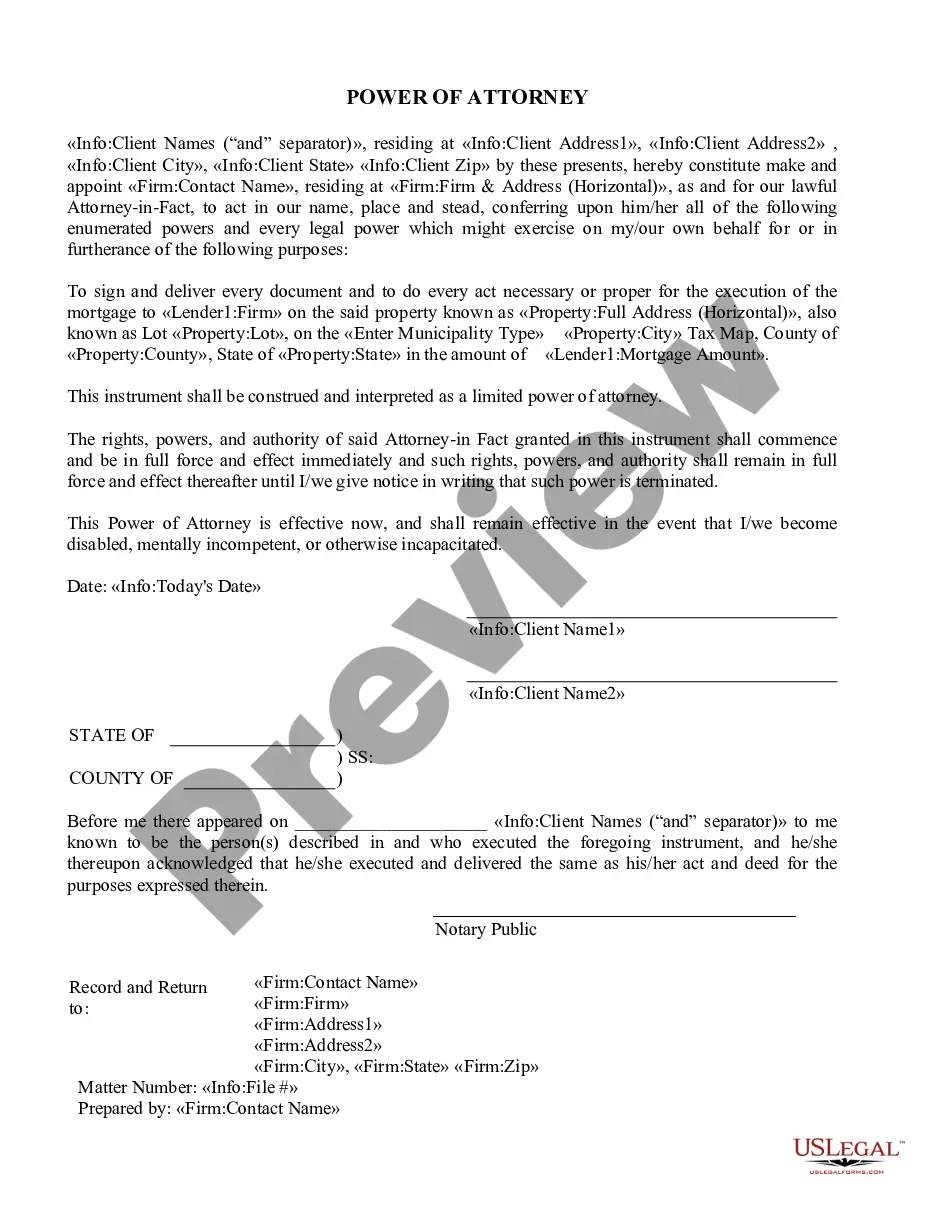
- Identify yourself as the principal, including your name and address.
- Name your chosen agent and provide their contact information.
- Specify the bank and detail the specific powers you are granting.
- Sign the document in the presence of a notary public to ensure its validity.
- Inform any previous agents or financial institutions of this new power of attorney if applicable.
Notarization guidance
Yes, this form must be notarized to be legally valid. The signing must occur in the presence of a notary public, ensuring that all parties understand the document and its implications.
Get your form ready online
Our built-in tools help you complete, sign, share, and store your documents in one place.
Make edits, fill in missing information, and update formatting in US Legal Forms—just like you would in MS Word.
Download a copy, print it, send it by email, or mail it via USPS—whatever works best for your next step.
Sign and collect signatures with our SignNow integration. Send to multiple recipients, set reminders, and more. Go Premium to unlock E-Sign.
If this form requires notarization, complete it online through a secure video call—no need to meet a notary in person or wait for an appointment.
We protect your documents and personal data by following strict security and privacy standards.

Make edits, fill in missing information, and update formatting in US Legal Forms—just like you would in MS Word.

Download a copy, print it, send it by email, or mail it via USPS—whatever works best for your next step.

Sign and collect signatures with our SignNow integration. Send to multiple recipients, set reminders, and more. Go Premium to unlock E-Sign.

If this form requires notarization, complete it online through a secure video call—no need to meet a notary in person or wait for an appointment.

We protect your documents and personal data by following strict security and privacy standards.
Common mistakes
- Failing to have the document notarized, which could invalidate it.
- Not clearly specifying the powers being granted to the agent.
- Neglecting to inform financial institutions of the new power of attorney.
- Choosing an agent who may have conflicting interests.
Benefits of using this form online
- Convenience: Access and complete the form from anywhere at any time.
- Editability: Easily customize the content to suit your specific needs.
- Reliability: Obtain a professionally drafted document that meets legal standards.
Quick recap
- The Special Durable Power of Attorney for Bank Account Matters allows for designated banking management when you are unavailable.
- This form remains effective even if you become incapacitated.
- Ensure notarization to comply with legal requirements.
- Clearly define the powers granted to your agent to avoid confusion.
Looking for another form?



Form popularity
FAQ
The New York Special Durable Power of Attorney for Bank Account Matters is a limited POA that lets an agent handle specific banking tasks on the principal’s behalf, such as deposits, writing checks, and withdrawals. It stays in effect if the principal is incapacitated and is useful when the principal is traveling or temporarily unavailable; notarization and defined duties are included.
Banks commonly recognize a properly executed durable POA, including this form, when it is notarized and presented to the bank along with any required bank forms. In New York, banks may have their own procedures, but this document’s powers are limited to banking matters and stay effective if the principal is incapacitated.
The document’s powers are limited to the banking activities listed (deposits, writing checks, withdrawals) and do not grant ownership or co-ownership of the account. Adding someone as a co-owner or beneficiary typically isn’t authorized by this form unless such authority is expressly included or arranged separately with the bank.
Common mistakes include omitting the durability clause, failing to have the document notarized, not naming an alternate or successor agent, giving overly broad powers beyond banking tasks, and not providing clear definitions of the agent’s duties. This NY form explicitly includes a durability clause and notarization requirement to help avoid these issues.
Red flags include vague or overly broad powers, absence of a durable clause or proper notarization, failure to name an agent, or a document that isn’t executory in the correct form for bank use. For this form, ensure powers are limited to bank matters and the document is notarized.
This form is limited to banking tasks and remains in effect if the principal becomes incapacitated. A general POA covers broader powers and may not stay active after incapacity, making this form more focused and durable.