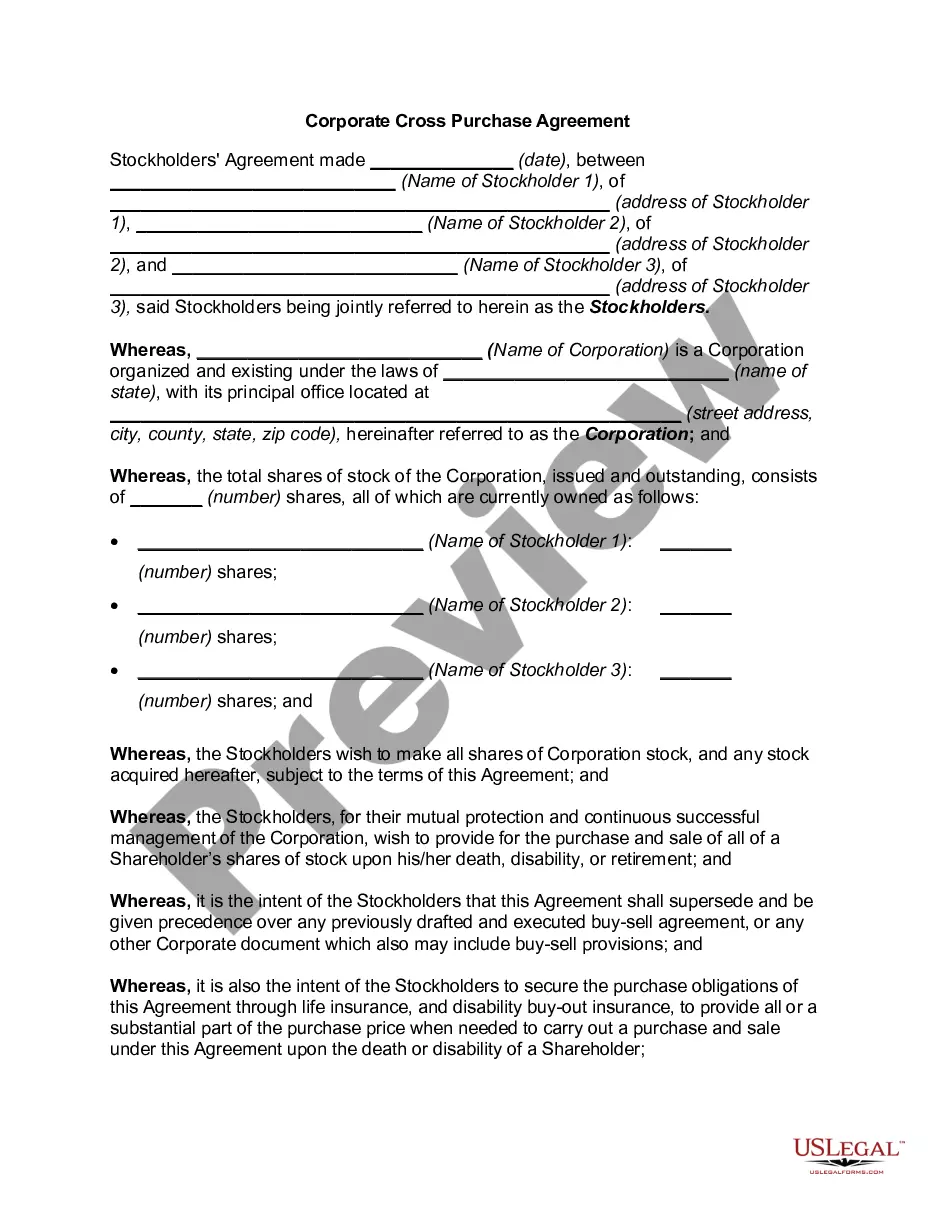
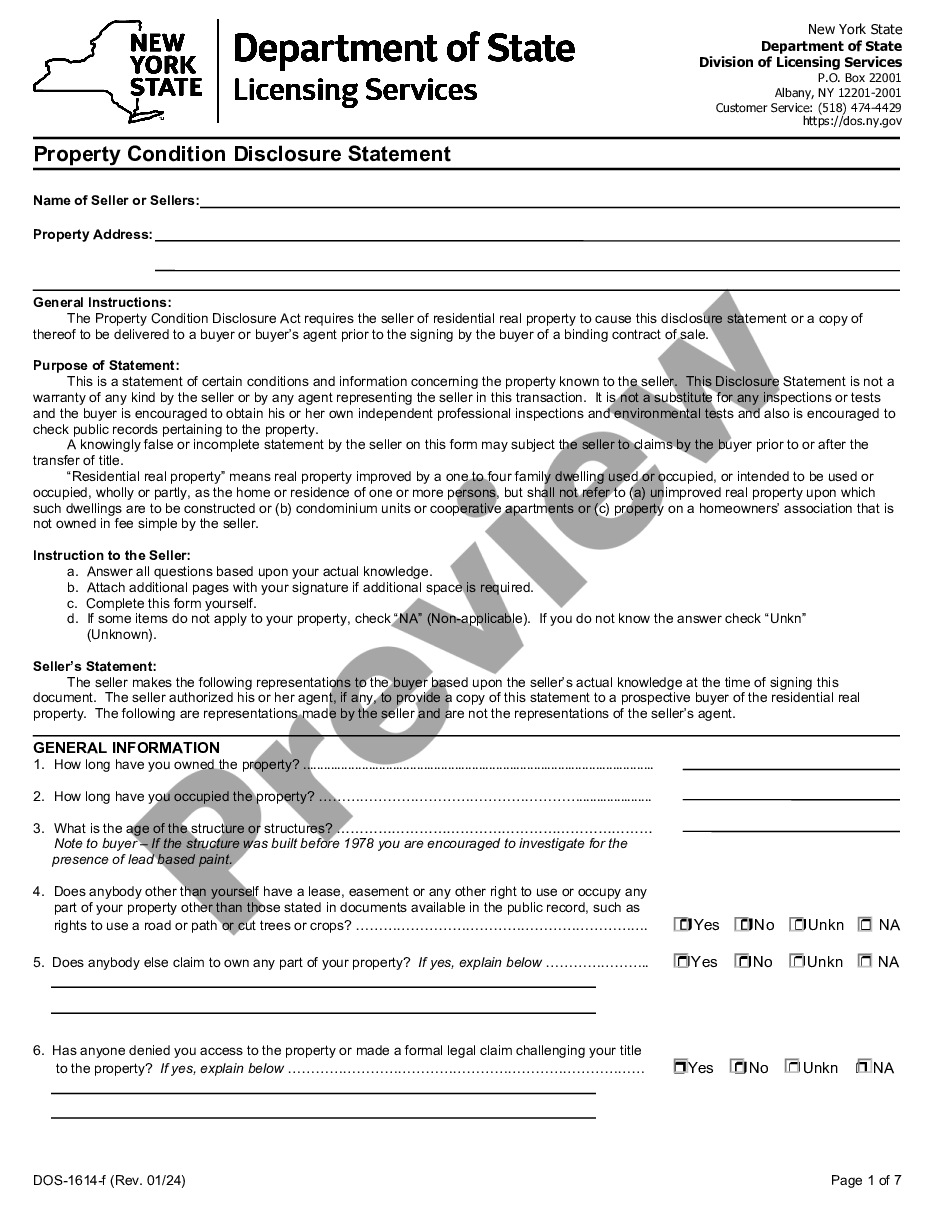
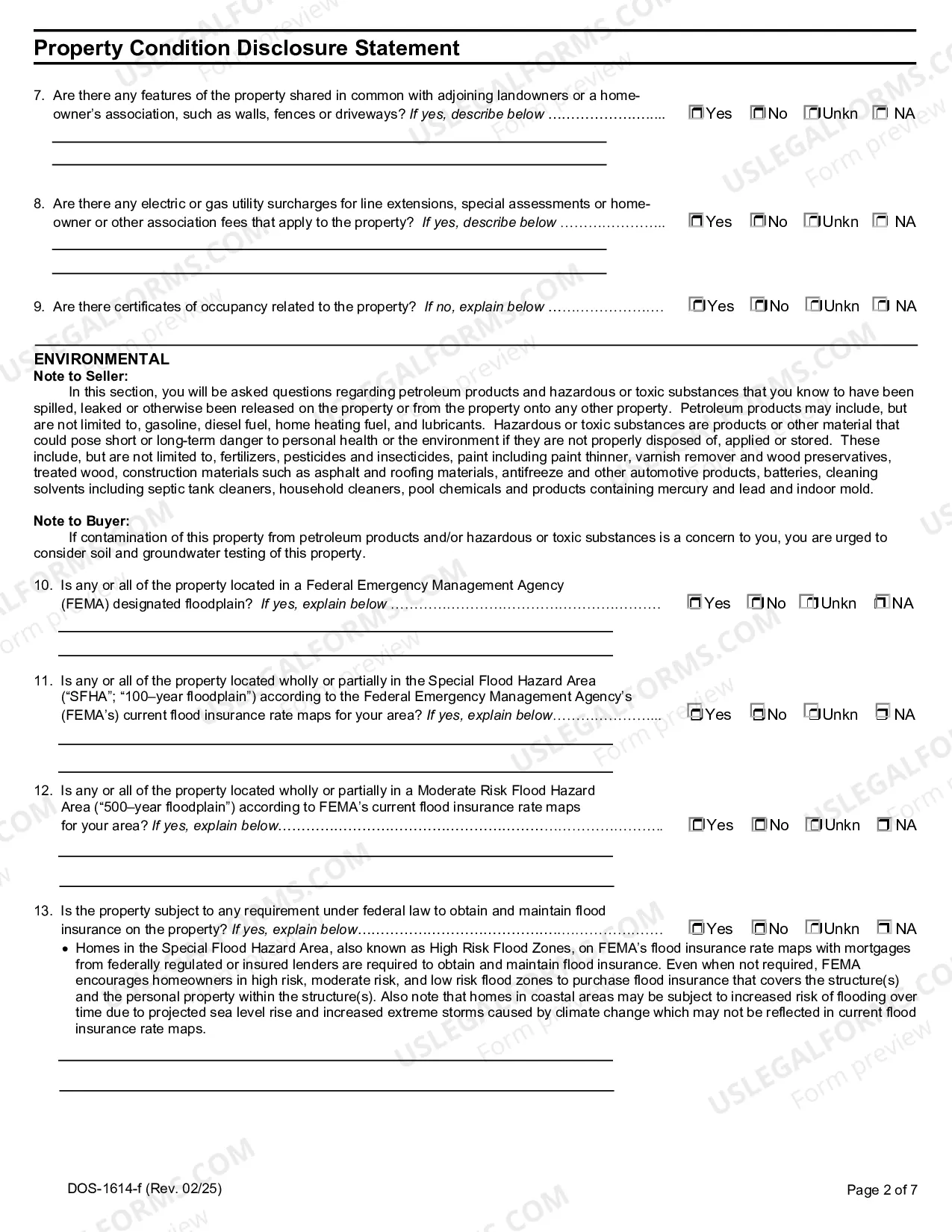
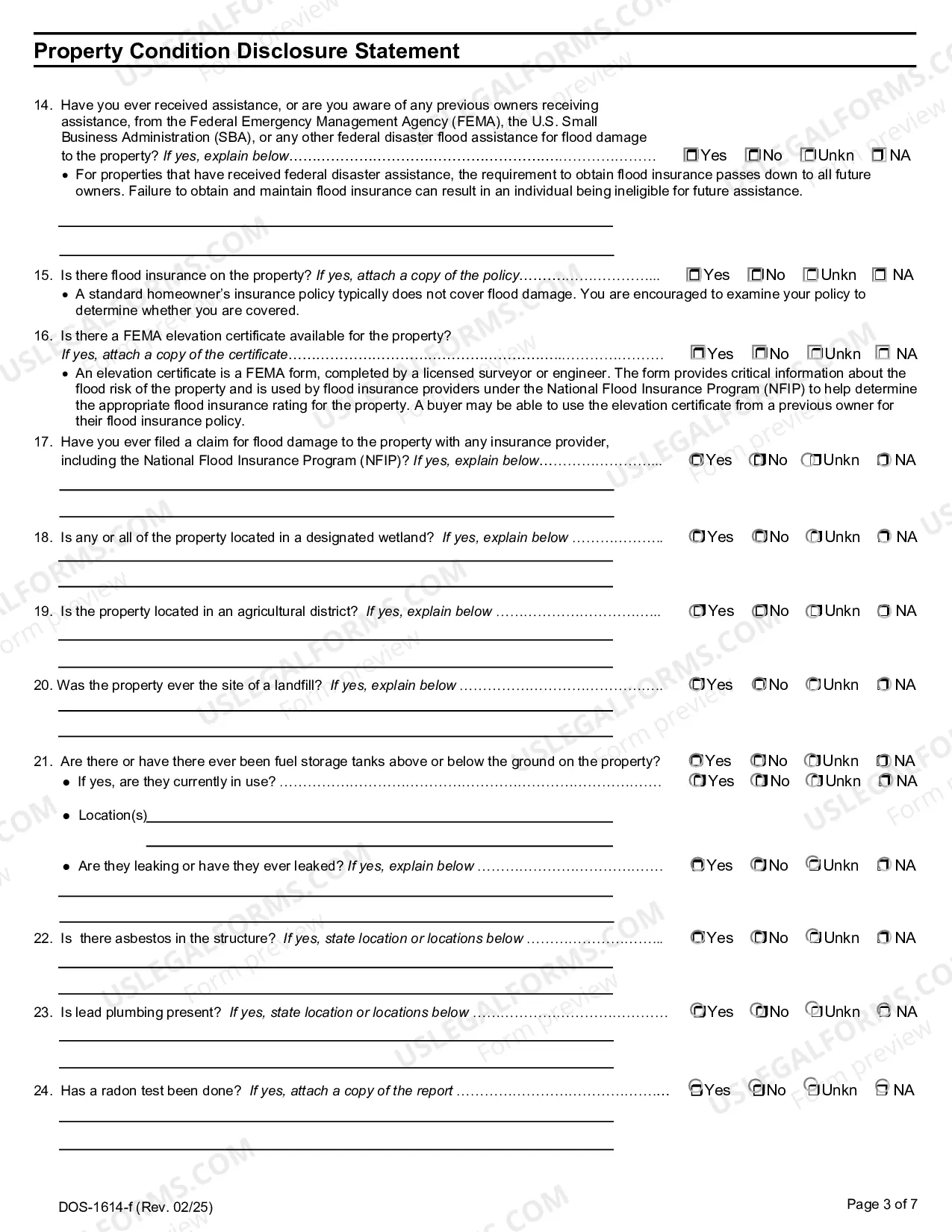
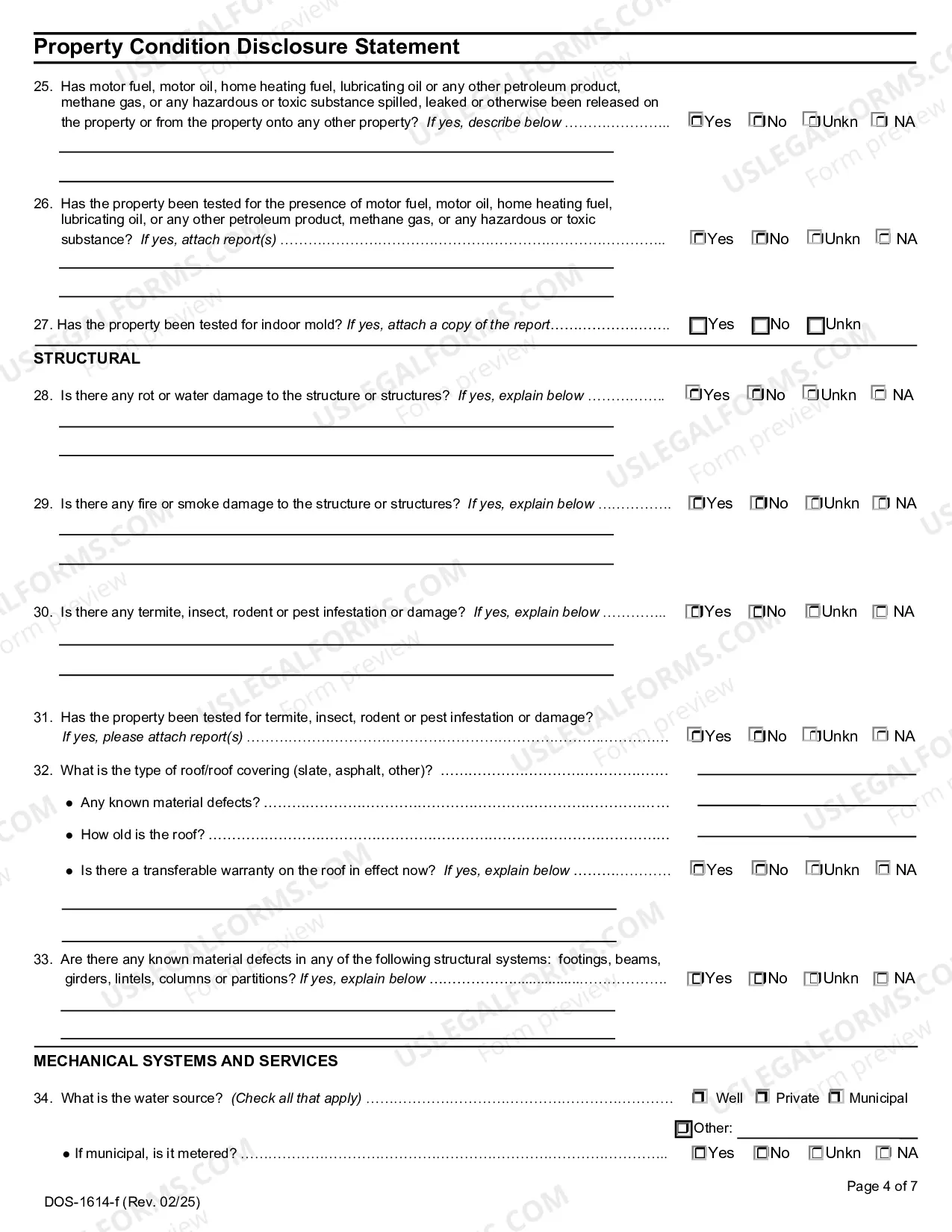
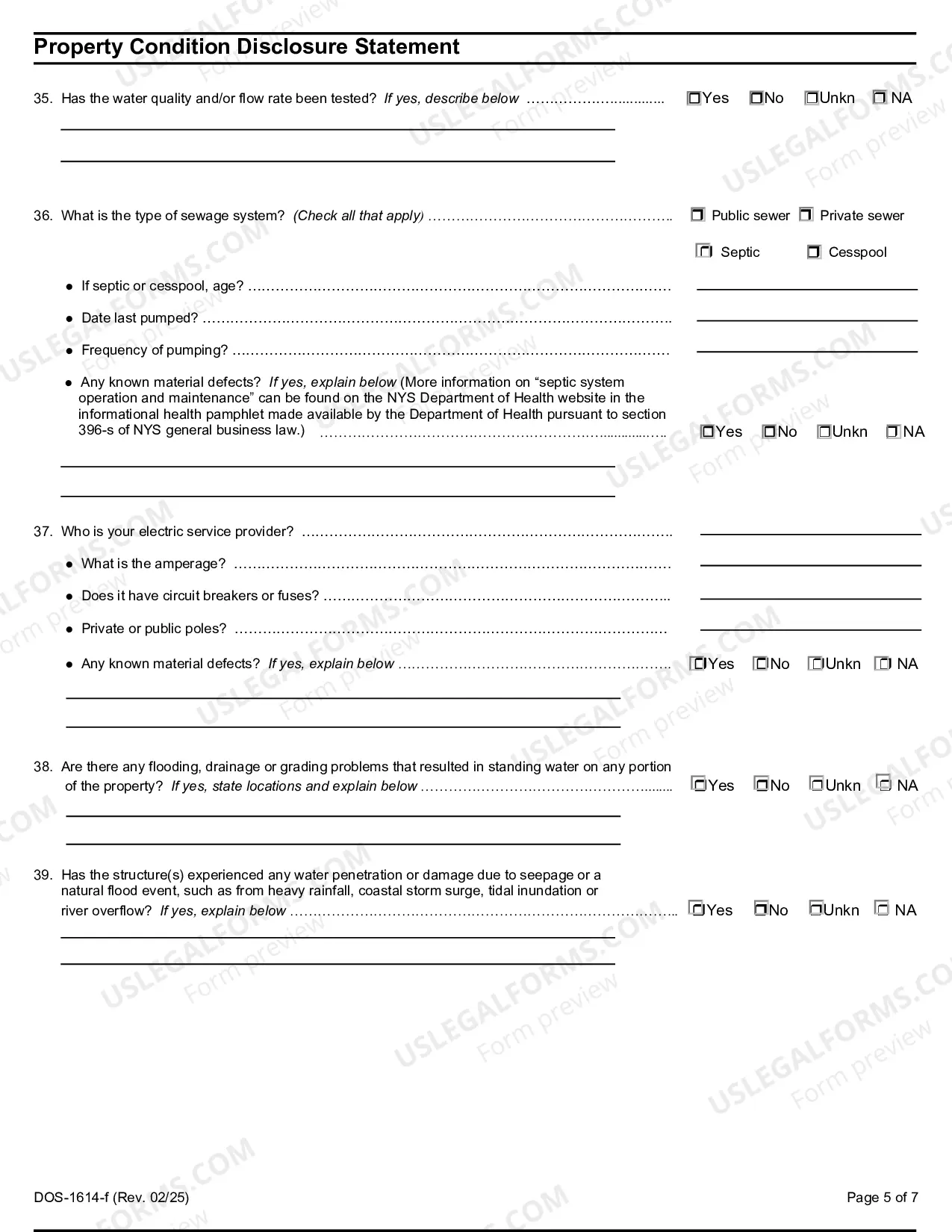
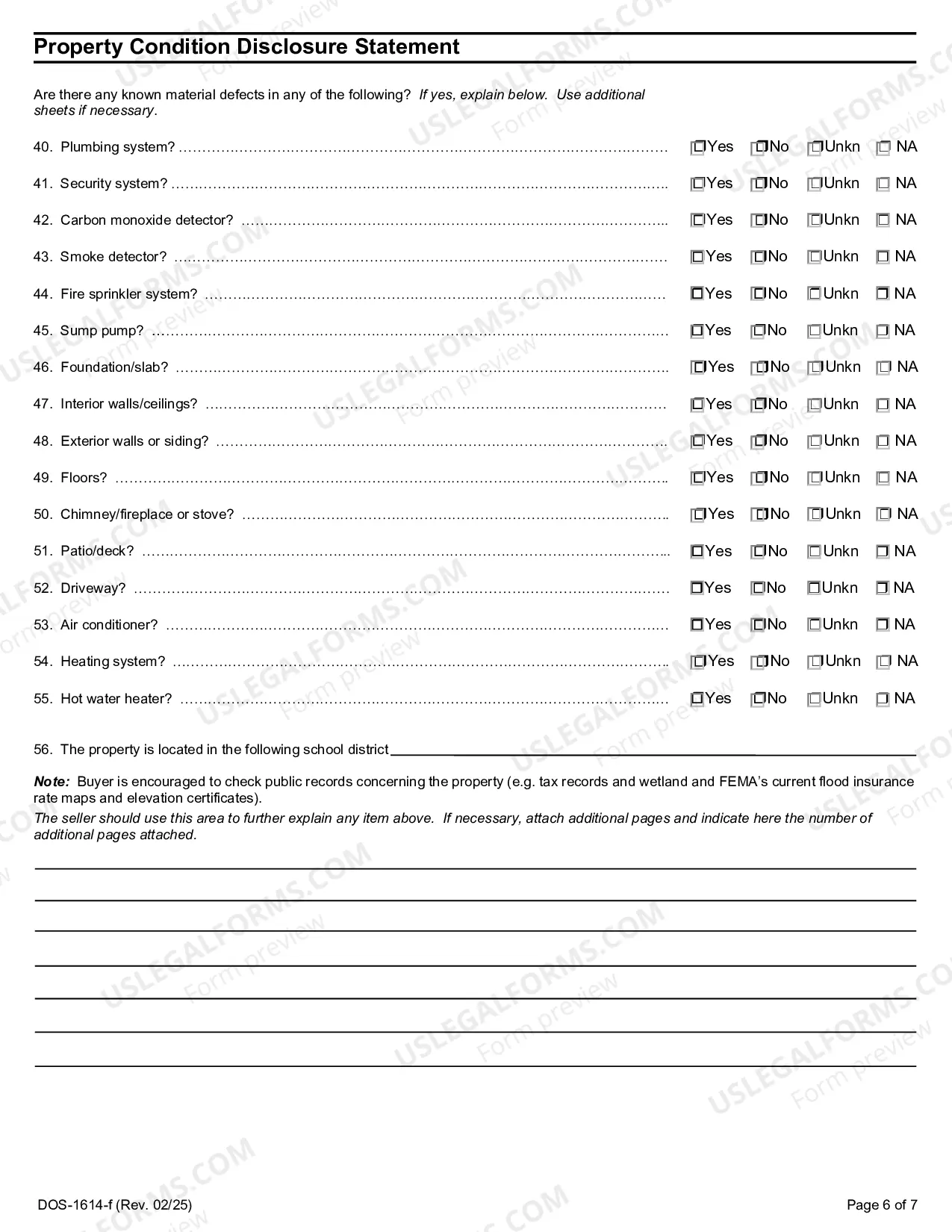
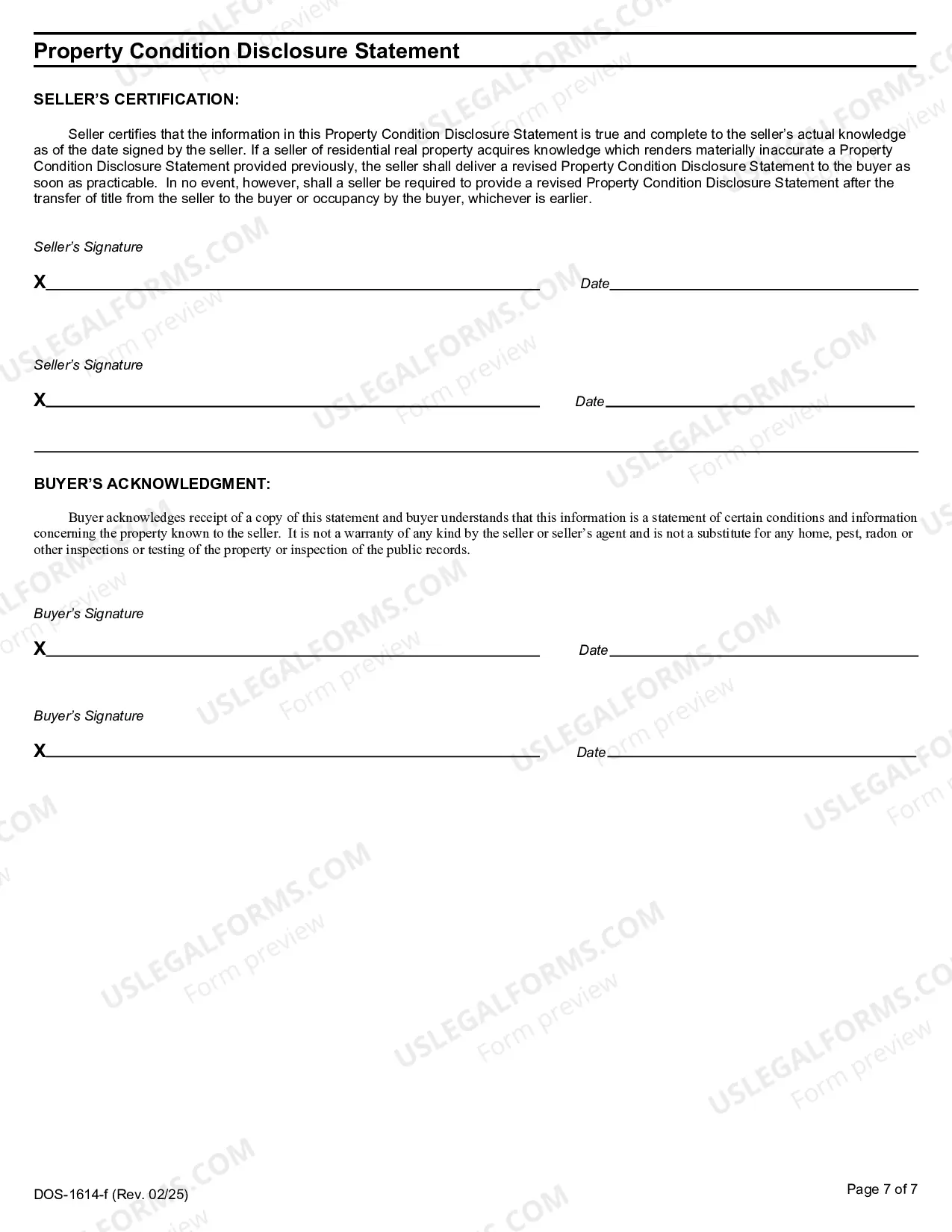
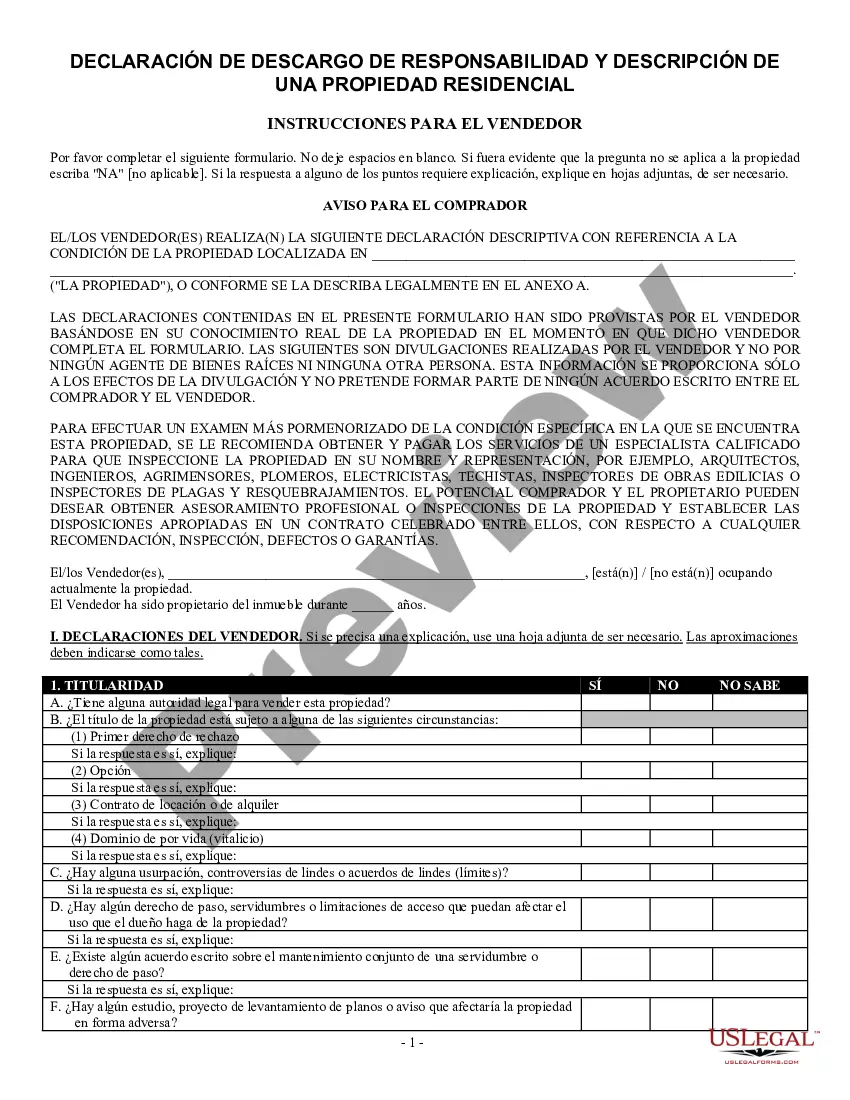
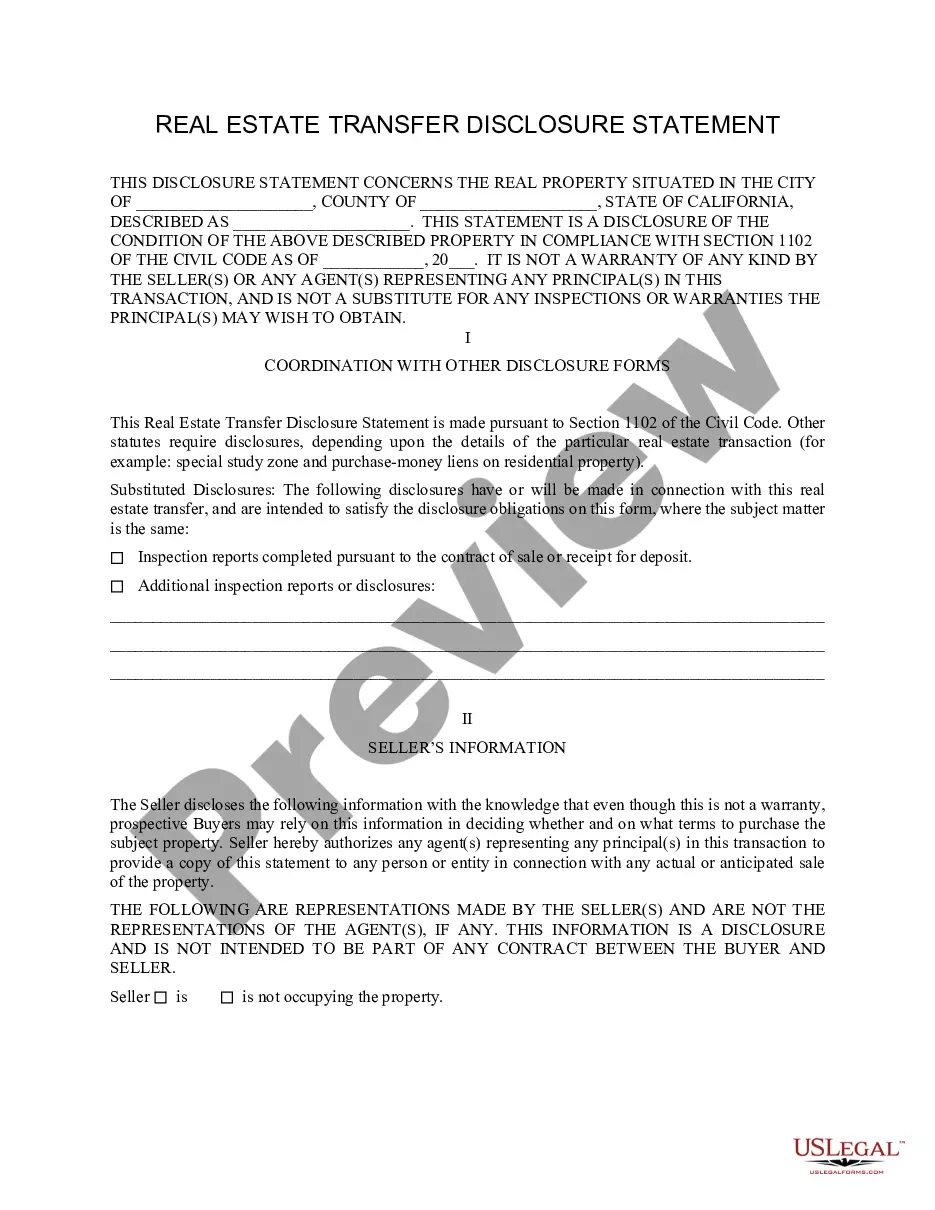
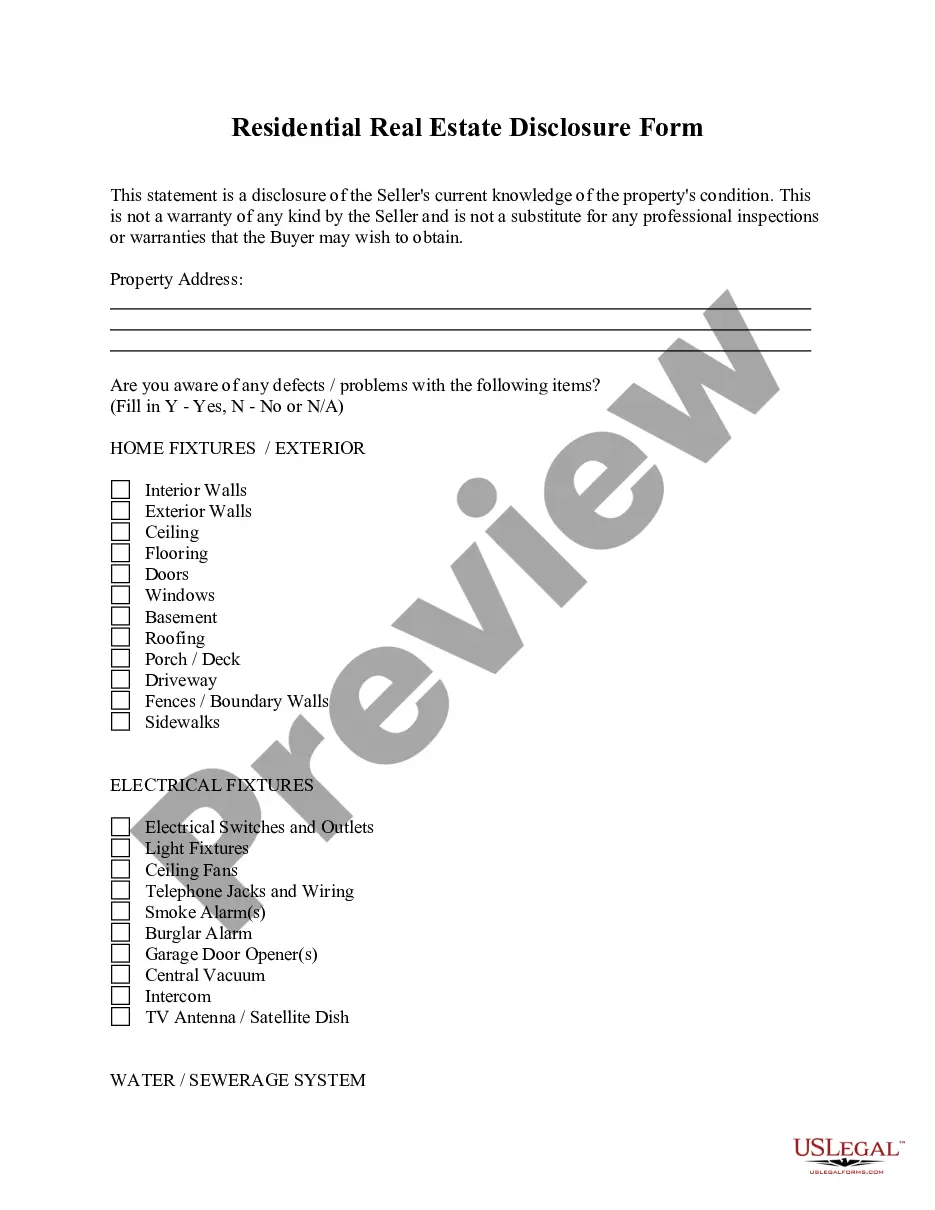
This form is a Seller's Disclosure Statement for use in a residential sales transaction in New York. This disclosure statement concerns the condition of property and is completed by the Seller.
New York Residential Real Estate Sales Disclosure Statement
Instant download
This website is not affiliated with any governmental entity
Public form
Description
Free preview
Get your form ready online
Our built-in tools help you complete, sign, share, and store your documents in one place.
Built-in online Word editor
Make edits, fill in missing information, and update formatting in US Legal Forms—just like you would in MS Word.
Export easily
Download a copy, print it, send it by email, or mail it via USPS—whatever works best for your next step.
E-sign your document
Sign and collect signatures with our SignNow integration. Send to multiple recipients, set reminders, and more. Go Premium to unlock E-Sign.
Notarize online 24/7
If this form requires notarization, complete it online through a secure video call—no need to meet a notary in person or wait for an appointment.
Store your document securely
We protect your documents and personal data by following strict security and privacy standards.

Make edits, fill in missing information, and update formatting in US Legal Forms—just like you would in MS Word.

Download a copy, print it, send it by email, or mail it via USPS—whatever works best for your next step.

Sign and collect signatures with our SignNow integration. Send to multiple recipients, set reminders, and more. Go Premium to unlock E-Sign.

If this form requires notarization, complete it online through a secure video call—no need to meet a notary in person or wait for an appointment.

We protect your documents and personal data by following strict security and privacy standards.
Looking for another form?
How to fill out New York Residential Real Estate Sales Disclosure Statement?
US Legal Forms is a unique system to find any legal or tax template for filling out, including New York Residential Real Estate Sales Disclosure Statement. If you’re tired of wasting time looking for ideal samples and paying money on papers preparation/attorney charges, then US Legal Forms is precisely what you’re seeking.
To enjoy all of the service’s advantages, you don't have to install any application but simply select a subscription plan and create your account. If you already have one, just log in and get the right template, save it, and fill it out. Saved files are all kept in the My Forms folder.
If you don't have a subscription but need to have New York Residential Real Estate Sales Disclosure Statement, take a look at the recommendations below:
- Double-check that the form you’re considering is valid in the state you want it in.
- Preview the sample and look at its description.
- Click Buy Now to reach the sign up webpage.
- Pick a pricing plan and keep on registering by entering some info.
- Pick a payment method to finish the registration.
- Download the file by selecting the preferred file format (.docx or .pdf)
Now, fill out the document online or print it. If you are unsure regarding your New York Residential Real Estate Sales Disclosure Statement template, speak to a attorney to check it before you send or file it. Begin without hassles!
Form popularity
FAQ
A NY Disclosure Form, more formally called the New York State Disclosure Form for Buyer and Seller, is an agency disclosure form that real estate agents are required to hand out to home buyers and sellers.
Under California law, all material facts that affect the value or desirability of the property must be disclosed to the buyer. There is no specific definition or rule on what is considered to be a material fact.
In general, you have an obligation to disclose potential problems and material defects that could affect the value of the property you're trying to sell. In addition, it is considered illegal in most states to deliberately conceal major defects on your property.
California's Especially Stringent Disclosure Requirements Sellers must fill out and give the buyers a disclosure form listing a broad range of defects, such as a leaky roof, deaths that occurred within three years on the property, neighborhood nuisances such as a dog that barks every night, and more.
A seller disclosure form is a document required by State law that discloses certain physical and/or title conditions of a one- to four-unit residential property by a seller to a buyer during a title transfer. The laws regarding what sellers are required to disclose vary State-to-State.
If a seller fails to disclose, or actively conceals, problems that affect the value of the property; they are violating the law, and may be subject to a lawsuit for recovery of damages based on claims of fraud and deceit, misrepresentation and/or breach of contract.
A Seller is not required to provide a PCDS in British Columbia. If a Seller is not willing to provide a PCDS, they may not be disclosing a major issue with the property. The fact a Seller is not willing to provide a PCDS to a potential Buyer should be cause for concern to the Buyer.
Whenever you sell real estate, you are obligated to follow local mandatory disclosure laws. This involves informing the buyer about specific hazards or problems affecting the property before the sale is completed.
In general, a disclosure document is supposed to provide details about a property's condition that might negatively affect its value. Sellers who willfully conceal information can be sued and potentially convicted of a crime. Selling a property As Is will usually not exempt a seller from disclosures.