New York Warranty Deed from Husband and Wife to Husband and Wife
What is this form?
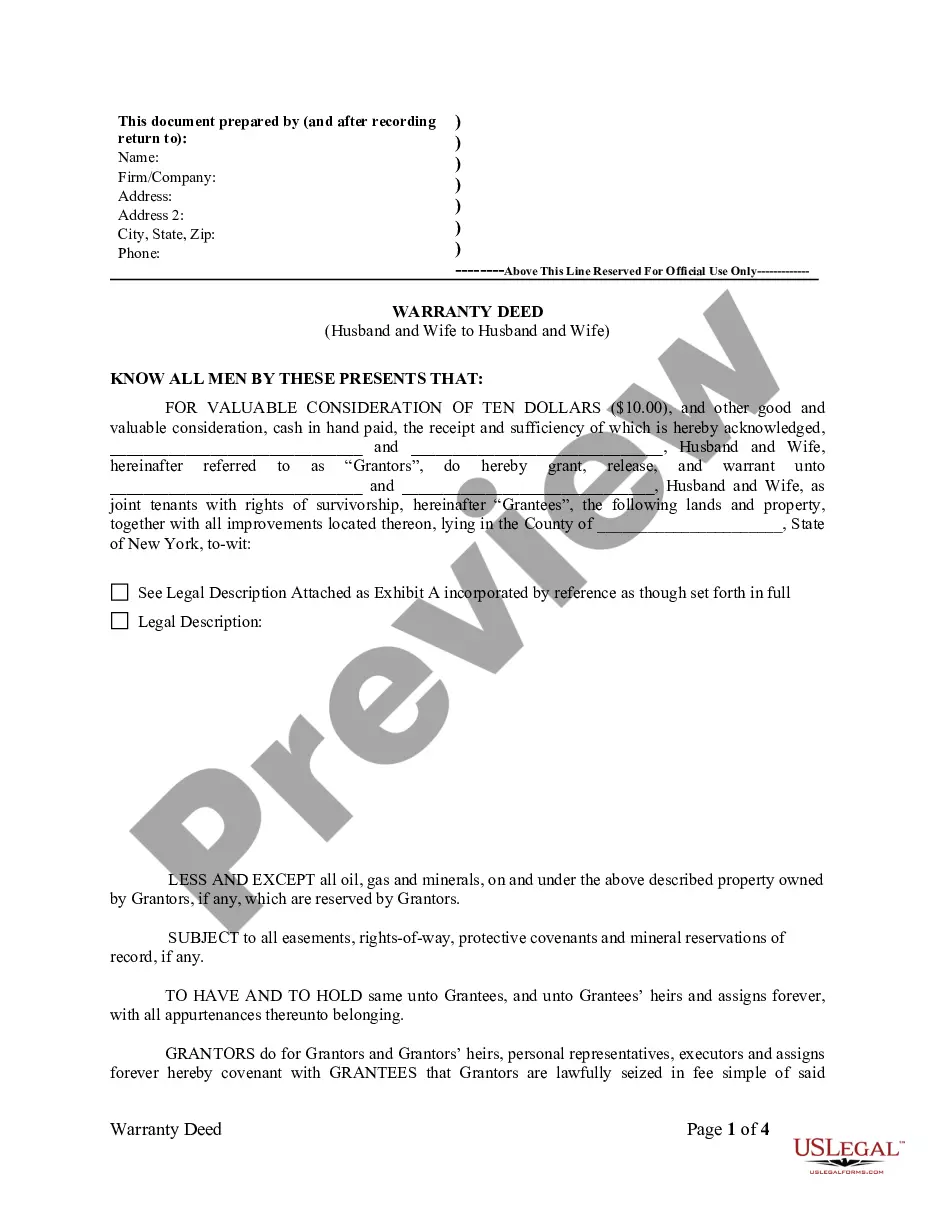
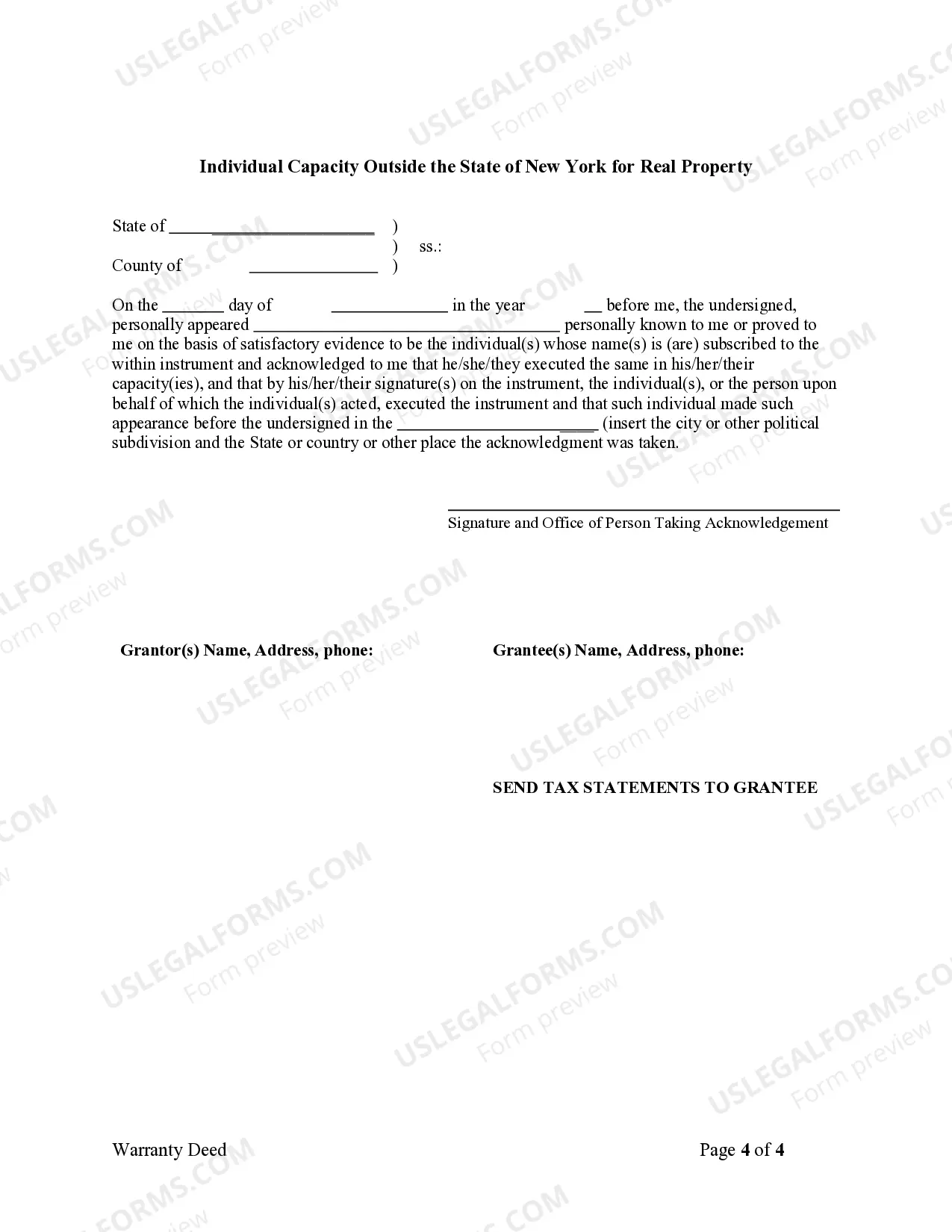
This Warranty Deed from Husband and Wife to Husband and Wife is a legal document that facilitates the transfer of real property between married couples. In this case, the grantors, who are the husband and wife, are conveying property to themselves as grantees. This form is essential for ensuring that both parties maintain rights to the property, signifying their intention to hold it as joint tenants with the right of survivorship. This means that if one spouse passes away, the surviving spouse automatically inherits the entire interest in the property, without the need for probate, distinguishing it from other types of deeds.
Form components explained
- Legal description of the property being conveyed.
- Identification of the grantors (husband and wife) and grantees (husband and wife).
- Covenant of seisin, affirming the grantors' ownership and free title to the property.
- Provision for rights of survivorship among grantees.
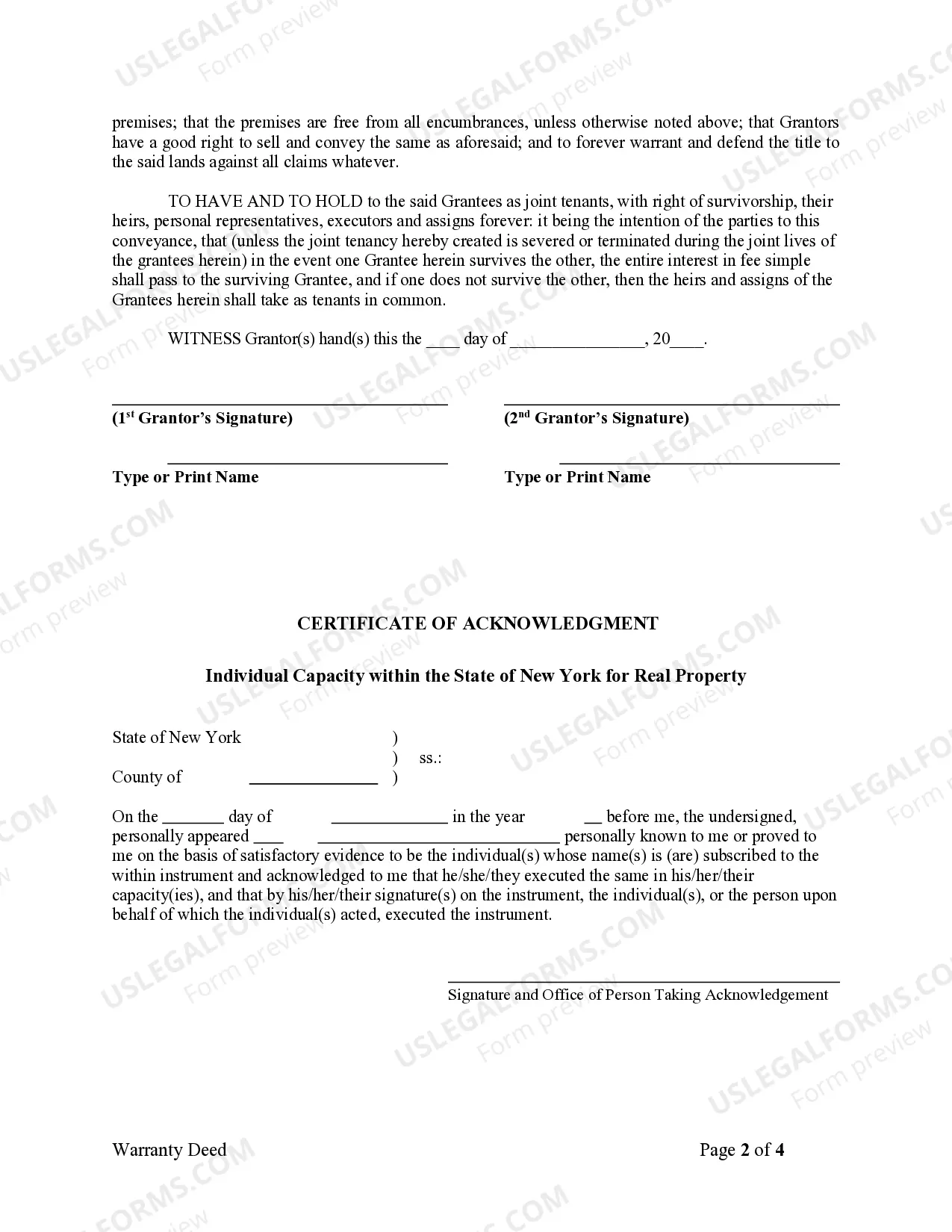
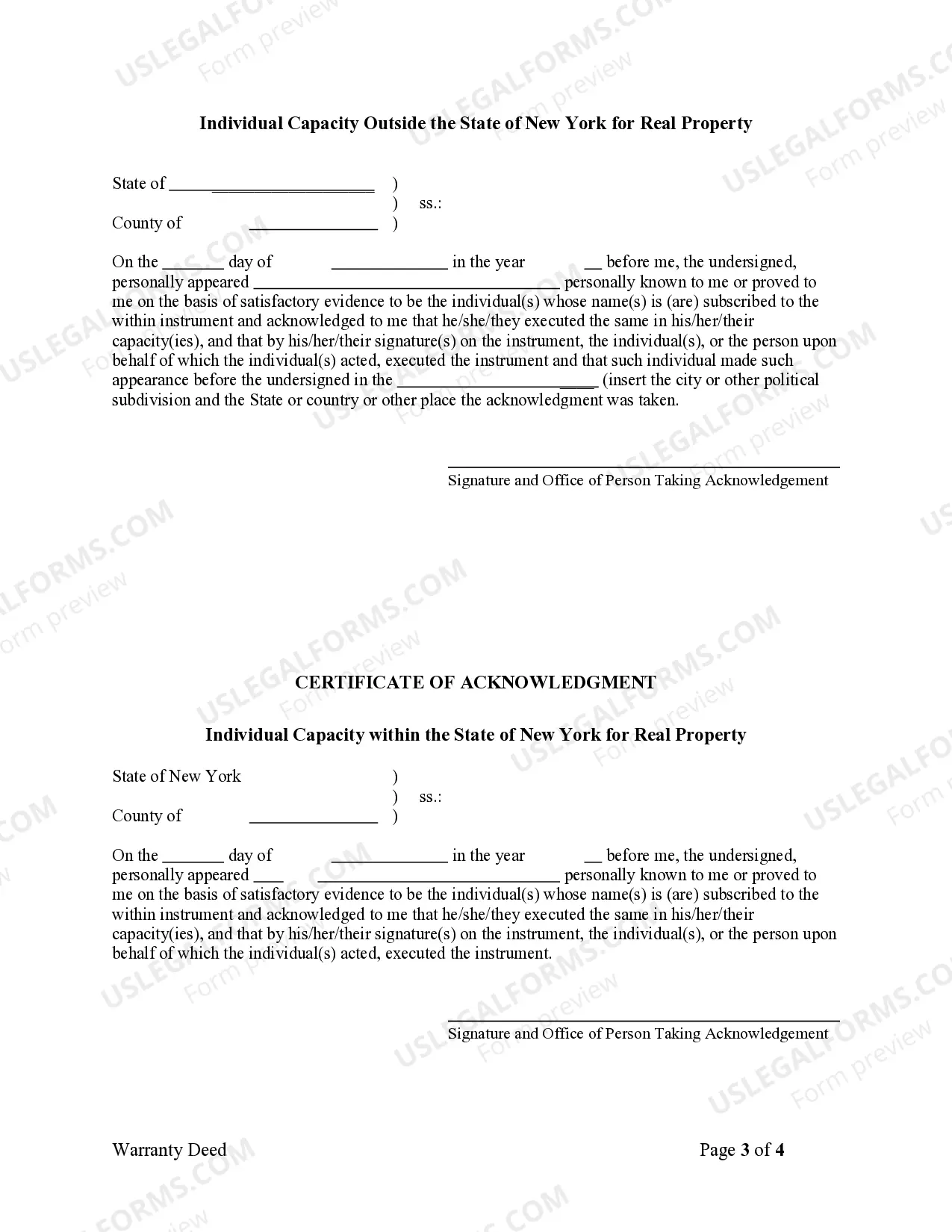
- Signatures of the grantors and acknowledgement by a notary (if applicable).





When to use this document
This form should be used when married couples wish to transfer property between themselves. Common scenarios include the addition of a spouse to an existing property title, managing estate planning through joint ownership, or transferring property as part of a divorce settlement where both parties are retaining joint rights to the property.
Who this form is for
- Married couples who own real property and want to reaffirm or define their ownership structure.
- Couples looking to simplify the transfer of their property in event of one spouse's death.
- Individuals assisting their spouse with a property transaction.
Steps to complete this form
- Identify the parties: List the names of both grantors (husband and wife) and grantees (also husband and wife).
- Specify the property: Attach a legal description of the property as Exhibit A.
- Enter the closing date: Fill in the date when the transfer is taking place.
- Sign the form: Both grantors must sign and date the document to validate the transfer.
- Obtain acknowledgment: If required, a notary public must witness the signatures and provide an acknowledgment.
Does this document require notarization?
To make this form legally binding, it must be notarized. Our online notarization service, powered by Notarize, lets you verify and sign documents remotely through an encrypted video session.
Get your form ready online
Our built-in tools help you complete, sign, share, and store your documents in one place.
Make edits, fill in missing information, and update formatting in US Legal Forms—just like you would in MS Word.
Download a copy, print it, send it by email, or mail it via USPS—whatever works best for your next step.
Sign and collect signatures with our SignNow integration. Send to multiple recipients, set reminders, and more. Go Premium to unlock E-Sign.
If this form requires notarization, complete it online through a secure video call—no need to meet a notary in person or wait for an appointment.
We protect your documents and personal data by following strict security and privacy standards.

Make edits, fill in missing information, and update formatting in US Legal Forms—just like you would in MS Word.

Download a copy, print it, send it by email, or mail it via USPS—whatever works best for your next step.

Sign and collect signatures with our SignNow integration. Send to multiple recipients, set reminders, and more. Go Premium to unlock E-Sign.

If this form requires notarization, complete it online through a secure video call—no need to meet a notary in person or wait for an appointment.

We protect your documents and personal data by following strict security and privacy standards.
Common mistakes to avoid
- Failing to attach the correct legal description of the property.
- Not signing the form in front of a notary, if required by state law.
- Inaccurate or incomplete information about the grantors or property.
Benefits of using this form online
- Convenience of downloading and completing forms from home.
- Editability allows you to fill out forms at your own pace.
- Access to templates that comply with legal standards.
Looking for another form?



Form popularity
FAQ
Under New York law, a person who wishes to update her name on a deed must execute a new deed and record it with the county clerk where the property is located. Obtain or purchase a New York warranty deed form.
To change the deed in New York City, as we discussed, we will need a deed signed and notorized by the grantor. Additionally, the deed must also be filed and recorded with the Office of the City Register along with transfer documents which identify if any taxes are due.
To change the deed in New York City, as we discussed, we will need a deed signed and notorized by the grantor. Additionally, the deed must also be filed and recorded with the Office of the City Register along with transfer documents which identify if any taxes are due.
If you've recently married and already own a home or other real estate, you may want to add your new spouse to the deed for your property so the two of you own it jointly. To add a spouse to a deed, all you have to do is literally fill out, sign and record a new deed in your county recorder's office.
The only way to forcibly change the ownership status is through a legal action and the resultant court order. However, if an owner chooses to be removed from the deed, it is simply a matter of preparing a new deed transferring that owner's interest in the property.
Retrieve your original deed. Get the appropriate deed form. Draft the deed. Sign the deed before a notary. Record the deed with the county recorder. Obtain the new original deed.
The fees to file a New York quitclaim deed vary from county to county, but some of the fees are similar. As of 2018, the basic fee for filing a quitclaim deed of residential or farm property is $125, while the fee for all other property is $250. These fees are for the RP-5217 form.