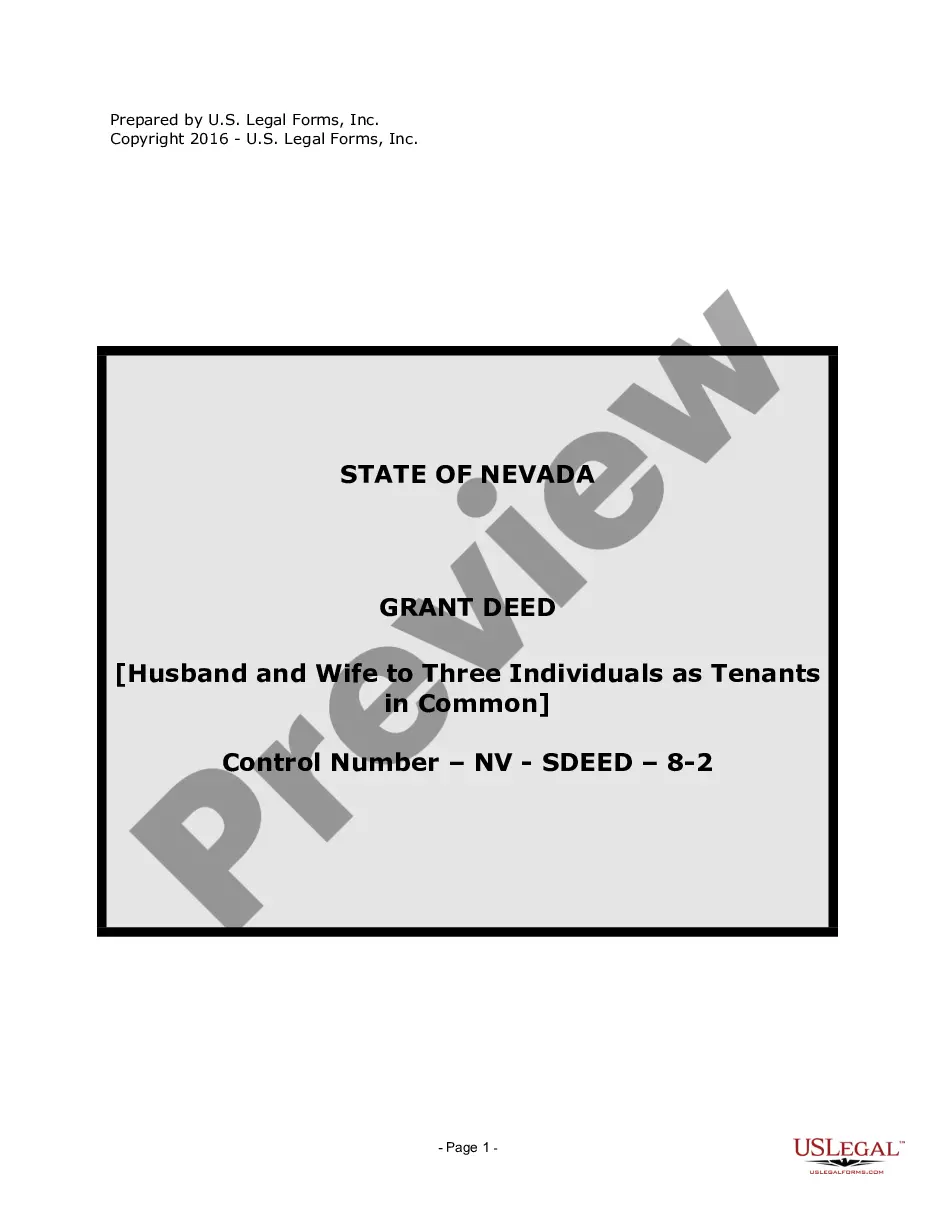
Nevada Grant Deed from Husband and Wife to Three Individuals as Tenants in Common
Overview of this form
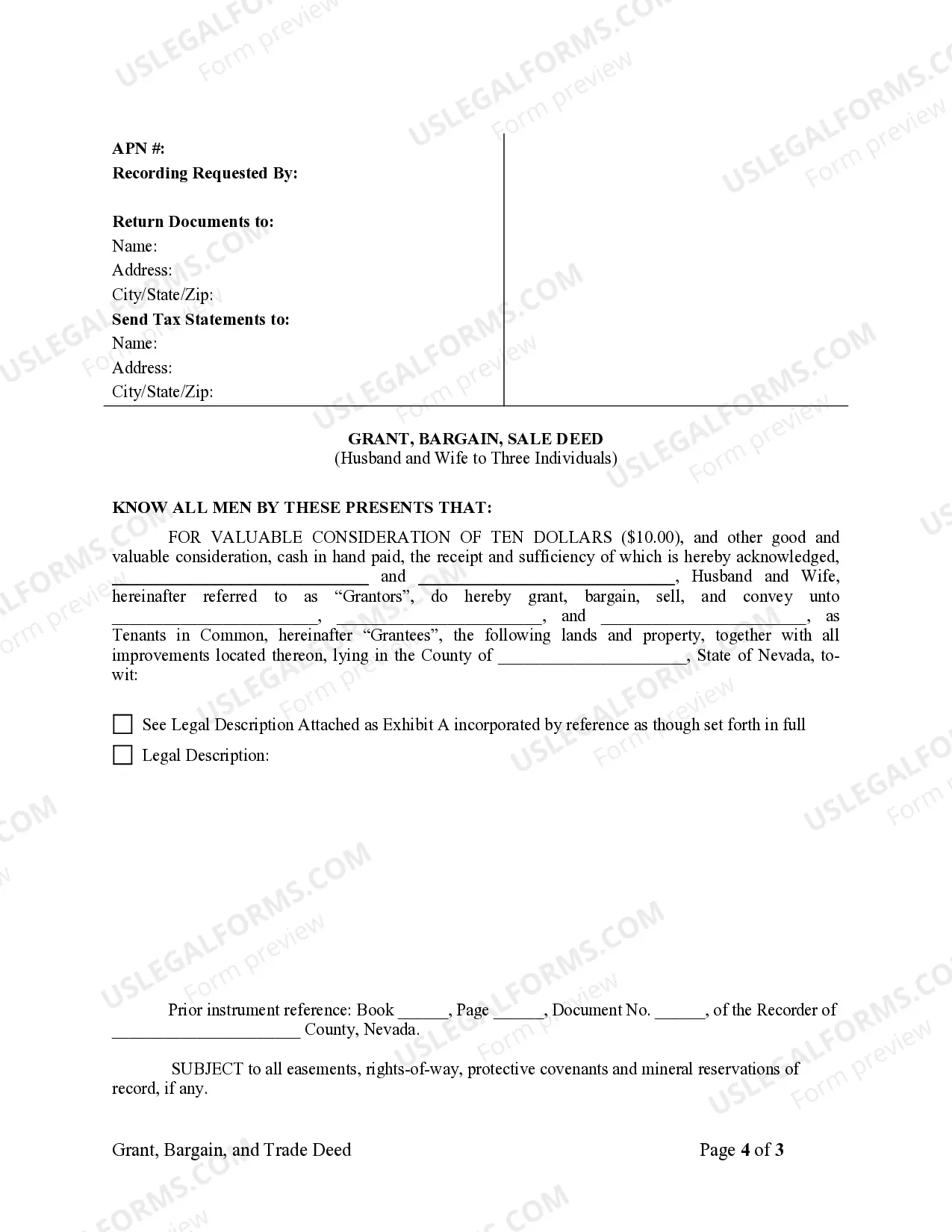
This Grant Deed is a legal document that enables a married couple, acting as the grantors, to transfer ownership of property to three individuals, who will hold the title as tenants in common. This form is distinct from similar documents, such as a quitclaim deed, because it not only conveys ownership but also includes warranties about the title. It is essential for ensuring that the grantees have their proportional shares in the property, maintaining clarity in ownership rights.
Form components explained
- Identifies the grantors (husband and wife) and grantees (three individuals).
- Includes a description of the property being transferred.
- States the intention of the grantors to convey the property as tenants in common.
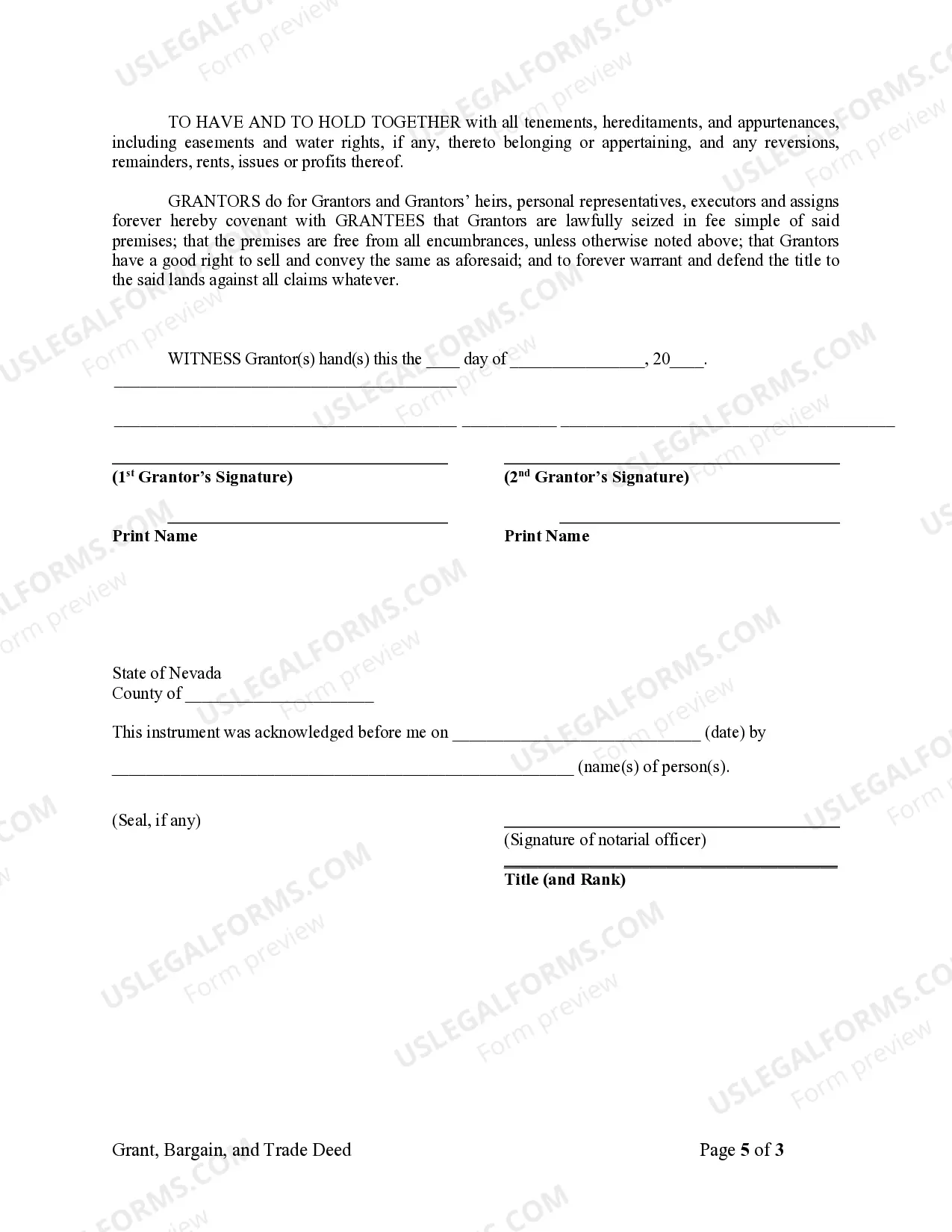
- Requires signatures from all grantors to validate the transfer.
- Contains warranties regarding the title, asserting that the grantors legally own the property and it is free from encumbrances.





Common use cases
This form should be used when a married couple wishes to transfer ownership of their property to three individuals. This situation may arise when co-owners are dividing property after a change in family dynamics, or when they want to share investment in real estate. It is crucial for ensuring that each individual receives a specific, defined interest in the property, which can help avoid disputes in the future.
Intended users of this form
This form is suitable for:
- Married couples looking to transfer property to multiple parties.
- Individuals managing the estate distribution among heirs.
- Investors wanting to establish shared ownership of real property.
How to prepare this document
- Identify the grantors by providing their names and marital status.
- Specify the names of the three individuals who will become the grantees.
- Clearly describe the property being transferred, including any unique identifiers like parcel numbers.
- Fill in the necessary details regarding any prior instruments or encumbrances, if applicable.
- Both grantors must sign and date the document to complete the transfer.
Notarization requirements for this form
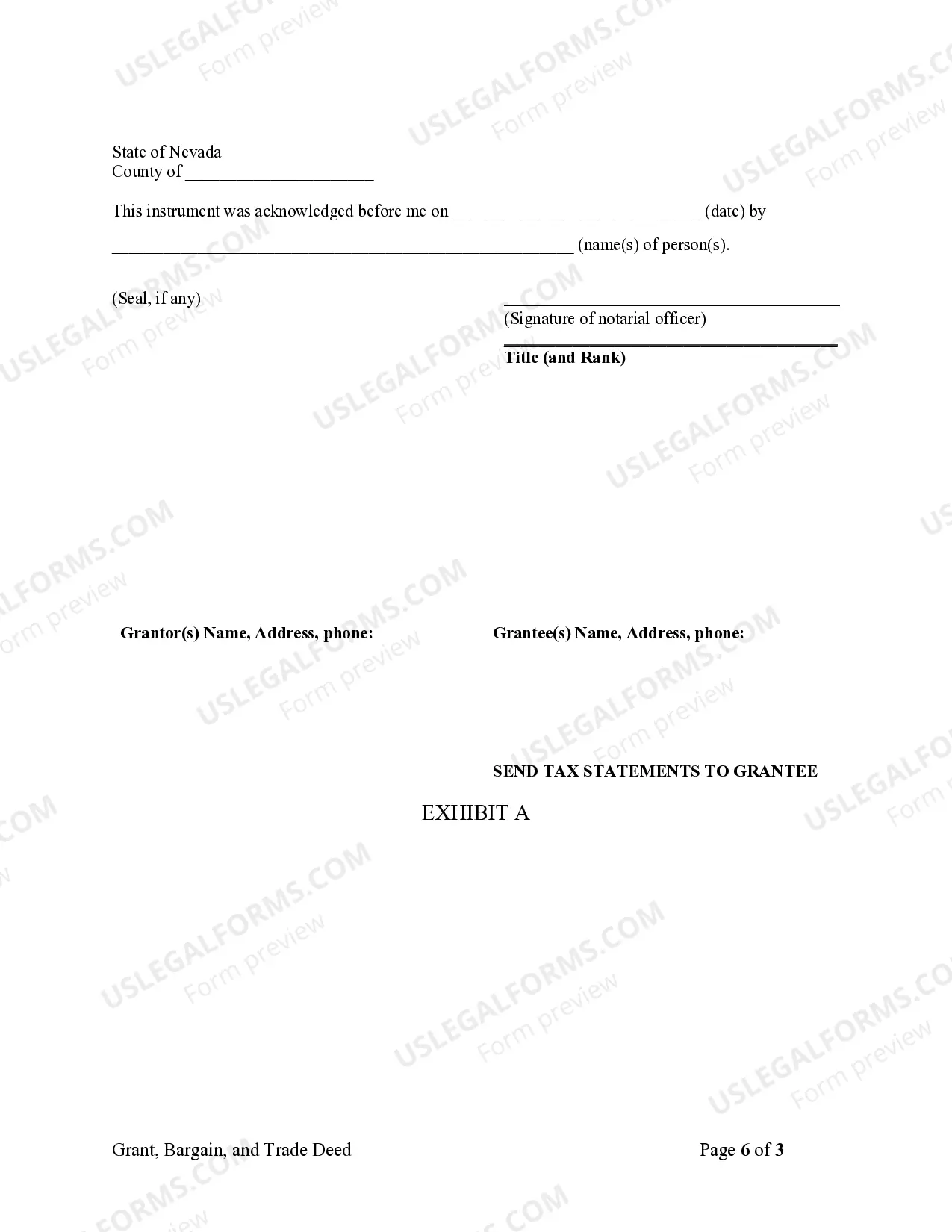
This document requires notarization to meet legal standards. US Legal Forms provides secure online notarization powered by Notarize, allowing you to complete the process through a verified video call, available 24/7.
Get your form ready online
Our built-in tools help you complete, sign, share, and store your documents in one place.
Make edits, fill in missing information, and update formatting in US Legal Forms—just like you would in MS Word.
Download a copy, print it, send it by email, or mail it via USPS—whatever works best for your next step.
Sign and collect signatures with our SignNow integration. Send to multiple recipients, set reminders, and more. Go Premium to unlock E-Sign.
If this form requires notarization, complete it online through a secure video call—no need to meet a notary in person or wait for an appointment.
We protect your documents and personal data by following strict security and privacy standards.

Make edits, fill in missing information, and update formatting in US Legal Forms—just like you would in MS Word.

Download a copy, print it, send it by email, or mail it via USPS—whatever works best for your next step.

Sign and collect signatures with our SignNow integration. Send to multiple recipients, set reminders, and more. Go Premium to unlock E-Sign.

If this form requires notarization, complete it online through a secure video call—no need to meet a notary in person or wait for an appointment.

We protect your documents and personal data by following strict security and privacy standards.
Typical mistakes to avoid
- Failing to include all required signatures from grantors.
- Not providing a complete property description.
- Overlooking any prior encumbrances or liens on the property.
- Not consulting state-specific regulations which may affect the deed.
Advantages of online completion
- Convenience of instant download and completion from home.
- Editability allows for adjustments before finalizing the document.
- Reliability of templates reviewed by licensed attorneys ensures accuracy and legal compliance.
- Easy navigation through form fields designed for user-friendliness.
Looking for another form?








Form popularity
FAQ
As with the tenancy-in-common, a joint tenancy can exist in three or more people. Obviously, each party must have an interest that is equal to one divided by the total number of joint tenants. If one of the joint tenants dies, the others share his or her interest and they remain joint tenants with each other.
California married couples generally have three options to take title to their community (vs separate) property real estate: community property, joint tenancy or Community Property with Right of Survivorship. The latter coming into play in California July of 2001.
The law doesn't forbid adding people to a deed on a home with an outstanding mortgage. Mortgage lenders are familiar and frequently work with deed changes and transfers.When you "deed" your home to someone, you've effectively transferred part ownership, which could activate the "due-on-sale" clause.
In most cases, the surviving owner or heir obtains the title to the home, the former owner's death certificate, a notarized affidavit of death, and a preliminary change of ownership report form. When all these are gathered, the transfer gets recorded, the fees are paid, and the county issues a new title deed.
Serve a written notice of the change (a 'notice of severance') on the other owners - a conveyancer can help you do this. Download and fill in form SEV to register a restriction without the other owners' agreement. Prepare any supporting documents you need to include.
Adding someone to your house deed requires the filing of a legal form known as a quitclaim deed. When executed and notarized, the quitclaim deed legally overrides the current deed to your home. By filing the quitclaim deed, you can add someone to the title of your home, in effect transferring a share of ownership.
Joint tenancy can only be created if the four people obtain their interest at the same time. In other words, if three people own a building, they cannot add a fourth person to the deed and create a joint tenancy.
It is possible to be named on the title deed of a home without being on the mortgage. However, doing so assumes risks of ownership because the title is not free and clear of liens and possible other encumbrances.If a mortgage exists, it's best to work with the lender to make sure everyone on the title is protected.
Six people can be on title. It can cause a lot of problems when it comes time to sell though. If even one of the six won't sign, you have a problem. They can sign at different times and from different locations depending on the closing attorney or escrow company.