New Mexico Residential or Rental Lease Extension Agreement
Understanding this form
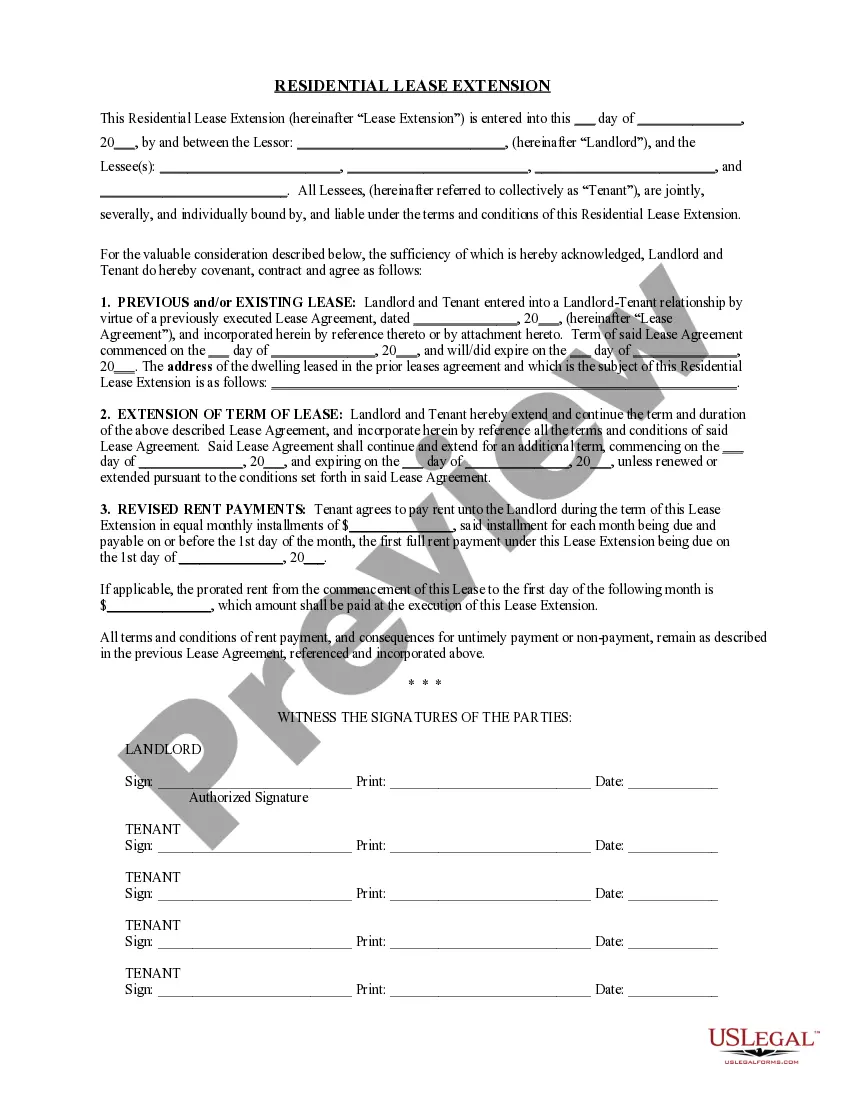
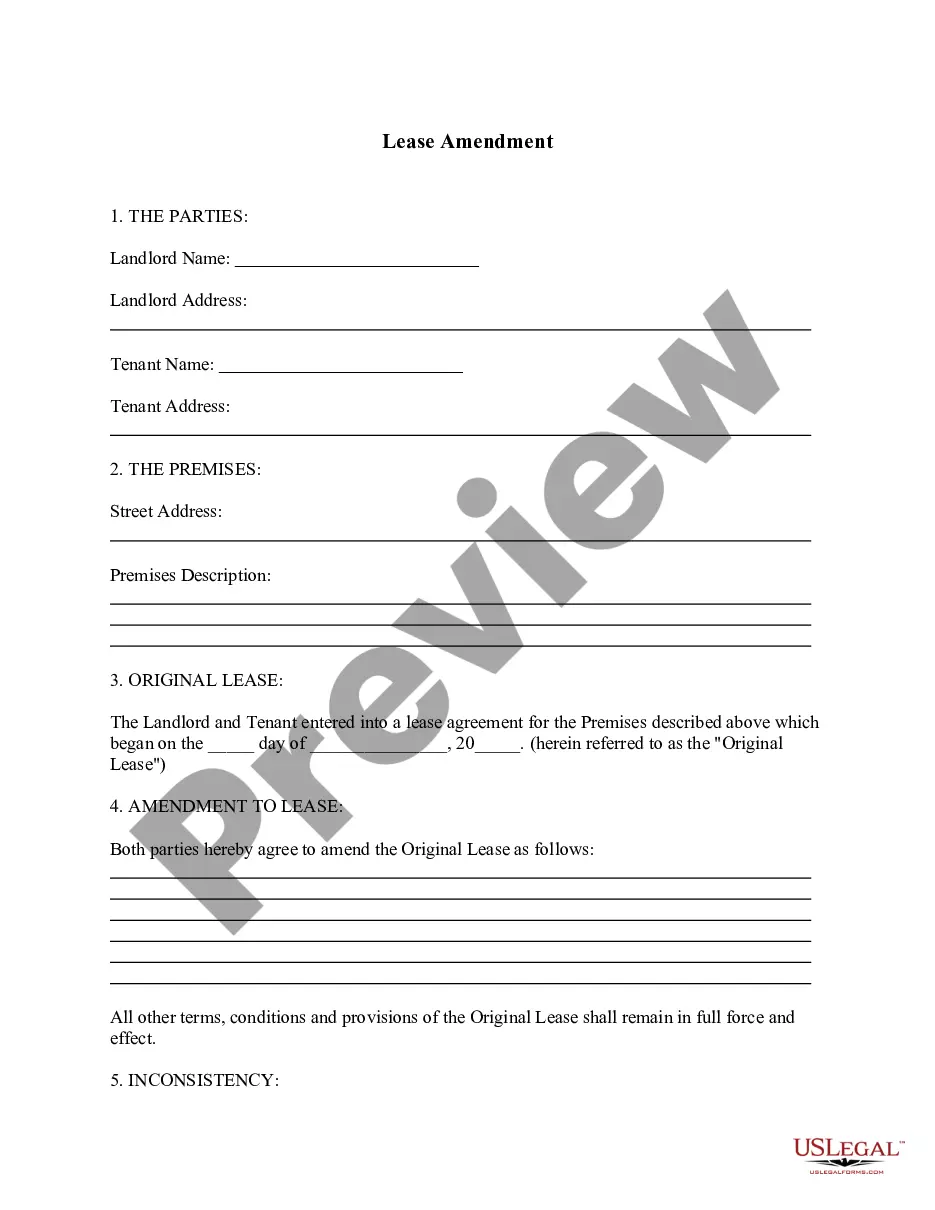
The Residential or Rental Lease Extension Agreement is a legal document that allows landlords and tenants to extend the duration of an existing residential lease without the need for a new lease. This form ensures that all terms from the previous lease are carried over while possibly modifying the rent or other conditions. By signing this agreement, both parties agree to continue their landlord-tenant relationship under the modified terms outlined in this extension.
Key parts of this document
- Identification of the landlord and tenant along with their responsibilities
- Reference to the original lease agreement being extended
- New effective dates for the lease extension
- Details regarding revised rent payments or other changes
- Signatures of all parties involved confirming their agreement
When this form is needed
This form is used when a landlord and tenant want to extend the terms of their current lease, typically when the initial lease term is nearing its end. It can be beneficial when both parties are satisfied with the existing lease arrangements but wish to continue their agreement for a further specified period. This extension can also be utilized if there are necessary modifications to the rent or other conditions of the lease.
Who can use this document
- Landlords seeking to extend a lease with existing tenants
- Tenants who wish to continue living in a rental property under the same or modified terms
- Parties looking to maintain their tenancy agreement without executing an entirely new lease
Completing this form step by step
- Identify the parties involved, including the landlord and tenant names.
- Specify the original lease agreement's date and the address of the leased property.
- Enter the new start and expiration dates for the lease extension.
- Detail the revised rent payments and specify when the first payment is due.
- Ensure all parties sign and date the form to indicate agreement.
Does this document require notarization?
This form does not typically require notarization unless specified by local law. Users are encouraged to check state regulations to ensure compliance.
Get your form ready online
Our built-in tools help you complete, sign, share, and store your documents in one place.
Make edits, fill in missing information, and update formatting in US Legal Forms—just like you would in MS Word.
Download a copy, print it, send it by email, or mail it via USPS—whatever works best for your next step.
Sign and collect signatures with our SignNow integration. Send to multiple recipients, set reminders, and more. Go Premium to unlock E-Sign.
If this form requires notarization, complete it online through a secure video call—no need to meet a notary in person or wait for an appointment.
We protect your documents and personal data by following strict security and privacy standards.

Make edits, fill in missing information, and update formatting in US Legal Forms—just like you would in MS Word.

Download a copy, print it, send it by email, or mail it via USPS—whatever works best for your next step.

Sign and collect signatures with our SignNow integration. Send to multiple recipients, set reminders, and more. Go Premium to unlock E-Sign.

If this form requires notarization, complete it online through a secure video call—no need to meet a notary in person or wait for an appointment.

We protect your documents and personal data by following strict security and privacy standards.
Common mistakes to avoid
- Failing to include all parties' names clearly, which could lead to disputes over liability.
- Not confirming the terms of the original lease are being accurately incorporated into the extension.
- Overlooking to specify the start date of the extension, leading to confusion about the lease terms.
Benefits of completing this form online
- Immediate access to customizable templates that are drafted by licensed attorneys.
- Convenience of downloading and filling out the form at your own pace.
- Reliability in obtaining a legally sound document without needing to visit a lawyer's office.
Looking for another form?






Form popularity
FAQ
Renewing a lease locks a tenant in so a landlord knows (if all goes to plan) that they will receive rent for a predictable period of time. Likewise, as the PM, it means your revenue is also guaranteed to remain stable because you only get your cut, when the landlord gets their rent!
By definition, a lease renewal is a new lease agreement, whereas a lease extension is a continuation of the original lease agreement. Generally speaking, the practical effect of either is that the parties to the lease continue the landlord-tenant relationship beyond the expiration of the original term of the lease.
Firstly, you will have to pay the premium for the lease extension. Secondly, you will have to pay your landlord's reasonable costs as they are legally entitled to.
Contract extension: an existing contract is continued for a period of time.Contract renewal: an existing contract endsby, for example, expiringand the parties agree to enter into a new contract (usually for the same or very similar services).
A lease agreement or a rental agreement is a vital legal document that should be completed prior to a landlord renting property to a tenant.A lease agreement is a contract between a landlord and a tenant that covers the renting of property for long periods of time, usually a period of 12 months or more.
Create Document. A lease extension addendum is a contract that further extends the term of an existing lease agreement. The addendum will establish a new lease termination date that both the landlord and tenant agree to.
Your rights as a tenant when a lessor proposes changes to your lease depend on whether you have an option to renew when the lease expires.That is, a new lease is created, and both parties are legally bound to that agreement. Until both parties sign the new lease, there is only an 'agreement to lease'.
You can immediately file an eviction if the tenant refuses to leave the property.If you took a rental payment from the tenant after their lease expired, you'll need to provide all the normal notices. When your tenant overstays their lease, you will still, however, be required to go through the normal eviction process.
When a lease ends, a tenant may choose to move, continue to pay rent as a month-to-month tenant, or sign a new lease. If a tenant continues to pay rent after a lease ends, in most states the terms of the expired lease carry over into a month-to-month tenancy.