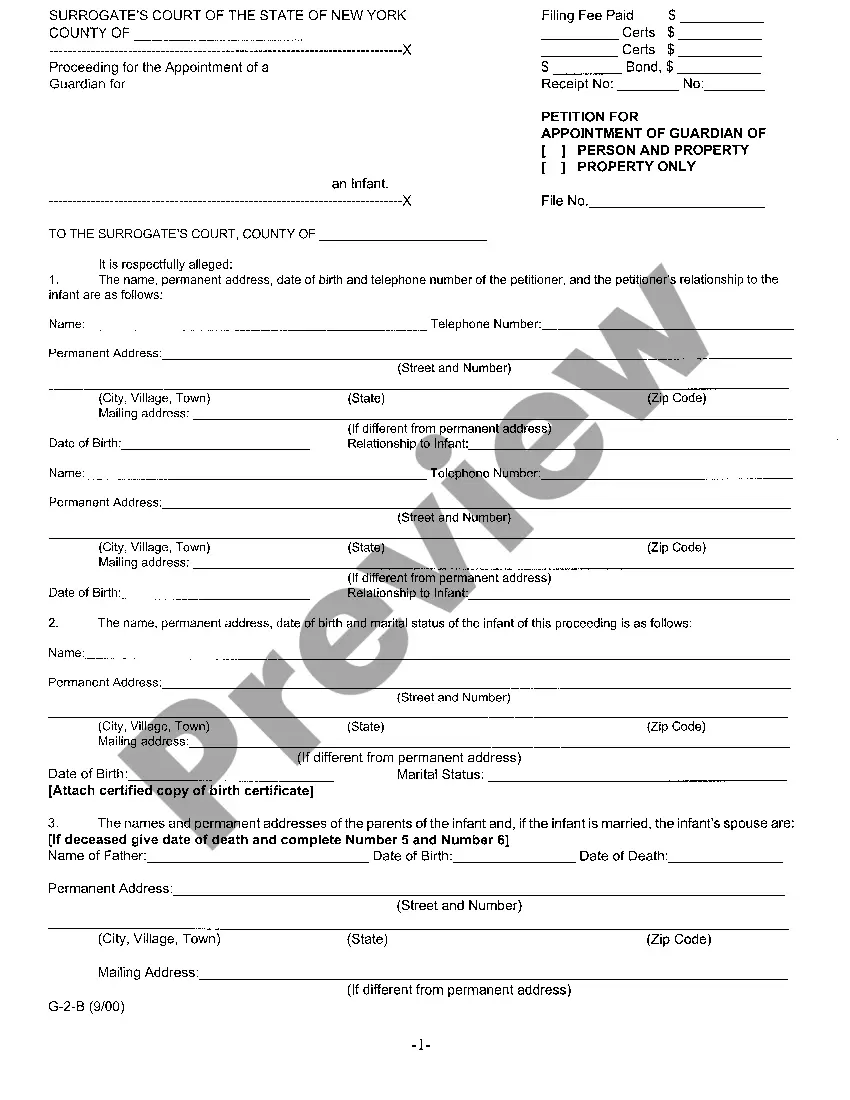
South Dakota Living Trust for Individual Who is Single, Divorced or Widow or Widower with No Children

Understanding this form
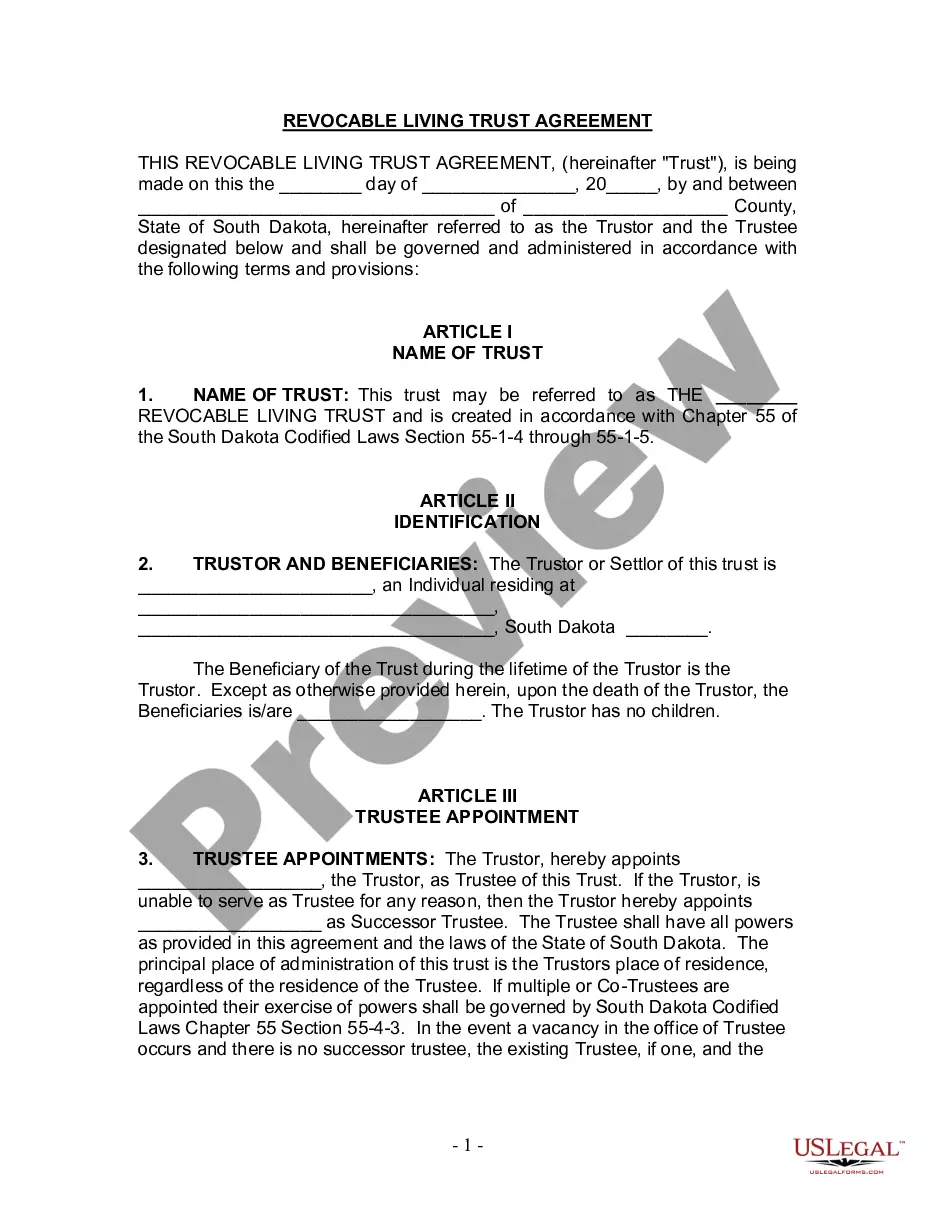
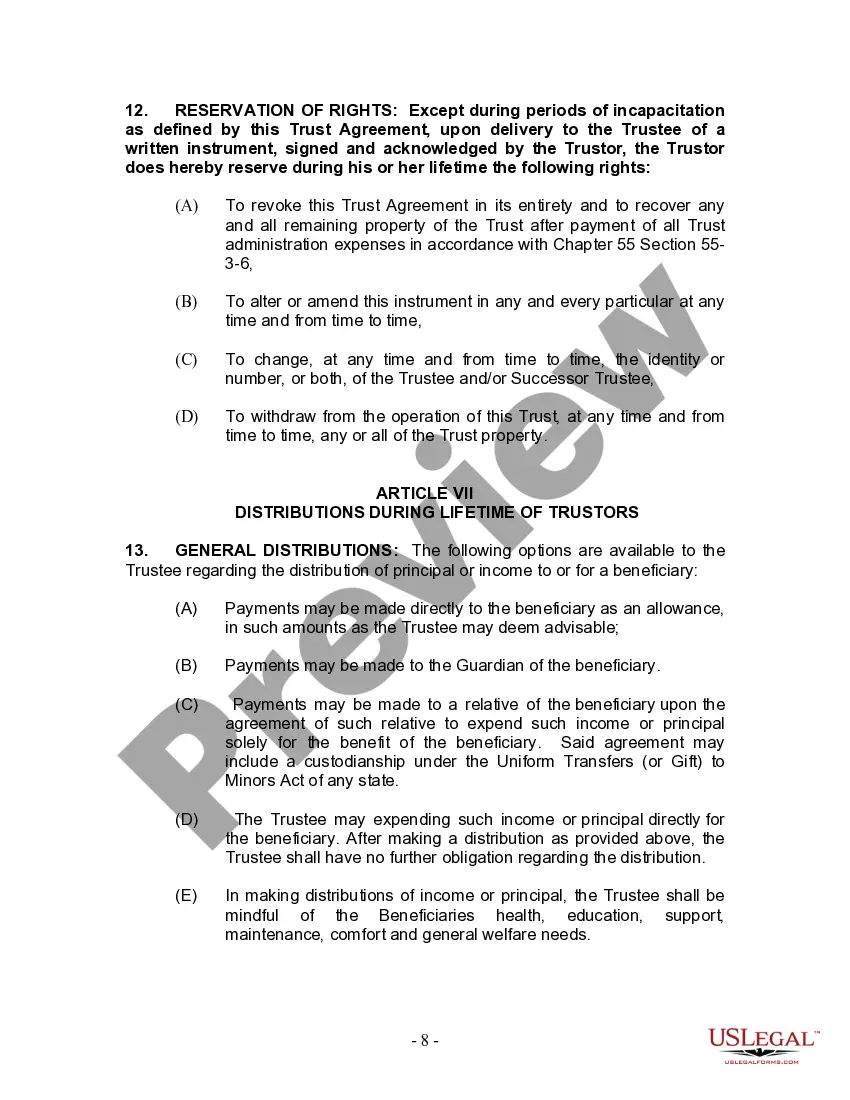
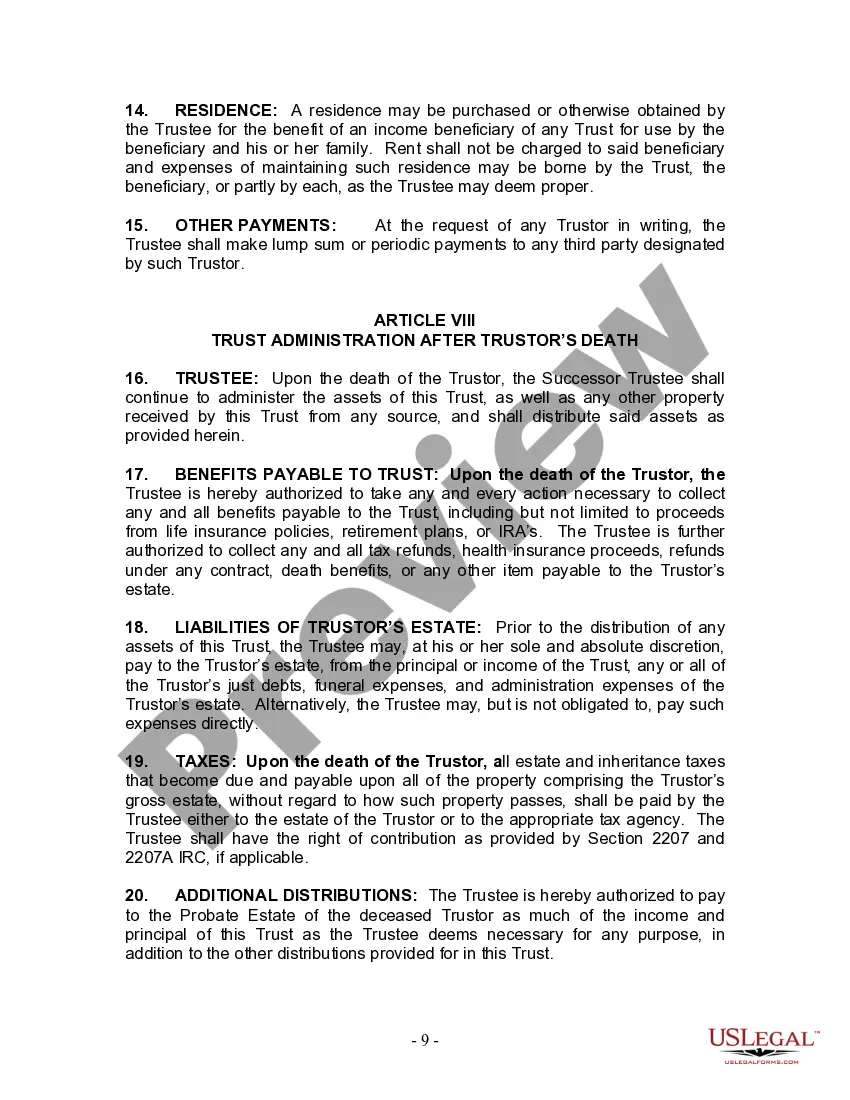
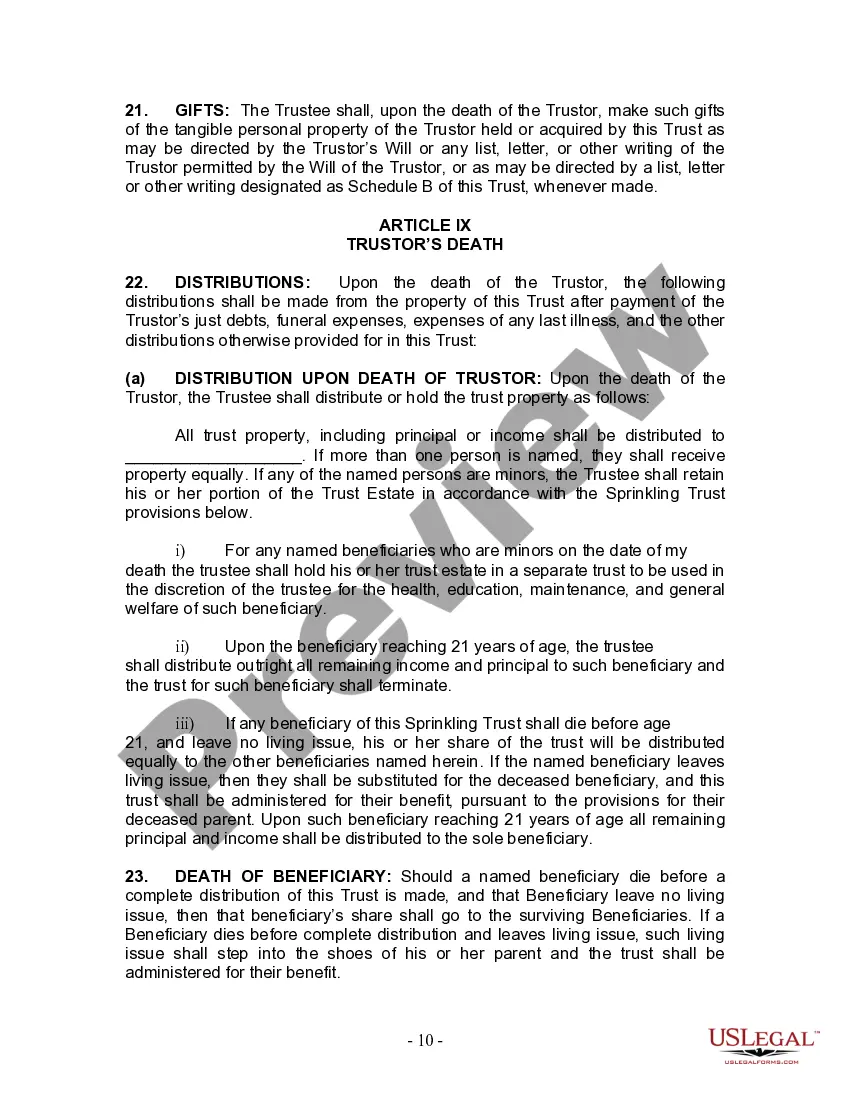
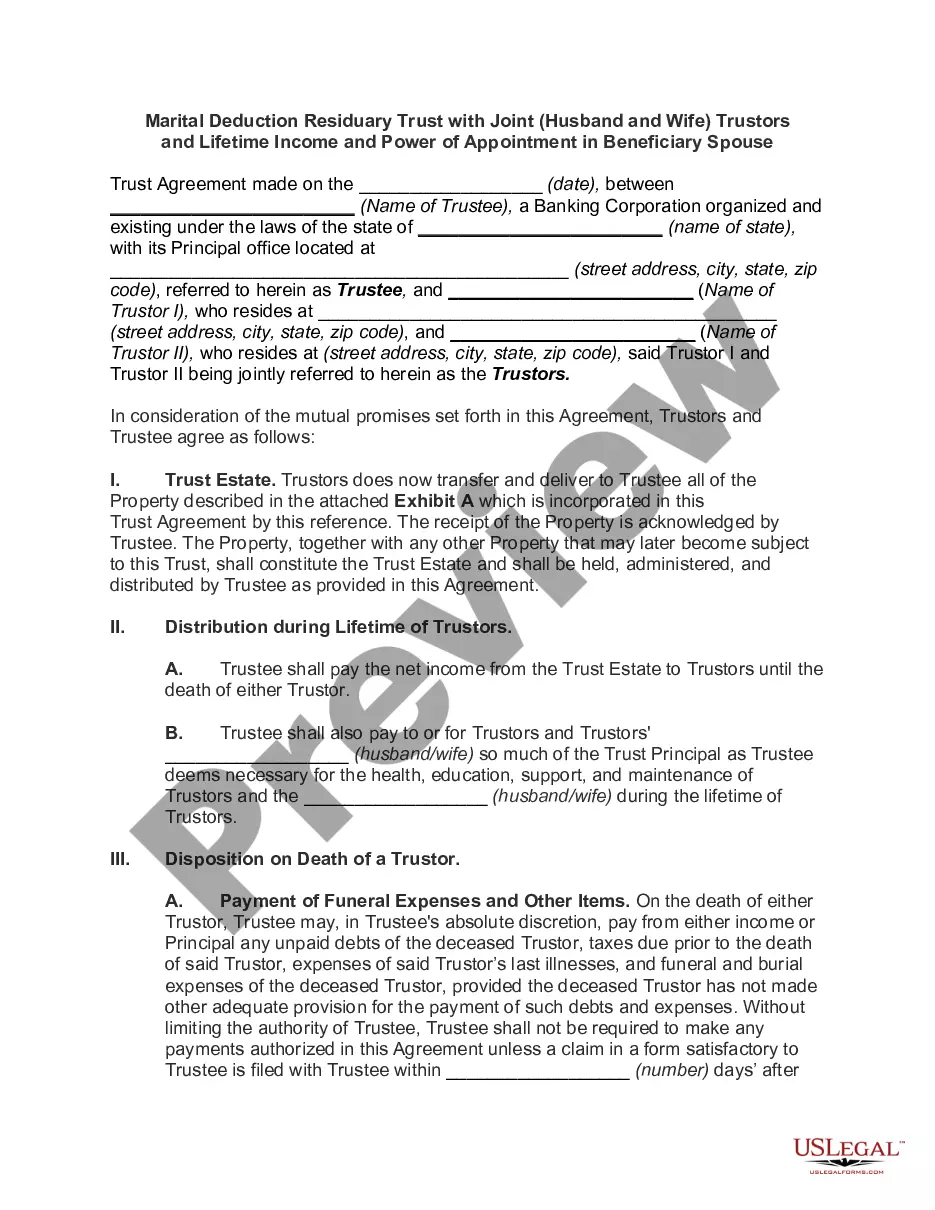
This Living Trust for Individual Who is Single, Divorced or Widow (or Widower) with No Children is a legal document that enables a single, divorced, or widowed person without children to manage their assets during their lifetime and specify how these assets should be distributed upon their death. This form allows the individual to create a revocable living trust which provides for seamless transfer of assets without going through probate, enhancing privacy and potentially reducing taxes.
Key parts of this document
- Name of the trust
- Identification of the Trustor and beneficiaries
- Appointment of the trustee and successor trustee
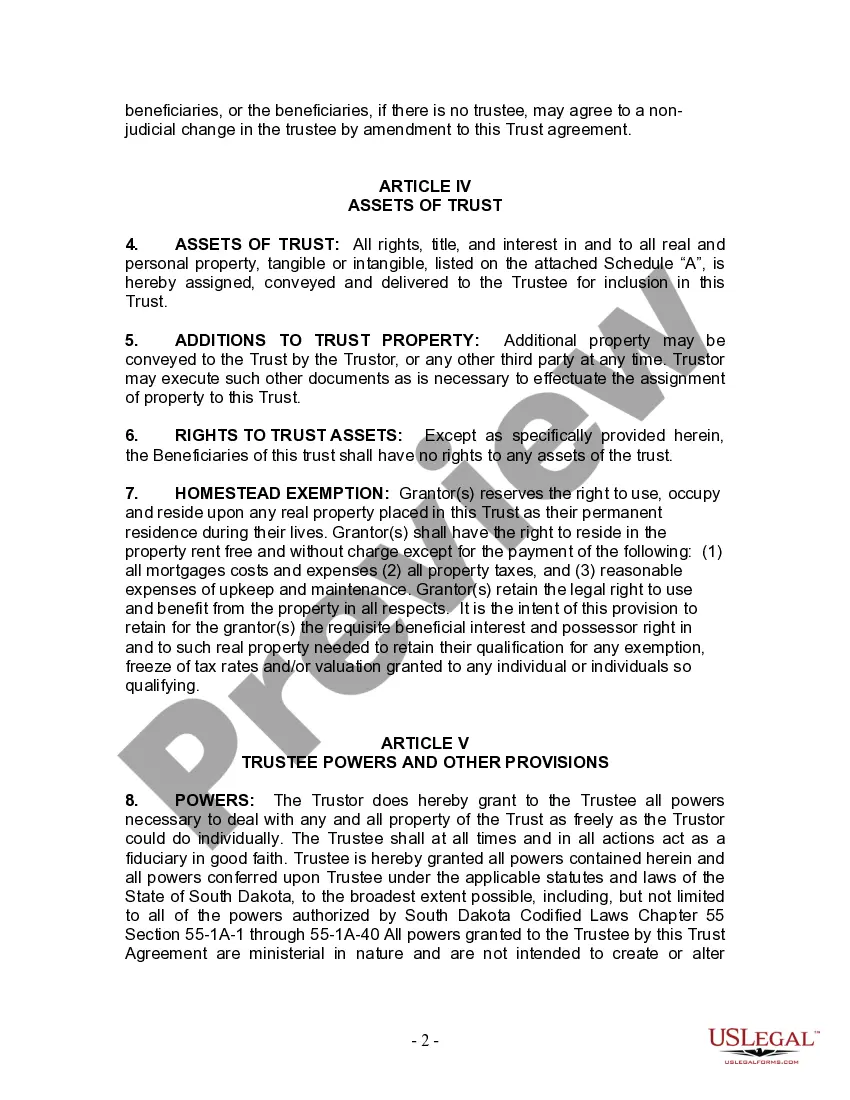
- Details of trust assets
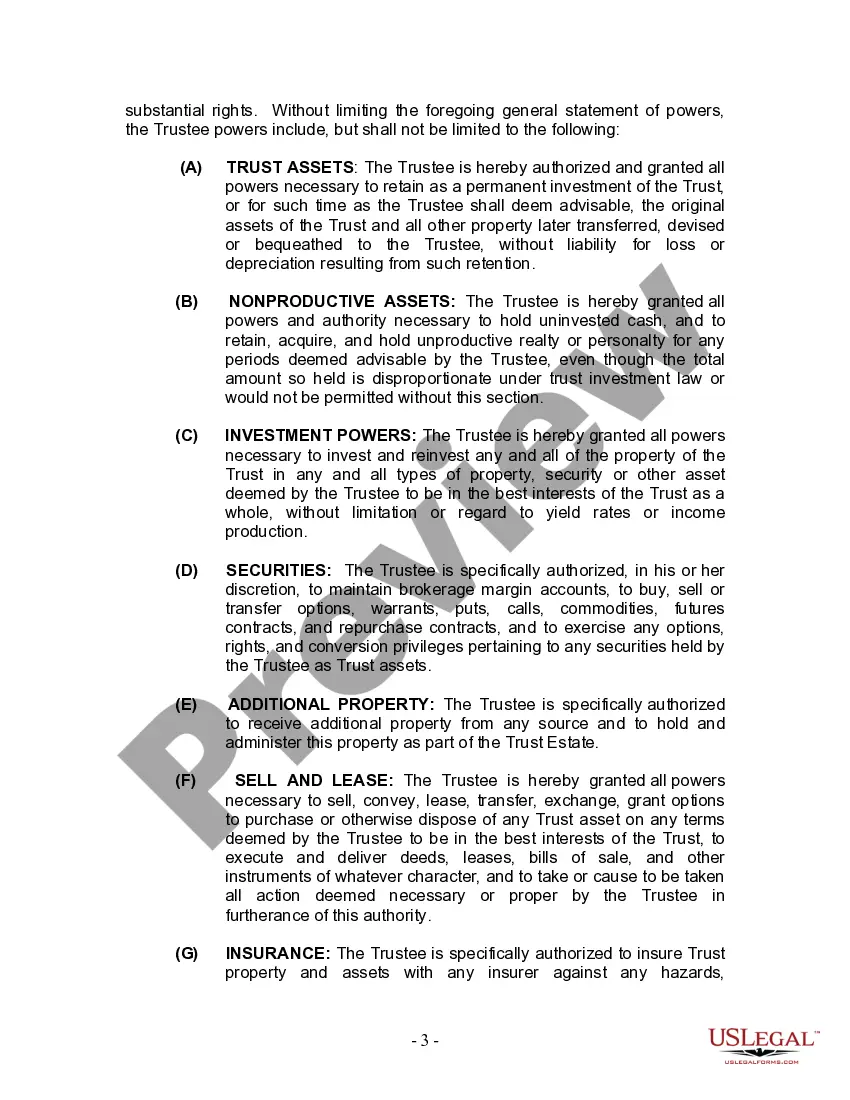
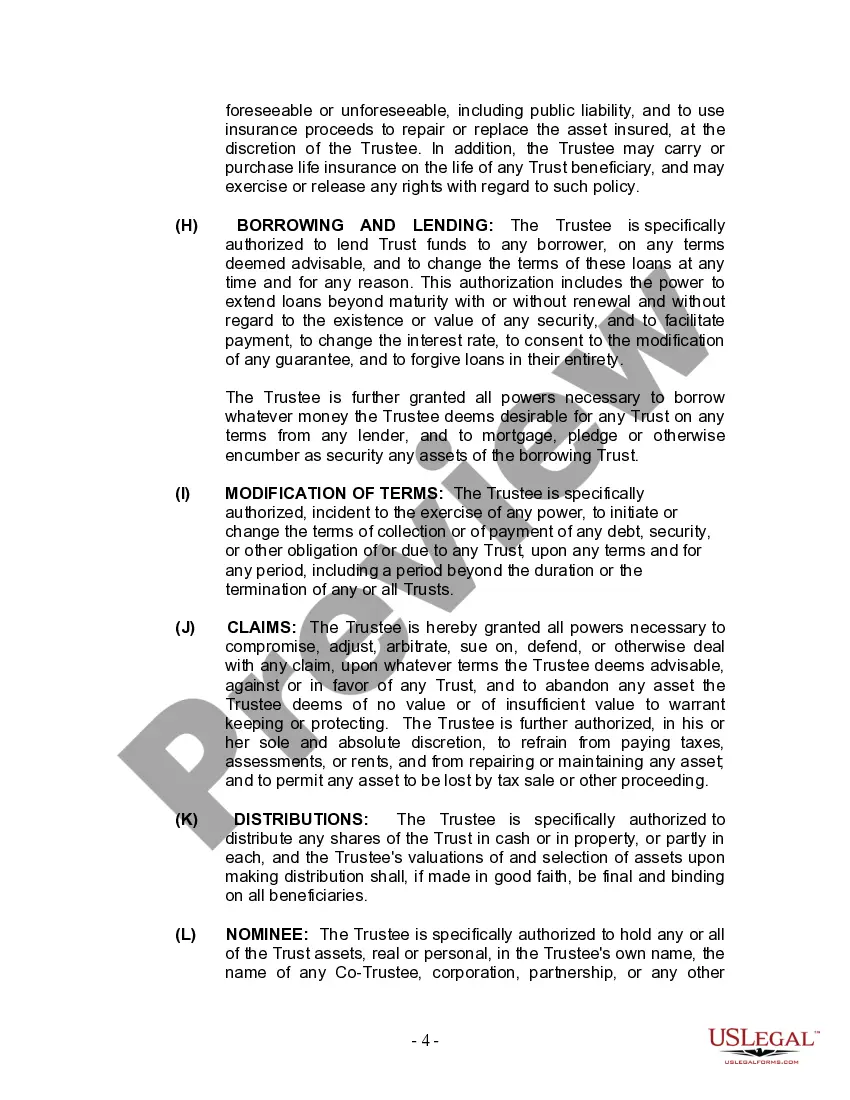
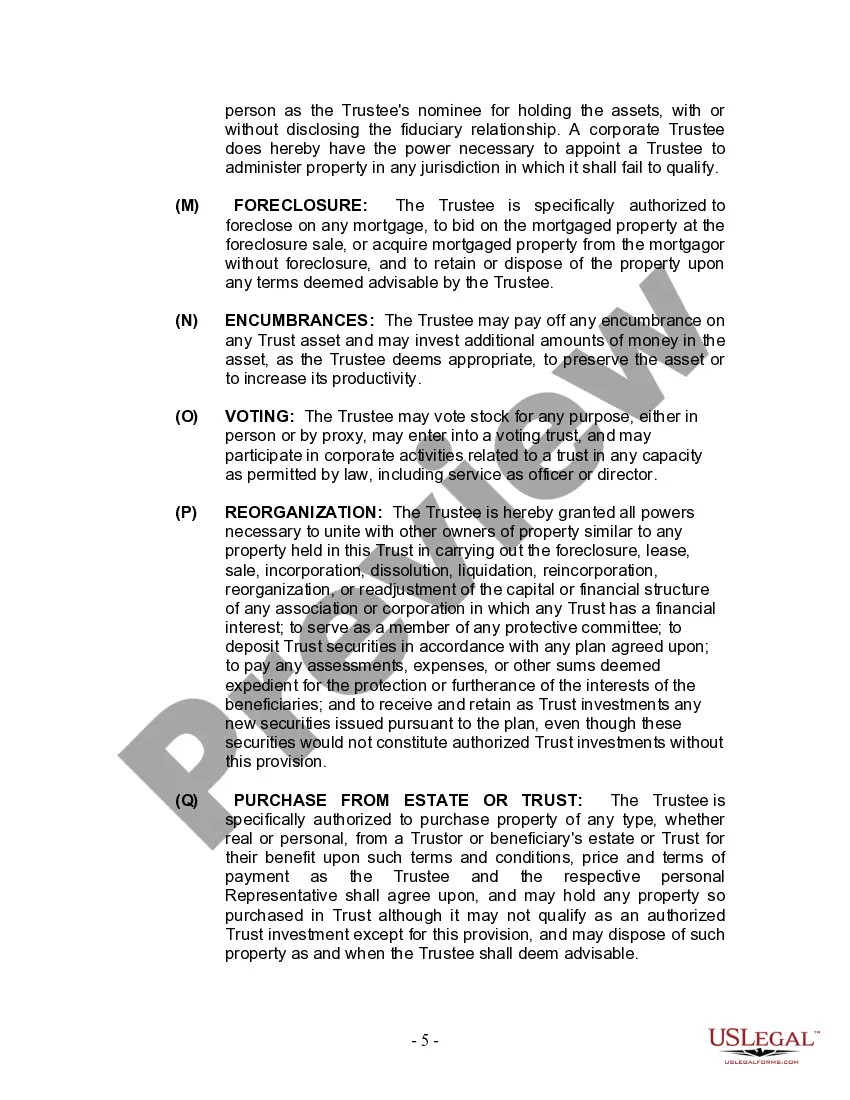
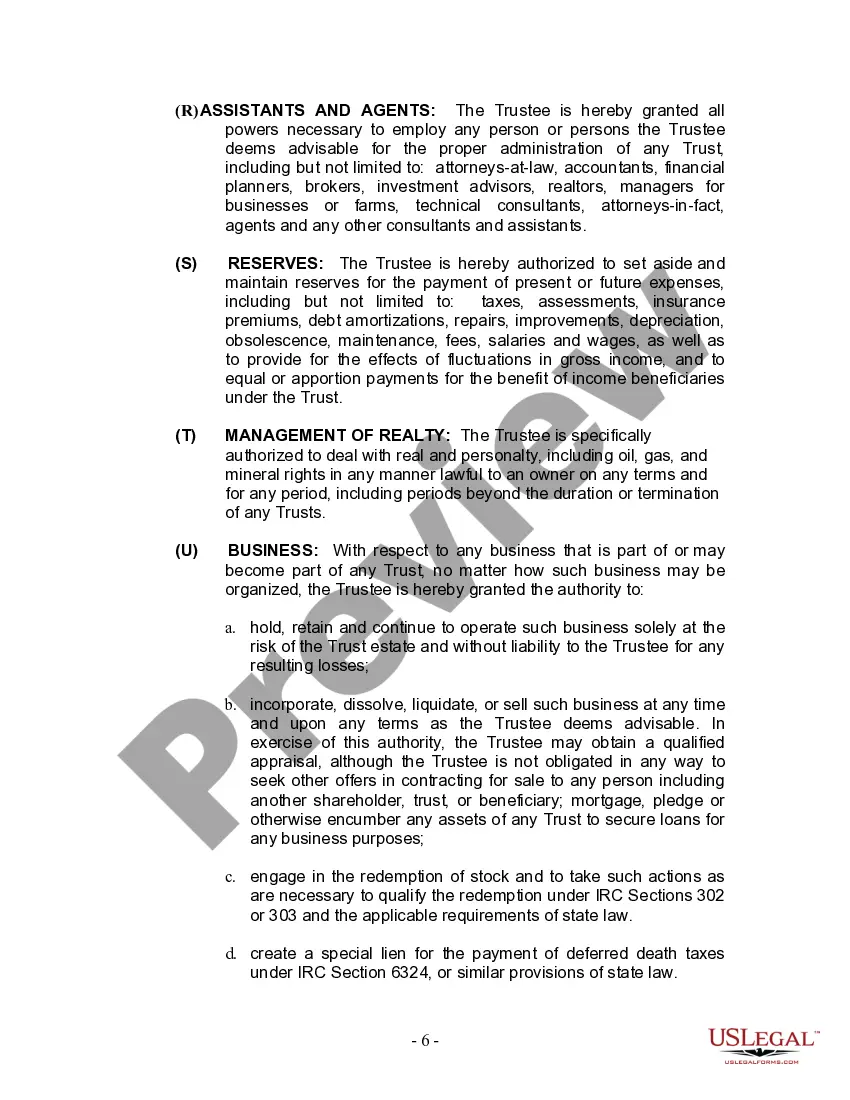
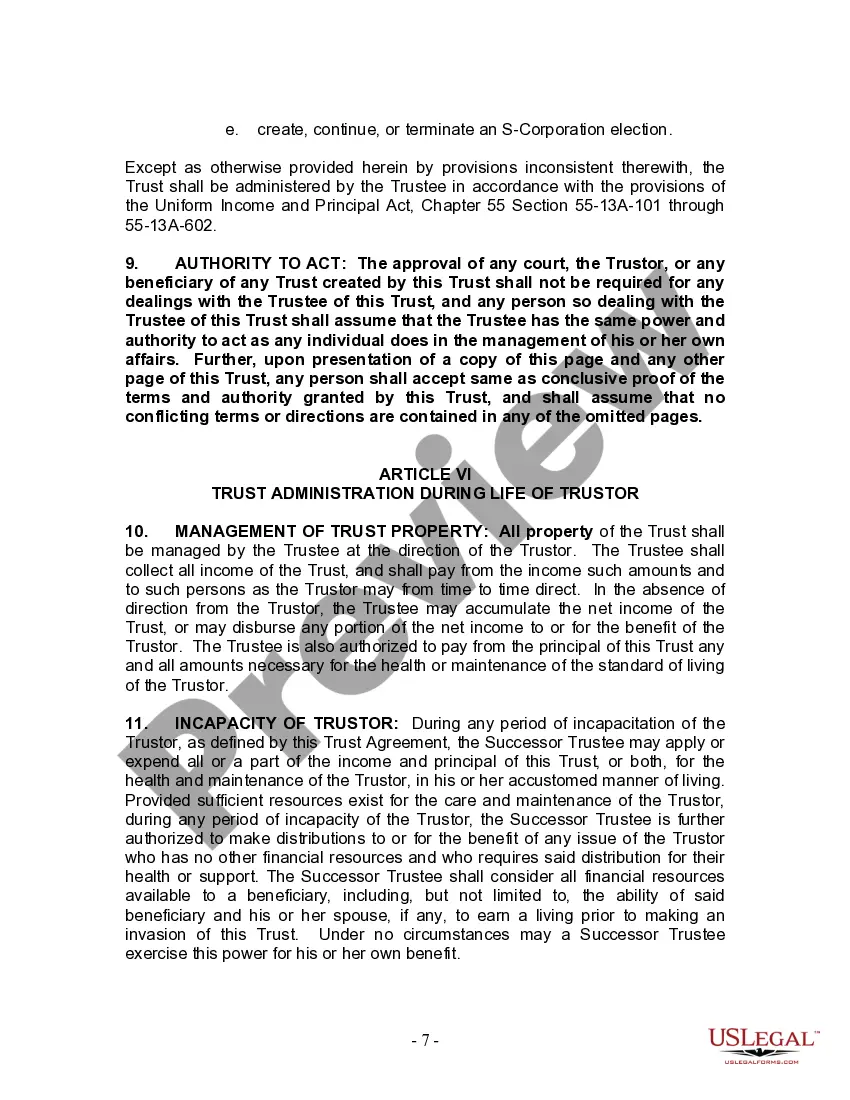
- Trusteeâs powers and responsibilities
- Distribution instructions upon the Trustorâs death



Situations where this form applies
This form is ideal for individuals who are single, divorced, or widowed and do not have children. It is particularly useful for those looking to manage their assets efficiently, ensure their wishes are respected after their passing, and avoid the lengthy and public probate process. It is applicable in situations where an individual has assets they wish to protect and control through a living trust.
Who should use this form
This form is intended for:
- Individuals who are single, divorced, or widowed.
- Persons who do not have children.
- Individuals looking to create a streamlined process for asset distribution upon their death.
- Those wanting to retain full control of their assets during their lifetime.
Completing this form step by step
- Identify the Trustor by entering their name and address.
- Name the trust, using the appropriate title as specified in the form.
- Designate the trustee and any successor trustees.
- List the assets being included in the trust, such as real estate or bank accounts.
- Provide clear instructions for asset distribution upon the Trustorâs death.
Notarization requirements for this form
This form does not typically require notarization unless specified by local law.
Get your form ready online
Our built-in tools help you complete, sign, share, and store your documents in one place.
Make edits, fill in missing information, and update formatting in US Legal Forms—just like you would in MS Word.
Download a copy, print it, send it by email, or mail it via USPS—whatever works best for your next step.
Sign and collect signatures with our SignNow integration. Send to multiple recipients, set reminders, and more. Go Premium to unlock E-Sign.
If this form requires notarization, complete it online through a secure video call—no need to meet a notary in person or wait for an appointment.
We protect your documents and personal data by following strict security and privacy standards.

Make edits, fill in missing information, and update formatting in US Legal Forms—just like you would in MS Word.

Download a copy, print it, send it by email, or mail it via USPS—whatever works best for your next step.

Sign and collect signatures with our SignNow integration. Send to multiple recipients, set reminders, and more. Go Premium to unlock E-Sign.

If this form requires notarization, complete it online through a secure video call—no need to meet a notary in person or wait for an appointment.

We protect your documents and personal data by following strict security and privacy standards.
Avoid these common issues
- Failing to clearly identify all assets to be placed in the trust.
- Not properly appointing successor trustees.
- Leaving ambiguous instructions regarding asset distribution.
- Not updating the trust after significant life events.
Benefits of using this form online
- Convenience of accessing legal forms at any time.
- Editability, allowing users to customize the document to their specific needs.
- Reliability, as forms are drafted by licensed attorneys to meet legal standards.
Main things to remember
- This living trust is suitable for individuals without children who want to manage their assets effectively.
- It simplifies the asset distribution process and avoids probate.
- The form is tailored for use in South Dakota, meeting state-specific legal requirements.
Looking for another form?


Form popularity
FAQ
You and your spouse may have one of the most common types of estate plans between married couples, which is a simple will leaving everything to each other. With this type of plan, you leave all of your assets outright to your surviving spouse. The kids or other beneficiaries only get something after you are both gone.
Property in a living trust. One of the ways to avoid probate is to set up a living trust. Retirement plan proceeds, including money from a pension, IRA, or 401(k) Stocks and bonds held in beneficiary. Proceeds from a payable-on-death bank account.
A living trust holds your assets during your lifetime and allows them to be distributed to the people you choose upon your death. To more easily understand how a living trust works, think of a trust as an empty box. You can put your assets into this box, including financial accounts and real estate.
Bank accounts. Brokerage or investment accounts. Retirement accounts and pension plans. A life insurance policy.
Paperwork. Setting up a living trust isn't difficult or expensive, but it requires some paperwork. Record Keeping. After a revocable living trust is created, little day-to-day record keeping is required. Transfer Taxes. Difficulty Refinancing Trust Property. No Cutoff of Creditors' Claims.
An executor of a will cannot take everything unless they are the will's sole beneficiary.However, the executor cannot modify the terms of the will. As a fiduciary, the executor has a legal duty to act in the beneficiaries and estate's best interests and distribute the assets according to the will.
A living trust is designed to allow for the easy transfer of the trust creator or settlor's assets while bypassing the often complex and expensive legal process of probate. Living trust agreements designate a trustee who holds legal possession of assets and property that flow into the trust.
A will can also be declared invalid if someone proves in court that it was procured by undue influence. This usually involves some evil-doer who occupies a position of trust -- for example, a caregiver or adult child -- manipulating a vulnerable person to leave all, or most, of his property to the manipulator instead
A living trust, specifically a revocable living trust, is a legal document that places your assetsinvestments, bank accounts, real estate, vehicles and valuable personal propertyin trust for your benefit during your lifetime, and spells out where you'd like these things to go upon your death.