New Mexico Warranty Deed from Husband and Wife to Corporation
What this document covers
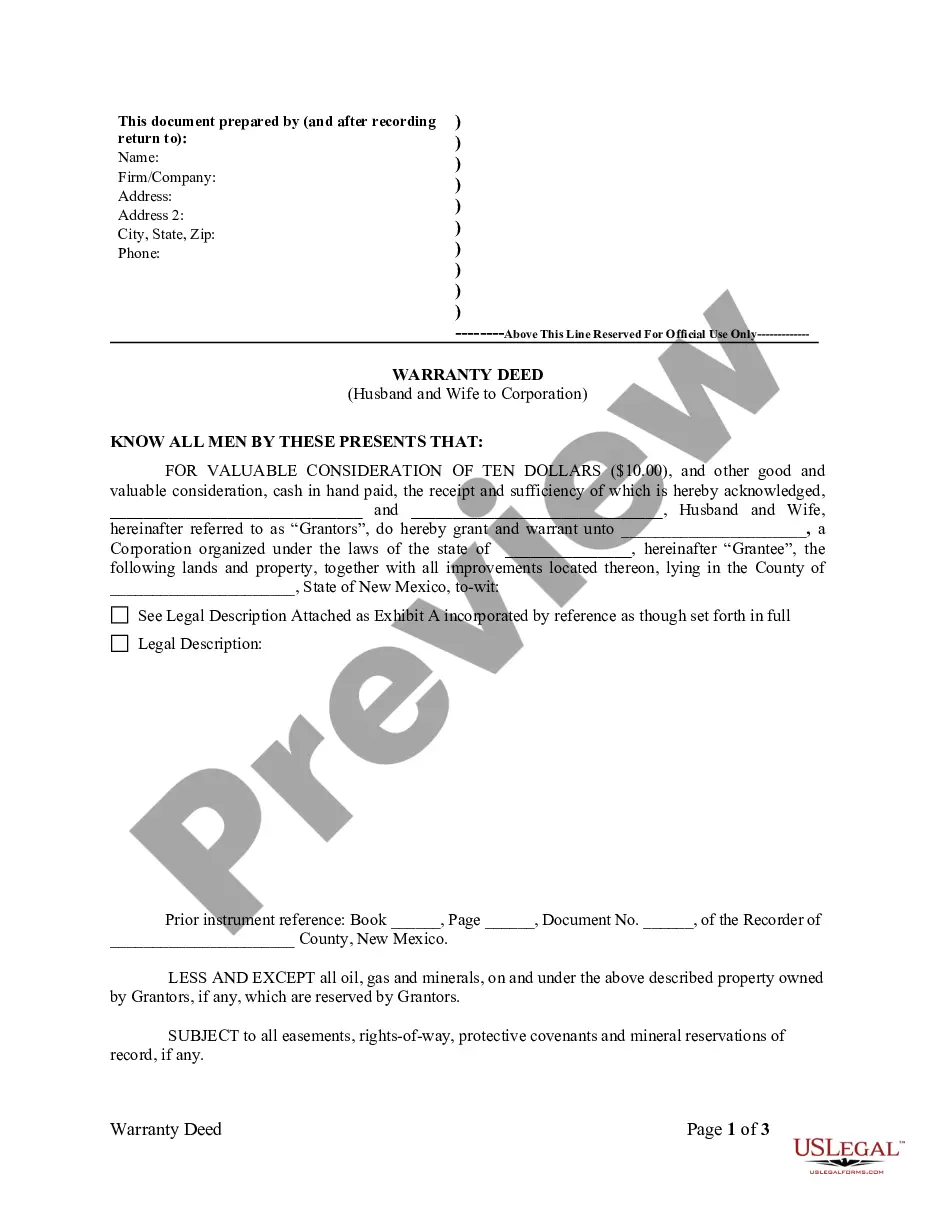
The Warranty Deed from Husband and Wife to Corporation is a legal document that transfers real estate property from a married couple (the grantors) to a corporation (the grantee). This specific form details the warranty provided by the grantors, ensuring the property is free of encumbrances, except for specified reservations. Unlike other deeds, this warranty deed specifically incorporates mineral reservations and easements, providing additional protection for both parties involved. This form is essential for legally formalizing the transfer of property between individuals and business entities.
Key parts of this document
- Identification of grantors (husband and wife) and grantee (corporation).
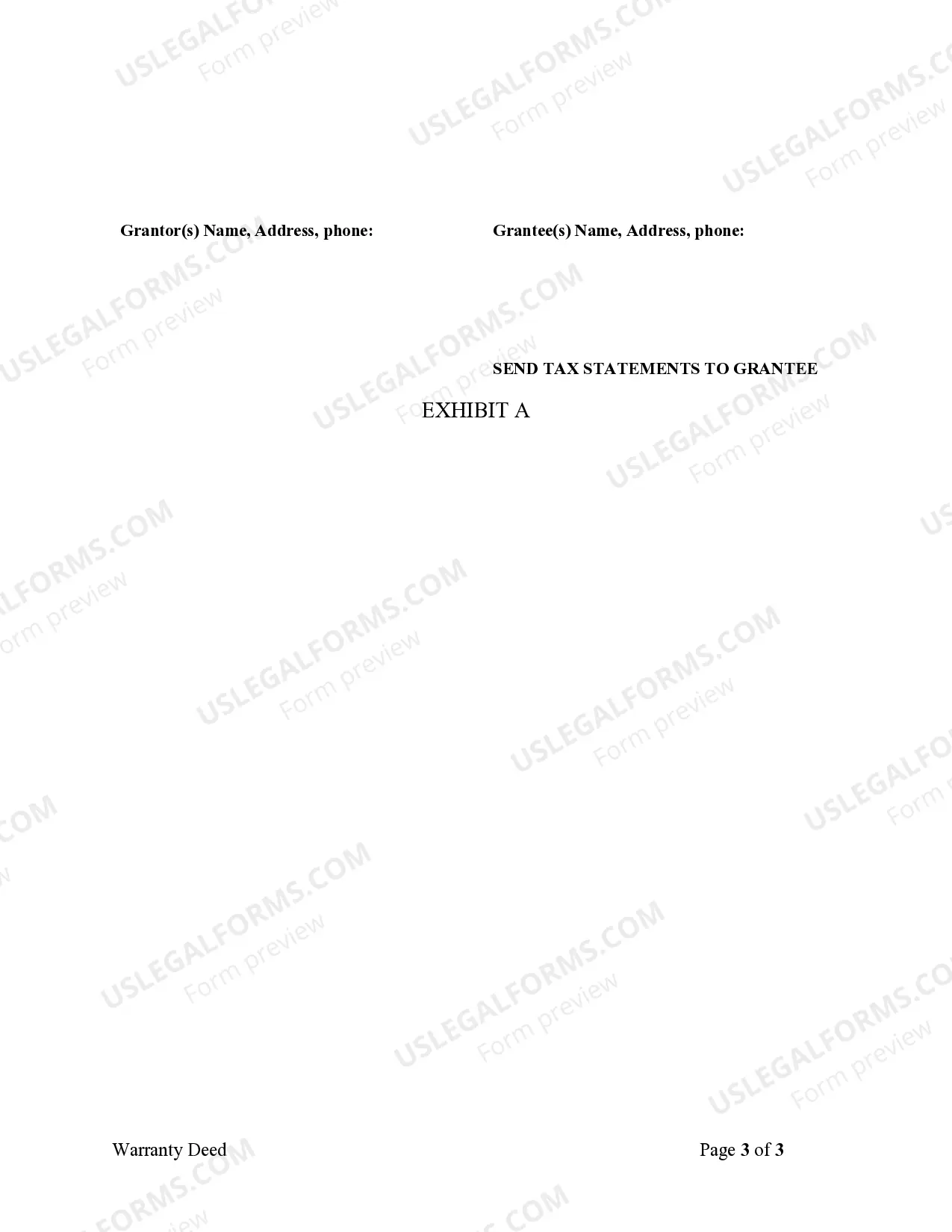
- Legal description of the property being transferred.
- Warranties regarding the property's title, ensuring it is free from encumbrances.
- Provisions for the reservation of oil, gas, and mineral rights.
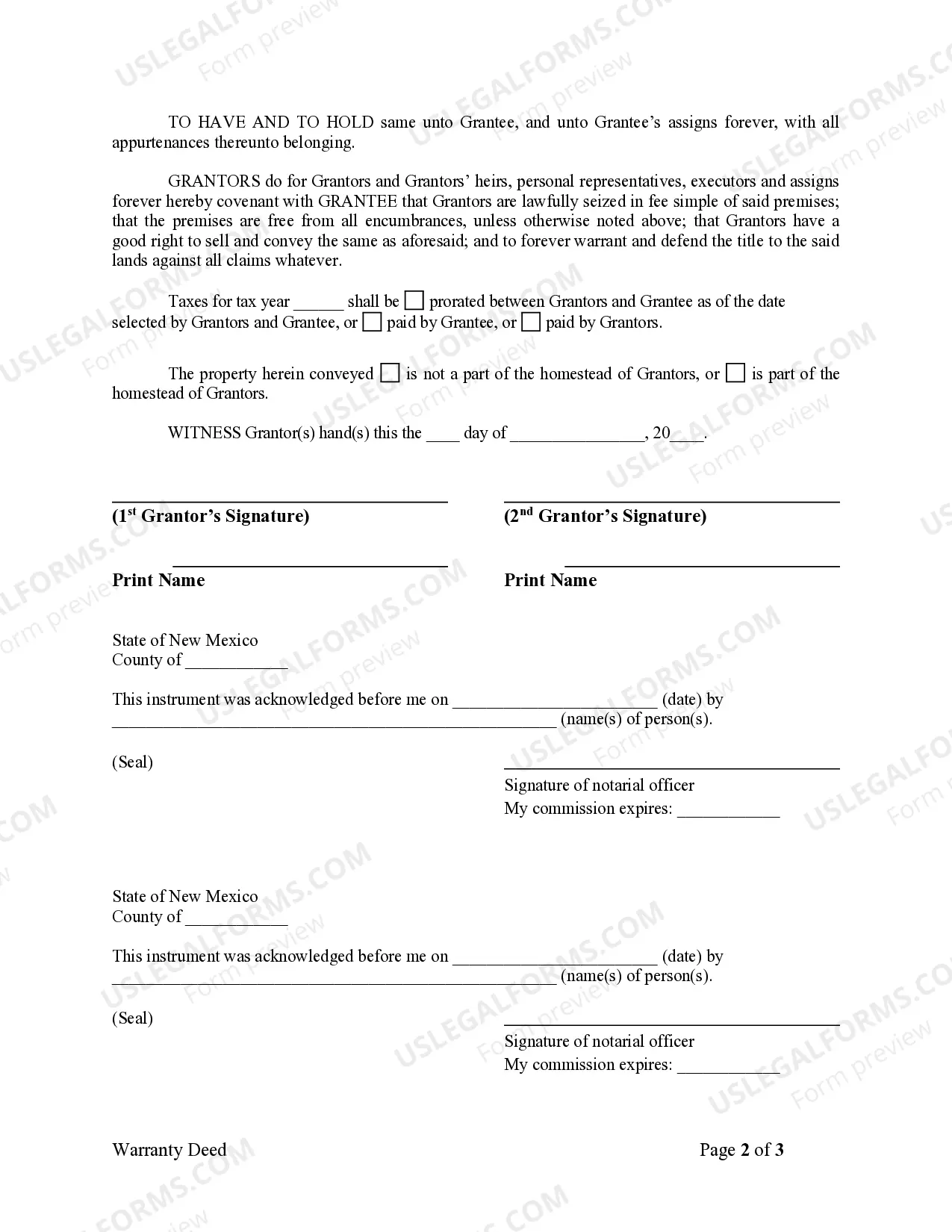
- Details on tax prorations between the parties.
- Signature lines for grantors and notary acknowledgment.




Situations where this form applies
This warranty deed should be used when a husband and wife wish to transfer property they own to a corporation. Common scenarios include when partners in a business entity want to formalize the ownership of a property under the corporation's name, thus protecting personal assets and ensuring a clear legal framework for the transfer of property rights.
Who needs this form
- Married couples who own property together and want to convey it to a corporation.
- Business owners who operate as a corporation and need to acquire property.
- Individuals seeking to ensure the legal transfer of property rights to a business entity.
Instructions for completing this form
- Identify the parties: enter the full names of the husband and wife as grantors, and the corporation's legal name as the grantee.
- Specify the property: include a detailed legal description of the property being transferred, as well as any attachments.
- Detail any reservations: indicate if there are any mineral rights or easements that will remain with the grantors.
- Enter the tax and financial arrangements: state how taxes for the current year will be handled.
- Obtain signatures: have both grantors sign the deed in the designated areas.
- Notarize the document: have it notarized to ensure its legal validity.
Does this document require notarization?
Notarization is required for this form to take effect. Our online notarization service, powered by Notarize, lets you verify and sign documents remotely through an encrypted video session, available 24/7.
Get your form ready online
Our built-in tools help you complete, sign, share, and store your documents in one place.
Make edits, fill in missing information, and update formatting in US Legal Forms—just like you would in MS Word.
Download a copy, print it, send it by email, or mail it via USPS—whatever works best for your next step.
Sign and collect signatures with our SignNow integration. Send to multiple recipients, set reminders, and more. Go Premium to unlock E-Sign.
If this form requires notarization, complete it online through a secure video call—no need to meet a notary in person or wait for an appointment.
We protect your documents and personal data by following strict security and privacy standards.

Make edits, fill in missing information, and update formatting in US Legal Forms—just like you would in MS Word.

Download a copy, print it, send it by email, or mail it via USPS—whatever works best for your next step.

Sign and collect signatures with our SignNow integration. Send to multiple recipients, set reminders, and more. Go Premium to unlock E-Sign.

If this form requires notarization, complete it online through a secure video call—no need to meet a notary in person or wait for an appointment.

We protect your documents and personal data by following strict security and privacy standards.
Typical mistakes to avoid
- Failing to provide a complete legal description of the property.
- Not specifying any easements or reservations that may affect the deed.
- Omitting tax arrangements, which may lead to disputes later on.
- Neglecting to have the form notarized, which can invalidate the deed.
Benefits of completing this form online
- Convenience of downloading and filling the form at your own pace.
- Access to templates created by licensed attorneys, ensuring legal compliance.
- Editability allows you to customize the form as per your requirements.
- Immediate availability without the need for in-person visits to an attorney.
What to keep in mind
- The Warranty Deed from Husband and Wife to Corporation is essential for legally transferring property ownership from a couple to a corporation.
- Complete accuracy in filling out the form is crucial to avoid legal disputes.
- Notarization is required for the document to be enforceable.
Looking for another form?
Form popularity
FAQ
A warranty deed guarantees that: The grantor is the rightful owner of the property and has the legal right to transfer the title.The title would withstand third-party claims to ownership of the property. The grantor will do anything to ensure the grantee's title to the property.
What Is the Difference Between a Warranty Deed & a Survivorship Deed?A warranty deed is the most comprehensive and provides the most guarantees. Survivorship isn't so much a deed as a title. It's a way to co-own property where, upon the death of one owner, ownership automatically passes to the survivor.
The New Mexico special warranty deed is a legal document used to convey real estate.A special warranty includes a guarantee from the grantor that there are no hidden interests or encumbrances on the property that arose while he or she owned the property.
It will not protect against title issues that arose prior to the time the seller took occupancy. Consequently, it offers less protection to buyers, and more protection to sellers, than a general warranty deed, which is the most common option for selling or buying a property.
Key Takeaways. A property deed is a legal document that transfers the ownership of real estate from a seller to a buyer.General warranty deeds give the grantee the most protection, special warranty deeds give the grantee more limited protection, and a quitclaim deed gives the grantee the least protection under the law
A special warranty deed to real estate offers protection to the buyer through the seller's guarantee that the title has been free and clear of encumbrances during their ownership of the property. It does not guarantee clear title beyond their ownership.
A Survivorship Deed transfers residential or commercial property from one property owner (the grantor) to another (the grantee) while allowing them to avoid going through probate when they (the grantor) passes away. The parties transferring property in a Survivorship Deed must have full ownership of the property.
Step 1 Write in the name of the grantor or seller. Step 2 Fill in the name and address of the grantee or buyer. Step 3 Specify the property information including county, lot, block and recording information. Step 4 Sign and date in the presence of a notary public.