New Mexico Warranty Deed from Individual to LLC
What this document covers
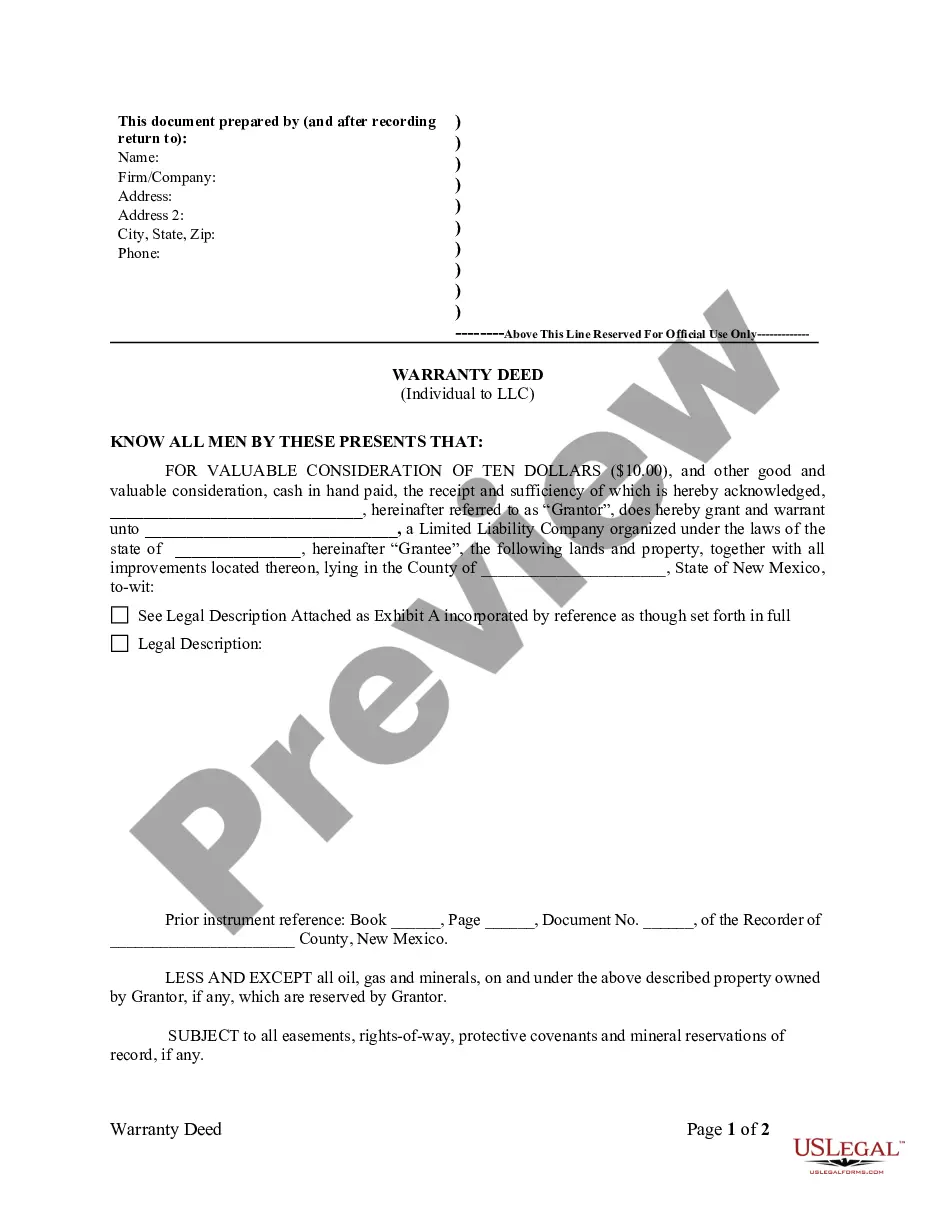
The Warranty Deed from Individual to LLC is a legal document that transfers property ownership from an individual (grantor) to a limited liability company (grantee). This form guarantees that the grantor has clear title to the property and ensures that the property is free of encumbrances, except for specific reservations noted in the document. Unlike other deeds, this warranty deed emphasizes the grantor's commitment to defend the title against claims, making it distinct in property transactions.
What’s included in this form
- Grantor and Grantee Information: Names and addresses of the individual transferring the property and the LLC receiving it.
- Property Description: A detailed description of the property being transferred, including legal boundaries.
- Reservation of Rights: Language regarding retained rights to oil, gas, and minerals beneath the property.
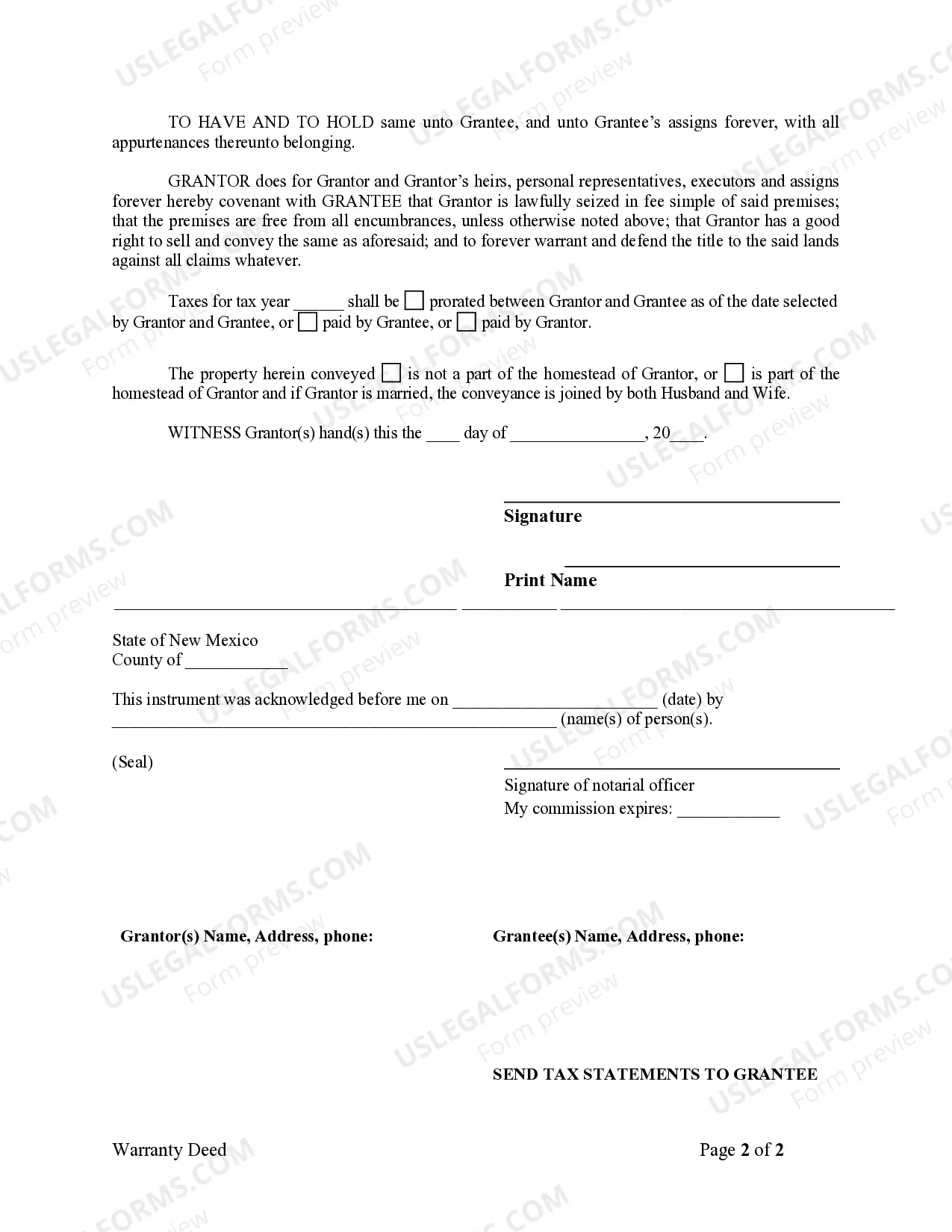
- Covenant of Warranty: Assurance that the grantor owns the property free of encumbrances, providing legal defense against claims.
- Tax Proration: Instructions on how property taxes will be handled between grantor and grantee.
- Notary Section: Space for notarization to affirm the transaction's legality.






Situations where this form applies
This form is used when an individual wishes to transfer ownership of real estate to a limited liability company. Common scenarios include property owners looking to organize their assets under an LLC for liability and tax benefits, or real estate investors wanting to hold properties in an LLC structure. It is particularly relevant when the property has appreciating value or is used for rental income.
Intended users of this form
- Property owners transferring ownership to a limited liability company.
- Real estate investors structuring their holdings for asset protection.
- Individuals looking to formalize a transfer of property for tax or estate planning purposes.
Steps to complete this form
- Identify the parties involved: Enter the names and addresses of the grantor and the LLC.
- Specify the property: Describe the property being transferred, including its legal description.
- Note any reservations: Indicate any rights or minerals that are being reserved by the grantor.
- Address tax responsibilities: Decide how property taxes will be prorated or paid.
- Sign the document: Ensure both parties sign the deed in front of a notary public.
Does this document require notarization?
This form needs to be notarized to ensure legal validity. US Legal Forms provides secure online notarization powered by Notarize, allowing you to complete the process through a verified video call, available anytime.
Get your form ready online
Our built-in tools help you complete, sign, share, and store your documents in one place.
Make edits, fill in missing information, and update formatting in US Legal Forms—just like you would in MS Word.
Download a copy, print it, send it by email, or mail it via USPS—whatever works best for your next step.
Sign and collect signatures with our SignNow integration. Send to multiple recipients, set reminders, and more. Go Premium to unlock E-Sign.
If this form requires notarization, complete it online through a secure video call—no need to meet a notary in person or wait for an appointment.
We protect your documents and personal data by following strict security and privacy standards.

Make edits, fill in missing information, and update formatting in US Legal Forms—just like you would in MS Word.

Download a copy, print it, send it by email, or mail it via USPS—whatever works best for your next step.

Sign and collect signatures with our SignNow integration. Send to multiple recipients, set reminders, and more. Go Premium to unlock E-Sign.

If this form requires notarization, complete it online through a secure video call—no need to meet a notary in person or wait for an appointment.

We protect your documents and personal data by following strict security and privacy standards.
Mistakes to watch out for
- Failing to include a detailed property description, which can lead to disputes.
- Neglecting to reserve rights to minerals or other resources, if applicable.
- Not having the form notarized, which can invalidate the deed.
- Improperly addressing tax obligations between parties.
Benefits of using this form online
- Immediate access to a professionally drafted legal document.
- Editable and customizable fields to suit specific needs.
- Cost-effective compared to hiring legal assistance for standard transactions.
- Secure storage and retrieval of documents for future reference.
Looking for another form?


Form popularity
FAQ
Step 1 Write in the name of the grantor or seller. Step 2 Fill in the name and address of the grantee or buyer. Step 3 Specify the property information including county, lot, block and recording information. Step 4 Sign and date in the presence of a notary public.
Contrary to normal expectations, the Deed DOES NOT have to be recorded to be effective or to show delivery, and because of that, the Deed DOES NOT have to be signed in front of a Notary Public. However, if you plan to record it, then it does have to be notarized as that is a County Recorder requirement.
Typically, the lender will provide you with a copy of the deed of trust after the closing. The original warranty deeds are often mailed to the grantee after they are recorded. These are your original copies and should be kept in a safe place, such as a fireproof lockbox or a safe deposit box at a financial institution.
Retrieve your original deed. Get the appropriate deed form. Draft the deed. Sign the deed before a notary. Record the deed with the county recorder. Obtain the new original deed.
The original deed is returned to the owner of the property from the office of the recorder after proper entry. The office of the Recorder of Deeds maintains a set of indexes about each deed recorded, for an easy search. Almost all states have a grantor-grantee index including a reference to all documents recorded.
A personal representative deed and warranty deed are the same only in that they both convey ownership of land. The types of title assurance that the different deeds provide to the new owner are very different.
The New Mexico special warranty deed is a legal document used to convey real estate.A special warranty includes a guarantee from the grantor that there are no hidden interests or encumbrances on the property that arose while he or she owned the property.
Fill out the "grantor" section of the warranty deed. The grantors are the givers, or current owners, of the property. Use the legal name of each grantor and insert current addresses after each grantor's name.