New Jersey Complaint Alleging Products Liability
What this document covers
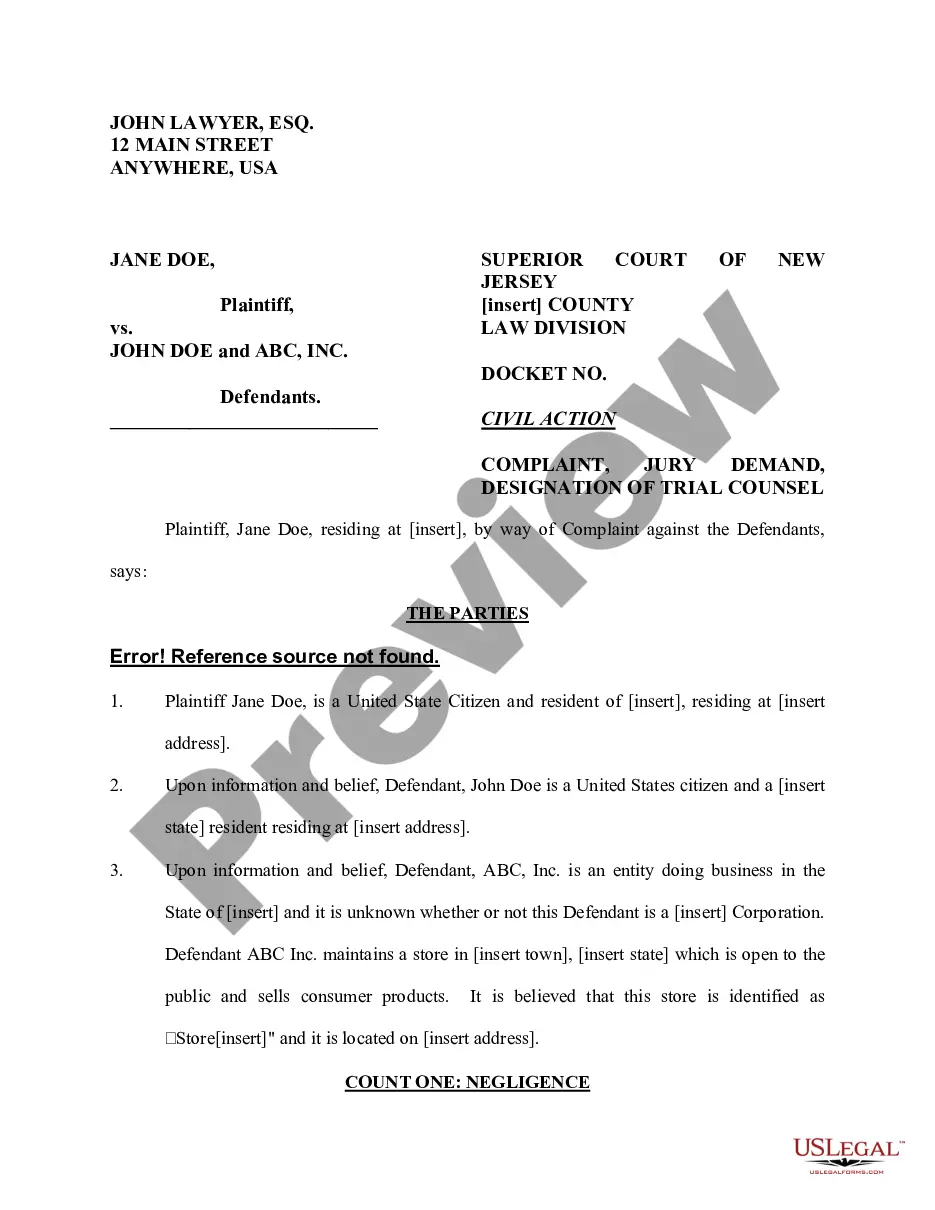
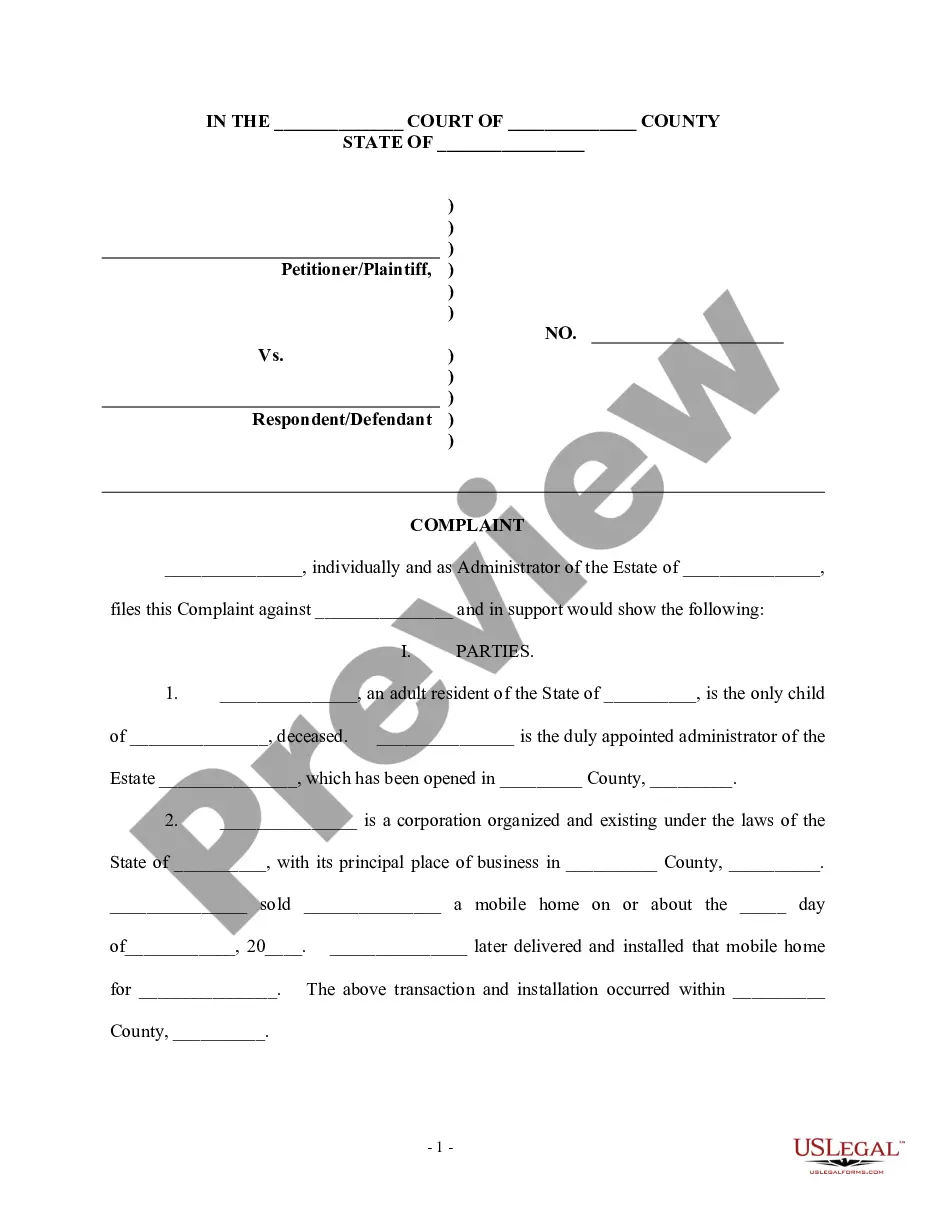
The Complaint Alleging Products Liability is a legal document used by a plaintiff to initiate a lawsuit against defendants for negligence, product liability, and breach of warranty. This form sets forth claims arising from injuries caused by unsafe products or hazardous conditions in a commercial environment. Unlike other complaints, this form specifically addresses issues related to product safety and the responsibilities of retailers and manufacturers to their customers.
What’s included in this form
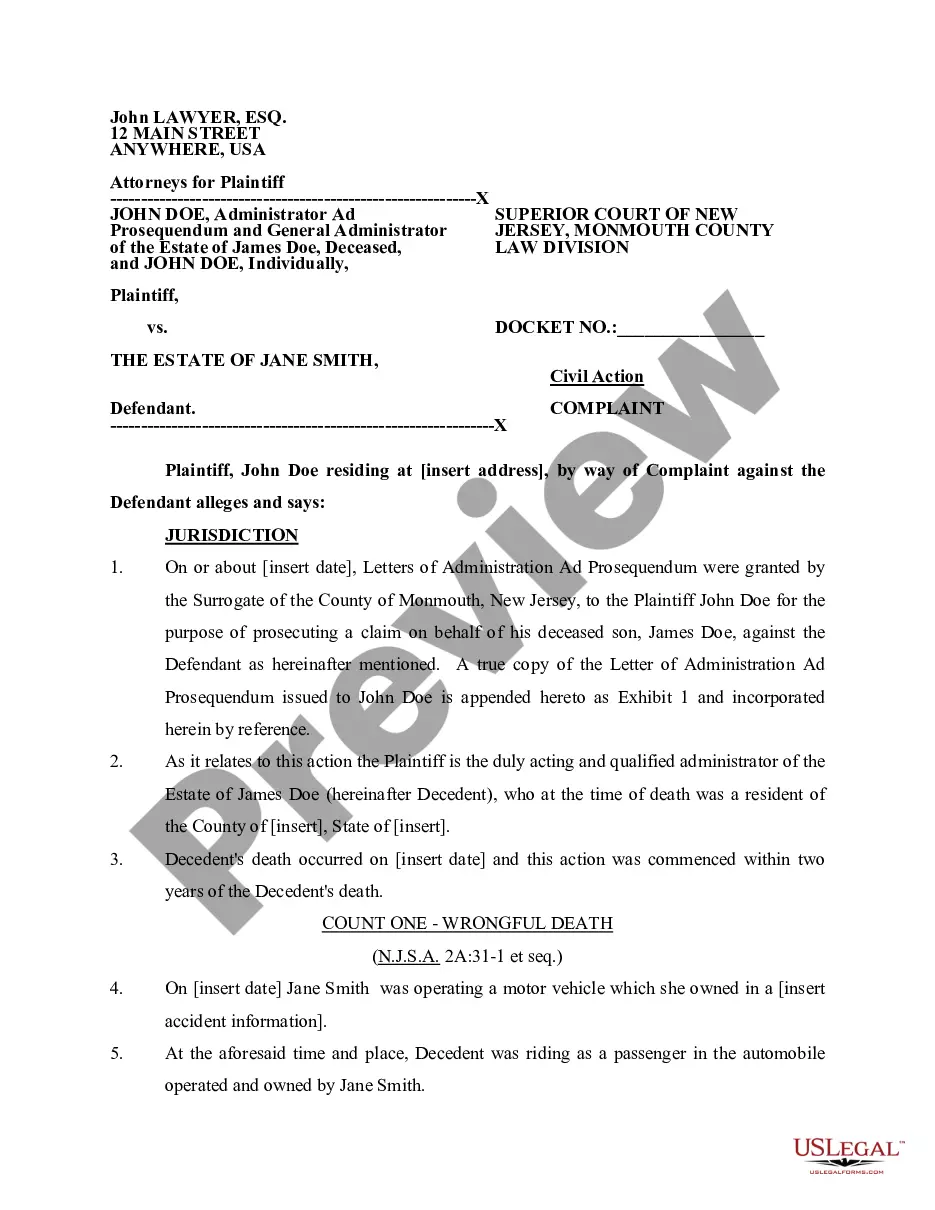
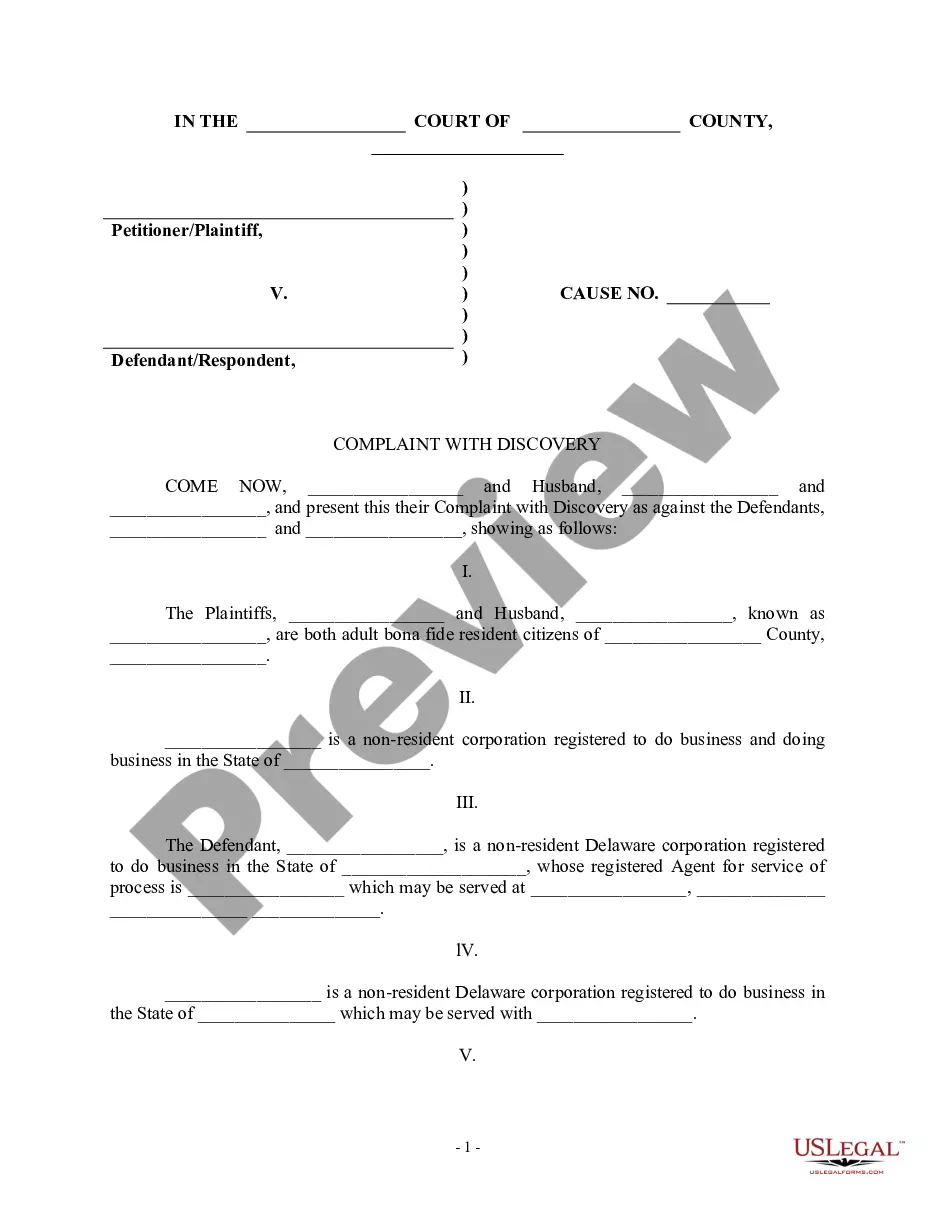
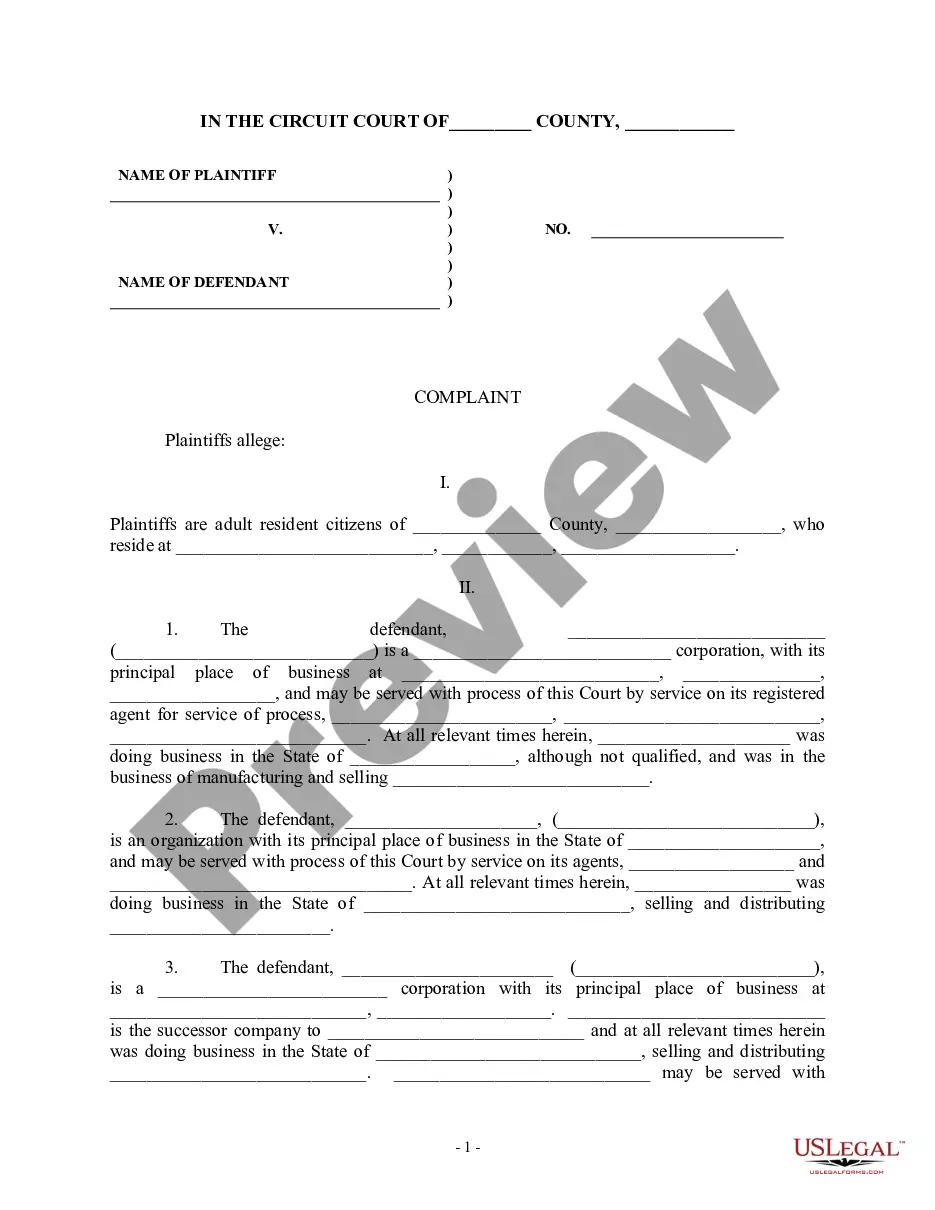
- Identification of the parties involved, including the plaintiff and defendants.
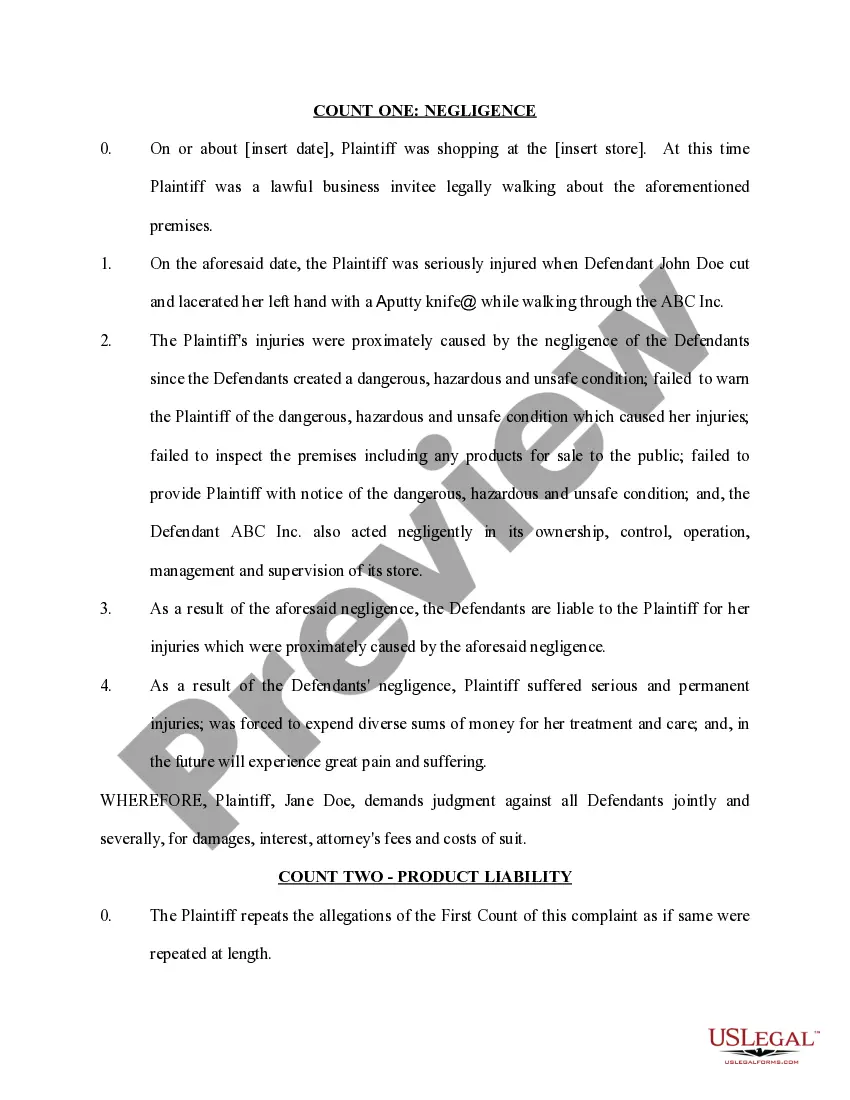
- Details of the negligence claim, including descriptions of the incident and injuries sustained.
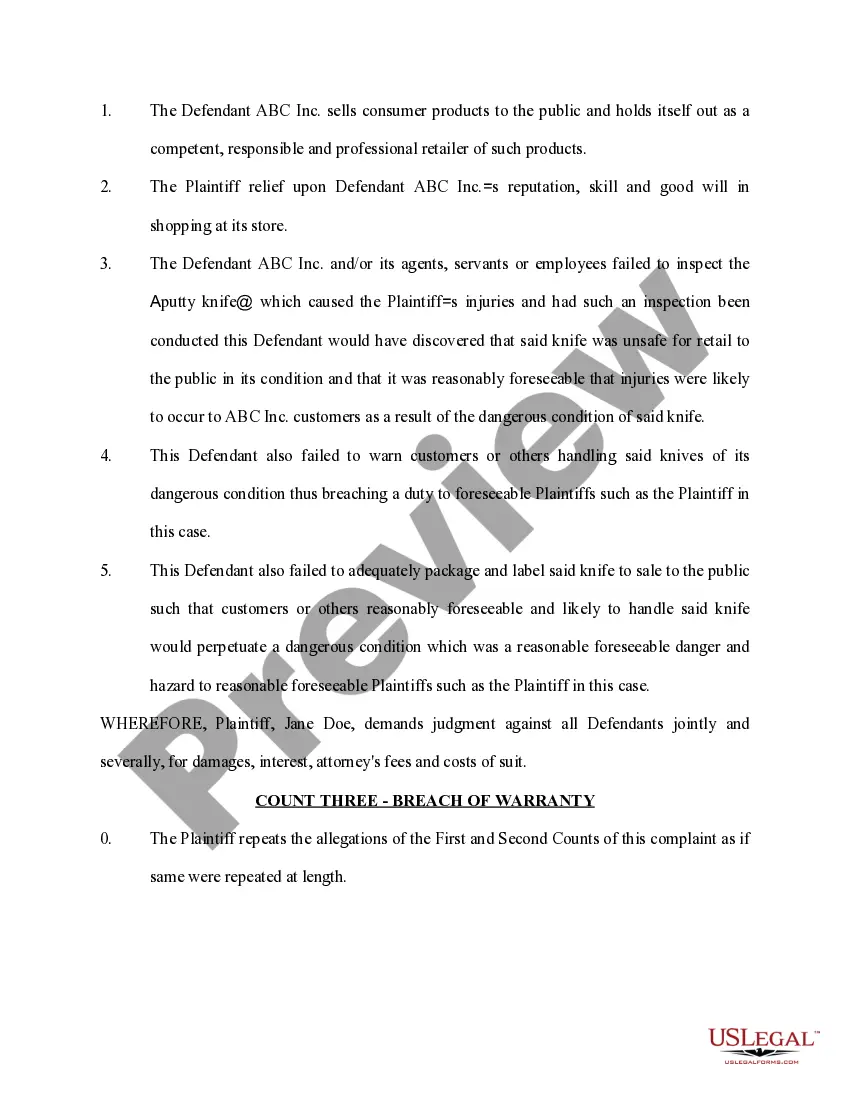
- Allegations related to product liability, specifying how the product was unsafe.
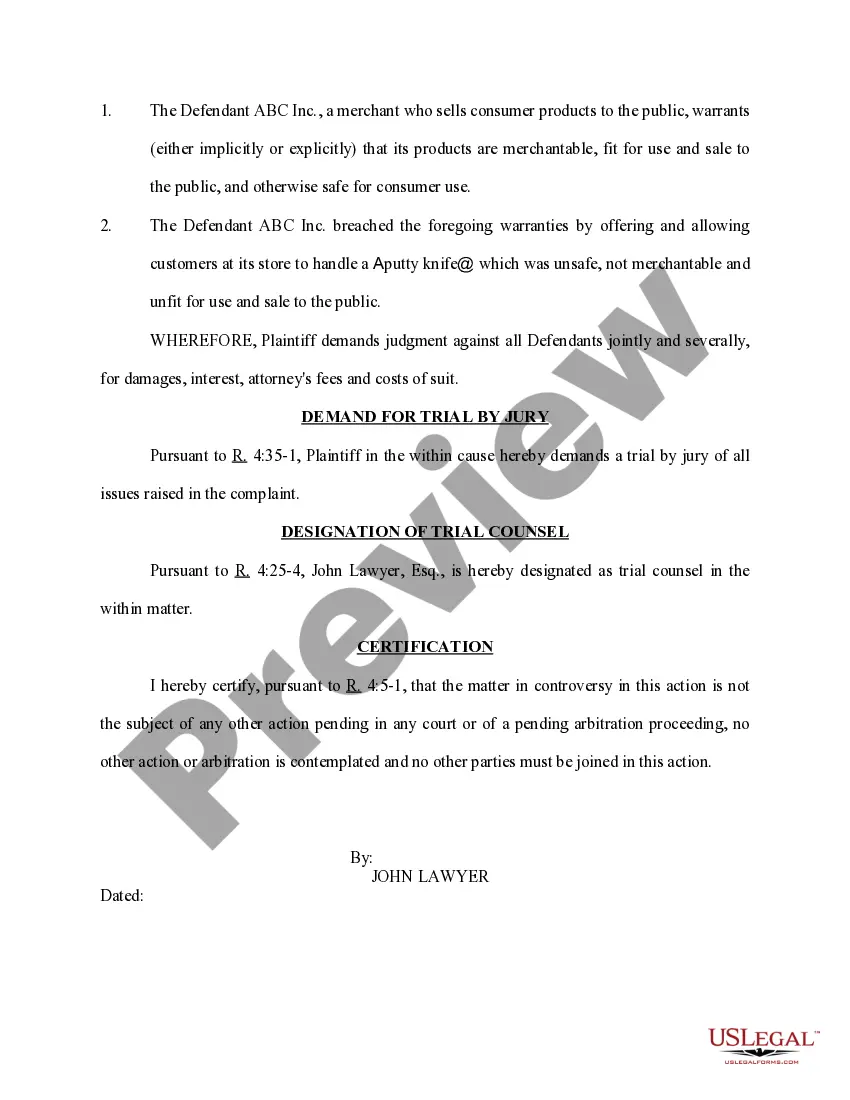
- Claims regarding breach of warranty, asserting that the product was not fit for sale.
- A jury demand, requesting a trial by jury for the issues raised in the complaint.
- Certification confirming the absence of other actions on the same matter.

When to use this form
This form is used when an individual has sustained injuries due to a product sold in a store or from unsafe conditions present in a commercial establishment. It is appropriate in situations where the plaintiff believes that negligence on the part of the store or product manufacturer directly led to their injuries, such as accidents involving defective products or unsafe premises.
Who needs this form
This form is intended for individuals who:
- Have been injured as a result of negligence related to a product or unsafe store conditions.
- Wish to seek damages for medical expenses, pain, and suffering resulting from their injuries.
- Are prepared to provide evidence supporting their claims against defendants.
Steps to complete this form
- Identify and fill in the complete names and addresses of all parties involved in the lawsuit.
- Provide detailed descriptions of the incident, including dates and locations.
- Specify the exact nature of the negligence and how it resulted in your injuries.
- Clearly outline the product liability and warranty breach claims against the defendants.
- Sign and date the form, certifying its accuracy and completeness.
Is notarization required?
This form does not typically require notarization to be legally valid. However, some jurisdictions or document types may still require it. US Legal Forms provides secure online notarization powered by Notarize, available 24/7 for added convenience.
Get your form ready online
Our built-in tools help you complete, sign, share, and store your documents in one place.
Make edits, fill in missing information, and update formatting in US Legal Forms—just like you would in MS Word.
Download a copy, print it, send it by email, or mail it via USPS—whatever works best for your next step.
Sign and collect signatures with our SignNow integration. Send to multiple recipients, set reminders, and more. Go Premium to unlock E-Sign.
If this form requires notarization, complete it online through a secure video call—no need to meet a notary in person or wait for an appointment.
We protect your documents and personal data by following strict security and privacy standards.

Make edits, fill in missing information, and update formatting in US Legal Forms—just like you would in MS Word.

Download a copy, print it, send it by email, or mail it via USPS—whatever works best for your next step.

Sign and collect signatures with our SignNow integration. Send to multiple recipients, set reminders, and more. Go Premium to unlock E-Sign.

If this form requires notarization, complete it online through a secure video call—no need to meet a notary in person or wait for an appointment.

We protect your documents and personal data by following strict security and privacy standards.
Common mistakes
- Failing to fully identify all parties involved in the case.
- Neglecting to provide sufficient details about the incident and injuries.
- Omitting important dates and locations related to the claim.
- Forgetting to include a jury demand if a jury trial is desired.
Why use this form online
- Instant access to a professionally drafted legal template saved in convenient formats.
- Edit and customize the form easily to suit individual circumstances.
- Save time by completing the form at your own pace from anywhere.
- Reliability from using a template created by licensed attorneys.
Looking for another form?


Form popularity
FAQ
Generally, to prevail on a strict product liability claim, a plaintiff must prove that an inherent defect in a product caused the damages claimed. In other words, the plaintiff must prove (1) that the product was inherently defective and (2) that the defect in the product caused the injury or damage.
Products Liability is a field of tort law which concerns the responsibility of the manufacturer or vendor of a product to ensure that products are safe and do not cause injury.
Products Liability is generally considered a strict liability offense. With regard to products liability, a defendant is liable when the plaintiff proves that the product is defective, regardless of the defendant's intent.
Products Liability is a field of tort law which concerns the responsibility of the manufacturer or vendor of a product to ensure that products are safe and do not cause injury.Contact a product liability lawyer to consult your case.
Product liability negligence occurs when a supplier, such as a wholesaler, retailer, distributor, manufacturer, or other party in the supply chain, places a product the stream of commerce with inaccurate or inadequate labeling, or manufacturing or design defects or flaws.
Generally, any manufacturers as well as any sellers down the distribution chain (i.e., distributors, wholesalers, and retailers) can be held legally responsible for a defective product causing injury.
There are three types of product defects that can result in product liability cases: Design defects, Manufacturing defects, and Marketing defects.
Product liability refers to when you're trying to hold a manufacturer liable for an injury you sustained while using their product. Unlike in strict liability cases, you have to be able to show some sort of negligence from the part of the Defendant (the entity getting sued).