New Jersey Complaint for Wrongful Death
Understanding this form
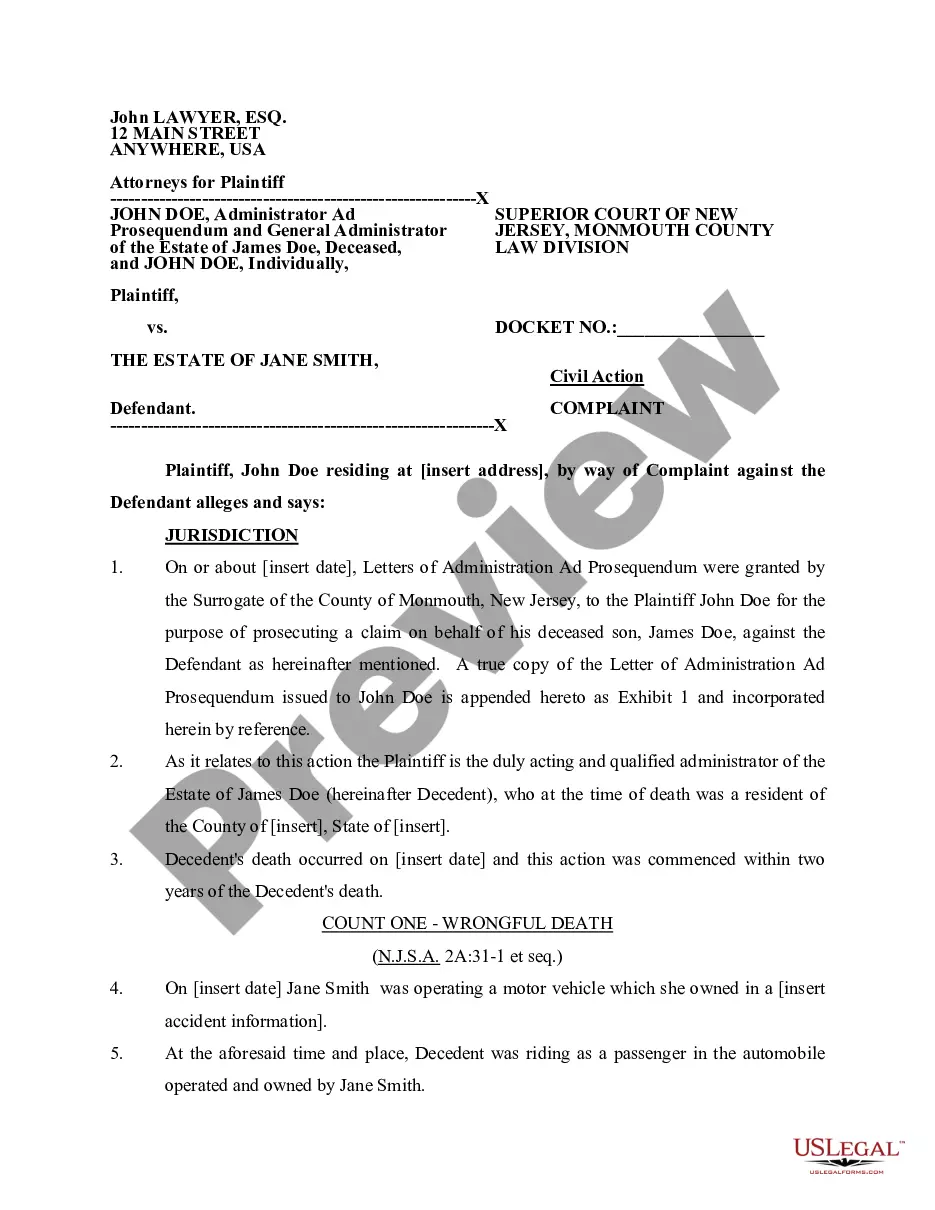
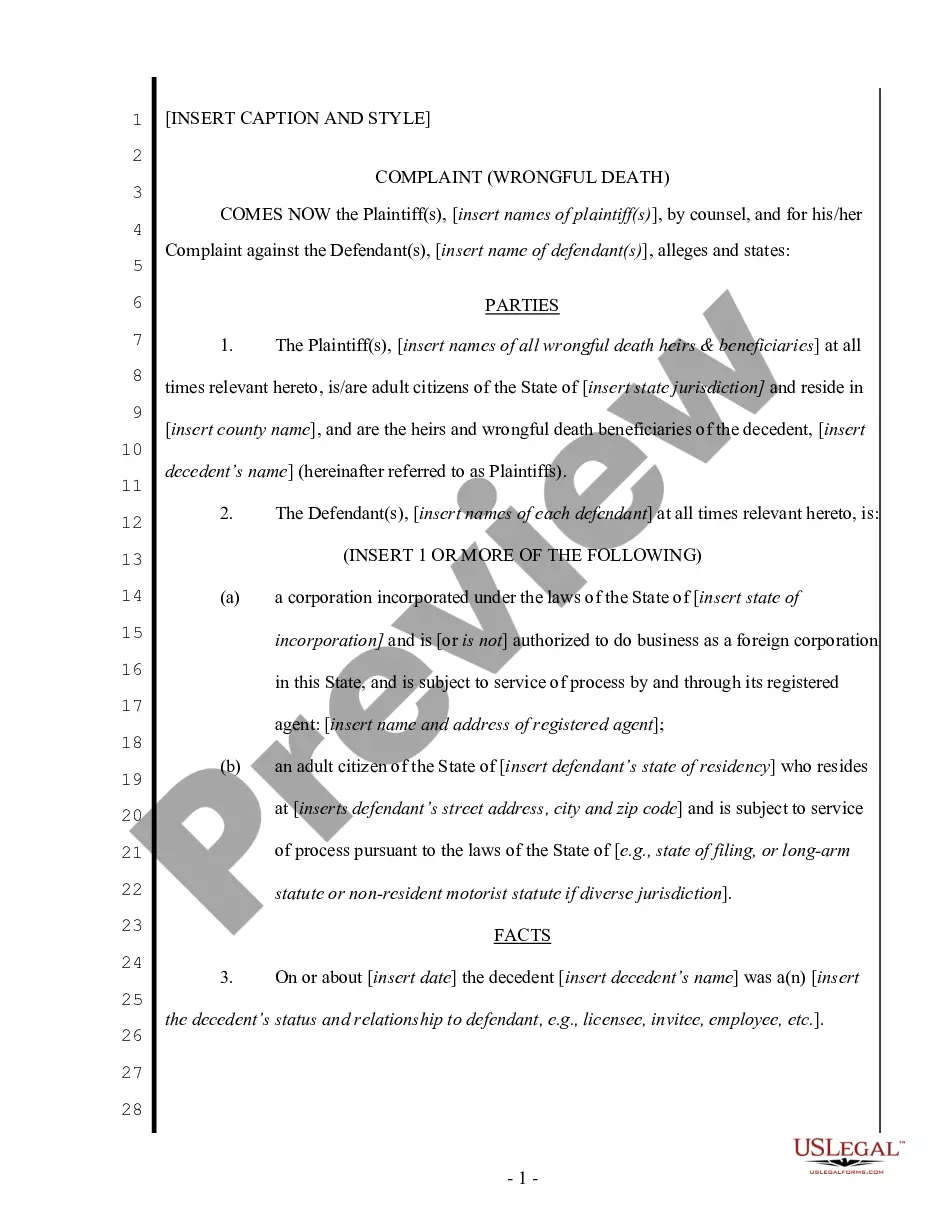
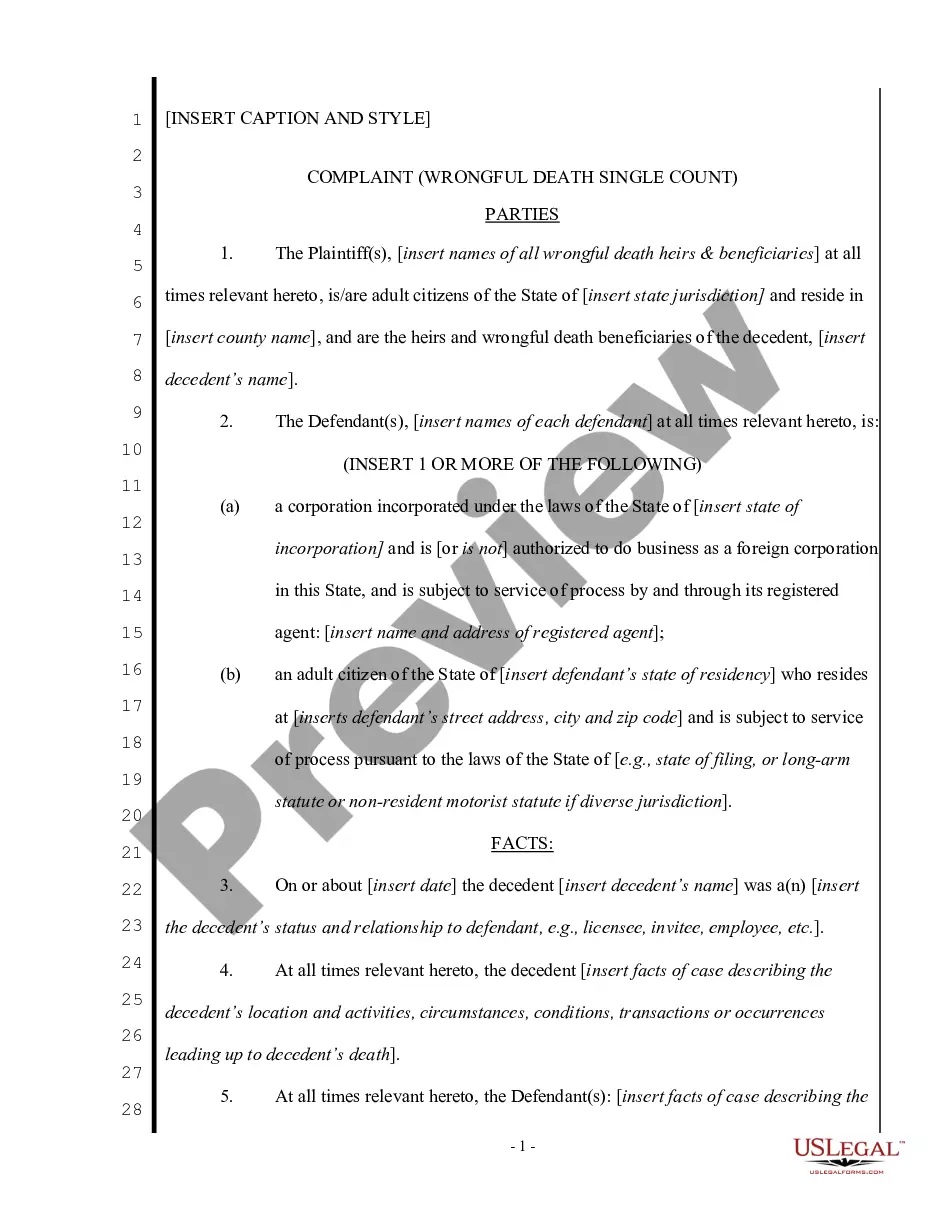
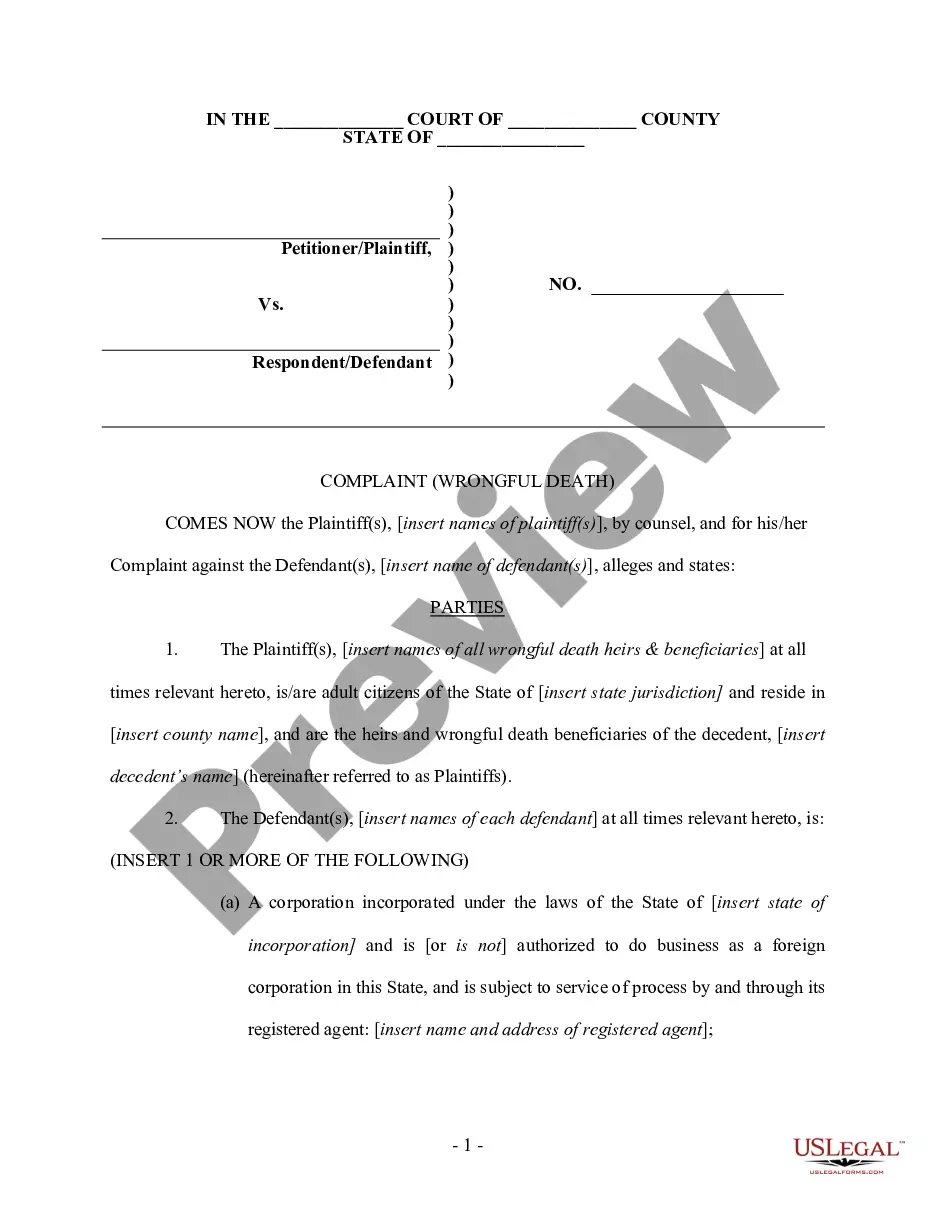
The Complaint for Wrongful Death is a legal document used in New Jersey to initiate a wrongful death lawsuit. This form allows the administrator of a deceased person's estate to claim damages from a party whose negligence or wrongful actions led to the death. It differentiates from similar forms as it specifically addresses claims made under New Jersey law regarding wrongful death and includes claims for survival and pain and suffering as a result of the decedent's injuries.
Form components explained
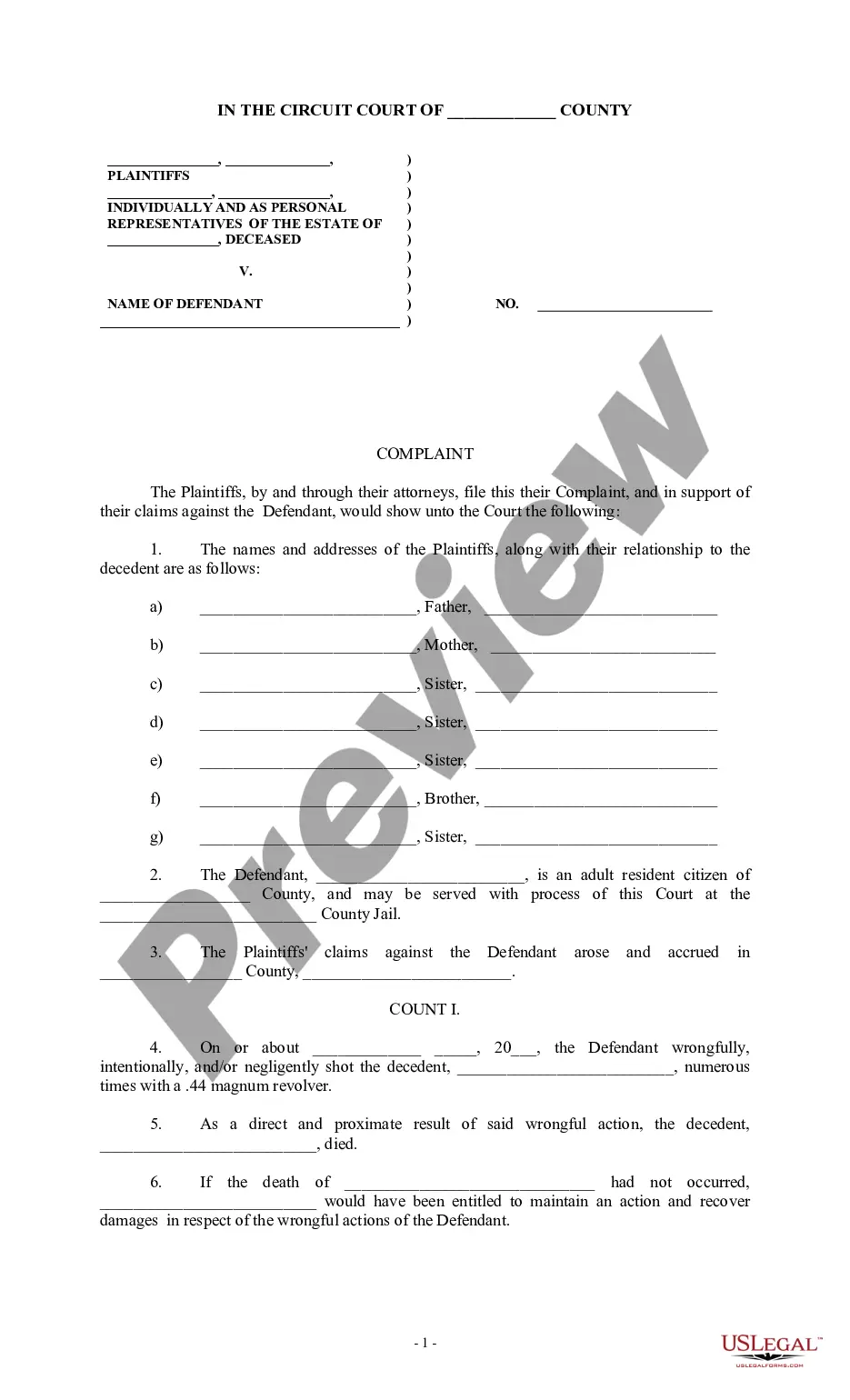
- The parties involved, including the plaintiff and defendant.
- Jurisdiction and the basis for filing the complaint.
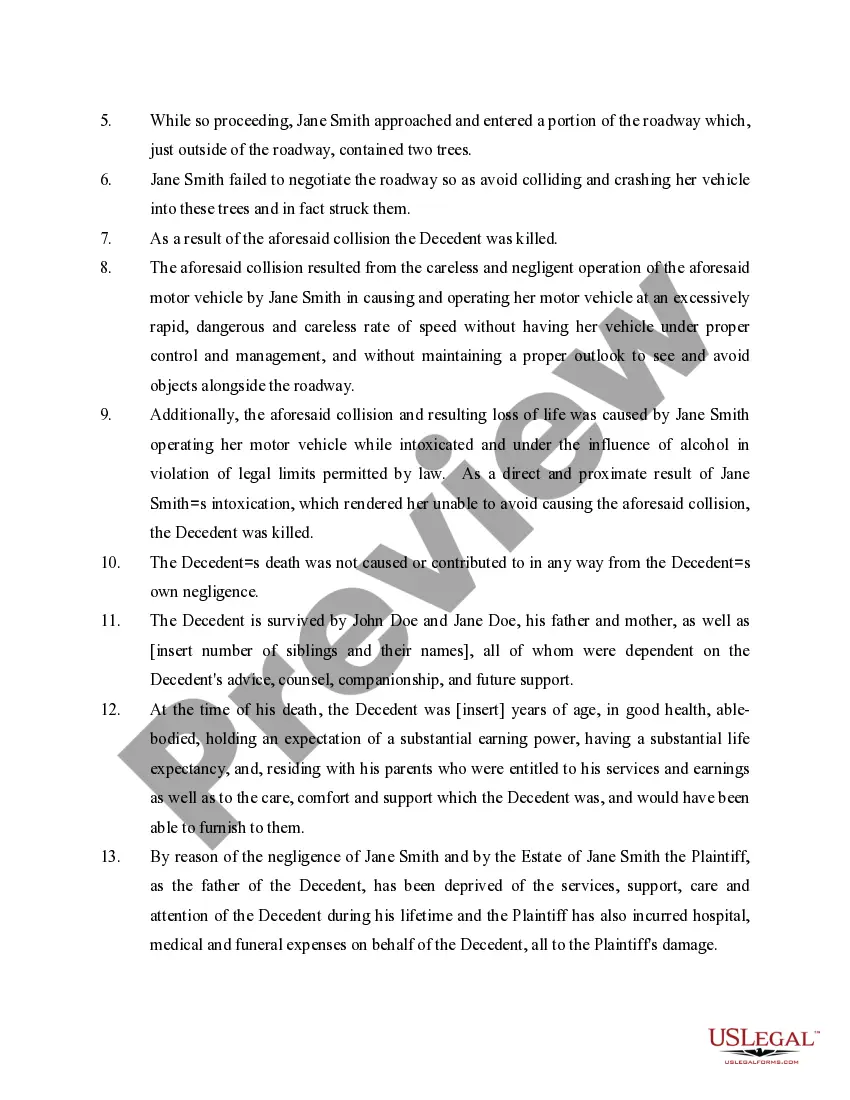
- Details of the wrongful death claim, including circumstances of the incident.
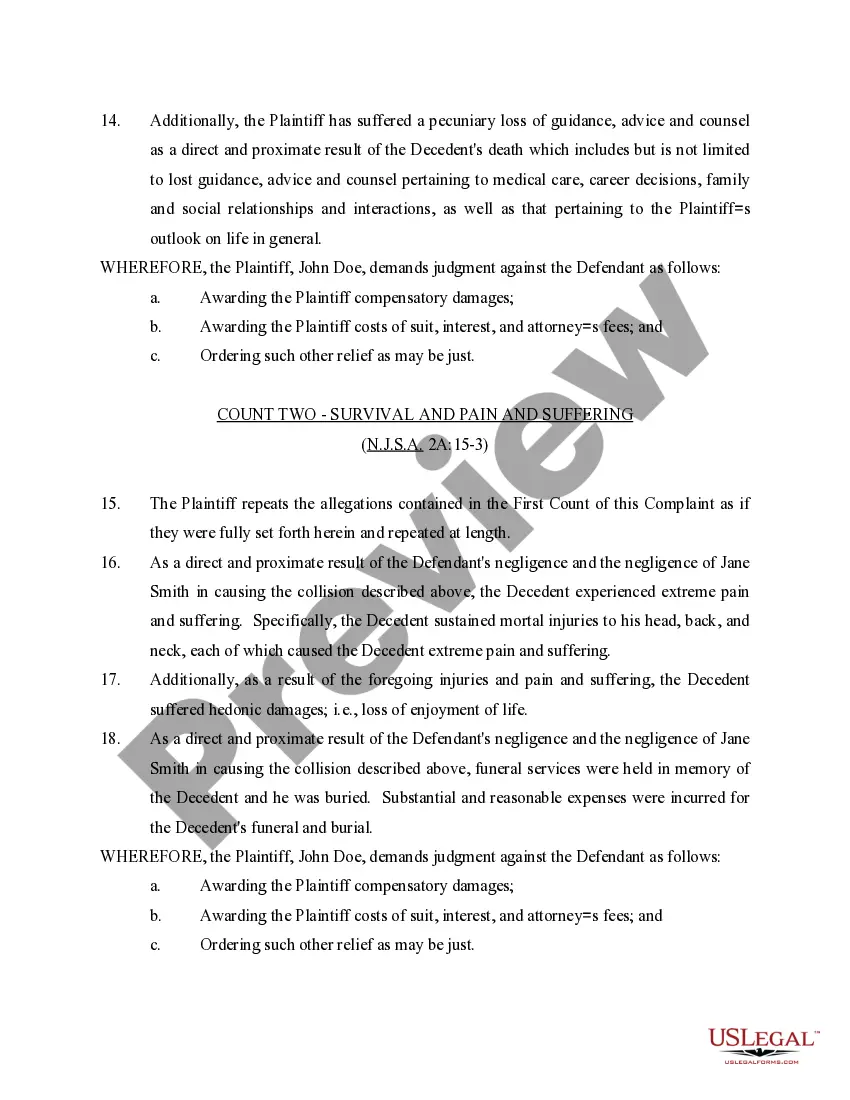
- Claims for damages related to the decedent's suffering and potential loss of future support for survivors.
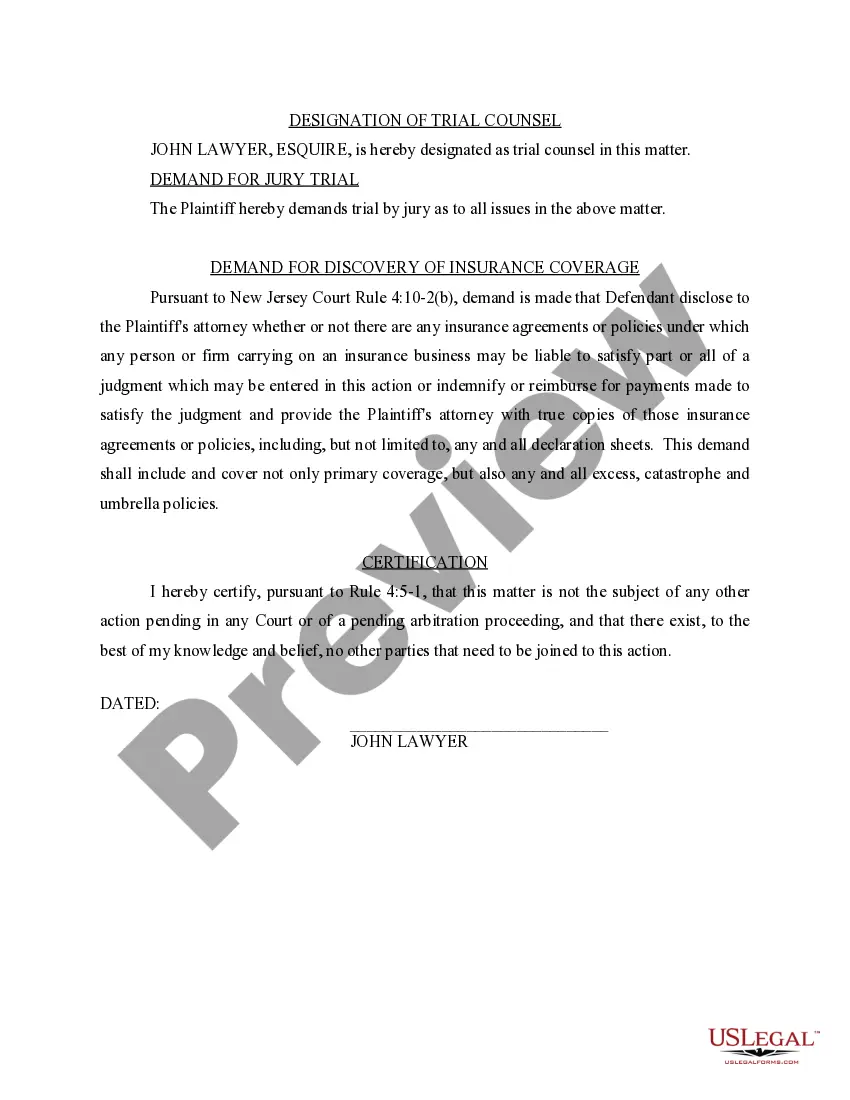
- Designation of trial counsel and demand for jury trial.
- Certification of no conflicting claims pending in other courts.

Situations where this form applies
This form should be used when a person has died due to the negligence or wrongful act of another party, and the administrator of the deceased's estate wishes to seek compensation for damages. Typical situations include fatal car accidents, medical malpractice resulting in death, or any other scenario where another individual's actions led directly to a fatality.
Who can use this document
- Estates of individuals who have died from wrongful actions of others.
- Administrators or executors of the deceased's estate.
- Surviving family members seeking damages related to the loss of their loved one.
How to complete this form
- Identify the plaintiff and defendant by providing their names and addresses.
- Specify the date of the decedent's death and the circumstances surrounding the incident.
- Include details of the Letters of Administration that authorize you to file the complaint.
- List the claims for damages clearly, including specific losses experienced due to the death.
- Designate trial counsel and indicate your request for a jury trial.
Does this form need to be notarized?
This form does not typically require notarization to be legally valid. However, some jurisdictions or document types may still require it. US Legal Forms provides secure online notarization powered by Notarize, available 24/7 for added convenience.
Get your form ready online
Our built-in tools help you complete, sign, share, and store your documents in one place.
Make edits, fill in missing information, and update formatting in US Legal Forms—just like you would in MS Word.
Download a copy, print it, send it by email, or mail it via USPS—whatever works best for your next step.
Sign and collect signatures with our SignNow integration. Send to multiple recipients, set reminders, and more. Go Premium to unlock E-Sign.
If this form requires notarization, complete it online through a secure video call—no need to meet a notary in person or wait for an appointment.
We protect your documents and personal data by following strict security and privacy standards.

Make edits, fill in missing information, and update formatting in US Legal Forms—just like you would in MS Word.

Download a copy, print it, send it by email, or mail it via USPS—whatever works best for your next step.

Sign and collect signatures with our SignNow integration. Send to multiple recipients, set reminders, and more. Go Premium to unlock E-Sign.

If this form requires notarization, complete it online through a secure video call—no need to meet a notary in person or wait for an appointment.

We protect your documents and personal data by following strict security and privacy standards.
Typical mistakes to avoid
- Failing to provide complete and accurate information about the deceased and the incident.
- Not properly designating an administrator if not already appointed.
- Missing the submission deadline, which can limit the ability to file a claim.
- Forgetting to include all relevant supporting documents, such as the Letters of Administration.
Benefits of completing this form online
- Convenience of downloading and filling out the form at your own pace.
- Access to legal templates drafted by licensed attorneys, ensuring legal compliance.
- The ability to easily customize the form to fit your specific circumstances.
- Immediate access to updates and revisions to align with any changes in legal standards.
Legal use & context
- Allows the legal representatives to initiate a wrongful death lawsuit in a timely manner.
- Facilitates the compensation process for families suffering losses due to wrongful death.
- Establishes a formal claim that can lead to a trial if settlements cannot be reached.
What to keep in mind
- The Complaint for Wrongful Death is essential for pursuing legal action in New Jersey.
- It addresses wrongful acts leading to a person's death and allows compensation claims.
- Proper completion and submission of the form is crucial to meet legal deadlines and requirements.
Looking for another form?
Form popularity
FAQ
Those who may receive a portion of the damages in a New Jersey wrongful death case include: the surviving spouse and children or grandchildren. surviving parents of the deceased person. any surviving siblings, nieces, or nephews of the deceased person, and.
The immediate family of a deceased person can usually file a wrongful death claim against the party who caused the underyling accident. If a family member has died as the result of negligence or some other wrongful action, you might be able to file a wrongful death lawsuit against the person who caused the death.
The person had the intent to commit the act; The person made non-consensual contact with the victim (this can include hitting someone with a car or using a weapon); and. The contact caused fatal harm.
How Much Are Wrongful Death Settlements? Wrongful death settlements are, on average, $500,000 or more. Your case may be more or less than average. The purpose of a wrongful death settlement is to place a value on the loss of companionship, life, and income that happens when a personal injury results in death.
Wrongful death happens when somebody is killed because of another person or entity's negligence or misconduct. Although there may be a criminal prosecution related to the fatality, a wrongful death lawsuit is a civil action that is separate and distinct from any criminal charges.
They must prove that their loved one's death was, in fact, caused by the other party's negligence, recklessness or deliberate act. The event was not brought about by his own action or inaction. Surviving family members must establish that they suffered measurable damages due to their loved one's wrongful death.
The average wrongful death settlement ranges from $500,000 to over $1 million. A typical wrongful death settlement depends on the circumstances surrounding the case. Your settlement may be more or less than average.
A wrongful death claim must be filed by a representative on behalf of the survivors who suffer damage from the decedent's death (they are called the "real parties in interest"). The representative is usually the executor of the decedent's estate. The "real parties in interest" vary from state to state.