New Jersey Residential or Rental Lease Extension Agreement
What is this form?
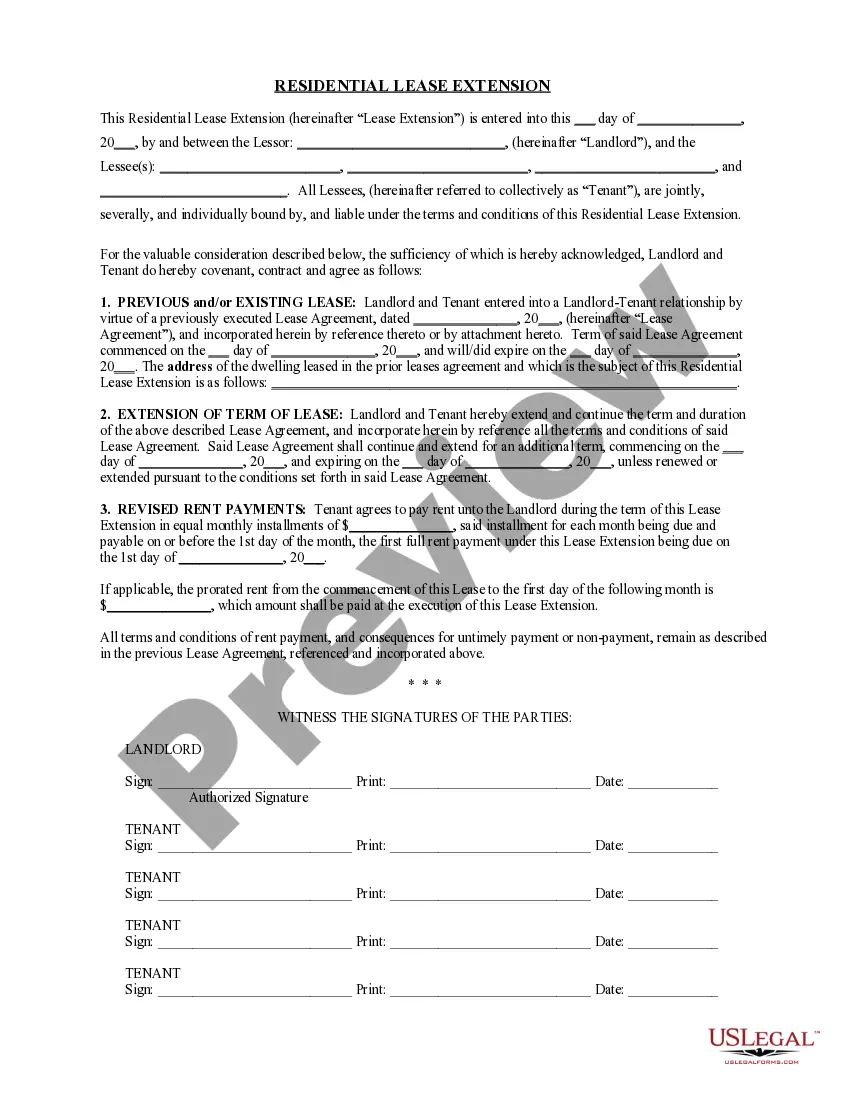
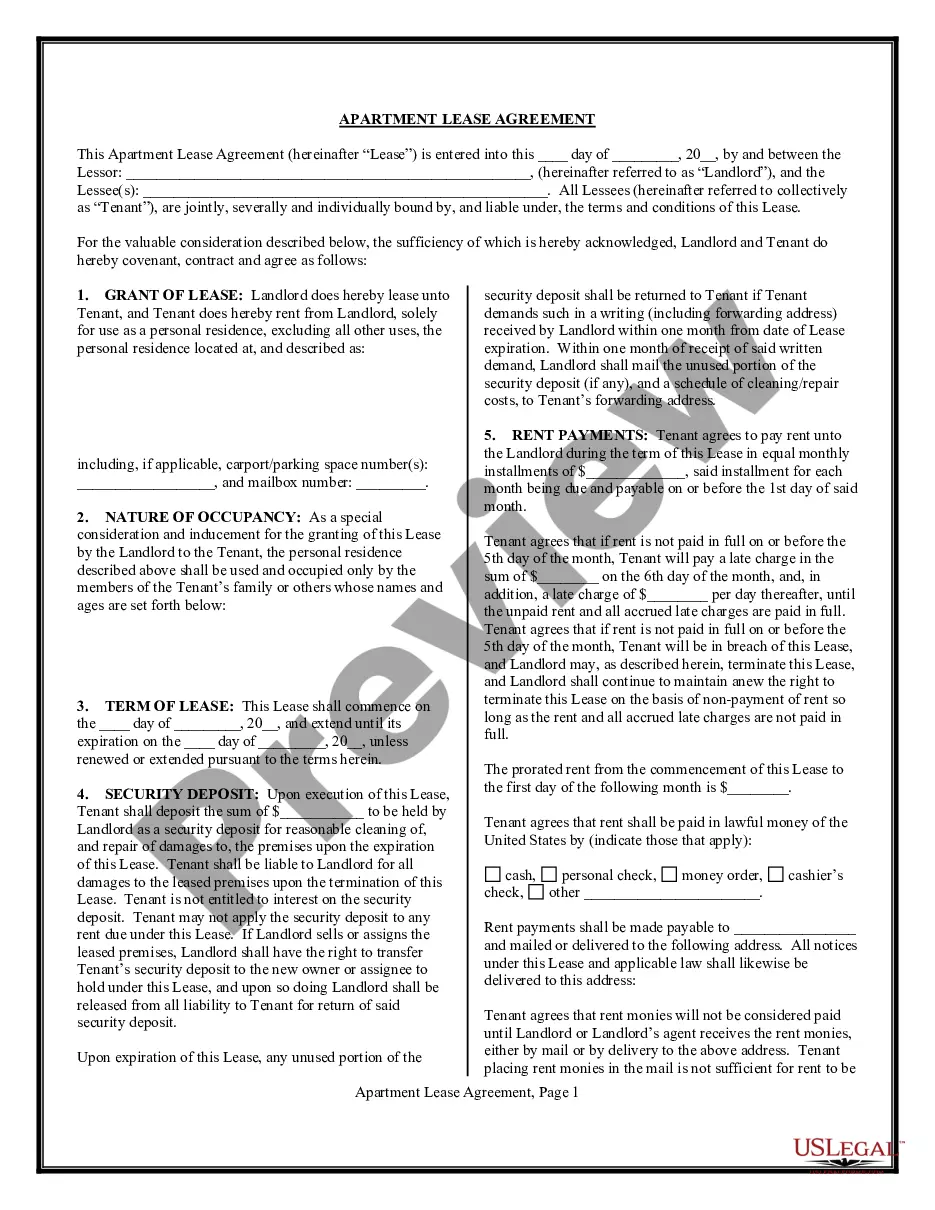
The Residential or Rental Lease Extension Agreement is a legal document used to extend the duration of an existing residential lease between a landlord and a tenant. This form allows both parties to continue their landlord-tenant relationship without needing to draft a new lease. By signing this extension, all terms from the original lease remain in effect, with possible adjustments to the rent amount or other conditions if specified.
Main sections of this form
- Identification of the landlord and tenant parties.
- Details of the original lease agreement, including dates and conditions.
- New term of the lease extension, including start and end dates.
- Revised rent payment terms, including the monthly amount and due dates.
- Signatures of all parties involved to confirm agreement.
When this form is needed
This form is necessary when a tenant wishes to continue living at the same rental property after their original lease expires. It is useful when both parties agree on the terms of extension and do not want to enter into a completely new lease agreement. This form is common among landlords and tenants who have established a good rental history and wish to maintain the same arrangement.
Who this form is for
This Residential Lease Extension Agreement is suitable for:
- Landlords seeking to extend the rental period for existing tenants.
- Tenants who wish to continue their tenancy beyond the original lease term.
- Individuals or property managers who manage rental properties on behalf of landlords.
Completing this form step by step
- Identify and fill in the names of the landlord and all tenants involved.
- Enter the original lease's start and expiration dates.
- Specify the new lease extension term's start and expiration dates.
- Fill in the revised rent amount and payment due dates.
- Ensure all parties sign the document to validate the agreement.
Does this document require notarization?
Notarization is generally not required for this form. However, certain states or situations might demand it. You can complete notarization online through US Legal Forms, powered by Notarize, using a verified video call available anytime.
Get your form ready online
Our built-in tools help you complete, sign, share, and store your documents in one place.
Make edits, fill in missing information, and update formatting in US Legal Forms—just like you would in MS Word.
Download a copy, print it, send it by email, or mail it via USPS—whatever works best for your next step.
Sign and collect signatures with our SignNow integration. Send to multiple recipients, set reminders, and more. Go Premium to unlock E-Sign.
If this form requires notarization, complete it online through a secure video call—no need to meet a notary in person or wait for an appointment.
We protect your documents and personal data by following strict security and privacy standards.

Make edits, fill in missing information, and update formatting in US Legal Forms—just like you would in MS Word.

Download a copy, print it, send it by email, or mail it via USPS—whatever works best for your next step.

Sign and collect signatures with our SignNow integration. Send to multiple recipients, set reminders, and more. Go Premium to unlock E-Sign.

If this form requires notarization, complete it online through a secure video call—no need to meet a notary in person or wait for an appointment.

We protect your documents and personal data by following strict security and privacy standards.
Common mistakes to avoid
- Failing to include all tenant's names, leading to potential disputes.
- Not specifying the exact new lease term dates.
- Omitting signatures, which can render the agreement unenforceable.
Why use this form online
- Convenient access to legal form templates from anywhere with an internet connection.
- Editable fields allow easy customization to fit specific landlord-tenant needs.
- Reliable legal language drafted by licensed attorneys ensures enforceability.
Looking for another form?

Form popularity
FAQ
Lease Renewal A landlord must allow the tenant to renew the lease unless the landlord has good cause for an eviction under the Anti-Eviction Act. (This does not apply to two or three-family owner occupied dwellings, motels, hotels, transients or seasonal tenants).
Renewing a lease locks a tenant in so a landlord knows (if all goes to plan) that they will receive rent for a predictable period of time. Likewise, as the PM, it means your revenue is also guaranteed to remain stable because you only get your cut, when the landlord gets their rent!
Lease Extension Request for Rental Address Dear Landlord's Name, Please accept this letter as a formal request for an extension to the lease for Property Address. Currently, the lease is set to expire on date. I would like to amend that date to end on new date.
We recommend offering your tenant a lease renewal 90 days before the lease expires. You can offer in-person, send via email, or send a letter. The goal is to receive a reply within 30 days so that you have at least 60 days to find a new tenant if your current tenant declines the renewal offer.
Your rights as a tenant when a lessor proposes changes to your lease depend on whether you have an option to renew when the lease expires.That is, a new lease is created, and both parties are legally bound to that agreement. Until both parties sign the new lease, there is only an 'agreement to lease'.
Ask your landlord in writing (as far in advance as possible) for a few extra days. Explain your difficulties and emphasize (if you can) that they are only temporary. Offer (if at all possible) to pay at least some of the rent on time.
By definition, a lease renewal is a new lease agreement, whereas a lease extension is a continuation of the original lease agreement. Generally speaking, the practical effect of either is that the parties to the lease continue the landlord-tenant relationship beyond the expiration of the original term of the lease.
A lease extension refers to a legal agreement that extends the term of an existing lease or rental agreement.They are common in relationships between landlords and tenants of commercial and residential property, or between parties who lease vehicles, machinery, plants, and equipment.
Contract extension: an existing contract is continued for a period of time.Contract renewal: an existing contract endsby, for example, expiringand the parties agree to enter into a new contract (usually for the same or very similar services).