New Jersey Tenant Consent to Background and Reference Check
Understanding this form
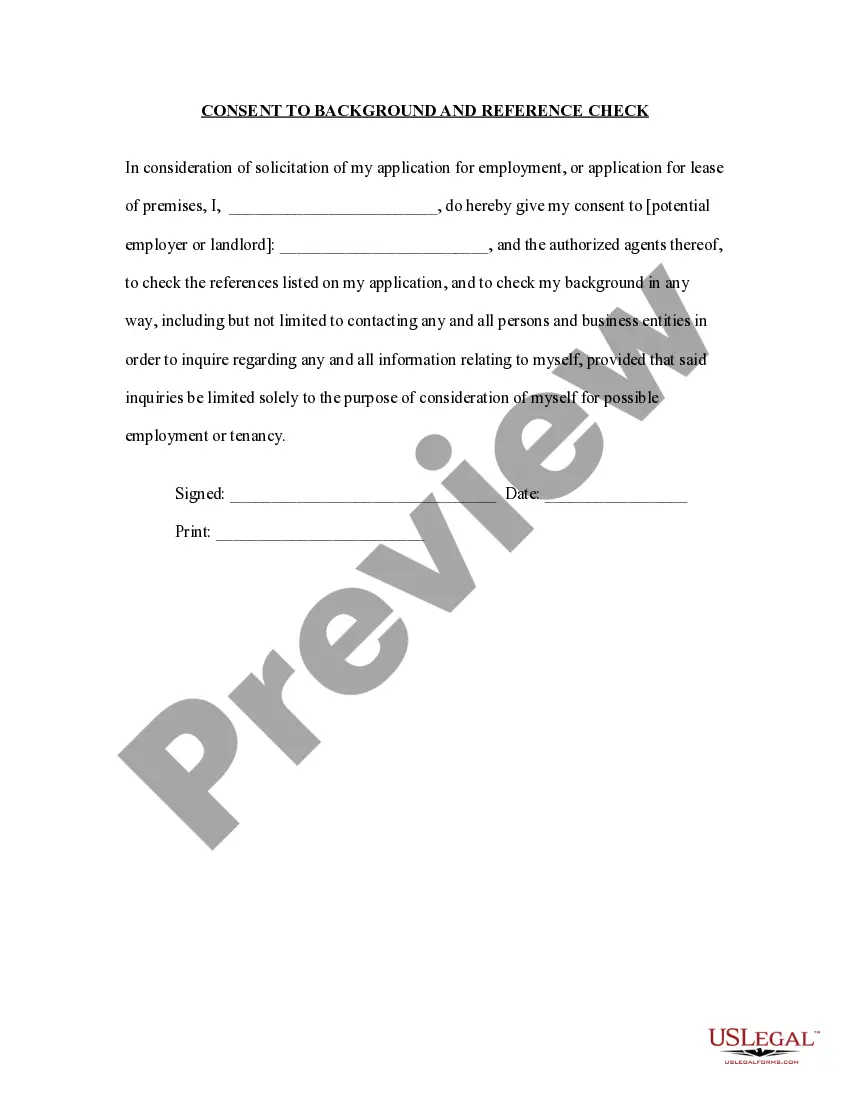
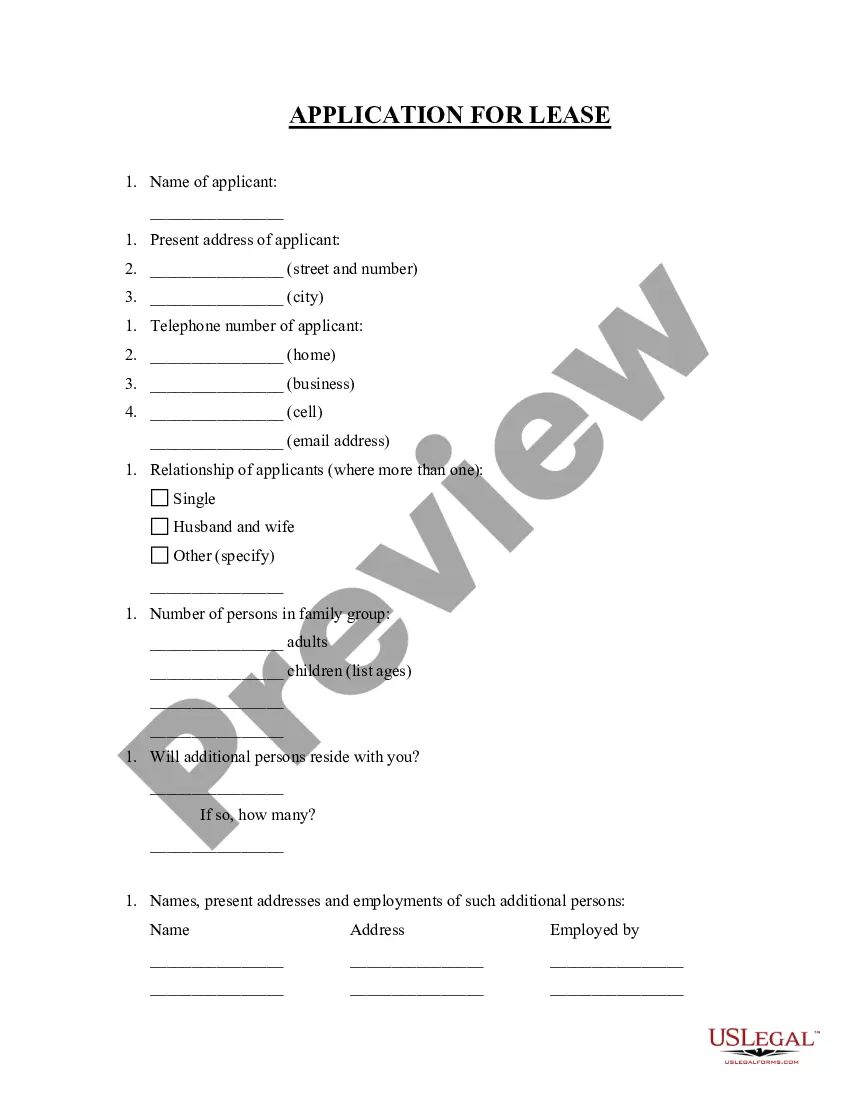
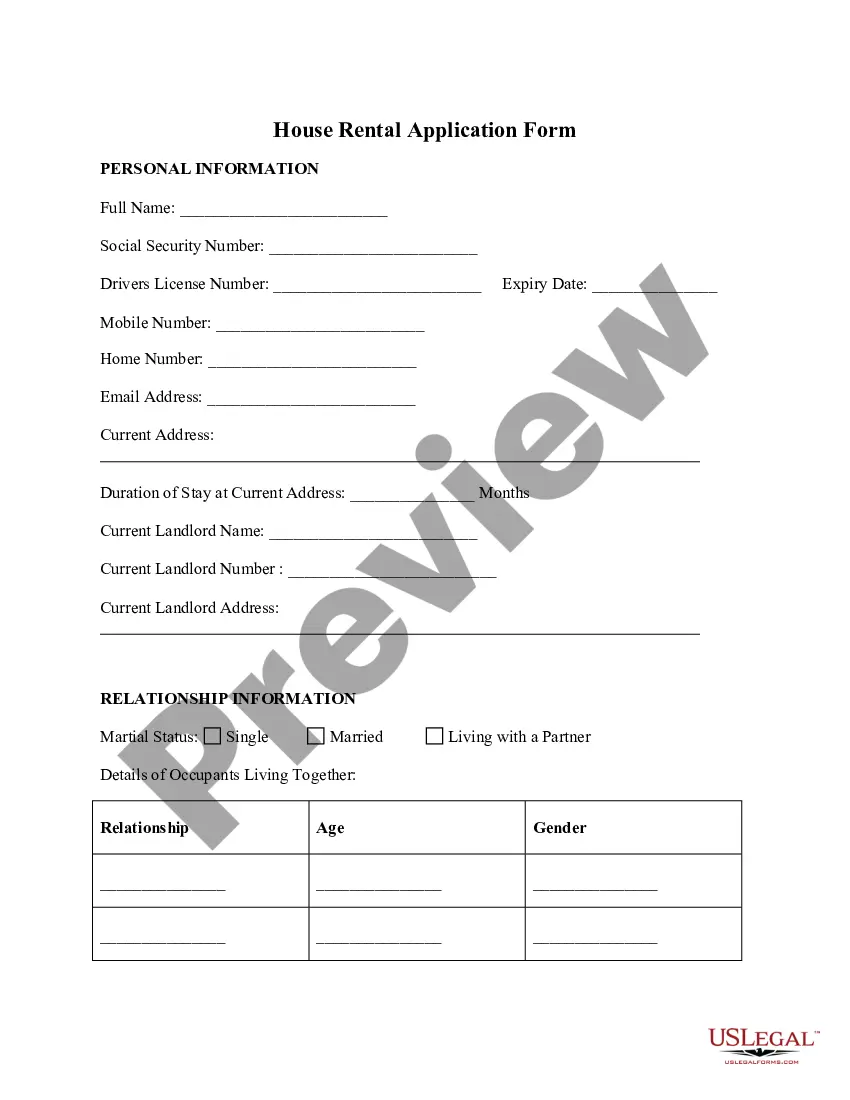
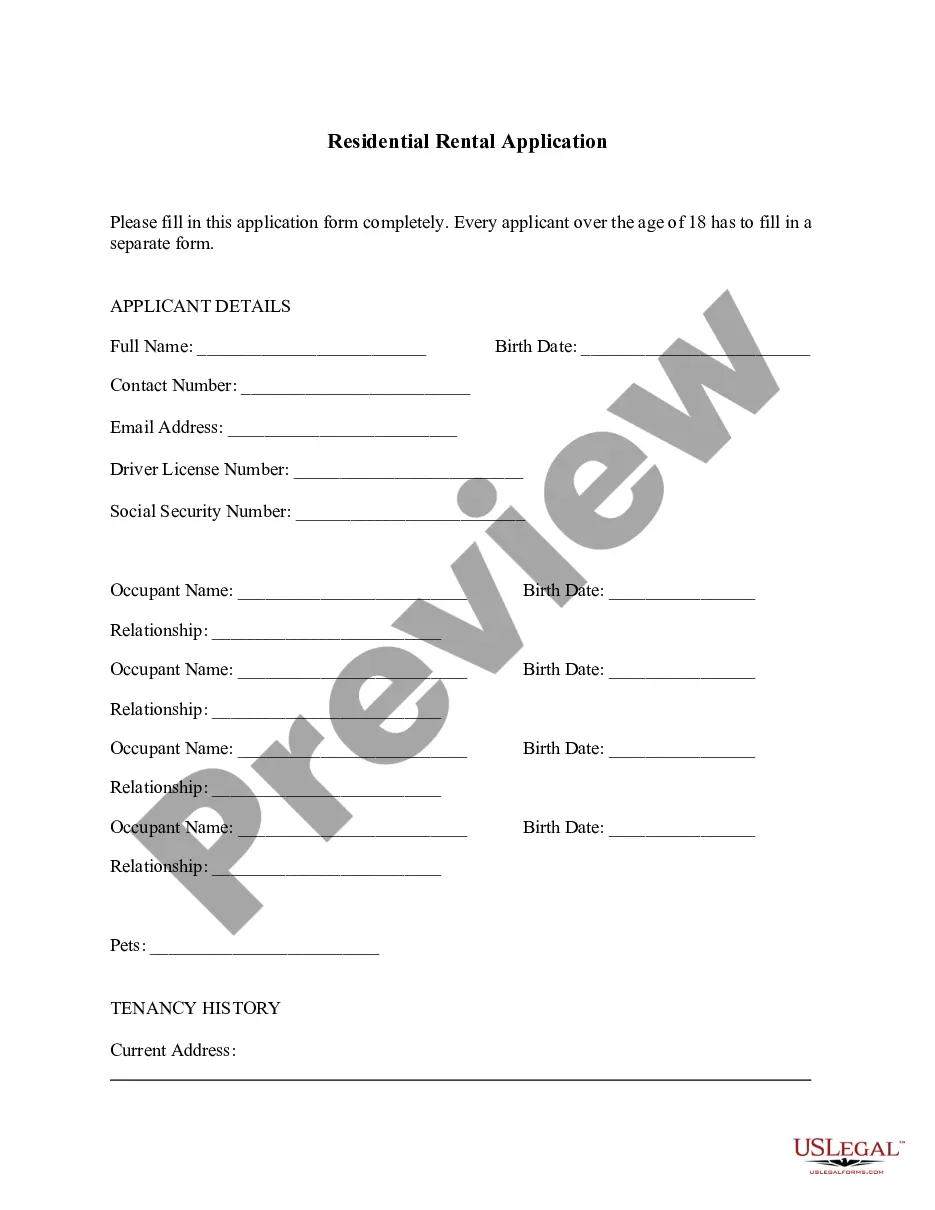
The Tenant Consent to Background and Reference Check is a legal document that allows a landlord to verify a tenant's background and references. This form ensures that the landlord has the tenant's permission to perform necessary checks, which may include reviewing criminal history and contacting references. Unlike other lease forms, this consent specifically focuses on the tenant's approval for background investigations, making it essential for screening potential renters.
Key parts of this document
- Tenant's name: The full name of the individual providing consent.
- Landlord's name: The name of the potential landlord or property manager conducting the checks.
- Consent statement: A declaration allowing the landlord to perform background checks related to employment or tenancy.
- Signature and date: The tenant must sign and date the form to validate consent.
- Printed name: The tenant's name must be clearly printed beside their signature.
When to use this form
This form is necessary when a tenant applies for a rental property and the landlord requires permission to conduct background and reference checks. It is commonly used in rental applications to assess the applicantâs suitability based on their criminal history and professional references.
Who can use this document
- Individuals applying for a rental property.
- Landlords or property managers seeking background verification for prospective tenants.
- Real estate agents facilitating rental agreements.
How to complete this form
- Print the tenant's full name at the top of the form.
- Enter the name of the landlord or property manager requesting the checks.
- Review the consent statement to ensure understanding and agreement.
- Sign and date the form where indicated.
- Print the tenant's name again next to the signature for clarity.
Notarization guidance
This form does not typically require notarization unless specified by local law. Itâs recommended to check state-specific regulations regarding notarization for tenant consent forms.
Get your form ready online
Our built-in tools help you complete, sign, share, and store your documents in one place.
Make edits, fill in missing information, and update formatting in US Legal Forms—just like you would in MS Word.
Download a copy, print it, send it by email, or mail it via USPS—whatever works best for your next step.
Sign and collect signatures with our SignNow integration. Send to multiple recipients, set reminders, and more. Go Premium to unlock E-Sign.
If this form requires notarization, complete it online through a secure video call—no need to meet a notary in person or wait for an appointment.
We protect your documents and personal data by following strict security and privacy standards.

Make edits, fill in missing information, and update formatting in US Legal Forms—just like you would in MS Word.

Download a copy, print it, send it by email, or mail it via USPS—whatever works best for your next step.

Sign and collect signatures with our SignNow integration. Send to multiple recipients, set reminders, and more. Go Premium to unlock E-Sign.

If this form requires notarization, complete it online through a secure video call—no need to meet a notary in person or wait for an appointment.

We protect your documents and personal data by following strict security and privacy standards.
Common mistakes to avoid
- Failing to sign or date the form, which invalidates consent.
- Not clearly printing the tenantâs name next to the signature.
- Providing incomplete information about references or contacts.
Why complete this form online
- Convenient download and printing from home.
- Easy to fill out and access at any time.
- Reliable templates drafted by licensed attorneys to ensure compliance with legal standards.
Legal use & context
- This form is legally binding once signed, as it establishes consent for background checks.
- Landlords must adhere to Fair Housing laws when using the information obtained through this form.
Key takeaways
- This form allows landlords to conduct essential background checks on prospective tenants.
- Proper completion of the form is crucial for both tenant consent and landlord verification.
- Understanding local laws relating to tenant screening is important to avoid legal issues.
Looking for another form?
Form popularity
FAQ
Landlords should absolutely request a reference if the applicant has a rental history. Our policy is a credit check, background check, employment/financials verification, and a landlord reference. It's important to know if you're getting a quality tenant and all of the above checks help create a fuller picture.
A. A courteous introduction (e.g. Dear ______ or To whom it may concern) b. A statement of intent (e.g. I am writing this letter to recommend _____ as a tenant) c. A closing sentiment (e.g. Kind Regards or Sincerely)
For more regulations on the application fee in California: Landlords may charge (per applicant) a maximum screening fee of $35. The fee must be used for actual out-of-pocket costs of obtaining a background check and the reasonable value of time spent by the landlord obtaining the background information.
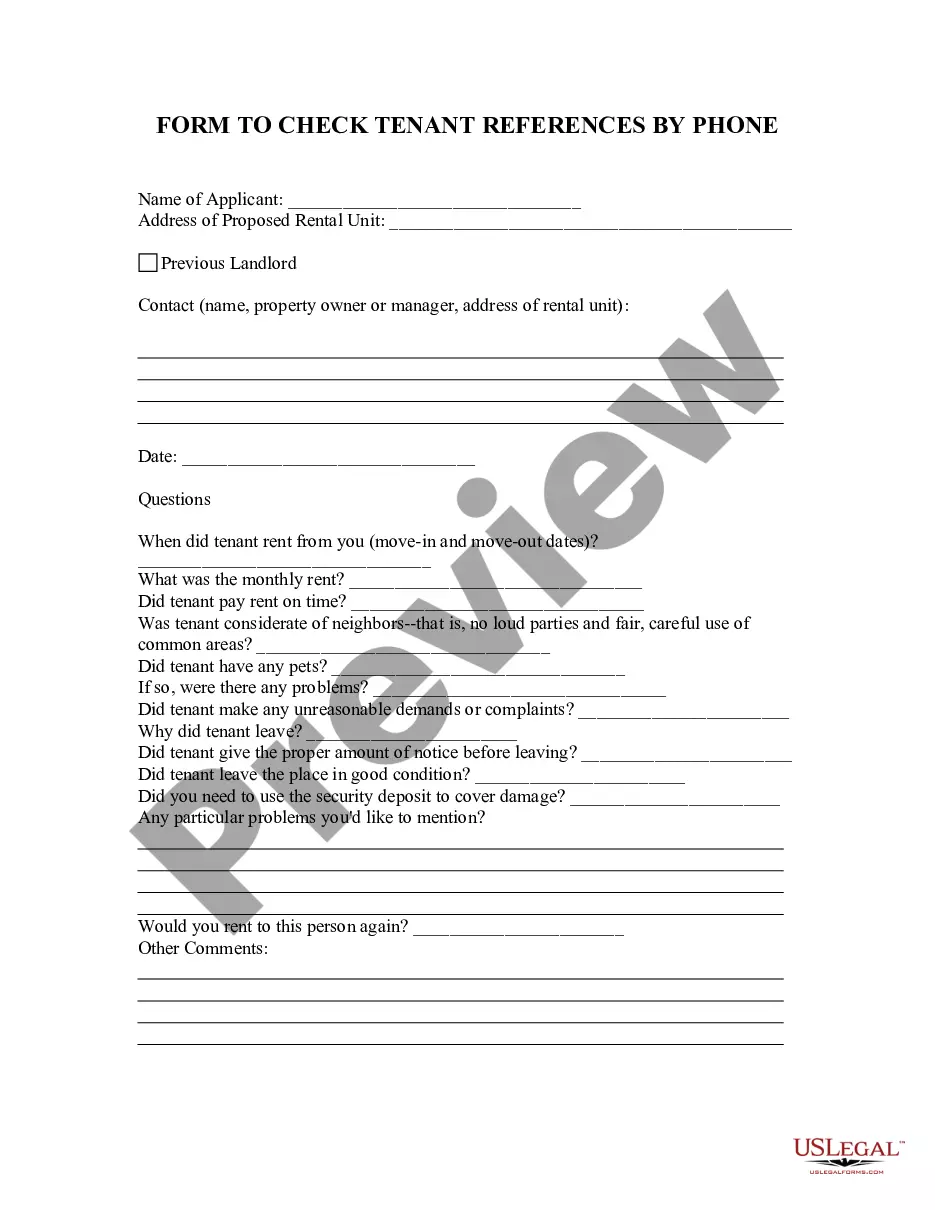
Screening Questions for Tenant's Current or Past Landlords Did the tenant abide by the rules of the lease and any move-out rules? Did the tenant take care of your home and yard? Were there any complaints made against the tenant? How much work did you have to do to get it ready for the next tenant?
References from past landlords may indicate how an applicant would occupy your property, and this information could help you avoid a bad outcome such as late rent payments, property damage, complaints from neighbors, or an eviction. The eviction process is time-consuming and costly.
Rest assured there are no privacy laws limiting what a landlord can or can't disclose about a previous tenant. You can say anything you wish. However, our advice is to stick to the facts and only give information that you can support with written proof so that your former tenants won't accuse you of slander.
Landlord referencing This involves getting in touch with the tenant's previous landlord to find out how they behaved as a tenant. They can tell you if the tenant paid rent on time, if they treated the property with respect and any other information that might influence the decision.
Request an Application. Start by having every prospective tenant complete an application. Run a Credit Check. Run a Background Check. Contact the Previous Landlords. Contact the Tenant's Employer. Interview the Tenant.
Stick to the Facts Many landlords have heard rumors that they can't give tenants a bad reference. This is not true, and if there are definite, verifiable facts that pertain to a particular tenant, you have a responsibility to let other prospective landlords know.