New Jersey Heirship Affidavit - Descent
What this document covers
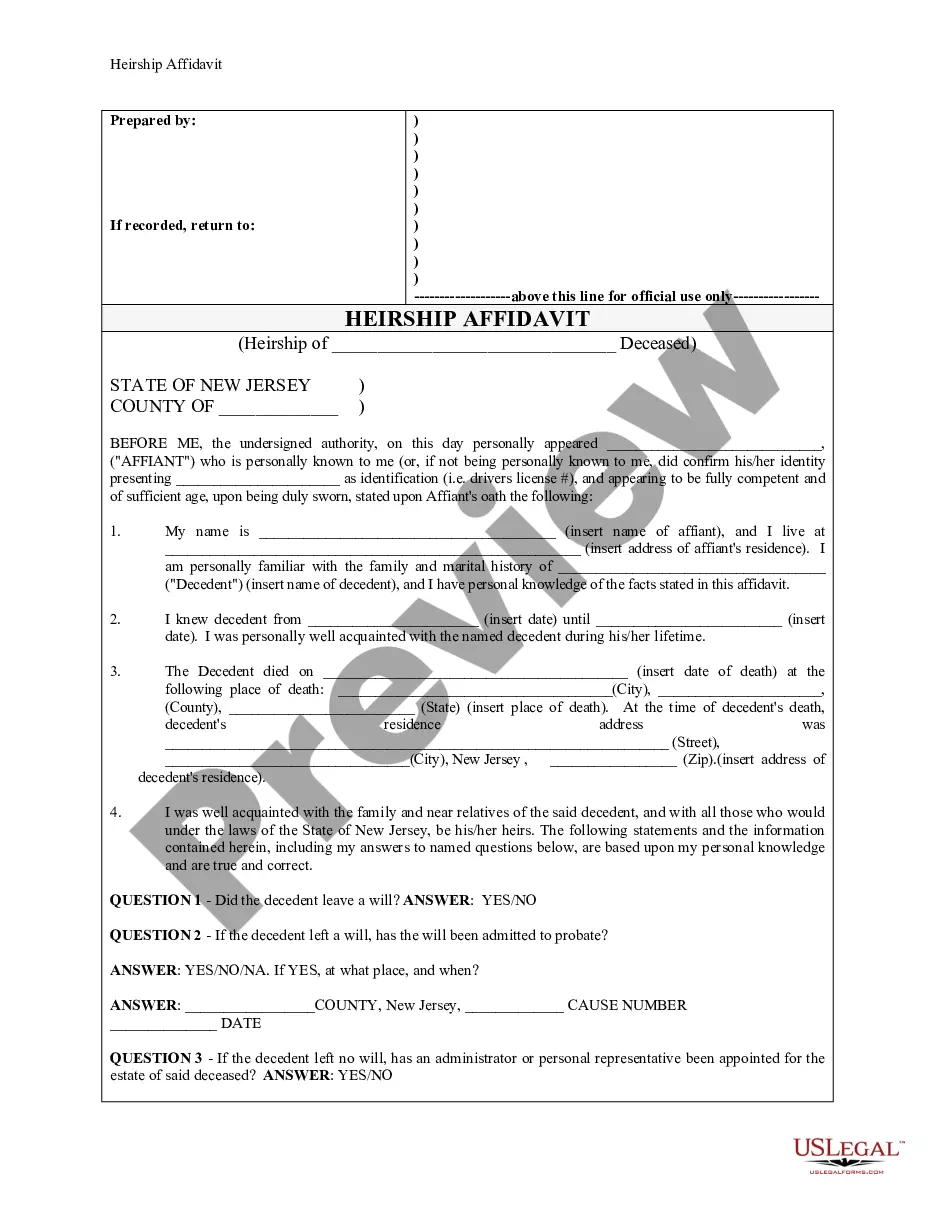
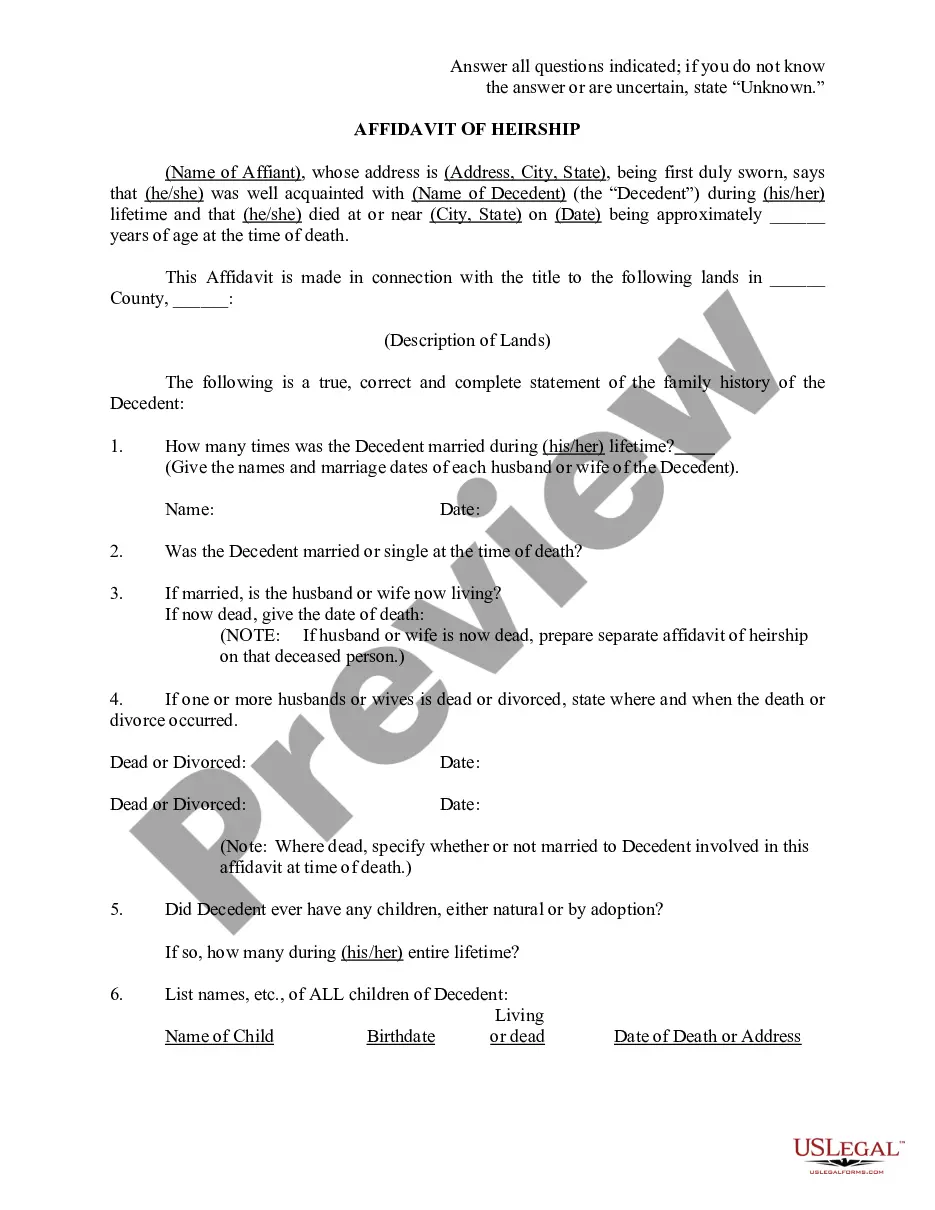
The Heirship Affidavit - Descent is a legal document used to declare the heirs of a deceased individual. This affidavit is essential for establishing ownership of personal and real property when someone dies without a will. It differs from similar forms by its specific focus on identifying heirs and may be recorded with land records to provide formal evidence of heirship.
Key components of this form
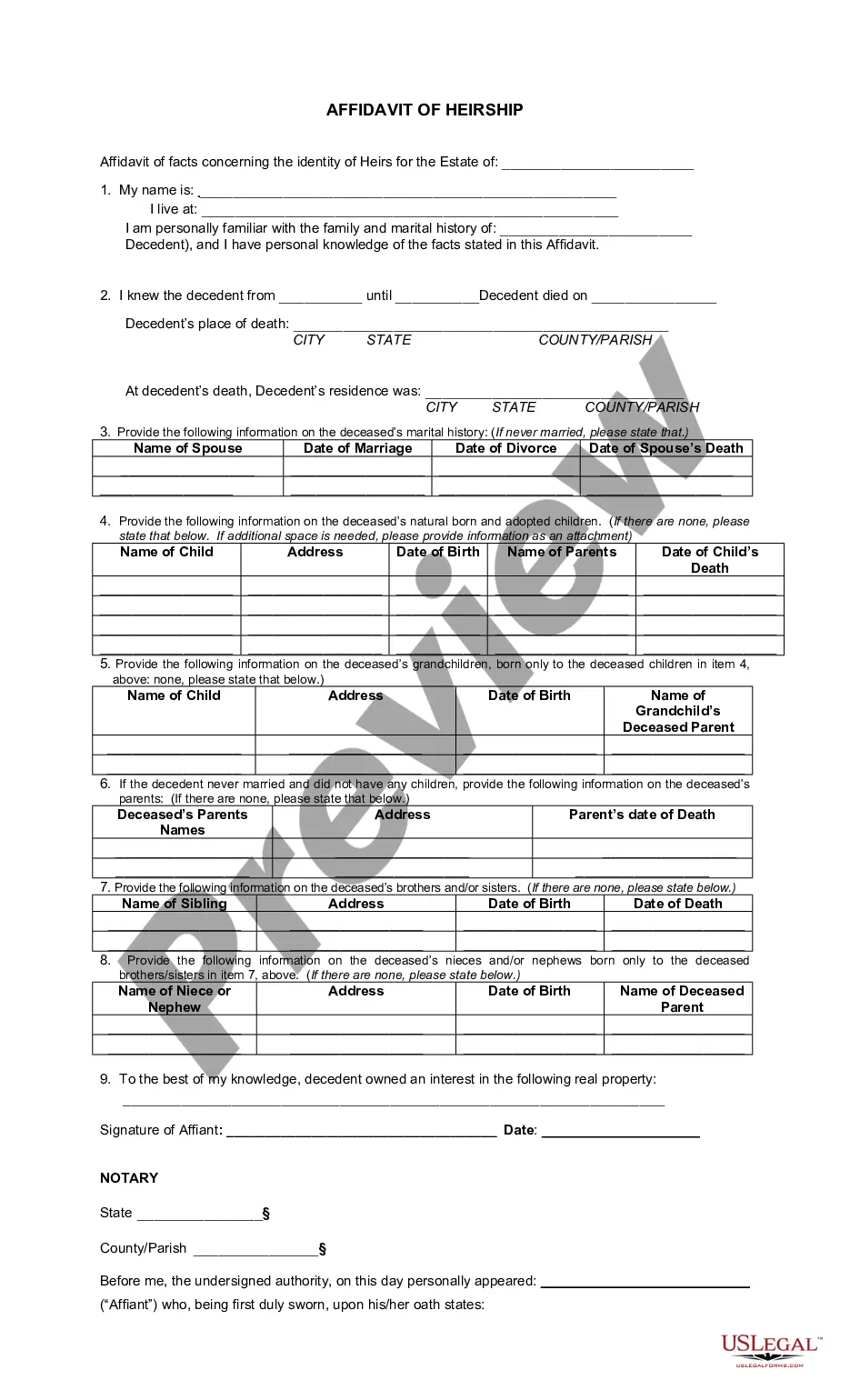
- Affiant's name and address
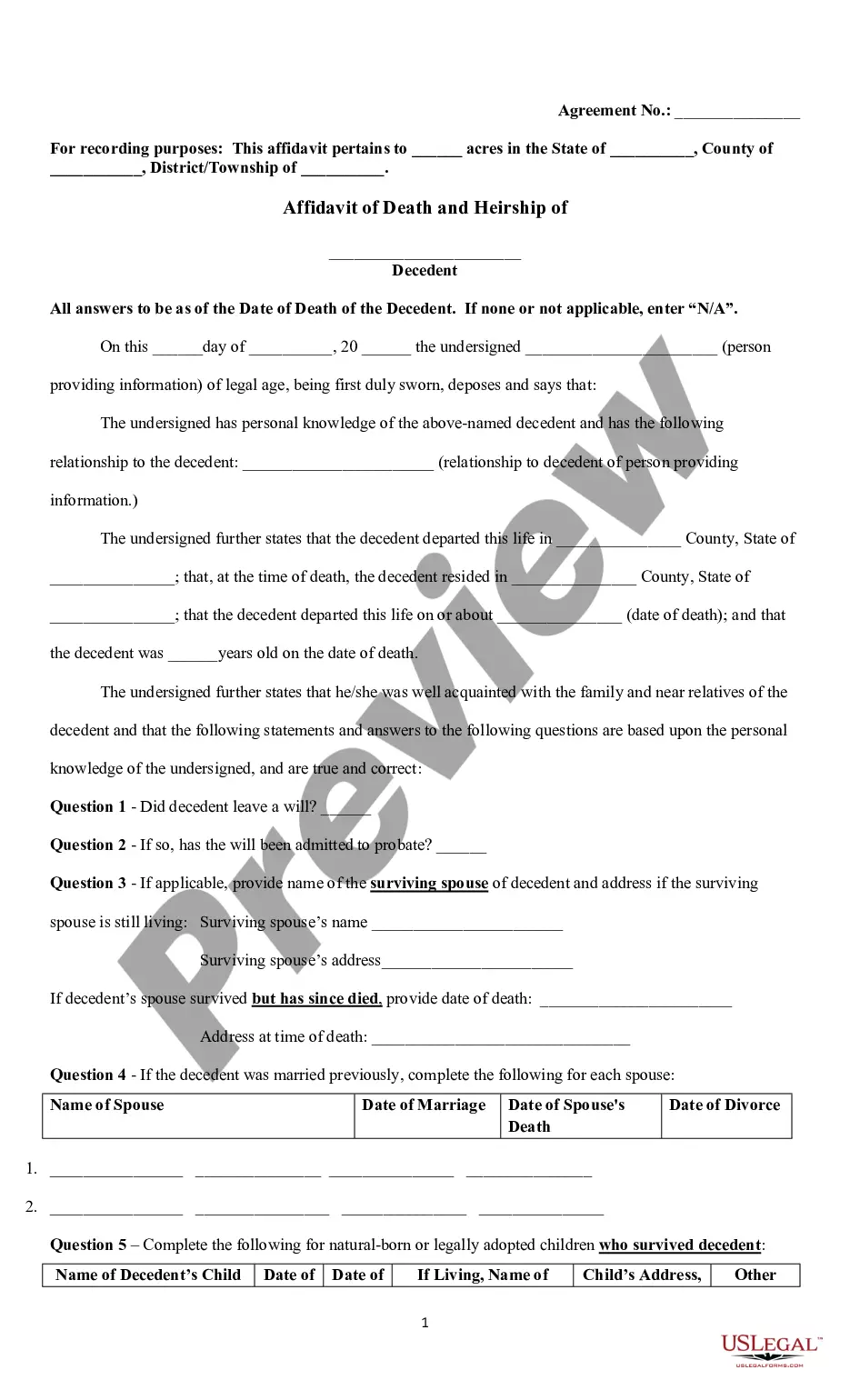
- Details of the deceased, including name, date of death, and place of death
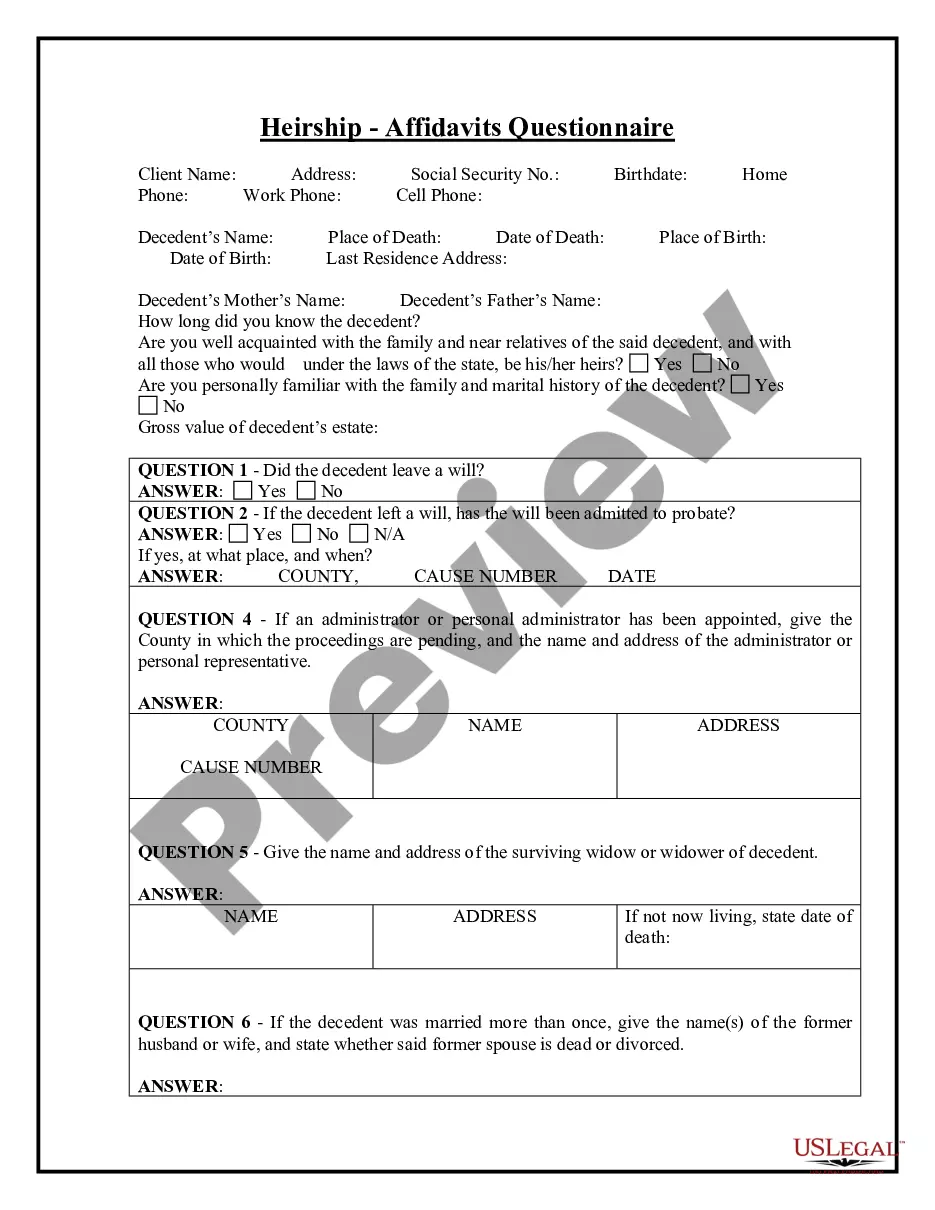
- Questions regarding any existing wills or probate proceedings
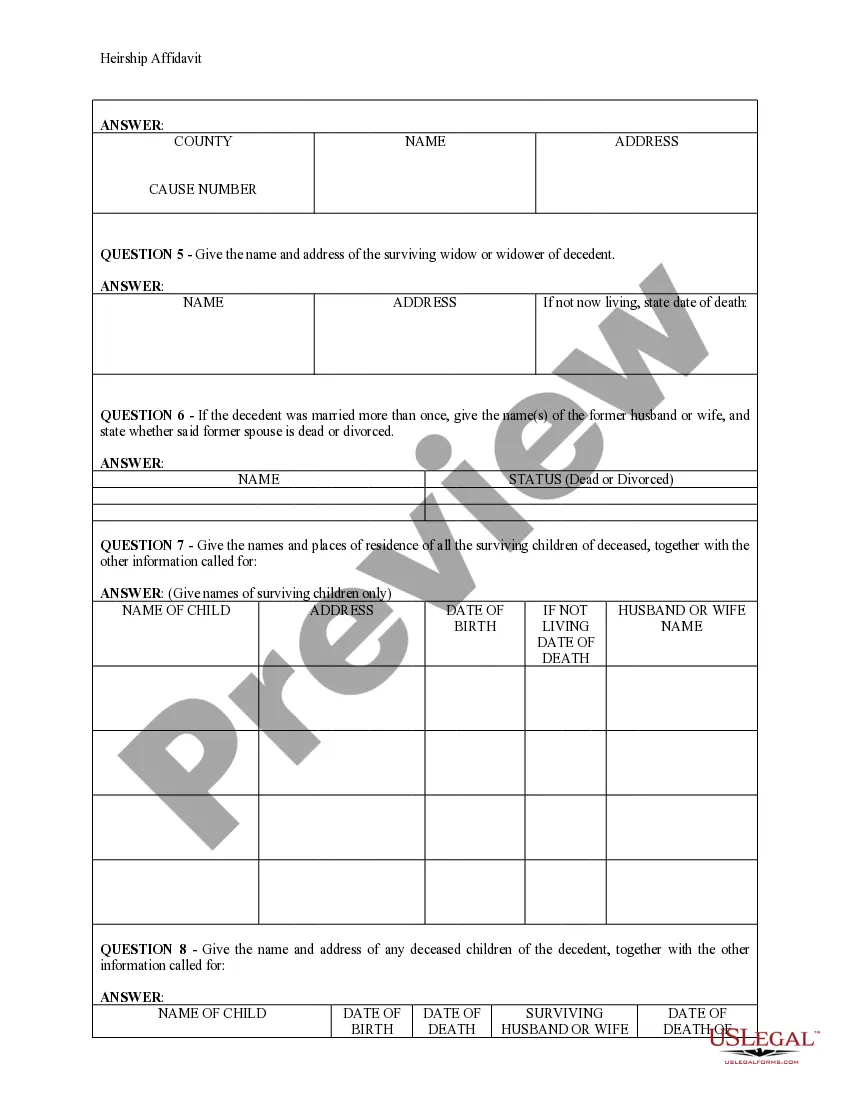
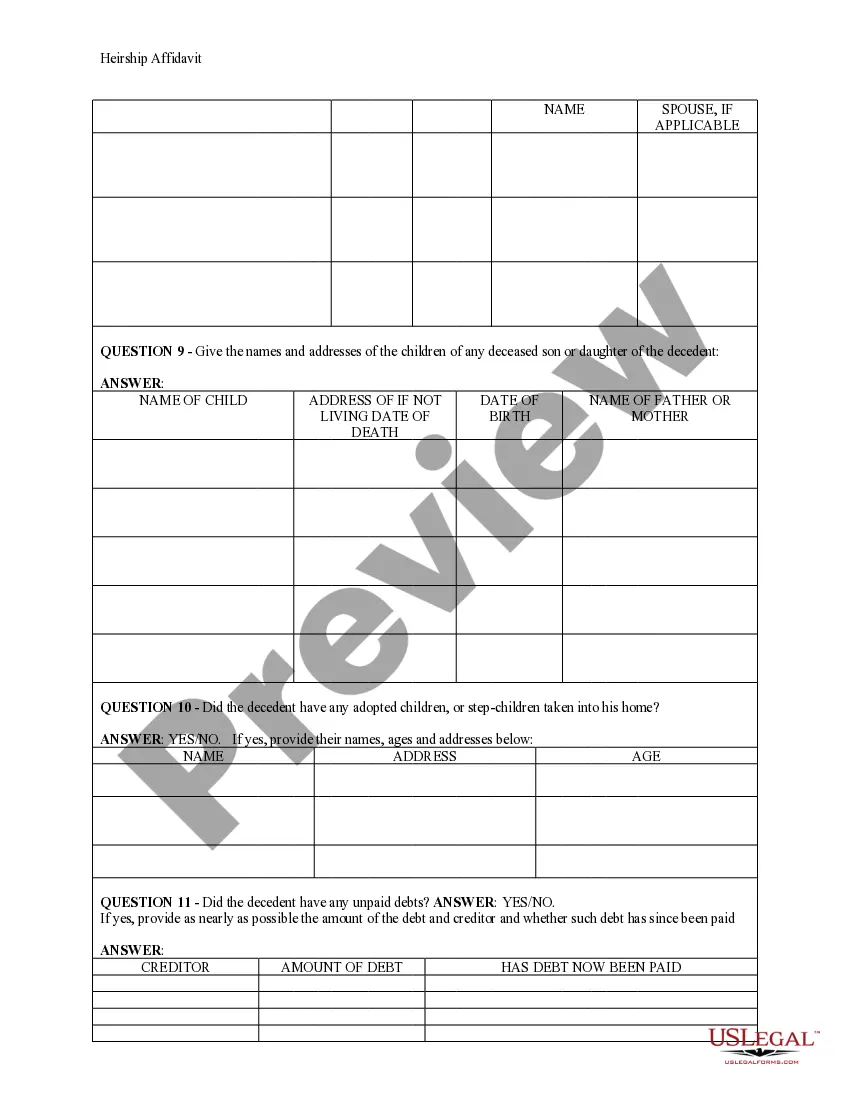
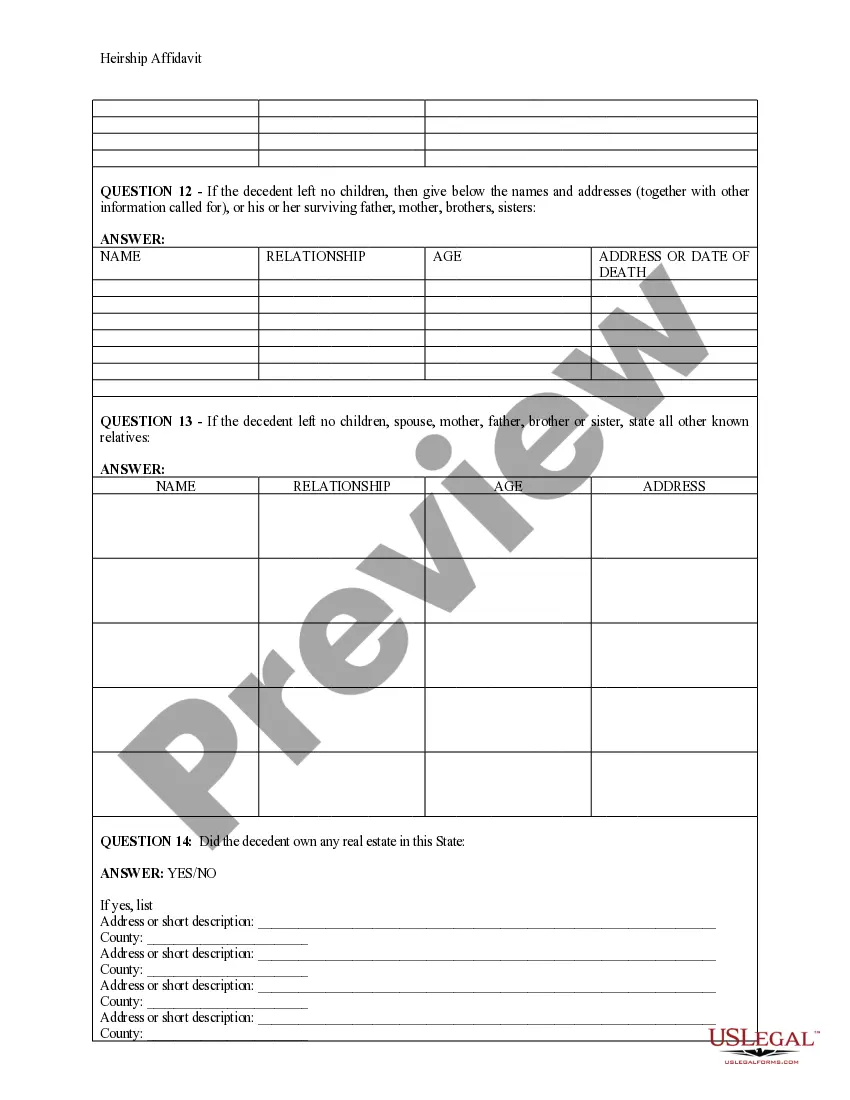
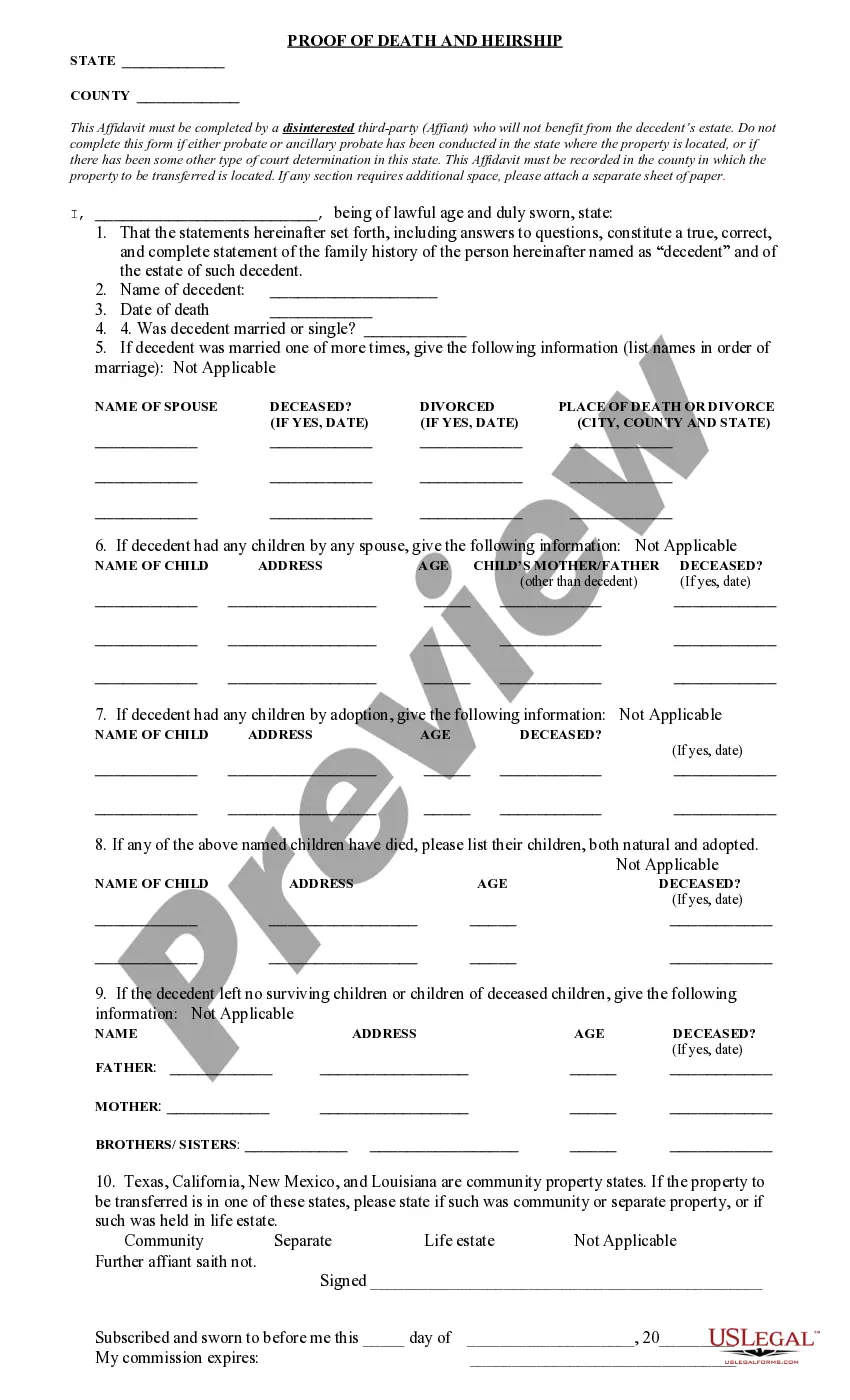
- Information about surviving relatives, including children, spouse, and siblings
- Details about any real estate owned by the deceased
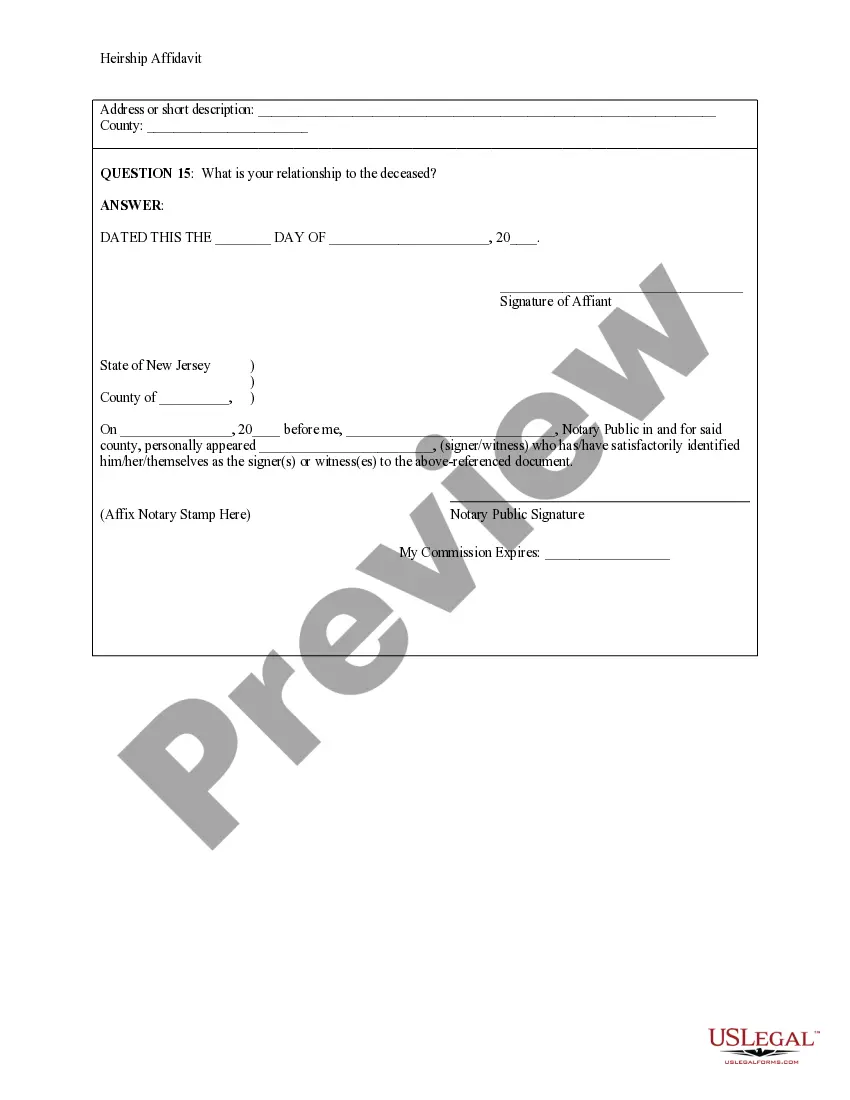
- Signature of the affiant and notarization section
When to use this form
This affidavit is typically used when a person dies without leaving a will, and heirs need to confirm their status to transfer property. Common situations include the sale of real estate owned by the deceased or when applying for estate benefits. It serves to establish the rightful heirs in a manner recognized by legal authorities.
Intended users of this form
- Individuals acting as an affiant who are familiar with the deceased's family and marital history
- Surviving family members of the deceased, such as children or siblings, who need to confirm their heirship
- Anyone involved in the administration of the deceased's estate or property
How to prepare this document
- Fill in the affiant's name and address at the beginning of the affidavit.
- Provide accurate details about the deceased, including their name, date of death, and residence at the time of death.
- Answer all questions regarding the decedent's estate, including whether a will exists or has gone through probate.
- List all surviving relatives, providing names and addresses for children, spouse, and other direct heirs.
- Ensure the affidavit is signed in front of a notary public to validate it legally.
Does this document require notarization?
This form needs to be notarized to ensure legal validity. US Legal Forms provides secure online notarization powered by Notarize, allowing you to complete the process through a verified video call, available anytime.
Get your form ready online
Our built-in tools help you complete, sign, share, and store your documents in one place.
Make edits, fill in missing information, and update formatting in US Legal Forms—just like you would in MS Word.
Download a copy, print it, send it by email, or mail it via USPS—whatever works best for your next step.
Sign and collect signatures with our SignNow integration. Send to multiple recipients, set reminders, and more. Go Premium to unlock E-Sign.
If this form requires notarization, complete it online through a secure video call—no need to meet a notary in person or wait for an appointment.
We protect your documents and personal data by following strict security and privacy standards.

Make edits, fill in missing information, and update formatting in US Legal Forms—just like you would in MS Word.

Download a copy, print it, send it by email, or mail it via USPS—whatever works best for your next step.

Sign and collect signatures with our SignNow integration. Send to multiple recipients, set reminders, and more. Go Premium to unlock E-Sign.

If this form requires notarization, complete it online through a secure video call—no need to meet a notary in person or wait for an appointment.

We protect your documents and personal data by following strict security and privacy standards.
Avoid these common issues
- Failing to provide complete and accurate information about the decedent.
- Not properly notarizing the form before submission.
- Leaving sections unanswered, particularly regarding the existence of a will.
- Mixing information about living and deceased relatives, causing confusion.
Advantages of online completion
- Convenience of downloading and completing the form at your own pace.
- Editable format allows for easy updates if necessary information changes.
- Access to professionally drafted templates ensures legal compliance.
Looking for another form?


Form popularity
FAQ
181. Therefore, under the statute of descent and distribution, next of kin in New Jersey are: Surviving spouse or domestic partner. Descendants.
If you die in New Jersey without having a will, then you have died intestate. This is a legal term that means that you have no will to probate once you are dead. Therefore, since you don't have a will, your estate is distributed according to New Jersey's law of intestacy.
The death certificate and the original deed are the only documents needed to have the deceased's name removed from the deed. File papers in New Jersey probate court to have a deed transferred, in case of a tenancy in common.
Children - if there is no surviving married or civil partner If there is no surviving partner, the children of a person who has died without leaving a will inherit the whole estate. This applies however much the estate is worth. If there are two or more children, the estate will be divided equally between them.
If you die in New Jersey without having a will, then you have died intestate. This is a legal term that means that you have no will to probate once you are dead. Therefore, since you don't have a will, your estate is distributed according to New Jersey's law of intestacy.
The law of intestate succession in New Jersey states that: If you die leaving a spouse, a registered domestic partner, or civil union partner and children who are also the children of the spouse or legal partner, the spouse/legal partner receives 100% of the estate and no bond is required to be posted.
The law of intestate succession in New Jersey states that: If you die leaving a spouse, a registered domestic partner, or civil union partner and children who are also the children of the spouse or legal partner, the spouse/legal partner receives 100% of the estate and no bond is required to be posted.
Who Gets What: The Basic Rules of Intestate Succession.Generally, only spouses, registered domestic partners, and blood relatives inherit under intestate succession laws; unmarried partners, friends, and charities get nothing. If the deceased person was married, the surviving spouse usually gets the largest share.