New Jersey Mutual Wills or Last Will and Testaments for Man and Woman living together, not Married with Minor Children
Understanding this form
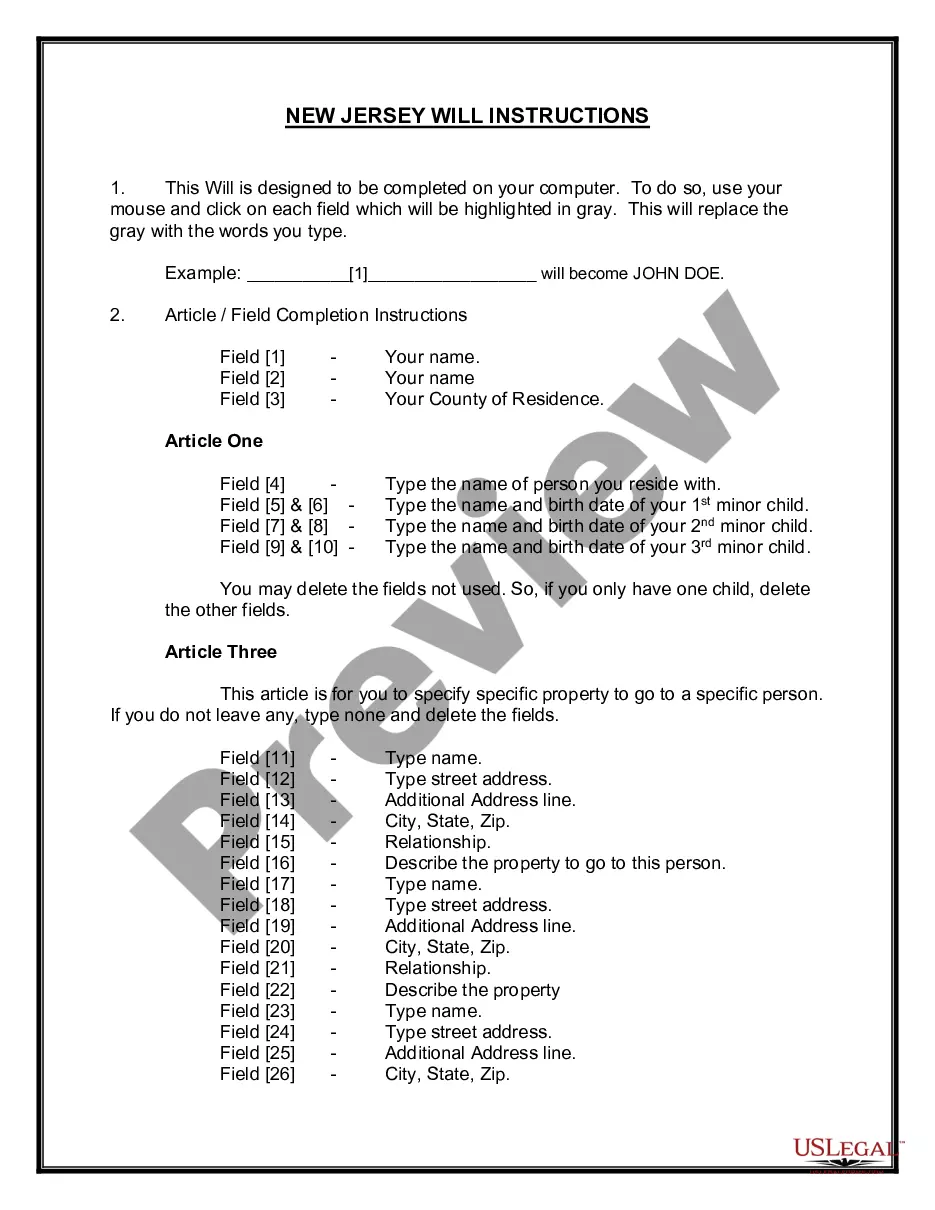
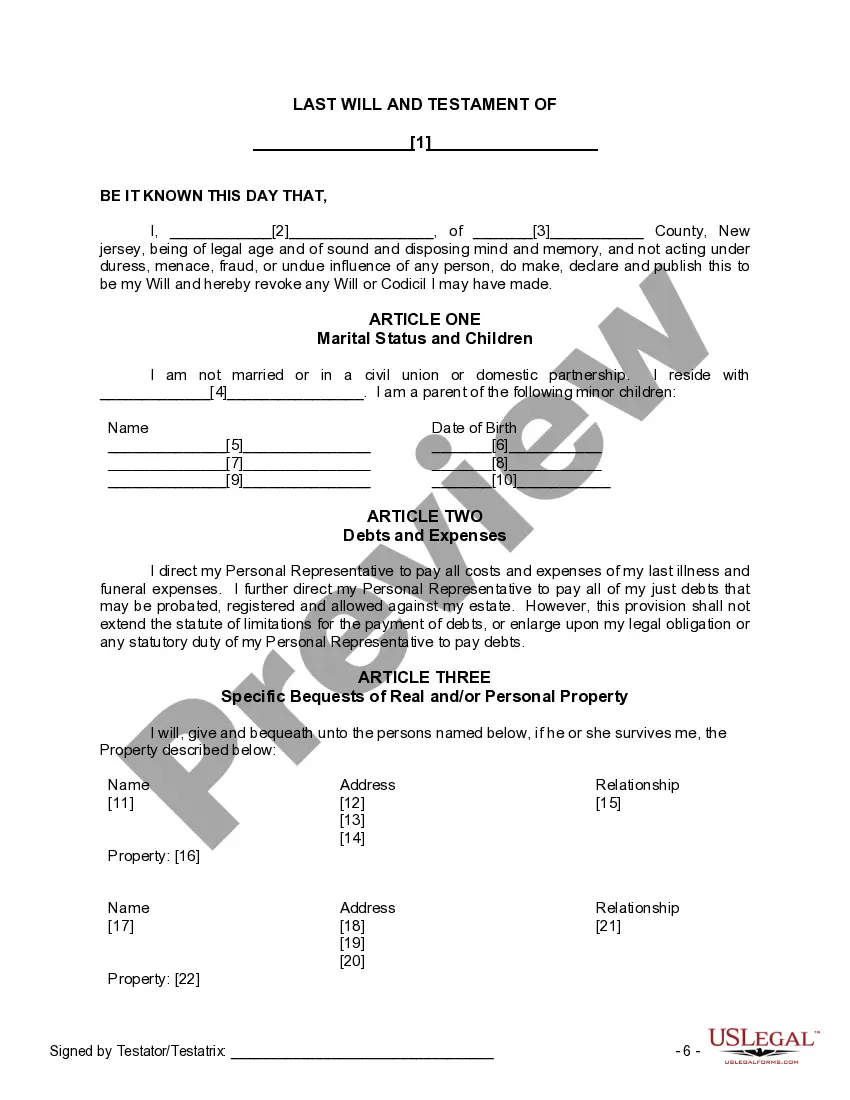
This form is a Mutual Will or Last Will and Testament for a man and woman living together who are not married but have minor children. It allows both individuals to make mutual declarations regarding the distribution of their estate. Unlike individual wills, mutual wills ensure that both parties agree on the distribution of their joint assets, particularly for the benefit of their children. This form is essential for unmarried partners wishing to secure their children's future and ensure that their wishes for asset distribution are respected after their passing.
Form components explained
- Article One: Identifies the individuals and their children.
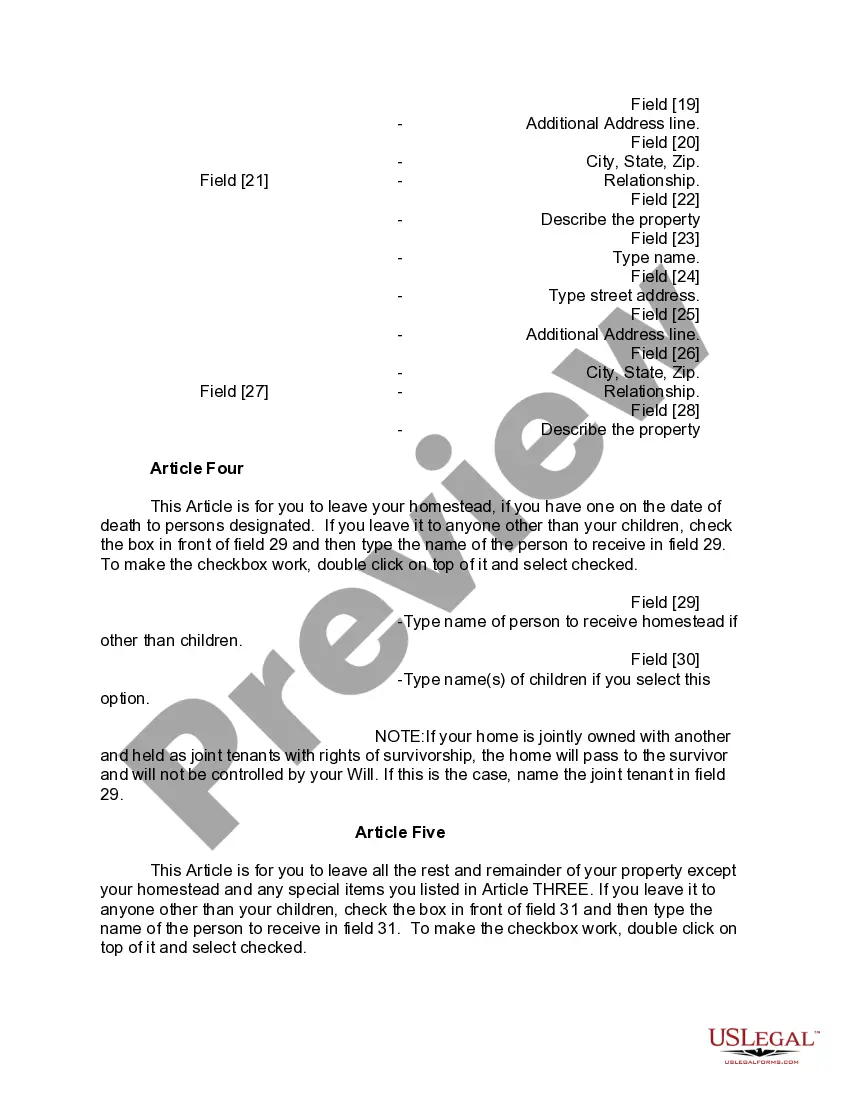
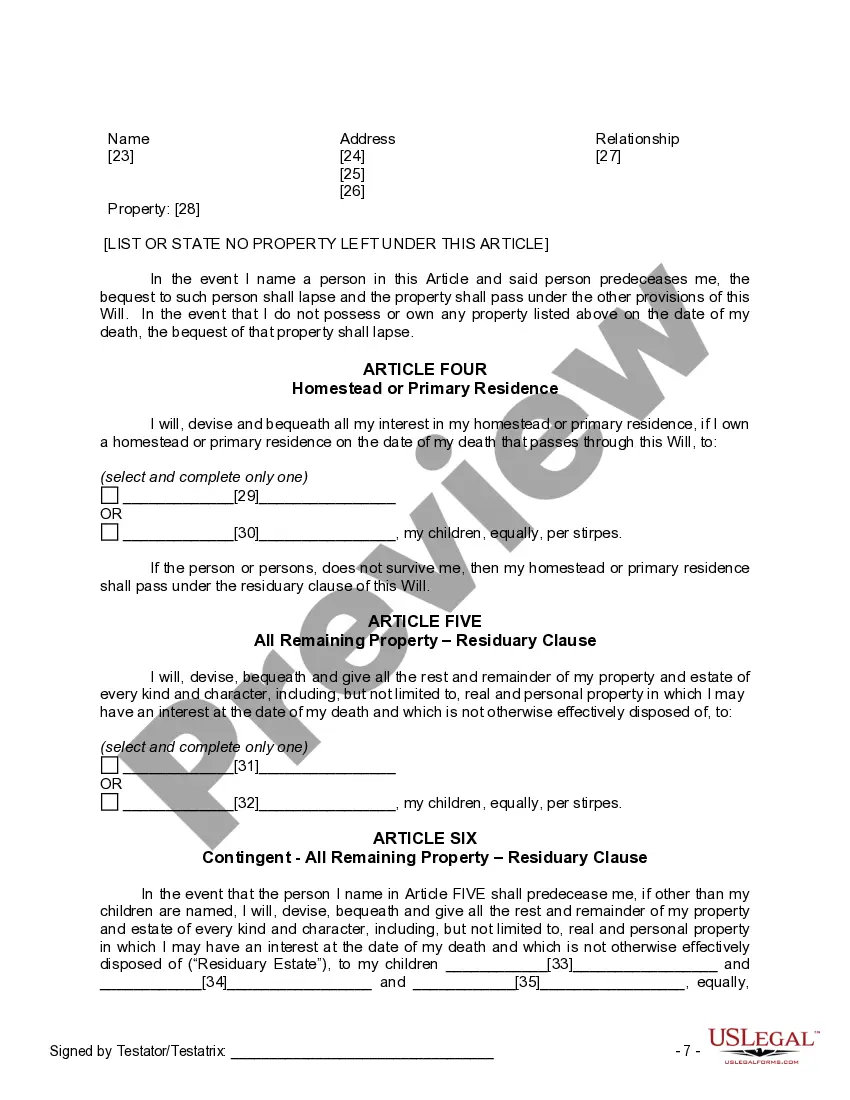
- Article Three: Details specific bequests of property to named beneficiaries.
- Article Four: Addresses the disposition of the primary residence or homestead.
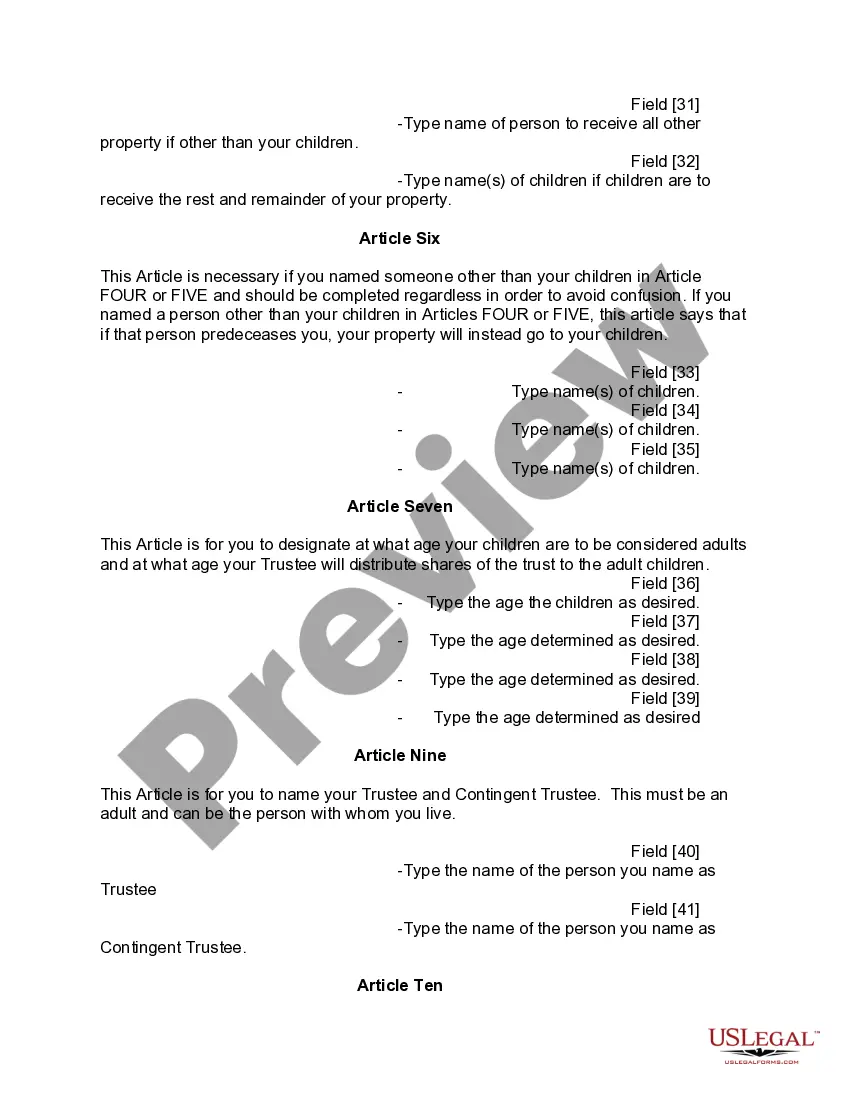
- Article Five: Outlines the residuary clause for remaining property not covered in previous articles.
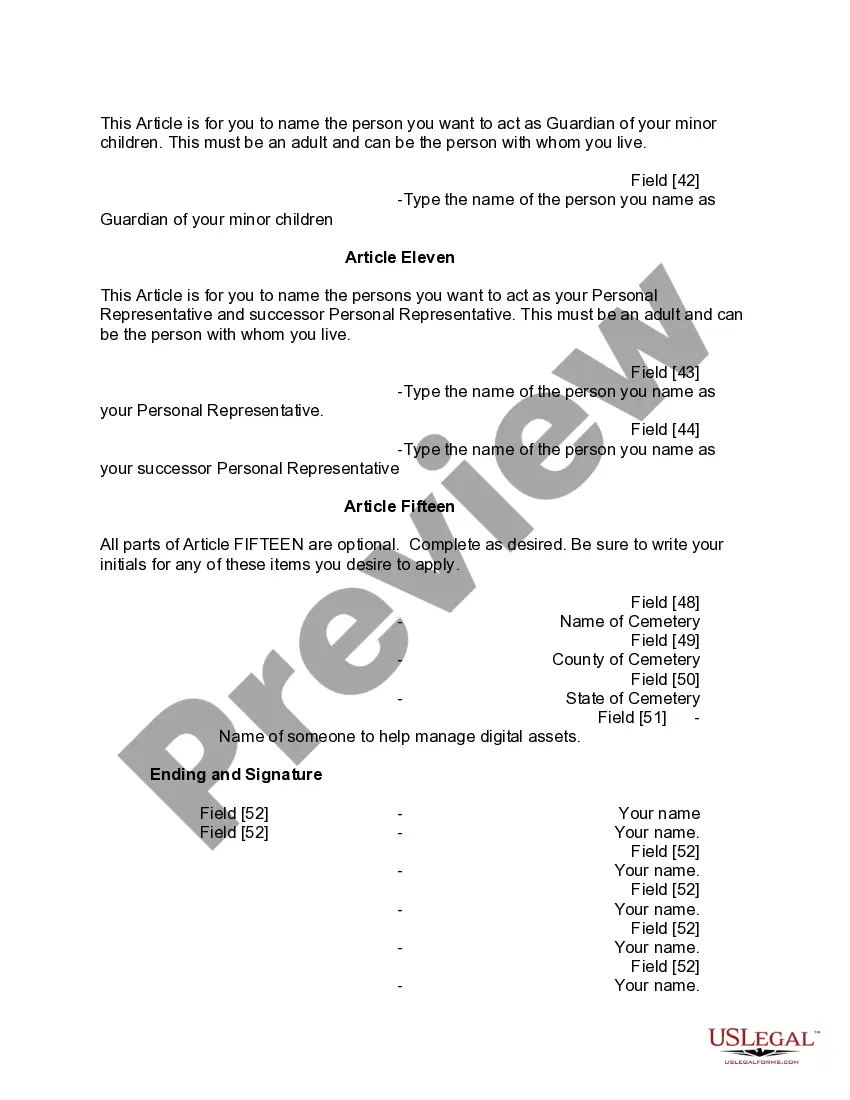
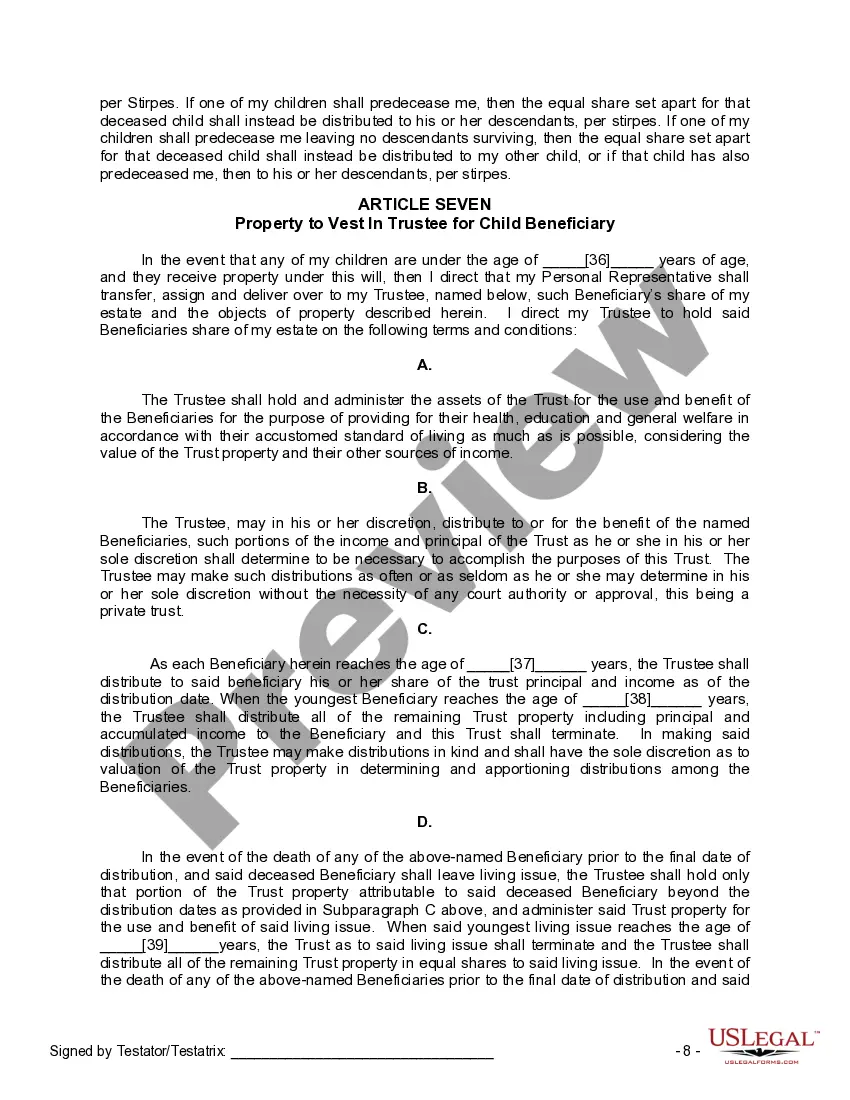
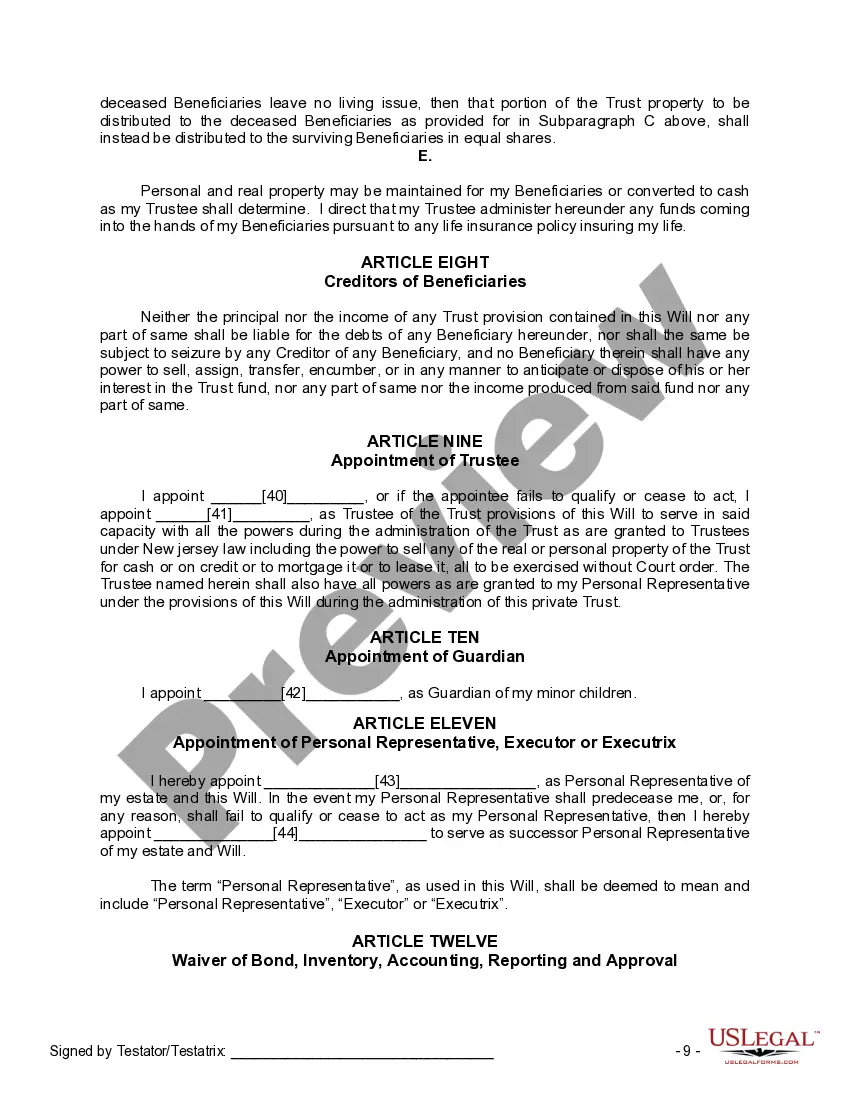
- Article Nine: Designates a trustee for managing any assets left to minors.
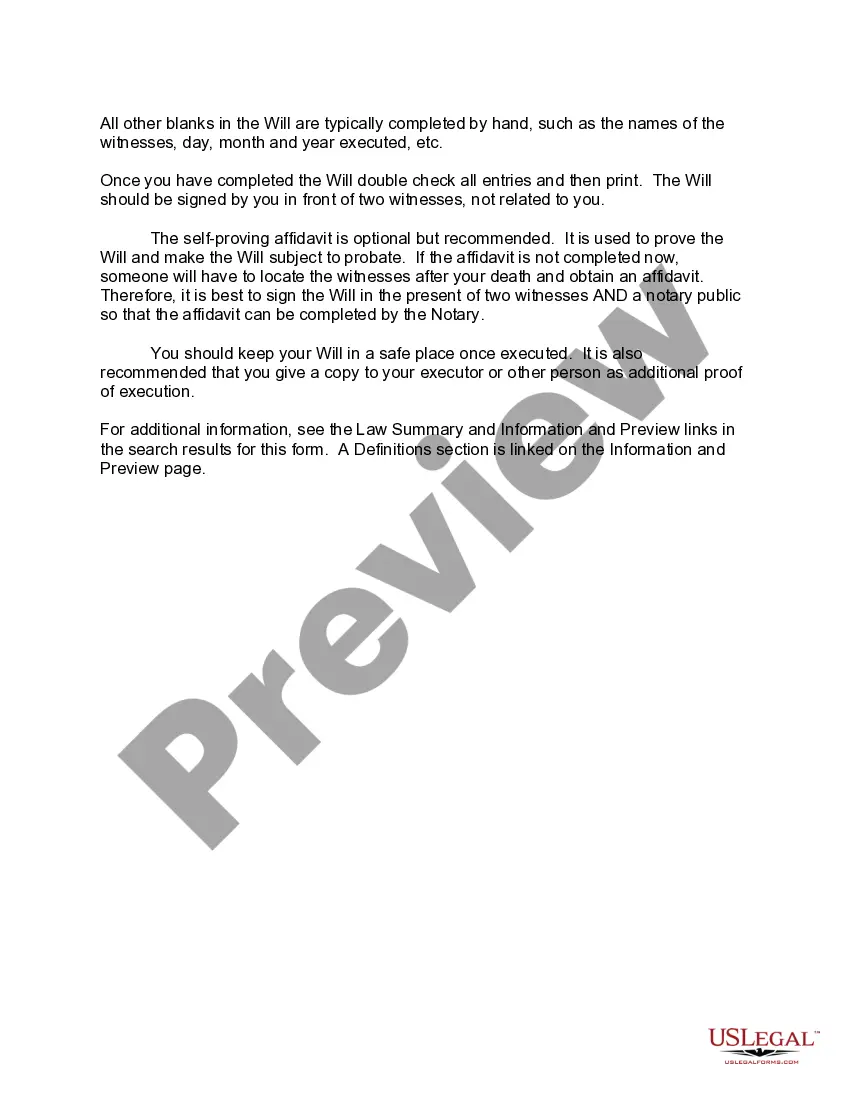
- Witnessing Requirements: Includes necessary signatures of witnesses and possibly a notary for validity.



When to use this document
This form is beneficial when you and your partner wish to outline your wishes regarding asset distribution in the event of death. It's particularly relevant for cohabiting couples who want to ensure their children are provided for and that mutual agreements on property and assets are honored. Examples include scenarios where couples have joint property or wish to pass on specific heirlooms or assets to their children without marriage complicating the legalities.
Who can use this document
This form is suitable for:
- Cohabiting couples who are not married but share minor children.
- Individuals seeking to formalize their shared wishes about asset distribution.
- Parents wanting to ensure their children's welfare and inheritance rights in the absence of a marriage arrangement.
- Anyone desiring clarity and security in their estate planning as an unmarried couple.
Instructions for completing this form
Steps to complete this form:
- Identify the parties by filling in the names of both partners and their children in the designated fields.
- Specify specific property bequests and designate beneficiaries for those properties in Article Three.
- Decide on the distribution of the homestead or primary residence in Article Four.
- Outline how remaining assets will be distributed in Article Five, confirming the residuary clause structure.
- Obtain signatures from two witnesses, and if needed, notarize the document to ensure it complies with your stateâs legal requirements.
Notarization guidance
Yes, this form must be notarized to be legally valid. The presence of a notary public ensures that the signatures on the will are authentic, which aids in avoiding disputes during probate. US Legal Forms offers integrated online notarization for your convenience, allowing secure video calls with notaries 24/7, ensuring your document remains legally binding without the need for travel.
Get your form ready online
Our built-in tools help you complete, sign, share, and store your documents in one place.
Make edits, fill in missing information, and update formatting in US Legal Forms—just like you would in MS Word.
Download a copy, print it, send it by email, or mail it via USPS—whatever works best for your next step.
Sign and collect signatures with our SignNow integration. Send to multiple recipients, set reminders, and more. Go Premium to unlock E-Sign.
If this form requires notarization, complete it online through a secure video call—no need to meet a notary in person or wait for an appointment.
We protect your documents and personal data by following strict security and privacy standards.

Make edits, fill in missing information, and update formatting in US Legal Forms—just like you would in MS Word.

Download a copy, print it, send it by email, or mail it via USPS—whatever works best for your next step.

Sign and collect signatures with our SignNow integration. Send to multiple recipients, set reminders, and more. Go Premium to unlock E-Sign.

If this form requires notarization, complete it online through a secure video call—no need to meet a notary in person or wait for an appointment.

We protect your documents and personal data by following strict security and privacy standards.
Common mistakes to avoid
- Failing to have the document properly witnessed can invalidate the will.
- Overlooking the need for notarization in jurisdictions that require it.
- Not updating the will after significant life changes (e.g., birth of more children, change in assets).
- Leaving fields blank or incorrectly filled, which can lead to ambiguity in asset distribution.
Benefits of completing this form online
- Convenience of downloading and completing the form remotely.
- Editable fields make it easy to customize the document according to your specific needs.
- Access to attorney-drafted templates ensures higher legal accuracy and relevance.
- Easy storage and retrieval of your document for future reference or updates.
Legal use & context
- This Mutual Will is legally binding and should be recognized by the courts to distribute your estate according to your wishes.
- In cases where no will exists, state laws may dictate the distribution of assets, which may not reflect your preferences.
- It is crucial to regularly update your wills in response to major life changes, such as the birth of additional children or changes in your relationship status.
Quick recap
- This form is essential for cohabiting couples who wish to ensure their wishes are honored regarding asset distribution.
- Proper execution and notarization are vital for the legal effectiveness of the will.
- It provides peace of mind by clearly laying out guardianship and estate distribution for minor children.
Looking for another form?

Form popularity
FAQ
Create the initial document. Start by titling the document Last Will and Testament" and including your full legal name and address. Designate an executor. Appoint a guardian. Name the beneficiaries. Designate the assets. Ask witnesses to sign your will. Store your will in a safe place.
New Jersey requires that a person is at least 18 years old in order to execute a valid will.New Jersey requires that a typed will be signed by at least two people who witnessed the testator sign the will, or witnessed the testator acknowledge their signature on the will or the will itself.
Find an online template or service. Make a list of your assets. Be specific about who gets what. If you have minor children, choose a guardian. Give instructions for your pet. Choose an executor. Name a 'residuary beneficiary' List your funeral preferences.
Property in a living trust. One of the ways to avoid probate is to set up a living trust. Retirement plan proceeds, including money from a pension, IRA, or 401(k) Stocks and bonds held in beneficiary. Proceeds from a payable-on-death bank account.
Include personal identifying information. Include a statement about your age and mental status. Designate an executor. Decide who will take care of your children. Choose your beneficiaries. List your funeral details. Sign and date your Last Will and Testament.
Find an online template or service. Make a list of your assets. Be specific about who gets what. If you have minor children, choose a guardian. Give instructions for your pet. Choose an executor. Name a 'residuary beneficiary' List your funeral preferences.
While you can write your own last will and testament, it's very important to follow your state's requirements. If the court finds it invalid, someone other than your chosen executor could handle your estate and distribute your assets differently than you intended.
Choose an online legal services provider or locate a will template. Carefully consider your distribution wishes. Identify a personal representative/executor. Understand the requirements to make your will legal. Make sure someone else knows about your will. Consult a lawyer if you have a more complicated estate.
Contrary to popular belief, you do not need to have an attorney draft a will for you. Anyone can write this document on their own, and as long as it meets all of the legal requirements of the state, courts will recognize one you wrote yourself.