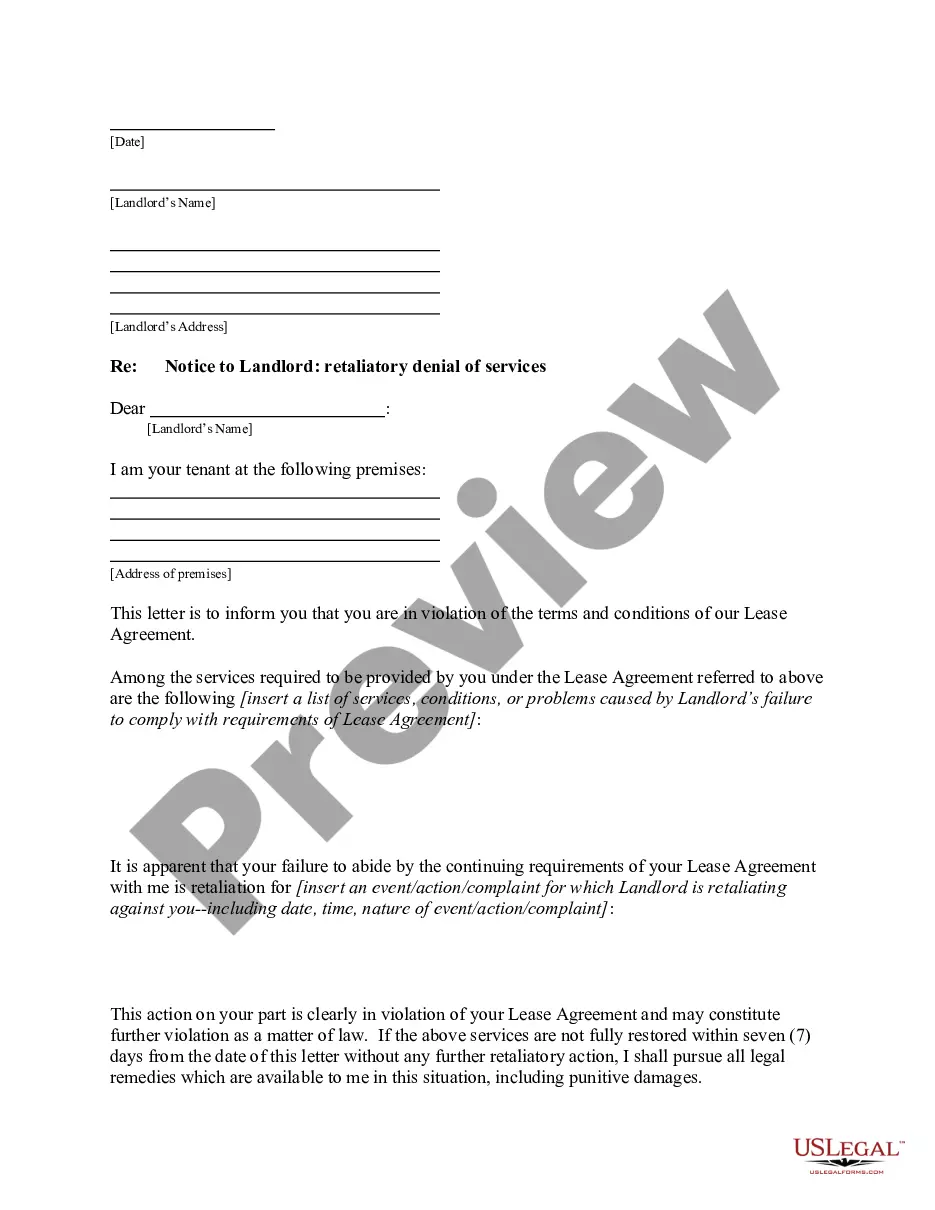
New Jersey Letter from Tenant to Landlord containing Notice to landlord to cease retaliatory threats to evict or retaliatory eviction
Understanding this form
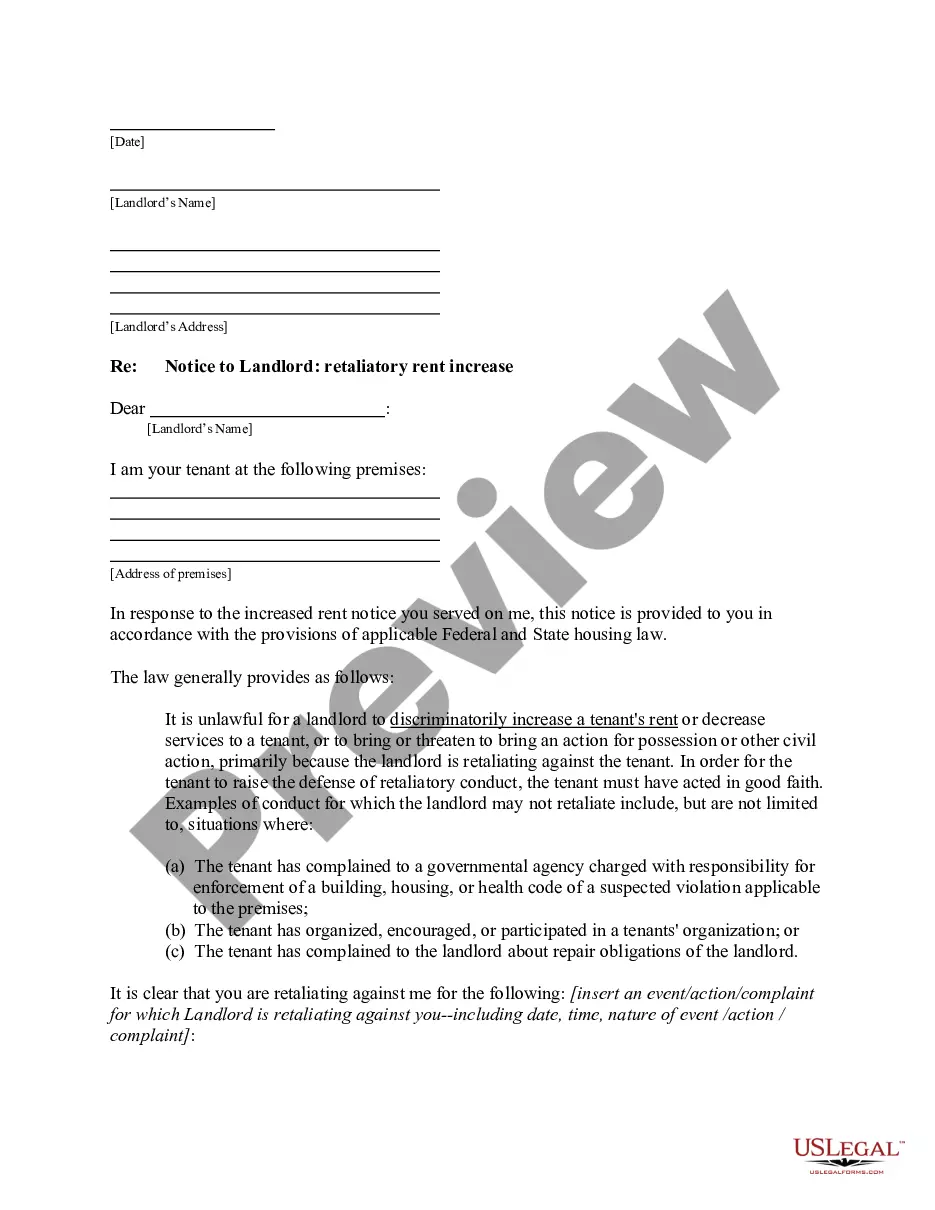
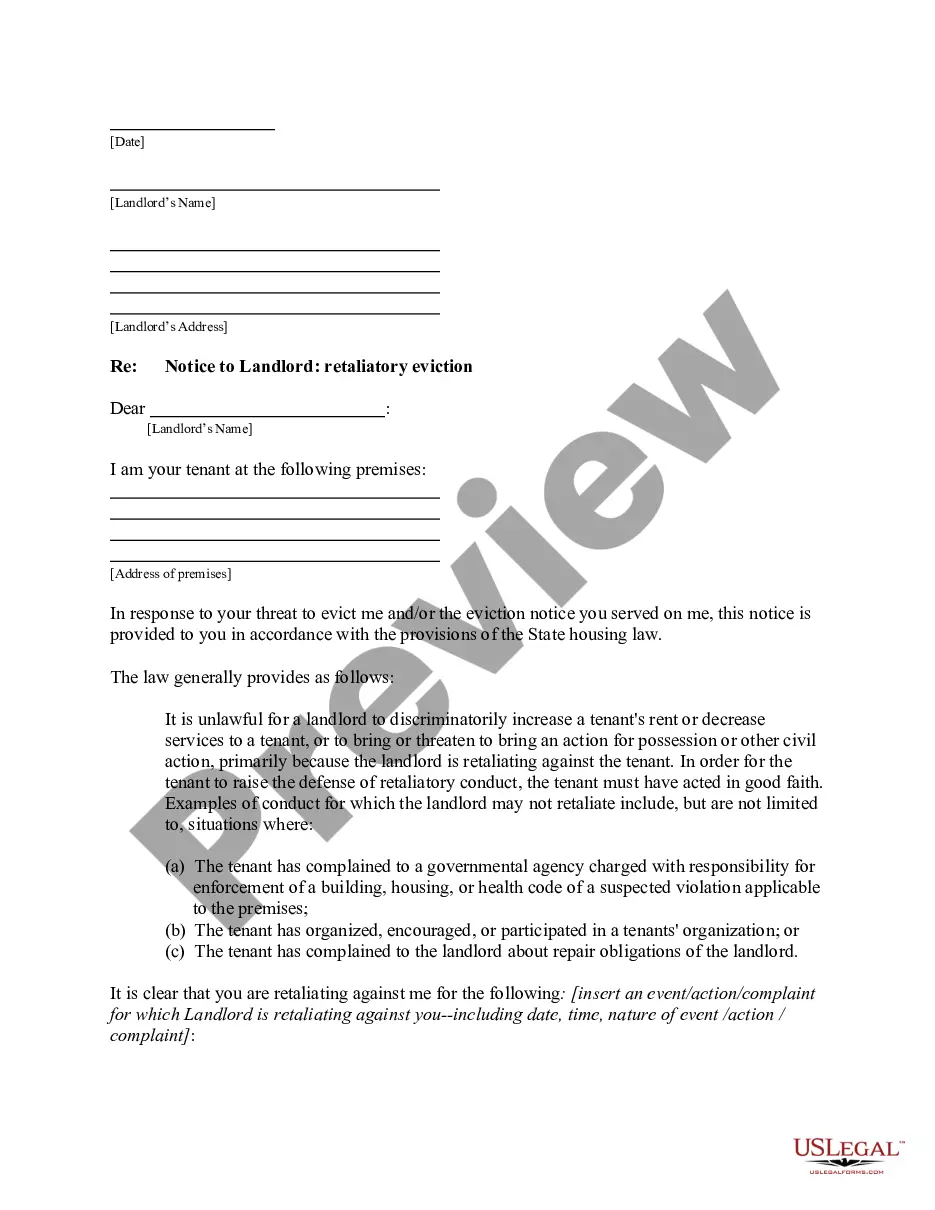
This letter from tenant to landlord serves as a formal notice regarding the landlord's retaliatory eviction threats. It is designed for tenants who believe that the landlord's actions, such as threatening eviction, are in response to the tenant's lawful actions, which may include reporting violations or participating in tenant organizations. This form adheres to applicable state housing laws, ensuring the tenant's rights are protected against retaliatory conduct.
What’s included in this form
- Date of the notice
- Name and address of the tenant
- Name and address of the landlord
- Statement of retaliatory eviction threat
- Reference to tenant's lawful actions
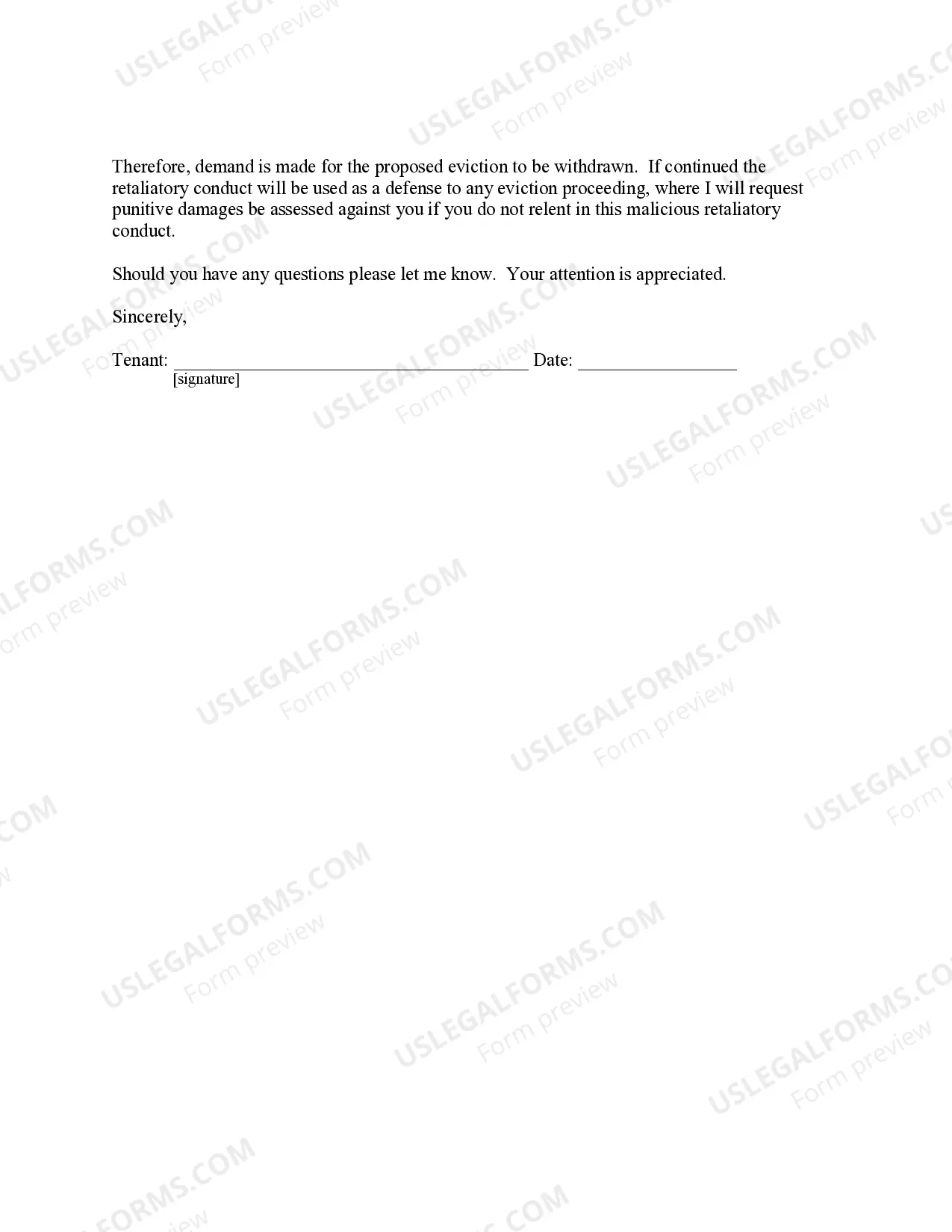
- Signature of the tenant
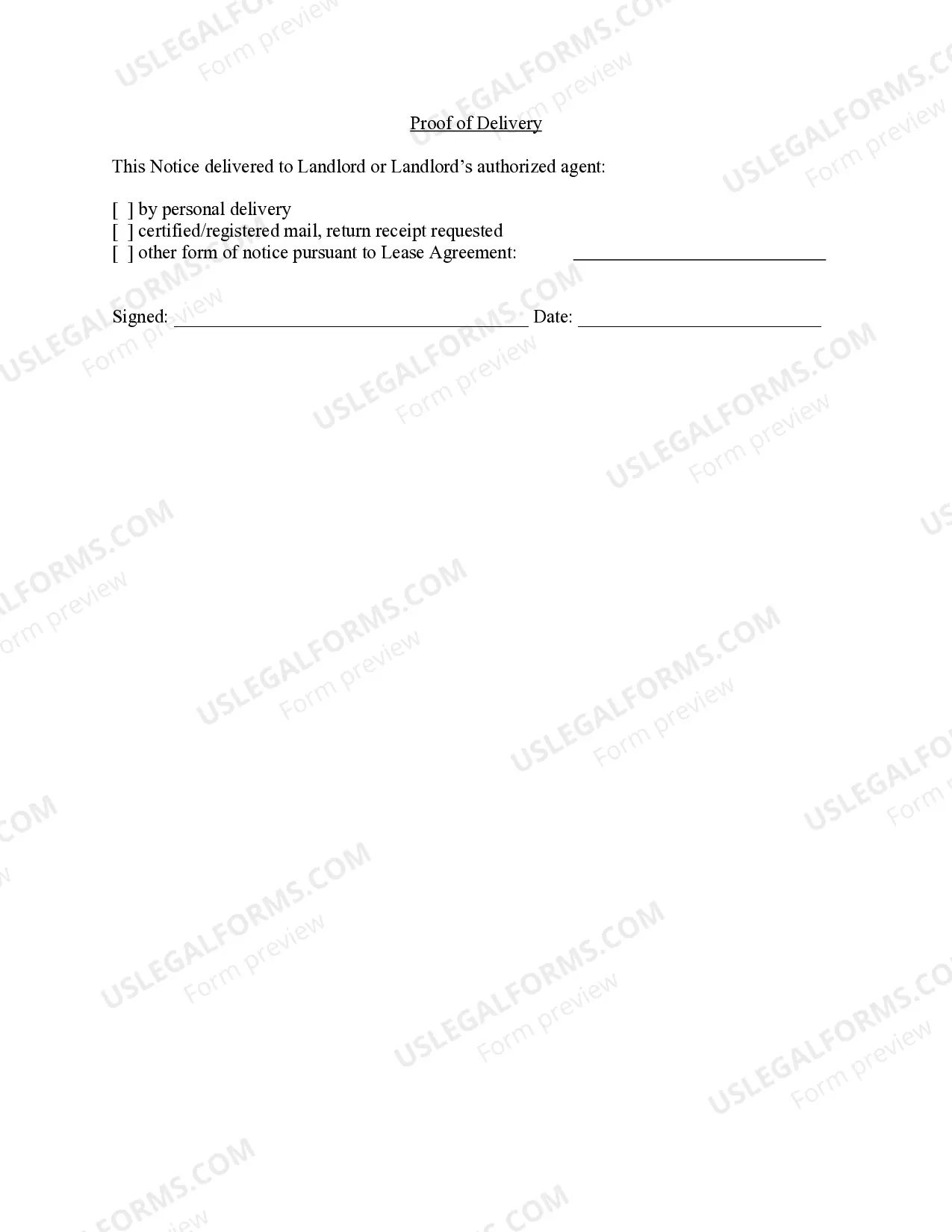
- Proof of delivery method

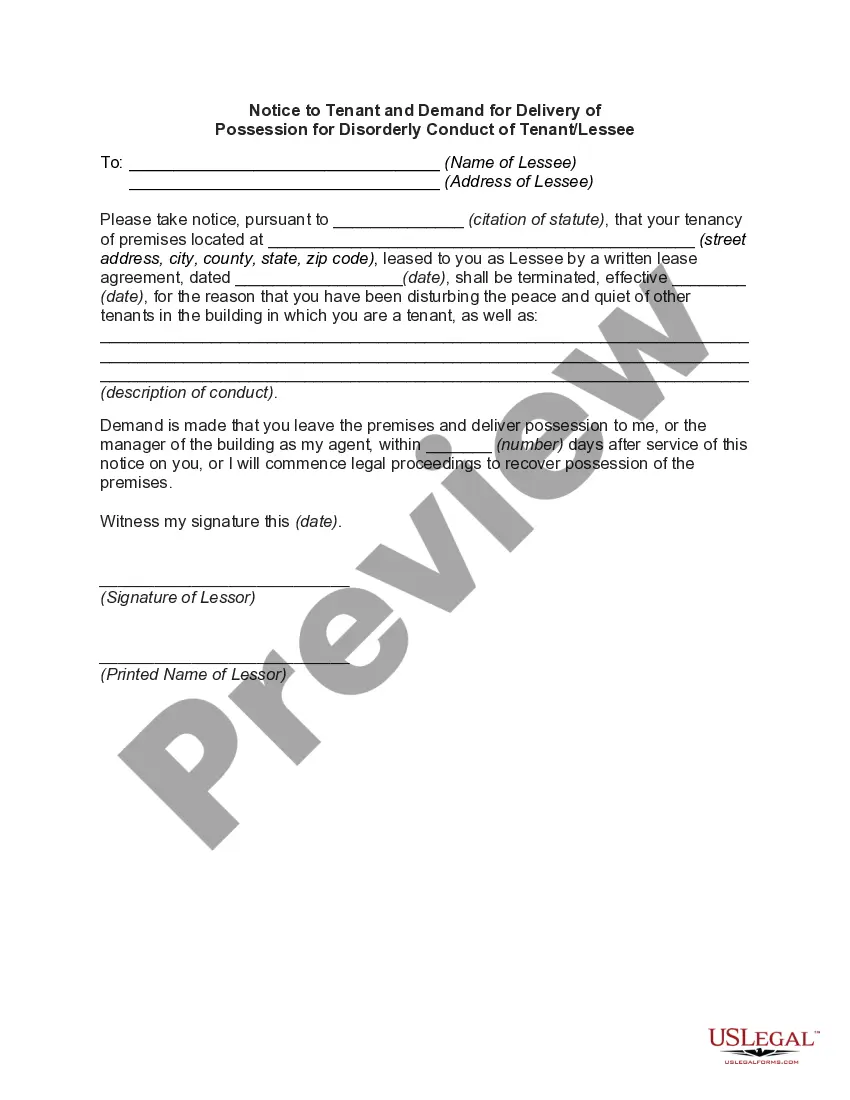
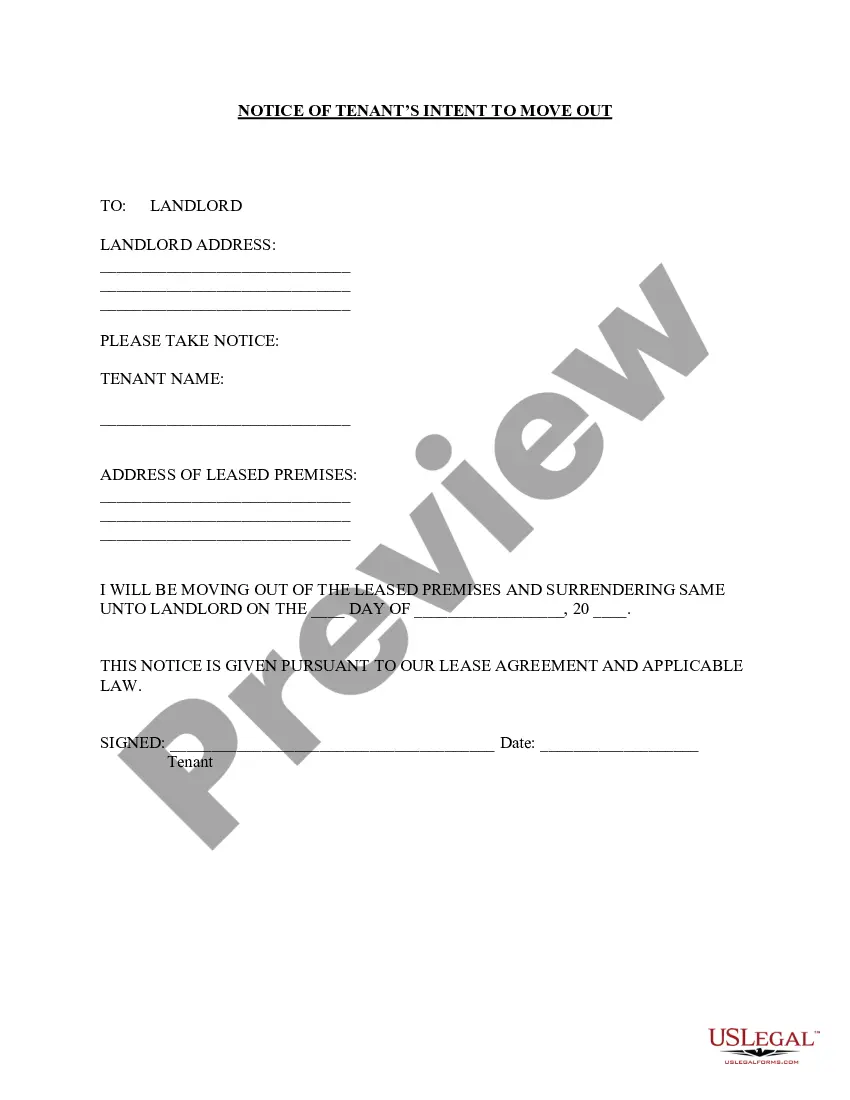

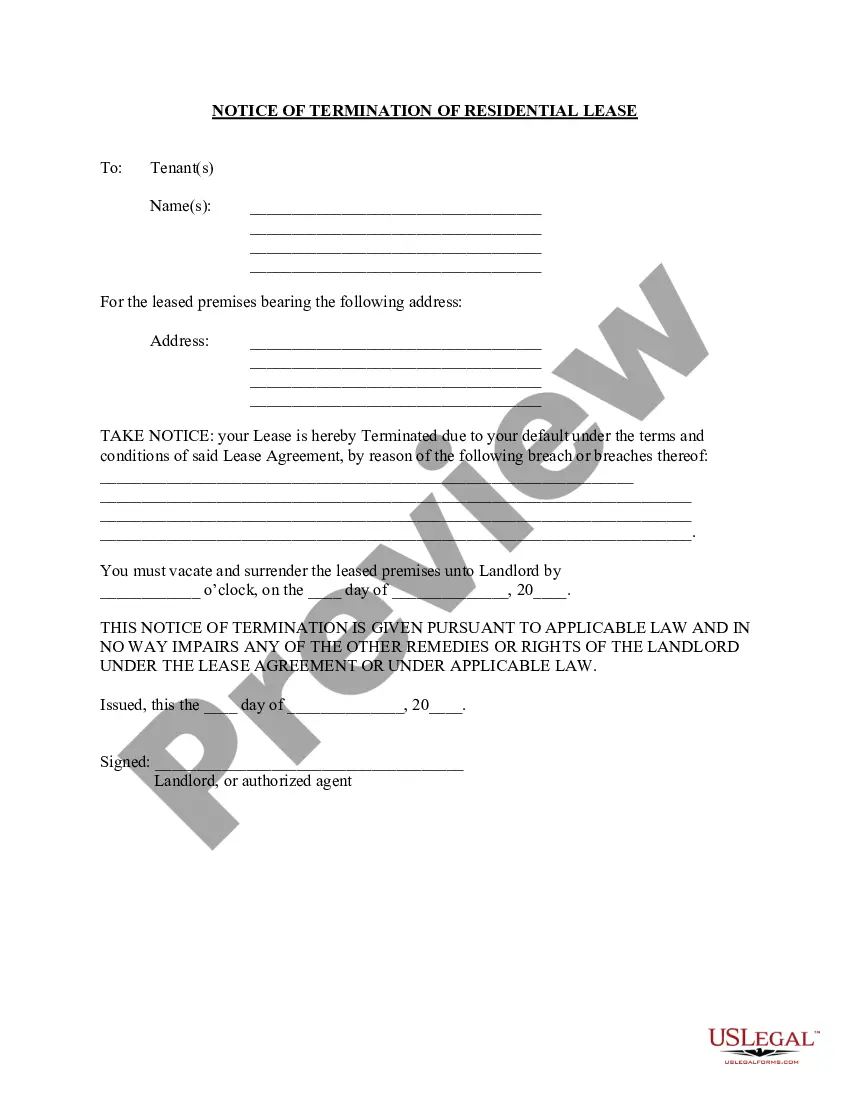
When to use this document
This form should be used when a tenant receives threats of eviction from a landlord that the tenant believes are retaliatory in nature. This situation commonly arises when a tenant has exercised their rights, such as filing complaints about unsafe living conditions or organizing with other tenants, and subsequently faces eviction threats from the landlord as a form of punishment.
Who should use this form
This form is intended for:
- Tenants experiencing retaliation from landlords due to lawful actions
- Individuals who have reported issues regarding their rental property
- Members of tenant organizations facing eviction threats
Steps to complete this form
- Identify the parties: Write your name and address as the tenant, followed by the landlord's name and address.
- Specify the date: Clearly indicate the date the notice is being served.
- Detail the retaliatory threat: Include a description of the landlord's threat and the context in which it occurred.
- State your actions: Mention the specific actions you took that are likely considered protected under housing laws.
- Sign the form: Add your signature to legitimize the notice.
- Deliver the notice: Choose a delivery method, such as personal delivery or mail, and retain proof of delivery.
Notarization requirements for this form
This form does not typically require notarization unless specified by local law.
Get your form ready online
Our built-in tools help you complete, sign, share, and store your documents in one place.
Make edits, fill in missing information, and update formatting in US Legal Forms—just like you would in MS Word.
Download a copy, print it, send it by email, or mail it via USPS—whatever works best for your next step.
Sign and collect signatures with our SignNow integration. Send to multiple recipients, set reminders, and more. Go Premium to unlock E-Sign.
If this form requires notarization, complete it online through a secure video call—no need to meet a notary in person or wait for an appointment.
We protect your documents and personal data by following strict security and privacy standards.

Make edits, fill in missing information, and update formatting in US Legal Forms—just like you would in MS Word.

Download a copy, print it, send it by email, or mail it via USPS—whatever works best for your next step.

Sign and collect signatures with our SignNow integration. Send to multiple recipients, set reminders, and more. Go Premium to unlock E-Sign.

If this form requires notarization, complete it online through a secure video call—no need to meet a notary in person or wait for an appointment.

We protect your documents and personal data by following strict security and privacy standards.
Common mistakes
- Failing to provide clear evidence of the landlord's threat.
- Not including the date of the notice.
- Neglecting to specify the protected actions taken by the tenant.
- Forgetting to sign the document before delivery.
Why complete this form online
- Convenience of completing the form at any time without needing to visit a lawyer.
- Editability to ensure all information is accurate before sending.
- Access to professionally drafted materials that comply with current legal standards.
Legal use & context
- This notice is a protective measure for tenants against wrongful eviction.
- Using the form correctly may provide a defense against retaliatory eviction claims.
- It helps assert tenant rights in accordance with housing laws.
Summary of main points
- The form communicates a tenant's position regarding retaliatory eviction threats.
- Filling this form accurately is essential for protecting tenant rights.
- Timely action may prevent eviction and potential legal disputes.
Looking for another form?

Form popularity
FAQ
Detail the issue that you're experiencing in your rental (include pictures if helpful) propose a reasonable solution. mention possible consequences, such as health problems, a fire, or a burglary or assault, of not dealing with the issue promptly, and.
A Notice to Vacate is a notice written by the landlord or property manager giving a notice to leave the premises within a specified time frame. This type of notice is typically given during the end of a lease period, or due to an infringement of the lease agreement.
You can send your letter by email if your tenancy agreement says you can. You should say something like: I am giving 1 month's notice to end my tenancy, as required by law. I will be leaving the property on (date xxxxx).
Addresses. Date. Tenant names. Status and date of the lease. Why the eviction notice is served (clear and concise explanation) Date tenant must vacate the property. Proof of service or delivery of notice.
Dear (Name of landlord or manager), This letter constitutes my written (number of days' notice that you need to give based on your lease agreement)-day notice that I will be moving out of my apartment on (date), the end of my current lease. I am leaving because (new job, rent increase, etc.)
Your name and address. Your Landlord's name and address. The date your notice period ends. A forwarding address. A request for tenancy documentation such as the tenancy agreement or deposit details. A reason for a request to terminate the tenancy early (if applicable)
Eviction notices When written by a landlord, a notice to vacate is commonly known as an "eviction notice," which tells the tenant they must move out of the rental property.
Write your name, job title and date. State that the document is a letter of resignation. Include your last day of employment. Show your appreciation for the position. Explain any open projects or next steps. Print and sign the document.
When writing to your landlord, be specific in describing the problems you are having. Do not exaggerate or under-emphasize the extent of the problem. The landlord may show this letter to a judge if your problem is ever litigated.